#ReadingtheMeow2024 and 20 Books of Summer, 2: Sleeping with Cats by Marge Piercy
Reviews of books about cats have been a standard element on my blog over the years, and the second annual Reading the Meow challenge, hosted by Mallika of Literary Potpourri, was a good excuse to pick up some more. Tomorrow I’ll review two cat-themed novels; today I have a 2002 memoir that I have been meaning to read for ages.
I discovered Piercy through her poetry, then read Woman on the Edge of Time, a feminist classic that contrasts utopian and dystopian views of the future. Like May Sarton (whom Piercy knew), she devotes equal energy to both fiction and poetry and is an inveterate cat lady. Piercy is still publishing and blogging at 88; I have much to catch up on from her back catalogue. A précis of her life is almost stranger than fiction: she grew up in poverty in Detroit, joining a teen gang and discovering her sexuality first with other girls (“The first time I had an orgasm—I was eleven—I was astonished and also I had a feeling of recognition. Of course, that’s it. As if that was what I had been expecting or looking for”) then with men; had a couple abortions, including one self-administered, then got sterilized; honed her writing craft at college; married three times – briefly to a Frenchman, an unhappy open arrangement, and now for 40+ years to fellow writer Ira Wood; and wrote like a dervish yet has remained on the periphery of the literary establishment and thus struggled financially.
Political activism has been a constant for Piercy, whether protesting the Vietnam War or supporting women’s reproductive rights. She and Wood also nurtured a progressive Jewish community around their Cape Cod home. Again like Sarton, she has always embraced the term feminist but been more resistant to queerness. A generational thing, perhaps; nowadays we would surely call Piercy bisexual or at least sexually fluid, but she’s more apt to dismiss her teen girlfriends and her later affairs with women as a phase. The personal life and career mesh here, though there is more of a focus on the former, such that I haven’t really gotten a clear idea of which of her novels I might want to try. Each chapter ends with one of her poems (wordy, autobiographical free verse), giving a flavour of her work in other genres. She portrays herself as a nomad who wandered various cities before settling into an unexpectedly homely and seasonal existence: “I am a stray cat who has finally found a good home.”

I admired Piercy’s self-knowledge here: her determination to write (including to keep her late mother alive in her) and to preserve the solitude necessary to her work –
I know I am an intense, rather angular passionate woman, not easy to like, not easy to live with, even for myself. Convictions, causes jostle in me. My appetites are large. I have learned to protect my work time and my privacy fiercely. I have been a better writer than a person, and again and again I made that choice. Writing is my core. I do not regret the security I have sacrificed to serve it.
and her conviction that motherhood was not for her –
I did not want children. I never felt I would be less of a woman, but I feared I would be less of a writer if I reproduced. I didn’t feel anything special about my genetic composition warranted replicating it. … I liked many of my friends’ children as they grew older: I was a good aunt. But I never desired to possess them or have one of my own. … I have never regretted staying childless. My privacy, my time for work … are precious. I feel my life is full enough.
“There were no role models for a woman like me,” she felt at the end of college, but she can in her turn be a role model of the female artist’s life, socially engaged and willing to take risks.
As to the title: There is, of course, special delight here for cat lovers. Piercy has had cats since she was a child, and in the Cape Cod era has usually kept a band of five or so. In the interludes we meet some true characters: Arofa the Siamese, Cho-Cho who lived to 21, mother and son Dinah and Oboe, alpha male Jim Beam, and many more. Of course, they age and fall ill and there are some goodbye scenes. She mostly describes these unsentimentally – if you’ve read Doris Lessing on cats, I’d say the attitude is similar. There are extremes of both love and despair: she licks a kitten to bond with her; she euthanizes one beloved cat herself. She wrote this memoir at 65 and felt that her cats were teaching her how to age.
There is a sadness to living with old cats; also a comfort and pleasure, for you know each other thoroughly and the trust is almost absolute. … The knowledge of how much I will miss them is always with me, but so is the sense of my own time flowing out, my life passing and the necessity to value it as I value them. Old cats are precious.
Even those unfamiliar with Piercy’s work might enjoy reading a perspective on the radical movements of the 1960s and 70s. This was right up my street because of her love of cats, her defence of the childfree life, and her interest in identity and memory. Because she doesn’t talk in depth about her oeuvre, you needn’t have read anything else of hers to appreciate reading this. I hope you have a cat who will nap on your lap as you do so. (Secondhand, a gift from my wish list) 

Carol Shields Prize Longlist Reading: The Future and Chrysalis
My first two dedicated reads for our informal Carol Shields Prize shadowing project exhibit one main way in which the prize is different from the Women’s Prize for Fiction: works in translation and short story collections are eligible. I have one of each to review today. Laura and I did a buddy read of an atmospheric dystopian novel translated from the French, and I caught up on a magical, erotic story collection I’d had on my Kindle for a long time. These were both very good, but my minor misgivings are such that I’d rate them the same: 
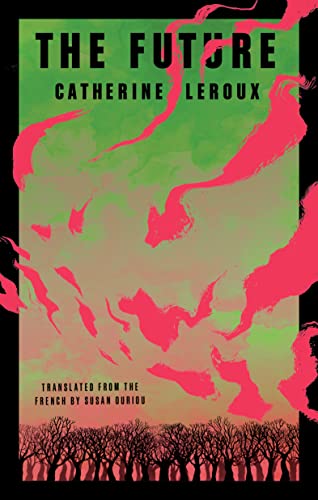
The Future by Catherine Leroux (2020; 2023)
[Translated from the French by Susan Ouriou]
For such a monolithic title, this has a limited stage: a few derelict districts of the ailing city we know as Detroit, Michigan – but in Leroux’s alternate version, it remained part of French Canada, with lingering Indigenous influence, and so is known as Fort Détroit. No doubt she was inspired by the many vacant properties that characterized Detroit in the 2010s; there’s even a ruins tour bus. In her Fort Détroit, a handful of determined adults cling on in their own homes, but the streets and parks have been abandoned to animals and to a gang of half-feral children who have developed their own nicknames (Adidas, Lego, Wolfpup), social hierarchy and vernacular. Worlds meet when Gloria determines to find her granddaughters Cassandra and Mathilda, who ran away after their addict mother Judith’s suspicious death. At the same time, her neighbour Eunice wants to find out who ran her father down in the street.
 Despite their fierce independence and acts of protest, the novel’s children still rely on the adult world. Ecosystems are awry and the river is toxic, but Gloria’s friend Solomon, a former jazz pianist, still manages to grow crops. He overlooks the children’s thefts from his greenhouse and eventually offers to help them grow their own food supply, and other adults volunteer to prepare a proper winter shelter to replace their shantytown. Puberty threatens their society, too: we learn that Fiji, the leader, has been binding her breasts to hide her age.
I expected to be reminded strongly of Station Eleven, and while there were elements that were reminiscent of Emily St John Mandel’s work, Leroux’s is a more consciously literary approach. The present-tense omniscient narration occupies many perspectives, including that of a dog, and the descriptions and musings are more lyrical than literal. Where another author would site high drama – sixtysomething Gloria’s night quest, a few children rafting down the river – Leroux moves on swiftly to other character interactions. What did bring Mandel to mind was the importance of art during societal collapse: the children spin nursery rhyme mash-ups and fairytales, Stutt rescues a makeshift library and insists on Huckleberry Finn going along on the river journey, and Solomon plays the piano again after decades.
The opening mysteries of death and disappearance are resolved before the end, but don’t seem to have been the point. The Future is more subtle and slippery than many dystopian novels I’ve read in that there’s not really a warning, or a message here. Instead, there’s an intriguing situation that opens out and alters slightly, but avoids resolution. It’s all about atmosphere and language – I was especially impressed by Ouriou’s rendering of Leroux’s made-up dialect via folksy slang (“She figgers she’s growed-up”). I loved the details and one-on-one moments more than the momentous scenes. On the whole, I found the story elegant but somewhat frustrating. You might be drawn to it if you enjoyed To Paradise or the MaddAddam books. (Read via Edelweiss; published by Biblioasis)
See also Laura’s review.
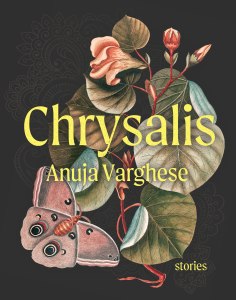
Chrysalis: Stories by Anuja Varghese (2023)
This debut collection of 15 stories brims with magic and horror, and teems with women of colour and queer people. Indeed, Varghese dedicates the book to “all the girls and women who don’t see themselves in most stories.” Most of the characters are of South Asian extraction. Adoption recurs in a couple of places. Two of the rarer realist stories, “Milk” and “Stories in the Language of the Fist,” have protagonists dealing with schoolgirl bullying and workplace microaggressions. More often, there are unexplained phenomena that position the players between life and death. “In the Bone Fields” focuses on the twin daughters of an Indian immigrant family on a Canadian farm. The house and the bone field behind are active and hungry, and only one twin will survive. (I got mild North Woods vibes.)
 In the title story, Radhika visits her mother’s grave and wonders whether her life is here in Montreal with her lover or back in Toronto with her husband. Fangs and wings symbolize her desire for independence. Elsewhere, watery metaphors alternately evoke fear of drowning or sexual fluidity. “Midnight at the Oasis” charts the transformation of a trans woman and “Cherry Blossom Fever,” one of my two favourites, bounces between several POVs. Marjan is in love with Talia, but she’s married to Sunil, who’s also in love with Silas. “People do it — open their relationships and negotiate rules and write themselves into polyamorous fairy tales … Other people. Not brown people,” Talia sighs. They are better off, at least, than they would be back in India, where homophobia can be deadly (“The Vetala’s Song”).
My other favourite was “Bhupati,” about a man who sets up multiple Lakshmi figures in the backyard, hoping devotion will earn him and his wife a better future. The statues keep being burned up by lightning; we learn his wife may be petitioning for different things. “Chitra” is a straightforward Cinderella retelling whose title character lives with two mean stepsisters and works in food service at the mall. A Shoe Chateau BOGO closing sale gives her the chance to get a bargain – and catch the manager’s eye. Despite a striking ending signalled by the story’s subtitle, all I could conclude about this one was “cute.” The three flash horror stories (a murder hotel, ghosts in a basement, werewolves) were much the weakest for me.
There’s a pretty even split of third- and first-person stories (nine versus six) here, and the genre shifts frequently. The quality wasn’t as consistent as I’d hoped, but it was an engaging read. The overall blend of feminism and horror had me thinking of Her Body and Other Parties by Carmen Maria Machado, but I’d be most likely to recommend this to fans of Julia Armfield, Violet Kupersmith and Vauhini Vara. (Read via Edelweiss; published by House of Anansi Press)
Both of these are worthwhile books and it’s great that readers outside of Canada can discover them. I wouldn’t personally shortlist either, but the judges may well be dazzled enough to do so. I don’t yet have a sense of where they’d fit for me in the rankings.
Up next:
Cocktail by Lisa Alward (short story collection from Edelweiss)
A Council of Dolls by Mona Susan Power (buddy read with Laura)
Land of Milk and Honey by C Pam Zhang (from library)

I’m aiming for one or two more batches of reviews before the shortlist is announced on 9 April.
A Bookshop of One’s Own by Jane Cholmeley (Blog Tour)
Silver Moon, one of the Charing Cross Road bookshops, was a London institution from 1984 until its closure in 2001. “Feminism and business are strange bedfellows,” Jane Cholmeley soon realised, and this book is her record of the challenges of combining the two. On the spectrum of personal to political, this is much more manifesto than memoir. She dispenses with her own story (vicar’s tomboy daughter, boarding school, observing racism on a year abroad in Virginia, secretarial and publishing jobs, meeting her partner) via a 10-page “Who Am I?” opening chapter. However, snippets of autobiography do enter into the book later on; in one of my favourite short chapters, “Coming Out,” Cholmeley recalls finally telling her mother that she was a lesbian after she and Sue had been together nearly a decade.
The mid-1980s context plays a major role: Thatcherite policies (Section 28 outlawing the “promotion of homosexuality”), negotiations with the Greater London Council, and trying to share the landscape with other feminist bookshops like Sisterwrite and Virago. Although there were some low-key rivalries and mean-spirited vandalism, a spirit of camaraderie generally prevailed. Cholmeley estimates that about 30% of the shop’s customers were men, but the focus here was always on women. The events programme featured talks by an amazing who’s-who of women authors, Cholmeley was part of the initial roundtable discussions in 1992 that launched the Orange Prize for Fiction (now the Women’s Prize), and the café was designated a members’ club so that it could legally be a women-only space.

I’ve always loved reading about what goes on behind the scenes in bookshops (The Diary of a Bookseller, Diary of a Tuscan Bookshop, The Sentence, The Education of Harriet Hatfield, The Little Bookstore of Big Stone Gap, and so on), and Cholmeley ably conveys the buzzing girl-power atmosphere of hers. There is a fun sense of humour, too: “Dyke and Doughnut” was a potential shop name, and a letter to one potential business partner read, “you already eat lentils, and ride a bicycle, so your standard of living hasn’t got much further to fall, we happen to like you an awful lot, and think we could all work together in relative harmony”.
However, the book does not have a narrative per se; the “A Day in the Life of… (1996)” chapter comes closest to what those hoping for a bookseller memoir might be expecting, in that it actually recreates scenes and dialogue. The rest is a thematic chronicle, complete with lists, sales figures, profitability charts, and excerpted documents, and I often got lost in the detail. The fact that this gives the comprehensive history of one establishment makes it a nostalgic yearbook that will appeal most to readers who have a head for business, were dedicated Silver Moon customers, and/or hold a particular personal or academic interest in the politics of the time and the development of the feminist and LGBT movements.
With thanks to Random Things Tours and Mudlark for the free copy for review.
Buy A Bookshop of One’s Own from Bookshop.org [affiliate link]
I was happy to be part of the blog tour for the release of this book. See below for details of where other reviews have appeared or will be appearing soon.

Preposterous #NovNov23 Catch-Up Post
I have a big pile of novellas I read last month but never wrote about, plus a few more I’ve sneaked in by finishing them over the past couple of days. I tweaked my shoulder last weekend and the discomfort has moved into my neck, making daily life, and sleep, difficult. A taste of what it’s like to live with chronic pain, I suppose. Add in the freezing temperatures of recent days and I’ve been feeling pretty sorry for myself and haven’t succeeded in sitting at a computer for the time required to write at least a bit about these short books. But as today is the day our link-up finishes, I’m tucked up in bed with laptop, electric blanket, heater, cat, cup of tea and ice pack, ready to do all 16 the best justice I can through a paragraph each.
Fiction:
In the Sweep of the Bay by Cath Barton (2020)
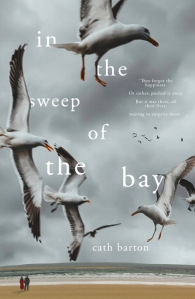 Susan put this on my radar and I bought it in publisher Louise Walters Books’ closing-down sale. Set in Morecambe, this bittersweet story of a half-century marriage and the figures on its margins – co-workers, children, even strangers – is both ambitious and intimate. Ted and Rene Marshall marry in the 1950s and soon drift into drudgery and traditional gender roles; “They forgot the happiness. Or rather, they pushed it away.” While Ted becomes a celebrated ceramics designer in the family company, Rene stagnates at home. It is not so much suspected infidelity as simply taking each other for granted that threatens their relationship. Barton moves through the decades and varies the perspective, letting us hear from one of the Marshalls’ daughters and giving kind attention to a gay couple. Strictly Come Dancing fans and those familiar with the northwest might take particular pleasure, but I enjoyed this quiet book reminiscent of Anne Tyler’s French Braid and (though less political) Jonathan Coe’s Bournville. (New purchase) [104 pages]
The Visitor by Maeve Brennan (2000)
 This posthumous novella was written in the 1940s but never published in Brennan’s lifetime. From Dublin, she was a longtime New Yorker staff member and wrote acclaimed short stories. After her mother’s death, Anastasia King travels from Paris, where the two set up residence after leaving her father, to Ireland to stay in the family home with her grandmother. Anastasia considers it a return, a homecoming, but her spiteful grandmother makes it clear that she is an unwelcome interloper. Mrs King can’t forgive the wrong done to her son, and so won’t countenance Anastasia’s plan to repatriate her mother’s remains. Rejection and despair eat away at Anastasia’s mental health (“She saw the miserable gate of her defeat already open ahead. There only remained for her to come up to it and pass through it and be done with it”) but she pulls herself together for an act of defiance. Most affecting for me was a scene in which we learn that Anastasia is so absorbed in her own drama that she does not fulfill the simple last wish of a dying friend. This brought to mind James Joyce’s The Dead. (Secondhand purchase – The Bookshop, Wigtown) [81 pages]
Bear by Marian Engel (1976)
 If you’ve heard of this, it’ll be for the fact that the main character – Lou, a librarian sent to archive the holdings of an octagonal house on an island one summer – has sex with a bear. That makes it sound much more repulsive and/or titillating than it actually is. The further I read the more I started to think of it as an allegory for women’s awakening; perhaps the strategy inspired Melissa Broder’s The Pisces (stuffed full of sex with a merman). “I have an odd sense of being reborn,” Lou writes to her boss, the Institute director, with whom she’d been having an affair. The bear lives in an outbuilding and at first Lou is indifferent, only feeding him as necessary. Then he becomes a friend, joining her for swims. Then he comes into the house. Bestiality is a taboo for a reason, but what mostly bothers me is the lack of mutuality, the sense of taking advantage. I’m also wary of stories in which animals have a primarily instrumental or metaphorical role. Still, this was a solid read, offbeat and nearly as shocking today as when it first appeared. (Secondhand purchase online) [167 pages]
So Late in the Day by Claire Keegan (2023)
 Several of us reviewed this for #NovNov though unsure it counts: in the UK the title story (originally for the New Yorker) was published in a standalone volume by Faber, while the U.S. release includes two additional earlier stories; I read the latter. The title story has Cathal spending what should have been his wedding weekend moping about Sabine calling off their engagement at the last minute. It’s no mystery why she did: his misogyny, though not overt, runs deep, most evident in the terms in which he thinks about women. And where did he learn it? From his father. (“The Long and Painful Death” is from Keegan’s second collection, Walk the Blue Fields, and concerns a woman on a writing residency at an author’s historic house in Ireland. She makes a stand for her own work by refusing to cede place to an entitled male scholar. The final story is “Antarctica,” the lead story in that 1999 volume and a really terrific one I’d already experienced before. It’s as dark and surprising as an early Ian McEwan novel.) Keegan proves, as ever, to be a master at portraying emotions and relationships, but the one story is admittedly slight on its own, and its point obvious. (Read via Edelweiss) [64 pages]
Swallowing Geography by Deborah Levy (1993)
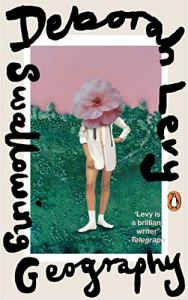 “She is Europe’s eerie child, and she is part of the storm.” J.K. is a young woman who totes her typewriter around different European locations, sleeps with various boyfriends, hears strangers’ stories, and so on. Many of the people she meets are only designated by an initial. By contrast, the most fully realized character is her mother, Lillian Strauss. The chapters feel unconnected and the encounters within them random, building to nothing. Though a bit like Crudo, this has very little detail to latch onto and so was pretentious in its opacity. I’ve generally gotten on much better with Levy’s nonfiction (see below) than her fiction. This, along with the Keegan (above), was my chosen train entertainment for the Booker Prize evening. I got so little out of it that it seemed like wasted reading time. Here’s a decent excerpted passage: “The arrogance of metaphor when facts save people’s lives. The succour of metaphor when facts inadequately describe people’s lives.” (Public library) [83 pages]
Nonfiction:
Starting with two from the Bloomsbury Object Lessons series, a great source of short monographs. These have been among my favourites so far.
Grave by Allison C. Meier (2023)
 Meier is a cemetery tour guide in Brooklyn, where she lives. She surveys American burial customs in particular, noting the lack of respect for Black and Native American burial grounds, the Civil War-era history of embalming, the increasing popularity of cremation, and the rise of garden cemeteries such as Mount Auburn in Cambridge, Massachusetts, which can serve as wildlife havens. The mass casualties and fear of infection associated with Covid-19 brought back memories of the AIDS epidemic, especially for those in New York City. Meier travels to a wide range of resting places, from potter’s fields for unclaimed bodies to the most manicured cemeteries. She also talks about newer options such as green burial, body composting, and the many memorial objects ashes can be turned into. I’m a dedicated reader of books about death and so found this fascinating, with the perfect respectful and just-shy-of-melancholy tone. It’s political and philosophical in equal measures. (Read via NetGalley) [168 pages]
Pregnancy Test by Karen Weingarten (2023)
 Laboratory pregnancy tests have been available since the 1930s and home pregnancy tests – the focus here – since the 1970s. All of them work by testing urine for the hormone hCG (human chorionic gonadotropin). What is truly wild is that pregnancy used to be verifiable only with laboratory animals – female mice and rabbits had to be sacrificed to see if their ovaries had swelled after the injection of a woman’s urine; later, female Xenopus toads were found to lay eggs in response, so didn’t need to be killed. Home pregnancy kits were controversial and available in Canada before the USA because it was thought that they could be unreliable or that they would encourage early abortions. Weingarten brings together the history, laypeople-friendly science, and cultural representations (taking a pregnancy test is excellent TV shorthand) in a readable narrative and makes a clear feminist statement: “the home pregnancy test gave back to women what should have always been theirs: first-hand knowledge about how their bodies worked” and thus “had the potential to upend a paternalistic culture.” (Read via NetGalley) [160 pages]
And from a different Bloomsbury series for monographs about seminal albums, 33 1/3:
Jesus Freak by Will Stockton and D. Gilson (2019)
 The dc Talk album Jesus Freak (1995) is the first CD I ever owned. My best friend and I listened to it (along with Bloom by Audio Adrenaline and Take Me to Your Leader by Newsboys) so many times that we knew every word and note by heart. So it’s hard for me to be objective rather than nostalgic; I was intrigued to see what two secular academics would have to say. Crucially, they were teenage dc Talk fans, now ex-Evangelicals and homosexual partners. As English professors, their approach is to spot musical influences (Nirvana on the title track; R&B and gospel elsewhere), critically analyse lyrics (with “Colored People” proving problematic for its “neoliberal multiculturalism and its potential for post-racial utopianism”), and put a queer spin on things. For those who don’t know, dc Talk were essentially a boy band with three singers, one Black and two white – one of these a rapper. Stockton and Gilson chronicle the confusion of living with a same-sex attraction they couldn’t express as teens, and cheekily suggest there may have been something going on between dc Talk members Toby McKeehan and Michael Tait, who were roommates at Liberty University and apparently dismantled their bunk beds so they could sleep side by side. Hmmm! I was interested enough in the subject matter to overlook the humanities jargon. (Birthday gift from my wish list last year) [132 pages]
And the rest:
Fifty Days of Solitude by Doris Grumbach (1994)
 Grumbach died last year at age 104. This was my third of her books; I read two previous memoirs, Extra Innings and The Presence of Absence, when they were brought back into print as Open Road Media e-books. I knew of Grumbach through her association with May Sarton, and the two in fact had a lot in common, including lesbianism, living in Maine and writing about older age. I was expecting something on a par with Sarton’s Journal of a Solitude, one of my favourite books, but this fell short in comparison. Grumbach spent a month and a half alone in Maine during the winter of 1993 while her partner, Sybil, was away amassing stock for their bookstore. The book is a collection of unconnected meditations about nature, the cold, creativity and so on. She finds herself writing fiction so the characters can keep her company, and notes “how much more I was aware of my vices.” Although she tries to avoid the news, word reaches her of acquaintances’ demises, and she recalls the recent death from AIDS of a young local man. Amusingly, she rereads Bear (see above) during the 50 days. Some atmosphere, but low on insight. (Secondhand purchase – Wonder Book and Video, Hagerstown) [114 pages]
Things I Don’t Want to Know: On Writing by Deborah Levy (2013)
 It feels like I made an error by reading Levy’s “Living Autobiography,” out of order. I picked up the middle volume of the trilogy, The Cost of Living, for #NovNov in 2021 and it ended up being my favourite nonfiction read of that year. I then read part of the third book, Real Estate, last year but set it aside. And now I’ve read the first because it was the shortest. It’s loosely structured around George Orwell’s four reasons for writing: political purpose, historical impulse, sheer egoism and aesthetic enthusiasm. The frame story has her flying to Majorca at a time when she was struggling with her mental health. She vaguely follows in the footsteps of George Sand and then pauses to tell a Chinese shopkeeper the story of her upbringing in apartheid-era South Africa and the family’s move to London. Although I generally admire recreations of childhood and there are some strong pen portraits of minor characters, overall there was little that captivated me here and I was too aware of the writerly shaping. (Secondhand purchase – 2nd & Charles, Hagerstown) [111 pages]
The Private Life of the Hare by John Lewis-Stempel (2019)
 I reviewed a couple of JLS’s species-specific monographs for #NovNov in 2018: The Secret Life of the Owl and The Glorious Life of the Oak. There’s a similar range of material here: anatomy, natural history and cultural significance, including in poetry. There are chapters on hunting, the hare as food, and its appearances in myth and religion. I was engaged about half of the time; I tended to skip over longer excerpts from historical documents. The reliance on lengthy quotations and use of bullet points make it feel like a half-finished research project, with the kind of information you could find anywhere else. Too many of his recent books have felt like they were rushed into print. I would only pick this up if you’re particularly fascinated by hares. (Public library) [99 pages]
The Cancer Journals by Audre Lorde (1980)
 I’ve read so many cancer stories that it takes a lot to make one stand out. This feels like a random collection of documents rather than a coherent memoir. One of the three essays was originally a speech, and two were previously printed in another of her books. Lorde was diagnosed with breast cancer in 1978 and had a mastectomy. A Black lesbian feminist, she resisted wearing prostheses and spoke up about the potential environmental causes of breast cancer that need to be addressed in research (“I may be a casualty in the cosmic war against radiation, animal fat, air pollution, McDonald’s hamburgers and Red Dye No. 2”). Her actual journal entries make up little of the text, which is for the best because fear and pain can bring out the cliches in us – but occasionally a great quote like “if bitterness were a whetstone, I could be sharp as grief.” Another favourite line: “Pain does not mellow you, nor does it ennoble, in my experience.” I’m keen to read her memoir Zami. (University library) [77 pages]
A Month in Siena by Hisham Matar (2019)
 I’d not read Matar before I spotted this art book-cum-memoir and thought, why not. A Libyan American novelist who lives in London, Matar had long been fascinated by the Sienese School of painting (13th to 15th centuries), many of whose artists depicted biblical scenes or religious allegories – even though he’s not a Christian. He spent a month in Italy immersed in the art he loves; there are 15 colour reproductions here. His explications of art history are generalist enough to be accessible to all readers, but I engaged more with the glimpses into his own life. For instance, he meets a fellow Arabic speaker and they quickly form a brotherly attachment, and a Paradise scene gives him fanciful hope of being reunited with his missing father – the subject of his Folio Prize-winning memoir The Return, which I’d like to read soon. His prose is beautiful as he reflects on history, death and how memories occupy ‘rooms’ in the imagination. A little more interest in the art would have helped, though. (Little Free Library) [118 pages]
A Childhood in Scotland by Christian Miller (1981)
 I had high hopes for this childhood memoir that originally appeared in the New Yorker and was reprinted as part of the Canongate Classics series. But I soon resorted to skimming as her recollections of her shabby upper-class upbringing in a Highlands castle are full of page after page of description and dull recounting of events, with few scenes and little dialogue. This would be of high historical value for someone wanting to understand daily life for a certain fraction of society at the time, however. When Miller’s father died, she was only 10 and they had to leave the castle. I was intrigued to learn from her bio that she lived in Newbury for a time. (Secondhand purchase – Barter Books) [98 pages]
Here and Now: Living in the Spirit by Henri J.M. Nouwen (1994)
 This collection of micro-essays under themed headings like “Living in the Present” and “Suffering” was a perfect introduction to Nouwen’s life and theology. The Dutch Catholic priest lived in an Ontario community serving the physically and mentally disabled, and died of a heart attack just two years after this was published. I marked out many reassuring or thought-provoking passages. Here’s a good pre-Christmas one:
“God became a little child in the midst of a violent world. Are we surprised by joy or do we keep saying: ‘How nice and sweet, but the reality is different.’ What if the child reveals to us what is really real?”
I was taken by the ideas that the life of compassion is one of “downward mobility” and that inner freedom only comes when you don’t judge anyone. He encourages readers to not live in a past of shame and regret, but to be grateful for opportunities for God’s mercy and guidance. Very peaceful and readable; a good bedside devotional book. (Free from my stepfather) [175 pages] 
De Profundis by Oscar Wilde (1897)
 My only reread for the month. Wilde wrote this from prison. No doubt he had a miserable time there, but keeping in mind that he was a flamboyant dramatist and had an eye to this being published someday, this time around I found it more exaggerated and self-pitying than I had before. “Suffering is one very long moment. … Where there is sorrow there is holy ground,” he writes, stating that he has found “harmony with the wounded, broken, and great heart of the world.” He says he’s not going to try to defend his behaviour … but what is this but one extended apologia and humble brag, likening himself to a Greek tragic hero (“The gods had given me almost everything. But I let myself be lured into long spells of senseless and sensual ease. I amused myself with being a flâneur, a dandy, a man of fashion”) and even to Christ in his individuality as well as in his suffering at the hands of those who don’t understand him (the scene where he was pilloried consciously mimics a crucifixion tableau). As a literary document, it’s extraordinary, but I didn’t buy his sincerity. He feigns remorse but, really, wasn’t sorry about anything, merely sorry he got caught. (Free from a neighbour) [151 pages]
Original rating (2011):
Rating now:
Average:
Which of these have you read?
And which do you want to read? (You may choose no more than 4!)
In total, I read 27 novellas this November – close to my 2021 record of 29. The highlights included the Barton, Meier, Nouwen and Weingarten above plus Train Dreams by Denis Johnson and Western Lane by Chetna Maroo, but the best of the lot was Absolutely and Forever by Rose Tremain.
Coming right up, final statistics on the month’s participants and posts!
#NovNov23 Buddy Reads Reviewed: Western Lane & A Room of One’s Own
This year we set two buddy reads for Novellas in November: one contemporary work of fiction and one classic work of short nonfiction. Do let us know if you’ve been reading them and what you think!
 A version of the below review, submitted via their Facebook book club group, won me a pair of tickets to this year’s Booker Prize ceremony!
You may also wish to have a look at the excellent reading guide on the Booker website.
Western Lane by Chetna Maroo (2023)
In the same way that you don’t have to love baseball or video games to enjoy The Art of Fielding or Tomorrow, and Tomorrow, and Tomorrow, it’s easy to warm to Western Lane even if you’ve never played squash. Debut author Chetna Maroo assumes reader unfamiliarity with her first line: “I don’t know if you have ever stood in the middle of a squash court – on the T – and listened to what is going on next door.” As Gopi looks back to the year that she was eleven – the year after she lost her mother – what she remembers is the echo of a ball hitting a wall. That first year of mourning, which was filled with compulsive squash training, reverberates just as strongly in her memory.
To make it through, Pa tells his three daughters, “You have to address yourself to something.” That something will be their squash hobby, he decides, but ramped up to the level of an obsession. Having lost my own mother just over a year ago, I could recognize in these characters the strategies people adopt to deflect grief. Keep busy. Go numb. Ignore your feelings. Get angry for no particular reason. Even within this small family, there’s a range of responses. Pa lets his electrician business slip; fifteen-year-old Mona develops a mild shopping addiction; thirteen-year-old Khush believes she still sees their mother.
Preparing for an upcoming squash tournament gives Gopi a goal to work towards, and a crush on thirteen-year-old Ged brightens long practice days. Maroo emphasizes the solitude and concentration required, alternating with the fleeting elation of performance. Squash players hover near the central T, from which most shots can be reached. Maroo, too, sticks close to the heart. Like all the best novellas, hers maintains a laser focus on character and situation. A child point-of-view can sound precocious or condescending. That is by no means the case here. Gopi’s perspective is convincing for her age at the time, yet hindsight is the prism that reveals the spectrum of intense emotions she experienced: sadness, estrangement from her immediate family, and rejection on the one hand; first love and anticipation on the other.

This offbeat, delicate coming-of-age story eschews the literary fireworks of other Booker Prize nominees. In place of stylistic flair is the sense that each word and detail has been carefully placed. Less is more. Rather than the dark horse in the race, I’d call it the reader favourite: accessible but with hidden depths. There are cinematic scenes where little happens outwardly yet what is unspoken between the characters – the gazes and tension – is freighted with meaning. (I could see this becoming a successful indie film.)
she and my uncle stood outside under the balcony of my bedroom until much later, and I knelt above them with my blanket around me. The three of us looked out at the black shapes of the rose arbour, the trees, the railway track. Stars appeared and disappeared. My knees began to ache. Below me, Aunt Ranjan wanted badly to ask Uncle Pavan how things stood now and Uncle Pavan wanted to tell her, but she wasn’t sure how to ask and he wasn’t sure how to begin. Soon, I thought, it would be morning, and night, and morning again, and it wouldn’t matter, except to someone watching from so far off that they couldn’t know yet.
The novella is illuminating on what is expected of young Gujarati women in England; on sisterhood and a bereaved family’s dynamic; but especially on what it is like to feel sealed off from life by grief. “I think there’s a glass court inside me,” Gopi says, but over the course of one quietly momentous year, the walls start to crack. (Public library) [161 pages] 
A Room of One’s Own by Virginia Woolf (1929)
Here’s the thing about Virginia Woolf. I know she’s one of the world greats. I fully acknowledge that her books are incredibly important in the literary canon. But I find her unreadable. The last time I had any success was when I was in college. Orlando and To the Lighthouse both blew me away half a lifetime ago, but I’ve not been able to reread them or force my way through anything else (and I have tried: Mrs Dalloway, The Voyage Out and The Waves). In the meantime, I’ve read several novels about Woolf and multiple Woolf-adjacent reads (ones by Vita Sackville-West, or referencing the Bloomsbury Group). So I thought a book-length essay based on lectures she gave at Cambridge’s women’s colleges in 1928 would be the perfect point of attack.
Hmm. Still unreadable. Oh well!
 In the end I skimmed A Room of One’s Own for its main ideas – already familiar to me, as was some of the language – but its argumentation, reliant as much on her own made-up examples as on literary history, failed to move me. Woolf alternately imagines herself as Mary Carmichael, a lady novelist trawling an Oxbridge library and the British Museum for her forebears; and as a reader of Carmichael’s disappointingly pedestrian Life’s Adventure. If only Carmichael had had the benefit of time and money, Woolf muses, she might have been good. As it is, it would take her another century to develop her craft. She also posits a sister for Shakespeare and probes the social conditions that made her authorship impossible.
This is important to encounter as an early feminist document, but I would have been okay with reading just the excerpts I’d already come across.
Some favourite lines:
“I thought how unpleasant it is to be locked out; and I thought how it is worse perhaps to be locked in”
“A very queer, composite being thus emerges. Imaginatively she [the woman in literature] is of the highest importance; practically she is completely insignificant. She pervades poetry from cover to cover; she is all but absent from history.”
“Poetry depends upon intellectual freedom. And women have always been poor, not for two hundred years merely, but from the beginning of time. Women have had less intellectual freedom than the sons of Athenian slaves. Women, then, have not had a dog’s chance of writing poetry. That is why I have laid so much stress on money and a room of one’s own.”
(Secondhand purchase many years ago) [114 pages]

20 Books of Summer, 1: Small Fires by Rebecca May Johnson
So far I’m sticking to my vague plan and reading foodie lit, like it’s 2020 all over again. At the same time, I’m tackling a few books that I received as review copies last year but that have been on my set-aside pile for longer than I’d like to admit. Later in the summer I’ll branch out from the food theme, but always focusing on books I own and have been meaning to read.
Without further ado, my first of 20 Books of Summer:
Small Fires: An Epic in the Kitchen by Rebecca May Johnson (2022)
“I tried to write about cooking, but I wrote a hot red epic.”
Johnson’s debut is a hybrid work, as much a feminist essay collection as it is a memoir about the role that cooking has played in her life. She chooses to interpret apron strings erotically, such that the preparation of meals is not gendered drudgery or oppression but an act of self-care and love for others.
“The kitchen is a space for theorizing!”
While completing a PhD on the reception of The Odyssey and its translation history, Johnson began to think about dishes as translations, or even performances, of a recipe. In two central chapters, “Hot Red Epic” and “Tracing the Sauce Text,” she reckons that she has cooked the same fresh Italian tomato sauce, with nearly infinite small variations, a thousand times over ten years. Where she lived, what she looked like, who she cooked for: so many external details changed, but this most improvisational of dishes stayed the same.

Just a peek at the authors cited in her bibliography – not just the expected subjects like MFK Fisher and Nigella Lawson but also Goethe, Lorde, Plath, Stein, Weil, Winnicott – gives you an idea of how wide-ranging and academically oriented the book is, delving into the psychology of cooking and eating. Oh yes, there will be Freudian sausages. There are also her own recipes, of a sort: one is a personal prose piece (“Bad News Potatoes”) and another is in poetic notation, beginning “I made Mrs Beeton’s / recipe for frying sausages”.
“The recipe is an epic without a hero.”
I particularly enjoyed the essay “Again and Again, There Is That You,” in which Johnson determinedly if chaotically cooks a three-course meal for someone who might be a lover. The mixture of genres and styles is inventive, but a bit strange; my taste would call for more autobiographical material and less theory. The most similar work I’ve read is Recipe by Lynn Z. Bloom, which likewise pulled in some seemingly off-topic strands. I’d be likely to recommend Small Fires to readers of Supper Club. 
With thanks to Pushkin Press for the free copy for review.

Literary Wives Club: The Harpy by Megan Hunter
(My fifth read with the Literary Wives online book club; see also Kay’s and Naomi’s reviews.)
Megan Hunter’s second novella, The Harpy (2020), treads familiar ground – a wife discovers evidence of her husband’s affair and questions everything about their life together – but somehow manages to feel fresh because of the mythological allusions and the hint of how female rage might reverse familial patterns of abuse.
Lucy Stevenson is a mother of two whose husband Jake works at a university. One day she opens a voicemail message on her phone from a David Holmes, saying that he thinks Jake is having an affair with his wife, Vanessa. Lucy vaguely remembers meeting the fiftysomething couple, colleagues of Jake’s, at the Christmas party she hosted the year before.
As further confirmation arrives and Lucy tries to carry on with everyday life (another Christmas party, a pirate-themed birthday party for their younger son), she feels herself transforming into a wrathful, ravenous creature – much like the harpies she was obsessed with as a child and as a Classics student before she gave up on her PhD.

Like the mythical harpy, Lucy administers punishment. At first, it’s something of a joke between her and Jake: he offers that she can ritually harm him three times. Twice it takes physical form; once it’s more about reputational damage. The third time, it goes farther than either of them expected. It’s clever how Hunter presents this formalized violence as an inversion of the domestic abuse of which Lucy’s mother was a victim.
Lucy also expresses anger at how women are objectified, and compares three female generations of her family in terms of how housewifely duties were embraced or rejected. She likens the grief she feels over her crumbling marriage to contractions or menstrual cramps. It’s overall a very female text, in the vein of A Ghost in the Throat. You feel that there’s a solidarity across time and space of wronged women getting their own back. I enjoyed this so much more than Hunter’s debut, The End We Start From. (Birthday gift from my wish list)
The main question we ask about the books we read for Literary Wives is:
What does this book say about wives or about the experience of being a wife?
“Marriage and motherhood are like death … no one comes back unchanged.”
So much in life can remain unspoken, even in a relationship as intimate as a marriage. What becomes routine can cover over any number of secrets; hurts can be harboured until they fuel revenge. Lucy has lost her separate identity outside of her family relationships and needs to claw back a sense of self.
I don’t know that this book said much that is original about infidelity, but I sympathized with Lucy’s predicament. The literary and magical touches obscure the facts of the ending, so it’s unclear whether she’ll stay with Jake or not. Because we’re mired in her perspective, it’s hard to see Jake or Vanessa clearly. Our only choice is to side with Lucy.
Next book: Sea Wife by Amity Gaige in September
Monsters: A Fan’s Dilemma by Claire Dederer
The question posed by Claire Dederer’s third hybrid work of memoir and cultural criticism might be stated thus: “Are we still allowed to enjoy the art made by horrible people?” You might be expecting a hard-line response – prescriptive rules for cancelling the array of sexual predators, drunks, abusers and abandoners (as well as lesser offenders) she profiles. Maybe you’ve avoided Monsters for fear of being chastened about your continuing love of Michael Jackson’s music or the Harry Potter series. I have good news: This book is as compassionate as it is incisive, and while there is plenty of outrage, there is also much nuance.
Dederer begins, in the wake of #MeToo, with film directors Roman Polanski and Woody Allen, setting herself the assignment of re-watching their masterpieces while bearing in mind their sexual crimes against underage women. In a later chapter she starts referring to this as “the stain,” a blemish we can’t ignore when we consider these artists’ work. Try as we might to recover prelapsarian innocence, it’s impossible to forget allegations of misconduct when watching The Cosby Show or listening to Miles Davis’s Kind of Blue. Nor is it hard to find racism and anti-Semitism in the attitude of many a mid-20th-century auteur.

Does “genius” excuse all? Dederer asks this in relation to Picasso and Hemingway, then counteracts that with a fascinating chapter about Lolita – as far as we know, Nabokov never engaged in, or even contemplated, sex with minors, but he was able to imagine himself into the mind of Humbert Humbert, an unforgettable antihero who did. “The great writer knows that even the blackest thoughts are ordinary,” she writes. Although she doesn’t think Lolita could get published today, she affirms it as a devastating picture of stolen childhood.
“The death of the author” was a popular literary theory in the 1960s that now feels passé. As Dederer notes, in the Internet age we are bombarded with biographical information about favourite writers and musicians. “The knowledge we have about celebrities makes us feel we know them,” and their bad “behavior disrupts our ability to apprehend the work on its own terms.” This is not logical, she emphasizes, but instinctive and personal. Some critics (i.e., white men) might be wont to dismiss such emotional responses as feminine. Super-fans are indeed more likely to be women or teenagers, and heartbreak over an idol’s misdoings is bound up with the adoration, and sense of ownership, of the work. She talks with many people who express loyalty “even after everything” – love persists despite it all.

U.S. cover
In a book largely built around biographical snapshots and philosophical questions, Dederer’s struggle to make space for herself as a female intellectual, and write a great book, is a valuable seam. I particularly appreciated her deliberations on the critic’s task. She insists that, much as we might claim authority for our views, subjectivity is unavoidable. “We are all bound by our perspectives,” she asserts; “consuming a piece of art is two biographies meeting: the biography of the artist, which might disrupt the consuming of the art, and the biography of the audience member, which might shape the viewing of the art.”
While men’s sexual predation is a major focus, the book also weighs other sorts of failings: abandonment of children and alcoholism. The “Abandoning Mothers” chapter posits that in the public eye this is the worst sin that a woman can commit. Her two main examples are Doris Lessing and Joni Mitchell, but there are many others she could have mentioned. Even giving more mental energy to work than to childrearing is frowned upon. Dederer wonders if she has been a monster in some ways, and confronts her own drinking problem.

A painting by Cathy Lomax of girls at a Bay City Rollers concert.
Here especially, the project reminded me most of books by Olivia Laing: the same mixture of biographical interrogation, feminist cultural criticism, and memoir as in The Trip to Echo Spring and Everybody; some subjects even overlap (Raymond Carver in the former; Ana Mendieta and Valerie Solanas in the latter – though, unfortunately, these two chapters by Dederer were the ones I thought least necessary; they could easily have been omitted without weakening the argument in any way). I also thought of how Lara Feigel’s Free Woman examines her own life through the prism of Lessing’s.
The danger of being quick to censure any misbehaving artist, Dederer suggests, is a corresponding self-righteousness that deflects from our own faults and hypocrisy. If we are the enlightened ones, we can look back at the casual racism and daily acts of violence of other centuries and say: “1. These people were simply products of their time. 2. We’re better now.” But are we? Dederer redirects all the book’s probing back at us, the audience. If we’re honest about ourselves, and the people we love, we will admit that we are all human and so capable of monstrous acts.
Dederer’s prose is forthright and droll; lucid even when tackling thorny issues. She has succeeded in writing the important book she intended to. Erudite, empathetic and engaging from start to finish, this is one of the essential reads of 2023. 
With thanks to Sceptre for the free copy for review.
Buy Monsters from Bookshop.org [affiliate link]
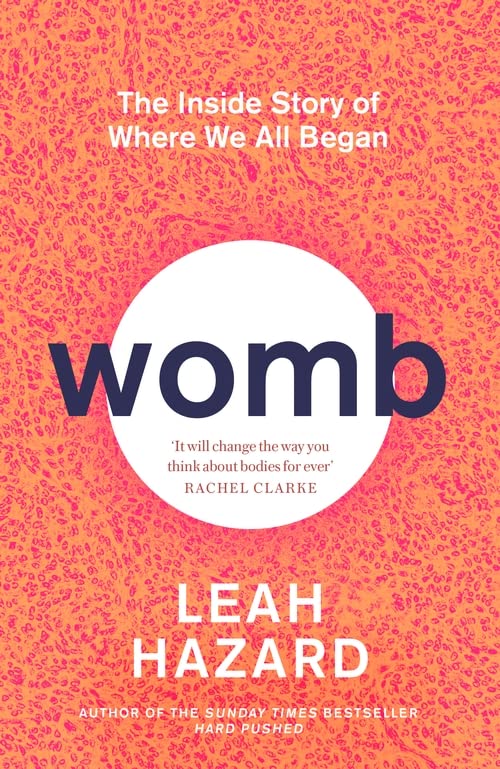
Womb: The Inside Story of Where We All Began by Leah Hazard
Back in 2019, I reviewed Hard Pushed, Leah Hazard’s memoir of being a midwife in a busy Glasgow hospital. Here she widens the view to create a wide-ranging and accessible study of the uterus. As magisterial in its field as Siddhartha Mukherjee’s The Emperor of All Maladies was for cancer, it might have shared that book’s ‘A Biography’ subtitle and casts a feminist eye over history and future alike. Blending medical knowledge and cultural commentary, it cannot fail to have both personal and political significance for readers of any gender.
The thematic structure of the chapters also functions as a roughly chronological tour of how life with a uterus might proceed: menstruation, conception, pregnancy, labour, caesarean section, ongoing health issues, menopause. With much of Hazard’s research taking place at the height of the pandemic, she had to conduct many of her interviews online. She consults mostly female experts and patients, meeting people with surprisingly different opinions. For instance, she encounters opposing views on menstruation from American professors: one who believes it is now optional, a handicap – for teenagers, especially – and that the body was never meant to endure 350–400 periods compared to the historical average of 100 (based on shorter lifespan plus more frequent pregnancy and breastfeeding); versus another who is concerned about the cognitive effects of constant hormonal intervention.
The book forcefully conveys how gynaecological wellness is threatened by a lack of knowledge, sexist stereotypes, and devaluation of certain wombs. Even today, little is known about the placenta, she reports, so research involves creating organoids from stem cells that act like it would. The use of emotionally damaging language like “irritable/hostile uterus,” “incompetent cervix” and “too posh to push” is a major problem. The sobering chapter on “Reprocide” elaborates on enduring threats to reproductive freedom, such as non-consensual sterilization of women in detention centres and the revoking of abortion rights. And even routine problems like endometriosis and fibroids disproportionately affect women of colour.
Hazard has taken pains to adopt an inclusive perspective, referring to “menstruators” or “people with a uterus” as often as to women and mentioning health concerns specific to transgender people. She is also careful to depict the sheer variety of experience: age at first menses, subjective reactions to labour or hysterectomy, severity of menopause symptoms, and so on. Where events have potentially traumatic effects, she presents alternatives, such as a “gentle” or “natural” Caesarean, which is less clinical and more empowering. The prose is pitched at a good level for laypeople: conversational, and never bombarding with information. That I have not had children myself was no obstruction to my enjoyment of the book. It is full of fascinating content that is relevant to all (as in the Harry and Chris solidarity-themed song “Womb with a View,” which has the repeated line “we’ve all been in a womb”). 
Here are just some of the mind-blowing facts I learned:
- Infant girls bleed in what as known as pseudomenses.
- Research is underway to regularly test menstrual effluent for endometriosis, etc. and the uterine microbiome for signs of cancer.
- The cervix can store sperm and release it later for optimal fertilization.
- Caesarean section and induction with oxytocin now occur in one-third of pregnancies, despite the WHO recommendation of no more than 10% for the former and the danger of postpartum haemorrhage with the latter.
- After childbirth, a discharge called lochia continues for 4–6 weeks.
- There have been successful uterine transplants from living donors and cadavers.
- Artificial wombs (“biobags”) have been used for other mammals and are in development; Hazard cautions about possible misogynistic exploitation.
With thanks to Virago Press for the free copy for review.
Four for #WITMonth: Jansson, Lamarche, Lunde and Vogt
I’ve managed four novels for this year’s Women in Translation month: a nostalgic, bittersweet picture of island summers poised between childhood and old age; a brief, impressionistic account of domestic violence and rape; the third in a series looking at how climate change and species loss reverberate amid family situations; and a visceral meditation on women’s bodies and relationships. Two of these were review copies from the recently launched Héloïse Press, which “champions world-wide female talent”.

The Summer Book by Tove Jansson (1972; 1974)
[Translated from the Swedish by Thomas Teal]
It was just the same long summer, always, and everything lived and grew at its own pace.
 This was only the second time I’ve read one of Jansson’s books aimed at adults (as opposed to five from the Moomins series). Whereas A Winter Book didn’t stand out to me when I read it in 2012 – though I will try it again this winter, having acquired a free copy from a neighbour – this was a lovely read, so evocative of childhood and of languid summers free from obligation. For two months, Sophia and Grandmother go for mini adventures on their tiny Finnish island. Each chapter is almost like a stand-alone story in a linked collection. They make believe and welcome visitors and weather storms and poke their noses into a new neighbour’s unwanted construction.
Six-year-old Sophia, based on Jansson’s niece of the same name, is precocious and opinionated, liable to change her mind in an instant. In “The Cat,” one of my favourite stand-alone bits, she’s fed up with their half-feral pet who kills lots of birds and swaps him for a friend’s soppy lap cat, but then regrets it. She’s learning that logic and emotion sometimes contradict each other, which becomes clearer as she peppers Grandmother with questions about religion and superstition.
As is common to Jansson’s books, there’s a melancholy undercurrent here.
Everything was fine, and yet everything was overshadowed by a great sadness. It was August, and the weather was sometimes stormy and sometimes nice, but for Grandmother, no matter what happened, it was only time on top of time, since everything is vanity and a chasing after the wind.
Sophia’s mother died, and although her grandmother has the greater presence, Papa is also around, dealing with practicalities in the background. Death stalks around the edges, reminding Grandmother of her mortality through bouts of vertigo that have her grabbing for her heart medication. On just the second page we have this memento mori:
“When are you going to die?” the child asked.
And Grandmother answered, “Soon. But that is not the least concern of yours.”
And so it doesn’t feel like our concern either; the focus is on the now, on these beautiful little moments of connection across the generations – like in “Playing Venice,” when Grandmother stays up all night rebuilding Sophia’s model city that was washed away by the rain. (Public library)
The Memory of the Air by Caroline Lamarche (2014; 2022)
[Winner of an English PEN Award; translated from the French by Katherine Gregor]
 In a hypnotic monologue, a woman tells of her time with a violent partner (the man before, or “Manfore”) who thinks her reaction to him is disproportionate and all due to the fact that she has never processed being raped two decades ago. When she goes in for a routine breast scan, she shows the doctor her bruised arm, wanting there to be a definitive record of what she’s gone through. It’s a bracing echo of the moment she walked into a police station to report the sexual assault (and oh but the questions the male inspector asked her are horrible).
The novella opens with an image that returns in dreams but is almost more a future memory of what might have been: “I went down into a ravine and, at the bottom, found a dead woman. She was lying in a shroud, on a carpet of fallen leaves.” I read this in one sitting – er, yoga session – and it has stayed in my mind in intense flashes like that and the flounce of her red dress on the summer day that turned into a nightmare. At an intense 70 pages, this reminded me of Annie Ernaux’s concise autofiction (I’ve reviewed Happening and I Remain in Darkness). An introduction by Dr Dominique Carlini-Versini contextualizes the work by considering the treatment of rape in contemporary French women’s writing.
The Memory of the Air will be published on 26 September. With thanks to Héloïse Press for the proof copy for review.
The Last Wild Horses by Maja Lunde (2019; 2022)
[Translated from the Norwegian by Diane Oatley]
The third in Lunde’s “Climate Quartet,” with its recurring elements of migration, shortages and environmental collapse. Always, though, the overall theme is parent–child relationships and the love that might be the only thing that keeps us going in the face of unspeakable challenges. Here she returns to the tripartite structure of The History of Bees (much my favourite of the three): a historical strand, a near-contemporary one, and a dystopian future story line. The link between the three is Przewalski’s horses (aka takhi).
 In the early 1880s, Mikhail Alexandrovich Kovrov, assistant director of St. Petersburg Zoo, is brought the hide and skull of an ancient horse species assumed extinct. Although a timorous man who still lives with his mother, he becomes part of an expedition to Mongolia to bring back live specimens. In 1992, Karin, who has been obsessed with Przewalski’s horses since encountering them as a child in Nazi Germany, spearheads a mission to return the takhi to Mongolia and set up a breeding population. With her is her son Matthias, tentatively sober after years of drug abuse. In 2064 Norway, Eva and her daughter Isa are caretakers of a decaying wildlife park that houses a couple of wild horses. When a climate migrant comes to stay with them and the electricity goes off once and for all, they have to decide what comes next. This future story line engaged me the most.
I appreciated some aspects: queer and middle-aged romances, the return of a character from The End of the Ocean, the consideration across all three plots of what makes a good mother. However, the horses seemed neither here nor there. There are also many, many animal deaths. Perhaps an unsentimental attitude is necessary to reflect past and future values, and the apparent cruelty of natural processes, but it limits the book’s appeal to animal lovers. Maybe the tone fits the Norwegian prose, which the translator describes as lean.
The fourth book of the quartet, publishing in Norway next month, is called something like The Dream of a Tree; a focus on trees would be a draw for me. After the disappointment of Books 2 and 3, I’m unsure whether I want to bother with the final volume, but it makes sense to do so, if only to grasp Lunde’s full vision. (Public library)
What Concerns Us by Laura Vogt (2020; 2022)
[Translated from the German by Caroline Waight]
 Vogt’s Swiss-set second novel is about a tight-knit matriarchal family whose threads have started to unravel. For Rahel, motherhood has taken her away from her vocation as a singer. Boris stepped up when she was pregnant with another man’s baby and has been as much of a father to Rico as to Leni, the daughter they had together afterwards. But now Rahel’s postnatal depression is stopping her from bonding with the new baby, and she isn’t sure this quartet is going to make it in the long term.
Meanwhile, Rahel’s sister Fenna knows she’s pregnant but refuses a doctor’s care. When she comes to stay with Rahel, she confides that the encounter with her partner, Luc, that led to conception was odd, rough; maybe not consensual. And all this time, the women’s mother, Verena, has been undergoing treatment for breast cancer. All three characters appear to be matter-of-factly bisexual; Rahel and Fenna’s father has long been out of the picture, replaced in Verena’s affections by Inge.
As I was reading, I kept thinking of the declaration running through A Ghost in the Throat by Doireann Ní Ghríofa: “This is a female text.” Vogt’s vision is all breasts and eggs, genitals actual and metaphorical. I loved the use of food in the novel: growing up, the girls cherished “silly nights” when their mother prepared an egg feast and paired it with a feminist lecture on reproduction. Late on, there’s a wonderful scene when the three main characters gorge on preserved foodstuffs from the cellar and share their secrets. (Their language is so sexually frank; would anyone really talk to their mother and siblings in that way?!) As in the Lunde, the main question is what it means to be a mother, but negotiating their relationships with men stretches the bonds of this feminine trio. One for fans of Rachel Cusk and Sally Rooney.
With thanks to Héloïse Press for the proof copy for review.
 Bookish Beck = Rebecca Foster. American transplant to England. Freelance proofreader and book reviewer.
 Bookish Beck