#NovNov25 Catch-Up: Dodge, Garner, O’Collins, Sagan and A. White
As promised, I’m catching up on five novella-length works I finished in November. In fiction, I have an odd duck of a family story, a piece of autofiction about caring for a friend with cancer, a record of an affair, and a tale of settling two new cats into home life in the 1950s. And in nonfiction, a short book about the religious approach to midlife crisis.
Fup by Jim Dodge (1983)
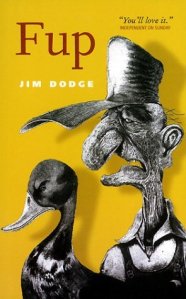 I’d never heard of this but picked it up because of my low-key project of reading books from my birth year. After his daughter died in a freak accident, Grandaddy Jake Santee adopted his grandson “Tiny.” With that touch of backstory dabbed in, we’re in the northern California hills in 1978 with grandfather and grandson – now 99 and 22, respectively. Tiny builds fences, while Grandaddy is famous for his incredibly strong, home-distilled whiskey, “Ol’ Death Whisper.” One day, Tiny rescues a filthy creature from a posthole where it’s been chased by their nemesis, Lockjaw the wild boar. It turns out to be a duckling that grows into a hen mallard named Fup Duck (it’s a spoonerism…) who eats so much she’s too heavy to fly. Grandaddy plans to continue drinking and gambling indefinitely, but the hunt for Lockjaw – who he thinks may be a reincarnation of his Native American friend, Seven Moons – breaks the household apart. This was very weird: it starts out a mixture of grit (those grotesque Harry Horse drawings!) and Homer Hickam schmaltz and then goes full Jonathan Livingston Seagull. (Secondhand – Community Furniture Project, Newbury) [89 pages]
The Spare Room by Helen Garner (2008)
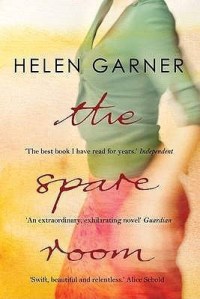 Who knew there was such a market for novels about helping a friend through cancer treatment? Or maybe it’s just that I love them so much I home right in on them. As a work of autofiction – the no-nonsense narrator, Helen, gives her old friend Nicola a place to stay in Melbourne for several weeks while she undergoes experimental procedures – this is most like What Are You Going Through by Sigrid Nunez (but I also had in mind Talk Before Sleep by Elizabeth Berg, We All Want Impossible Things by Catherine Newman, and Some Bright Nowhere by Ann Packer). Helen thinks The Theodore Institute peddles quack medicine, whereas Nicola is willing to shell out thousands of dollars for its coffee enemas and vitamin C infusions, even though they leave her terrifyingly fragile. Nicola is the only character who doesn’t acknowledge that her case is terminal. The pages turn effortlessly as Helen covers her frustration with Nicola, Nicola’s essential optimism, and the realities of living while dying. “Oh, I loved her for the way she made me laugh. She was the least self-important person I knew, the kindest, the least bitchy. I couldn’t imagine the world without her.” I’ll read more by Garner for sure. (Secondhand – Awesomebooks.com) [195 pages]
Second Journey: Spiritual Awareness and the Mid-Life Crisis by Gerald O’Collins SJ (1978; 1995)
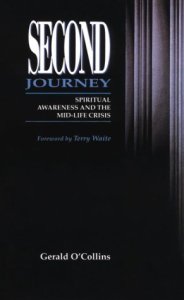 O’Collins, a Jesuit priest, sought a more constructive term than “midlife crisis” for the unease and difficult decisions that many face in their forties. He chooses instead the language of journeys, specifically one embarked upon because a previous way of life was no longer working. There are several types of triggers that O’Collins illustrates through brief case studies of famous individuals or anonymous acquaintances. The shift might be prompted by a sense of failure (John Wesley, Jimmy Carter), by literal exile (Dante), by falling in love (someone who left the priesthood to marry), by experiencing severe illness (John Henry Newman) or fighting in a war (Ignatius of Loyola), or simply by a longing for “something more” (Mother Teresa). But there are only two end points, O’Collins offers: a new place or situation; or a fresh appreciation of the old one – he quotes Eliot’s “to arrive where we started / And know the place for the first time.” This is practical and relatable, but light on actual advice. It also pales by comparison to Richard Rohr’s more recent work on spirituality in the different stages of life (especially in Falling Upward). (Free from a church member’s donations) [100 pages]
A Certain Smile by Françoise Sagan (1956)
[Translated from French by Irene Ash]
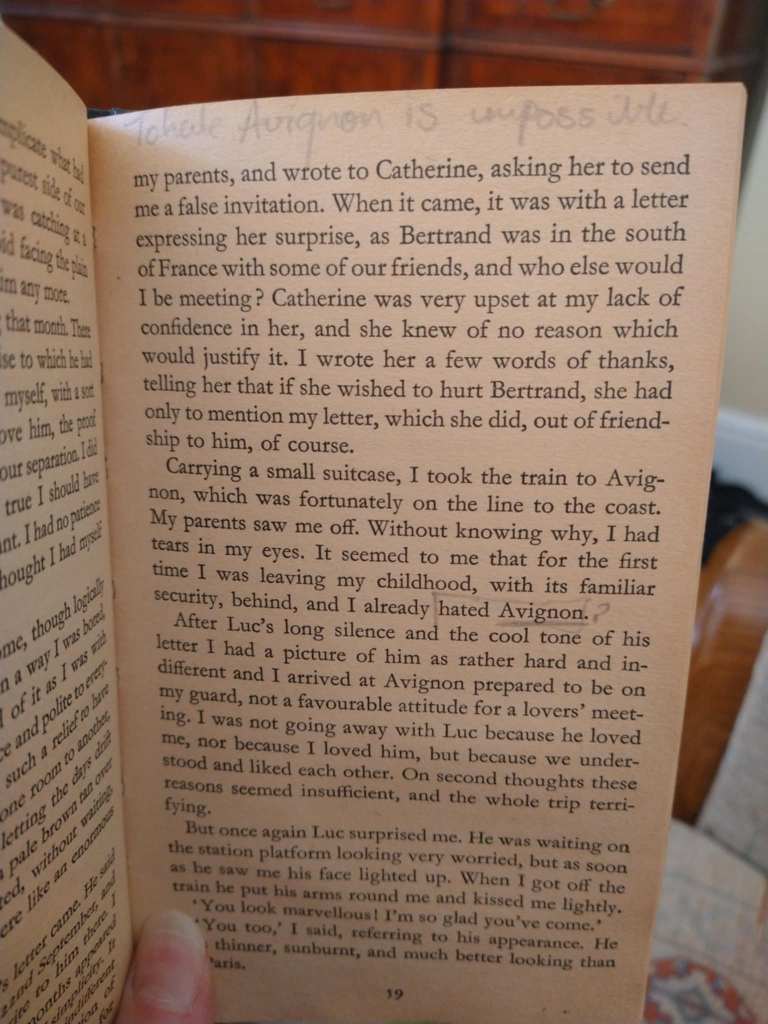
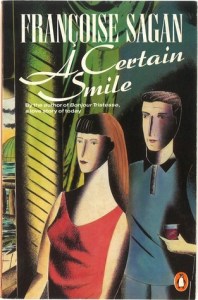 Law student Dominique is lukewarm on her boyfriend Bertrand and starts seeing his married uncle, Luc, instead. The high point is when they manage to go on a ‘honeymoon’ trip of several weeks to Avignon. Both Bertrand and Luc’s wife, Françoise, eventually find out, but everyone is very grown-up about it. The struggle is never external so much as within Dominique to accept that she doesn’t mean as much to Luc as he does to her, and that the relationship will only be a little blip in her early adulthood. I found this a disappointment compared to Bonjour Tristesse and Aimez-Vous Brahms – it really is just the story of an affair; nothing more – but Sagan is always highly readable. I read this in two days, a big section of it on a chilly beach in Devon. In its frank, cool assessment of relationship dynamics, this felt like a model for Sally Rooney. I had to laugh at the righteously angry and rather ungrammatical marginalia below (“To hate Avignon is unpossible”). (University library) [112 pages]
Minka and Curdy by Antonia White; illus. Janet and Anne Johnstone (1957)
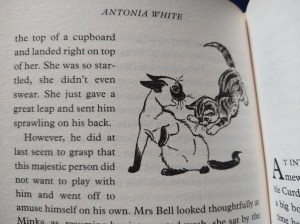
 After Mrs Bell’s formidable cat Victoria dies, she hankers to get a new kitten to keep her company – she works at home as a writer. She finds herself greeting all the neighbourhood cats and, in her enthusiasm to help a ‘stray’, accidentally overfeeds someone else’s pet with fresh fish. Her heart is set on a marmalade kitten, so she reserves one from an impending litter in Kent. But then the opportunity to take on a beautiful young female Siamese cat, for free, comes her way, and though she feels guilty about the ginger tom she’s been promised, she adopts Minka anyway. When Coeur de Lion (“Curdy”) arrives a few weeks later, her challenge is to get the kitties to coexist peacefully in her London flat. This reminded me so much of myself back in February and March, when I was so glum over losing Alfie that we rushed into adopting a giant kitten who has been a bit much for us. But we’re already contemplating getting Benny a little sister or two, so I read with interest to see how she made it happen. Well, this is fiction, so it starts out fraught but then is somewhat magically fine. No matter – White writes about cats’ antics and personalities with all the warmth and delight of Derek Tangye, Doreen Tovey and the like, and this 2023 Virago reprint is adorable. (Secondhand – Awesomebooks.com) [113 pages]
I also had a few DNFs last month:
- The Book of Colour by Julia Blackburn (1995) seemed a good bet because I’ve enjoyed some of Blackburn’s nonfiction and it was on the Orange Prize shortlist. But after 60 pages I still had no idea what was going on amid the Mauritius-set welter of family history and magic realism. (Secondhand – Bas Books charity shop, 2022)
- A Single Man by Christopher Isherwood (1964) lured me because I’d so loved Goodbye to Berlin and I remember liking the Colin Firth film. But this story of an Englishman secretly mourning his dead partner while trying to carry on as normal as a professor in Los Angeles was so dreary I couldn’t persist. (Public library)
- Night Life: Walking Britain’s Wild Landscapes after Dark by John Lewis-Stempel (2025) – JLS could write one of these mini nature volumes in his sleep. (Maybe he did with this one, actually?) I’d rather one full-length book from him every few years than bitty, redundant ones annually. (Public library)
- Aunts Aren’t Gentlemen by P.G. Wodehouse (1974) – I’ve read one Jeeves & Wooster book before and enjoyed it well enough. This felt inconsequential, so as I already had way too many novellas on the go I sent it back whence it came. (Little Free Library)
Final statistics for #NovNov25 coming up tomorrow!
#ShortStorySeptember: Stories by Katherine Heiny, Shena Mackay and Ian McEwan
Every September I enjoy focusing on short stories, which I seem to read at a rate of only one or two collections per month in the rest of a year. This year, Lisa of ANZ Lit Lovers is hosting Short Story September as a blogger challenge for the first time. She’s encouraging people to choose individual short stories they would recommend, so I’ll be centring all of my reviews around one particular story but also giving my reaction to the collections as a whole.
“Dark Matter”
from
Single, Carefree, Mellow by Katherine Heiny (2015)
“One week in late February, Rhodes and Gildas-Joseph told Maya the same come fact, that there was a movement to reinstate Plato’s status as a planet.”
Maya is engaged to Rhodes but also sleeping with Gildas-Joseph, the director of the university library where she works. She’s one of Heiny’s typical whip-smart, exasperated protagonists, irresistibly drawn to a man or two even though they seem like priggish or ridiculous bores (witness the “come fact” above – neither can stop himself from mansplaining after sex). Having an affair means always having to keep your wits about you. Maya bumps into her boss with his wife, Adèle, at a colleague’s cocktail party and in line for the movies, and one day her fiancé’s teenage sister, Magellan (seriously, what is up with these names?!), turns up at the coffee shop where she is supposed to be meeting Gildas-Joseph. Quick, act natural. By the end, Maya knows that she must decide between the two men.
 This is the middle of a trio of stories about Maya. They’re not in a row and I read the book over quite a number of months, so I was in danger of forgetting that we’d met this set of characters before. In the first, the title story, Maya has been with Rhodes for five years but is thinking of leaving him – and not just because she’s crushing on her boss. A health crisis with her dog leads her to rethink. In “Grendel’s Mother,” Maya is pregnant and hoping that she and her partner are on the same page.
This triptych of linked stories is evidence that Heiny was working her way towards a novel, and I certainly prefer Standard Deviation and Early Morning Riser. However, I really liked Heiny’s 2023 story collection, Games and Rituals, which has much more variety.
I like the second person as much as anyone but three instances of “You” narration is too much. The best of these was “The Rhett Butlers,” about a teenager whose history teacher uses famous character names as aliases when checking them into motels for trysts. The cover image is from this story: “The part of your life that contains him is too sealed off, like the last slice of cake under one of those glass domes.”
Although all of these stories are entertaining and have some of the insouciance and bittersweetness of Nora Ephron’s Heartburn, they are so overwhelmingly about adultery (the main theme of at least 8 of 11) that they feel one-note.
why have an affair if not to say bad things about your spouse?
She thought that was the essence of motherhood: acting like you knew what you were talking about when you didn’t. That, and looking at people’s rashes. It was probably why people had affairs.
I would recommend any of Heiny’s other books over this one, but I wanted to read everything she’s published and I wouldn’t say my time spent on this was a waste. (Secondhand – Awesomebooks.com)
“All the Pubs in Soho”
from
Dreams of Dead Women’s Handbags by Shena Mackay (1987)
“It was his father’s vituperation about ‘those bloody pansies at Old Hollow’ that had brought Joe to the cottage on this empty summer holiday afternoon.”
It’s 1956 in Kent and Joe is only eight years old, so it’s not too surprising that, ignorant of the slang, he shows up at Arthur and Guido’s expecting to find flowers dripping red. Their place becomes his haven from a home full of crying, excreting younger siblings and a conventional father who intends to send him to a private girls’ school in the autumn. That’s right, “Joe” is Josephine, who likes to wear boys’ clothes and insists on a male name. Mackay struck me as ahead of her time (rather like Rose Tremain with Sacred Country) in honouring Joe’s chosen pronouns and letting him imagine an adult future in which he’d keep company with Arthur and Guido’s bohemian, artistic set – the former is a poet, the latter a painter – and they’d take him round ‘all the pubs in Soho.’ But in a sheltered small town where everyone has a slur ready for the men, it is not to be. Things don’t end well, but thankfully not as badly as I was hoping, and Joe has plucked up the courage to resist his father. There’s all the emotional depth and character development of a novella in this 26-page story.
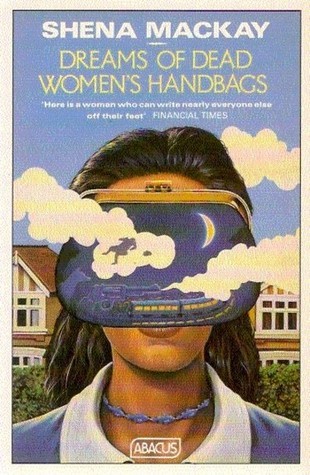 I’ve had a mixed experience with Mackay, but the one novel of hers I got on well with, The Orchard on Fire, also dwells on the shattered innocence of childhood. By contrast, most of the stories in this collection are grimy ones about lonely older people – especially elderly women – reminding me of Barbara Comyns or Barbara Pym at her darkest. “Where the Carpet Ends,” about the long-term residents of a shabby hotel, recalls The Lonely Passion of Judith Hearne. In “Violets and Strawberries in the Snow,” a man in a mental institution awaits a holiday visit from his daughters. “What do we do now?” he asks a fellow inmate. “We could hang ourselves in the tinsel” is the reply. It’s very black comedy indeed. The same is true of a Halloween-set story that I’ll revisit next month.
The cover is so bad it’s good, amirite? In the title story, Susan Vigo is on her way by train to give a speech at a writers’ workshop and running through possible plots for her mystery novel in progress. “Slaves to the Mushroom” is another great one that takes place on a mushroom farm. Mackay’s settings are often surprising, her vocabulary precise, and her portraits of young people as cutting as those of the aged are pitiful. This would serve as a great introduction to her style. (Secondhand – Slightly Foxed Books, Berwick) 
“The Grown-up”
from
The Daydreamer by Ian McEwan (1994)
“The following morning Peter Fortune woke from troubled dreams to find himself transformed into a giant person, an adult.”
A much better Kafka homage, this, than that forgettable novella The Cockroach that McEwan published in 2019. Every story of this linked collection features Peter, a 10-year-old with a very active imagination. Three of the stories are straightforward body-swap narratives (with his sister’s mangled doll, his cat, or his baby cousin), whereas in this one he’s not trading with anyone else but still experiencing what it’s like to be someone else. In this case, a young man falling in love for the first time. Just the previous day, at the family’s holiday cottage in Cornwall, he’d been bemoaning how boring adults are: all they want to do is sit on the beach and chat or read, when there’s so much world out there to explore and turn into a personal playground. He never wants to be one of them. Now he realizes there are different ways to enjoy life; “he stopped and turned to look at the grown-ups one more time. … He felt differently about them now. There were things they knew and liked which for him were only just appearing, like shapes in a mist. There were adventures ahead of him after all.”
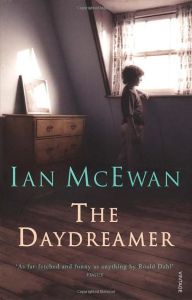 Of course, I also loved “The Cat,” which Eleanor mentioned when she read my review of Matt Haig’s To Be a Cat. At the time, I’d not heard of this and couldn’t believe McEwan had written something suitable for kids! These stories were ones he read aloud to his children as he composed them. There is a hint of gruesomeness in “The Dolls,” but most are just playful. “Vanishing Cream” is a cautionary tale about wanting your family to go away. In “The Bully,” Peter turns a bully into a tentative friend. “The Baby” sees him changing his mind about an annoying relative, while “The Burglar” has him imagining himself a hero who stops the spate of neighbourhood break-ins. Events are explained away as literal dreams, daydreams or a bit of magic. This was an offbeat gem. Try it for a very different taste of McEwan! (Secondhand – Community Furniture Project, Newbury)
Summer Reading 2025: Anthony, Espach, Han & Teir
In the UK, summer doesn’t officially end until the 22nd, so even though I’ve been doing plenty of baking with apples and plums and we’ve had squashes delivered in our vegetable box, I’ve taken advantage of that extra time to finish a couple more summery books. This year I’m featuring four novels ranging in location from Rhode Island to Finland. I’ve got all the trappings of summer: a swimming pool, a wedding, a beach retreat, and a summer house.
The Most by Jessica Anthony (2024)
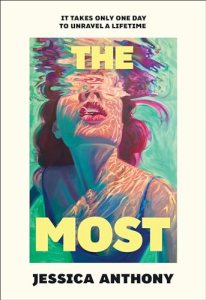 I can’t resist a circadian narrative. This novella takes place in Delaware on one day in early November 1957, but flashbacks and close third-person narration reveal everything we need to know about Virgil and Kathleen Beckett and their marriage. I’m including it in my summer reading because it’s set on an unseasonably warm Sunday and Kathleen decides to spend the entire day in their apartment complex’s pool. The mother of two drifts back in memory to her college tennis-playing days and her first great love, Billy Blasko, a Czech tennis coach who created a signature move called “The Most,” which means “bridge” in his language – the idea is to trap your opponent and then drop a bomb on them. Virgil, who after taking their two boys to church goes golfing with his insurance sales colleagues as is expected of him, loves jazz music and has just been sent the secret gift of a saxophone. Both spouses are harbouring secrets and, as Laika orbits the Earth overhead, they wonder if they can break free from the capsules they’ve built around their hearts and salvage their relationship. The storytelling is tight even as the book loops around the same events from the two perspectives. This was really well done, and a big step up from Enter the Aardvark. (Public library)
The Wedding People by Alison Espach (2024)
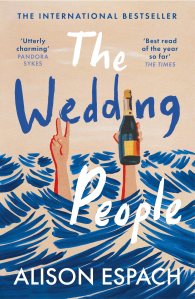 You’ve all heard about this one, right? It’s been a Read with Jenna selection and the holds are stacking up in my library system. No wonder it’s been hailed as a perfect summer read: it’s full of sparkling banter; heartwarming, very funny and quite sexy. And that despite a grim opening situation: Phoebe flies from St. Louis to Newport and checks into a luxury hotel, intending to kill herself. She’s an adjunct professor whose husband left her for their colleague after their IVF attempts failed, and she feels she’ll never finish writing her book, become a mother or find true love again. Little does she know that a Bridezilla type named Lila who’s spent $1 million of her inheritance on a week-long wedding extravaganza (culminating in a ceremony at The Breakers mansion) meant to book out the entire hotel. Phoebe somehow snagged the room with the best view. Lila isn’t about to let anyone ruin her wedding.
What follows is Cinderella-like yet takes into account the realities of bereavement, infidelity, infertility and blended families. Because of the one-week format, Phoebe’s depression is defused more quickly than is plausible, but I was relieved that Espach doesn’t plump for a full-blown happy ending. I did also find the novel unnecessarily crass in places, especially the gag about the car. Still, this has all the wit of Katherine Heiny and Curtis Sittenfeld. I’d recommend it if you enjoyed Dream State or Consider Yourself Kissed, and it’s especially reminiscent of Sorrow and Bliss for the mixture of humour and frank consideration of mental health. It’s as easy to relate to Phoebe’s feelings (“How much of her life had she spent in this moment, waiting for someone else to decide something conclusive about her?”; “It is so much easier to sit in things and wait for someone to save us”) as it is to laugh at the one-liners. “Garys are not wonderful. That’s just not what they are meant to be” particularly tickled me because I know a few Garys in real life. (Public library)
The Summer I Turned Pretty by Jenny Han (2008)
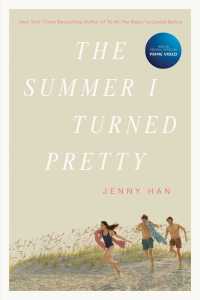 Every summer Belly and her mother and brother have joined her mother’s best friend Susannah and her sons Conrad and Jeremiah at their beach house. She’s had a crush on Conrad for what’s felt like forever, but she’s only ever been his surrogate little sister, fun for palling around with but never taken seriously. This summer is different, though: Belly is turning 16, it’s Conrad’s last summer before college, and his family seems to be falling apart. The novel kept being requested off me and I puzzled over how it could have eight reservations on it until I realized there’s an Amazon Prime Video adaptation now in its third and final season. I reckon the story will work better on screen because Belly’s narration was the main issue for me. She’s ever so shallow, so caught up in boys that she doesn’t realize Susannah is sick again. Her fixation on the brooding Conrad doesn’t make sense when she could have affable Jeremiah or sweet, geeky Cam, who met her through Latin club and liked her before she grew big boobs. He’s who she’s supposed to be with in this kind of story, right? I think this would appeal to younger, boy-crazy teens, but it just made me feel old and grumpy. (Public library)
The Summer House by Philip Teir (2017; 2018)
[Translated from Swedish by Tiina Nunnally]
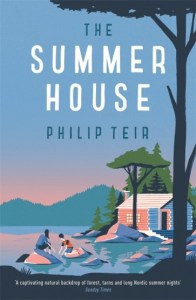 The characters are Finland-Swedish, like the author. Erik and Julia escape Helsinki with their children, Alice and Anton, to spend time at her father’s summer house. Erik has just lost his job in IT for a large department store, but hasn’t told Julia yet. Julia is working on a novel, but distracted by the fact that her childhood friend Marika, the not so secret inspiration for a character in her previous novel, is at another vacation home nearby with Chris, her Scottish partner. These two and their hangers-on have a sort of commune based around free love and extreme environmental realism: the climate crisis will not be solved (“accepting the grief instead of talking about hope all the time”) and the only thing to do is participate in de-civilisation. But like many a cult leader, Chris courts young female attention and isn’t the best role model. Both couples are strained to breaking point.
Meanwhile, Chris and Marika’s son, Leo, has been sneaking off with Alice; and Erik’s brother Anders shows up and starts seeing the widowed therapist neighbour. This was a reasonably likeable book about how we respond to crises personal and global, and how we react to our friends’ successes and problems – Erik is jealous of his college buddy’s superior performance in a tech company. But I thought it was a little aimless, especially in its subplots, and it suffered in comparison with Leave the World Behind, which has quite a similar setup but a more intriguing cosmic/dystopian direction. (Secondhand – Community Furniture Project, Newbury)
Any final summer books for you this year?
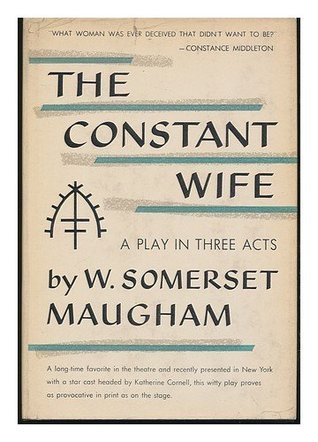
Literary Wives Club: The Constant Wife by W. Somerset Maugham (1927)
As far as I know, this is the first play we’ve chosen for the club. While I’m a Maugham fan, I haven’t read him in a while and I’ve never explored his work for the theatre. The Constant Wife is a straightforward three-act play with one setting: a large parlour in the Middletons’ home in Harley Street, London. A true drawing room comedy, then, with very simple staging.
{SPOILERS IN THE REMAINDER}
Rumours are circulating that surgeon John Middleton has been having an affair with his wife Constance’s best friend, Marie-Louise. It’s news to Mrs. Culver and Martha, Constance’s mother and sister – but not to Constance herself. Mrs. Culver, the traditional voice of a previous generation, opines that men are wont to stray and so long as the wife doesn’t find out, what harm can it do? Women, on the other hand, are “naturally faithful creatures and we’re faithful because we have no particular inclination to be anything else,” she says.
Other characters enter in twos and threes for gossip and repartee and the occasional confrontation. Marie-Louise’s husband, Mortimer Durham, shows up fuming because he’s found John’s cigarette-case under her pillow and assumes it can only mean one thing. Constance is in the odd position of defending her husband’s and best friend’s honour, even though she knows full well that they’re guilty. With her white lies, she does them the kindness of keeping their indiscretion quiet – and gives herself the moral upper hand.
Constance is matter of fact about the fading of romance. She is grateful to have had a blissful first five years of marriage; how convenient that both she and John then fell out of love with each other at the same time. The decade since has been about practicalities. Thanks to John, she has a home, respectability, and fine belongings (also a child, only mentioned in passing); why give all that up? She’s still fond of John, anyway, and his infidelity has only bruised her vanity. However, she wants more from life, and a sheepish John is inclined to give her whatever she asks. So she agrees to join an acquaintance’s interior decorating business.
The early reappearance of her old flame Bernard Kersal, who is clearly still smitten with her, seeds her even more daring decision in the final act, set one year after the main events. Having earned £1400 of her own money, she has more than enough to cover a six-week holiday in Italy. She announces to John that she’s deposited the remainder in his account “for my year’s keep,” and slyly adds that she’ll be travelling with Bernard. This part turns out to be a bluff, but it’s her way of testing their new balance of power. “I’m not dependent on John. I’m economically independent, and therefore I claim my sexual independence,” she declares in her mother’s company.
There are some very funny moments in the play, such as when Constance tells her mother she’ll place a handkerchief on the piano as a secret sign during a conversation. Her mother then forgets what it signifies and Constance ends up pulling three hankies in a row from her handbag. I had to laugh at Mrs. Culver’s test for knowing whether you’re in love with someone: “Could you use his toothbrush?” It’s also amusing that Constance ends up being the one to break up with John for Marie-Louise, and with Marie-Louise for John.
However, there are also hidden depths of feeling meant to be brought out by the actors. At least three times in scenes between John and Constance, I noted the stage direction “Breaking down” in parentheses. The audience, therefore, is sometimes privy to the emotion that these characters can’t express to each other because of their sardonic wit and stiff upper lips.
I hardly ever experience plays, so this was interesting for a change. At only 70-some pages, it’s a quick read even if a bit old-fashioned or tedious in places. It does seem ahead of its time in questioning just what being true to a spouse might mean. A clever and iconoclastic comedy of manners, it’s a pleasant waystation between Oscar Wilde and Alan Ayckbourn.
(Free download from Internet Archive – is this legit or a copyright scam??) 
The main question we ask about the books we read for Literary Wives is:
What does this book say about wives or about the experience of being a wife?
Answered by means of quotes from Constance.
- Partnership is important, yes, but so is independence. (Money matters often crop up in the books we read for the club.)
“there is only one freedom that is really important, and that is economic freedom”
- Marriage often outlasts the initial spark of lust, and can survive one or both partners’ sexual peccadilloes. (Maugham, of course, was a closeted homosexual married to a woman.)
“I am tired of being the modern wife.” When her mother asks for clarification, she adds rather bluntly, “A prostitute who doesn’t deliver the goods.”
“I may be unfaithful, but I am constant. I always think that’s my most endearing quality.”
We have a new member joining us this month: Becky, from Australia, who blogs at Aidanvale. Welcome! Here’s the group’s page on Kay’s website.
See Becky’s, Kate’s, Kay’s and Naomi’s reviews, too!
Coming up next, in September: Novel about My Wife by Emily Perkins
Book Serendipity, Mid-February to Mid-April
I call it “Book Serendipity” when two or more books that I read at the same time or in quick succession have something in common – the more bizarre, the better. This is a regular feature of mine every couple of months. Because I usually have 20–30 books on the go at once, I suppose I’m more prone to such incidents. People frequently ask how I remember all of these coincidences. The answer is: I jot them down on scraps of paper or input them immediately into a file on my PC desktop; otherwise, they would flit away!
The following are in roughly chronological order.
- The protagonist isn’t aware that they’re crying until someone tells them / they look in a mirror in The Remains of the Day by Kazuo Ishiguro and Three Days in June by Anne Tyler.
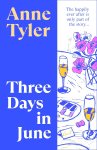
- A residential complex with primal scream therapy in Confessions by Catherine Airey and The Möbius Book by Catherine Lacey.
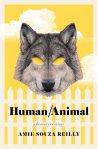
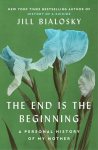
- Memories of wiping down groceries during the early days of the pandemic in The End Is the Beginning by Jill Bialosky and Human/Animal by Amie Souza Reilly.
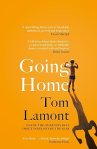
- A few weeks before I read Maurice and Maralyn by Sophie Elmhirst, I’d finished reading the author’s husband’s debut novel (Going Home by Tom Lamont); I had no idea of the connection between them until I got to her Acknowledgements.
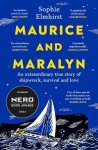
- A mention of the same emergency money passing between friends in Alligator Tears by Edgar Gomez ($20) and The Möbius Book by Catherine Lacey ($100).
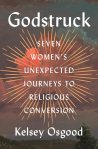
- Autobiographical discussions of religiosity and anorexia in The Möbius Book by Catherine Lacey and Godstruck by Kelsey Osgood.
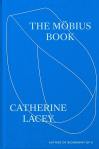
- The theme of the dark night sky in The Wild Dark by Craig Childs, followed almost immediately by Night Magic by Leigh Ann Henion.
- Last year I learned about Marina Abramović’s performance art where she and her ex trekked to China’s Great Wall from different directions, met in the middle, and continued walking away to dramatize their breakup in The Ritual Effect by Michael Norton. Recently I saw it mentioned again in The Möbius Book by Catherine Lacey. Abramović’s work is also mentioned in Human/Animal by Amie Souza Reilly and is the basis for the opening track on Anne-Marie Sanderson’s album Old Light, “Amethyst Shoes.”
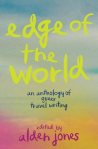
- The idea of running towards danger appears in Alex Marzano-Lesnevich’s essay in Edge of the World, a queer travel anthology edited by Alden Jones; and the bibliography of The Möbius Book by Catherine Lacey.
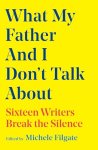
- I then read another Alex Marzano-Lesnevich essay in quick succession (both were excellent, by the way) in What My Father and I Don’t Talk About, edited by Michele Filgate.
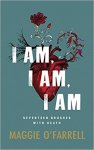
- A scene in which a woman goes to a police station and her concerns are dismissed because she has no evidence and the man/men’s behaviour isn’t ‘bad enough’ in I Am, I Am, I Am by Maggie O’Farrell and Human/Animal by Amie Souza Reilly.
- Too many details as the sign of a lie in Dream Count by Chimamanda Ngozi Adichie and Three Days in June by Anne Tyler.
- Scenes of throwing all of a spouse’s belongings out on the yard/street in Old Soul by Susan Barker, How to Survive Your Mother by Jonathan Maitland, and Human/Animal by Amie Souza Reilly.
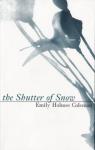
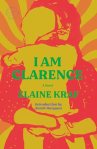
- Reading two lost American classics about motherhood and time spent in a mental institution at the same time: The Shutter of Snow by Emily Holmes Coleman and I Am Clarence by Elaine Kraf.
- Disorientation underwater: a literal experience in I Am, I Am, I Am by Maggie O’Farrell, then used as a metaphor for what it was like to be stuck in a blizzard on Annapurna in 2014 in The Secret Life of Snow by Giles Whittell.
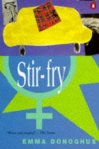
- A teenager who has a job cleaning hotels in Old Soul by Susan Barker and I Am, I Am, I Am by Maggie O’Farrell. (In Stir-Fry by Emma Donoghue, Maria is also a teenaged cleaner, but of office buildings.)
- A vacuum cleaner bag splits in Stir-Fry by Emma Donoghue and one story of Are You Happy? by Lori Ostlund – in the latter it’s deliberate, searching for evidence of the character’s late son after cleaning his room.

- An ailing tree or trees that have to be cut down in one story of The Accidentals by Guadalupe Nettel and The Lost Trees of Willow Avenue by Mike Tidwell.
- Buchenwald was mentioned in one poem each in A God at the Door by Tishani Doshi and The Ghost Orchid by Michael Longley.
- A reference to Robin Wall Kimmerer’s Braiding Sweetgrass in To Have or to Hold by Sophie Pavelle and Human/Animal by Amie Souza Reilly.

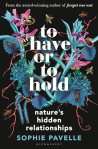
- A mentally unwell woman deliberately burns her hands in I Am Clarence by Elaine Kraf and Every Day Is Mother’s Day by Hilary Mantel.
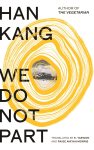
- A mention of the pollution caused by gas stoves in We Do Not Part by Han Kang and The Lost Trees of Willow Avenue by Mike Tidwell.
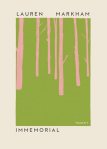
- An art installation involving part-buried trees was mentioned in Immemorial by Lauren Markham and then I encountered a similar project a few months later in We Do Not Part by Han Kang. Burying trees as a method of carbon storage is then discussed in The Lost Trees of Willow Avenue by Mike Tidwell.

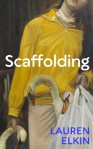
- Imagining the lives of the people living in an apartment you didn’t end up renting in Scaffolding by Lauren Elkin and one story of The Accidentals by Guadalupe Nettel.
- The Anthropocene is mentioned in Scaffolding by Lauren Elkin and The Alternatives by Caoilinn Hughes.
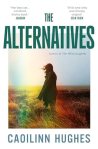
- I was reading three debut novels from the McKitterick Prize longlist at the same time, all of them with very similar page counts of 383, 387, and 389 (i.e., too long!).
- Being appalled at an institutionalized mother’s appearance in The End Is the Beginning by Jill Bialosky and Every Day Is Mother’s Day by Hilary Mantel.
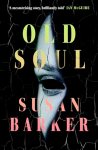 A remote artist’s studio and severed fingers in Old Soul by Susan Barker and We Do Not Part by Han Kang.
- A lesbian couple in New Mexico, the experience of being watched through a window, and the mention of a caftan/kaftan, in Old Soul by Susan Barker and one story of Are You Happy? by Lori Ostlund.
- Refusal to go to a hospital despite being in critical condition in I Am, I Am, I Am by Maggie O’Farrell and one story of Are You Happy? by Lori Ostlund.
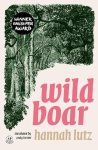
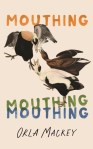
- It’s not a niche stylistic decision anymore; I was reading four novels with no speech marks at the same time: Old Soul by Susan Barker, Scaffolding by Lauren Elkin, The Alternatives by Caoilinn Hughes, and We Do Not Part by Han Kang. [And then, a bit later, three more: Wild Boar by Hannah Lutz, Mouthing by Orla Mackey, and How to Be Somebody Else by Miranda Pountney.]
 A lesbian couple is alarmed by the one partner’s family keeping guns in Spent by Alison Bechdel and one story of Are You Happy? by Lori Ostlund.
- Responding to the 2021 murder of eight Asian spa workers in Atlanta in Foreign Fruit by Katie Goh and Find Me as the Creature I Am by Emily Jungmin Yoon.
- Disposing of a late father’s soiled mattress in Mouthing by Orla Mackey and one story of Are You Happy? by Lori Ostlund.
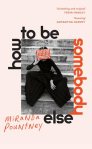 New York City tourist slogans in Apple of My Eye by Helene Hanff and How to Be Somebody Else by Miranda Pountney.
- A Jewish care home for the elderly in The End Is the Beginning by Jill Bialosky and Joanna Rakoff’s essay in What My Father and I Don’t Talk About (ed. Michele Filgate).
- A woman has no memory between leaving a bar and first hooking up with the man she’s having an affair with in If You Love It, Let It Kill You by Hannah Pittard and How to Be Somebody Else by Miranda Pountney.
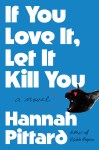 A stalker-ish writing student who submits an essay to his professor that seems inappropriately personal about her in one story of Are You Happy? by Lori Ostlund and If You Love It, Let It Kill You by Hannah Pittard.
- A pygmy goat as a pet (and a one-syllable, five-letter S title!) in Spent by Alison Bechdel and Sleep by Honor Jones.
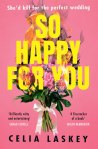
- A Brooklyn setting and thirtysomething female protagonist in Sleep by Honor Jones, So Happy for You by Celia Laskey, and How to Be Somebody Else by Miranda Pountney.
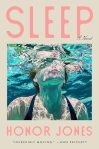
- A mention of the American Girl historical dolls franchise in Sleep by Honor Jones and If You Love It, Let It Kill You by Hannah Pittard, both of which I’m reviewing early for Shelf Awareness.
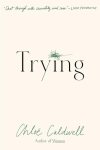 A writing professor knows she’s a hypocrite for telling her students what (not) to do and then (not) doing it herself in Trying by Chloé Caldwell and If You Love It, Let It Kill You by Hannah Pittard. These two books also involve a partner named B (or Bruce), metafiction, porch drinks with parents, and the observation that a random statement sounds like a book title.
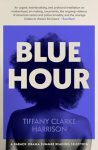
- The protagonist’s therapist asks her to find more precise words for her feelings in Blue Hour by Tiffany Clarke Harrison and So Happy for You by Celia Laskey.
- The protagonist “talks” with a dying dog or cat in The Möbius Book by Catherine Lacey and If You Love It, Let It Kill You by Hannah Pittard.
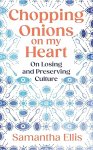 Shalimar perfume is mentioned in Scaffolding by Lauren Elkin and Chopping Onions on My Heart by Samantha Ellis.
- The Rapunzel fairytale is a point of reference in In the Evening, We’ll Dance by Anne-Marie Erickson and Secret Agent Man by Margot Singer, both of which I was reading early for Foreword Reviews.
What’s the weirdest reading coincidence you’ve had lately?
August Releases: Sarah Manguso (Fiction), Sarah Moss (Memoir), and Carl Phillips (Poetry)
Today I feature a new-to-me poet and two women writers whose careers I’ve followed devotedly but whose latest books – forthright yet slippery; their genre categories could easily be reversed – I found very emotionally difficult to read. Gruelling, almost, but admirable. Many rambling thoughts ensue. Then enjoy a nice poem.
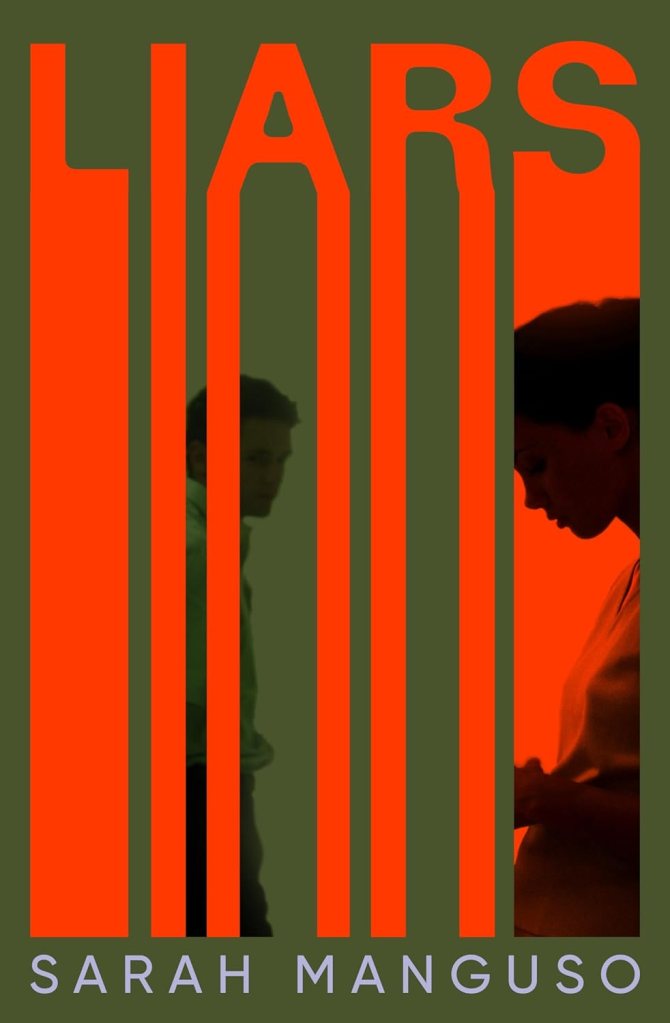
Liars by Sarah Manguso
As part of a profile of Manguso and her oeuvre for Bookmarks magazine, I wrote a synopsis and surveyed critical opinion; what follow are additional subjective musings. I’ve read six of her nine books (all but the poetry and an obscure flash fiction collection) and I esteem her fragmentary, aphoristic prose, but on balance I’m fonder of her nonfiction. Had Liars been marketed as a diary of her marriage and divorce, Manguso might have been eviscerated for the indulgence and one-sided presentation. With the thinnest of autofiction layers, is it art?
Jane recounts her doomed marriage, from the early days of her relationship with John Bridges to the aftermath of his affair and their split. She is a writer and academic who sacrifices her career for his financially risky artistic pursuits. Especially once she has a baby, every domestic duty falls to her, while he keeps living like a selfish stag and gaslights her if she tries to complain, bringing up her history of mental illness. The concise vignettes condense 14+ years into 250 pages, which is a relief because beneath the sluggish progression is such repetition of type of experiences that it could feel endless. John’s last name might as well be Doe: The novel presents him – and thus all men – as despicable and useless, while women are effortlessly capable and, by exhausting themselves, achieve superhuman feats. This is what heterosexual marriage does to anyone, Manguso is arguing. Indeed, in a Guardian interview she characterized this as a “domestic abuse novel,” and elsewhere she has said that motherhood can be unlinked from patriarchy, but not marriage.
Let’s say I were to list my every grievance against my husband from the last 17+ years: every time he left dirty clothes on the bedroom floor (which is every day); every time he loaded the dishwasher inefficiently (which is every time, so he leaves it to me); every time he failed to seal a packet or jar or Tupperware properly (which – yeah, you get the picture) – and he’s one of the good guys, bumbling rather than egotistical! And he’d have his own list for me, too. This is just what we put up with to live with other people, right? John is definitely worse (“The difference between John and a fascist despot is one of degree, not type”). But it’s not edifying, for author or reader. There may be catharsis to airing every single complaint, but how does it help to stew in bitterness? Look at everything I went through and validate my anger.
There are bright spots: Jane’s unexpected transformation into a doting mother (but why must their son only ever be called “the child”?), her dedication to her cat, and the occasional dark humour:
So at his worst, my husband was an arrogant, insecure, workaholic, narcissistic bully with middlebrow taste, who maintained power over me by making major decisions without my input or consent. It could still be worse, I thought.
Manguso’s aphoristic style makes for many quotably mordant sentences. My feelings vacillated wildly, from repulsion to gung-ho support; my rating likewise swung between extremes and settled in the middle. I felt that, as a feminist, I should wholeheartedly support a project of exposing wrongs. It’s easy to understand how helplessness leads to rage, and how, considering sunk costs, a partner would irrationally hope for a situation to improve. So I wasn’t as frustrated with Jane as some readers have been. But I didn’t like the crass sexual language, and on the whole I agreed with Parul Sehgal’s brilliant New Yorker review that the novel is so partial and the tone so astringent that it is impossible to love.
With thanks to Picador for the proof copy for review.
And a quote from the Moss memoir (below) to link the two books: “Homes are places where vulnerable people are subject to bullying, violence and humiliation behind closed doors. Homes are places where a woman’s work is never done and she is always guilty.”
20 Books of Summer, #19:
My Good Bright Wolf by Sarah Moss
I’ve reviewed this memoir for Shelf Awareness (it’s coming out in the USA from Farrar, Straus and Giroux on October 22nd) so will only give impressions, in rough chronological order:
Sarah Moss returns to nonfiction – YES!!!
Oh no, it’s in the second person. I’ve read too much of that recently. Fine for one story in a collection. A whole book? Not so sure. (Kirsty Logan got away with it, but only because The Unfamiliar is so short and meant to emphasize how matrescence makes you other.)
 The constant second-guessing of memory via italicized asides that question or refute what has just been said; the weird nicknames (her father is “the Owl” and her mother “the Jumbly Girl”) – in short, the deliberate artifice – at first kept me from becoming submerged. This must be deliberate and yet meant it was initially a chore to pick up. It almost literally hurt to read. And yet there are some breathtakingly brilliant set pieces. Oh! when her mother’s gay friend Keith buys her a chocolate éclair and she hides it until it goes mouldy.
Once she starts discussing her childhood reading – what it did for her then and how she views it now – the book really came to life for me. And she very effectively contrasts the would-be happily ever after of generally getting better after eight years of disordered eating with her anorexia returning with a vengeance at age 46 – landing her in A&E in Dublin. (Oh! when she reads War and Peace over and over on a hospital bed and defiantly uses the clean toilets on another floor.) This crisis is narrated in the third person before a return to second person.
The tone shifts throughout the book, so that what threatens to be slightly cloying in the childhood section turns academically curious and then, somehow, despite the distancing pronouns, intimate. So much so that I found myself weeping through the last chapters over this lovely, intelligent woman’s ongoing struggles. As an overly cerebral person who often thinks it’s pesky to have to live in a body, I appreciated her probing of the body/mind divide; and as she tracks where her food issues came from, I couldn’t help but think about my sister’s years of eating disorders and my mother’s fear that it was all her fault.
Beyond Moss’s usual readers, I’d also recommend this to fans of Laura Freeman’s The Reading Cure and Noreen Masud’s A Flat Place.
Overall: shape-shifting, devastating, staunchly pragmatic. I’m not convinced it all hangs together (and I probably would have ended it at p. 255), but it’s still a unique model for transmuting life into art.
With thanks to Picador for the free copy for review.
Scattered Snows, to the North by Carl Phillips
 Phillips is a prolific poet I’d somehow never heard of. In fact, he won the Pulitzer Prize last year for his selected poetry volume. He’s gay and African American, and in his evocative verse he summons up landscapes and a variety of weather, including as a metaphor for emotions – guilt, shame, and regret. Looking back over broken relationships, he questions his memory.
Will I remember individual poems? Unlikely. But the sense of chilly, clear-eyed reflection, yes. (Sample poem below)
With thanks to Carcanet for the advanced e-copy for review.
Record of Where a Wind Was
Wave-side, snow-side,
little stutter-skein of plovers
lifting, like a mind
of winter—
We’d been walking
the beach, its unevenness
made our bodies touch,
now and then, at
the shoulders mostly,
with that familiarity
that, because it sometimes
includes love, can
become confused with it,
though they remain
different animals. In my
head I played a game with
the waves called Weapon
of Choice, they kept choosing
forgiveness, like the only
answer, as to them
it was, maybe. It’s a violent
world. These, I said, I choose
these, putting my bare hands
through the air in front of me.
Any other August releases you’d recommend?
#WITMonth, Part I: Novellas by Eva Baltasar and Françoise Sagan
I’m starting off my Women in Translation month coverage with mini responses to two novellas: one Catalan and one French; both about disaffected women trying to work out what they want from life.
Mammoth by Eva Baltasar (2022; 2024)
[Translated from the Catalan by Julia Sanches]
 I’d been vaguely attracted by descriptions of the Spanish poet’s novels Permafrost and Boulder, which are also about lesbians in odd situations. Mammoth is the third book in a loose trilogy. Its 24-year-old narrator is so desperate for a baby that she’s decided to have unprotected sex with men until a pregnancy results. In the meantime, her sociology project at nursing homes comes to an end and she moves from Barcelona to a remote farm where she develops subsistence skills and forms an interdependent relationship with the gruff shepherd. “I’d been living in a drowning city, and I need this – the restorative silence of a decompression chamber. … my past is meaningless, and yet here, in this place, there is someone else’s past that I can set up and live in awhile.” For me this was a peculiar combination of distinguished writing (“The city pounces on the still-pale light emerging from the deep sea and seizes it with its lucrative forceps”) but absolutely repellent story, with a protagonist whose every decision makes you want to throttle her. An extended scene of exterminating feral cats certainly didn’t help matters. I’d be wary of trying Baltasar again.
With thanks to And Other Stories for the proof copy for review.
Aimez-vous Brahms… by Françoise Sagan (1959; 1960)
[Translated from the French by Peter Wiles]
 At age 39, divorced interior decorator Paule is “passionately concerned with her beauty and battling with the transition from young to youngish woman”. (Ouch. But true.) It’s an open secret that her partner Roger is always engaged in a liaison with a young woman; people pity her and scorn Roger for his infidelity. But when Paule has a dalliance with a client’s son, 25-year-old lawyer Simon, a double standard emerges: “they had never shown her the mixture of contempt and envy she was going to arouse this time.” Simon is an idealist, accusing her of “letting love go by, of neglecting your duty to be happy”, but he’s also indolent and too fond of drink. Paule wonders if she’s expected too much from an affair. “Everyone advised a change of air, and she thought sadly that all she was getting was a change of lovers: less bother, more Parisian, so common”.
I was by turns reminded of Chéri by Colette, In a Summer Season by Elizabeth Taylor, and even The Graduate (“Mrs. Robinson,” anyone?). Simon asks the title question to invite Paule to a concert; that she has to ponder it carefully tells her she’s “losing herself, losing track of herself”. But it’s all too easy for the status quo to be reinstated after a brave act. Middle-aged woman makes bid for freedom but ultimately nothing changes: same plot as The Funeral Cryer and any number of other books, but this was so much better. How did Sagan manage such insight at age 24 (and this was her fourth book)?! While not quite as memorable as Bonjour Tristesse, this is another incisive slice of fiction that has aged well apart from using “sodomite” and “Negress” as matter-of-fact terms for bit players. I’d read anything else I can find by Sagan. (Secondhand – Community Furniture Project, Newbury)
20 Books of Summer, 11–13: Campbell, Julavits, Lu
Two solid servings of women’s life writing plus a novel about a Chinese woman stuck in roles she’s not sure she wants anymore.
Thunderstone: A true story of losing one home and discovering another by Nancy Campbell (2022)
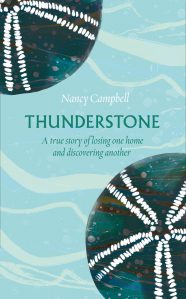 Just before Covid hit, Campbell’s partner Anna had a partially disabling stroke. They had to adjust to lockdown and the rigours of Anna’s at-home care at once. It was complicated in that Campbell was already halfway out the door: after 10 years, their relationship had run its course and she knew it was time to go, but guilt lingered about abandoning Anna at her most vulnerable (“How dare I leave someone who needed me”). That is the backdrop to a quiet book largely formed of a diary spanning June to September 2021. Campbell recounts settling into a caravan by the canal and railway line in Oxford, getting plenty of help from friends and neighbours but also finding her own inner resources and enjoying her natural setting.
The title refers to a fossil that has been considered a talisman in various cultures, and she needed the good luck during a period that involved accidental carbon monoxide poisoning and surgery for an ovarian abnormality (but it didn’t protect her books, which were all destroyed in a leaking shipping container – the horror!). I most enjoyed the longer entries where she muses on “All the potential lives I moved on from” during 20 years in Oxford and elsewhere, which makes me think that I would have preferred a more traditional memoir by her. Covid narratives feel really dated now, unfortunately. (New (bargain) purchase from Hungerford Bookshop with birthday voucher)
Directions to Myself: A Memoir by Heidi Julavits (2023)
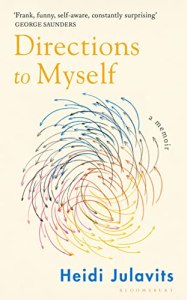 Julavits is a novelist and founding editor of The Believer. I loved her non-standard diary, The Folded Clock, back in 2017, so jumped at the chance to read her new memoir but then took more a year over reading it. The U.S. subtitle, “A Memoir of Four Years,” captures the focus: the change in her son from age five to age nine – from little boy to full-fledged individual. In later sections he sounds so like my American nephew with his Fortnite obsession and lawyerly levels of argumentation and self-justification. A famous author once told Julavits that writers should not have children because each one represents a book they will not write. This book is a rebuttal: something she could not have written without having had her son. Home is a New York City apartment near the Columbia University campus where she teaches – in fact, directly opposite a dorm at which rape allegations broke out – but more often the setting is their Maine vacations, where coastal navigation is a metaphor for traversing life.
Mostly the memoir takes readers through everyday conversations the author has with friends and family about situations of inequality or harassment. Through her words she tries to gently steer her son towards more open-minded ideas about gender roles. She also entrances him and his sleepover friends with a real-life horror story about being chased through the French countryside by a man in a car. The tenor of her musings appealed to me, but already the details are fading. I suspect this will mean much more to a parent.
With thanks to Bloomsbury for the free copy for review.
The Funeral Cryer by Wenyan Lu (2023)
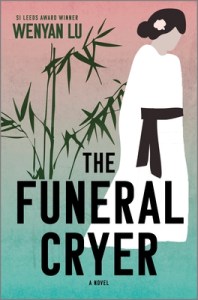 The title character holds a traditional position in her Chinese village, performing mourning at ceremonies for the dead. It’s a steady source of income for her and her husband, but her career choice has stigma attached: “Now that I brought bad luck and I smelt of the dead, nobody would step into our house to play mah-jong or chat.” Exotic as the setup might seem at first, it underpins a familiar story of a woman caught in frustrating relationships and situations. A very readable but plain style to this McKitterick Prize winner.
With thanks to the Society of Authors for the free copy.
Literary Wives Club: The Harpy by Megan Hunter
(My fifth read with the Literary Wives online book club; see also Kay’s and Naomi’s reviews.)
Megan Hunter’s second novella, The Harpy (2020), treads familiar ground – a wife discovers evidence of her husband’s affair and questions everything about their life together – but somehow manages to feel fresh because of the mythological allusions and the hint of how female rage might reverse familial patterns of abuse.
Lucy Stevenson is a mother of two whose husband Jake works at a university. One day she opens a voicemail message on her phone from a David Holmes, saying that he thinks Jake is having an affair with his wife, Vanessa. Lucy vaguely remembers meeting the fiftysomething couple, colleagues of Jake’s, at the Christmas party she hosted the year before.
As further confirmation arrives and Lucy tries to carry on with everyday life (another Christmas party, a pirate-themed birthday party for their younger son), she feels herself transforming into a wrathful, ravenous creature – much like the harpies she was obsessed with as a child and as a Classics student before she gave up on her PhD.

Like the mythical harpy, Lucy administers punishment. At first, it’s something of a joke between her and Jake: he offers that she can ritually harm him three times. Twice it takes physical form; once it’s more about reputational damage. The third time, it goes farther than either of them expected. It’s clever how Hunter presents this formalized violence as an inversion of the domestic abuse of which Lucy’s mother was a victim.
Lucy also expresses anger at how women are objectified, and compares three female generations of her family in terms of how housewifely duties were embraced or rejected. She likens the grief she feels over her crumbling marriage to contractions or menstrual cramps. It’s overall a very female text, in the vein of A Ghost in the Throat. You feel that there’s a solidarity across time and space of wronged women getting their own back. I enjoyed this so much more than Hunter’s debut, The End We Start From. (Birthday gift from my wish list) 
The main question we ask about the books we read for Literary Wives is:
What does this book say about wives or about the experience of being a wife?
“Marriage and motherhood are like death … no one comes back unchanged.”
So much in life can remain unspoken, even in a relationship as intimate as a marriage. What becomes routine can cover over any number of secrets; hurts can be harboured until they fuel revenge. Lucy has lost her separate identity outside of her family relationships and needs to claw back a sense of self.
I don’t know that this book said much that is original about infidelity, but I sympathized with Lucy’s predicament. The literary and magical touches obscure the facts of the ending, so it’s unclear whether she’ll stay with Jake or not. Because we’re mired in her perspective, it’s hard to see Jake or Vanessa clearly. Our only choice is to side with Lucy.
Next book: Sea Wife by Amity Gaige in September
Love and Lust: Four Books for Valentine’s Day
Got any romantic plans for the morrow? I’ll be having my first of six evening yoga classes at our local Waitrose (was a more middle-class phrase ever written?!), but I’ve been promised a nice dinner with dessert on my return.
Like last year, I’ve been reading a few books with “love” in the title – plus one featuring “lust” this time – in advance of the day and can report back on what I’ve gleaned. Nothing particularly optimistic about marriage or true love, I’m afraid.

Lust in Translation: Infidelity from Tokyo to Tennessee by Pamela Druckerman (2007)
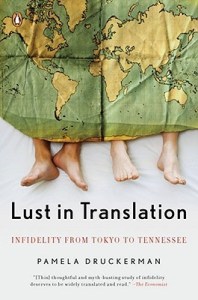 Druckerman travels from France (where she lives) to the United States, Russia, Japan, South Africa, Indonesia and China, interviewing professionals and anonymous adulterers and pondering what makes people cheat and what difference country of origin makes. Boiling it down, people in poor countries, even in parts of Africa where AIDS is a huge threat, are more likely to have multiple sexual partners than those in wealthy countries. Statistically speaking, there’s also a slight bias towards adultery in warmer countries. However, some factors that you might expect to have a big effect on the adultery rate, like religiosity (e.g. America vs. France), actually hardly do. What does differ is the level of guilt experienced over infidelity and its concomitant offense, lying. In places like France and Japan she discovers more of a don’t-ask-don’t-tell attitude: as long as the straying partner is discreet enough not to be caught, the other turns a blind eye.
Travel-based quest narratives like this usually have a personal element that helps to anchor a book. The other direction Druckerman might have taken would be a straightforward academic study, which her journalistic tone wouldn’t suit. Because this book hovers between genres/levels of discourse, it didn’t quite work for me, but if you think you might find the subject matter interesting it’s at least worth skimming.
A representative line:
“The pursuit of happiness, or true love, is one of the most salient stories that Americans use to justify affairs and overcome their moral qualms about cheating.”
My rating: 
Loving Frank by Nancy Horan (2007)
 Even if you don’t have any particular interest in architect Frank Lloyd Wright, this carefully crafted and lovingly written historical novel is well worth reading. Mamah (“May-muh”) Borthwick Cheney and her husband Edwin hired Wright to design their suburban Chicago home in 1903, and in 1907 she and Wright embarked on an affair. The novel covers roughly the next seven years of their lives, and is particularly illuminating about relationships, the rights of women and the morality code of the time. Through Mamah’s eyes Horan shows just why this affair was irresistible: “Frank Lloyd Wright was a life force. He seemed to fill whatever space he occupied with a pulsing energy that was spiritual, sexual, and intellectual all at once.” But in the eyes of the public, and of their families, it was a selfish choice that left her two children adrift. Beside Mamah, Catherine Wright was held up as a paragon of fidelity, waiting patiently for Frank to come back to her and their seven children.
If you think you are at all likely to read this book, DO NOT GOOGLE Mamah Borthwick Cheney, or Frank Lloyd Wright’s life in these years. I’m now keen to compare this with T.C. Boyle’s The Women, which is about Catherine, Mamah and two other important female figures in Frank Lloyd Wright’s life.
A representative passage:
“Does that mean I have to play this hand to the bitter end, full of regret? Knowing I might have had the happiest life imaginable with the one man I love more than any other I have ever known?”
My rating: 
I Love Dick by Chris Kraus (1997)
 This is one of the stranger novels I’ve ever read. It’s December 1994 and failed filmmaker Chris Kraus, 39, and her husband, 56-year-old professor Sylvère Lotringer, spend a night at the home of Dick, one of his California colleagues, to mark the end of Sylvère’s sabbatical. When they wake up the next morning Dick is gone, but he’s made a huge impression on Chris. She decides she and Dick have had something like D.H. Lawrence’s ‘sex in the head’, and becomes obsessed with him. Chris and Sylvère address reams of letters and journal entries to Dick. Some they send and some they don’t; Dick is a total blank, which allows the couple to build fantasies around him. It’s a chance for Chris to reimagine a life that’s gotten away from her and regain her voice.
I preferred Part 1, which I found quite funny. Kraus lost me a bit in Part 2, with a trip to Guatemala plus random exhibits and performance art. I think the whole thing would have been more effective at novella length. But it’s intriguing how it blends fact and fiction (Dick Hebdige is a real person, and apparently not happy about the invasion of his privacy) and adapts the epistolary form. An afterword by Joan Hawkins notes the similarity to Dangerous Liaisons, in which a couple exchange letters about a seduction plot.
A representative passage:
“Dear Dick,
No woman is an island-ess. We fall in love in hope of anchoring ourselves to someone else, to keep from falling,
Love,
Chris”
My rating:
The Pursuit of Love by Nancy Mitford (1945)
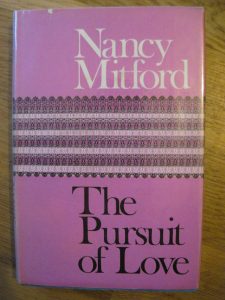 Last year I unwittingly read the 1949 sequel, Love in a Cold Climate, first. I rather enjoyed that one, but somehow wasn’t in the mood for Mitford this time around, and ended up just skimming this one. Once again Fanny traces the love life of one of her posh cousins. This time it’s Linda Radlett, whose two marriages – to a Conservative and a Communist – are doomed to failure. Then she finds her true love, too late. I liked the ball scene, and the image of Uncle Matthew using his bloodhounds to hunt down his children. Mitford mixes the lighthearted and the caustic in an amusing way. The last two pages of this novel turn particularly nasty, though, which made me wonder how people can call this a comfort read.
A representative passage:
“What we would never admit was the possibility of lovers after marriage. We were looking for real love, and that could only come once in a lifetime; it hurried to consecration, and thereafter never wavered. Husbands, we knew, were not always faithful, this we must be prepared for, we must understand and forgive.”
My rating:
 Bookish Beck = Rebecca Foster. American transplant to England. Freelance proofreader and book reviewer.
 Bookish Beck