Eleventh Blog Anniversary (& International Women’s Day)
Bookish Beck launched 11 years ago today. I find that hard to believe as I still feel like a newbie in the blogging world compared to veterans like Annabel, Kim, Laura, Liz and Simon; imposter syndrome (Imposter Foster!) strikes again. And yet I can’t really remember what it was like before I had a blog, nor can I imagine life without one.

Pratyya Ghosh, CC BY-SA 4.0 <https://creativecommons.org/licenses/by-sa/4.0>, via Wikimedia Commons
This is my 1594th post, which means I’m maintaining an average of 2.8 posts per week. I feel like I’m posting less often these days, with most of my reviews clumping around the end of a month as I scramble to report back on library reads and finish everything I’ve started towards particular challenges.
It’s also International Women’s Day, a coincidence I would have been unaware of when I started the blog. The Women’s Prize longlist is always announced at around this time of year, with the Carol Shields Prize longlist to follow on Tuesday. I’ve read three of the Women’s Prize nominees (Castillo, Hutchinson and King) and skimmed another (Choi). I’m currently reading Wendy Erskine’s The Benefactors, which is also just right for Reading Ireland Month.
To mark the day, I’ll reproduce my review of one of the best books I’ve read by a woman recently. It’s one of my early favourites for the year.
Brawler by Lauren Groff
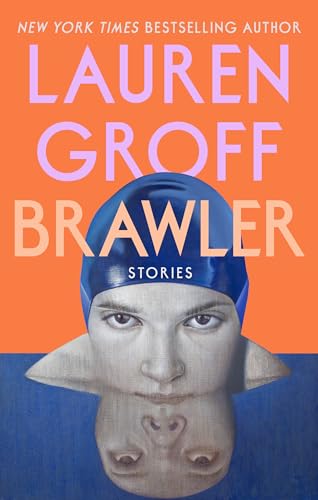 The nine short stories in Lauren Groff’s exceptional eighth book profile women in states of desperation and probe legacies of loss and violence.
Most of the stories employ third-person narration and originally appeared in the New Yorker. Often, inherited trauma binds mothers and daughters. The title character is high school swimmer Sara, who shoplifts and fights in frustration at her mother’s incurable illness. In “Under the Wave,” set after a natural disaster, a woman adopts an orphan as a replacement for her dead child—despite their racial differences. The title of “The Wind” symbolizes women’s fear and rage after an attempted escape from an abusive patriarch. Accidental harm and imagery of the Madonna and Child link the three mother–daughter pairs in “Annunciation.”
Themes of midlife reinvention and latent queerness (cf. Matrix) recur. Bisexuality is a secret between a dying woman and her friend in “Birdie.” In “Between the Shadow and the Soul,” a woman finds new hobbies following early retirement. Although she flirts with her female gardening teacher, she realizes her desire is not to leave her husband but to “brush up against the dazzling future again.”
“Such Small Islands” is a startling Jamesian fable; “To Sunland” a 1950s Southern gothic black comedy that would do Flannery O’Connor proud; and the masterful “What’s the Time, Mr. Wolf?” a suspenseful, novella-length examination of privilege and obsession.
The prose is stellar and the endings breathtaking. Groff is a first-rate novelist, but her short stories are truly peerless.
(Reposted with permission from Shelf Awareness.)
Thanks to all who support my blog by reading and commenting. You’re stars!
Book Serendipity, January to February
I call it “Book Serendipity” when two or more books that I read at the same time or in quick succession have something in common – the more bizarre, the better. This is a regular feature of mine every couple of months. Because I usually have 20–30 books on the go at once, I suppose I’m more prone to such incidents. People frequently ask how I remember all of these coincidences. The answer is: I jot them down on scraps of paper or input them immediately into a file on my PC desktop; otherwise, they would flit away! Feel free to join in with your own.
The following are in roughly chronological order.
- An old woman with purple feet (due to illness or injury) in one story of Brawler by Lauren Groff and John of John by Douglas Stuart.
- Someone is pushed backward and dies of the head injury in Zofia Nowak’s Book of Superior Detecting by Piotr Cieplak and one story of Brawler by Lauren Groff.
- The Hindenburg disaster is mentioned in A Long Game by Elizabeth McCracken and Evensong by Stewart O’Nan.
- Reluctance to cut into a corpse during medical school and the dictum ‘see one, do one, teach one’ in the graphic novel See One, Do One, Teach One: The Art of Becoming a Doctor by Grace Farris and Separate by C. Boyhan Irvine.
 A remote Scottish island setting and a harsh father in Muckle Flugga by Michael Pedersen [Shetland] and John of John by Douglas Stuart [Harris]. (And another Scottish island setting in A Calendar of Love by George Mackay Brown [Orkney].)
- A mention of genuine Harris tweed in Alone in the Classroom by Elizabeth Hay and John of John by Douglas Stuart.
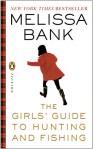
- The Katharine Hepburn film The Philadelphia Story is mentioned in The Girls’ Guide to Hunting and Fishing by Melissa Bank and Woman House by Lauren W. Westerfield.
- A mention of Icelandic poppies in Nighthawks by Lisa Martin and Boundless by Kathleen Winter.
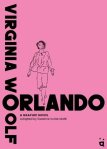
- Vita Sackville-West is mentioned in the Orlando graphic novel adaptation by Susanne Kuhlendahl and Boundless by Kathleen Winter.
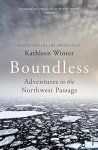
- Fear of bear attacks in Black Bear by Trina Moyles and Boundless by Kathleen Winter. Bears also feature in A Rough Guide to the Heart by Pam Houston and No Paradise with Wolves by Katie Stacey. [Looking through children’s picture books at the library the other week, I was struck by how many have bears in the title. Dozens!]
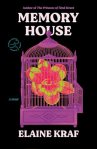
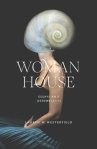
- I was reading books called Memory House (by Elaine Kraf) and Woman House (by Lauren W. Westerfield) at the same time, both of them pre-release books for Shelf Awareness reviews.
- An adolescent girl is completely ignorant of the facts of menstruation in I Who Have Never Known Men by Jacqueline Harpman and Carrie by Stephen King.
- Camembert is eaten in The Honesty Box by Lucy Brazier and Ordinary Saints by Niamh Ni Mhaoileoin.
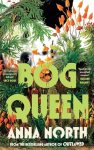
- A herbal tonic is sought to induce a miscarriage in The Girls Who Grew Big by Leila Mottley and Bog Queen by Anna North.

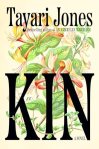
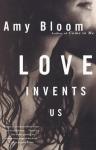
- Vicks VapoRub is mentioned in Love Invents Us by Amy Bloom, Kin by Tayari Jones, and Dirt Rich by Graeme Richardson.
- An adolescent girl only admits to her distant mother that she’s gotten her first period because she needs help dealing with a stain (on her bedding / school uniform) in Love Invents Us by Amy Bloom, An Experiment in Love by Hilary Mantel, and Ordinary Saints by Niamh Ni Mhaoileoin. (I had to laugh at the mother asking the narrator of the Mantel: “Have you got jam on your underskirt?”) Basically, first periods occurred a lot in this set! They are also mentioned in A Little Feral by Maria Giesbrecht and one story of The Blood Year Daughter by G.G. Silverman. [I also had three abortion scenes in this cycle, but I think it would constitute spoilers to say which novels they appeared in.)
- A casual job cleaning pub/bar toilets in Kin by Tayari Jones and John of John by Douglas Stuart.
- Kansas City is a location mentioned in Strangers by Belle Burden, Mrs. Bridge by Evan S. Connell, and Dreams in Which I’m Almost Human by Hannah Soyer. (Not actually sure if that refers to Kansas or Missouri in two of them.)
- The notion of “flirting with God” is mentioned in Love Invents Us by Amy Bloom and A Little Feral by Maria Giesbrecht.
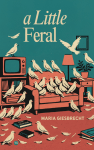
- A signature New Orleans cocktail, the Sazerac (a variation on the whisky old-fashioned containing absinthe), appears in Kin by Tayari Jones and Let the Bad Times Roll by Alice Slater.
- An older person’s smell brings back childhood memories in Love Invents Us by Amy Bloom and Whistler by Ann Patchett.
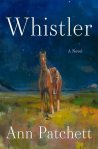
- The fact that complaining of chest pain will get you seen right away in an emergency room is mentioned in Love Invents Us by Amy Bloom and The Girls Who Grew Big by Leila Mottley.
- Thickly buttered toast is a favoured snack in The Honesty Box by Lucy Brazier and An Experiment in Love by Hilary Mantel.
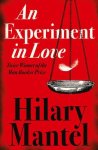 A scene of trying on fur coats in Love Invents Us by Amy Bloom and An Experiment in Love by Hilary Mantel.
- Lime and soda is drunk in Our Numbered Bones by Katya Balen, Kin by Tayari Jones, and Whistler by Ann Patchett.
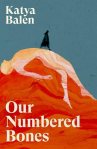
- A husband 17 years older than his wife in Kin by Tayari Jones and Whistler by Ann Patchett.
- The protagonist seems to hold a special attraction for old men in Love Invents Us by Amy Bloom and Whistler by Ann Patchett.
- A tattoo of a pottery shard (her ex-husband’s) in Strangers by Belle Burden and one of an arrowhead (her own) in Dreams in Which I’m Almost Human by Hannah Soyer.
- A relationship with an older editor at a publishing house: The Girls’ Guide to Hunting and Fishing by Melissa Bank (romantic) and Whistler by Ann Patchett (stepfather–stepdaughter).
- Repeated vomiting and a fever of 103–104°F leads to a diagnosis of appendicitis in My Grandmothers and I by Diana Holman-Hunt and Whistler by Ann Patchett.
 Multiple pet pugs in Strangers by Belle Burden and My Grandmothers and I by Diana Holman-Hunt.
- Palm crosses are mentioned in My Grandmothers and I by Diana Holman-Hunt and Kin by Tayari Jones.
- A Miss Jemison in Kin by Tayari Jones and a Miss Jamieson in Elizabeth and Ruth by Livi Michael.
- Pasley as a surname in Elizabeth and Ruth by Livi Michael and a place name (Pasley Bay) in Boundless by Kathleen Winter.
- A remark on a character’s unwashed hair in My Grandmothers and I by Diana Holman-Hunt and Let the Bad Times Roll by Alice Slater.
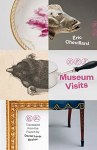
- A mention of a monkey’s paw in Museum Visits by Éric Chevillard and Let the Bad Times Roll by Alice Slater.

- A character gets 26 (22) stitches in her face (head) after a car accident, a young person who’s vehemently anti-smoking, and a mention of being dusted orange from eating Cheetos, in Whistler by Ann Patchett and Let the Bad Times Roll by Alice Slater.
- Pre-eclampsia occurs in Strangers by Belle Burden and The Girls Who Grew Big by Leila Mottley.
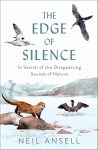
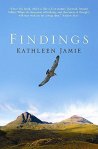
- There’s a chapter on searching for corncrakes on the Isle of Coll (the Inner Hebrides of Scotland) in The Edge of Silence by Neil Ansell, which I read last year; this year I reread the essay on the same topic in Findings by Kathleen Jamie.
- Worry over women with long hair being accidentally scalped – if a horse steps on her ponytail in Mare by Emily Haworth-Booth; if trapped in a London Underground escalator in Leaving Home by Mark Haddon.
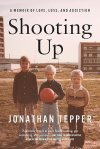 A pet ferret in My Grandmothers and I by Diana Holman-Hunt and Shooting Up by Jonathan Tepper.
- A dodgy doctor who molests a young female patient in Leaving Home by Mark Haddon and Elizabeth and Ruth by Livi Michael.
- A high school girl’s inappropriate relationship with her English teacher is the basis for Love Invents Us by Amy Bloom, and then Half His Age by Jennette McCurdy, which I started soon after.

- College roommates who become same-sex lovers, one of whom goes on to have a heterosexual marriage, in Kin by Tayari Jones and Whistler by Ann Patchett.
- A mention of Sephora (the cosmetics shop) in Half His Age by Jennette McCurdy and Whistler by Ann Patchett.
- A discussion of the Greek mythology character Leda in Mrs. Bridge by Evan S. Connell and Whistler by Ann Patchett (where it’s also a character name).
- A workaholic husband who rarely sees his children and leaves their care to his wife in Strangers by Belle Burden and Mrs. Bridge by Evan S. Connell.
- An apparently wealthy man who yet steals food in Strangers by Belle Burden and Let the Bad Times Roll by Alice Slater.
- Characters named Lulubelle in Mrs. Bridge by Evan S. Connell and Lulabelle in Kin by Tayari Jones.
- Characters named Ruth in Mrs. Bridge by Evan S. Connell, Kin by Tayari Jones, and Elizabeth and Ruth by Livi Michael.
 A mention of Mary McLeod Bethune in Negroland by Margo Jefferson and Kin by Tayari Jones.
- Doing laundry at a whorehouse in Kin by Tayari Jones and Elizabeth and Ruth by Livi Michael.
- A male character nicknamed Doll in John of John by Douglas Stuart and then Elizabeth and Ruth by Livi Michael.
- A mention of tuberculosis of the stomach in Findings by Kathleen Jamie and Shooting Up by Jonathan Tepper. I was also reading a whole book on tuberculosis, Everything Is Tuberculosis by John Green, at the same time.
- Mention of Doberman dogs in Mrs. Bridge by Evan S. Connell and one story of The Blood Year Daughter by G.G. Silverman.
- Extreme fear of flying in Leaving Home by Mark Haddon and Whistler by Ann Patchett.
What’s the weirdest reading coincidence you’ve had lately?
Most Anticipated Books of 2026
Later than intended, but here we are. I’ve narrowed it down to the 25 books I’m most looking forward to in January–September, though no doubt I’ll have heard of many more unmissable titles before that time is up. My list is dominated by fiction, which I tend to find out about earlier. Also on my radar are novels by Sharon Bala, Freya Bromley, Mary Costello, Louise Kennedy, Ben Lerner, Paula McLain, Liz Nugent and Tom Perrotta; short stories by Jess Gibson (Margaret Atwood’s daughter); and nonfiction from Margaret Drabble, Cal Flyn, Siri Hustvedt and Anne Lamott.
In release date order, with UK publication info given first if available. The blurbs are adapted from Goodreads. I’ve taken the liberty of using whichever cover I prefer.
Fiction
 Departure(s) by Julian Barnes [20 Jan., Vintage (Penguin) / Knopf]: (Currently reading) I get more out of rereading Barnes’s classics than reading his latest stuff, but I’ll still attempt anything he publishes. He’s 80 and calls this his last book. So far, it’s heavily about memory. “Julian played matchmaker to Stephen and Jean, friends he met at university in the 1960s; as the third wheel, he was deeply invested in the success of their love”. Sounds way too similar to 1991’s Talking It Over, and the early pages have been tedious. (Review copy from publisher)
Half His Age by Jennette McCurdy [20 Jan., Fourth Estate / Ballantine]: McCurdy’s memoir, I’m Glad My Mom Died, was stranger than fiction. I was so impressed by her recreation of her childhood perspective on her dysfunctional Mormon/hoarding/child-actor/cancer survivor family that I have no doubt she’ll do justice to this reverse-Lolita scenario about a 17-year-old who’s in love with her schlubby creative writing teacher. (Library copy on order)
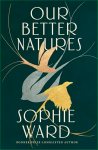 Our Better Natures by Sophie Ward [5 Feb., Corsair]: I loved Ward’s Booker-longlisted Love and Other Thought Experiments (though the follow-up, The Schoolhouse, was a letdown). “Amid the chaos and political upheaval of 1970s America, three very different women must accept the world as it is, or act to change it. Phyllis Patterson is a housewife in White Plains, Illinois. … Andrea Dworkin is an activist in Amsterdam. … Muriel Rukeyser is a poet in New York.” (Library copy on order)
 Brawler: Stories by Lauren Groff [Riverhead, Feb. 24]: (Currently reading) Controversial opinion: Short stories are where Groff really shines. Three-quarters in, this collection is just as impressive as Delicate Edible Birds or Florida. “Ranging from the 1950s to the present day and moving across age, class, and region (New England to Florida to California) these nine stories reflect and expand upon a shared the ceaseless battle between humans’ dark and light angels.” (For Shelf Awareness review) (Edelweiss download)
Kin by Tayari Jones [24 Feb., Oneworld / Knopf]: I’m a big fan of Leaving Atlanta and An American Marriage. This sounds like Brit Bennett meets Toni Morrison. “Vernice and Annie, two motherless daughters raised in Honeysuckle, Louisiana, have been best friends and neighbors since earliest childhood, but are fated to live starkly different lives. … A novel about mothers and daughters, about friendship and sisterhood, and the complexities of being a woman in the American South”. (Edelweiss download)
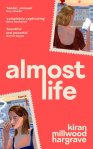 Almost Life by Kiran Millwood Hargrave [12 March, Picador / March 24, S&S/Summit Books]: There have often been queer undertones in Hargrave’s work, but this David Nicholls-esque plot sounds like her most overt. “Erica and Laure meet on the steps of the Sacré-Cœur in Paris, 1978. … The moment the two women meet the spark is undeniable. But their encounter turns into far more than a summer of love. It is the beginning of a relationship that will define their lives and every decision they have yet to make.” (Edelweiss download)
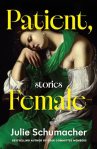 Patient, Female: Stories by Julie Schumacher [May 5, Milkweed Editions]: I found out about this via a webinar with Milkweed and a couple of other U.S. indie publishers. I loved Schumacher’s Dear Committee Members. “[T]his irreverent collection … balances sorrow against laughter. … Each protagonist—ranging from girlhood to senescence—receives her own indelible voice as she navigates social blunders, generational misunderstandings, and the absurdity of the human experience.” The publicist likened the tone to Meg Wolitzer.
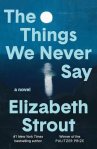 The Things We Never Say by Elizabeth Strout [7 May, Viking (Penguin) / May 5, Random House]: Hurrah for moving on from Lucy Barton at last! “Artie Dam is living a double life. He spends his days teaching history to eleventh graders … and, on weekends, takes his sailboat out on the beautiful Massachusetts Bay. … [O]ne day, Artie learns that life has been keeping a secret from him, one that threatens to upend his entire world. … [This] takes one man’s fears and loneliness and makes them universal.”
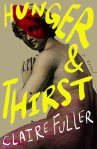 Hunger and Thirst by Claire Fuller [7 May, Penguin / June 2, Tin House]: I’ve read everything of Fuller’s and hope this will reverse the worsening trend of her novels, though true crime is overdone. “1987: After a childhood trauma and years in and out of the care system, sixteen-year-old Ursula … is invited to join a squat at The Underwood. … Thirty-six years later, Ursula is a renowned, reclusive sculptor living under a pseudonym in London when her identity is exposed by true-crime documentary-maker.” (Edelweiss download)
 Little Vanities by Sarah Gilmartin [21 May, ONE (Pushkin)]: Gilmartin’s Service was great. “Dylan, Stevie and Ben have been inseparable since their days at Trinity, when everything seemed possible. … Two decades on, … Dylan, once a rugby star, is stranded on the sofa, cared for by his wife Rachel. Across town, Stevie and Ben’s relationship has settled into weary routine. Then, after countless auditions, Ben lands a role in Pinter’s Betrayal. As rehearsals unfold, the play’s shifting allegiances seep into reality, reviving old jealousies and awakening sudden longings.”
 Said the Dead by Doireann Ní Ghríofa [21 May, Faber / Sept. 22, Farrar, Straus and Giroux]: A Ghost in the Throat was brilliant and this sounds right up my street. “In the city of Cork, a derelict Victorian mental hospital is being converted into modern apartments. One passerby has always flinched as she passes the place. Had her birth occurred in another decade, she too might have lived within those walls. Now, … she finds herself drawn into an irresistible river of forgotten voices”.
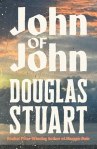 John of John by Douglas Stuart [21 May, Picador / May 5, Grove Press]: I DNFed Shuggie Bain and haven’t tried Stuart since, but the Outer Hebrides setting piqued my attention. “[W]ith little to show for his art school education, John-Calum Macleod takes the ferry back home to the island of Harris [and] begrudgingly resumes his old life, stuck between the two poles of his childhood: his father John, a sheep farmer, tweed weaver, and pillar of their local Presbyterian church, and his maternal grandmother Ella, a profanity-loving Glaswegian”. (For early Shelf Awareness review) (Edelweiss download)
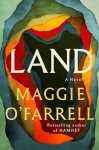 Land by Maggie O’Farrell [2 June, Tinder Press / Knopf]: I haven’t fully loved O’Farrell’s shift into historical fiction, but I’m still willing to give this a go. “On a windswept peninsula stretching out into the Atlantic, Tomás and his reluctant son, Liam [age 10], are working for the great Ordnance Survey project to map the whole of Ireland. The year is 1865, and in a country not long since ravaged and emptied by the Great Hunger, the task is not an easy one.” (Edelweiss download)
Whistler by Ann Patchett [2 June, Bloomsbury / Harper]: Patchett is hella reliable. “When Daphne Fuller and her husband Jonathan visit the Metropolitan Museum of Art, they notice an older, white-haired gentleman following them. The man turns out to be Eddie Triplett, her former stepfather, who had been married to her mother for a little more than year when Daphne was nine. … Meeting again, time falls away; … [in a story of] adults looking back over the choices they made, and the choices that were made for them.” (Edelweiss download)
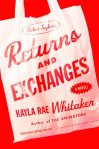 Returns and Exchanges by Kayla Rae Whitaker [2 June, Scribe / May 19, Random House]: Whitaker’s The Animators is one of my favourite novels that hardly anyone else has ever heard of. “A sweeping novel of one [discount department store-owning] Kentucky family’s rise and fall throughout the 1980s—a tragicomic tour de force about love and marriage, parents and [their four] children, and the perils of mixing family with business”. (Edelweiss download)
 The Great Wherever by Shannon Sanders [9 July, Viking (Penguin) / July 7, Henry Holt]: Sanders’s linked story collection Company left me keen to follow her career. Aubrey Lamb, 32, is “grieving the recent loss of her father and the end of a relationship.” She leaves Washington, DC for her Black family’s ancestral Tennessee farm. “But the land proves to be a burdensome inheritance … [and] the ghosts of her ancestors interject with their own exasperated, gossipy commentary on the flaws and foibles of relatives living and dead”. (Edelweiss download)
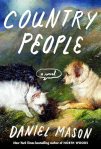 Country People by Daniel Mason [14 July, John Murray / July 7, Random House]: It doesn’t seem long enough since North Woods for there to be another Mason novel, but never mind. “Miles Krzelewski is … twelve years late with his PhD on Russian folktales … [W]hen his wife Kate accepts a visiting professorship at a prestigious college in the far away forests of Vermont, he decides that this will be his year to finally move forward with his life. … [A] luminous exploration of marriage and parenthood, the nature of belief and the power of stories, and the ways in which we find connection in an increasingly fragmented world.”
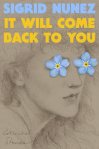 It Will Come Back to You: Collected Stories by Sigrid Nunez [14 July, Virago / Riverhead]: Nunez is one of my favourite authors but I never knew she’d written short stories. The blurb reveals very little about them! “Carefully selected from three decades of work … Moving from the momentous to the mundane, Nunez maintains her irrepressible humor, bite, and insight, her expert balance between intimacy and universality, gravity and levity, all while entertainingly probing the philosophical questions we have come to expect, such as: How can we withstand the passage of time? Is memory the greatest fiction?” (Edelweiss download)
 Exit Party by Emily St. John Mandel [17 Sept., Picador / Sept. 15, Knopf]: The synopsis sounds a bit meh, but in my eyes Mandel can do no wrong. “2031. America is at war with itself, but for the first time in weeks there is some good news: the Republic of California has been declared, the curfew in Los Angeles is lifted, and everyone in the city is going to a party. Ari, newly released from prison, arrives with her friend Gloria … Years later, living a different life in Paris, Ari remains haunted by that night.”
The Housekeeper by Rose Tremain [17 Sept., Vintage (Penguin); no cover image yet]: “Set in 1930s England and fictionalises the inspiration behind Daphne du Maurier’s famous novel, Rebecca.” Strangely, this started life as a short story (in The American Lover), then become a screenplay authored by Tremain (the film is in production and stars Uma Thurman and Anthony Hopkins), and is now being expanded into a novel. Tremain is 82 and a survivor of major cancer; I do wonder if this is the last book we can expect from her.
Nonfiction
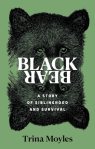 Black Bear: A Story of Siblinghood and Survival by Trina Moyles [Jan. 6, Pegasus Books]: Out now! “When Trina Moyles was five years old, her father … brought home an orphaned black bear cub for a night before sending it to the Calgary Zoo. … After years of working for human rights organizations, Trina returned to northern Alberta for a job as a fire tower lookout, while [her brother] Brendan worked in the oil sands … Over four summers, Trina begins to move beyond fear and observe the extraordinary essence of the maligned black bear”. (For BookBrowse review) (Review e-copy)
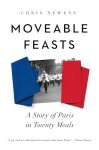 Moveable Feasts: A Story of Paris in Twenty Meals by Chris Newens [Feb. 3, Pegasus Books; came out in the UK in July 2025 but somehow I missed it!]: I’m a sucker for foodie books and Paris books. A “long-time resident of the historic slaughterhouse quartier Villette takes us on a delightful gastronomic journey around Paris … From Congolese catfish in the 18th to Middle Eastern falafels in the 4th, to the charcuterie served at the libertine nightclubs of Pigalle in the 9th, Newens lifts the lid on the city’s ever-changing, defining, and irresistible food culture.” (Edelweiss download)
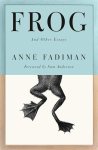 Frog: And Other Essays by Anne Fadiman [Feb. 10, Farrar, Straus and Giroux]: Fadiman publishes rarely, and it can be difficult to get hold of her books, but they are always worth it. “Ranging in subject matter from her deceased frog, to archaic printer technology, to the fraught relationship between Samuel Taylor Coleridge and his son Hartley, these essays unlock a whole world—one overflowing with mundanity and oddity—through sly observation and brilliant wit.”
 The Beginning Comes after the End: Notes on a World of Change by Rebecca Solnit [March 3, Haymarket Books]: A sequel to Hope in the Dark. Hope is a critically endangered species these days, but Solnit has her eyes open. “While the white nationalist and authoritarian backlash drives individualism and isolation, this new world embraces antiracism, feminism, a more expansive understanding of gender, environmental thinking, scientific breakthroughs, and Indigenous and non-Western ideas, pointing toward a more interconnected, relational world.” (Edelweiss download)
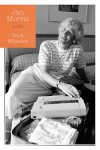 Jan Morris: A Life by Sara Wheeler [7 April, Faber / April 14, Harper]: I didn’t get on with the mammoth biography Paul Clements published in 2022 – it was dry and conventional; entirely unfitting for Morris – but hope for better things from a fellow female travel writer. “Wheeler uncovers the complexity of this twentieth-century icon … Drawing on unprecedented access to Morris’s papers as well as interviews with family, friends and colleagues, Wheeler assembles a captivating … story of longing, traveling and never reaching home.” (Edelweiss download)
Others’ lists whence a few of my ideas came!
What catches your eye here? What other 2026 titles do I need to know about?
Short Stories in September Roundup: Alexie, Donoghue, Groff Anthology, Houston, McCracken, Moore, Svoboda, Walker
I gave myself an extra week to finish up the story collections I was in the middle of, so I’ve managed to read 13 during this challenge to self (including my first and second posts). Again I’m borrowing Marcie’s five-sentence review format to keep things simple.
The Lone-Ranger and Tonto Fistfight in Heaven by Sherman Alexie (1993)
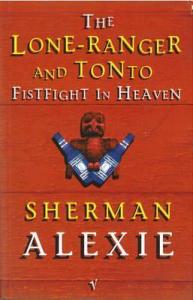 There are 22 stories in this fairly short book, so most top out at no more than 10 pages: little slices of life on and around the reservation at Spokane, Washington. Some central characters recur, such as Victor, Thomas Builds-the-Fire and James Many Horses, but there are so many tales that I couldn’t keep track of them across the book even though I read it quickly. My favourite was “This Is What It Means to Say Phoenix, Arizona,” in which Victor and Thomas fly out to collect the ashes of Victor’s father. Some of the longer titles give a sense of the tone: “Because My Father Always Said He Was the Only Indian Who Saw Jimi Hendrix Play ‘The Star-Spangled Banner’ at Woodstock” and “Jesus Christ’s Half-Brother Is Alive and Well on the Spokane Indian Reservation.” I couldn’t help but think of it as a so-so rehearsal for The Absolutely True Diary of a Part-Time Indian because a similar cast of drunks, jokers, relatives and basketball players populates the stories and a comparable voice prevails. (University library)
The Woman Who Gave Birth to Rabbits by Emma Donoghue (2002)
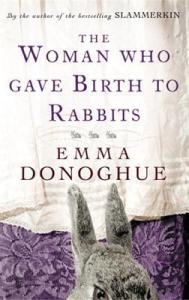 The title story is about Mary Toft – I thought of making her hoax the subject of a Three on a Theme post because I actually have two novels about her downloaded from NetGalley and Edelweiss (Mary and the Rabbit Dream by Noémi Kiss-Deáki and Mary Toft; or, The Rabbit Queen by Dexter Palmer), but the facts as conveyed here don’t seem like nearly enough to fuel a whole book, so I doubt I’ll read those. Donoghue has a good eye for historical curios and incidents and an academic’s gift for research, yet not many of these 17 stories, most of which are in the third person, rise above the novelty. Many protagonists are British or Irish women who were a footnote in the historical record: an animal rights activist, a lord’s daughter, a cult leader, a blind poet, a medieval rioter, a suspected witch. There are mild homoerotic touches, too. I enjoyed “Come, Gentle Night,” about John Ruskin’s honeymoon, and “Cured,” which reveals a terrifying surgical means of controlling women’s moods but, as I found with Astray and Learned by Heart, Donoghue sometimes lets documented details overwhelm other elements of a narrative. (Secondhand – Awesomebooks.com)
The Best Short Stories 2023: The O. Henry Prize Winners, ed. Lauren Groff (2023)
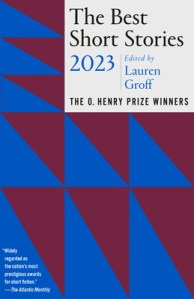 Hard to convey the variety of this 20-story anthology in a concise way because they run the gamut from realist (Nigerian homosexuality in “Happy Is a Doing Word” by Arinze Ifeakandu; Irish gangsters in “The Blackhills” by Eamon McGuinness) to absurd (Ling Ma’s “Office Hours” has academics passing through closet doors into a dream space; the title of Catherine Lacey’s “Man Mountain” is literal; “Ira and the Whale” is Rachel B. Glaser’s gay version of the Jonah legend). Also difficult to encapsulate my reaction, because for every story I would happily have seen expanded into a novel (the gloomy character study “The Locksmith” by Grey Wolfe LaJoie, the teenage friends’ coming-of-age in “After Hours at the Acacia Park Pool” by the marvellous Kirstin Valdez Quade), there was another I thought might never end (“Dream Man” by Cristina Rivera-Garza and “Temporary Housing” by Kathleen Alcott). Three are in translation. I admired Lisa Taddeo’s tale of grief and revenge, “Wisconsin,” and Naomi Shuyama-Gómez’s creepy Colombian-set “The Commander’s Teeth.” But my two favourites were probably “Me, Rory, and Aurora” by Jonas Eika (Danish), which combines an uneasy threesome, the plight of the unhoused and a downright chilling Ishiguro-esque ending; and “Xífù,” K-Ming Chang’s funny, morbid take on daughter/mother-in-law relations in China. (PDF review copy)
Waltzing the Cat by Pam Houston (1998)
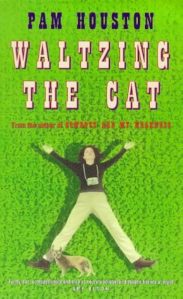 The novel-in-stories is about Lucy, a photographer in her early thirties with a penchant for falling for the wrong men – alcoholics or misogynists or ones who aren’t available. When she’s not working she’s thrill-seeking: rafting in Colorado, travelling in the Amazon, sailing in the Caribbean, or gliding. “Everything good I’ve gotten in life I’ve gotten by plunging in,” she boasts, to which a friend replies, “Sure, and everything bad you’ve gotten in your life you’ve gotten by plunging in.” Ultimately she ‘settles down’ on the Colorado ranch she inherits from her grandmother with a dog, making this – based on what I learned from the autobiographical essays in Deep Creek – even more autofiction for Houston than her debut, Cowboys Are My Weakness, was. Although the final magic realist touch of having her child-self come to her with a box of photographs of traumatic memories is overdone, the themes of accepting vulnerability, seeking to freeze time and creating a home for yourself resonated, and the title story, about the death of Lucy’s mother, is a brilliant and heart-wrenching standalone. (Secondhand – British Red Cross, Berwick)
The Souvenir Museum by Elizabeth McCracken (2021)
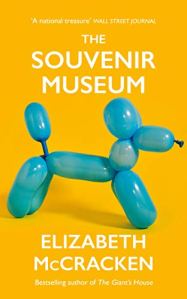 McCracken is terrific in short forms: The Hero of This Book, a novella, was one of my top books of 2022, and I also loved her previous story collection, Thunderstruck. Five of these dozen stories are taken from different points in the lives of Jack and Sadie, English and American academics (who I inevitably read as McCracken and her husband, Edward Carey) who come from large-family zaniness versus claustrophobic mother–daughter melancholy. I kept thinking that McCracken’s are just the sorts of scenarios Lucy and Olive would have told stories about in Tell Me Everything: accidents, misfortunes; random connections. Travel is a major element in many of the stories, including to Denmark (in the title story) and Amsterdam. I couldn’t decide whether I preferred the Jack-and-Sadie material or the rest, but I had a favourite from each: “The Irish Wedding” cracked me up as much as it did Sadie with the accidental use of crass American slang, while “Proof,” about a man communing with his father despite his early dementia, is set on a boat trip I’ve made (in 2004!) to see puffins on the Treshnish islands of Scotland. (Secondhand – Dogs Trust charity shop, Marlborough)
Like Life by Lorrie Moore (1990)
 Compared to Birds of America, this feels a little dated and the plots are overall less memorable. Still, the eight stories of Moore’s second collection are chewy with insight into relationships and the mindsets of youngish and middle-aged women, and there’s an effortless wry wit to her turns of phrase. Her exasperated would-be feminist characters remind me of Helen Simpson’s, while the cheese-selling protagonist of “Joy” made me think of an early Carol Shields story; and who knew a “cute meet” (aka a meet-cute) was a thing back then? New York City contrasts with the Midwest, most notably in “You’re Ugly, Too” and “The Jewish Hunter.” The title story, which comes last, crafts a weirdly muted dystopia built around shortages and marital misery; I preferred the (comparative lightness) of “Vissi d’Arte,” about a lonely playwright, and “Places to Look for Your Mind,” in which an empty-nest entrepreneur hosts an aimless young Englishman her daughter met on her study abroad year. (Secondhand – Bark charity shop, Berwick)
The Long Swim by Terese Svoboda (2023)
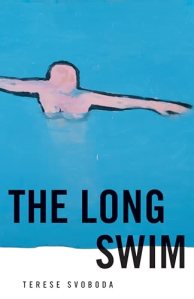 These 44 stories, mostly of flash fiction length, combine the grit of Denis Johnson with the bite of Flannery O’Connor. Siblings squabble over a late parent’s effects or wishes, marriages go wrong, the movie business isn’t as glittering as it’s cracked up to be, and drugs and alcohol complicate everything. The settings range through North America and the Caribbean, with a couple of forays to Europe. There are no speech marks and, whether the narrative is in first person or third, all the voices are genuine and distinctive yet flow together admirably. Svoboda has a poet-like talent for compact, zingy lines; two favourites were “my laziness is born of generalized-looking-to-get-specific grief, like an atom trying to make salt” (“Niagara”) and “Ditziness, a kind of Morse code of shriek-and-stop, erupts around the girls” (“Orphan Shop”).
Winner of the Juniper Prize for Fiction. Published by University of Massachusetts Press. With thanks to the author for the free PDF copy for review.
In Love and Trouble by Alice Walker (1973)
 I’d only ever read The Color Purple, so when I spotted this in a bookshop on our Northumberland holiday it felt like a good excuse to try something else by Walker. I had actually encountered one of the stronger stories before: “Everyday Use” is in the Close Company Virago anthology. In these Southern scenes (“a hate-filled state complete with magnolias, tornadoes and broken-tongued field hands”), Black women oppressed by fathers and partners gain what few advantages they can through deception or folk medicine. I liked “Entertaining God,” which opens with a boy abducting a gorilla from a zoo, and “To Hell with Dying,” about a friendship with an elderly neighbour in cotton country. Setting, style, characters; nothing drew me to any of the others or made me think I’ll read Walker again in the future. (Secondhand – Berrydin Books, Berwick)
Which of these would you read?
Currently reading: I’m not good at picking up short stories in the rest of the year, but I’ve discovered that I really enjoy reviewing them for Shelf Awareness – the length and format of their reviews really suits essay and story collections. So I’m now partway through Save Me, Stranger by Erika Krouse (2025) for an early Shelf Awareness review. Another book I started in Northumberland, Dreams of Dead Women’s Handbags by Shena Mackay, I didn’t finish in time for this challenge but will either continue or set aside and pick back up next year. Both are fantastic!
Three on a Theme: Books on Communes by Crossman, Heneghan & Twigg
Communal living always seems like a great idea but rarely works out well. Why? The short answer: Because people. A longer answer: Political ideals are hard to live out in the everyday when egos clash, practical arrangements become annoying, and lines of privacy or autonomy get crossed. All three books I review today are set in the aftermath of utopian failure. Susanna Crossman, who grew up in an English commune, looks back at 15 years of an abnormal childhood. The community in Birdeye is set to collapse after two founding members announce their departure, leaving one ageing woman and her disabled daughter. And in Spoilt Creatures, from a decade’s distance, Iris narrates the disastrous downfall of Breach House.
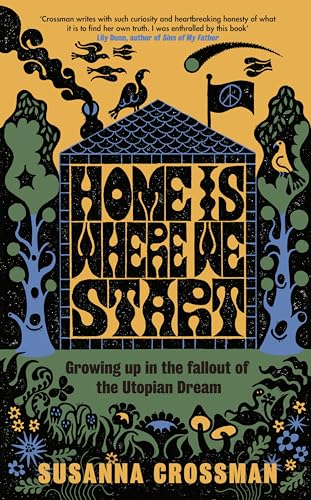
Home Is Where We Start: Growing up in the Fallout of the Utopian Dream by Susanna Crossman
For Crossman’s mother, “the community” was a refuge, a place to rebuild their family’s life after divorce and the death of her oldest daughter in a freak accident. For her three children, it initially was a place of freedom and apparent equality between “the Adults” and “the Kids” – who were swiftly indoctrinated into hippie opinions on the political matters of the day. “There is no difference between private and public conversations, between the inside and the outside. No euphemisms. Vaginas are discussed over breakfast alongside domestic violence and nuclear bombs.” Crossman’s present-tense recreation of her precocious eight-year-old perspective is canny, as when she describes watching Charles and Diana’s wedding on television:
It was beautiful, but I know marriage is a patriarchal institution, a capitalist trap, a snare. You can read about it in Spare Rib, or if you ask community members, someone will tell you marriage is legalized rape. It is a construction, and that means it’s not natural, and is part of the social reproduction of gender roles and women’s unpaid domestic labour.
 Their mum, now known only as “Alison,” often seemed unaware of what the Kids got up as they flitted in and out of each other’s units. Crossman once electrocuted herself at a plug. Another time she asked if she could go to an adult man’s unit for an offered massage. Both times her mother was unfazed.
The author is now a clinical arts therapist, so her recreation is informed by her knowledge of healthy child development and the long-term effects of trauma. She knows the Kids suffered from a lack of routine and individually expressed love. Community rituals, such as opening Christmas presents in the middle of a circle of 40 onlookers, could be intimidating rather than welcoming. Her molestation and her sister’s rape (when she was nine years old, on a trip to India ‘supervised’ by two other adults from the community) were cloaked in silence.
Crossman weaves together memoir and psychological theory as she examines where the utopian impulse comes from and compares her own upbringing with how she tries to parent her three daughters differently at home in France. Through vignettes based on therapy sessions with patients, she shows how play and the arts can help. (I’d forgotten that I’ve encountered Crossman’s writing before, through her essay on clowning for the Trauma anthology.) I somewhat lost interest as the Kids grew into teenagers. It’s a vivid and at times rather horrifying book, but the author doesn’t resort to painting pantomime villains. Behind things were good intentions, she knows, and there is nuance and complexity to her account. It’s a great mix of being back in the moment and having the hindsight to see it all clearly.
With thanks to Fig Tree (Penguin) for the proof copy for review.
Birdeye by Judith Heneghan
Like Crossman’s community, the Birdeye Colony is based in a big crumbling house in the countryside – but this time in the USA; the Catskills of upstate New York, to be precise. Liv Ferrars has been the de facto leader for nearly 50 years, since she was a young mother to twins. Now she’s a sixty-seven-year-old breast cancer survivor. To her amazement, her book, The Attentive Heart, still attracts visitors, “bringing their problems, their pain and loneliness, hoping to be mended, made whole.”
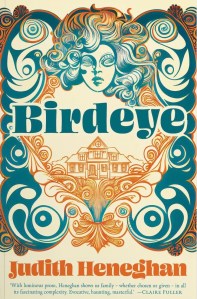 One of the ur-plots is “a stranger comes to town,” and that’s how Birdeye opens, with the arrival of a young man named Conor who’s read and admired Liv’s book, and seems to know quite a lot about the place. When Indian American siblings Sonny and Mishti, the only others who have been there almost from the beginning, announce that they’re leaving, it seems Birdeye is doomed. But Liv wonders if Conor can be part of a new generation to take it on.
It’s a bit of a sleepy book, with a touch of suspense as secrets emerge from Birdeye’s past. I was slightly reminded of May Sarton’s Kinds of Love. I most appreciated the character study of Liv and her very different relationships with her daughters, who are approaching fifty: Mary is a capable lawyer in London, while Rose suffered oxygen deprivation at birth and is severely intellectually disabled. Since Liv’s illness, Mary has pressured her to make plans for Rose’s future and, ultimately, her own. The duty of care we bear towards others – blood family; the chosen family of friends and comrades, even pets – arises as a major theme. I’d recommend this to those who love small-town novels.
With thanks to Salt Publishing for the free copy for review.
& 20 Books of Summer, #20:
Spoilt Creatures by Amy Twigg
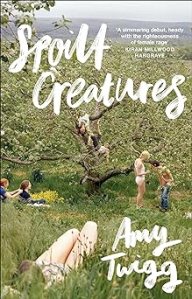 Alas, this proved to be another disappointment from the Observer’s 10 best new novelists feature (following How We Named the Stars by Andrés N. Ordorica). The setup was promising: in 2008, Iris reeling from her break-up from Nathan and still grieving her father’s death in a car accident, goes to live at Breach House after a chance meeting with Hazel, one of the women’s commune’s residents. “Breach House was its own ecosystem, removed from the malfunctioning world of indecision and patriarchy.” Any attempts to mix with the outside world go awry, and the women gain a reputation as strange and difficult. I never got a handle on the secondary characters, who fill stock roles (the megalomaniac leader, the reckless one, the disgruntled one), and it all goes predictably homoerotic and then Lord of the Flies. The dual-timeline structure with Iris’s reflections from 10 years later adds little. An example of the commune plot done poorly, with shallow conclusions rather than deeper truths at play.
With thanks to Tinder Press for the free copy for review.
On this topic, I have also read:
Novels:
Arcadia by Lauren Groff
The Blithedale Romance by Nathaniel Hawthorne
On my TBR:
O Sinners by Nicole Cuffy
We Burn Daylight by Bret Anthony Johnston
Nonfiction:
Heaven Is a Place on Earth by Adrian Shirk
Women’s Prize 2024: Longlist Predictions vs. Wishes
This is the fourth year in a row that I’ve made predictions for the Women’s Prize longlist (the real thing comes out on Tuesday, 6 p.m. GMT). It shows how invested I’ve become in this prize in recent years. Like I did last year, I’ll give predictions, then wishes (no overlap this time!). My wishes are based on what I have already read and want to read. Although I kept tabs on publishers and ‘free entries’ for previous winners and shortlistees, I didn’t let quotas determine my selections. And while I kept in mind that there are two novelists on the judging panel, I don’t know enough about any of these judges’ taste to be able to tailor my predictions. My only thought was that they will probably appreciate good old-fashioned storytelling … but also innovative storytelling.
(There are two books – The List of Suspicious Things by Jennie Godfrey (= Joanna Cannon?) and Jaded by Ela Lee (this year’s Queenie) – that I only heard about as I was preparing this post and seem pretty likely, but I felt that it would be cheating for me to include them.)
Predictions
The Three of Us, Ore Agbaje-Williams
The Future, Naomi Alderman
The Storm We Made, Vanessa Chan
Penance, Eliza Clark


The Wren, The Wren, Anne Enright
A House for Alice, Diana Evans
Piglet, Lottie Hazell
Pineapple Street, Jenny Jackson


Yellowface, R. F. Kuang
Biography of X, Catherine Lacey
Julia, Sandra Newman
The Vulnerables, Sigrid Nunez


Tom Lake, Ann Patchett
In Memory of Us, Jacqueline Roy
The Fraud, Zadie Smith
Land of Milk and Honey, C. Pam Zhang


Wish List
Family Lore, Elizabeth Acevedo
The Sleep Watcher, Rowan Hisayo Buchanan
The Unfortunates, J. K. Chukwu
The Three Graces, Amanda Craig


Learned by Heart, Emma Donoghue
Service, Sarah Gilmartin
The Vaster Wilds, Lauren Groff
Reproduction, Louisa Hall


Happiness Falls, Angie Kim
Bright Young Women, Jessica Knoll
A Sign of Her Own, Sarah Marsh
The Fetishist, Katherine Min


Hello Beautiful, Ann Napolitano
Mrs S, K Patrick
Romantic Comedy, Curtis Sittenfeld
Absolutely and Forever, Rose Tremain


If I’m lucky, I’ll get a few right from across these two lists; no doubt I’ll be kicking myself over the ones I considered but didn’t include, and marvelling at the ones I’ve never heard of…
What would you like to see on the longlist?
Appendix
(A further 50 novels that were on my radar but didn’t make the cut. Like last year, I made things easy for myself by keeping an ongoing list of eligible novels in a file on my desktop.)
Everything Is Not Enough, Lola Akinmade Akerstrom
The Wind Knows My Name, Isabel Allende
Swanna in Love, Jennifer Belle
The Sisterhood, Katherine Bradley
The Fox Wife, Yangsze Choo
The Guest, Emma Cline
Speak to Me, Paula Cocozza
Talking at Night, Claire Daverley
Clear, Carys Davies
Bellies, Nicola Dinan
The Happy Couple, Naoise Dolan
In Such Tremendous Heat, Kehinde Fadipe
The Memory of Animals, Claire Fuller
Anita de Monte Laughs Last, Xochitl Gonzalez
Normal Women, Ainslie Hogarth
Sunburn, Chloe Michelle Howarth
Loot, Tania James
The Half Moon, Mary Beth Keane
Morgan Is My Name, Sophie Keetch
Soldier Sailor, Claire Kilroy
8 Lives of a Century-Old Trickster, Mirinae Lee
August Blue, Deborah Levy
Winter Animals, Ashani Lewis
Rosewater, Liv Little
The Couples, Lauren Mackenzie
Tell Me What I Am, Una Mannion
She’s a Killer, Kirsten McDougall
The Misadventures of Margaret Finch, Claire McGlasson
Nightbloom, Peace Adzo Medie
I Am Homeless If This Is Not My Home, Lorrie Moore
The Lost Wife, Susanna Moore
Okay Days, Jenny Mustard
Parasol against the Axe, Helen Oyeyemi
The Human Origins of Beatrice Porter and Other Essential Ghosts, Soraya Palmer
The Lodgers, Holly Pester
Night Wherever We Go, Tracey Rose Peyton
The Mars House, Natasha Pulley
Playing Games, Huma Qureshi
Come and Get It, Kiley Reid
High Time, Hannah Rothschild
Commitment, Mona Simpson
Death of a Bookseller, Alice Slater
Bird Life, Anna Smail
Stealing, Margaret Verble
Help Wanted, Adelle Waldman
Temper, Phoebe Walker
Hang the Moon, Jeannette Walls
Moral Injuries, Christie Watson
Ghost Girl, Banana, Wiz Wharton
Speak of the Devil, Rose Wilding
Best Books from 2023
Keeping it simple again this year with one post covering all genres: the 24 (or, actually 26) current-year releases that stood out the most for me. (No rankings; anything from my Best of First Half that didn’t make it through can be considered a runner-up, along with The Librarianist.)


Fiction
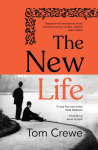 The New Life by Tom Crewe: Two 1890s English sex researchers (based on John Addington Symonds and Havelock Ellis) write a book called Sexual Inversion drawing on ancient Greek history and containing case studies of homosexual behaviour. Oscar Wilde’s trial puts everyone on edge; not long afterwards, their own book becomes the subject of an obscenity trial, and each man has to decide what he’s willing to give up in devotion to his principles. This is deeply, frankly erotic stuff, and, on the sentence level, just exquisite writing.
 The Vaster Wilds by Lauren Groff: Groff’s fifth novel combines visceral detail and magisterial sweep as it chronicles a runaway Jamestown servant’s struggle to endure the winter of 1610. Flashbacks to traumatic events seep into her mind as she copes with the harsh reality of life in the wilderness. The style is archaic and postmodern all at once. Evocative and affecting – and as brutal as anything Cormac McCarthy wrote. A potent, timely fable as much as a historical novel.
Counting as one this thematic trio of women’s true crime pastiches; I liked the Makkai best.
Penance by Eliza Clark: A compelling account of teenage feuds and bullying that went too far and ended in murder. It’s a pretty gruesome crime, but memorable, not least because it coincided with the day of the Brexit vote. I loved Clark’s portrait of Crow-on-Sea, a down-at-heel seaside town near Scarborough, and the depth of character that comes through via interviews and documents. She also nails teenage dialogue and social media use, podcasts, true crime obsession and so on.

 Bright Young Women by Jessica Knoll: An engrossing story of a Type A sorority president whose perfect life goes askew when a serial killer targets the house and kills two of her friends. She and the domestic partner of one of his previous victims are determined to see “the Defendant” brought to justice. 1970s Florida/Washington were interesting settings, and I liked the focus on the victims. The judge in the Defendant’s case lamented that such a bright young man would come to grief; think of the bright young women he extinguished instead.
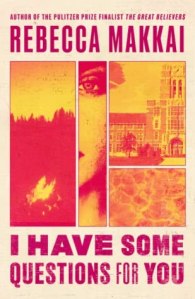
I Have Some Questions for You by Rebecca Makkai: When an invitation comes from her boarding school alma mater, Granby, to teach a two-week course on podcasting, Bodie indulges her obsession with the 1995 murder of her former roommate. Makkai has taken her cues from the true crime genre and constructed a convincing mesh of evidence and theories. She so carefully crafts her pen portraits, and so intimately involves us in Bodie’s psyche, that it’s impossible not to get invested. This is timely, daring, intelligent, enthralling storytelling.
 Sidle Creek by Jolene McIlwain: In this debut collection of 22 short stories, loosely linked by their location in the Appalachian hills in western Pennsylvania and a couple of recurring minor characters, McIlwain softens the harsh realities of addiction, poverty and violence with the tender bruises of infertility and lost love. Grief is a resonant theme in many of the stories, with pregnancy or infant loss a recurring element. At times harrowing, always clear-eyed, these stories are true to life and compassionate about human foibles and animal pain.
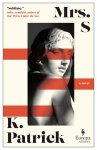 Mrs S by K Patrick: Patrick’s unnamed narrator is an early-twenties Australian butch lesbian who has come to England to be a matron at a girls’ boarding school. Mrs S is the headmaster’s wife, perhaps 20 years her senior. A heat wave gives a sultry atmosphere as hints of attraction between them give way to explicit scenes. Summer romances never last, but their intensity is legendary, and this feels like an instant standard. Not your average coming-of-age story, seduction narrative or cougar stereotype. It’s a new queer classic.
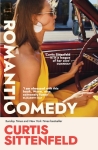 Romantic Comedy by Curtis Sittenfeld: Through her work as a writer for a sketch comedy show modelled on Saturday Night Live, Sally Milz meets Noah Brewster, a pop star with surfer-boy good looks. Plain Jane getting the hot guy – that never happens, right? In fact, Sally has a theory about this very dilemma… As always, Sittenfeld’s inhabiting of a first-person narrator is flawless, and Sally’s backstory and Covid-lockdown existence endeared her to me. Could this be called predictable? Well, what does one want from a romcom?
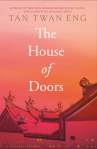 The House of Doors by Tan Twan Eng: In 1921, “Willie” Somerset Maugham and his secretary/lover, Gerald, stay with old friends Robert and Lesley Hamlyn in Penang, Malaysia. Willie’s marriage is floundering and he faces financial ruin. He needs a story that will sell and gets one when Lesley starts recounting the momentous events of 1910: volunteering at the party office of Dr Sun Yat Sen and trying to save her friend from a murder charge. Tan weaves it all into a Maugham-esque plot with sumptuous scene-setting and atmosphere.
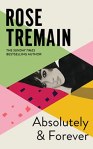 Absolutely and Forever by Rose Tremain: At age 15, Marianne falls in love. She imagines her romance with Simon as a grand adventure (and escape from her parents’ ordinariness), but his post-school life in Paris doesn’t have room for her. Much changes over the next 15 years, but never her attachment to her first love. This has the chic, convincing 1960s setting of Tessa Hadley’s work, and Marianne’s droll narration is a delight. It put me through an emotional wringer – no cheap tear-jerker but a tender depiction of love in all its forms.
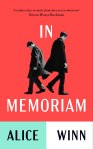 In Memoriam by Alice Winn: Heartstopper on the Western Front; swoon! Will Sidney Ellwood and Henry Gaunt both acknowledge that this is love and not just sex, as it is for so many teenage boys at their English boarding school? And will one or both survive the trenches of the First World War? Winn depicts the full horror of war, but in between there is banter, friendship and poetry. Some moments are downright jolly. This debut is obsessively researched, but Winn has a light touch with it. Engaging, thrilling, and, yes, romantic.
Nonfiction
 All My Wild Mothers by Victoria Bennett: A lovely memoir about grief and gardening, caring for an ill child and a dying parent. The book is composed of dozens of brief autobiographical, present-tense essays, each titled after a wildflower with traditional healing properties. The format realistically presents bereavement and caring as ongoing, cyclical challenges rather than one-time events. Sitting somewhere between creative nonfiction and nature essays, it’s a beautiful read for any fan of women’s life writing.
 Monsters by Claire Dederer: The question posed by this hybrid work of memoir and cultural criticism is “Are we still allowed to enjoy the art made by horrible people?” It begins, in the wake of #MeToo, by reassessing the work of film directors Roman Polanski and Woody Allen. The book is as compassionate as it is incisive. While there is plenty of outrage, there is also much nuance. Dederer’s prose is forthright and funny; lucid even when tackling thorny issues. Erudite, empathetic and engaging from start to finish.
 Womb by Leah Hazard: A wide-ranging and accessible study of the uterus, this casts a feminist eye over history and future alike. Blending medical knowledge and cultural commentary, it cannot fail to have both personal and political significance for readers of any gender. The thematic structure of the chapters also functions as a roughly chronological tour of how life with a uterus might proceed: menstruation, conception, pregnancy, labour, caesarean section, ongoing health issues, menopause. Inclusive and respectful of diversity.
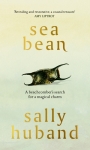 Sea Bean by Sally Huband: Stories of motherhood, the quest to find effective treatment in a patriarchal medical system, volunteer citizen science projects, and studying Shetland’s history and customs mingle in a fascinating way. Huband travels around the archipelago and further afield, finding vibrant beachcombing cultures. In many ways, this is about coming to terms with loss, and the author presents the facts about climate crisis with sombre determination. She writes with such poetic tenderness in this radiant debut memoir.
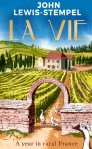 La Vie by John Lewis-Stempel: The author has written much about his Herefordshire haunts, but he’s now relocated permanently to southwest France (La Roche, in the Charente). He proudly calls himself a peasant farmer, growing what he can and bartering for much of the rest. La Vie chronicles a year in his quest to become self-sufficient. It opens one January and continues through the December, an occasional diary with recipes. It’s a peaceful, comforting read that’s attuned to the seasons and the land. Lewis-Stempel’s best book in an age.
 All of Us Together in the End by Matthew Vollmer: In 2019, Vollmer’s mother died of complications of Alzheimer’s and Parkinson’s. Months later, his father reported blinking lights in the woods near the family cemetery. Although Vollmer had left the Seventh-Day Adventist Church in college, his religious upbringing influenced his investigation, which overlapped with COVID-19. Grief, mysticism, and acceptance of the unexplained are resonant themes. An unforgettable record of “a collision with the ineffable.”
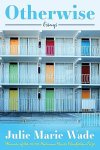 Otherwise by Julie Marie Wade: Nine intricate autobiographical essays reflect on risk, bodily autonomy, and poetry versus prose. A series of meditations composed across Wade’s thirties arranges snapshots of her growing frustration with gendered stereotypes. In particular, she interrogates her rosy childhood notions of marriage. As she explored feminism and accepted her lesbian identity—though not before leaving a man at the altar—she found ways to be “a secular humanist by day and a hopeless romantic by night.” Superb.
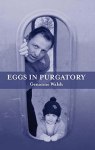 Eggs in Purgatory by Genanne Walsh: This autobiographical essay tells the story of the last few months of her father’s life. Aged 89, he lived downstairs from Walsh and her wife in San Francisco. He was quite the character: idealist, stubborn, outspoken; a former Catholic priest. Although he had no terminal conditions, he was sick of old age and its indignities and ready to exit. The task of a memoir is to fully mine the personal details of a situation but make of it something universal, and that’s just what she does here. Stunning.
Poetry
 More Sky by Joe Carrick-Varty: In this debut collection, the fact of his alcoholic father’s suicide is inescapable. The poet alternates between an intimate “you” address and third-person scenarios, auditioning coping mechanisms. His frame of reference is wide: football, rappers, Buddhist cosmology. The word “suicide” itself is repeated to the point where it becomes just a sibilant collection of syllables. The tone is often bitter, as is to be expected, but there is joy in the deft use of language.
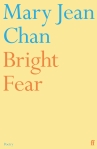 Bright Fear by Mary Jean Chan: This follow-up to Flèche takes up many of the same foundational subjects: race, family, language and sexuality. But this time, the pandemic is the lens through which all is filtered. At a time when Asian heritage merited extra suspicion, English was both a means of frank expression and a source of ambivalence. At the centre of the book, “Ars Poetica,” a multi-part collage incorporating lines from other poets, forms a kind of autobiography in verse. Chan also questions the lines between genres. Excellent.
 Lo by Melissa Crowe: This incandescent autobiographical collection delves into the reality of sexual abuse and growing up in rural poverty. Guns are insidious, used for hunting or mass shootings. Trauma lingers. “Maybe home is what gets on you and can’t / be shaken loose.” The collection is so carefully balanced in tone that it never feels bleak. In elegies and epithalamiums (poems celebrating marriage), Crowe honors family ties that bring solace. The collection has emotional range: sensuality, fear, and wonder at natural beauty.
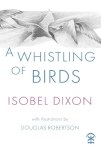 A Whistling of Birds by Isobel Dixon: I was drawn to this for its acknowledged debt to D.H. Lawrence’s Birds, Beasts and Flowers. Snakes, bees, bats and foxes are some of the creatures that scamper through the text. There are poems for marine life, fruit and wildflowers. You get a sense of the seasons turning, and the natural wonders to prize from each. Dixon’s poetry is formal yet playful, the structures and line and stanza lengths varying. There are portraits and elegies. The book is in collaboration with Scottish artist Douglas Robertson. A real gem.
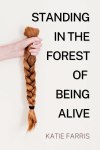 Standing in the Forest of Being Alive by Katie Farris: This debut collection addresses the symptoms and side effects of breast cancer treatment at age 36, but often in oblique or cheeky ways – it can be no mistake that “assistance” appears two lines before a mention of hemorrhoids, for instance, even though it closes an epithalamium distinguished by its gentle sibilance (Farris’s husband is Ukrainian American poet Ilya Kaminsky.) She crafts sensual love poems, and exhibits Japanese influences. (Discussed in my review essay for The Rumpus.)
 The House of the Interpreter by Lisa Kelly: Kelly is half-Danish and has single-sided deafness, and her second collection engages with questions of split identity. One section ends with the Deaf community’s outrage that the Prime Minister’s Covid briefings were not translated into BSL. Bizarre but delightful is the sequence of alliteration-rich poems about fungi, followed by a miscellany of autobiographical poems full of references to colour, language, nature and travel.
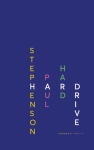 Hard Drive by Paul Stephenson: This wry, wrenching debut collection is an extended elegy for his partner, Tod Hartman, an American anthropologist who died of heart failure at 38. There’s every style, tone and structure imaginable here. Stephenson riffs on his partner’s oft-misspelled name (German for death), and writes of discovery, autopsy, sadmin and rituals. In “The Only Book I Took” he opens up Tod’s copy of Joan Didion’s The Year of Magical Thinking – which came from Wonder Book, the bookstore chain I worked at in Maryland!
Okay, twist my arm … if I had to pick my overall books of the year, I’d concur with the Times in picking The New Life. In nonfiction: Monsters. In poetry: Standing in the Forest of Being Alive.


Have you read any of my favourites? What 2023 releases do I need to catch up on right away?
Short Stories in September Roundup: Munro, Ulrich; Virago Anthology
This comes a few days later than I intended, but better late than never. I’ve been focusing on short stories in September for the last eight years. In September 2021 I read 12 short story collections; last year it was 11.5; this year I finished 11, so pretty much par for the course, and pushing my year-to-date total to 30 story collections – not bad going for someone who feels like she hardly ever reads stories and doesn’t seek them out. This year’s reviews are here, here and here.
Hateship, Friendship, Courtship, Loveship, Marriage by Alice Munro (2001)
I always think I’ve never read Munro before, but that’s not the case. A decade or more ago I read Lives of Girls and Women. The ironic thing is that I chose it because I thought it was the odd one out in her oeuvre, being a novel rather than short stories. In fact, it’s a linked story collection, and really they might as well be discrete stories. That book left no impression, but I’d happened to accumulate several more Munro collections over the years and, especially after she won the Nobel, felt delinquent for not reading her.
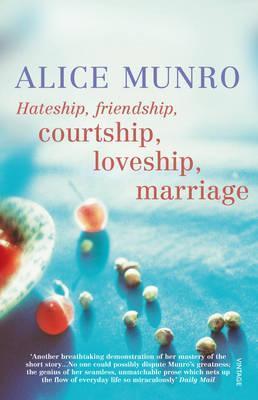 There are nine stories in the 320-page volume, so the average story here is 30–35 pages – a little longer than I tend to like, but it allows Munro to fill in enough character detail that these feel like miniature novels; they certainly have all the emotional complexity. Her material is small-town Ontario and the shifts and surprises in marriages and dysfunctional families.
More commonly, she employs an omniscient third person to allow her to move between minds, yet I found that the three first-person stories were among the most memorable: in “Family Furnishings,” a woman recalls the encounter with her father’s cousin that made her resolve to be a writer; in “Nettles,” childhood friends meet again in midlife and a potential affair is quashed by the report of a tragedy; in “Queenie,” a young woman spends a short time living with her older stepsister and her husband, her music teacher she ran off with. This last one reminded me of Tessa Hadley’s stories – no doubt Munro has been an influence on many.
For instance, the title story, which opens the collection, gave me strong Elizabeth Hay and Mary Lawson vibes. A housekeeper sets off on the train to start a new life, encouraged by a romantic correspondence fabricated by her adolescent charge, Sabitha, and her friend. Munro pays close attention to domestic minutiae like furniture and clothing. Illness and death are frequent seeds of a story: cancer in “Floating Bridge,” the suicide of an ALS patient in “Comfort,” and dementia in the oft-anthologized “The Bear Came Over the Mountain.”
Individual plots are less likely to stay with me than the quality of the prose, the compassionate eye, and the feeling of being immersed in a novel-length narrative when really I was only halfway through a few dozen pages. I’ll certainly read more Munro collections. (Free from a neighbour) 
Close Company: Stories of Mothers and Daughters, ed. Christine Park and Caroline Heaton (1987)
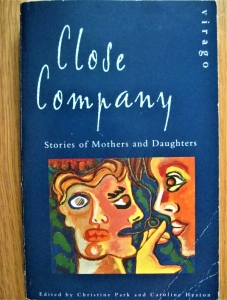 Back in 2021, I read 14 of these 25 stories (reviewed here) and set the book aside. At that time I noted the repeated theme of women’s expectations of their daughters, and that was true of the remainder as well. The editors quote Simone de Beauvoir in the introduction, “the daughter is for the mother at once her double and another person.” So in Emily Prager’s “A Visit from the Footbinder,” Lady Guo Guo subjects her spirited daughter to the same painful procedure she underwent as a child. The cultural detail was overpowering in this one, like the author felt she had to prove she’d done her research on China. The father–daughter relationship struck me more in Judith Chernaik’s Jewish Brooklyn-set “Honor Thy Father and Thy Mother.”
From this batch, two stood out the most: in “Children’s Liberation” by Jan Clausen, Lisa rebels against her lesbian mother’s bohemian lifestyle by idolizing heterosexual love stories; and in Zhang Jie’s “Love Must Not Be Forgotten,” a daughter comes to understand her mother by reading her diary about her doomed romance. My overall favourites, though, were still the stories by Jane Gardam, Janet Frame, Alice Walker and Charlotte Perkins Gilman. (Free mall bookshop) 
Small, Burning Things by Cathy Ulrich (2023)
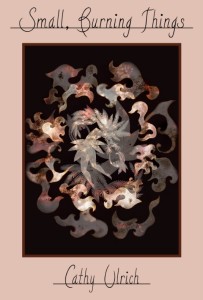 Ulrich’s second collection contains 50 flash fiction pieces, most of which were first published in literary magazines. She often uses the first-person plural and especially the second person; both “we” and “you” are effective ways of implicating the reader in the action. Her work is on a speculative spectrum ranging from magic realism to horror. Some of the situations are simply bizarre – teenagers fall from the sky like rain; a woman falls in love with a giraffe; the mad scientist next door replaces a girl’s body parts with robotic ones – while others are close enough to the real world to be terrifying. The dialogue is all in italics. Some images recur later in the collection: metamorphoses, spontaneous combustion. Adolescent girls and animals are omnipresent. At a certain point this started to feel repetitive and overlong, but in general I appreciated the inventiveness.
Published on 2 July by Okay Donkey Press. With thanks to publicist Lori Hettler for the free e-copy for review.
 I also read the first two stories in The Best Short Stories 2023: The O. Henry Prize Winners, edited by Lauren Groff. If these selections by Ling Ma and Catherine Lacey are anything to go by, Groff’s taste is for gently magical stories where hints of the absurd or explained enter into everyday life. Ma’s “Office Hours” has academics passing through closet doors into a dream space; the title of Lacey’s “Man Mountain” is literal. I’ll try to remember to occasionally open the book on my e-reader to get through the rest.
September Releases by Chloe Lane, Ben Lerner, Navied Mahdavian & More
September and October are bounteous months in the publishing world. I’ll have a bunch of books to plug in both, mostly because I’ve upped my reviewing quota for Shelf Awareness. There’s real variety here, from contemporary novellas and heavily autobiographical poetry to nature essays and a graphic memoir.
Arms & Legs by Chloe Lane
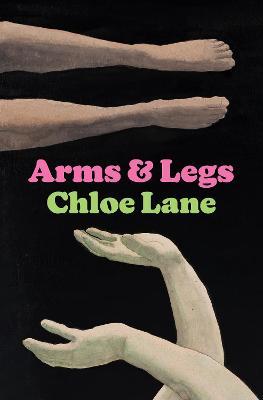 I reviewed Lane’s debut novel, The Swimmers, a black comedy about a family preparing for an assisted suicide, this time last year. It seems there’s an autobiographical setup to the author’s follow-up, which focuses on a couple from New Zealand now living in Florida with their young son. Narrator Georgie teaches writing at a local college and is having an affair with Jason, an Alabama-accented librarian she met through taking Finn to the Music & Movement class. She joins in a volunteer-led controlled burn in the forest, and curiosity quickly turns to horror when she discovers the decaying body of a missing student.
There’s a strong physicality to this short novel: fire, bodies and Florida’s dangerous fauna (“To choose to live in a place surrounded by these creatures, these threats, it made me feel like I was living a bold life”). Georgie has to decide whether setting fire to her marriage with Dan is what she really wants. A Barry Hannah short story she reads describes adultery as just a matter of arms and legs, a phrase that’s repeated several times.
Georgie is cynical and detached from her self-destructive choices, coming out with incisive one-liners (“My life isn’t a Muriel Spark novel, there’s no way to flash forward and find out if I make it out of the housefire alive” and “He rested the spade on his shoulder as if he were a Viking taking a drinks break in the middle of a battle”). Lane burrows into instinct and motivation, also giving a glimpse of the challenges of new motherhood. Apart from a wicked dinner party scene, though, the book as a whole was underwhelming: the body holds no mystery, and adultery is an old, old story.
With thanks to Gallic Books for the proof copy for review.
The Lights by Ben Lerner
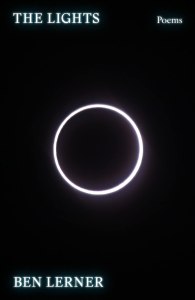 I’d read fiction and nonfiction from Lerner but had no idea of what to expect from his poetry. Almost every other poem is a prose piece, many of these being absurdist monologues that move via word association between topics seemingly chosen at random: psychoanalysis, birdsong, his brother’s colorblindness; proverbs, the Holocaust; art conservation, his partner’s upcoming C-section, an IRS Schedule C tax form, and so on.
The vocabulary and pronouncements can be a little pretentious. The conversational nature and randomness of the subjects contribute to the same autofiction feel you get from his novels. For instance, he probes parenting styles: his parents’ dilemma between understanding his fears and encouraging him in drama and sport; then his daughters’ playful adoption of his childhood nickname of Benner for him.
A few highlights: the enjambment in “Index of Themes”; the commentary on pandemic strictures and contrast between ancient poetry and modern technology in “The Stone.” I wouldn’t seek out more poetry by Lerner, but this was interesting to try. (Read via Edelweiss)
Sample lines:
“When you die in the patent office / there’s a pun on expiration”
“the goal is to be on both sides of the poem, / shuttling between the you and I. … Form / is always the answer to the riddle it poses”
“It’s raining now / it isn’t, or it’s raining in the near / future perfect when the poem is finished / or continuous, will have been completed”
This Country: Searching for Home in (Very) Rural America by Navied Mahdavian
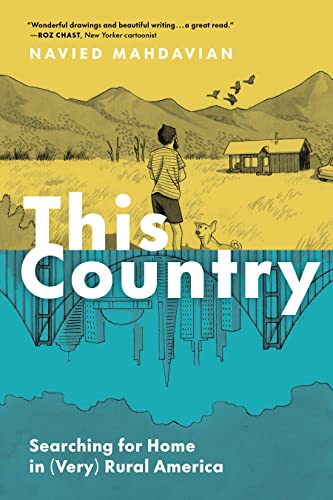 Mahdavian has also published comics in the New Yorker. His debut graphic novel is a memoir of the three years (2016–19) he and his wife lived in remote Idaho. Of Iranian heritage, the author had lived in Miami and then the Bay Area, so was pretty unprepared for living off-grid. His wife, Emelie (who is white), is a documentary filmmaker. They had a box house brought in on a trailer. After Trump’s surprise win, it was a challenging time to be a Brown man in the rural USA. “You’re not a Muslim, are you?” was the kind of question he got on their trips into town. Neighbors were outwardly friendly – bringing them firewood and elk kebabs, helping when their car wouldn’t start or they ran off the road in icy conditions, teaching them the local bald eagles’ habits – yet thought nothing of making racist and homophobic slurs.
I appreciated the self-deprecating depictions of learning DIY from YouTube videos and feeling like a wimp in comparison to his new friends who hunt and have gun collections – one funny spread has him imagining himself as a baby in a onesie sitting across from a manly neighbor. “I am shedding my city madness,” Mahdavian boasts as they plant an abundant garden and start learning about trees and birds. The references to Persian myth and melodrama are intriguing, though sometimes seem à propos of nothing, as do the asides on science and nature. I preferred when the focus was on the couple’s struggles with infertility and reopening the town movie theater – a flop because people only want John Wayne flicks.
This was enjoyable reading, but the simple black-and-white style is unlikely to draw in readers new to graphic storytelling, and I wondered if the overall premise – ‘we expected to find closed-minded racists and we did’ – was enough to hang a memoir on. (Read via Edelweiss)
Reviewed for Shelf Awareness:
(Links to full text)
The Wren, The Wren by Anne Enright
 Enright’s astute eighth novel traces the family legacies of talent and trauma through the generations descended from a famous Irish poet. Cycles of abandonment and abuse characterize the McDaraghs. Enright convincingly pinpoints the narcissism and codependency behind their love-hate relationships. (It was an honor to also interview Anne Enright. You can see our Q&A here.)
When My Ghost Sings by Tara Sidhoo Fraser
 This lyrical debut memoir is an experimental, literary recounting of the experience of undergoing a stroke and relearning daily skills while supporting a gender-transitioning partner. Fraser splits herself into two: the “I” moving through life, and “Ghost,” her memory repository. But “I can’t rely only on Ghost’s mental postcards,” Fraser thinks, and sets out to retrieve evidence of who she was and is.
The Vaster Wilds by Lauren Groff
(Already featured in my Best of 2023 so far post.) Groff’s fifth novel combines visceral detail and magisterial sweep as it chronicles a runaway Jamestown servant’s struggle to endure the winter of 1610. Flashbacks to traumatic events seep into her mind as she copes with the harsh reality of life in the wilderness. The style is archaic and postmodern all at once. Evocative and affecting – and as brutal as anything Cormac McCarthy wrote. A potent, timely fable as much as a historical novel.
Zoo World: Essays by Mary Quade
 A collection of 15 thoughtful nature/travel essays that explore the interconnectedness of life and conservation strategies, and exemplify compassion for people and, particularly, animals. The book makes a round-trip journey, beginning at Quade’s Ohio farm and venturing further afield in the Americas and to Southeast Asia before returning home.
The Goodbye World Poem by Brian Turner
 The lovely laments in Brian Turner’s fourth collection (a sequel to The Wild Delight of Wild Things) dwell in the aftermath of the loss of his wife and others, and cultivate compensatory appreciation for the natural world. Turner’s poetry is gilded with alliteration and maritime metaphors The long title piece, which closes the collection, repeats many phrases from earlier poems—a pleasing way of drawing the book’s themes together. (My review of the third volume in this loose trilogy is forthcoming.)
And a bonus review book, relevant for its title:
September and the Night by Maica Rafecas
[Translated from the Catalan by Megan Berkobien and María Cristina Hall]
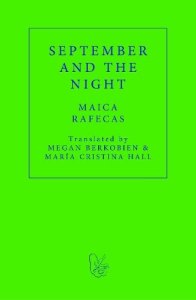 A new Logistics Centre is to cut through Anaïs’s family vineyards as part of a compulsory land purchase. While her father, Magí, and brother, Jan, are resigned to the loss, this single mother decides to resist, tying herself to a stone shed on the premises that will be right in the path of the bulldozers. This causes others to question her mental health, with social worker Elisa tasked with investigating the case. Key evidence of her irrational behaviour turns out to have perfectly good explanations.
Certain chapters alternate Jan’s and Anaïs’s perspectives, recreate her confusion in a psychiatric hospital, or have every sentence beginning with “There” or “And” – effective anaphora. Although I didn’t think Jan’s several romantic options added to the plot, this debut novella from a Spanish author was a pleasant surprise. It’s based on a true story, though takes place in fictional locations, and bears a gentle message of cultural preservation.
With thanks to Fum d’Estampa Press for the free copy for review.
The Best Books from the First Half of 2023
Yes, it’s that time of year already! It remains to be seen how many of these will make it onto my overall best-of year list, but for now, these are my 20 highlights. Plus, I sneakily preview another great novel that won’t release until September. (For now I’m highlighting 2023 releases, whereas at the end of the year I divide my best-of lists into current year and backlist. I’ve read 86 current-year releases so far and am working on another 20, so I’m essentially designating a top 20% here.) I give review excerpts and link to the full text from this site or elsewhere. Pictured below are the books I read in print; all the others were e-copies.

Fiction
 Shoot the Horses First by Leah Angstman: In 16 sumptuous historical stories, outsiders and pioneers face disability and prejudice with poise. The flash entries crystallize moments of realization, often about health. Longer pieces shine as their out-of-the-ordinary romances have space to develop. In the novella Casting Grand Titans, a botany professor in 1850s Iowa learns her salary is 6% of a male colleague’s. She strives for intellectual freedom, reporting a new-to-science species of moss, while working towards liberation for runaway slaves.
 The House Is on Fire by Rachel Beanland: Moving at a propulsive pace, Beanland’s powerful second novel rotates through the perspectives of these main characters – two men and two women; two white people and two enslaved Black people – caught up in the Richmond Theater Fire of 1811 (one of the deadliest events in early U.S. history) and its aftermath. Painstakingly researched and full of historical detail and full-blooded characters, it dramatizes the range of responses to tragedy and how people rebuild their lives.
The New Life by Tom Crewe: Two 1890s English sex researchers (based on John Addington Symonds and Havelock Ellis) write a book called Sexual Inversion drawing on ancient Greek history and containing case studies of homosexual behaviour. Oscar Wilde’s trial puts everyone on edge; not long afterwards, their own book becomes the subject of an obscenity trial, and each man has to decide what he’s willing to give up in devotion to his principles. This is deeply, frankly erotic stuff, and, on the sentence level, just exquisite writing.
 Daughters of Nantucket by Julie Gerstenblatt: (Yes, another historical fire novel, and I reviewed both for Shelf Awareness!) This engrossing debut explores the options for women in the mid-19th century. Metaphorical conflagrations blaze in the background in the days leading up to the great Nantucket fire of 1846: each of three female protagonists (a whaling captain’s wife, a museum curator, and a pregnant Black entrepreneur) holds a burning secret and longs for a more expansive, authentic life. Tense and sultry; for Sue Monk Kidd fans.
 I Have Some Questions for You by Rebecca Makkai: When an invitation comes from her boarding school alma mater, Granby, to teach a two-week course on podcasting, Bodie indulges her obsession with the 1995 murder of her former roommate. Makkai has taken her cues from the true crime genre and constructed a convincing mesh of evidence and theories. She so carefully crafts her pen portraits, and so intimately involves us in Bodie’s psyche, that it’s impossible not to get invested. This is timely, daring, intelligent, enthralling storytelling.
Sidle Creek by Jolene McIlwain: In this debut collection of 22 short stories, loosely linked by their location in the Appalachian hills in western Pennsylvania and a couple of recurring minor characters, McIlwain softens the harsh realities of addiction, poverty and violence with the tender bruises of infertility and lost love. Grief is a resonant theme in many of the stories, with pregnancy or infant loss a recurring element. At times harrowing, always clear-eyed, these stories are true to life and compassionate about human foibles and animal pain.
 Hello Beautiful by Ann Napolitano: Oprah’s 100th book club pick. It’s a family story spanning three decades and focusing on the Padavanos, a working-class Italian American Chicago clan with four daughters. Julia meets melancholy basketball player William Waters while at Northwestern in the late 1970s. There is such warmth and intensity to the telling, and brave reckoning with bereavement, mental illness, prejudice and trauma. I love sister stories in general, and the subtle echoes of Leaves of Grass and Little Women add heft.
Romantic Comedy by Curtis Sittenfeld: Through her work as a writer for a sketch comedy show modelled on Saturday Night Live, Sally Milz meets Noah Brewster, a pop star with surfer-boy good looks. Plain Jane getting the hot guy – that never happens, right? In fact, Sally has a theory about this very dilemma… As always, Sittenfeld’s inhabiting of a first-person narrator is flawless, and Sally’s backstory and Covid-lockdown existence endeared her to me. Could this be called predictable? Well, what does one want from a romcom?
In Memoriam by Alice Winn: Heartstopper on the Western Front; swoon! Will Sidney Ellwood and Henry Gaunt both acknowledge that this is love and not just sex, as it is for so many teenage boys at their English boarding school? And will one or both survive the trenches of the First World War? Winn depicts the full horror of war, but in between there is banter, friendship and poetry. Some moments are downright jolly. This debut is obsessively researched, but Winn has a light touch with it. Engaging, thrilling, and, yes, romantic.
A bonus:
The Vaster Wilds by Lauren Groff (Riverhead/Hutchinson Heinemann, 12 September): Groff’s fifth novel combines visceral detail and magisterial sweep as it chronicles a runaway Jamestown servant’s struggle to endure the winter of 1610. Flashbacks to traumatic events seep into her mind as she copes with the harsh reality of life in the wilderness. The style is archaic and postmodern all at once. Evocative and affecting – and as brutal as anything Cormac McCarthy wrote. A potent, timely fable as much as a historical novel. (Review forthcoming for Shelf Awareness.)
Nonfiction
All My Wild Mothers by Victoria Bennett: A lovely memoir about grief and gardening, caring for an ill child and a dying parent. The book is composed of dozens of brief autobiographical, present-tense essays, each titled after a wildflower with traditional healing properties. The format realistically presents bereavement and caring as ongoing, cyclical challenges rather than one-time events. Sitting somewhere between creative nonfiction and nature essays, it’s a beautiful read for any fan of women’s life writing.
Monsters by Claire Dederer: The question posed by this hybrid work of memoir and cultural criticism is “Are we still allowed to enjoy the art made by horrible people?” It begins, in the wake of #MeToo, by reassessing the work of film directors Roman Polanski and Woody Allen. The book is as compassionate as it is incisive. While there is plenty of outrage, there is also much nuance. Dederer’s prose is forthright and droll; lucid even when tackling thorny issues. Erudite, empathetic and engaging from start to finish.
Womb by Leah Hazard: A wide-ranging and accessible study of the uterus, this casts a feminist eye over history and future alike. Blending medical knowledge and cultural commentary, it cannot fail to have both personal and political significance for readers of any gender. The thematic structure of the chapters also functions as a roughly chronological tour of how life with a uterus might proceed: menstruation, conception, pregnancy, labour, caesarean section, ongoing health issues, menopause. Inclusive and respectful of diversity.
Sea Bean by Sally Huband: Stories of motherhood, the quest to find effective treatment in a patriarchal medical system, volunteer citizen science projects, and studying Shetland’s history and customs mingle in a fascinating way. Huband travels around the archipelago and further afield, finding vibrant beachcombing cultures. In many ways, this is about coming to terms with loss, and the author presents the facts about climate crisis with sombre determination. She writes with such poetic tenderness in this radiant debut memoir.
 Marry Me a Little by Robert Kirby: Hopping around in time, this graphic memoir tells the story of how the author and his partner John decided to get married in 2013. The blue and red color scheme is effective at evoking a polarized America and the ebb and flow of emotions, with blue for calm, happy scenes and concentrated red for confusion or anger. This is political, for sure, but it’s also personal, and it balances those two aims well by tracing the history of gay marriage in the USA and memorializing his own relationship.
All of Us Together in the End by Matthew Vollmer: In 2019, Vollmer’s mother died of complications of Alzheimer’s and Parkinson’s. Months later, his father reported blinking lights in the woods near the family cemetery. Although Vollmer had left the Seventh-Day Adventist Church in college, his religious upbringing influenced his investigation, which overlapped with COVID-19. Grief, mysticism, and acceptance of the unexplained are resonant themes. An unforgettable record of “a collision with the ineffable.”
Eggs in Purgatory by Genanne Walsh: This autobiographical essay tells the story of the last few months of her father’s life. Aged 89, he lived downstairs from Walsh and her wife in San Francisco. He was quite the character: idealist, stubborn, outspoken; a former Catholic priest. Although he had no terminal conditions, he was sick of old age and its indignities and ready to exit. The task of a memoir is to fully mine the personal details of a situation but make of it something universal, and that’s just what she does here. Stunning.
Poetry
More Sky by Joe Carrick-Varty: In this debut collection, the fact of his alcoholic father’s suicide is inescapable. The poet alternates between an intimate “you” address and third-person scenarios, auditioning coping mechanisms. His frame of reference is wide: football, rappers, Buddhist cosmology. The word “suicide” itself is repeated to the point where it becomes just a sibilant collection of syllables. The tone is often bitter, as is to be expected, but there is joy in the deft use of language.
Lo by Melissa Crowe: This incandescent autobiographical collection delves into the reality of sexual abuse and growing up in rural poverty. Guns are insidious, used for hunting or mass shootings. Trauma lingers. “Maybe home is what gets on you and can’t / be shaken loose.” The collection is so carefully balanced in tone that it never feels bleak. In elegies and epithalamiums (poems celebrating marriage), Crowe honors family ties that bring solace. The collection has emotional range: sensuality, fear, and wonder at natural beauty.
Standing in the Forest of Being Alive by Katie Farris: This debut collection addresses the symptoms and side effects of breast cancer treatment at age 36, but often in oblique or cheeky ways – it can be no mistake that “assistance” appears two lines before a mention of haemorrhoids, for instance, even though it closes an epithalamium distinguished by its gentle sibilance (Farris’s husband is Ukrainian American poet Ilya Kaminsky.) She crafts sensual love poems, and exhibits Japanese influences. (Review forthcoming at The Rumpus.)
The House of the Interpreter by Lisa Kelly: Kelly is half-Danish and has single-sided deafness, and her second collection engages with questions of split identity. One section ends with the Deaf community’s outrage that the Prime Minister’s Covid briefings were not translated into BSL. Bizarre but delightful is the sequence of alliteration-rich poems about fungi, followed by a miscellany of autobiographical poems full of references to colour, nature and travel.
What are some of the best books you’ve read so far this year?
What 2023 releases should I catch up on right away?
 Bookish Beck = Rebecca Foster. American transplant to England. Freelance proofreader and book reviewer.
 Bookish Beck