Review Catch-up: Matt Gaw, Sheila Heti, Liz Jensen (and a Pile of DNFs)
Today I have a travel book about appreciating nature in any weather, a sui generis memoir drawn from a decade of diaries, and an impassioned cry for the environment in the wake of a young adult son’s death.
I’m also bidding farewell to a whole slew of review books that have been hanging around, in some cases, for literal years – I think one is from 2021, and several others from 2022. Putting a book on my “set aside” shelf can be a kiss of death … or I can go back at a better time and end up loving it. It’s hard to predict which will occur. On these, alas, I have had to admit defeat and will pass the books on to other homes.
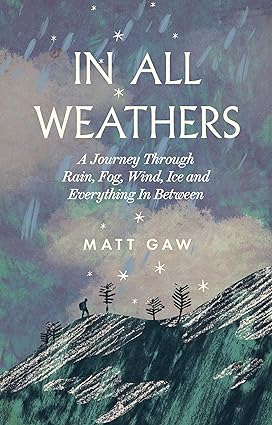
In All Weathers: A Journey through Rain, Fog, Wind, Ice and Everything in Between by Matt Gaw
Gaw’s two previous nature/travel memoirs, the enjoyable The Pull of the River and Under the Stars, involve gentle rambles through British landscapes, along with commentary on history, nature and science. The remit is much the same here. The book is split into four long sections: “Rain,” “Fog,” “Ice and Snow,” and “Wind.” The adventures always start from and end up at the author’s home in Suffolk, but he ranges as far as the Peak District, Cumbria and the Isle of Skye. Wild swimming is one way in which he experiences places. He notices a lot and describes it all in lovely and relatable prose.
 I was tickled by the definitions of, and statistics about, a “white Christmas”: in the UK, it counts if there’s even a single snowflake falling, whereas in the US there has to be 2.5 cm or more of standing snow. (Scotland is most likely to experience white Christmases; it has had 37 since 1960 vs. 26 in northern England. The English snow record is 43 cm, at Buxton and Malham Tarn in 1981 and 2009.) There’s underlying mild dread as he notes how weather patterns have changed and will likely continue changing, ever more dramatically, into his children’s future.
I find I don’t have much to say about this book because it is very nice but doesn’t do anything interesting or tackle anything that isn’t familiar from many other nature books (such as Rain by Melissa Harrison and Forecast by Joe Shute). It’s unfortunate for Gaw that his ideas often seem to have been done before – his book on night-walking, in particular, was eclipsed by several other works on that topic that came out at around the same time. I hope that the next time around he’ll get more editorial guidance to pursue original topics. It might take just a little push to get him to the next level where he could compete with top UK nature writers.
With thanks to Elliott & Thompson Books for the free copy for review.
Alphabetical Diaries by Sheila Heti
Heti put the contents of ten years of her diaries into a spreadsheet, alphabetizing each sentence (including articles), and then ruthlessly culled the results until she had a 25-chapter (no ‘X’) book. You could hardly call it a narrative, yet looking for one is so hardwired that every few sentences you are jolted out of what feels like a mini-story and into something new. Instead, you might think of it as an autobiographical mosaic. The recurring topics are familiar from the rest of Heti’s oeuvre, with obsessive cogitating about relationships, art and identity. But there are also the practicalities of trying to make a living as a woman in a creative profession. Tendrils of the everyday poke out here and there as she makes a meal, catches a plane, or buys clothes. Men loom large: explicit accounts of sex with Pavel and Lars (though also Fiona); advising her friend Lemons on his love life. There are also meta musings on what she is trying to achieve with her book projects and on what literature can be.
 Grammatically, the document is a lot more interesting than it could be – or than a similar experiment based on my diary would be, for instance – because Heti sometimes writes in incomplete sentences, dropping the initial pronoun; or intersperses rhetorical questions or notes to self in the imperative. So, yes, ‘I’ is a long chapter, but not only because of self-absorbed “I…” statements; there’s also plenty of “If…” and “It’s…” ‘H’ and ‘W’ are longer sections than might be expected because of the questioning mode. But it’s at the sentence level that the book makes the biggest impression: lines group together, complement or contradict each other, or flout coherence by being so merrily à propos of nothing. Here are a few passages to give a flavour:
Am I wasting my time? Am low on money. Am making noodles. Am reading Emma. Am tired and will go to sleep. Am tired today and I feel like I may be getting a cold. Ambivalence gives you something to do, something to think about.
Best not to live too emotionally in the future—it hardly ever comes to pass. Better to be on the outside, where you have always been, all your life, even in school, nothing changes. Better to look outward than inward. Blow jobs and tenderness. Books that fall in between the cracks of all aspects of the human endeavour.
It’s 2:34 every time I check the time these days. It’s 4 p.m. It’s 4:41 now. It’s a fantasy of being saved. It’s a stupid idea. It’s a yellow, cloudy sky. It’s amazing to me how life keeps going. It’s better to work, to go into the underground cave where there are books, than to fritter away time online. It’s crazy that I need all of these mental crutches in order to live. It’s fiction. It’s fine.
Scrambled eggs on toast at Yaddo. Second-guessing everything. Second, he said that no one is buying fiction. See the complexity. See the souls. See what kind of story the book can accommodate, if any. Seeing her for coffee was not so bad.
It’s surprising how much sense a text constructed so apparently haphazardly makes, perhaps because of the same subject and style throughout. Sometimes aphoristic, sometimes poetic (all that anaphora), the book is playful but overall serious about the capturing of a life on the page. Heti transcends the quotidian by exploding the one-thing-after-another tedium of chronology. Remarkably, the collage approach produces a more genuine, crystalline vision of the self than precise scenes and cause-and-effect chains ever could. A work of life writing like no other, it must be read in a manner all its own that it teaches you as you go along. I admire it enormously and hope I might write something even half as daring one day.
With thanks to Fitzcarraldo Editions for the free copy for review.
Your Wild and Precious Life: On grief, hope and rebellion by Liz Jensen
Jensen’s younger son, Raphaël Coleman, was just 25 when he collapsed while filming a documentary in South Africa and died of a previously undiagnosed heart condition. Raph had been involved in Extinction Rebellion and Jensen is a founding member of Writers Rebel. They both deemed activism “the best antidote to depression.” Her son had been obsessed with wildlife from a young age and was rewilding acres of their land in France, as well as making environmentalist films (he had achieved minor fame as a child actor in Nanny McPhee) and participating in direct action, such as at the Brazilian embassy in London.
 For Jensen, the challenge, especially after lockdown confined her to her Copenhagen flat, was to channel grief into further radicalism rather than retreating into herself or giving in to the lure of suicide. She tried to see personal grief as a reminder of ecogrief, and therefore as a spur. One way that she coped was turning towards the supernatural. She continued to hear and speak to Raph, in daily life as well as through a medium, and interpreted bird sightings as signs of his continued presence. An additional point of interest to me was that the author’s husband is Carsten Jensen, the writer of one of my favourite books, We, the Drowned.
This doesn’t particularly stand out among the dozens of bereavement memoirs I’ve read. (It was also remarkably similar to Alexandra Fuller’s Fi, which I’d read not long before.) Perhaps more years of reflection would have helped – Mary Karr advises seven – though I suspect Jensen felt, quite rightly, that given the current state of the environment we have no time to waste. And I have no doubt that the combination of a mother’s love and an ecological conscience will make this book meaningful to many readers.
With thanks to Canongate for the free copy for review.
And the DNFs…
there are more things, Yara Rodrigues Fowler – I loved Stubborn Archivist so much that I leapt at the chance to read her follow-up, but it was just too dull and involved about Brazilian versus UK politics. Nor did the stylistic tricks feel as novel this time around. I read 66 pages. (Fleet)
The Rabbit Hutch, Tess Gunty – Gunty dazzled critics and prize judges in the USA, winning a National Book Award. I was drawn to her debut novel for the composite picture of the residents of one Indiana apartment building and the strange connections that develop between them over one summer week, including perhaps a murder? Blandine, the central character, is a sort of modern-day mystic but hard to warm to (“She normally tries to avoid saying in which out loud, to minimize the number of people who find her insufferable”), as are all the characters. This felt like try-hard MFA writing. I read 85 pages. (Oneworld)
Eve: The Disobedient Future of Birth, Claire Horn – I usually get on well with Wellcome Collection books. I think the problem here was that there was too much material that was familiar to me from having read Womb by Leah Hazard – even the SF-geared stuff about artificial wombs. I read 45 pages. (Profile Books)
Blessings, Chukwuebuka Ibeh – This debut novel has a confident voice, buttressed by determination to reveal what life is like for queer people living in countries where homosexuality is criminalized. Obiefuna is cast out for having a crush on Aboy, his father’s apprentice, even though the two young men share nothing more physical than a significant gaze into each other’s eyes. The strict boarding school his father sends him to is a place of privation, hierarchy, hazing and, I suspect, same-sex experimentation. I found the writing capable but couldn’t get past a sense of dread about what was going to happen. Meanwhile, I didn’t think the alternating chapters from Obiefuna’s mother’s perspective added anything to the narrative. I read 62 pages. (Penguin Viking)
The War for Gloria, Atticus Lish – Lish’s debut novel, Preparation for the Next Life, was excellent, but I could never get stuck in to this follow-up, despite the appealing medical theme. When Gloria Goltz is diagnosed with ALS, her 15-year-old son Corey turns to his absent father and others for support. It was also unfortunate that Lish mentions the Ice Bucket Challenge: that was popularized in 2014, whereas the book is set in 2010. I read 75 pages. (Serpent’s Tail)
Snow Widows: Scott’s Fatal Antarctic Expedition through the Eyes of the Women They Left Behind, Katherine MacInnes – I seriously overestimated my interest in polar exploration narratives. MacInnes seems to have done quite a good job of creating novelistic scenes through research, though. I read 35 pages. (William Collins)
The Woodcock, Richard Smyth – I feel particularly bad about this one as I’ve read and enjoyed three of Smyth’s nature books and my husband and I are friendly with him on Twitter. Initially, I got Thomas Hardy, D.H. Lawrence and Sarah Perry (The Essex Serpent, anyway) vibes from this 1920s-set novel about the upheaval a naturalist and his wife experience when an American whaler and his daughters arrive in their small coastal English town. I read 90 pages. (Fairlight Books)
Better Broken than New: A Fragmented Memoir, Lisa St Aubin de Terán – I accepted this for review because I’d often seen the author’s name on spines in secondhand bookstores but didn’t know anything about her work. The précis of her globe-trotting life is stranger than fiction: marriage to a Venezuelan freedom fighter, managing a sugar plantation in the Andes, living in an Italian palace for 20 years, founding a charity in Mozambique. The vignettes in the early part of the book (e.g., skipping school and going on daytrips by train at age eight) are entertaining, if written with blithe disregard for a reader’s need for context or perspective. But the fragmented nature means it all feels as random as life, without the necessary authorial shaping. The publisher has done her a disservice as she seeks to relaunch her career by not proofreading properly: Many small errors slipped through the net, making this look like a sloppy manuscript. The worst happen to be other authors’ names: Jane ‘Austin’, ‘Kahil’ Gibran, Virginia ‘Wolfe’. Are you kidding me?! I read 53 pages. (Amaurea Press)
Spring Journeys with Edwin Way Teale and Edward Thomas
When I heard that Little Toller were reissuing their edition of Edward Thomas’s In Pursuit of Spring, I couldn’t resist pairing it with Edwin Way Teale’s book about the progress of the season up the United States, North with the Spring. These spring journeys, documented by authors delighting in nature’s bounty and responding with poetry, inspired mixed feelings in me: vicarious nostalgia, but also sadness for all that has been lost since they set out in the 1910s and 1950s, respectively.
It’s hard to live joyfully when evidence of the destruction of nature is overwhelming. Enjoying what still exists doesn’t seem like enough. But it’s a start. So this year I’ve been careful to note every phenological landmark: the first swift, the first hearing of a cuckoo, a rare sighting of a live hedgehog. One day in late April I stood on the towpath for hours watching a cloud of swallows and martins swooping for insects. I’ve also enjoyed watching from my office window as sparrows come and go from a nest box.
North with the Spring by Edwin Way Teale (1951)
I’ve previously reviewed Teale’s Autumn Across America and Springtime in Britain and consider him one of the classic – and most underrated – American nature writers. I was delighted to find a copy of this first seasonal volume on our trip to Northumberland a few years ago. As in the autumn book, he and his wife Nellie undertake a road trip, this time travelling from Florida up to New England, a total of 17,000 miles. Their journey lasted 130 days because instead of waiting for 21 March they started weeks before; spring comes early to the Gulf coast. Their time in Florida feels endless, constituting over a third of the book. Although it’s true that there are (were?) many peerless ecosystems there between the scrub and swamp, I grew impatient to move on to other states. The meet-up with Marjorie Kinnan Rawlings, who took them on a picnic to ‘The Yearling country,’ was a highlight.
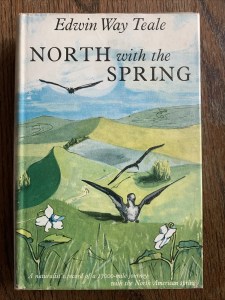 They travel alongside the spring warblers; past river deltas and barrier islands, by mountain meadows and forests. Other stops include Monticello and New Jersey’s pine barrens. A stopover in New York City dramatizes the difference between civilization and relative wilderness. I particularly enjoyed a pair of chapters set in Tennessee: first the wonder of Nickajack Cave, then the horror of the deforested and poisoned Ducktown Desert. Teale seems ahead of his time in decrying people’s wilful ignorance – one man they met denied the fact of migration, insisting the birds were always around – and failure to consider nature. His scenes and conversations feel fully natural; he’s as interested in people as in wildlife, and that humanism comes across in his writing.
“We longed for a thousand springs on the road instead of this one. For spring is like life. You never grasp it entire; you touch it here, there; you know it only in parts and fragments.”
(Secondhand – Barter Books, Alnwick)
In Pursuit of Spring by Edward Thomas (1914)
On Good Friday, 21 March 1913, Edward Thomas set off on his bicycle from his parents’ home in South London. He was bound southwest, toward Somerset and the height of spring. At cycling and walking pace, he would truly experience the development of the season, whereas
“Many days in London have no weather. We are aware only that it is hot or cold, dry or wet; that we are in or out of doors; that we are at ease or not.”
He prepares himself for hardship and slog:
“Spring would come, of course – nothing, I supposed, could prevent it – and I should have to make up my mind how to go westward. Whatever I did, Salisbury Plain was to be crossed”
 It’s remarkable both how much and how little has changed in the intervening century and more. The place names, plant and bird species, and alternation of town and countryside are all familiar, but the difference is stark when you see Thomas’s black-and-white photographs that illustrate the text. These dirt roads are empty. You’d have to search high and low today to find the kind of unspoiled fields, rivers, churchyards, hedgerows and stone walls that he memorializes.
Everything he sees drives him back to poetry, with long passages quoted from authors who have fallen somewhat out of fashion, such as George Herbert and Alexander Pope. I loved the scene where he buys a book at a secondhand furniture shop (for two pence, mind you) and then ignores it to eavesdrop on fellow diners at a restaurant. He has words of high praise for W.H. Hudson:
“Were men to disappear they might be reconstructed from the Bible and the Russian novelists; … Hudson so writes of birds that if ever … they should cease to exist, and should leave us to ourselves on a benighted planet, we should have to learn from him what birds were.”
Thomas also mentions William Cobbett, whose Rural Rides this reminded me of strongly. Both are slow-paced journeys around a rural England that no longer exists. Today Thomas is better remembered as a poet; he would be one of the fallen in a First World War battle just four years after this expedition. It was great to have a chance to read his nature writing, too.
With thanks to Little Toller for the free copy for review.
We’re off to rural France on Wednesday for eight days of relaxation and nature-watching; it’s not a sight-seeing or foodie trip like our time in Paris back in December. Ironically, it seems that it may be cold and rainy for much of the holiday, having been gorgeous in both countries this past week. We will hope for some sun and warmth, but have packed plenty of books and board games (and will acquire much wine) for when the weather is to be avoided inside.
What signs of the spring have you been seeing?
Women’s Prize for Non-Fiction, Writers’ Prize & Young Writer of the Year Award Catch-Up
This time of year, it’s hard to keep up with all of the literary prize announcements: longlists, shortlists, winners. I’m mostly focussing on the Carol Shields Prize for Fiction this year, but I like to dip a toe into the others where I can. I ask: What do I have time to read? What can I find at the library? and Which books are on multiple lists so I can tick off several at a go??
Women’s Prize for Non-Fiction

(Shortlist to be announced on 27 March.)
Read so far: Intervals by Marianne Brooker, Matrescence by Lucy Jones
&
A Flat Place by Noreen Masud
Past: Sunday Times/Charlotte Aitken Young Writer of the Year Award shortlist
Currently: Jhalak Prize longlist
I also expect this to be a strong contender for the Wainwright Prize for nature writing, and hope it doesn’t end up being a multi-prize bridesmaid as it is an excellent book but an unusual one that is hard to pin down by genre. Most simply, it is a travel memoir taking in flat landscapes of the British Isles: the Cambridgeshire fens, Orford Ness in Suffolk, Morecambe Bay, Newcastle Moor, and the Orkney Islands.
 But flatness is a psychological motif as well as a physical reality here. Growing up in Pakistan with a violent Pakistani father and a passive Scottish mother, Masud chose the “freeze” option when in fight-or-flight situations. When she was 15, her father disowned her and she moved with her mother and sisters to Scotland. Though no particularly awful things happened, a childhood lack of safety, belonging and love left her with complex PTSD that still affects how she relates to her body and to other people, even after her father’s death.
Masud is clear-eyed about her self and gains a new understanding of what her mother went through during their trip to Orkney. The Newcastle chapter explores lockdown as a literal Covid-era circumstance but also as a state of mind – the enforced solitude and stillness suited her just fine. Her descriptions of landscapes and journeys are engaging and her metaphors are vibrant: “South Nuns Moor stretched wide, like mint in my throat”; “I couldn’t stop thinking about the Holm of Grimbister, floating like a communion wafer on the blue water.” Although she is an academic, her language is never off-puttingly scholarly. There is a political message here about the fundamental trauma of colonialism and its ongoing effects on people of colour. “I don’t want ever to be wholly relaxed, wholly at home, in a world of flowing fresh water built on the parched pain of others,” she writes.
What initially seems like a flat authorial affect softens through the book as Masud learns strategies for relating to her past. “All families are cults. All parents let their children down.” Geography, history and social justice are all a backdrop for a stirring personal story. Literally my only annoyance was the pseudonyms she gives to her sisters (Rabbit, Spot and Forget-Me-Not). (Read via Edelweiss) 
And a quick skim:
Doppelganger: A Trip into the Mirror World by Naomi Klein
Past: Writers’ Prize shortlist, nonfiction category
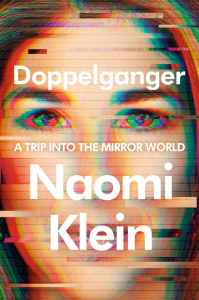 For years people have been confusing Naomi Klein (geography professor, climate commentator, author of No Logo, etc.) with Naomi Wolf (feminist author of The Beauty Myth, Vagina, etc.). This became problematic when “Other Naomi” espoused various right-wing conspiracy theories, culminating with allying herself with Steve Bannon in antivaxxer propaganda. Klein theorizes on Wolf’s ideological journey and motivations, weaving in information about the doppelganger in popular culture (e.g., Philip Roth’s novels) and her own concerns about personal branding. I’m not politically minded enough to stay engaged with this but what I did read I found interesting and shrewdly written. I do wonder how her publisher was confident this wouldn’t attract libel allegations? (Public library)
Predictions: Cumming (see below) and Klein are very likely to advance. I’m less drawn to the history or popular science/tech titles. I’d most like to read Some People Need Killing: A Memoir of Murder in the Philippines by Patricia Evangelista, Wifedom: Mrs Orwell’s Invisible Life by Anna Funder, and How to Say Babylon: A Jamaican Memoir by Safiya Sinclair. I’d be delighted for Brooker, Jones and Masud to be on the shortlist. Three or more by BIPOC would seem appropriate. I expect they’ll go for diversity of subject matter as well.
Writers’ Prize
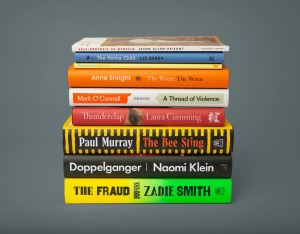
Last year I read most books from the shortlists and so was able to make informed (and, amazingly, thoroughly correct) predictions of the winners. I didn’t do as well this year. In particular, I failed with the nonfiction list in that I DNFed Mark O’Connell’s book and twice borrowed the Cumming from the library but never managed to make myself start it; I thought her On Chapel Sands overrated. (I did skim the Klein, as above.) But at least I read the poetry shortlist in full:
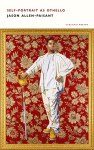 Self-Portrait as Othello by Jason Allen-Paisant: I found more to sink my teeth into here than I did with his debut collection, Thinking with Trees (2021). Part I’s childhood memories of Jamaica open out into a wider world as the poet travels to London, Paris and Venice, working in snippets of French and Italian and engaging with art and literature. “I’m haunted as much by the character Othello as by the silences in the story.” Part III returns home for the death of his grandmother and a coming to terms with identity. [Winner: Forward Prize for Best Collection; Past: T.S. Eliot Prize shortlist] (Public library)
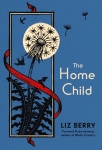 The Home Child by Liz Berry: A novel in verse “loosely inspired,” as Berry puts it, by her great-aunt Eliza Showell’s experience: she was a 12-year-old orphan when, in 1908, she was forcibly migrated from the English Midlands to Nova Scotia. The scenes follow her from her home to the Children’s Emigration Home in Birmingham, on the sea voyage, and in her new situation as a maid to an elderly invalid. Life is gruelling and lonely until a boy named Daniel also comes to the McPhail farm. This was a slow and not especially engaging read because of the use of dialect, which for me really got in the way of the story. (Public library)
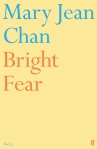 & Bright Fear by Mary Jean Chan (Current: Dylan Thomas Prize shortlist)
Three category winners:
- The Wren, The Wren by Anne Enright (Fiction)
- Thunderclap by Laura Cumming (Nonfiction) (Current: Women’s Prize for Non-Fiction longlist)
- The Home Child by Liz Berry (Poetry)
Overall winner: The Home Child by Liz Berry
Observations: The academy values books that cross genres. It appreciates when authors try something new, or use language in interesting ways (e.g. dialect – there’s also some in the Allen-Paisant, but not as much as in the Berry). But my taste rarely aligns with theirs, such that I am unlikely to agree with its judgements. Based on my reading, I would have given the category awards to Murray, Klein and Chan and the overall award perhaps to Murray. (He recently won the inaugural Nero Book Awards’ Gold Prize instead.)
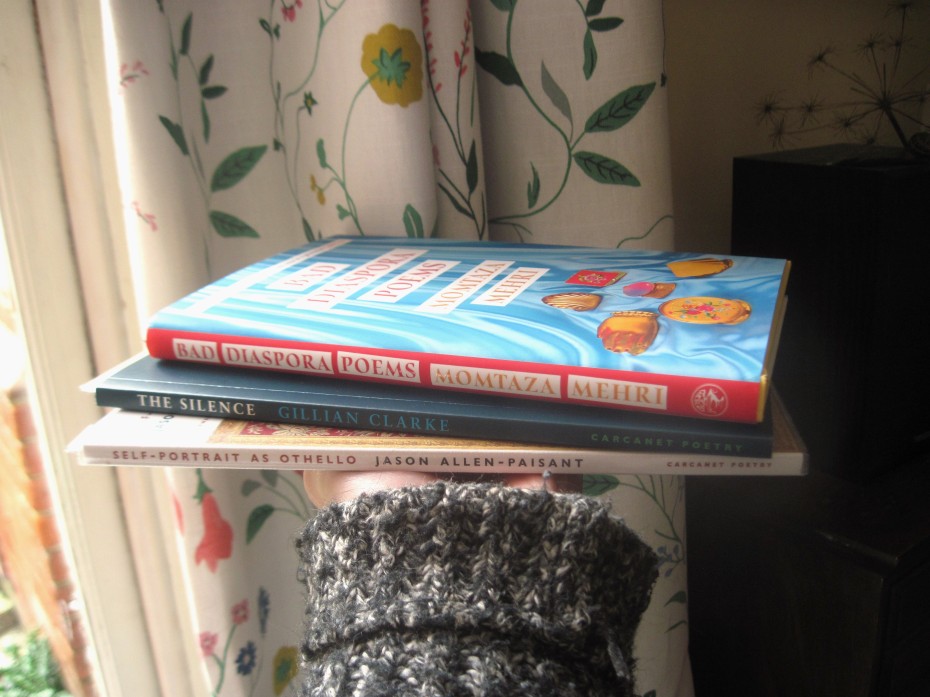
World Poetry Day stack last week
Young Writer of the Year Award
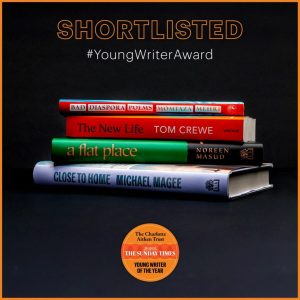
Shortlist:
- The New Life by Tom Crewe
 (Past: Nero Book Award shortlist, debut fiction)
 - Close to Home by Michael Magee (Winner: Nero Book Award, debut fiction category)
- A Flat Place by Noreen Masud (see above)
&
Bad Diaspora Poems by Momtaza Mehri
Winner: Forward Prize for Best First Collection
Nostalgia is bidirectional. Vantage point makes all the difference. Africa becomes a repository of unceasing fantasies, the sublimation of our curdled angst.
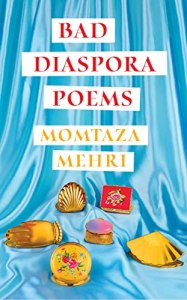 Crossing between Somalia, Italy and London and proceeding from the 1830s to the present day, this debut collection sets family history amid wider global movements. It’s peopled with nomads, colonisers, immigrants and refugees. In stanzas and prose paragraphs, wordplay and truth-telling, Mehri captures the welter of emotions for those whose identity is split between countries and complicated by conflict and migration. I particularly admired “Wink Wink,” which is presented in two columns and opens with the suspension of time before the speaker knew their father was safe after a terrorist attack. There’s super-clever enjambment in this one: “this time it happened / after evening prayer // cascade of iced tea / & sugared straws // then a line / break // hot spray of bullets & / reverb & // in less than thirty minutes we / they the land // lose twenty of our children”. Confident and sophisticated, this is a first-rate debut.
A few more favourite lines:
IX. Art is something we do when the war ends.
X. Even when no one dies on the journey, something always does.
(from “A Few Facts We Hesitantly Know to Be Somewhat True”)
You think of how casually our bodies are overruled by kin,
by blood, by heartaches disguised as homelands.
How you can count the years you have lived for yourself on one hand.
History is the hammer. You are the nail.
(from “Reciprocity is a Two-way Street”)
With thanks to Jonathan Cape (Penguin) for the free copy for review.
I hadn’t been following the Award on Instagram so totally missed the news of them bringing back a shadow panel for the first time since 2020. The four young female Bookstagrammers chose Mehri’s collection as their winner – well deserved.
Winner: The New Life by Tom Crewe
This was no surprise given that it was the Sunday Times book of the year last year (and my book of the year, to be fair). I’ve had no interest in reading the Magee. It’s a shame that a young woman of colour did not win as this year would have been a good opportunity for it. (What happened last year, seriously?!) But in that this award is supposed to be tied into the zeitgeist and honour an author on their way up in the world – as with Sally Rooney in my shadowing year – I do think the judges got it right.
#ReadIndies Catch-up: Ansell, Kinard, McNaught, Ponce, Toews and Vara
At last, my first dedicated selections for Read Indies month, two of which have been languishing on the shelf since 2022! A few more indie titles will appear in my February roundup tomorrow. I’ve got a huge variety here: an extended essay comparing life among the unhoused in London in the 1980s with the freedom of the open road and the island of Jura; gospel-saturated poems of queer African American life; an exposé of spiritual abuse in a Pentecostal church with branches in England and Nigeria; an Ecuadorian novella obsessed with bodies and sex; a funny yet heartbreaking novel about a zany family trying not to fall apart; and short stories about siblings, adolescence, memory, death and much more. I name the publishers and other books I have on the docket from each one.

Deer Island by Neil Ansell (2013)
 My last unread book by Ansell (whose Deep Country, The Last Wilderness, and The Circling Sky I’ve loved) and one that had been out of print for many years, so it was great to hear that Little Toller was reissuing it. Ansell has visited most countries; pressed for a favourite place, he names the Scottish isle of Jura. In memory he returns to a place he hadn’t been in over 20 years. In the early 1980s he lived in London and volunteered with The Simon Community, a homeless charity, for three years. Later that decade, he found himself in the same situation as those he served, squatting in chaotic multi-occupancy London properties. But in between he’d had a magical jaunt to Jura by hitchhiking and motorbike with a girlfriend. And later, when his only sentimental keepsake was stolen from his squat bedroom, he left that lifestyle behind and fled to Jura, haunt of golden eagles and otters; refuge for George Orwell, who experienced his fair share of squalor – Down and Out in Paris and London gets a mention, but Ansell doesn’t belabour a comparison he more than earns. It’s a shame this is so short, but it’s a carefully crafted slice of life, and illustrates a sobering truth: “Security is an illusion.”
With thanks to Little Toller Books for the free copy for review. Deer Island came out in paperback on 27 February.
Little Toller
Also read recently: brother. do. you. love. me. by Manni Coe
Currently reading: The Long Field by Pamela Petro
Orders of Service by Willie Lee Kinard III (2023)
 At a confluence of Southern, Black and gay identities, Kinard writes of matriarchal families, of congregations and choirs, of the descendants of enslavers and enslaved living side by side. The layout mattered more than I knew, reading an e-copy: often it is white text on a black page; words form rings or an infinity symbol; erasure poems gray out much of what has come before. “Boomerang” interludes imagine a chorus of fireflies offering commentary – just one of numerous insect metaphors. Mythology also plays a role. “A Tangle of Gorgons,” a sample poem I’d read before, wends its serpentine way across several pages. “Catalog of My Obsessions or Things I Answer to” presents an alphabetical list. For the most part, the poems were longer, wordier and more involved (four pages of notes on the style and allusions) than I tend to prefer, but I could appreciate the religious frame of reference and the alliteration.
Two favorite passages:
Ma taught me how to change a tire
the fall before it got real cold one October,
on the plot of dirt the pole beans we call Babel
spiral from, where our boozy station wagon
sat after hobbling home & passing out
in the backyard
(from “Work”)
I left before the door was closed.
I built myself of drowning hymns.
I stole every one to fly.
(from “Icarus Confesses”)
With thanks to Alice James Books for the advanced e-copy for review.
Alice James Books
Also read recently: Theophanies by Sarah Ghazal Ali
Immanuel by Matthew McNaught (2022)
 “Immanuel was the centre of the world once. Long after it imploded, its gravitational pull remains.” McNaught grew up in an evangelical church in Winchester, England, but by the time he left for university he’d fallen away. Meanwhile, some peers left for Nigeria to become disciples at charismatic preacher TB Joshua’s Synagogue Church of All Nations in Lagos. It’s obvious to outsiders that this was a cult, but not so to those caught up in it. It took years and repeated allegations for people to wake up to faked healings, sexual abuse, and the ceding of control to a megalomaniac who got rich off of duping and exploiting followers. This book won the inaugural Fitzcarraldo Editions Essay Prize. I admired its blend of journalistic and confessional styles: research, interviews with friends and strangers alike, and reflection on the author’s own loss of faith. He gets to the heart of why people stayed: “A feeling of holding and of being held. A sense of fellowship and interdependence … the rare moments of transcendence … It was nice to be a superorganism.” This gripped me from page one, but its wider appeal strikes me as limited. For me, it was the perfect chance to think about how I might write about traditions I grew up in and spurned.
With thanks to Fitzcarraldo Editions for the proof copy for review.
Fitzcarraldo Editions
Currently reading: Intervals by Marianne Brooker
Up next: Alphabetical Diaries by Sheila Heti
Blood Red by Gabriela Ponce (2020; 2024)
[Translated from the Spanish by Sarah Booker]
 Like other short works I’ve read by Hispanic women authors (Die, My Love, September and the Night, In Vitro), this Ecuadorian novella is intense, fragmentary, and obsessed with the female body and psyche. The unnamed narrator, a woman separated from her husband and freed from inhibitions, gives in to her substance and sex addictions – “For me, anything that isn’t falling in love has never merited much attention. That giddiness from proximity or bodies”. I was reminded of A Spy in the House of Love in that she flits compulsively from one lover to another, but Ponce is much more explicit than Nin. At least at the start, the sex scenes are almost constant and described in graphic detail. The narrator meets her lovers in warehouses and caves. Literal holes/orifices and blood are profuse, but also symbolically weighty, with fear of pregnancy also featuring heavily. I was impressed at how Booker rendered the stream-of-consciousness approach, which involves several-page paragraphs and metaphors of moths and moss. I wouldn’t say this was a pleasant book to spend time with, but the style and vocabulary made it worthy of note.
With thanks to Dead Ink for the free copy for review. Blood Red was first published in English by Restless Books in the USA in 2022.
Dead Ink
Up next: Sinking Bell by Bojan Louis
Fight Night by Miriam Toews (2022)
 I knew from All My Puny Sorrows that Canadian author Miriam Toews has a knack for combining humour and heartbreak. I can’t believe it took me since 2015 to read another of her novels. Once again, there seems to be a strong autobiographical element and suicide in the family is part of the backstory. Although abandonment and failure haunt these three female generations, we see everything through a child’s point-of-view, which turns life into a jolly adventure. Swiv’s mother, an underemployed actress, is heavily pregnant with “Gord”; her father is out of the picture. Swiv has been expelled, which gives her plenty of time with Grandma Elvira, who makes friends with everyone she meets but, alas, is crumbling physically. Luckily, Swiv knows just how to keep her going with nitro spray and compression socks and pills rescued from the floor. Before Gord arrives, Grandma wants one last adventure: a flight from Canada to Fresno, California to see her remaining family. Their trip is a disaster, in hilarious ways. Child narrators are tough to pull off, so kudos to Toews for making eight-year-old Swiv almost completely believable (though a bit too precocious). These characters are all foul-mouthed fighters, with a quick wit and the determination to make their stories matter. You’ll laugh and cry.
With thanks to Faber for the proof copy for review.
Faber
Also read recently: Happiness Falls by Angie Kim
Currently reading: Places I’ve Taken My Body by Molly McCully Brown
This Is Salvaged by Vauhini Vara (2023)
 The epigraph is from the two pages of laughter (“Ha!”) in “Real Estate,” one of the stories of Birds of America by Lorrie Moore. Vara shares Moore’s themes, which are the stuff of literary fiction generally – adolescence, friendship, ageing, memory, romantic relationships – but also her tone of dark comedy. The death of a sibling recurs. In “The Irates,” teenage Swati, whose brother died of cancer, and her friend Lydia get phone sales jobs through the Chinese restaurant where they go for egg rolls. In “I, Buffalo,” Sheila tries to hide her alcoholism when her sister Priya comes for a visit with Sheila’s brother-in-law and niece. “The girl” in “You Are Not Alone” is delighted to spend her eighth birthday in Florida with her estranged father, but less so when she learns there’s a stepmother figure in the picture. The women of “Sibyls” look after an elderly neighbour with dementia. The querulous child in “Unknown Unknowns” reminded me of Good Talk by Mira Jacob. My two favourites were the title story, about building a Noah’s Ark replica, and “What Next,” about a woman accompanying her teenage daughter to meet her father for the first time. A few stories didn’t stand out, and while I liked the writing, this didn’t necessarily feel like a cohesive collection.
With thanks to Grove Press UK for the free copy for review. This Is Salvaged came out in paperback in the UK on 1 February.
Grove Atlantic
Up next: Get the Picture by Bianca Bosker, Home/Land by Rebecca Mead, We Play Ourselves by Jen Silverman
Have you discovered any new-to-you independent publishers recently?
Recent Releases by Nathan Hill, Hisham Matar, Sigrid Nunez and More
One key way in which 2024’s reading has already differed from previous years’ is that I no longer avoid doorstoppers. I now classify any book with over 400 pages as a doorstopper, and by that definition I have already gotten through three this year: The Tidal Year plus two of the below, with Wellness standing out as the true whopper at 597 small-print pages. January offered a set of releases full of variety: gritty yet funny flash fiction; a novel of big ideas and big empathy for its flawed characters; an exile’s elegant love letter to Libya from London; a coy pandemic-era reflection on connection and creation; and a tour of nature close to home.
Universally Adored and Other One Dollar Stories by Elizabeth Bruce
 This was a great collection of 33 stories, all of them beginning with the words “One Dollar” and most of flash fiction length. Bruce has a knack for quickly introducing a setup and protagonist. The voice and setting vary enough that no two stories sound the same. What is the worth of a dollar? In some cases, where there’s a more contemporary frame of reference, a dollar is a sign of desperation (for the man who’s lost house, job and wife in “Little Jimmy,” for the coupon-cutting penny-pincher whose unbroken monologue makes up the whole of “Grocery List”), or maybe just enough for a small treat for a child (as in “Mouse Socks” or “Boogie Board”). In the historical stories, a dollar can buy a lot more. It’s a tank of gas – and a lesson on the evils of segregation – in “Gas Station”; it’s a huckster’s exorbitant charge for a mocked-up relic in “The Grass Jesus Walked On.”
The tone ranges from black comedy (“Festus”) to high tragedy (“Votive Candle”), but the book mostly falls within the realm of dirty realism with the attention to working-class country folk, so I’d recommend the collection to fans of authors who perch on the lighter side of that subgenre, such as Barbara Kingsolver or Denis Johnson. A few of my favorite stories, in addition to the above, were “Ice-Cold Water,” which I appreciated for the Washington D.C. setting and the way that an assumption about who would be racist was overturned by a moment of simple compassion; “Dolores,” in which a slick humanitarian fundraiser meets a waitress who has his number; and “Boiling the Buggers,” a window onto Covid-exacerbated mental illness. (Read via BookSirens)
Wellness by Nathan Hill
Somehow nearly eight years have passed since Hill’s debut novel, The Nix, which I dubbed “a rich, multi-layered story about family curses and failure.” I admired it as much for its prose as for its ideas, and Wellness is just as effervescent and insightful. It’s a state-of-the-nation novel filtered through one Chicago family: experimental photographer and underperforming academic Jack; his wife Elizabeth, a placebo researcher at Wellness; and their YouTube-obsessed son Toby. They’ve recently invested their life savings in a new condo and are considering trendy features like open shelves and separate master bedrooms. It would be oversimplifying, but true, to say that this couple is experiencing midlife and marital crises. Their nineties college romance – and a time of life when everything felt open and possible – is so remote now. When Elizabeth suggests they join a friend at a swingers’ club and a patient of hers who’s also a parent at Toby’s school sees them outside, chaos ensues.
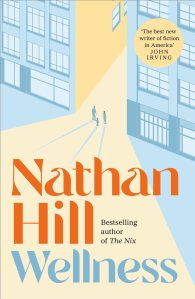
Some elements from The Nix carry over, such as campus politics, the American Midwest, and mother–son relationships, but also broader questions of authenticity, purpose and nurture. Is love itself a placebo? The novel spends time with Jack and Elizabeth at the dawn of their relationship and in the present day, but also looks back to their early careers and first years of parenthood. Hill is clearly fascinated with the sort of psychological experimentation Elizabeth engages in (there’s a whole bibliography of scientific papers consulted) but also turns it to humorous effect, as when Elizabeth subjects Toby to the marshmallow test. A lot of information is conveyed through dialogue, yet it never feels forced. A couple of long asides, on Elizabeth’s family history and the algorithms guiding Jack’s interactions with his conspiracy theorist father, tried my patience, but I loved a four-page chapter on a funeral supper where every sentence starts “There was.” Sooooo many quotable lines throughout.
The only fault in an addictive and spot-on novel (how did he know?! you’ll find yourself thinking about your own attitude to work/marriage/children) is that Hill is so committed to excavating these characters’ backstory of stunted emotion – Jack estranged from his religious Kansas farmer parents after a traumatic incident you feel right in the gut; Elizabeth glad to jettison her father’s wealth with his anger – that he hurries through the denouement. Still, this is sure to be a fiction highlight of my year. It’s one for readers of Jonathan Franzen, sure, but I also thought it reminiscent of Katherine Heiny’s Standard Deviation and Meg Wolitzer’s The Interestings.
With thanks to Picador for the proof copy for review.
My Friends by Hisham Matar
“Benghazi was the one place I longed for the most, it was also the place I most feared to return to.”
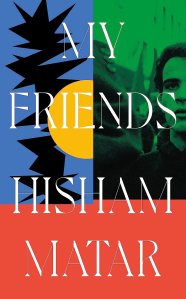 Taking a long walk through London one day, Khaled looks back from midlife on the choices he and his two best friends have made. He first came to the UK as an eighteen-year-old student at Edinburgh University. Everything that came after stemmed from one fateful day. Matar places Khaled and his university friend Mustafa at a real-life demonstration outside the Libyan embassy in London in 1984, which ended in a rain of bullets and the accidental death of a female police officer. Khaled’s physical wound is less crippling than the sense of being cut off from his homeland and his family. As he continues his literary studies and begins teaching, he decides to keep his injury a secret from them, as from nearly everyone else in his life. On a trip to Paris to support a female friend undergoing surgery, he happens to meet Hosam, a writer whose work enraptured him when he heard it on the radio back home long ago. Decades pass and the Arab Spring prompts his friends to take different paths.
I’d previously only read Matar’s short nonfiction work A Month in Siena. The slow, meditative style I enjoyed so much there didn’t translate well into doorstopper length; by the 300-page mark I found myself skimming to see if anything else might happen. Despite the title, we come to know Mustafa and Hosam much less well than we do Khaled. I would happily have had the book’s plot and sentiment concentrated into a taut 200 pages. However, I’m still interested in trying other books by Matar. In the Country of Men is significantly shorter and available from the backroom storage area of my library, and his Folio Prize-winning memoir The Return, too, is on shelf and I reckon will be right up my street.
With thanks to Viking (Penguin) for the proof copy for review.
The Vulnerables by Sigrid Nunez
I’m a huge Nunez fan after reading The Friend, What Are You Going Through, and especially A Feather on the Breath of God. Her last three books have been very much of a piece: autofiction voiced by an unnamed woman who has a duty of care towards a friend or a friend’s pet and ponders, in wry meta fashion, the nature of autobiographical writing and the meaning of life and death at a time of climate breakdown. Alas, The Vulnerables seems like no more than a rehashing of The Friend, with flanking main characters chosen at random from central casting: a parrot named Eureka and a mentally ill college drop-out called Vetch. This quirky trio is thrown together in a lavish New York City apartment during lockdown and nothing much happens but conversation brings them closer.
 A second problem: Covid-19 stories feel dated. For the first two years of the pandemic I read obsessively about it, mostly nonfiction accounts from healthcare workers or ordinary people looking for community or turning to nature in a time of collective crisis. But now when I come across it as a major element in a book, it feels like an out-of-place artefact; I’m almost embarrassed for the author: so sorry, but you missed your moment. My disappointment may primarily be because my expectations were so high. I’ve noted that two blogger friends new to Nunez were enthusiastic about this (but so was Susan, who’d enjoyed her before). That’s not to say this wasn’t a pleasantly fluid and incisive read, even if its message of essential human vulnerability is an obvious one. Anyway, I’ll take Nunez musing on familiar subjects over most other contemporary writers any day:
“Never write ‘I don’t remember,’ Editor says; it undermines your authority. But write as if you remember everything and Reader will smell a rat.”
“You can start with fiction or start with documentary, according to Jean-Luc Goddard. Either way, you will inevitably find the other.”
“I like this clarification by the narrator of a book by Stendhal: ‘It is not out of egotism that I say “I”; it is simply the quickest way to tell the story.’)”
(À propos of the doorstoppers above)
“Does that mean a long novel is easier to write than a short one? / Um, no. But, to borrow from a certain critic, in almost every long book I read I see a short one shirking its job.”
With thanks to Virago for the proof copy for review.
And a bonus work of nonfiction:
Local: A Search for Nearby Nature and Wildness by Alastair Humphreys
Lev Parikian alerted me to this amiable record of weekly discoveries of the nature on one’s home turf. Humphreys has been an international adventure traveller and written many books about his exploits. Here, by contrast, he zooms the lens in about as far as it will go, ordering a custom-made 20-km-square OS map that has his house at the centre and choosing one surrounding grid square per week (so 52 out of a total of 400) to cycle to and explore. He’s chosen to leave his town unnamed so this can function as an Everyman’s journey through edgelands. And his descriptions and black-and-white photographs really do present an accurate microcosm of modern England: fields, woods, waterways, suburban streets.
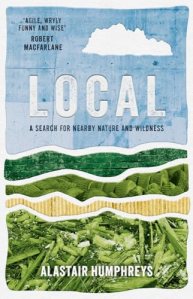 From one November to the next, he watches the seasons advance and finds many magical spaces with everyday wonders to appreciate. “This project was already beginning to challenge my assumptions of what was beautiful or natural in the landscape,” he writes in his second week. True, he also finds distressing amounts of litter, no-access signs and evidence of environmental degradation. But curiosity is his watchword: “The more I pay attention, the more I notice. The more I notice, the more I learn.”
Each week’s observations send him down a research rabbit hole, with topics including caves, land management, mudlarking, plant species, and much more. The nature of the short chapters means that there can only ever be a cursory look at huge issues like rewilding and veganism, but Humphreys is nimble in weaving in the brief, matter-of-fact discussions. His eagerness is irrepressible. “How you look, what you see, and the way all this makes you feel: a single map and the best of all possible worlds.” (See also: Paul’s review.)
With thanks to the author for the free copy for review.
Review: The Tidal Year by Freya Bromley (2023)
The Nero Book Awards category winners will be announced on Tuesday. I haven’t had a chance to read as many of the nominees as I would like, but I’m catching up on one that I’ve wanted to read ever since I first heard about it early last year. Even though Stephen Collins sums up about my feelings about coldwater swimming well in this cartoon –

– I was drawn to The Tidal Year for several reasons. First off, I’ll read just about any bereavement memoir going. Second, I love following along on a year challenge. Third, even though I haven’t been much of a swimmer since childhood, I appreciate how outdoor swimming combines observation of nature and the seasons with achievable bodily exploits; you don’t have to be an exercise nut or undergo lots of training to get into it. There was a spate of swimming memoirs back in 2017, including Jessica J. Lee’s superb Turning and Ruth Fitzmaurice’s I Found My Tribe. Headlines often tout the physical benefits of coldwater swimming, but it’s the emotional benefits that Bromley emphasizes in this record of facing grief and opening up to love.
Bromley was the middle of five children but her boisterous family’s dynamic went out of kilter when her younger brother Tom was diagnosed with bone cancer and died at age 19. Suddenly she could hardly talk to her mother, let alone to Tom’s twin, Emma. Isolated in London, where she worked in music journalism, she roped her friend Miri into wild swimming excursions and threw herself into Internet dating. She and Miri concocted a plan to swim in all of Britain’s mainland tidal pools (saltwater enclosed by manmade elements) in a year; she started seeing Jem, a free-spirited documentary filmmaker – but also Flip, a Black actor she met when he came to buy her neighbour’s antique chairs; he nicknamed her “Poet” and encouraged her in her writing.
Each short chapter is identified by a place name and its geographical coordinates. Most often, these correspond to a swimming destination, but they can also be clues to interludes or flashbacks, whether set in London (“Jem’s Skylight”), on the last night she spent by Tom’s hospital bedside, or at the Brecon Beacons home her parents moved to after Tom’s death. A lot of the tidal pools are in Devon and Cornwall, but she and Miri also make expeditions to Scotland and Wales and elsewhere along the south coast.

At a certain point Bromley realizes that they aren’t going to hit every single pool before the year is over, but the goal starts to matter less than the slow internal transformation that’s taking place. “Swimming had been a way for me to rediscover my body as a place of power, play and movement.” We see the gradual shifts: she’s more able to talk about Tom, she commits to her writing through a Cambridge course, she’s a supportive big sister to Emma, and she breaks it off with one of the boyfriends.
I had to suppress my judgemental side here. I know monogamy is not a universal value, especially among a younger generation, and Bromley does acknowledge that she was behaving badly in stringing two partners along – grief leads people to make decisions they might not normally. The other niggle for this pedantic proofreader was the non-standard way of introducing dialogue. Bromley chose to put all dialogue in italics – fine with me – but doesn’t consistently bracket phrases with “I said” or “she asked.” Usually it’s clear enough, but sometimes the interruption of speech with gesture is downright maddening, e.g., “There’s this, I blew on the tea, well inside me” and “It’s magic isn’t it, Miri rolled down her window”.
But I was (mostly) able to excuse this stylistic quirk because Bromley writes so acutely about herself and others, giving a lucid sense of the passage of time and the particularities of place. She’s observant and funny, too. “I find what people often mean when they say ‘resilient’ is that they want people to be good at suffering in silence.” Youthful, playful, sexy: those are unusual characteristics for a book on the fringes of nature writing. The voice was distinctive enough that, though I’ve rarely met a 400+-page book that couldn’t stand to be closer to 300, I thoroughly enjoyed my time spent with it.
The Nero Awards judges chose an all-female inaugural shortlist made up of four works of opinionated nonfiction. I’ve read the first 42 pages of Undercurrent, Natasha Carthew’s memoir of growing up in poverty in Cornwall, and will probably leave it there; I didn’t care for the writing in Fern Brady’s Strong Female Character, her memoir of being a young autistic woman (it’s said to be funny but I didn’t get the humour). Hags, Victoria Smith’s book about the societal marginalizing of older women, is the sort of book I’d skim from the library but am unlikely to read in its entirety. I would have been very happy for Bromley to win. 
With thanks to Coronet (Hodder & Stoughton) for the free copy for review.
My Best Backlist Reads of the Year
Like many bloggers, I’m irresistibly drawn to the new books released each year. However, I consistently find that many of my more memorable reads were published earlier – most of these happen to have been published between one and a few years ago, with the ‘oldest’ being from 2004. These dozen selections – alphabetical within genre but in no particular rank order – together with my Best of 2023 post (coming up tomorrow), make up about the top 10% of my year’s reading.

Fiction
 Loved and Missed by Susie Boyt: The heart-wrenching story of a woman who adopts her granddaughter because of her daughter’s drug addiction. The prose is stunning as Boyt traces the history of this complicated, makeshift family. The title has a wry double meaning, but also connotations of anticipatory grief. There can be love even where there is estrangement, or eternal separation. That is one of the enduring messages of this gem of a short novel.
 Homesick by Jennifer Croft: Each vignette – some just a paragraph long – is perfectly chosen to reveal a family dynamic and a moment in American history. What Croft does so brilliantly is to chart the accretion of ordinary and landmark events that form a life. In the end it didn’t matter whether this was presented as memoir or autofiction, so true was it to the experience of 1990s girlhood, as well as to sisterhood and coming of age.
 Search by Michelle Huneven: When middle-aged restaurant critic Dana Potowski is invited to be on the search committee to appoint the next minister for her California Unitarian church, she reluctantly agrees but soon wonders whether the experience could be interesting fodder for a new book… The setup might seem niche but will resonate with anyone who’s had a brush with bureaucracy. Pure pleasure; lit fic full of gossip and good food.
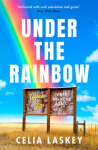 Under the Rainbow by Celia Laskey: Researchers identified Big Burr, Kansas as the most homophobic town in America. An Acceptance Across America task force descends on the rural backwater for a two-year program promoting education and friendship. Each chapter in the linked short story collection is a first-person, present-tense confession from a local or a queer visitor, whose stories interlock. Laskey inhabits all 11 with equal skill and compassion.
 The Chosen by Elizabeth Lowry: This utterly immersive novel examines Thomas Hardy’s relationship with his first wife, Emma Gifford. It opens on the morning of her death. The couple had long been estranged, but Hardy was instantly struck with grief – and remorse, his guilt compounded by what he found in her journals. A universal tale of waning romance, loss, and regret. Beautifully understated; perfectly convincing for the period but also timeless.
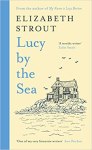 Lucy by the Sea by Elizabeth Strout: As Covid hits, William whisks Lucy from her NYC apartment to a house at the Maine coast. She’s an Everywoman recounting the fear and confusion of the early pandemic. Isolation has benefits: the first ‘room of her own’ she’s ever had, and time to ponder her childhood trauma and what went wrong in her marriage. Astute on American politics and writers’ inspirations; an effortless voice and emotional intelligence.
Nonfiction
 Bibliomaniac by Robin Ince: Ince was meant to undertake a stadium tour in Autumn 2021, but a Covid resurgence put paid to that. Not one for sitting around at home, he formulated Plan B: 100+ events, most of them in independent bookshops, over the course of two months, criss-crossing Britain and hitting many of my favourites. He’s not just a speaker at them but, invariably, a customer. I sensed a kindred spirit in so many lines. Witty and open-minded.
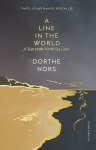 A Line in the World by Dorthe Nors: Nors lives in rural Jutland along the west coast of Denmark – little visited and largely unknown to foreigners. This can be both good and bad. Tourists feel they’re discovering somewhere new, but the residents are insular. Local legends and traditions, bird migration, reliance on the sea, wanderlust, maritime history, a visit to church frescoes, and more. Gorgeous writing and atmosphere, despite the bleakness.
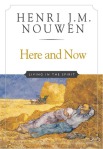 Here and Now by Henri Nouwen: This collection of micro-essays under themed headings like “Living in the Present” and “Suffering” is a perfect introduction to the Dutch Catholic priest’s theology. I marked out many reassuring or thought-provoking passages. I was taken by his ideas that the life of compassion is one of “downward mobility” and that inner freedom comes when you don’t judge anyone. Peaceful and readable; a good bedside devotional.
Poetry
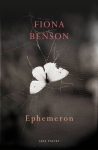 Ephemeron by Fiona Benson: Exquisite poems about the ephemeral, whether that be insect lives, boarding school days, primal emotions or moments from her children’s early years. The book is in four discrete corresponding sections but themes and language bleed from one into another and the whole is shot through with astonishing corporeality and eroticism. The form varies but the alliteration, slant rhymes and unexpected metaphors make each poem glisten.
 Leave Me a Little Want by Beverly Burch: Burch’s fourth collection juxtaposes the cosmic and the mundane, marvelling at the behind-the-scenes magic that goes into one human being born but also making poetry of an impatient wait in a long post office queue. Beset by environmental anxiety and the scale of bad news during the pandemic, she pauses in appreciation of the small and gradual.
 Making the Beds for the Dead by Gillian Clarke: Full of colour and nature imagery, profuse with alliteration and slant rhymes, relishing its specialist terminology, and taking on the serious subject matter of manmade disasters. Several sequences are devoted to gardening and geology; some pieces are ekphrastic, or dedicated to particular poets. The title sequence tackles the 2001foot and mouth disease outbreak. “The Fall” is on 9/11. Very affecting stuff.
My overall favourites were: in novels, Search and The Chosen (one contemporary and one historical) and in poetry, Ephemeron.
What were your best backlist reads this year?
#NovNov23 Week 4, “The Short and the Long of It”: W. Somerset Maugham & Jan Morris
Hard to believe, but it’s already the final full week of Novellas in November and we have had 109 posts so far! This week’s prompt is “The Short and the Long of It,” for which we encourage you to pair a novella with a nonfiction book or novel that deals with similar themes or topics. The book pairings week of Nonfiction November is always a favourite (my 2023 contribution is here), so think of this as an adjacent – and hopefully fun – project. I came up with two pairs: one fiction and one nonfiction. In the first case, the longer book led me to read a novella, and it was vice versa for the second.

W. Somerset Maugham
The House of Doors by Tan Twan Eng (2023)
&
Liza of Lambeth by W. Somerset Maugham (1897)
I wasn’t a huge fan of The Garden of Evening Mists, but as soon as I heard that Tan Twan Eng’s third novel was about W. Somerset Maugham, I was keen to read it. Maugham is a reliably readable author; his books are clearly classic literature but don’t pose the stylistic difficulties I now experience with Dickens, Trollope et al. And yet I know that Booker Prize followers who had neither heard of nor read Maugham have enjoyed this equally. I’m surprised it didn’t make it past the longlist stage, as I found it as revealing of a closeted gay writer’s life and times as The Master (shortlisted in 2004) but wider in scope and more rollicking because of its less familiar setting, true crime plot and female narration.
The main action is set in 1921, as “Willie” Somerset Maugham and his secretary, Gerald, widely known to be his lover, rest from their travels in China and the South Seas via a two-week stay with Robert and Lesley Hamlyn at Cassowary House in Penang, Malaysia. Robert and Willie are old friends, and all three men fought in the First World War. Willie’s marriage to Syrie Wellcome (her first husband was the pharmaceutical tycoon) is floundering and he faces financial ruin after a bad investment. He needs a good story that will sell and gets one when Lesley starts recounting to him the momentous events of 1910, including a crisis in her marriage, volunteering at the party office of Chinese pro-democracy revolutionary Dr Sun Yat Sen, and trying to save her friend Ethel Proudlock from a murder charge.

It’s clever how Tan weaves all of this into a Maugham-esque plot that alternates between omniscient third-person narration and Lesley’s own telling. The glimpses of expat life and Asia under colonial rule are intriguing, and the scene-setting and atmosphere are sumptuous – worthy of the Merchant Ivory treatment. I was left curious to read more by and about Maugham, such as Selina Hastings’ biography. (Public library)
But for now I picked up one of the leather-bound Maugham books I got for free a few years ago. Amusingly, the novella-length Liza of Lambeth is printed in the same volume with the travel book On a Chinese Screen, which Maugham had just released when he arrived in Penang.
{SPOILERS AHEAD}
This was Maugham’s debut novel and drew on his time as a medical intern in the slums of London. In tone and content it falls almost perfectly between Dickens and Hardy, because on the one hand Liza Kemp and her neighbours are cheerful paupers even though they work in factories, have too many children and live in cramped quarters; on the other hand, alcoholism and domestic violence are rife, and the wages of sexual sin are death. All seems light to start with: an all-village outing to picnic at Chingford; pub trips; and harmless wooing as Liza rebuffs sweet Tom in favour of a flirtation with married Jim Blakeston.
 At the halfway point, I thought we were going full Tess of the d’Urbervilles – how is this not a rape scene?! Jim propositions her four times, ignoring her initial No and later quiet. “‘Liza, will yer?’ She still kept silence, looking away … Suddenly he shook himself, and closing his fist gave her a violent, swinging blow in the belly. ‘Come on,’ he said. And together they slid down into the darkness of the passage.” So starts their affair, which leads to Liza getting beaten up by Mrs Blakeston in the street and then dying of an infection after a miscarriage. The most awful character is Mrs Kemp, who spends the last few pages – while Liza is literally on her deathbed – complaining of her own hardships, congratulating herself on insuring her daughter’s life, and telling a blackly comic story about her husband’s corpse not fitting in his oak coffin and her and the undertaker having to jump on the lid to get it to close.
Liza isn’t entirely the stereotypical whore with the heart of gold, but she is a good-time girl (“They were delighted to have Liza among them, for where she was there was no dullness”) and I wonder if she could even have been a starting point for Eliza Doolittle in Pygmalion. Maugham’s rendering of the cockney accent is over-the-top –
“‘An’ when I come aht,’ she went on, ‘’oo should I see just passin’ the ’orspital but this ’ere cove, an’ ’e says to me, ‘Wot cheer,’ says ’e, ‘I’m goin’ ter Vaux’all, come an’ walk a bit of the wy with us.’ ‘Arright,’ says I, ‘I don’t mind if I do.’”
– but his characters are less caricatured than Dickens’s. And, imagine, even then there was congestion in London:
“They drove along eastwards, and as the hour grew later the streets became more filled and the traffic greater. At last they got on the road to Chingford, and caught up numbers of other vehicles going in the same direction—donkey-shays, pony-carts, tradesmen’s carts, dog-carts, drags, brakes, every conceivable kind of wheeled thing, all filled with people”
In short, this was a minor and derivative-feeling work that I wouldn’t recommend to those new to Maugham. He hadn’t found his true style and subject matter yet. Luckily, there’s plenty of other novels to try. (Free mall bookshop) [159 pages] 
Jan Morris
Conundrum by Jan Morris (1974)
&
Jan Morris: Life from Both Sides, A Biography by Paul Clements (2022)

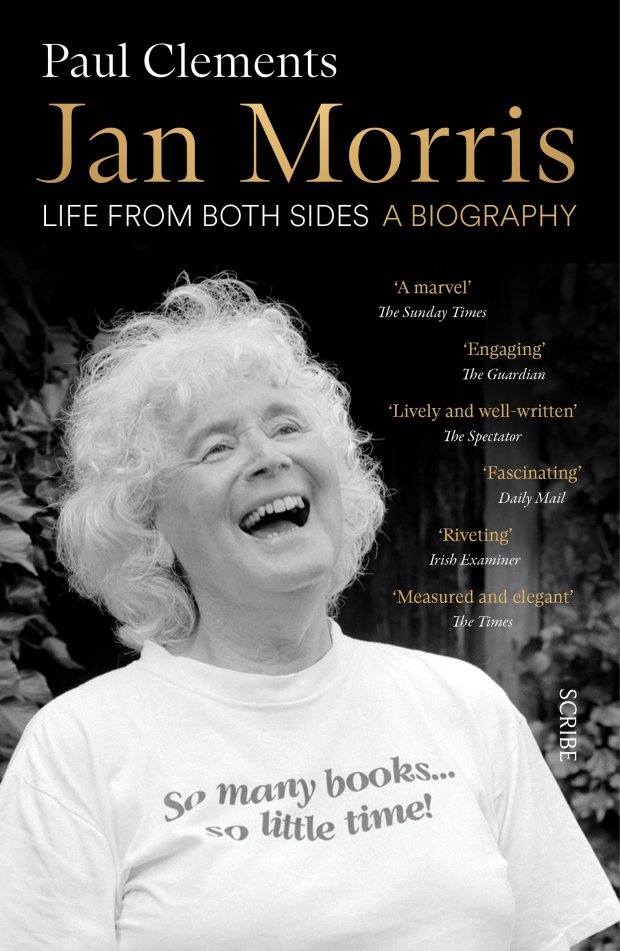
Back in 2021, I reread and reviewed Conundrum during Novellas in November. It’s a short memoir that documents her spiritual journey towards her true identity – she was a trans pioneer and influential on my own understanding of gender. In his doorstopper of a biography, Paul Clements is careful to use female pronouns throughout, even when this is a little confusing (with Morris a choirboy, a soldier, an Oxford student, a father, and a member of the Times expedition that first summited Everest). I’m just over a quarter of the way through the book now. Morris left the Times before the age of 30, already the author of several successful travel books on the USA and the Middle East. I’ll have to report back via Love Your Library on what I think of this overall. At this point I feel like it’s a pretty workaday biography, comprehensive and drawing heavily on Morris’s own writings. The focus is on the work and the travels, as well as how the two interacted and influenced her life.

The Lost Supper by Taras Grescoe (Blog Tour)
“Searching for the Future of Food in the Flavors of the Past” is the instructive subtitle of this globe-trotting book of foodie exploration in the vein of A Cook’s Tour and The Omnivore’s Dilemma. With its firm grounding in history, it also reminded me of Twain’s Feast. Journalist Tara Grescoe is based in Montreal. Dodging Covid lockdowns, he managed to make visits to the homes of various traditional foods, such as the more nutritious emmer wheat that sustained the Çatalhöyük settlement in Turkey 8,500 years ago; the feral pigs that live on Ossabaw Island off of Georgia, USA: the Wensleydale cheese that has been made in Yorkshire for more than 700 years; the olive groves of Puglia; and the potato-like tuber called camas that is a staple for the Indigenous peoples of Vancouver Island.
One of the most fascinating chapters is about the quest to recreate “garum,” a fermented essence of salted fish (similar to modern-day Asian fish sauces) used ubiquitously by the Romans. Grescoe journeys to Cádiz, Spain, where the sauce is being made again in accordance with the archaeological findings at Pompeii. He experiences a posh restaurant tasting menu where garum features in every dish – even if just a few drops – and then has a go at making his own. “Garum seemed to subject each dish to the culinary equivalent of italicization,” he found, intensifying the existing flavours and giving an inimitable umami hit. I’m also intrigued by the possibilities of entomophagy (eating insects) so was interested in his hunt for water boatman eggs, “the caviar of Mexico”; and his outing to the world’s largest edible insect farm near Peterborough, Ontario.
Grescoe seems to be, like me, a flexitarian, focusing on plants but indulging in occasional high-quality meat and fish. He advocates for eating as locally as you can, and buying from small producers whose goods reflect the care taken over the raising. “Everybody who eats cheap, factory-made meat is eating suffering,” he insists, having compared an industrial-scale slaughterhouse in North Carolina with small farms of heritage pigs. He acknowledges other ecological problems, too, however, such as the Ossabaw hogs eating endangered loggerhead turtles’ eggs and the overabundance of sheep in the Yorkshire Dales leading to a loss of plant diversity. This ties into the ecological conscience that is starting to creep into foodie lit (as opposed to a passé Bourdain eat-everything mindset), as witnessed by Dan Saladino’s Eating to Extinction winning the Wainwright Prize (Conservation) last year.
Another major theme of the book is getting involved in the food production process yourself, however small the scale (growing herbs or tomatoes on a balcony, for instance). “With every home food-making skill I acquired, I felt like I was tapping into some deep wellspring of self-sufficiency that connected me to my historic—and even prehistoric—ancestors,” Grescoe writes. He also cites American farmer-philosopher Wendell Berry’s seven principles for responsible eating, as relevant now as they were in the 1980s. The book went a little deeper into history and anthropology than I needed, but there was still plenty here to hold my interest. Readers may not follow Grescoe into grinding their own wheat or making their own cheese, but we can all be more mindful about where our food comes from, showing gratitude rather than entitlement. This was a good Nonfiction November and pre-Thanksgiving read!
With thanks to Random Things Tours and Greystone Books for the proof copy for review.
Buy The Lost Supper from Bookshop UK [affiliate link]
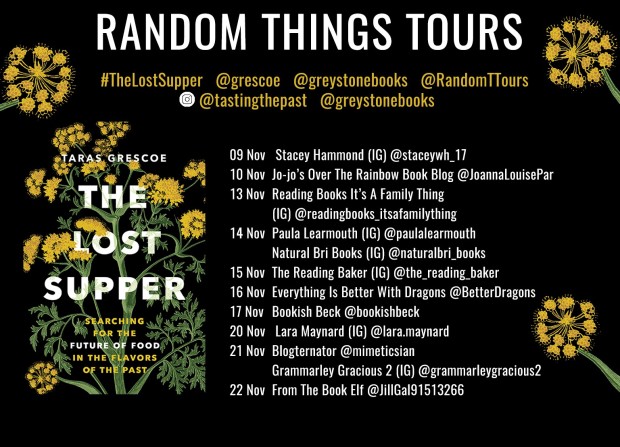
I was delighted to be part of the blog tour for The Lost Supper. See below for details of where other reviews have appeared or will be appearing soon.
“The Possibilities of Place” Webinar with Nina Mingya Powles
Yesterday was National Nonfiction Day in the UK, apparently, as well as being part of the ongoing Nonfiction November challenge. Appropriately, I attended what I think must be my first writing workshop, run online by The Emma Press, a Birmingham-based publisher whose poetry and essay collections I enjoy. Thanks to Arts Council England funding, they’ve been able to arrange a series of masterclass webinars that explore some of the genres they publish.

The life writing class I participated in was led by Nina Mingya Powles, a poet and essayist whose terrific books Magnolia, Small Bodies of Water, and Tiny Moons (The Emma Press’s best-selling memoir) I’ve read and reviewed. Other attendees hailed from as far afield as Orkney, West Cork, the South of France, Berlin and New Zealand. The seminar was in Zoom presenter mode, so only Nina was on screen and the rest of us communicated via the chat box. I had been nervous about joining from my PC without a webcam or microphone, so I was relieved that this was the setup.


Nina spoke about how broad the umbrella of “life writing” is, potentially incorporating poetry and autofiction as well as straightforward prose. “Creative nonfiction” is a term sometimes used interchangeably with it. Today she wanted to focus on how memories (especially childhood memories), food and place are intertwined.
For our first warm-up exercise, she had us draw a rough map of a body of water and put a point on it, then write ourselves into that place. During this 7-minute freewrite, I compiled a list of not particularly poetic sense impressions of Annapolis harbour. I found myself crying as I realized I might never have a reason to go back to a place that was so important in my teen and early adult years.
Nina’s black-and-white cat, Otto, often butted in, in amusing and feline-appropriate ways. We proceeded to consider food as a portal to memories and to different places we’ve lived or travelled. Nina likes to think about being an outsider and the visitor’s perspective. She acknowledged that our relationships with food can be complicated, so sometimes it is a loaded topic. Mostly she is looking for gentle, tender, joyful depictions of food.
 She read aloud Rebecca May Johnson’s recipe poem “to purge the desire to write like a man,” which on one level is about making tomato sauce (as is Small Fires) but ends with a “found incantation” from Natalia Ginzburg that reclaims the female realm of the kitchen as a place of power. I loved how the first stanzas describe the body as an archive, containing multitudes. Then we considered a Jennifer Wong poem, “A personal history of soups,” about all the Chinese soups she loves and misses, and their personal and legendary meanings.
Taking the Wong title as our prompt, we spent 15 minutes writing a rough piece about a foodstuff. I’ve reproduced mine below, without any tidying-up. I mimicked the part-recipe format of the Johnson and tried to picture the kitchen of our first Bowie house and the cookware we had there.
A personal history of apple pie
As American as…
Dad did all the cooking when I was growing up, so for my mother to accompany me in the kitchen was a big thing. One year of my adolescence, there was a baking contest at the church my best friend and her family attended. I didn’t expect to take part at all or, if anything, perhaps I assumed I’d knock together some simple chocolate chip cookies on my own. But Mom insisted we would make an apple pie from scratch together – crust and all.
An apron each. One green, one red. Hand-embroidered heirlooms made by her grandmother. (Don’t keep them folded away in a drawer. Use them. They are your lineage, your artefacts.)
Half shortening, half butter. Glass bowl. Cold water. Half-moon cutter criss-crosses through chunks of semi-solid fat to render them smaller and smaller, flour-covered pebbles the size of peas.
Scent clouds of cinnamon and cloves billow up from a pan of stewing apples. A ceramic dish with crimping around the rim. A wooden rolling pin to achieve a uniform one-quarter inch round of dough. Freshly washed fingers gently pressing divots into the sides until every air bubble disappears.
Blind bake the crust. Trust that it will hold your creation. The sizzle of softened fruit in contact with the part-baked crust.
I have no memory of whether we won a prize. And me so competitive! The prize was the time. The prize was the attention. The assurance that this was worth it, that I was worth it.
Next we moved on to think about place and journeys, especially departures and arrivals – bringing places with us versus leaving them behind. An attendee commented, and Nina agreed, that often distance is useful: we can most easily write about somewhere after we’ve left it, once there is a sense of yearning. For this section we looked at a few-page extract from Larissa Pham’s essay collection Pop Song in which she describes a drive from Albuquerque to Taos. Expecting beautiful Georgia O’Keeffe-type scenery, she experiences the letdown of signs of the opioid crisis and Trump voters.
Borrowing a line from the Pham essay, Nina invited us to spend 20 minutes writing a piece that would bring the reader into the immediacy of our experience of a place. She reminded us, as a general rule, to remember to cite whatever we borrow, or to remove the borrowed line afterwards and see if it still works. My take on “Here I was now in the distant place…” ended up being a few rambling paragraphs contrasting my two study abroad years, one magical and one difficult. (Sample line: “Everything in England was like that: partially familiar but slightly askew.”)
At the end, three participants unmuted themselves and read their food pieces aloud. One was about food and a mother’s love; milk and rice. The other two, amusingly, were both about meringue: making a cherry meringue pie with a Scottish granny, and assembling pavlovas with aunts in New Zealand.
Nina encouraged us to think of life writing as a fluid thing, including journaling, blogging, travel and nature writing. This was heartening because I’ve always indulged in bits of autobiographical writing on my blog, and I started a journal last month as my 40th birthday approached, inspired in part by the 150 journals I inherited from my mother as well as by the desires to document my life and believe that the day-to-day has meaning.
The two-hour workshop was incredibly good value, especially considering that The Emma Press sent a voucher for £4 off of one of their books. (I’ve ordered their poetry anthology on ageing.) Nina also generously circulated lists of additional writing prompts, magazines that accept life writing submissions, and relevant competitions to enter.
I’d purchased a ticket on a whim but wasn’t sure whether I’d participate fully – I have a bad habit of skipping the exercises in books, after all. I’m so glad I did join, and gave myself over to the writing prompts. Who knows if anything will come of it, but it was cathartic to think about life experiences I don’t often have at the forefront of my mind, and to see how much can be produced in short periods of concerted writing.
 Bookish Beck = Rebecca Foster. American transplant to England. Freelance proofreader and book reviewer.
 Bookish Beck