The Lost Supper by Taras Grescoe (Blog Tour)
“Searching for the Future of Food in the Flavors of the Past” is the instructive subtitle of this globe-trotting book of foodie exploration in the vein of A Cook’s Tour and The Omnivore’s Dilemma. With its firm grounding in history, it also reminded me of Twain’s Feast. Journalist Tara Grescoe is based in Montreal. Dodging Covid lockdowns, he managed to make visits to the homes of various traditional foods, such as the more nutritious emmer wheat that sustained the Çatalhöyük settlement in Turkey 8,500 years ago; the feral pigs that live on Ossabaw Island off of Georgia, USA: the Wensleydale cheese that has been made in Yorkshire for more than 700 years; the olive groves of Puglia; and the potato-like tuber called camas that is a staple for the Indigenous peoples of Vancouver Island.
One of the most fascinating chapters is about the quest to recreate “garum,” a fermented essence of salted fish (similar to modern-day Asian fish sauces) used ubiquitously by the Romans. Grescoe journeys to Cádiz, Spain, where the sauce is being made again in accordance with the archaeological findings at Pompeii. He experiences a posh restaurant tasting menu where garum features in every dish – even if just a few drops – and then has a go at making his own. “Garum seemed to subject each dish to the culinary equivalent of italicization,” he found, intensifying the existing flavours and giving an inimitable umami hit. I’m also intrigued by the possibilities of entomophagy (eating insects) so was interested in his hunt for water boatman eggs, “the caviar of Mexico”; and his outing to the world’s largest edible insect farm near Peterborough, Ontario.
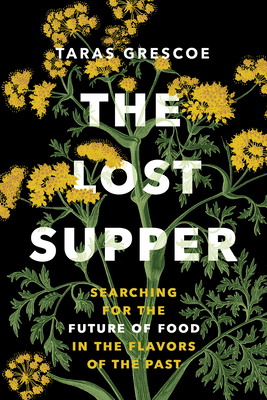
Grescoe seems to be, like me, a flexitarian, focusing on plants but indulging in occasional high-quality meat and fish. He advocates for eating as locally as you can, and buying from small producers whose goods reflect the care taken over the raising. “Everybody who eats cheap, factory-made meat is eating suffering,” he insists, having compared an industrial-scale slaughterhouse in North Carolina with small farms of heritage pigs. He acknowledges other ecological problems, too, however, such as the Ossabaw hogs eating endangered loggerhead turtles’ eggs and the overabundance of sheep in the Yorkshire Dales leading to a loss of plant diversity. This ties into the ecological conscience that is starting to creep into foodie lit (as opposed to a passé Bourdain eat-everything mindset), as witnessed by Dan Saladino’s Eating to Extinction winning the Wainwright Prize (Conservation) last year.
Another major theme of the book is getting involved in the food production process yourself, however small the scale (growing herbs or tomatoes on a balcony, for instance). “With every home food-making skill I acquired, I felt like I was tapping into some deep wellspring of self-sufficiency that connected me to my historic—and even prehistoric—ancestors,” Grescoe writes. He also cites American farmer-philosopher Wendell Berry’s seven principles for responsible eating, as relevant now as they were in the 1980s. The book went a little deeper into history and anthropology than I needed, but there was still plenty here to hold my interest. Readers may not follow Grescoe into grinding their own wheat or making their own cheese, but we can all be more mindful about where our food comes from, showing gratitude rather than entitlement. This was a good Nonfiction November and pre-Thanksgiving read!
With thanks to Random Things Tours and Greystone Books for the proof copy for review.
Buy The Lost Supper from Bookshop UK [affiliate link]
I was delighted to be part of the blog tour for The Lost Supper. See below for details of where other reviews have appeared or will be appearing soon.
“The Possibilities of Place” Webinar with Nina Mingya Powles
Yesterday was National Nonfiction Day in the UK, apparently, as well as being part of the ongoing Nonfiction November challenge. Appropriately, I attended what I think must be my first writing workshop, run online by The Emma Press, a Birmingham-based publisher whose poetry and essay collections I enjoy. Thanks to Arts Council England funding, they’ve been able to arrange a series of masterclass webinars that explore some of the genres they publish.

The life writing class I participated in was led by Nina Mingya Powles, a poet and essayist whose terrific books Magnolia, Small Bodies of Water, and Tiny Moons (The Emma Press’s best-selling memoir) I’ve read and reviewed. Other attendees hailed from as far afield as Orkney, West Cork, the South of France, Berlin and New Zealand. The seminar was in Zoom presenter mode, so only Nina was on screen and the rest of us communicated via the chat box. I had been nervous about joining from my PC without a webcam or microphone, so I was relieved that this was the setup.


Nina spoke about how broad the umbrella of “life writing” is, potentially incorporating poetry and autofiction as well as straightforward prose. “Creative nonfiction” is a term sometimes used interchangeably with it. Today she wanted to focus on how memories (especially childhood memories), food and place are intertwined.
For our first warm-up exercise, she had us draw a rough map of a body of water and put a point on it, then write ourselves into that place. During this 7-minute freewrite, I compiled a list of not particularly poetic sense impressions of Annapolis harbour. I found myself crying as I realized I might never have a reason to go back to a place that was so important in my teen and early adult years.
Nina’s black-and-white cat, Otto, often butted in, in amusing and feline-appropriate ways. We proceeded to consider food as a portal to memories and to different places we’ve lived or travelled. Nina likes to think about being an outsider and the visitor’s perspective. She acknowledged that our relationships with food can be complicated, so sometimes it is a loaded topic. Mostly she is looking for gentle, tender, joyful depictions of food.
 She read aloud Rebecca May Johnson’s recipe poem “to purge the desire to write like a man,” which on one level is about making tomato sauce (as is Small Fires) but ends with a “found incantation” from Natalia Ginzburg that reclaims the female realm of the kitchen as a place of power. I loved how the first stanzas describe the body as an archive, containing multitudes. Then we considered a Jennifer Wong poem, “A personal history of soups,” about all the Chinese soups she loves and misses, and their personal and legendary meanings.
Taking the Wong title as our prompt, we spent 15 minutes writing a rough piece about a foodstuff. I’ve reproduced mine below, without any tidying-up. I mimicked the part-recipe format of the Johnson and tried to picture the kitchen of our first Bowie house and the cookware we had there.
A personal history of apple pie
As American as…
Dad did all the cooking when I was growing up, so for my mother to accompany me in the kitchen was a big thing. One year of my adolescence, there was a baking contest at the church my best friend and her family attended. I didn’t expect to take part at all or, if anything, perhaps I assumed I’d knock together some simple chocolate chip cookies on my own. But Mom insisted we would make an apple pie from scratch together – crust and all.
An apron each. One green, one red. Hand-embroidered heirlooms made by her grandmother. (Don’t keep them folded away in a drawer. Use them. They are your lineage, your artefacts.)
Half shortening, half butter. Glass bowl. Cold water. Half-moon cutter criss-crosses through chunks of semi-solid fat to render them smaller and smaller, flour-covered pebbles the size of peas.
Scent clouds of cinnamon and cloves billow up from a pan of stewing apples. A ceramic dish with crimping around the rim. A wooden rolling pin to achieve a uniform one-quarter inch round of dough. Freshly washed fingers gently pressing divots into the sides until every air bubble disappears.
Blind bake the crust. Trust that it will hold your creation. The sizzle of softened fruit in contact with the part-baked crust.
I have no memory of whether we won a prize. And me so competitive! The prize was the time. The prize was the attention. The assurance that this was worth it, that I was worth it.
Next we moved on to think about place and journeys, especially departures and arrivals – bringing places with us versus leaving them behind. An attendee commented, and Nina agreed, that often distance is useful: we can most easily write about somewhere after we’ve left it, once there is a sense of yearning. For this section we looked at a few-page extract from Larissa Pham’s essay collection Pop Song in which she describes a drive from Albuquerque to Taos. Expecting beautiful Georgia O’Keeffe-type scenery, she experiences the letdown of signs of the opioid crisis and Trump voters.
Borrowing a line from the Pham essay, Nina invited us to spend 20 minutes writing a piece that would bring the reader into the immediacy of our experience of a place. She reminded us, as a general rule, to remember to cite whatever we borrow, or to remove the borrowed line afterwards and see if it still works. My take on “Here I was now in the distant place…” ended up being a few rambling paragraphs contrasting my two study abroad years, one magical and one difficult. (Sample line: “Everything in England was like that: partially familiar but slightly askew.”)
At the end, three participants unmuted themselves and read their food pieces aloud. One was about food and a mother’s love; milk and rice. The other two, amusingly, were both about meringue: making a cherry meringue pie with a Scottish granny, and assembling pavlovas with aunts in New Zealand.
Nina encouraged us to think of life writing as a fluid thing, including journaling, blogging, travel and nature writing. This was heartening because I’ve always indulged in bits of autobiographical writing on my blog, and I started a journal last month as my 40th birthday approached, inspired in part by the 150 journals I inherited from my mother as well as by the desires to document my life and believe that the day-to-day has meaning.
The two-hour workshop was incredibly good value, especially considering that The Emma Press sent a voucher for £4 off of one of their books. (I’ve ordered their poetry anthology on ageing.) Nina also generously circulated lists of additional writing prompts, magazines that accept life writing submissions, and relevant competitions to enter.
I’d purchased a ticket on a whim but wasn’t sure whether I’d participate fully – I have a bad habit of skipping the exercises in books, after all. I’m so glad I did join, and gave myself over to the writing prompts. Who knows if anything will come of it, but it was cathartic to think about life experiences I don’t often have at the forefront of my mind, and to see how much can be produced in short periods of concerted writing.
20 Books of Summer, 15–17: Bill Buford, Kristin Newman, J. Courtney Sullivan
One last foodie selection for the summer: a chef’s memoir set mostly in Lyon, France. Plus a bawdy travel memoir I DNFed halfway through, and an engaging but probably overlong contemporary novel about finances, generational conflict and women’s relationships.
Dirt: Adventures in French Cooking by Bill Buford (2020)
 Buford’s Heat was one of the highlights of my foodie summer reading in 2020. This is a sequel insomuch as it tells you what he did next, after his Italian-themed apprenticeships. The short answer is that he went to Lyon to learn French cooking in similarly obsessive fashion. Without knowing a word of French. And this time he had a wife and twin toddlers in tow. He met several celebrated French chefs – Michel Richard, Paul Bocuse, Daniel Boulud – and talked his way into training at a famous cookery school and in Michelin-starred kitchens.
These experiences are discussed in separate essays, so I rather lost track of the timeline. It’s odd that it took the author so many years to get around to publishing about it all. You’d think his sons were still young, but in fact they’re now approaching adulthood. The other slightly unusual thing is the amount of space Buford devotes to his pet theory that French cuisine (up to ragout, at least) evolved from Italian. Unsurprisingly, the French don’t favour this idea; I didn’t particularly care one way or the other.
Nonetheless, I enjoyed reading about his encounters with French bureaucracy; the stress of working in busy (and macho) restaurants, where he’s eventually entrusted with cooking the staff lunch; and his discovery of what makes for good bread: small wheat-growing operations rather than industrially produced flour – his ideal was the 90-cent baguette from his local boulangerie. This could have been a bit more focused, and I’m still more likely to recommend Heat, but I am intrigued to go to Lyon one day. (Secondhand gift, Christmas 2022) 
What I Was Doing While You Were Breeding by Kristin Newman (2014)
 (DNF, 156/291 pages) As featured in my Six Degrees post earlier in the month. Newman is a comedy writer for film and television (That ’70s Show, How I Met Your Mother, etc.). I liked how the title unabashedly centres things other than couplehood and procreation. When she’s travelling, she can be spontaneous, open-to-experience “Kristin-adjacent,” who loves doing whatever it is that locals do. And be a party girl, of course (“If there is one thing that is my favorite thing in the world, it’s making out on a dance floor”). However, this chronological record of her sexual conquests in Amsterdam, Paris, Russia, Argentina, etc. gets repetitive and raunchy. I also felt let down when I learned that she married and had a child right after she published it. So this was just her “Pietra Pan” stage before she copied everyone else. Which is fine, but were her drunken shenanigans really worth commemorating? (Secondhand, Bas Books & Home)
Friends and Strangers by J. Courtney Sullivan (2020)
I got Emma Straub vibes from this big, juicy novel focusing on two women in upstate New York: Elisabeth, a married journalist who moved out of Brooklyn when she finally conceived via IVF; and Sam, a college art student who becomes her son Gil’s babysitter. Elisabeth misses her old crowd and doesn’t fit in with the middle-aged book club ladies in her suburban neighbourhood; Sam is almost her only friend, a confidante who’s also like a little sister (better, anyway, than Elisabeth’s real sister, who lives on tropical islands and models swimwear for inspirational Instagram posts). And Sam admires Elisabeth for simultaneously managing a career and motherhood with seeming aplomb.
 But fundamental differences between the two emerge, mostly to do with economics. Elisabeth comes from money and takes luxury products for granted, while Sam is solidly working-class and develops a surprising affinity with Elisabeth’s father-in-law, George, who is near bankruptcy after Uber killed off his car service business. His pet theory, “The Hollow Tree,” explains that ordinary Americans have been sold the lie that they are responsible for their own success, when really they are in thrall to corporations and the government doesn’t support them as it should. This message hits home for Sam, who is distressed about the precarious situation of the Latina dining hall employees she has met via her work study job. Both Elisabeth and Sam try to turn their privilege to the good, with varied results.
Although I remained engrossed in the main characters’ stories, which unfold in alternating chapters, I thought this could easily have been 300 pages instead of nearly 400. In particular, Sullivan belabours Sam’s uncertainty over her thirtysomething English fiancé, Clive, whom Elisabeth refers to as “sleazy-hot.” The red flags are more than obvious to others in Sam’s life, and to us as readers, yet we get scene after scene meant to cast shade on him. I also kept wondering if first person would have been the better delivery mode for one or both strands. Still, this was perfect literary cross-over summer reading. (Little Free Library) 
#WITMonth, Part II: Wioletta Greg, Dorthe Nors, Almudena Sánchez and More
My next four reads for Women in Translation month (after Part I here) were, again, a varied selection: a mixed volume of family history in verse and fragmentary diary entries, a set of nature/travel essays set mostly in Denmark, a memoir of mental illness, and a preview of a forthcoming novel about Mary Shelley’s inspirations for Frankenstein. One final selection will be coming up as part of my Love Your Library roundup on Monday.
(20 Books of Summer, #13)
Finite Formulae & Theories of Chance by Wioletta Greg (2014)
[Translated from the Polish by Marek Kazmierski]
 I loved Greg’s Swallowing Mercury so much that I jumped at the chance to read something else of hers in English translation – plus this was less than half price AND a signed copy. I had no sense of the contents and might have reconsidered had I known a few things: the first two-thirds is family wartime history in verse, the rest is a fragmentary diary from eight years in which Greg lived on the Isle of Wight, and the book is a bilingual edition, with Polish and English on facing pages (for the poems) or one after the other (for the diary entries). I’m not sure what this format adds for English-language readers; I can’t know whether Kazmierski has rendered anything successfully. I’ve always thought it must be next to impossible to translate poetry, and it’s certainly hard to assess these as poems. They are fairly interesting snapshots from her family’s history, e.g., her grandfather’s escape from a stalag, and have quite precise vocabulary for the natural world. There’s also been an attempt to create or reproduce alliteration. I liked the poem the title phrase comes from, “A Fairytale about Death,” and “Readers.” The short diary entries, though, felt entirely superfluous. (New purchase – Waterstones bargain, 2023)
(20 Books of Summer, #14)
A Line in the World: A Year on the North Sea Coast by Dorthe Nors (2021; 2022)
[Translated from the Danish by Caroline Waight]
 Nors’s first nonfiction work is a surprise entry on this year’s Wainwright Prize nature writing shortlist. I’d be delighted to see this work in translation win, first because it would send a signal that it is not a provincial award, and secondly because her writing is stunning. Like Patrick Leigh Fermor, Aldo Leopold or Peter Matthiessen, she doesn’t just report what she sees but thinks deeply about what it means and how it connects to memory or identity. I have a soft spot for such philosophizing in nature and travel writing.
You carry the place you come from inside you, but you can never go back to it.
I longed … to live my brief and arbitrary life while I still have it.
This eternal, fertile and dread-laden stream inside us. This fundamental question: do you want to remember or forget?
Nors lives in rural Jutland – where she grew up, before her family home was razed – along the west coast of Denmark, the same coast that reaches down to Germany and the Netherlands. In comparison to Copenhagen and Amsterdam, two other places she’s lived, it’s little visited and largely unknown to foreigners. This can be both good and bad. Tourists feel they’re discovering somewhere new, but the residents are insular – Nors is persona non grata for at least a year and a half simply for joking about locals’ exaggerated fear of wolves.
Local legends and traditions, bird migration, reliance on the sea, wanderlust, maritime history, a visit to church frescoes with Signe Parkins (the book’s illustrator), the year’s longest and shortest days … I started reading this months ago and set it aside for a time, so now find it difficult to remember what some of the essays are actually about. They’re more about the atmosphere, really: the remote seaside, sometimes so bleak as to seem like the ends of the earth. (It’s why I like reading about Scottish islands.) A bit more familiarity with the places Nors writes about would have pushed my rating higher, but her prose is excellent throughout. I also marked the metaphors “A local woman is standing there with a hairstyle like a wolverine” and “The sky looks like dirty mop-water.”
With thanks to Pushkin Press for the proof copy for review.
Pharmakon by Almudena Sánchez (2021; 2023)
[Translated from the Spanish by Katie Whittemore]
 This is a memoir in micro-essays about the author’s experience of mental illness, as she tries to write herself away from suicidal thoughts. She grew up on Mallorca, always feeling like an outsider on an island where she wasn’t a native. Did her depression stem from her childhood, she wonders? She is also a survivor of ovarian cancer, diagnosed when she was 16. As her mind bounces from subject to subject, “trying to analyze a sick brain,” she documents her doctor visits, her medications, her dreams, her retweets, and much more. She takes inspiration from famous fellow depressives such as William Styron and Virginia Woolf. Her household is obsessed with books, she says, and it’s mostly through literature that she understands her life. The writing can be poetic, but few pieces stand out on the whole. My favourite opens: “Living in between anxiety and apathy has driven me to flowerpot decorating.”
With thanks to Fum d’Estampa Press for the free copy for review.
And a bonus preview:
Mary and the Birth of Frankenstein by Anne Eekhout (2021; 2023)
[Translated from the Dutch by Laura Watkinson]
 Anne Eekhout’s fourth novel and English-language debut is an evocative recreation of two momentous periods in Mary Shelley’s life that led – directly or indirectly – to the composition of her 1818 masterpiece. Drawing parallels between the creative process and motherhood and presenting a credibly queer slant on history, the book is full of eerie encounters and mysterious phenomena that replicate the Gothic science fiction tone of Frankenstein itself. The story lines are set in the famous “Year without a Summer” of 1816 (the storytelling challenge with Lord Byron) and during a period in 1812 that she spent living in Scotland with the Baxter family; Mary falls in love with the 17-year-old daughter, Isabella.
Coming out on 3 October from HarperVia. My full review for Shelf Awareness is pending.
Six Degrees of Separation: Romantic Comedy to Wild Fell
This is a fun meme I take part in every few months.
For August we begin with Romantic Comedy by Curtis Sittenfeld, one of my top 2023 releases so far. (See Kate’s opening post.)
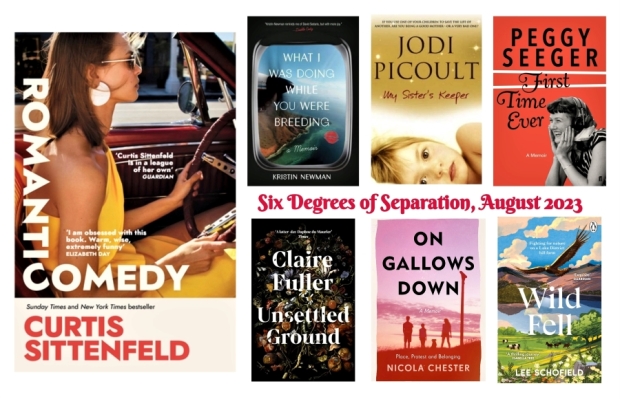
#1 Sittenfeld’s protagonist, Sally Milz, writes TV comedy, as does Kristin Newman (That ’70s Show, How I Met Your Mother, etc.), author of What I Was Doing While You Were Breeding, a lighthearted record of her travels and romantic conquests. (She even has a passage that reminds me of Sally’s Danny Horst Rule: “I looked like a thirty-year-old writer. Not like a twenty-year-old model or actress or epically legged songstress, which is a category into which an alarmingly high percentage of Angelenas fall. And, because the city is so lousy with these leggy aliens, regular- to below-average-looking guys with reasonable employment levels can actually get one, another maddening aspect of being a woman in this city.”)
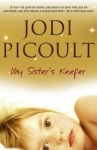 #2 I didn’t realize when I picked it up in a charity shop that my copy smelled strongly of cigarette smoke. I aired it in kitty litter, then by scented candles, and it still reeks. I reckon I can tolerate the smell long enough to finish it and put it in the Little Free Library, which gets good ventilation. A novel I acquired from the free bookshop we used to have in the mall in town was the only book I can remember having to get rid of before reading because it just smelled too bad (also of cigarettes in that case): My Sister’s Keeper by Jodi Picoult.
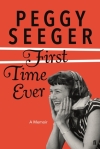 #3 So I didn’t read that, but I have read another Picoult novel, Sing You Home. The author is known for picking a central issue to address in each work, and in that one it was sexuality. Zoe, a music therapist, is married to Max but leaves him for Vanessa – and then decides to sue him for the use of the embryos they created together via IVF. It was the first book I’d read with that dynamic (a previously straight woman enters into a lesbian partnership), but by no means the last. Later came Untamed by Glennon Doyle, Hidden Nature by Alys Fowler, The Fixed Stars by Molly Wizenberg … and one you maybe weren’t expecting: the fantastic memoir First Time Ever by Peggy Seeger. The authors vary in how they account for it. They were gay all along but didn’t realize it? Their orientation changed? Or they just happened to fall in love with someone of the same gender? Seeger doesn’t explain at all, simply records how head-over-heels she was for Ewan MacColl … and then for Irene Pyper Scott.
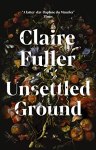 #4 Peggy Seeger is one of my heroes these days. I first got into her music through the lockdown livestreams put together by Folk on Foot and have since seen her live and acquired several of her albums, including a Smithsonian Folkways collection of her best-loved folk standards. One of these is, of course, “I’m Gonna Be an Engineer,” which was one of the inspirations for Claire Fuller’s Unsettled Ground.
 #5 Unsettled Ground, an unusual story of rural poverty and illiteracy, is set in a fictional village modelled on Inkpen, where Nicola Chester lives. Her memoir On Gallows Down, which held particular local interest for me, was shortlisted for the Wainwright Prize last year.
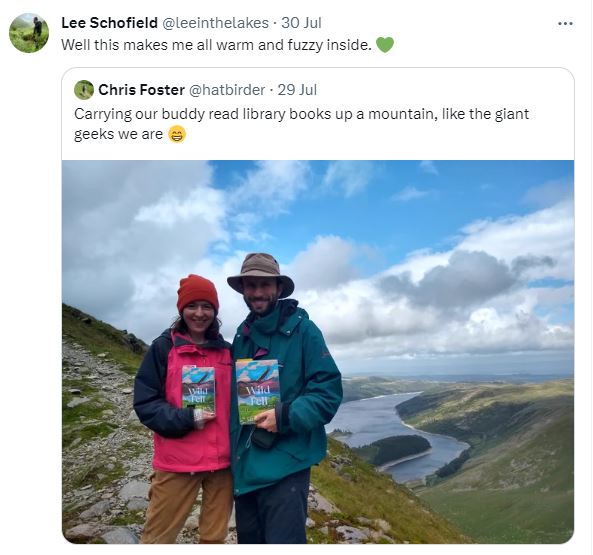
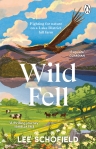 #6 Also shortlisted that year was Wild Fell by Lee Schofield, about his work at RSPB Haweswater. Like Chester, he’s been mired in the struggle to balance sustainable farming with conservation at a beloved place. And like a fellow Lakeland farmer (and previous Wainwright Prize winner for English Pastoral), James Rebanks, he’s trying to be respectful of tradition while also restoring valuable habitats. My husband and I each took a library copy of Wild Fell along to Cumbria last week (about which more anon) and packed it in a backpack for an on-location photo during our wild walk at the very atmospheric Haweswater.
Where will your chain take you? Join us for #6Degrees of Separation! (Hosted on the first Saturday of each month by Kate W. of Books Are My Favourite and Best.) Next month’s starting book is Wifedom by Anna Funder.
Have you read any of my selections? Tempted by any you didn’t know before?
Books of Summer, 3–4: Anthony Bourdain and Meron Hadero
Back to the foodie lit. A chef’s memoir of adventurous travel and eating, and a short story collection about Ethiopian American immigrants – for some of whom learning how to cook traditional American food is a sign of integration.
A Cook’s Tour: In Search of the Perfect Meal by Anthony Bourdain (2001)
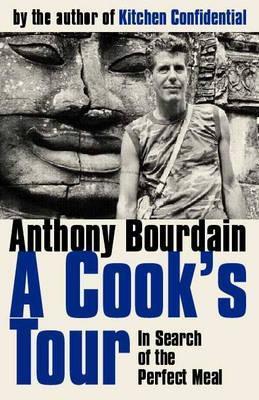 Anthony Bourdain also appeared on my summer reading list when I reviewed Kitchen Confidential in 2020; I have both books in an omnibus edition. The chef acknowledges there’s no such thing as a perfect dining experience as there are many subjective factors apart from the food, but a few of his meals here are pretty close to ideal. Others are horrific. But everywhere he goes, from England to Cambodia, he gives a fair try. Four interspersed chapters are set in Vietnam, a country he falls in love with, but the rest are like individual essays with a different destination each time: Spain, Russia, Morocco, Japan, Scotland…
Some places are chosen due to personal significance or professional connections. He goes back to where he spent childhood summers in France, but it doesn’t live up to expectations: “I’d thought everything would be instant magic. That the food would taste better because of all the memories. … But you can never be ten years old again.” His boss arranges a pig roast for him in Portugal; he travels to the state in Mexico where most of his kitchen staff come from. With several other chefs, he journeys to Thomas Keller’s The French Laundry in California for a 20-course tasting menu – the rundown of the dishes takes him several pages. The key ingredients of this and the other near-perfect meals seem to be excellent quality of food, innovative flavors, a variety of dishes, and a languid pace with the alcohol flowing.
Bourdain sheepishly confesses that his travels were documented for television; the Food Network made him agree to some filming opportunities he would otherwise have avoided. Vegetarians be warned: some of these involve slaughter, and/or eating exotic animals. Aside from the pig, there’s a whole lamb cooked over a fire in the desert in Morocco, a turkey he beheads, and rabbits he shoots. And while you might think he’d eat anything with pleasure, there are in fact a few meals that leave him feeling ill: iguana tamales, bird’s nest soup, and dishes that use up all parts of a cobra. A notorious vegetarian hater, he even agrees to attend a vegan potluck in Berkeley, but reports that “not one of them could cook a f***ing vegetable.”
This was fast-moving, brash and funny; just as good as Kitchen Confidential and something I’d recommend to anyone who enjoys cooking shows or stunt travel. (Free – swap shop)
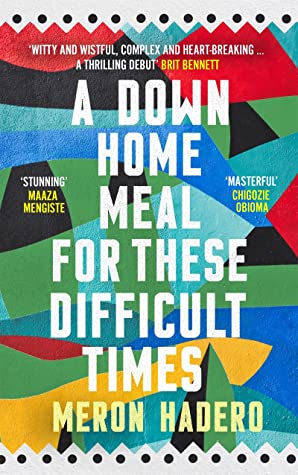
A Down Home Meal for These Difficult Times by Meron Hadero (2022)
Debut author Hadero won the Restless Books Prize for New Immigrant Writing for this work in progress, many of whose stories had been published in periodicals in 2015–20. The 15 stories are roughly half in the first person and half in the third person, and apart from a couple whose place or character origins aren’t specified, I think all are about Ethiopians or Ethiopian Americans. Often, the protagonist is a recent immigrant. Yohannes, in “Medallion,” is recruited by his taxi driver almost immediately upon his arrival in Los Angeles, but finds that his American dream never comes through. In “The Thief’s Tale,” an old Ethiopian man who speaks no English is lost in Prospect Park. When the man who holds him up at knifepoint realizes there is no watch or wallet to take, he lets him call his daughter from a payphone and, as they wait, the two strangers share their stories of failure and regret.
Sometimes Ethiopia is the setting instead. “The Suitcase” has Saba getting ready to return to the USA after a one-month visit to Addis Ababa, her bag 10 kilograms too heavy because of everything people are sending back with her. In “The Street Sweep,” Getu hopes to impress a departing NGO worker enough at his leaving party at the Addis Sheraton that he’ll get a life-changing job offer. This one was a standout, though distressing for how it rests on misunderstanding.
 My favorites seem like they could be autobiographical for the author. “The Wall” is narrated by a man who immigrated to Iowa via Berlin at age 10 in the mid-1980s. At a potluck dinner, he met Professor Johannes Weill, who gave him free English lessons. Six years later, he heard of the Berlin Wall coming down and, though he’d lost touch with the professor, made a point of sending a note. The connection across age, race and country is touching. “Sinkholes” is a short, piercing one about the single Black student in a class refusing to be the one to write the N-word on the board during a lesson on Invisible Man. The teacher is trying to make a point about not giving a word power, but it’s clear that it does have significance whether uttered or not. “Swearing In, January 20, 2009” is a poignant flash story about an immigrant’s patriotic delight in Barack Obama’s inauguration, despite prejudice encountered.
The title story is the only foodie link, but it’s a sweet one. Two women who attend church Amharic classes in New York City admit that they can’t cook, but want to impress at the PTA bake sale, so go in search of a quintessential American cookbook, and in the years to come prepare dishes from The Good Housekeeping Illustrated Cookbook every time there is a crisis. “When Yeshi’s husband left her for a blonde waitress, they made Broiled Hamburg Steak, just the once. … When Jazarah’s credit cards were stolen and maxed out, they made trays of Corn Fritters.” Eventually, they start to make a living from their own food truck.
There were no bad stories here per se, but several too many, and not enough variety. I also didn’t warm to the couple of political satires involving manuscripts. “The Case of the Missing _______,” set in 2036 and counting backwards from Day 100, is a document full of erasure, produced by the Minnesota newspaper The Exile Gazeta and concerning an absent authoritarian leader. It made me think of Ella Minnow Pea, or perhaps novels by Jonathan Safran Foer and Hernan Diaz, and felt different to the rest, but not in a good way. It would be interesting to try a novel by Hadero someday. See also Liz’s review. (Other challenges this met: review catch-up, set-aside) 
With thanks to Canongate for the proof copy for review.
Recent Writing for BookBrowse, Foreword, Shelf Awareness, Shiny New Books, and the TLS
I’ve compiled excerpts from some reviews I’ve contributed to other websites and publications this year. I link to the full text where available. (When writing a paid review, I seek to be balanced but positive. Ratings reflect my personal response.)
BookBrowse
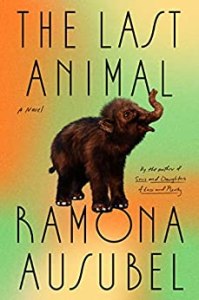 The Last Animal by Ramona Ausubel: In Ausubel’s offbeat third novel, a widowed scientist and her two daughters embark on a rogue plan to make history by resurrecting the woolly mammoth. There is a quirky combination of cosmic and domestic concerns here. A winsome sister duo is at the heart of the unusual and timely story, with priority given to the points of view of teenagers Eve and Vera, whose banter is a highlight. Ausubel has wisely chosen not to dwell on the scientific details of de-extinction, yet that means that this becomes more like speculative fiction or a fairy tale. Ironically, the fabulist-leaning novel is best when most realist, documenting struggles with bereavement, sexism and parenting teens.
 The Lost Wife by Susanna Moore: Moore’s hard-hitting novella is based in part on the memoir Six Weeks in the Sioux Tepees: A Narrative of Indian Captivity. In Moore’s version, Sarah, 25, leaves her baby behind when she flees an abusive husband, and once in Minnesota Territory marries John Brinton, who becomes a doctor on a Sioux reservation. By 1862, Sarah is friendly with the Native women. Although the Civil War is unfolding, the greater threat here is of revolt by the starving Indigenous residents. There is much of anthropological and historical interest, but Sarah’s flat storytelling, which may represent a pastiche of period style, means threatening or climactic scenes lose some of their potential gravity.
Foreword
 My Mother Says by Stine Pilgaard (trans. from the Danish by Hunter Simpson): After breaking up with her zookeeper girlfriend over their age gap and their conflicting takes on motherhood, the heroine moves back in with her father, a pastor who’s obsessed with Pink Floyd, and her stepmother. Her mother visits often, nagging her to finish her thesis. The line between her conversations and internal thoughts is thin. From her mansplaining doctor, she learns that the brain’s hippocampus is named for its seahorse shape. This inspires “Monologues of a Seahorse,” interludes of stream-of-consciousness association. Experimental and whimsical, this delivers deadpan narration of everyday woes.
 In Vitro: On Longing and Transformation by Isabel Zapata (trans. from the Spanish by Robin Myers): A Mexican poet probes the enduring mysteries of pregnancy and birth in a memoir in fragments that travels from fertility treatment through to the early weeks of pandemic-time motherhood. The clinical language of a gynecological history—late menstruation, polycystic ovary syndrome, eighteen years on the pill, and infertility—and the embryo transfer process contrasts with Zapata’s mystical thinking. The microessays integrate family stories, history, and artistic explorations. This resolute account of a personal metamorphosis alchemizes tender experiences into enchanting vignettes.
Shelf Awareness
Fiction
 Daughters of Nantucket by Julie Gerstenblatt: This engrossing debut novel explores the options for women in the mid-19th century while bringing a historical tragedy to life. Metaphorical conflagrations blaze in the background in the days leading up to the great Nantucket fire of 1846: each of three female protagonists (a whaling captain’s wife, a museum curator, and a pregnant Black entrepreneur) holds a burning secret and longs for a more expansive, authentic life. The action spans two tense weeks, one week before the fire through eight days after. The women’s lives collide in two climactic scenes. Gerstenblatt’s eye for detail results in sultry historical fiction for Sue Monk Kidd’s readers.
 Camp Zero by Michelle Min Sterling: Sterling’s brilliantly unsettling debut novel is set in mid-21st-century, post-oil North America. Prioritizing perspectives from two all-female communities, it contrasts the heights of opulence and technology with the basic instinct for survival. How the strands connect is a mystery sustained through much of the book. Characters go by multiple names and harbor ulterior motives; scenes echo each other as disparate subplots meet in unexpected ways. The background is all too plausible. Sterling also takes to its logical extreme the state of being constantly online. Compelling dystopian cli-fi with three-dimensional characters—perfect for fans of Station Eleven and To Paradise.
 Dear Chrysanthemums by Fiona Sze-Lorrain: In this elegant collection of 11 linked short stories by a poet and translator, China’s mid-20th-century political upheaval casts a long shadow. Music and food, not to mention love, bring meaning to those displaced in the aftermath of dissent. The stories—set in China, Singapore, Paris, and New York—span seven decades but always take place in a year ending in a six, a sacred number in Chinese divination. A highlight is “News from Saigon,” in which a prostitute meets Marguerite Duras in a Paris café. The connections are subtle, with the final story pulling together many strands. Ideal for readers of Madeleine Thien’s Do Not Say We Have Nothing.
Nonfiction
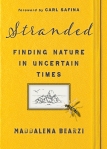 Stranded by Maddalena Bearzi: Bearzi developed a deep love for marine fauna during childhood summers in Sardinia and cofounded the Ocean Conservation Society in the 1990s. Temporarily confined to land by Covid-19 lockdowns, she adopts a different tactic for exploring animal behavior: “an urban safari in my backyard and neighborhood.” These nature essays exemplify evenhandedness, curiosity, and close observation. From wasps to night-blooming flowers, her interest is wide-ranging. Gardening is a relaxing pastime and a connection to her mother while they are separated. As a behavioral ecologist, she views even her dog as a subject of study. A passionate primer to appreciating everyday nature.
Poetry
 Lo by Melissa Crowe: This incandescent autobiographical collection travels from girlhood to marriage and motherhood in post-pandemic USA. Crowe delves into sexual abuse and growing up in rural poverty. Yet the collection is so carefully balanced in tone that it never feels bleak. The emotional range is enhanced by alliteration and botanical imagery.
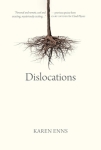 Dislocations by Karen Enns: The fourth collection by Canadian poet Enns skillfully evokes a rural upbringing and revels in the beauty of nature and music. One of its aphorisms could encapsulate the entire collection: “The ratio of love to grief / we understood as music.” Updating the pastoral tradition, the bittersweet verse also takes solace in the past.
Shiny New Books
A Fortunate Woman by Polly Morland & A Fortunate Man by John Berger: The similarities go much further than the title and subject matter: these two biographical works, both illustrated with black-and-white photographs, are set in the same English valley and the female subject of Morland’s is the next-but-one successor of the doctor who stars in Berger’s.
 Berger (1926–2017), an art critic and Booker Prize-winning novelist, spent six weeks shadowing the doctor, to whom he gives the pseudonym John Sassall, with Swiss documentary photographer Jean Mohr, his frequent collaborator. Sassall’s dedication was legendary: he attended every birth in this community, and nearly every death. Sassall’s middle-class origins set him apart from his patients. There’s something condescending about how Berger depicts the locals as simple peasants. Mohr’s photos include soft-focus close-ups on faces exhibiting a sequence of emotions, a technique that feels outdated in the age of video. Along with recording the day-to-day details of medical complaints and interventions, Berger waxes philosophical on topics such as infirmity and vocation. A Fortunate Man is a curious book, part intellectual enquiry and part hagiography.
 With its layers of local history and its braided biographical strands, A Fortunate Woman takes up many of the same heavy questions but feels more subtle and timely. It also soon delivers a jolting surprise: the doctor Berger called John Sassall was likely bipolar and, soon after the death of his beloved wife Betty, committed suicide in 1982. His story still haunts this community, where many of the older patients remember going to him for treatment. Like Berger, Morland keenly follows a range of cases. As the book progresses, we see this beautiful valley cycle through the seasons, with certain of Richard Baker’s landscape shots deliberately recreating Mohr’s scene setting. The timing of Morland’s book means that it morphs from a portrait of the quotidian for a doctor and a community to, two-thirds through, an incidental record of the challenges of medical practice during COVID-19.
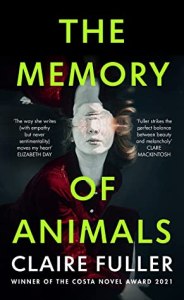 The Memory of Animals by Claire Fuller: Neffy has nothing to lose when she enrolls in a controversial vaccine trial in a familiar mid-pandemic landscape. The novel is presented as her journal. The bulk takes place in two weeks she spends on a locked unit with four fellow test subjects. In the meantime, she is introduced to an experimental technology for reliving memories. The characterisation of the four other cast members is somewhat thin, and the elements feel randomly assembled. The world-building and tech are unlikely to stand up to science fiction fans’ scrutiny, but this has just the right dose of the speculative for literary fiction readers. It also happens to fit into a recent vogue for octopus novels.
Times Literary Supplement
A late-twenties journalist sets out to survey the situation on the ground for ten British species being squeezed out by anthropogenic climate change: The mission is very similar, and both authors embody passionate dedication to conservation, but the difference in tone of these travel narratives makes them likely to appeal to separate audiences…
In Search of One Last Song by Patrick Galbraith & Forget Me Not by Sophie Pavelle:
 Galbraith’s is an elegiac tour through imperilled countryside and urban edgelands. Each chapter resembles an in-depth magazine article: a carefully crafted profile of a beloved bird species, with a focus on the specific threats it faces. Galbraith recognises the nuances of land use. However, shooting plays an outsized role. (Curious for his bio not to disclose that he is editor of the Shooting Times.) The title’s reference is to literal birdsong, but the book also celebrates birds’ cultural importance through their place in Britain’s folk music and poetry. He is clearly enamoured of countryside ways, but too often slips into laddishness, with no opportunity missed to mention him or another man having a “piss” outside. Readers could also be forgiven for concluding that “Ilka” (no surname, affiliation or job title), who briefs him on her research into kittiwake populations in Orkney, is the only female working in nature conservation in the entire country; with few exceptions, women only have bit parts: the farm wife making the tea, the receptionist on the phone line, and so on.
 Pavelle’s book is a tonic in more ways than one. Employed by Beaver Trust, she is enthusiastic and self-deprecating. Her nature quest has a broader scope, including insects like the marsh fritillary and marine species such as seagrass and the Atlantic salmon. Travelling between lockdowns in 2020–1, Pavelle took low-carbon transport wherever possible and bolsters her trip accounts with context, much of it gleaned from Zoom calls and e-mail correspondence with experts from museums and universities. Refreshingly, around half of these interviewees are women, and the animal subjects are never the obvious choices. Instead, she seeks out “underdog” species. The explanations are at a suitable level for laymen, true to her job as a science communicator. The snappy, casual prose (“the future of the bilberry bumblebee and its Aperol arse can be bright, but only if we get off our own”) could even endear her to teenage readers. As image goes, Pavelle’s cheerful naïveté holds more charm than Galbraith’s hardboiled masculinity.
 Taking Flight by Lev Parikian: Parikian’s accessible account of the animal kingdom’s development of flight exhibits a layman’s enthusiasm for an everyday wonder. He explicates the range of flying strategies and the structural adaptations that made them possible. The archaeopteryx section, chronicling the transition between dinosaurs and birds, is a highlight. Though the most science-heavy of the author’s six works, this, perhaps ironically, has fewer footnotes. His usual wit is on display: he describes the feral pigeon as “the Volkswagen Golf of birds” and penguins as “piebald blubber tubes”. This makes it a pleasure to tag along on a journey through evolutionary time, one sure to engage even history- and science-phobes.
Do any of these catch your eye?
Bill Bryson’s Notes from a Small Island: Reread and Stage Production
Bill Bryson, an American author of humorous travel and popular history or science books, is considered a national treasure in his adopted Great Britain. He is a particular favourite of my husband and in-laws, who got me into his work back in the early to mid-2000s. As I, too, was falling in love with the country, I found much to relate to in his travel-based memoirs of expatriate life and temporary returns to the USA. Sometimes it takes an outsider’s perspective to see things clearly.
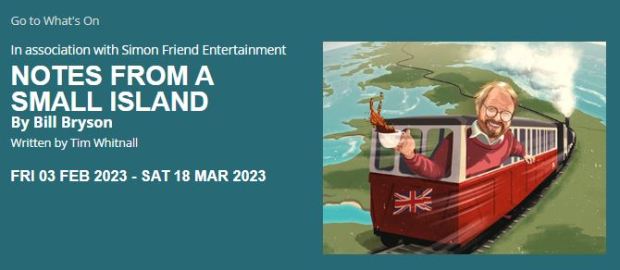
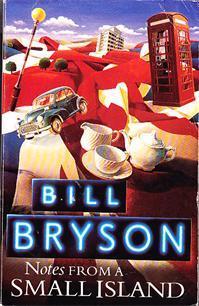 When we heard that Notes from a Small Island (1995), his account of a valedictory tour around Britain before returning to live in the States for the first time in 20 years, had been adapted into a play by Tim Whitnall and would be performed at our local theatre, the Watermill, we thought, huh, it never would have occurred to us to put this particular book on stage. Would it work? we wondered. The answer is yes and no, but it was entertaining and we were glad that we went. We presented tickets as my in-laws’ Christmas present and accompanied them to a mid-February matinee before supper at ours.
A few members of my book club decided to see the show later in the run and suggested we read – or reread, as was the case for several of us – the book in March. I started my reread before attending the play and had gotten through the first 50 pages, which is mostly about his first visit to England in 1973 (including a stay in a Dover boarding-house presided over by the infamously officious “Mrs Smegma”). This was ideal as the first bit contains the funniest stuff and, with the addition of some autobiographical material from later in the book plus his 2006 memoir The Life and Times of the Thunderbolt Kid, made up the entirety of the first act.
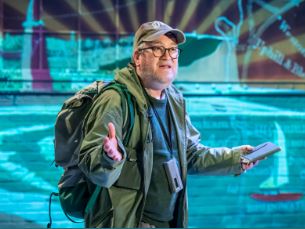
Photos are screenshots from the Watermill website.
Bryson traveled almost exclusively by public transport, so the set had the brick and steel walls of a generic terminal, and a bus shelter and benches were brought into service as the furnishing for most scenes. The problem with frontloading the play with hilarious scenes is that the second act, like the book itself on this reread, became rather a slog of random stops, acerbic observations, finding somewhere to stay and something to eat (often curry), and then doing it all over again.
Mark Hadfield, in the starring role, had the unenviable role of carrying the action and remembering great swathes of text lifted directly from the book. That’s all well and good as a strategy for giving a flavour of the writing style, but the language needed to be simplified; the poor man couldn’t cope and kept fluffing his lines. There were attempts to ease the burden: sections were read out by other characters in the form of announcements, letters or postcards; some reflections were played as if from Bryson’s Dictaphone. It was best, though, when there were scenes rather than monologues against a projected map, because there was an excellent ensemble cast of six who took on the various bit parts and these were often key occasions for humour: hotel-keepers, train-spotters, unintelligible accents in a Glasgow pub.

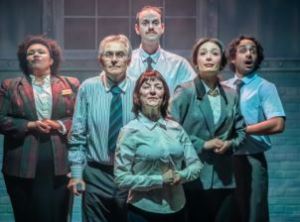
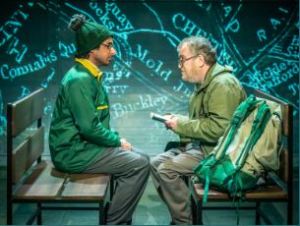
The trajectory was vaguely southeast to northwest – as far as John O’Groats, then back home to the Yorkshire Dales – but the actual route was erratic, based on whimsy as much as the availability of trains and buses. Bryson sings the praises of places like Salisbury and Durham and the pinnacles of coastal walks, and slates others, including some cities, seaside resorts and tourist traps. Places of personal significance make it onto his itinerary, such as the former mental asylum at Virginia Water, Surrey where he worked and met his wife in the 1970s. (My husband and I lived across the street from it for a year and a half.) He’s grumpy about having to pay admission fees that in today’s money sound minimal – £2.80 for Stonehenge!
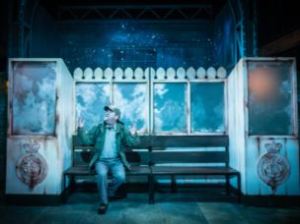 The main interest for me in both book and play was the layers of recent history: the nostalgia for the old-fashioned country he discovered at a pivotal time in his own young life in the 1970s; the disappointments but still overall optimism of the 1990s; and the hindsight the reader or viewer brings to the material today. At a time when workers of every type seem to be on strike, it was poignant to read about the protests against Margaret Thatcher and the protracted printers’ strike of the 1980s.
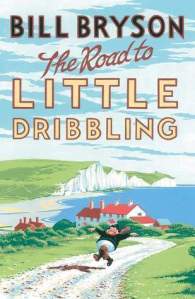 The central message of the book, that Britain has an amazing heritage that it doesn’t adequately appreciate and is rapidly losing to homogenization, still holds. Yet I’m not sure the points about the at-heart goodness and politeness of the happy-with-their-lot British remain true. Is it just me or have general entitlement, frustration, rage and nastiness taken over? Not as notable as in the USA, but social divisions and the polarization of opinions are getting worse here, too. One can’t help but wonder what the picture would have been post-Brexit as well. Bryson wrote a sort-of sequel in 2015, The Road to Little Dribbling, in which the sarcasm and curmudgeonly persona override the warmth and affection of the earlier book.
Indeed, my book club noted that a lot of the jokes were things he couldn’t get away with saying today, and the theatre issued a content warning: “This production includes the use of very strong language, language reflective of historical attitudes around Mental Health, reference to drug use, sexual references, mention of suicide, flashing lights, pyrotechnics, loud sound effect explosions, and haze. This production is most suitable for those aged 12+.”
So, yes, an amusing journey, but a bittersweet one to revisit, and an odd choice for the stage.
A favourite line I’ll leave you with: “To this day, I remain impressed by the ability of Britons of all ages and social backgrounds to get genuinely excited by the prospect of a hot beverage.”
Book:
Original rating (c. 2004):
My rating now:
Play:
Have you read anything by Bill Bryson? Are you a fan?
February Releases by Nick Acheson, Charlotte Eichler and Nona Fernández (#ReadIndies)
Three final selections for Read Indies. I’m pleased to have featured 16 books from independent publishers this month. And how’s this for neat symmetry? I started the month with Chase of the Wild Goose and finish with a literal wild goose chase as Nick Acheson tracks down Norfolk’s flocks in the lockdown winter of 2020–21. Also appearing today are nature- and travel-filled poems and a hybrid memoir about Chilean and family history.

The Meaning of Geese: A thousand miles in search of home by Nick Acheson
I saw Nick Acheson speak at New Networks for Nature 2021 as the ‘anti-’ voice in a debate on ecotourism. He was a wildlife guide in South America and Africa for more than a decade before, waking up to the enormity of the climate crisis, he vowed never to fly again. Now he mostly stays close to home in North Norfolk, where he grew up and where generations of his family have lived and farmed, working for Norfolk Wildlife Trust and appreciating the flora and fauna on his doorstep.
 This was indeed to be a low-carbon initiative, undertaken on his mother’s 40-year-old red bicycle and spanning September 2021 to the start of the following spring. Whether on his own or with friends and experts, and in fair weather or foul, he became obsessed with spending as much time observing geese as he could – even six hours at a stretch. Pink-footed geese descend on the Holkham Estate in their thousands, but there were smaller flocks and rarer types as well: from Canada and greylag to white-fronted and snow geese. He also found perspective (historical, ethical and geographical) by way of Peter Scott’s conservation efforts, chats with hunters, and insight from the Icelandic researchers who watch the geese later in the year, after they leave the UK. The germane context is woven into a month-by-month diary.
The Covid-19 lockdowns spawned a number of nature books in the UK – for instance, I’ve also read Goshawk Summer by James Aldred, Birdsong in a Time of Silence by Steven Lovatt, The Consolation of Nature by Michael McCarthy, Jeremy Mynott and Peter Marren, and Skylarks with Rosie by Stephen Moss – and although the pandemic is not a major element here, one does get a sense of how Acheson struggled with isolation as well as the normal winter blues and found comfort and purpose in birdwatching.
Tundra bean, taiga bean, brent … I don’t think I’ve seen any of these species – not even pinkfeet, to my recollection – so wished for black-and-white drawings or colour photographs in the book. That’s not to say that Acheson is not successful at painting word pictures of geese; his rich descriptions, full of food-related and sartorial metaphors, are proof of how much he revels in the company of birds. But I suspect this is a book more for birders than for casual nature-watchers like myself. I would have welcomed more autobiographical material, and Wintering by Stephen Rutt seems the more suitable geese book for laymen. Still, I admire Acheson’s fervour: “I watch birds not to add them to a list of species seen; nor to sneer at birds which are not truly wild. I watch them because they are magnificent”.
With thanks to Chelsea Green Publishing for the free copy for review.
Swimming Between Islands by Charlotte Eichler
 Eichler’s debut collection was inspired by various trips to cold and remote places, such as to Lofoten 10 years ago, as she explains in a blog post on the Carcanet website. (The cover image is her painting Nusfjord.) British and Scandinavian islands and their wildlife provide much of the imagery and atmosphere. You can sink into the moss and fog, lulled by alliteration. A glance at some of the poem titles reveals the breadth of her gaze: “Brimstones” – “A Pheasant” (a perfect description in just two lines) – “A Meditation of Small Frogs” – “Trapping Moths with My Father.” There are also historical vignettes and pen portraits. The scenes of childhood, as in the four-part “What Little Girls Are Made Of,” evoke the freedom of curiosity about the natural world and feel autobiographical yet universal.
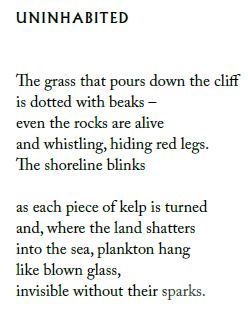
With thanks to Carcanet Press for the free copy for review.
Voyager: Constellations of Memory—A Memoir by Nona Fernández (2019; 2023)
[Translated from the Spanish by Natasha Wimmer]
Our archive of memories is the closest thing we have to a record of identity. … Disjointed fragments, a pile of mirror shards, a heap of the past. The accumulation is what we’re made of.
 When Fernández’s elderly mother started fainting and struggling with recall, it prompted the Chilean actress and writer to embark on an inquiry into memory. Astronomy provides the symbolic language here, with memory a constellation and gaps as black holes. But the stars also play a literal role. Fernández was part of an Amnesty International campaign to rename a constellation in honour of the 26 people “disappeared” in Chile’s Atacama Desert in 1973. She meets the widow of one of the victims, wondering what he might have been like as an older man as she helps to plan the star ceremony. This oblique and imaginative narrative ties together brain evolution, a medieval astronomer executed for heresy, Pinochet administration collaborators, her son’s birth, and her mother’s surprise 80th birthday party. NASA’s Voyager probes, launched in 1977, were intended as time capsules capturing something of human life at the time. The author imagines her brief memoir doing the same: “A book is a space-time capsule. It freezes the present and launches it into tomorrow as a message.”
With thanks to Daunt Books for the free copy for review.
A Trip to Kyoto with Muriel Barbery and Florentyna Leow (#FrenchFebruary and #ReadIndies)
One of my most recent Book Serendipity incidents was reading these two 139-page books about a foreigner’s wanderings in Kyoto (often touring temples) at the same time. They’re also both from independent publishers, so I’m taking the opportunity to review them together for Read Indies month. The Barbery is also towards Marina Sofia’s casual French February challenge.
A Single Rose by Muriel Barbery (2020; 2021)
[Translated from the French by Alison Anderson]
 That Barbery is a Japanophile was clear from her whimsical The Writer’s Cats, which I reviewed for Novellas in November in 2021. Here she takes inspiration from a Japanese aesthetic of minimalist prose, melancholy walks in rainy gardens, and a mixture of legends and stoic Buddhist philosophy. Rose, the half-French, half-Japanese protagonist, is in Kyoto to hear the reading of the will made by her late father, Haru, a contemporary art dealer.
A 40-year-old botanist, Rose is adrift, her father’s death just the latest in a string of losses that have caused her to close off her heart. Her time in Kyoto, while she waits to meet with the lawyer, is a low-key cycle of visits to gardens and Buddhist temples, sake-soused meals, going to bed sad and tipsy, and waking up to rain and preparing to do it all over again. Her minder is Paul, a Belgian who was her father’s assistant. They initially find each other irritating, but are gradually drawn together as two damaged souls.
There are lovely descriptive passages, and the theme of the inescapability of suffering cannot be refuted. The universality of loss comes across in key quotes from Issa and Rainer Maria Rilke, respectively: “in this world / we walk on the roof of hell / gazing at flowers” and “A single rose is every rose.” Still, I somehow found this work both too subtle (the only vaguely relevant chapter-opening snippets of history or legend) and too obvious (“Everybody hurts” is hardly a groundbreaking message). This was my third novella by Barbery. Shall I carry on and read The Elegance of the Hedgehog as well?
With thanks to Gallic Books for the free copy for review.
How Kyoto Breaks Your Heart by Florentyna Leow (2023)
On the face of it, this collection has quite a lot in common with Nina Mingya Powles’s Tiny Moons, from the same publisher: travel- and food-inspired essays that loop through some of the same experiences of loneliness and disorientation. The writers also have a similar background, with Leow a Malaysian Chinese woman living in Japan. She is able to pass for Japanese and so is experienced at code-switching as she moves from temple to jazz bar to teahouse and learns new dialects and accents.
 For some years she made a living by leading tours she could never have afforded herself. Much as she loves Kyoto and its sights, she tired of the crowds and of seeing the same temples all the time. It took a stranger observing that she seemed unhappy in her work for her too realize it was time for a change.
This disillusionment and the end of her friendship with her female housemate are the main themes of this short book, especially in the six-part title essay. Interestingly, she describes the end of their relationship in the sort of terms that would generally be used for a romantic break-up, despondently querying what went wrong between them when they had been so happy picking and cooking the fruit from the persimmon tree outside their apartment window. Indeed, later on she cites the concept of a “romantic friendship.”
But I think what she was really mourning was the temporary nature of life. We’re nostalgic for golden times we can never get back. I think of parts of my early twenties like that. I wouldn’t necessarily trade my life now to go back in time (or maybe I would), but those periods will always glow in my memory.
My favourite essays were “Persimmons,” “A Bowl of Tea,” “A Rainy Day in Kyoto” and “Egg Love” – prove you care for someone by learning how they like their eggs. This wasn’t a particularly stand-out read for me, especially in comparison to the Powles, but I’d happily read more by Leow in the future.
A favourite passage:
REASONS FOR TEA
To celebrate. To thank someone. To enjoy the scent of different incense. To listen to the rain. To view an autumn moon reflected on a pond outside. To watch snow blanket the garden. To hear the texture of that silence. To walk through freshly fallen snow before dawn on the way to the teahouse. To drink tea by candlelight. To remember someone. To bask in the light, the cool of early summer mornings. Because it is spring. Because the leaves are changing colour. Because it is autumn. Because the plum blossoms are out. Because the world is beautiful. Because why not?
How Kyoto Breaks Your Heart will be published on 23 February. With thanks to The Emma Press for the proof copy for review.
 Bookish Beck = Rebecca Foster. American transplant to England. Freelance proofreader and book reviewer.
