May Poetry Releases: Blood & Cord Anthology; Connolly, Goss, Harrison
Apart from Monsters, my focus for May releases has been on poetry, with three Carcanet collections plus a poetry-heavy anthology of writing on early parenthood. Love, history, nature and parental bonds are a few underlying subjects that connect some or all of these.
The Recycling by Joey Connolly
Joey Connolly’s second collection reminded me most of Caroline Bird’s work (especially the mise en abyme ending to “For Such a Widely Used Material, Glass Sure Does Have Some Downsides”): effusive and sometimes absurdist, with unexpected imagery and wordplay.
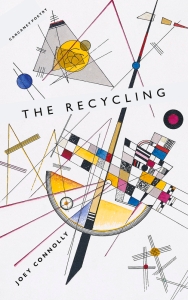 In keeping with the title, there are environmentalist considerations and musings on materials, but also the connotation of reusing language or rehashing ideas. I appreciated this strategy when he’s pondering etymology (“Strange noun full of verb, noun / bending to verb, strange / idea of repeating repetition” in the title poem) or reworking proverbs in the hilarious “Poem in Which Is Is Sufficient” (“Sufficient unto the glaze / is the primer thereunder. Sufficient / unto the applecart is the upset / thereof” and so on) but perhaps less so during 22 indulgent pages of epigraphs. The distance-designated poems of the inventive “Solvitur Ambulando” section range from history to science fiction: “Abstracted, ankle deep in the proto-gutters of Elizabethan London: / how were you ejected from your life to wash up here?”
It’s such a versatile book. I loved the philosophical self-questioning of “Why Try and Be Good When This World” (“the / mental carapace required to weather the hardness / of indifference insulates you from what it means to be alive”) and the utterly original love poetry (“I will take out the bins, and I will try not to leave the keys / in the door, and I will continue / to love you / to the fullest extent to which I find myself able. Oh love. Checkmate”). Eminently quotable stuff. Here are two of my favourite passages:
like an
amateur kintsugi enthusiast in the ruined chinashop
of my childhood idealism
What sweet sorrow
to persist within this disappeared world
With thanks to Carcanet Press for the advanced e-copy for review.
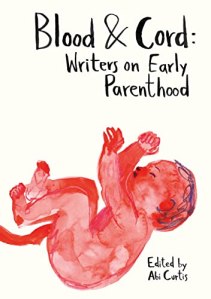
Blood & Cord: Writers on Early Parenthood, edited by Abi Curtis
“The introduction of a new baby rearranges a life, and this requires a new language and a new kind of engagement with the world,” Abi Curtis writes in her introduction. These poems and pieces of flash autofiction or memoir are often visceral, as the title and cover image by Elīna Brasliņa indicate. Elizabeth Hogarth’s “Animal Body” tracks how primal instinct takes over. Second- and third-person narratives distance the speaker from the experience, as in Ruth Charnock’s hybrid “three tarot cards for the new mother.” As I’ve come to expect from The Emma Press, there’s a wide variety of formats, styles and even page layout, with some poems printed in landscape.
 Curtis’s four poems are, together, the strongest entry. I particularly loved the final lines of “September Birth”: “We listen close but cannot fathom / Your new language. We will spend / The rest of our days learning it.” Naomi Booth, too, zeroes in on language in “What is tsunami?” A daughter’s acquisition of language provides entertainment (“She names her favourite doll, Hearty Campfire”) but also induces apprehension:
There are certain words that you dread hearing her say. The first is money. … You dread the way it will become as concrete to her as sky and cat and gate. Mu-nee. Mu-nee.
Not all of these are jubilant birth stories. There are children who are longed for but never arrive. There are also babies who never breathe, or soon die. Alex McRae Dimsdale’s “Bath” is a heartbreaking poem about bidding goodbye to a stillborn son:
It wasn’t the first time that a couple had to leave
the hospital without their newborn.
What could they give us instead?
Here, a small white wooden box –
inside, a packet of wildflower seeds,
your wristband, little
stripy hat. A curlicued certificate
inked with your footprints.
…
what maternal sin did I commit,
deciding who you were
for a whole life that was
already stopped before it started?
“Other Mothers,” a prose essay by poet Rebecca Goss (from whom more below), is about her infant daughter’s death in hospital.
There are a few male contributors, outnumbered five to one by women writers. Poets Liz Berry and Gail McConnell illuminate same-sex motherhood. The two short stories – i.e., those that are clearly fiction rather than memoir by different pronouns – were among the weakest pieces for me: the one piles cruel irony on misery (no real surprise as it’s by an author I’ve had a strong reaction against in the past; the only saving grace was a clever reference to Hemingway’s six-word story about baby shoes); the other is silly and contrived.
I think this was my seventh Emma Press book, and my fourth of their anthologies, of which I’d recommend The Emma Press Anthology of Love. This one was a bit more uneven for me, but I can see it holding appeal for new parents who are of a literary bent.
Published in association with the York Centre for Writing, York St John University. With thanks to The Emma Press for the free copy for review.
Latch by Rebecca Goss
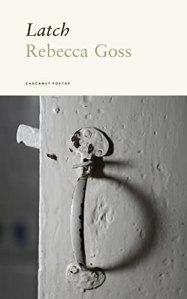 Rebecca Goss’s fourth poetry collection arises from a rural upbringing in Suffolk. Her parents’ farm was a “[s]emi-derelict, ramshackle whimsy of a place”. There’s nostalgia for the countryside left behind and for a less complicated family life before divorce, yet this is no carefree pastoral. From the omnipresent threats to girls to the challenges of motherhood, Goss is awake to the ways in which women are compelled to adapt to life in male spheres. The title/cover image has multiple connotations: the first bond between mother and child; the gates and doors that showcase craftsmanship (as in “Blacksmith, Making”) or seek to shut menacing forces out (see “The Hounds”), but cannot ensure safety.
Even the individual poem titles tell tales: “The Retired Agronomist Drives a Tractor in the Summer Because He Likes the Oily Smell of the Machine” and three with the enticing pattern “Woman Returns to Childhood Home…” Trees and animals provide much of the imagery. A few of my personal favourites were “Rooks,” “Weir,” and “In Song Flight.”

With thanks to Carcanet Press for the advanced e-copy for review.
Kitchen Music by Lesley Harrison
Lesley Harrison is a Scottish poet with a number of pamphlets and collections to her name. Orkney and other remote islands are settings for these atmospheric poems filled with whale song and weather (“the vast dark hung with / ropes of song”), birds and wordplay. Language and folktales inspire the poet, and she engages in word association and creates rebuses built around middle letters rather than first. There are also black-and-white photographs, and whale images by Marina Rees punctuating “C-E-T-A-C-E-A.” My attention threatened to drift away from the sometimes wispy lines and paragraphs, but this would be well worth taking on holiday to read on location.

With thanks to Carcanet Press for the advanced e-copy for review.
Would you be interested in reading one or more of these?
Nature Book Catch-Up: Sally Huband, Richard Smyth & Anna Vaught
I’m catching up with a few nature- and travel-based 2023 releases that were sent to me for review. I’ve grouped them together because these British authors share some of the same interests and concerns. They celebrate beloved places that become ours through the time we spend in them and the attention we grant; they mourn the loss of biodiversity from rockpools and gardens and seabird cliffs. What kind of diminished world they’re raising their children into is a major worry for all three, and for Huband and Vaught the unease is exacerbated by chronic illness. Wild creatures, and the fellow authors who have hymned them, ease the hurt.
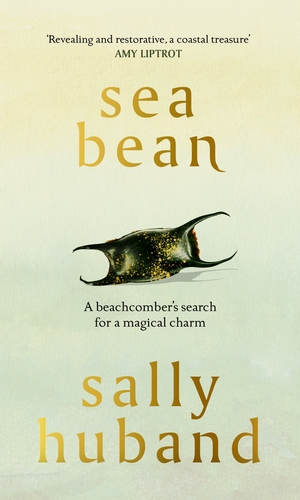
Sea Bean: A beachcomber’s search for a magical charm by Sally Huband
After more than a decade in her adopted home of Shetland, Sally Huband is still a newcomer. A tricky path to motherhood and ensuing chronic illness (the autoimmune disease palindromic rheumatism) limited her mobility and career. Beachcombing is at once her way of belonging to a specific place and feeling part of the wider world – what washes up on a Shetland beach might come from as far away as Atlantic Canada or the Caribbean. Sea glass, lobster pot tags, messages in bottles, driftwood … and a whole lot of plastic, of course. Early on, Huband sets her sights on a sea bean – also known as a drift-seed, from the tropics – which in centuries past was a talisman for ensuring safe childbirth. Possession of one was enough to condemn a 17th-century local woman to death for witchcraft, she learned.
 Stories of motherhood, the quest to find effective treatment in a patriarchal medical system, volunteer citizen science projects (monitoring numbers of dead seabirds, returning beached cetaceans to the water, dissecting fulmar stomachs to assess their plastic content), and studying Shetland’s history and customs mingle in a fascinating way. Huband travels around the archipelago and further afield, finding a vibrant beachcombing culture on the Dutch island of Texel. As in Moby-Duck by Donovan Hohn, one of my all-time favourite nonfiction books, there is delight at the randomness of what the ocean delivers.
I requested this book because Huband’s was my favourite essay in the Antlers of Water anthology. In it, she deplored the fact that women were still not allowed to participate in the Up Helly Aa fire festival in Lerwick. Good news: that is no longer the case, thanks to campaigning by Huband and others. In a late chapter, she also reports that blackface was recently banned from the festivals, and a Black Lives Matter demonstration drew 2000 people. Change does come, but slowly to a traditional island community. And sometimes it is not the right sort of change, as with an enormous wind farm, resisted vigorously by residents, that will primarily enrich a multinational company instead of serving the local people.
In many ways, this is a book about coming to terms with loss, and Huband presents the facts with sombre determination. Passages about the threats to birds and marine life had me near tears. But she writes with such poetic tenderness that the evocative specifics of island life point towards what’s true for all of us making the best of our constraints. I was lucky enough to visit several islands of Shetland in 2006; whether you have or not, this is a radiant memoir I would recommend to readers of Kathleen Jamie, Jean Sprackland and Malachy Tallack.
Some favourite lines:
No island can ever live up to the heightened expectations that we always seem to place on them; life catches up with us, sooner or later.
With each loss, emotional pain accretes for those who have paid attention.
If hope is a hierarchy of wishes then I am happy enough, each time that I beachcomb, to find fragments of the bark of paper birch
I’ve come to think of the ocean as an archive of sorts.
With thanks to Hutchinson Heinemann for the proof copy for review.
The Jay, the Beech and the Limpetshell: Finding Wild Things with My Kids by Richard Smyth
all around us
the stuff of spells. Our parents
let us go to scamper deeper,
leap from stumps lush with moss.
Everything aloof about me
fell into the soil once charged
with younger siblings
and freedoms of a wood.
…
I give you a damp valley floor,
this feather for your pocket.
~an extract from “Arger Fen,” from Latch by Rebecca Goss
I know Richard Smyth for his writing on birds (I’ve reviewed both A Sweet, Wild Note and An Indifference of Birds) and his somewhat controversial commentary on modern nature writing. This represents a change in direction for him toward more personal reflection, and with its focus on the phenomena of childhood and parenthood it recalls Wild Child by Patrick Barkham and The Nature Seed by Lucy Jones and Kenneth Greenway. But, as I knew to expect from previous works, he has such talent for reeling in the tangential and extrapolating from the concrete to the abstract that this lively read ends up being about everything: what it is to be human on this fading planet.
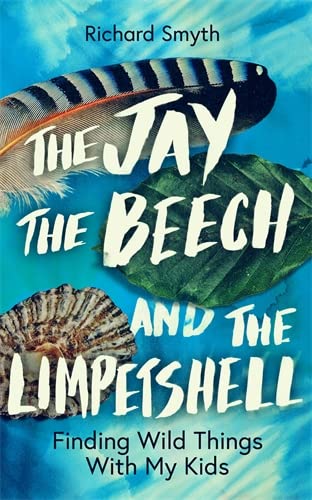 And this despite the fact that four of five chapter headings suggest pandemic-specific encounters with nature. Lockdown walks with his two children, and the totems they found in different habitats – also including a chaffinch nest and an owl pellet – are indeed jumping-off points, punctuating a wide-ranging account of life with nature. Smyth surveys the gateway experiences, whether books or television shows or a school tree-planting programme or collecting, that get young people interested; and talks about the people who beckon us into greater communion – sometimes authors and celebrities; other times friends and family. He also engages with questions of how to live in awareness of climate crisis. He acknowledges that he should be vegetarian, but isn’t; who does not harbour such everyday hypocrisies?
It’s still, unfortunately, rare for men to write about parenthood (and especially pregnancy loss – I only think of Native by Patrick Laurie and William Henry Searle’s books), so it’s great to see that represented, and it’s a charming idea that we create “downfamily” because the “upfamily” doesn’t last forever. Although there’s nostalgia for his childhood here, and anxiety about his kids’ chances of seeing wildlife in abundance, Smyth doesn’t get mired in the past or in existential dread. He has a humanist belief that people are essentially good and can do positive things like build offshore wind farms, and in the meantime he will take Genevieve and Daniel into the woods to play so they will develop a sense of wonder at all that lives on. Even for someone like me who doesn’t have children, this was a captivating, thought-provoking read: We’re all invested in the future of life on this planet.
With thanks to Icon Press for the free copy for review.
These Envoys of Beauty: A Memoir by Anna Vaught
Anna Vaught is a versatile author: I have a copy of her mental health-themed novel Saving Lucia, longlisted for the inaugural Barbellion Prize, on the shelf; she’s written a spooky set of stories, Famished (see Susan’s review); and I gave some early reader feedback on the opening pages of her forthcoming work of quirky historical fiction, The Zebra and Lord Jones. She’s also publishing a book on writing, and editing a collection of pieces submitted for the first Curae Prize for writers who are also carers. I was drawn to her first nonfiction release by reviews by fellow bloggers – it’s always good when a blog tour achieves its aim!
These dozen short essays are about how nature doesn’t necessarily heal, but is a most valued companion in a life marked by chronic illness and depression. The evocative title and epigraphs are from Ralph Waldo Emerson’s essay “Nature” (1836). The pieces loop through Vaught’s past and present, focussing on favourite places in Wiltshire, where she lives, and at the Pembrokeshire coast. It’s the second memoir about complex PTSD that I’ve read this year (see also What My Bones Know). Both at the time and now, when flashbacks of her parents’ verbal and physical abuse haunt her, lying down in a grassy field, exploring a sea cave or sucking on a gorse flower could be a salve. “Nature offered stability and satisfying detail; pattern, form and things that made sense.”
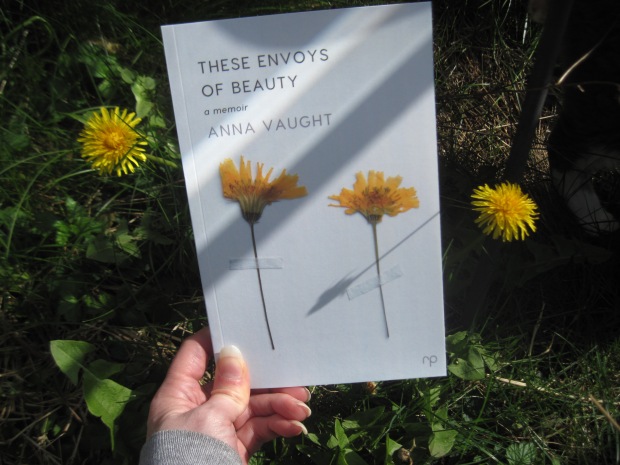
Vaught has a particular love for trees, flowers and moss – even just reciting their Latin names gives her a thrill, and she adds additional information about some species in footnotes. Although her childhood was painful, she retains gratitude for its wide-eyed wonder, and in the exuberance of her prose you can sense a willed childlike perspective (“But back to the list of clouds and writing about clouds!”). I found the frequent self-referential nature of the essays and direct reader address a little precious, but appreciated the thoughts about how nature holds us: “I have always felt a generosity around me, and that I was less lonely outside; at the very least, I could find something to comfort me”. She’s a bookish kindred spirit as well. I’ll be sure to try her work in other genres.
With thanks to Reflex Press for the free copy for review.
Recommended March Releases by Jane Aldous, Danielle Evans, Katherine May & Genanne Walsh
Sonnets, short stories, nature-fuelled wonder, and an autobiographical essay about a father’s death … from postwar Edinburgh to modern-day San Francisco and from fiction about young African American women to pilgrimages along the English coast, I have a real variety to recommend this month. (And coming up in a separate post: Womb by Leah Hazard.)
More Patina than Gleam by Jane Aldous
 This was my second Arachne Press collection after Routes by Rhiya Pau. Intriguingly, it’s a story composed of 70 sonnets, untraditional in that they do not follow a particular rhyme scheme apart from the odd couplet. There is scant punctuation, with within-line spaces separating the phrases. Aldous, who has recently been featured in a Guardian article on debut authors over 60, imagines a sort of alternative future for her mother had she run away with her when she was a baby. Here, Linda escapes her abusive common-law husband, Vernon, and travels from England to Edinburgh with her 11-year-old daughter, Angie. They settle with an eccentric older woman named Elsie Datlow, who hires Linda as a lady’s companion and keeps her on as a housekeeper when financial struggles force her to accept paying guests. It’s impressive how much Aldous fits into comparatively little text, including Angie’s coming of age, the ups and downs of the Datlows’ picture restoring business, and transgressive romance as both Elsie and Linda fall in love across accepted gender or racial boundaries. This was a pleasant surprise that called to mind works by Muriel Spark and Sarah Waters.
With thanks to Arachne Press for the free copy for review.
Before You Suffocate Your Own Fool Self by Danielle Evans (2010)
 A couple of years ago I reviewed Evans’s second short story collection, The Office of Historical Corrections. This was her first book but has only just been published in the UK. Six of the eight stories are in the first person, the other two in third person. The protagonists tend to be young African American women in moments of transition or clinging to unhealthy relationships. In “Virgins,” 15-year-old Erica and Jasmine want to shed their innocence but can’t necessarily control how it happens. “Snakes” has Tara, a transracial adoptee, spending her ninth summer with her white cousin, Allison, down at their grandmother’s home in Florida. The response to a series of accidents makes it clear to her who is valued in this family. The college girls in “Harvest” consider a variety of reproductive experiences, from selling their eggs to abortion. In “The King of a Vast Empire,” a brother and sister decide to track down a survivor of a car accident their family had when they were children. “Jellyfish” sees a father and daughter meeting for lunch in Harlem and pondering their separate futures.
Many settings were familiar to me from the Delmarva area where I grew up. Here on the cusp of the South, Confederate sympathy still exists, as high schoolers Crystal and Geena discover in “Robert E. Lee Is Dead.” The best friends collaborate on pranks, but Crystal’s grades point to a promising future whereas everyone has given up on Geena, including herself. Along with that one, my two favourites were “Someone Ought to Tell Her There’s Nowhere to Go” and “Wherever You Go, There You Are.” In the former, military veteran Georgie tries to ingratiate himself with his ex-girlfriend by treating her daughter to a princess experience; in the latter, Carla takes her would-be-sexpot 14-year-old niece, Chrissie, on a road trip to North Carolina to meet her ex’s fiancée. Both are exemplary of the assets of the whole collection: strong characters, natural dialogue, and subtle treatment of themes of class and race. I’d proffer this for fans of Sidik Fofana, and as a better option than Dantiel Moniz’s stories.
With thanks to Picador for the proof copy for review.
Enchantment: Reawakening wonder in an exhausted age by Katherine May
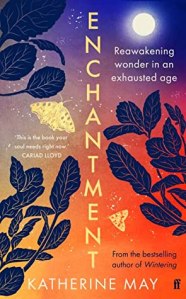 I was a big fan of Katherine May’s Wintering, which published just before the pandemic and, as if presciently, offers strategies for coping with seasons of depression. Coming after a few years of upheaval and disconnection, this follow-up voices May’s longing for rituals of the transcendent that will allow her to live in harmony and close attention to the world around her. Her usual way of communing with nature and other people was group swims in the sea, but that temporarily stopped with lockdown. She sought alternatives, such as visiting a sacred well with a friend, beekeeping, cultivating a wild garden, and chasing a meteor shower. The Earth – Water – Fire – Air structure is sometimes forced, and the content sparse; like Raynor Winn, May, I feel, was pressured to capitalize on the success of her previous work and quickly publish unfinished and rather nebulous material. It’s all surprisingly woo-woo from an English author. Yet May’s writing is unfailingly lovely and this went down easy a chapter at a time. It’s a comparable read to Wanderland by Jini Reddy.
With thanks to Faber for the proof copy for review.
Eggs in Purgatory by Genanne Walsh
I reviewed Genanne Walsh’s novel Twister as part of my summer reading in 2018. This autobiographical essay, recently published by WTAW Press and a finalist in their Alcove Chapbook Series Open, tells the story of the last few months of her father’s life. Aged 89, he lived downstairs from Walsh and her wife in San Francisco. He was quite the character: idealist, stubborn, outspoken; a former Catholic priest influenced by A Course in Miracles and convinced of the oneness of everything. Although he had no terminal conditions, he was sick of old age and its indignities and ready to exit. (“He wanted to be put on an ice floe and pushed offshore. The problem was, I lived above him on the iceberg and would be tasked with shoving him off.”) However, there was confusion about California state laws and whether doctors could help him with this, and at one point the police showed up at the door.
 The title refers to a Middle Eastern dish (see this Nigella Lawson recipe) I’ve known as shakshuka. It was the last proper meal her father ate, Christmas morning 2017 with her and her wife, before he went on his final hunger strike. Later Walsh writes, “Mourning is a kind of purgatory. You exist between worlds. For a long time I walked through, not fully feeling the world of the living or the world of the dead but aware of both.”
The task of a memoir is to fully mine the personal details of a situation but make of it something universal, and that’s just what she does here. Her father’s past with her mother (who died decades before, following a stroke) renders the family dynamic a backdrop to a final pyrrhic battle. Aware that she doesn’t come out of this a saint, Walsh admits to contradictory feelings, including “my life will be so much easier when he dies.” The prediction, no less than its reality, makes her feel guilty. Though she has no faith as such, she senses her father’s influence in her very desire to keep communing with him after his death.
This stunning little book met me at a deep place and I can highly recommend it, especially if you were a fan of In Love by Amy Bloom and All Things Consoled by Elizabeth Hay. (See also The Inevitable – one of its case studies reminded me of this.)
With thanks to the author for the free e-copy for review.
And one dud:
 Birnam Wood by Eleanor Catton – This year’s Klara and the Sun for me: I have trouble remembering why I was so excited about Catton’s third novel that I put it on my Most Anticipated list for 2023, especially given my decidedly mixed feelings about The Luminaries. I’d read a lot about Birnam Wood so its plot held no surprises for me. An American tech billionaire is up to no good on a New Zealand nature reserve; though the members of a guerrilla gardening group summon courage to fight back, his drones see all.
From early on I had little interest in the cast and their doings, especially the buzzword-filled dialogues, and skimmed the rest. Literary fiction usually distinguishes itself from commercial genre fiction by its focus on character depth (and prose quality), but in Catton’s case that was achieved through endless backstory. Her attempt at edginess entails adding at least one F-word to each spoken sentence. (The Bookshop Band, usually so mild-mannered, reflected this by dropping an F-bomb in their song based on the book – see the music video, which cleverly employs a derelict greenhouse and drones.) I’d heard that the ending was a knockout, so I skipped ahead and did find the last 40 pages gripping and the gruesome final tableau worthy of the Shakespearean allusions, but there’s a lot of blah to wade through before that.
With thanks to Granta for the free copy for review.
Would you be interested in reading one or more of these?
All My Wild Mothers by Victoria Bennett & I Have Some Questions for You by Rebecca Makkai
I’m catching up with reviews of two February releases that I spent the whole of last month submerged in. These are early entries on my Best of 2023 list: A lovely memoir about grief and gardening, caring for an ill child and a dying parent; and a riveting true crime-inspired novel, set on a boarding school campus, that rages at injustice and violence against women.
All My Wild Mothers: Motherhood, loss and an apothecary garden by Victoria Bennett
Early in February, I attended the online book launch via Sam Read Bookseller in Grasmere. With conversation, readings and song, it was the ideal introduction to the themes of this debut memoir by a poet. The book is composed of dozens of brief autobiographical, present-tense essays, each titled after a wildflower with traditional healing properties. The chapters are headed by a black-and-white woodcut of each plant (by Bennett’s husband, Adam Clarke) and a précis of its medicinal uses, as well as where it is found. Again and again, these descriptions site the flora on edgelands or “disturbed ground” – the perfect metaphorical tie-in to Bennett’s tumultuous life and the comfort that creating an apothecary garden brought.
Bennett is the youngest of six children. When she was expecting her son – much longed for after multiple pregnancy losses – news came that her eldest sister had died in a canoeing accident. At age two, her son was diagnosed with type 1 diabetes; managing his condition has imposed a heavy emotional burden. And years later, she was the primary caregiver for her elderly mother as she was dying of mesothelioma. The memoir’s format – which arose in part because it was written over the course of 10 years, during stolen moments – realistically presents bereavement and caring as ongoing, cyclical challenges rather than one-time events.

There are no simple solutions offered here, nothing so pat as that ‘gardening heals all hurts’, but Bennett writes into the broken places and finds joy in what comes to life spontaneously in nature or in her ramshackle yard on a social housing estate in Cumbria. She recalls a horse chestnut tree that looked over her outside the window of her childhood home; she and her son take impish delight in guerrilla gardening and sometimes disastrous cooking projects with foraged fruit. Some of my favourite individual vignettes were “Elder,” about the magic and medicine of making elderberry syrup from the few village trees that escape the chainsaw; “Dandelion,” about her trio of older sisters, who were Greenham Common protestors and always tried to protect her as well as nature; “Herb Robert,” about her sister-in-law’s funeral; and especially “Honeysuckle,” about a local agricultural show where the officious organizers make them feel like interlopers yet her son wins first place for their feral, fecund garden.
Many side topics twine into the narrative as well: a difficult relationship with a controlling mother; a family history that takes in boarding schools, cults, road trips, risk taking and mental health issues; the economic disparity that leads to one set of rules for the rich and another for those on benefits. But the core of the book is a tender mother–son relationship. “I can give him this: a seed, with all its defiant hope against the dark; and the memory that once, we grew a garden out of rock, and waste, and all things broken, and it thrived.” Sitting somewhere between creative nonfiction and nature essays, it’s a beautiful read for any fan of women’s life writing, especially if you share the interests in grief or gardening. I hope we’ll see it recognized on the Barbellion and Wainwright Prize shortlists alike.
Readalikes I have reviewed: A Still Life by Josie George, The Book of Difficult Fruit by Kate Lebo, The Cure for Sleep by Tanya Shadrick
With thanks to Victoria Bennett and Two Roads for the free copy for review.
I Have Some Questions for You by Rebecca Makkai
I’m a big fan of Makkai’s first two novels, The Borrower and The Hundred-Year House, and have her other two books lined up to read, so I was excited to hear about this new work and put it on my Most Anticipated list for the year. My interest was redoubled by Laura’s review, which likens it to a cross between Prep and My Dark Vanessa – irresistible.
Bodie Kane grew up in a deprived and dysfunctional family in Indiana, and has beneficent Mormon neighbours to thank for the tuition money that allowed her to attend Granby, an exclusive New Hampshire boarding school, in the early to mid-1990s. She was an angry and awkward high school student, yet her memories of Granby and the friendships she made there are still an emotional mainstay more than two decades later. In 2018, she is a successful film professor with a podcast about Hollywood starlets. Although she is separated from Jerome, her artist husband, he lives next door and they co-parent their two children.
After an invitation comes from Granby to teach a two-week course on podcasting, Bodie trades Los Angeles for a bitter New England winter. It’s the perfect excuse to indulge her obsession with the 1995 murder of her former Granby roommate, Thalia Keith, who was found dead in the swimming pool one March morning after a play performance. Bodie has never been comfortable with the flawed case against the Black athletics coach, Omar Evans, who has been imprisoned ever since. When one of her students chooses to make Thalia’s murder the subject of a podcast, it’s all the justification Bodie needs to dive deep into her pet hypothesis: Thalia was sleeping with the music director, Denny Bloch, and he was involved in her death in some way. Her blinkered view threatens to exclude a key explanation. Still, the informal sleuthing she and her students do is enough to warrant a follow-up hearing in 2022, but they – and Omar – are up against a broken system.

Makkai has taken her cues from the true crime genre and constructed a convincing mesh of evidence and theories. There’s a large cast of secondary characters, from Dorian, the bully who once humiliated Bodie with sexual slurs, to Fran, the faculty kid/gay best friend who now lives and works on campus herself and continues to be Bodie’s trusty backup. The combinations of background + teenage behaviour + 40-something lives all feel authentic in their randomness (when I saw that Makkai sourced 24 names from indie bookstore supporters, I realized afresh just how real, as opposed to ‘made-up’, these characters feel).
At times I wondered if there was too much detail on the case and the former classmates; I might even have streamlined the novel by doing away with the 2022 section altogether, though it ends up being crucial to the plot. But Makkai has so carefully crafted these pen portraits, and so intimately involved us in Bodie’s psyche, that it’s easy to become invested in the story. What’s more, the novel introduces a seam of rage about violence towards women – so predictably excused and allowed to recur by a justice system weighted against victims –
What’s as perfect as a girl stopped dead, midformation? Girl as blank slate. Girl as reflection of your desires, unmarred by her own. Girl as sacrifice to the idea of girl.
let’s say it was the one where the rugby team covered up the girl’s death and the school covered for the rugby team. Actually it was the one where the therapist spent years grooming her. It was the one where the senator, then a promising teenager, shoved his d*ck in the girl’s face. … It was the one where her body was never found. It was the one where her body was found in the snow. It was the one where he left her body for dead under the tarp.
– yet also finds nuance in the situation when Bodie’s ex-husband is subjected to exaggerated #MeToo accusations. It’s timely, daring, intelligent, enthralling storytelling. Susan (review here) and I are both hoping to see this make the Women’s Prize longlist next week.
Readalikes I have reviewed: Ghost Wall by Sarah Moss, My Dark Vanessa by Kate Elizabeth Russell, The Bass Rock by Evie Wyld
With thanks to Fleet for the proof copy for review.
What are the best 2023 books you’ve read so far?
A Trip to Kyoto with Muriel Barbery and Florentyna Leow (#FrenchFebruary and #ReadIndies)
One of my most recent Book Serendipity incidents was reading these two 139-page books about a foreigner’s wanderings in Kyoto (often touring temples) at the same time. They’re also both from independent publishers, so I’m taking the opportunity to review them together for Read Indies month. The Barbery is also towards Marina Sofia’s casual French February challenge.
A Single Rose by Muriel Barbery (2020; 2021)
[Translated from the French by Alison Anderson]
 That Barbery is a Japanophile was clear from her whimsical The Writer’s Cats, which I reviewed for Novellas in November in 2021. Here she takes inspiration from a Japanese aesthetic of minimalist prose, melancholy walks in rainy gardens, and a mixture of legends and stoic Buddhist philosophy. Rose, the half-French, half-Japanese protagonist, is in Kyoto to hear the reading of the will made by her late father, Haru, a contemporary art dealer.
A 40-year-old botanist, Rose is adrift, her father’s death just the latest in a string of losses that have caused her to close off her heart. Her time in Kyoto, while she waits to meet with the lawyer, is a low-key cycle of visits to gardens and Buddhist temples, sake-soused meals, going to bed sad and tipsy, and waking up to rain and preparing to do it all over again. Her minder is Paul, a Belgian who was her father’s assistant. They initially find each other irritating, but are gradually drawn together as two damaged souls.
There are lovely descriptive passages, and the theme of the inescapability of suffering cannot be refuted. The universality of loss comes across in key quotes from Issa and Rainer Maria Rilke, respectively: “in this world / we walk on the roof of hell / gazing at flowers” and “A single rose is every rose.” Still, I somehow found this work both too subtle (the only vaguely relevant chapter-opening snippets of history or legend) and too obvious (“Everybody hurts” is hardly a groundbreaking message). This was my third novella by Barbery. Shall I carry on and read The Elegance of the Hedgehog as well?
With thanks to Gallic Books for the free copy for review.
How Kyoto Breaks Your Heart by Florentyna Leow (2023)
On the face of it, this collection has quite a lot in common with Nina Mingya Powles’s Tiny Moons, from the same publisher: travel- and food-inspired essays that loop through some of the same experiences of loneliness and disorientation. The writers also have a similar background, with Leow a Malaysian Chinese woman living in Japan. She is able to pass for Japanese and so is experienced at code-switching as she moves from temple to jazz bar to teahouse and learns new dialects and accents.
 For some years she made a living by leading tours she could never have afforded herself. Much as she loves Kyoto and its sights, she tired of the crowds and of seeing the same temples all the time. It took a stranger observing that she seemed unhappy in her work for her too realize it was time for a change.
This disillusionment and the end of her friendship with her female housemate are the main themes of this short book, especially in the six-part title essay. Interestingly, she describes the end of their relationship in the sort of terms that would generally be used for a romantic break-up, despondently querying what went wrong between them when they had been so happy picking and cooking the fruit from the persimmon tree outside their apartment window. Indeed, later on she cites the concept of a “romantic friendship.”
But I think what she was really mourning was the temporary nature of life. We’re nostalgic for golden times we can never get back. I think of parts of my early twenties like that. I wouldn’t necessarily trade my life now to go back in time (or maybe I would), but those periods will always glow in my memory.
My favourite essays were “Persimmons,” “A Bowl of Tea,” “A Rainy Day in Kyoto” and “Egg Love” – prove you care for someone by learning how they like their eggs. This wasn’t a particularly stand-out read for me, especially in comparison to the Powles, but I’d happily read more by Leow in the future.
A favourite passage:
REASONS FOR TEA
To celebrate. To thank someone. To enjoy the scent of different incense. To listen to the rain. To view an autumn moon reflected on a pond outside. To watch snow blanket the garden. To hear the texture of that silence. To walk through freshly fallen snow before dawn on the way to the teahouse. To drink tea by candlelight. To remember someone. To bask in the light, the cool of early summer mornings. Because it is spring. Because the leaves are changing colour. Because it is autumn. Because the plum blossoms are out. Because the world is beautiful. Because why not?
How Kyoto Breaks Your Heart will be published on 23 February. With thanks to The Emma Press for the proof copy for review.

Dylan Thomas & Folio Prize Lists and a Book Launch
Literary prize season is upon us! I sometimes find it overwhelming, but mostly I love it. Last month I submitted a longlist of my top five manuscripts to be considered for the McKitterick Prize. In the past week the Dylan Thomas Prize longlist and Folio Prize shortlists have been announced. The press release for the former notes “an even split of debut and established names, with African diaspora and female voices dominating.”

- Limberlost by Robbie Arnott (Atlantic Books) – novel (Australia)
- Seven Steeples by Sara Baume (Tramp Press) – novel (Ireland)
- God’s Children Are Little Broken Things by Arinze Ifeakandu (Orion, Weidenfeld & Nicolson) – short story collection (Nigeria)
- Maps of Our Spectacular Bodies by Maddie Mortimer (Picador, Pan Macmillan) – novel (UK)
- Phantom Gang by Ciarán O’Rourke (The Irish Pages Press) – poetry collection (Ireland)
- Things They Lost by Okwiri Oduor (Oneworld) – novel (Kenya)
- Losing the Plot by Derek Owusu (Canongate Books) – novel (UK)
- I’m a Fan by Sheena Patel (Rough Trade Books) – novel (UK)
- Send Nudes by Saba Sams (Bloomsbury Publishing) – short story collection (UK)
- Bless the Daughter Raised by a Voice in Her Head by Warsan Shire (Chatto & Windus) – poetry collection (Somalia-UK)
- Briefly, A Delicious Life by Nell Stevens (Picador, Pan Macmillan) – novel (UK)
- No Land to Light On by Yara Zgheib (Atlantic Books, Allen & Unwin) – novel (Lebanon)
I happen to have already read Warsan Shire’s poetry collection and Nell Stevens’ debut novel (my review), which I loved and am delighted to see get more attention. I had Seven Steeples as an unsolicited review copy on my e-reader so have started reading that, and Maps of Our Spectacular Bodies is one of the books I treated myself to with Christmas money. There’s a possibility of a longlist blog tour, so for that I’ve requested the poetry book Phantom Gang. The shortlist will be announced on 23 March and the winner on 11 May.

This is the first year of the new Rathbones Folio Prize format: as in the defunct Costa Awards, the judges will choose a winner in each of three categories and then the category winners will go on to compete for an overall prize.
Nonfiction:
- The Passengers by Will Ashon
- In Love by Amy Bloom
- The Escape Artist by Jonathan Freedland
- Constructing a Nervous System by Margo Jefferson
- The Social Distance Between Us by Darren McGarvey
Poetry:
- Quiet by Victoria Adukwei Bulley
- Ephemeron by Fiona Benson
- Cane, Corn & Gully by Safiya Kamaria Kinshasa
- England’s Green by Zaffar Kunial
- Manorism by Yomi Ṣode
Fiction:
- Glory by NoViolet Bulawayo
- Scary Monsters by Michelle de Kretser
- Pure Colour by Sheila Heti
- Emergency by Daisy Hildyard
- Lucy by the Sea by Elizabeth Strout
Amy Bloom’s memoir In Love was one of my favourites last year, but I’m unfamiliar with the rest of the nonfiction shortlist and all the poetry collections are new to me (though I’ve read Zaffar Kunial’s Us). From the fiction list, I’m currently reading Elizabeth Strout’s Lucy by the Sea and I’ve read part of Sheila Heti’s bizarre Pure Colour and will try to get back into it on my Kindle at some point. In 2021 I was sent the entire Folio Prize shortlist to feature on my blog, but last year there was no contact from the publicists. I’ve expressed interest in receiving the poetry nominees, if nothing else.
The Women’s Prize longlist is always announced on International Women’s Day (8 March). Very unusually for me, I have already put together a list of novels we might see on that. I actually started compiling the list in 2022, and then last month spent some bookish procrastination time scouring the web for what I might have missed. There are 124 books on my list. Before cutting that down by 90% I have to decide if I want to be really thorough and check the publisher for each one (bar some exceptions, each publisher can only submit two books). I’ll work on that a bit more and post it in the next couple of weeks.
Last night I attended an online book launch (throwback to 2020!) via Sam Read Bookseller in Grasmere, for All My Wild Mothers by Victoria Bennett. Vik saw me express interest in her book on Twitter and had her publisher, Two Roads, send me a copy. I knew I had to attend the launch event because the Bookshop Band wrote a song about the book and premiered it as a music video partway through the evening. I’ve read the first 50 pages so far and it’s a lovely book I’ll review in full later in the month.
The brief autobiographical essays, each titled after a wildflower and headed by a woodcut of it, sit somewhere between creative nonfiction and nature writing, with Bennett reflecting on her sister’s sudden accidental death, her years caring for elderly parents and an ill son, and the process of creating an “apothecary garden” from scratch on a social housing estate in Cumbria. Interviewed by Catherine Simpson (author of When I Had a Little Sister), she said that the book is about “what grows not in spite of brokenness, but because of it.” The format is such in part because it was written over the course of 10 years and Bennett could only steal moments at a time from full-time caregiving. She has also previously published poetry, but this is her prose debut.
Simpson asked if she found the writing of All My Wild Mothers cathartic and Bennett replied that she went to therapy for that purpose, but that time and words have indeed helped to mellow anger and self-pity. She found that she was close enough in time to the events she writes about to remember them, but not so close as to get lost in grief. The Bookshop Band’s song “Keeping the Magic,” mostly on cello and guitar, has imagery of wildflowers and trees and dwells on the maternal and muddling through. (You can watch a performance of it here.)
Yesterday was a day of bad family news for me, both a diagnosis and another sudden death, so this was a message I needed, of beauty and hope alongside the grief. It’s why I’m so earnestly seeking warmth and spring flowers this season. I found snowdrops in the park the other day, and crocuses in a neighbour’s garden today.
Which literary prize races will you follow this year?
What’s bringing joy into your life these days?
Barbellion Prize Shortlist: Book of Hours by Letty McHugh
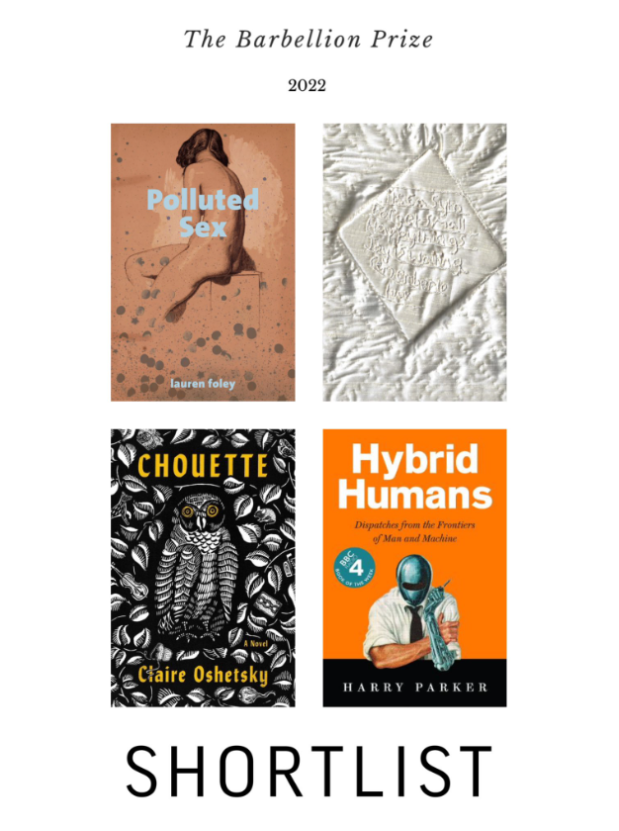
The Barbellion Prize shortlist, announced yesterday, consists of the short story collection Polluted Sex and the novel Chouette, both of which I’m still keen to read; and two nonfiction works, Hybrid Humans, which I reviewed last year, and Letty McHugh’s hybrid memoir, Book of Hours: An Almanac for the Seasons of the Soul.
I’m saving up tiny joys the way a bear fattens up for the coming winter
A patchwork quilt of ordinary leftover happiness
to keep me warm through the darkest part of the night.
In medieval times, a book of hours was a devotional book that set out the day’s prayers. Usually an illuminated manuscript, it was a precious object for laypeople, and a way of marking time. For Letty McHugh, a Yorkshire-based visual artist who lives with chronic pain and illness, this book of hours is many things: a journal, a scrapbook, an enquiry into the monastic impulse, and an interrogation of the potential meanings of physical suffering.
 In April 2020, McHugh experienced a relapse of MS so bad she had to move back in with her parents and was sleeping 20 hours a day. Her sphere had contracted to a single room. If only, she wished, there was “something to concentrate on that wasn’t my unravelling body or the unravelling world.” A Catholic upbringing and childhood holidays in Northumberland made her think about the early Christian hermits and saints like Aidan, Cuthbert and Julian of Norwich who salvaged something from solitude, who out of the privations of monasticism made monuments of faith and, sometimes, written documents, too.
This was the inspiration behind her own book of hours, which intersperses poems and photographs of found objects (wildflowers, animal skulls, sea glass and shells) with biographical sketches of saints, short autobiographical essays about her childhood and career, and musings on faith and pain. Metaphors of magic and outer space contrast with the claustrophobia of “the illness place,” somewhere she knows she’ll return to again and again. Although she knows she will never be perfectly holy or perfectly productive, she is encouraged to know that even those with confined lives (such as Emily Dickinson) can have a rich inner existence. While she resists the desire for a cure, or for a simple meaning to suffering, she bears witness to the fact that creativity can emerge in spite of everything.
I enjoyed spending time with this meticulously crafted and meditative work that engages with the present moment but also the eternal. It’s perfect onward reading for fans of the inaugural Barbellion Prize winner, Golem Girl by Riva Lehrer, and A Still Life by Josie George, a shortlistee from last year.
Book of Hours was self-published with assistance from Disability Arts Online. You can buy a signed copy of the handmade book from her Etsy shop, or read the text for free here.
With thanks to Letty McHugh for sending a free e-copy for review.
This year’s Barbellion Prize judges are Dr Emmeline Burdett, Lynn Buckle (last year’s winner) and scholar Ray Davis. The winner will be announced in February.
11 Days, 11 Books: 2023’s Reading So Far
I realized that, as in 2020, I happen to have finished 11 books so far this year (including a Patrick Gale again). Some of the below I’ll be reviewing in full for other themes or challenges coming up, and others have paid reviews pending that I can’t share yet, but I’ve written a little bit about each of the others. Here’s how my reading year has started off…


A children’s book
 Leila and the Blue Fox by Kiran Millwood Hargrave – Similar in strategy to Hargrave’s previous book (also illustrated by her husband Tom de Freston), Julia and the Shark, one of my favourite reads of last year – both focus on the adventures of a girl who has trouble relating to her mother, a scientific researcher obsessed with a particular species. Leila, a Syrian refugee, lives with family in London and is visiting her mother in the far north of Norway. She joins her in tracking an Arctic fox on an epic journey, and helps the expedition out with social media. Migration for survival is the obvious link. There’s a lovely teal and black colour scheme, but I found this unsubtle. It crams too much together that doesn’t fit.
Celebrity autobiographies
A genre that pretty much never makes it onto my stacks, but I read these two despite knowing little to nothing about the authors; instead, I was drawn in by their particular stories.
 A Heart that Works by Rob Delaney – Delaney is an American actor who was living in London for TV filming in 2016 when his third son, baby Henry, was diagnosed with a brain tumour. He died before the age of three. The details of disabling illness and brutal treatment could not be other than wrenching, but the tone is a delicate balance between humour, rage, and tenderness. The tribute to his son may be short in terms of number of words, yet includes so much emotional range and a lot of before and after to create a vivid picture of the wider family. People who have never picked up a bereavement memoir will warm to this one.
 Born a Crime: Stories from a South African Childhood by Trevor Noah – Again, I was not familiar with the author’s work in TV/comedy, but had heard good things so gave this a try. It reminded me of Barack Obama’s Dreams from My Father what with the African connection, the absent father, the close relationship with his mother, and the reflections on race and politics. I especially loved his stories of being dragged to church multiple times every Sunday. He writes a lot about her tough love, and the difficulty of leaving hood life behind once you’ve been sucked into it. The final chapter is exceptional. Noah does a fine job of creating scenes and dialogue; I’d happily read another book of his.
Novels
 Bournville by Jonathan Coe – Coe does a good line in witty state-of-the-nation novels. Patriotism versus xenophobia is the overarching dichotomy in this one, as captured through a family’s response to seven key events from English history over the last 75+ years, several of them connected with the royals. Mary Lamb, the matriarch, is an Everywoman whose happy life still harboured unfulfilled longings. Coe mixes things up by including monologues, diary entries, and so on. In some sections he cuts between the main action and a transcript of a speech, TV commentary, or set of regulations. Covid informs his prologue and the highly autobiographical final chapter, and it’s clear he’s furious with the government’s handling.
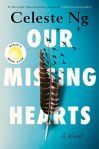 Our Missing Hearts by Celeste Ng – Disappointing compared to her two previous novels. I’d read too much about the premise while writing a synopsis for Bookmarks magazine, so there were no surprises remaining. The political commentary, though necessary, is fairly obvious. The structure, which recounts some events first from Bird’s perspective and then from his mother Margaret Miu’s, makes parts of the second half feel redundant. Still, impossible not to find the plight of children separated from their parents heart-rending, or to disagree with the importance of drawing attention to race-based violence. It’s also appealing to think about the power of individual stories and how literature and libraries might be part of an underground protest movement.
And a memoir in miniature
 Heating & Cooling: 52 Micro-Memoirs by Beth Ann Fennelly – I love memoirs-in-essays. Fennelly goes for the same minimalist approach as Abigail Thomas’s Safekeeping. Pieces range from one line to six pages and mostly pull out moments of note from the everyday of marriage, motherhood and house maintenance. I tended to get more out of the ones where she reinhabits earlier life, like “Goner” (growing up in the Catholic church); “Nine Months in Madison” (poetry fellowship in Wisconsin, running around the lake where Otis Redding died in a plane crash); and “Emulsionar,” (age 23 and in Barcelona: sexy encounter, immediately followed by scary scene). Two about grief, anticipatory for her mother (“I’ll be alone, curator of the archives”) and realized for her sister (“She threaded her arms into the sleeves of grief” – you can tell Fennelly started off as a poet), hit me hardest. Sassy and poignant.
The best so far? Probably Born a Crime, followed by Bournville.
Any of these you have read or would read?
Best Backlist Reads of the Year
Like many bloggers, I’m irresistibly drawn to the new books released each year. However, I consistently find that many of my most memorable reads were published years or even decades ago. These 16 selections, in alphabetical order within genre, together with my Best of 2022 post (coming up tomorrow), make up the top 9.5% or so of my reading for the year. Three of the below were rereads.
Fiction
First, a special mention for this trio:
Birds of a Lesser Paradise by Megan Mayhew Bergman
Delicate Edible Birds by Lauren Groff
Birds of America by Lorrie Moore
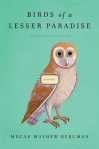
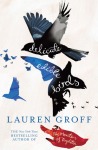
It’s unusual for me to fall so wholeheartedly for short stories. I intended to write up these three “Birds” collections as part of my short story focus in September but ultimately decided to spend more time with the latter two (and then fell ill with Covid before I could write them up, so look out for my full reviews early in the new year). The word from the title is incidental, really; the books do have a lot in common in terms of theme and tone, though. The environment, fidelity and motherhood are recurring elements. The warmth and psychological depth are palpable. Each story feels fleshed out enough that I would happily read an entire novel set in its world, but also such that it is complete unto itself. Two of these writers (Bergman and Moore) are best known for short stories; the third, to my mind, should be.
 Falling Angels by Tracy Chevalier: I’ve read all of Chevalier’s novels and always thought of this one as my favourite. A reread didn’t change that. I loved the neat structure that bookends the action between the death of Queen Victoria and the death of Edward VII, and the focus on funerary customs (with Highgate Cemetery a major setting) and women’s rights.
 Julia and the Shark by Kiran Millwood Hargrave: Julia and her parents are on an island adventure to Unst, in the north of Shetland, where her father will keep the lighthouse for a summer and her mother, a marine biologist, will search for the Greenland shark. Hargrave treats the shark as both a real creature and a metaphor for all that lurks – all that we fear and don’t understand. Beautifully illustrated, too; a modern children’s classic in the making.
 We Have Always Lived in the Castle by Shirley Jackson: A brooding character study of two sisters isolated by their scandalous family history and the suspicion of the townspeople. I loved the offbeat voice and unreliable narration, and the way the Blackwood house is both a refuge and a prison for the sisters. Who is protecting whom, and from what? There are a lot of great scenes, all so discrete that I could see this working very well as a play
 Foster by Claire Keegan: A delicate, heart-rending novella about a deprived young Irish girl sent to live with rural relatives for one pivotal summer. It bears all the hallmarks of a book several times its length: a convincing and original voice, rich character development, an evocative setting, just enough backstory, psychological depth, conflict and sensitive treatment of difficult themes like poverty and neglect. I finished the one-sitting read in a flood of tears.
 Small Things Like These by Claire Keegan: One good man’s small act of rebellion is a way of standing up to the injustice of the Magdalen Laundries, a church-sanctioned system that must have seemed too big to tackle. Keegan fits so much into so few pages, including Bill working out who his father was and deciding what to make of the middle of his life. Like Foster, this is set in the 1980s but feels timeless. Absolutely beautiful.
 The Murderer’s Ape by Jakob Wegelius: Sally Jones is a ship’s engineer who journeys from Portugal to India to clear her captain’s name when he is accused of murder. She’s also a gorilla. This was the perfect rip-roaring adventure story to read at sea (on the ferry to Spain in May); the twisty plot and larger-than-life characters who aid or betray Sally Jones kept the nearly 600 pages turning quickly.
Poetry
 Honorifics by Cynthia Miller: Miller is a Malaysian American poet in Edinburgh. The themes of her debut include living between countries and feeling like an exile versus finding a sense of home. There’s much variety here, and so many beautiful lines and evocative images. Miller incorporates a lot of unusual structures, some of them traditional forms and others freer: a numbered list, columns, dictionary definitions or prose paragraphs. Flora and fauna references plus a consideration of the expat life meant this was custom made for me.
Nonfiction
 The Boys in the Boat by Daniel James Brown: The University of Washington rowing team in general, and Joe Rantz in particular, were unlikely champions. Boatbuilding and rowing both come across as admirable skills involving hard physical labour, scientific precision and an artist’s mind. All along, Brown subtly weaves in the historical background: Depression-era Seattle with its shantytowns, and the rise of Hitler in Germany. A classic underdog story.
 My Life in Houses by Margaret Forster: Having become a homeowner for the first time earlier this year, I was interested in how an author would organize their life around the different places they’ve lived. The early chapters about being a child in Carlisle are compelling in terms of cultural history; later on she observes gentrification in London, and her home becomes a haven for her during her cancer treatment.
 Sightlines by Kathleen Jamie: A reread started on our July trip to the Outer Hebrides. I’d forgotten how closely Jamie’s interests align with my own: Scotland and its islands, birds, the prehistoric, museums, archaeology. I particularly appreciated “Three Ways of Looking at St Kilda,” but everything she writes is profound: “if we are to be alive and available for joy and discovery, then it’s as an animal body, available for cancer and infection and pain.”
 Reflections from the North Country by Sigurd F. Olson: Olson was a well-known environmental writer in his time (through 1970s), also serving as president of the National Parks Association. This collection of passionate, philosophically oriented essays about the state of nature places him in the vein of Aldo Leopold – before-their-time conservationists. He ponders solitude, wilderness and human nature, asking what is primal in us.
 Smile by Sarah Ruhl: These warm and beautifully observed autobiographical essays stem from the birth of her twins and the slow-burning medical crises that followed. Shortly after delivery, Ruhl developed Bell’s palsy, a partial paralysis of the face. Having a lopsided face, grimacing and squinting when she tried to show expression – it was a minor problem in the grand scheme of things, yet provoked questions about whether the body equates to identity.
 Owls of the Eastern Ice by Jonathan C. Slaght: Slaght has become an expert on the Blakiston’s fish owl during nearly two decades of fieldwork in the far east of Russia. Slaght thinks of Russia as his second home, and you can sense his passion for the fish owl and for conservation in general. Amid the science, this is a darn good story, full of bizarre characters. Top-notch nature and travel writing; a ride along on a consequential environmentalist quest.

Some of the best backlist reads I own and could lay my hands on.
What were your best backlist reads this year?
The 2023 Releases I’ve Read So Far
Some reviewers and book bloggers are constantly reading three to six months ahead of what’s out on the shelves, but I tend to get behind on proof copies and read from the library instead. (Who am I kidding? I’m no influencer.)
In any case, I happen to have read a number of pre-release books, generally for paid review for Foreword, Shelf Awareness, etc. Most of my reviews haven’t been published yet; I’ll give very brief excerpts and ratings here to pique the interest.
Early in January I’ll follow up with my 20 Most Anticipated titles of the coming year.
My top recommendations so far:
(In alphabetical order)
 Shoot the Horses First by Leah Angstman [Feb. 28, Kernpunkt Press]: Sixteen sumptuous historical stories ranging from flash to novella length depict outsiders and pioneers who face disability and prejudice with poise.
 The House Is on Fire by Rachel Beanland [April 4, Simon & Schuster]: Four characters – two men and two women; two white people and two Black slaves – are caught up in the Richmond Theater Fire of 1811. Painstakingly researched and a propulsive read.
 Tell the Rest by Lucy Jane Bledsoe [March 7, Akashic Books]: A high school girl’s basketball coach and a Black poet, both survivors of a conversion therapy camp in Oregon, return to the site of their spiritual abuse, looking for redemption.
 All of Us Together in the End by Matthew Vollmer [April 4, Hub City Press]: A pensive memoir investigates the blinking lights that appeared in his family’s woods soon after his mother’s death from complications of Alzheimer’s and Parkinson’s in 2019.
Other 2023 releases I’ve read:
(In publication date order; links to the few reviews that are already available online)
 Pusheen the Cat’s Guide to Everything by Claire Belton [Jan. 10, Gallery Books]: Good-natured and whimsical comic scenes delight in the endearing quirks of Pusheen, everyone’s favorite cartoon cat since Garfield. Belton creates a family and pals for her, too.
 Everything’s Changing by Chelsea Stickle [Jan. 13, Thirty West]: The 20 weird flash fiction stories in this chapbook are like prizes from a claw machine: you never know whether you’ll pluck a drunk raccoon or a red onion the perfect size to replace a broken heart.
 Decade of the Brain by Janine Joseph [Jan. 17, Alice James Books]: With formal variety and thematic intensity, this second collection by the Philippines-born poet ruminates on her protracted recovery from a traumatic car accident and her journey to U.S. citizenship.
 For Thy Great Pain Have Mercy on My Little Pain by Victoria Mackenzie [Jan. 19, Bloomsbury]: Two female medieval mystics, Julian of Norwich and Margery Kempe, are the twin protagonists of Mackenzie’s debut. She allows each to tell her life story through alternating first-person strands that only braid together very late on.
 The Faraway World by Patricia Engel [Jan. 24, Simon & Schuster]: These 10 short stories contrast dreams and reality. Money and religion are opposing pulls for Latinx characters as they ponder whether life will be better at home or elsewhere.
 Your Hearts, Your Scars by Adina Talve-Goodman [Jan. 24, Bellevue Literary Press]: The author grew up a daughter of rabbis in St. Louis and had a heart transplant at age 19. This posthumous collection gathers seven poignant autobiographical essays about living joyfully and looking for love in spite of chronic illness.
 God’s Ex-Girlfriend: A Memoir About Loving and Leaving the Evangelical Jesus by Gloria Beth Amodeo [Feb. 21, Ig Publishing]: In a candid memoir, Amodeo traces how she was drawn into Evangelical Christianity in college before coming to see it as a “common American cult” involving unhealthy relationship dynamics and repressed sexuality.
 Zig-Zag Boy: A Memoir of Madness and Motherhood by Tanya Frank [Feb. 28, W. W. Norton]: A wrenching debut memoir ranges between California and England and draws in metaphors of the natural world as it recounts a decade-long search to help her mentally ill son.
 The Distance from Slaughter County by Steven Moore [March 7, The University of North Carolina Press]: An Iowan now based in Oregon, Moore balances nostalgia and critique to craft nuanced, hypnotic autobiographical essays about growing up in the Midwest. The piece on Shania Twain is a highlight.
Currently reading:
(In release date order)
 My What If Year: A Memoir by Alisha Fernandez Miranda [Feb. 7, Zibby Books]: “On the cusp of turning forty, Alisha Fernandez Miranda … decides to give herself a break, temporarily pausing her stressful career as the CEO of her own consulting firm … she leaves her home in London to spend one year exploring the dream jobs of her youth.”
 Sea Change by Gina Chung [April 11, Vintage]: “With her best friend pulling away to focus on her upcoming wedding, Ro’s only companion is Dolores, a giant Pacific octopus who also happens to be Ro’s last remaining link to her father, a marine biologist who disappeared while on an expedition when Ro was a teenager.”
Additional pre-release books on my shelf:
(In release date order)
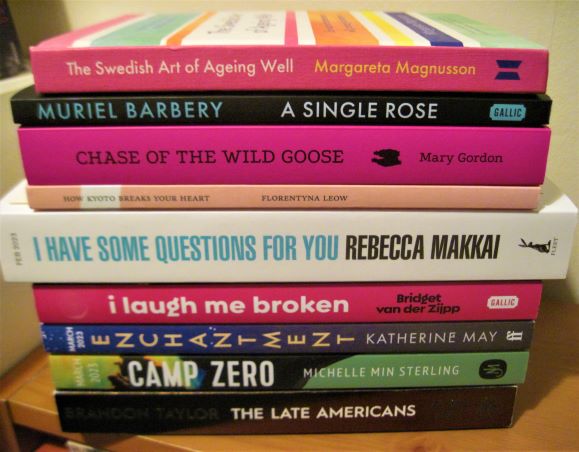
Will you look out for one or more of these?
Any 2023 reads you can recommend already?
 Bookish Beck = Rebecca Foster. American transplant to England. Freelance proofreader and book reviewer.
