Victorian-Themed Novels by Annie Elliot and Livi Michael (#ReadIndies)
I’m going back to my roots as a Victorianist (I completed an MA in Victorian Literature at the University of Leeds in 2006) with these two new novels, the one about Charles Dickens’s turbulent marriage and the other about the real-life inspiration for Elizabeth Gaskell’s Ruth. Both redress the balance of Victorian literature by placing women at the centre of the action, and both were comfortably in the 200–300-page range: turns out that’s how I like my Victoriana these days; none of your triple-decker nonsense.
Mr & Mrs Charles Dickens: Her Story by Annie Elliot
I used to proclaim Dickens my favourite author yet haven’t managed to read one of his novels in 15+ years; I seem to be allergic to all that verbiage. He managed to write all those millions of words thanks to his increasing status and wealth, but also thanks to his long-suffering wife, Catherine. Kate sacrificed her health and ambitions to bear and raise his nine children (along with one who died) and – along with sisters and servants – keep a house calm and quiet enough to enable his work.
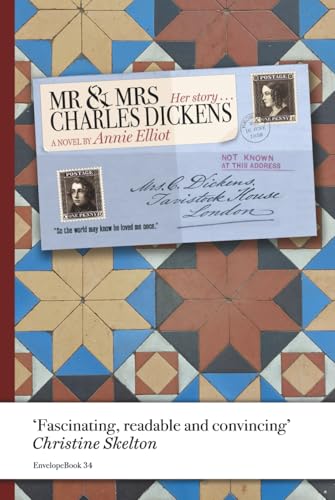 On her deathbed, Kate begged her daughter to give her love letters from Charles to the British Museum “so the world may know he loved me once.” Annie Elliot has used that phrase as the tagline for her absorbing and vigilantly researched debut novel. The structure perfectly mimics romantic illusions ceding to disenchantment. The framing story is set on 10 June 1870 – the day Kate, the estranged wife, learns of Charles’s death. Sections alternate between the bereaved Kate’s fragile state of mind (depicted in the third person) and first-person flashbacks to their relationship, from first meeting in 1834 to infamous separation in 1858.
It’s all narrated in the present tense, which creates an eternal now: nothing can be dated when it’s all happening at once for Kate. To start with, the Dickens marriage seems to be based on real love and physical passion. But before long it’s clear that he’s using Kate as ego boost and sexual outlet. She walks on eggshells lest anything shake his confidence. While the death of their baby daughter Dora nearly breaks her, he keeps up a frenzy of writing, travel, property acquisition, and new ventures such as public speaking and the theatre. And, of course, it’s through dramatics that he meets young Nelly Ternan and finds his excuse to push Kate aside.
Though much of this material was familiar to me from Claire Tomalin’s biographies as well as Gaynor Arnold’s novel about Kate, Girl in a Blue Dress, I appreciated the recreation of Kate’s perspective, the glimpses of their children’s lives, and the flashes of humour such as the proliferation of Pickwick memorabilia and a visit from Hans Christian Andersen. This is – yes, still – a necessary corrective to Dickens’s image as the dutiful husband and paterfamilias. And such a beautifully presented book, too. I wish Elliot well for next year’s McKitterick Prize race.
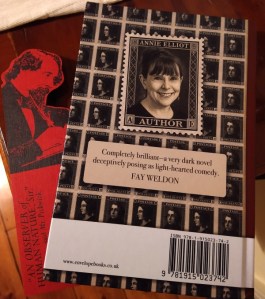
To be published on 1 March. With thanks to the author and EnvelopeBooks for the free copy for review.
Elizabeth and Ruth by Livi Michael
The Manchester of 1849 is a sordid complex of sweatshops, brothels and workhouses – if you’re Pasley, an Irish teenager abandoned by her mother and shunted from one bad situation to another. Or the Manchester of 1849 is a rarefied colloquium of forward-thinking authors, ministers and politicians – if you’re Elizabeth Gaskell, who’s been revealed as the mind behind the anonymously published sensation Mary Barton.
The two worlds collide when Elizabeth visits Pasley at the New Bailey Prison. She feels for this young woman who’s been a victim of deception, trafficking, and rape and narrowly escaped death by suicide only to end up imprisoned for theft when she made a desperate bid for freedom. There’s only so much that Pasley can bear to tell Mrs Gaskell on these short visits, though; her past would shock a preacher’s wife. Through euphemisms and evasions, Pasley is able to convey that she was taken advantage of by a doctor. Elizabeth suspects that there was a baby, but only readers know the whole truth.
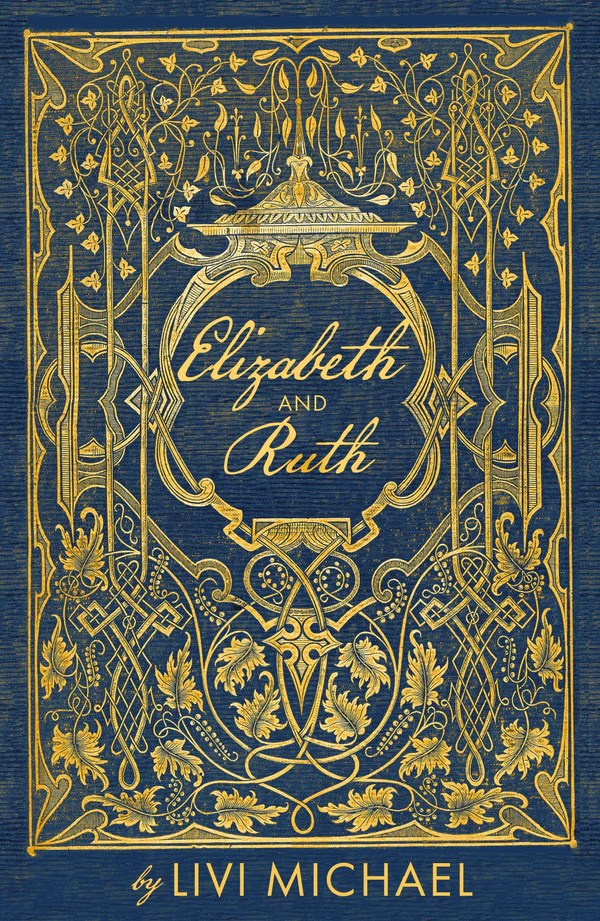
Chapters alternate between Elizabeth’s experience – in an omniscient third person cleverly reminiscent of Victorian prose – and Pasley’s first-person recollections. Elizabeth wants to follow through on her do-gooder reputation and truly help Pasley, who reminds her of her own infant and pregnancy losses. Achieving justice for the girl would be a bonus. All she knows to do is use her pen to change hearts and minds, as she has before (including for Dickens’s magazine) to draw attention to the plight of the poor. Thus, Ruth was born.
This is a riveting and touching novel about the rigidity of convention and the limits of compassion. Livi Michael is a prolific author of whom I’d not heard before Salt sent me this surprise, perfectly suited parcel. Her vivid scenes bring the two-tiered Manchester society to life and reminded me of my visit to the Gaskell House in 2015. My only small complaint would be that the blurb makes it sound as if Gaskell’s correspondence with Dickens will be a central element, when in fact it only appears once, two-thirds of the way through, with one cameo appearance by Dickens right at the end. He’s the better-known author, but after reading this you’ll agree that Gaskell was the subtler, more elegant chronicler.
Published on 9 February. With thanks to Salt Publishing for the proof copy for review.
Three on a Theme (Valentine’s Day): “Love” Books by Amy Bloom, George Mackay Brown & Hilary Mantel
Every year I say it: I’m really not a Valentine’s Day person and yet it’s become a tradition to put together a themed post featuring one or more books with “Love” or “Heart” in the title. This is the tenth year in a row, in fact – after 2017, 2018, 2019, 2020, 2021, 2022, 2023, 2024 and 2025. As you might expect, none of the three below contains a straightforward love story. The relationships portrayed tend to be unequal, creepy or doomed, but the solid character work and use of setting and voice was enough to keep me engaged with all of the books.
Love Invents Us by Amy Bloom (1997)
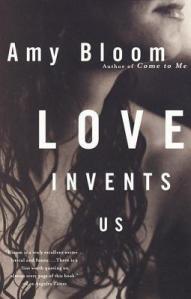 I’ve found Bloom’s short stories more successful than her novels. This is something of a halfway house: linked short stories (one of which was previously published in Come to Me; another that gives the title line to her 2000 collection A Blind Man Can See How Much I Love You) about Elizabeth Taube. When we first meet her on Long Island in the 1960s, she’s a rebellious and sexually precocious Jewish girl; by the time we’ve journeyed through several decades of vignettes, she’s a flighty and psychologically scarred single mother. Stories of her Lolita-esque attractiveness to grown salesmen and teachers, her shoplifting, her casual work for elderly African American Mrs. Hill, and her great love for Horace, nicknamed Huddie, a Black basketball player, are in the first person. The longer second part – about the aftermath of her physical affair with Huddie and her ongoing emotional entanglement with her English teacher, Max Stone – is in the third person yet feels more honest. Liz seems like bad news for everyone she meets. Bloom shows us some of the reasons for what she does, but I still couldn’t absolve her protagonist. I’d also reverse the title: We Invent Love. Liz is responsible for irrevocably altering two lives besides her own based on what she needs to feel secure. This is very much Lorrie Moore territory, but Moore leaves less of a bitter taste. (Secondhand – Community Furniture Project)
A Calendar of Love and Other Stories by George Mackay Brown (1967)
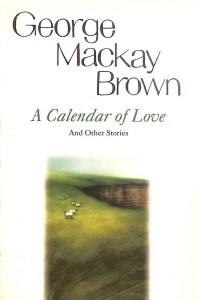 The title story opens a collection steeped in the landscape and history of Orkney. Each month we check in with three characters: Jean, who lives with her ailing father at the pub they run; and her two very different suitors, pious Peter and drunken Thorfinn. When she gives birth in December, you have to page back to see that she had encounters with both men in March. Some are playful in this vein or resemble folk tales: a boy playing hooky from school, a distant cousin so hapless as to father three bairns in the same household, and a rundown of the grades of whisky available on the islands. Others with medieval time markers are overwhelmingly bleak, especially “Witch,” about a woman’s trial and execution – and one of two stories set out like a play for voices. I quite liked the flash fiction “The Seller of Silk Shirts,” about a young Sikh man who arrives on the islands, and “The Story of Jorfel Hayforks,” in which a Norwegian man sails to find the man who impregnated his sister and keeps losing a crewman at each stop through improbable accidents. This is an atmospheric book I would have liked to read on location, but few of the individual stories stand out. (Secondhand – Community Furniture Project, Newbury)
An Experiment in Love by Hilary Mantel (1995)
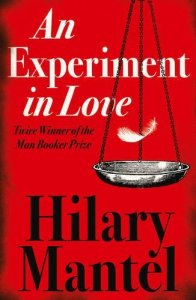 Mantel is best remembered for the Wolf Hall trilogy, but her early work includes a number of concise, sharp novels about growing up in the north of England. Carmel McBain attends a Catholic school in Manchester in the 1960s before leaving to study law at the University of London in 1970. In lockstep with her are a couple of friends, including Karina, who is of indeterminate Eastern European extraction and whose tragic Holocaust family history, added to her enduring poverty, always made her an object of pity for Carmel’s mother. But Karina as depicted by Carmel is haughty, even manipulative, and over the years their relationship swings between care and competition. As university students they live on the same corridor and have diverging experiences of schoolwork, romance, and food. “Now, I would not want you to think that this is a story about anorexia,” Carmel says early on, and indeed, she presents her condition as more like forgetting to eat. But then you recall tiny moments from her past when teachers and her mother shamed her for eating, and it’s clear a seed was sown. Carmel and her friends also deal with the results of the new-ish free love era. This is dark but funny, too, with Carmel likening roast parsnips to “ogres’ penises.” Further proof, along with Every Day Is Mother’s Day, that it’s well worth exploring authors’ back catalogue. (Public library)
Plus a DNF:
 Unexpected Lessons in Love by Bernardine Bishop (2013): I loved Bishop’s The Street, and this posthumous novel initially drew me in with its medical detail (two friends who both had stoma operations) and the exploration of different forms of love – romantic, parental, grandparental – before starting to feel obvious (two adoptions, one historical and one recent), maudlin and overlong. With some skimming, I made it to page 120. (Secondhand – Awesomebooks.com)
Other relevant reading on the go:
I would have tried spinning this one into another thematic trio, but ran out of time…
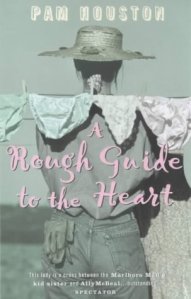 A Rough Guide to the Heart by Pam Houston (1999): A mix of personal essays and short travel pieces. The material about her dysfunctional early family life, her chaotic dating, and her thrill-seeking adventures in the wilderness is reminiscent of the highly autobiographical Waltzing the Cat. Amusingly, this has a previous price label from Richard Booth’s Bookshop in Hay-on-Wye, where it was incorrectly classed as Romance Fiction – one could be excused the mistake based on the title and cover! (Secondhand – Community Furniture Project)
And three books about marriage…
 The Honesty Box by Lucy Brazier – A pleasant year’s diary of rural living and adjusting to her husband’s new diagnosis of neurodivergence.
- Strangers by Belle Burden – A high-profile memoir about her husband’s strange and marriage-ending behaviour (his affair was only part of it) during the 2020 lockdown.
- Mrs. Bridge by Evan S. Connell – For Literary Wives Club in March. I’m in the early pages but it seems comparable to Richard Yates.
The 2026 Releases I’ve Read So Far
I happen to have read a number of pre-release books, generally for paid reviews for Foreword and Shelf Awareness. (I already previewed six upcoming novellas here.) Most of my reviews haven’t been published yet, so I’ll just give brief excerpts and ratings here to pique the interest. I link to the few that have been published already, then list the 2026 books I’m currently reading. Soon I’ll follow up with a list of my Most Anticipated titles.


 Simple Heart by Cho Haejin (trans. from Korean by Jamie Chang) [Other Press, Feb. 3]: A transnational adoptee returns to Korea to investigate her roots through a documentary film. A poignant novel that explores questions of abandonment and belonging through stories of motherhood.
 The Conspiracists: Women, Extremism, and the Lure of Belonging by Noelle Cook [Broadleaf Books, Jan. 6]: An in-depth, empathetic study of “conspirituality” (a philosophy that blends conspiracy theories and New Age beliefs), filtered through the outlook of two women involved in storming the Capitol on January 6, 2021.

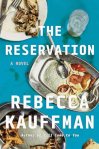 The Reservation by Rebecca Kauffman [Counterpoint, Feb. 24]: The staff members of a fine-dining restaurant each have a moment in the spotlight during the investigation of a theft. Linked short stories depict character interactions and backstories with aplomb. Big-hearted; for J. Ryan Stradal fans.


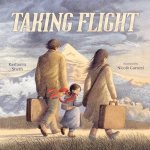 Taking Flight by Kashmira Sheth (illus. Nicolo Carozzi) [Dial Press, April 21]: A touching story of the journeys of three refugee children who might be from Tibet, Syria and Ukraine. The drawing style reminded me of Chris Van Allsburg’s. This left a tear in my eye.

Currently reading:
(Blurb excerpts from Goodreads; all are e-copies apart from Evensong)
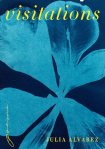 Visitations: Poems by Julia Alvarez [Knopf, April 7]: “Alvarez traces her life [via] memories of her childhood in the Dominican Republic … and the sisters who forged her, her move to America …, the search for mental health and beauty, redemption, and success.”
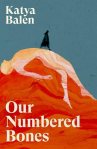 Our Numbered Bones by Katya Balen [Canongate, 12 Feb. / HarperVia, Feb. 17]: Her “adult debut [is] about a grieving author who heads to rural England for a writer’s retreat, only to stumble upon an incredible historical find” – a bog body!
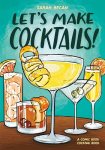 Let’s Make Cocktails!: A Comic Book Cocktail Book by Sarah Becan [Ten Speed Press, April 7]: “With vivid, easy-to-follow graphics, Becan guides readers through basic techniques such as shaking, stirring, muddling, and more. With all recipes organized by spirit for easy access, readers will delight in the panelized step-by-step comic instructions.”
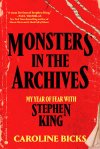 Monsters in the Archives: My Year of Fear with Stephen King by Caroline Bicks [Hogarth/Hodder & Stoughton, April 21]: “A fascinating, first of its kind exploration of Stephen King and his … iconic early books, based on … research and interviews with King … conducted by the first scholar … given … access to his private archives.”
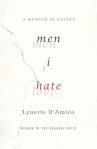 Men I Hate: A Memoir in Essays by Lynette D’Amico [Mad Creek Books, Feb. 17]: “Can a lesbian who loves a trans man still call herself a lesbian? As D’Amico tries to engage more deeply with the man she is married to, she looks at all the men—historical figures, politicians, men in her family—in search of clear dividing lines”.
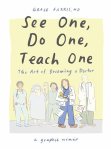 See One, Do One, Teach One: The Art of Becoming a Doctor: A Graphic Memoir by Grace Farris [W. W. Norton & Company, March 24]: “In her graphic memoir debut, Grace looks back on her journey through medical school and residency.”
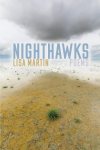 Nighthawks by Lisa Martin [University of Alberta Press, April 2]: “These poems parse aspects of human embodiment—emotion, relationship, mortality—and reflect on how to live through moments of intense personal and political upheaval.”
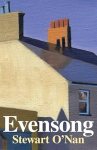 Evensong by Stewart O’Nan [published in USA in November 2025; Grove Press UK, 1 Jan.]: “An intimate, moving novel that follows The Humpty Dumpty Club, a group of women of a certain age who band together to help one another and their circle of friends in Pittsburgh.”
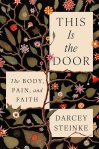 This Is the Door: The Body, Pain, and Faith by Darcey Steinke [HarperOne, Feb. 24]: “In chapters that trace the body—The Spine, The Heart, The Knees, and more—[Steinke] introduces sufferers to new and ancient understandings of pain through history, philosophy, religion, pop culture, and reported human experience.”
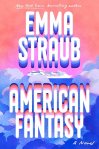 American Fantasy by Emma Straub [Riverhead, April 7 / Michael Joseph (Penguin), 14 May]: “When the American Fantasy cruise ship sets sail for a four-day themed voyage, aboard are all five members of a famous 1990s boyband, and three thousand screaming women who have worshipped them for thirty years.”
Additional pre-release review books on my shelf:
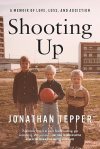 Shooting Up by Jonathan Tepper [Constable, 19 Feb.]: “Born into a family of American missionaries driven by unwavering faith … Jonathan’s home became a sanctuary for society’s most broken … AIDS hit Spain a few years after it exploded in New York and, like an invisible plague, … claimed countless lives – including those … in the family rehabilitation centre.”
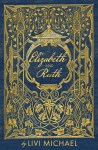 Elizabeth and Ruth by Livi Michael [Salt Publishing, 9 Feb.]: “Based on the real correspondence between Elizabeth Gaskell and Charles Dickens … [Gaskell] visits a young Irish prostitute in Manchester’s New Bailey prison. … [A] story of hypocrisy and suppression, and how Elizabeth navigates the … prejudice of the day to help the young girl”.
Will you look out for one or more of these?
Any other 2026 reads you can recommend?
10 Favorite Nonfiction Novellas from My Shelves
What do I mean by a nonfiction novella? I’m not claiming a new genre like Truman Capote did for the nonfiction novel (so unless they’re talking about In Cold Blood or something very similar, yes, I can and do judge people who refer to a memoir as a “nonfiction novel”!); I’m referring literally to any works of nonfiction shorter than 200 pages. Many of my selections even come well under 100 pages.
I’m kicking off this nonfiction-focused week of Novellas in November with a rundown of 10 of my favorite short nonfiction works. Maybe you’ll find inspiration by seeing the wide range of subjects covered here: bereavement, social and racial justice, hospitality, cancer, nature, politics, poverty, food and mountaineering. I’d reviewed all but one of them on the blog, half of them as part of Novellas in November in various years.
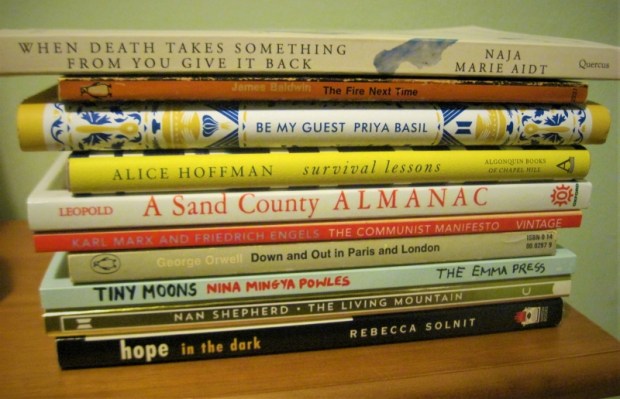
 When Death Takes Something from You Give It Back: Carl’s Book by Naja Marie Aidt [137 pages]: In March 2015 Aidt got word that her son Carl Emil was dead. The 25-year-old jumped out of his fifth-floor Copenhagen window after taking some mushrooms. The text is a collage of fragments: memories, dreams, dictionary definitions, journal entries, and quotations. The playful disregard for chronology and the variety of fonts, typefaces and sizes are a way of circumventing the feeling that grief has made words lose their meaning forever.
 The Fire Next Time by James Baldwin [89 pages]: A hard-hitting book composed of two essays: “My Dungeon Shook,” is a letter addressed to his nephew and namesake on the 100th anniversary of emancipation; and “Down at the Cross: Letter from a Region in My Mind,” which first appeared in the New Yorker and tells of a crisis of faith that hit Baldwin when he was a teenager and started to question to what extent Christianity of all stripes was upholding white privilege. This feels completely relevant, and eminently quotable, nearly 60 years later.
 Be My Guest: Reflections on Food, Community and the Meaning of Generosity by Priya Basil [117 pages]: A thought-provoking essay that reaches into many different topics. Part of an Indian family that has lived in Kenya and England, Basil is used to culinary abundance. However, living in Berlin increased her awareness of the suffering of the Other – hundreds of thousands of refugees have entered the EU to be met with hostility. Yet the Sikh tradition she grew up in teaches kindness to strangers. She asks how we can all cultivate a spirit of generosity.
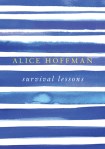 Survival Lessons by Alice Hoffman [83 pages]: Hoffman wrote this 15 years after her own experience of breast cancer to encourage anyone going through a crisis. Each chapter title begins with the word “Choose” – a reminder that, even when you can’t choose your circumstances, you can choose your response. This has been beautifully put together with blue-tinted watercolor-effect photographs and an overall yellow and blue theme (along with deckle edge pages – a personal favorite book trait). It’s a sweet little memoir with a self-help note.
 A Sand County Almanac by Aldo Leopold [92 pages]: Few know how much of our current philosophy of wilderness and the human impact on the world is indebted to Aldo Leopold. This was published in 1949, but so much rings true today: how we only appreciate wildlife if we can put an economic value on it, the troubles we get into when we eradicate predators and let prey animals run rampant, and the danger of being disconnected from the land that supplies our very life. And all this he delivers in stunning, incisive prose.
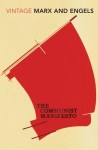 The Communist Manifesto by Karl Marx and Friedrich Engels [70 pages]: Maybe you, like me, had always assumed this was an impenetrable tome of hundreds of pages? But, as I discovered when I read it on the train to Manchester some years ago, it’s very compact. That’s not to say it’s an easy read; I’ve never been politically or economically minded, so I struggled to follow the argument at times. Mostly what I appreciated was the language. Like The Origin of Species, it has many familiar lines and wonderful metaphors.
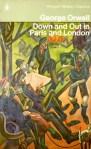 Down and Out in Paris and London by George Orwell [189 pages]: Orwell’s first book, published when he was 30, is an excellent first-hand account of the working and living conditions of the poor in two world cities. He works as a dishwasher and waiter in Paris hotel restaurants for up to 80 hours a week and has to pawn his clothes to scrape together enough money to ward off starvation. Even as he’s conveying the harsh reality of exhaustion and indignity, Orwell takes a Dickensian delight in people and their eccentricities.
 Tiny Moons: A Year of Eating in Shanghai by Nina Mingya Powles [85 pages]: This lovely pamphlet of food-themed essays arose from a blog Powles kept while in Shanghai on a one-year scholarship to learn Mandarin. From one winter to another, she explores the city’s culinary offerings and muses on the ways in which food is bound up with her memories of people and places. This is about how food can help you be at home. I loved how she used the senses – not just taste, but also smell and sight – to recreate important places in her life.
 The Living Mountain by Nan Shepherd [108 pages]: This is something of a lost nature classic. Composed during the later years of World War II but only published in 1977, it’s Shepherd’s tribute to her beloved Cairngorms, a mountain region of Scotland. But it’s not a travel or nature book in the way you might usually think of those genres. It’s a subtle, meditative, even mystical look at the forces of nature, which are majestic but also menacing. Shepherd dwells on the senses, the mountain flora and fauna, and the special quality of time and existence (what we’d today call mindfulness) achieved in a place of natural splendor and solitude.
 Hope in the Dark: Untold Histories, Wild Possibilities by Rebecca Solnit [143 pages]: Solnit believes in the power of purposeful individuals working towards social justice, even in the face of dispiriting evidence (e.g. the largest protests the world had seen didn’t stop the Iraq War). Instead of perfectionism, she advises flexibility and resilience; things could be even worse had we not acted. Her strong and stirring writing is a reminder that, though injustice is always with us, so is everyday heroism.
Keep in touch via Twitter (@bookishbeck / @cathy746books) and Instagram (@bookishbeck / @cathy_746books). We’ll add any of your review links in to our master posts. Feel free to use the terrific feature image Cathy made and don’t forget the hashtag #NovNov.

Any suitably short nonfiction on your shelves?
August Releases: Fiction Advocate, Kingsolver Poetry, Sarah Moss & More
My five new releases for August include two critical responses to contemporary classics; two poetry books, one a debut collection from Carcanet Press and the other by an author better known for fiction; and a circadian novel by one of my favorite authors.
I start with two of the latest releases from Fiction Advocate’s “Afterwords” series. The tagline is “Essential Readings of the New Canon,” and the idea is that “acclaimed writers investigate the contemporary classics.” (I reviewed the monographs on Blood Meridian, Fun Home, and The Year of Magical Thinking in this post.)
Dear Knausgaard: Karl Ove Knausgaard’s My Struggle by Kim Adrian
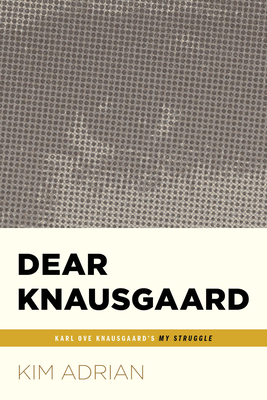 Karl Ove Knausgaard turned his pretty ordinary life into thousands of pages of autofiction that many readers have found addictive. Adrian valiantly grapples with his six-volume exploration of identity, examining the treatment of time and the dichotomies of intellect versus emotions, self versus other, and life versus fiction. She marvels at the ego that could sustain such a project, and at the seemingly rude decision to use all real names (whereas in her own family memoir she assigned aliases to most major figures). At many points she finds the character of “Karl Ove” insufferable, especially when he’s a teenager in Book 4, and the books’ prose dull. Knausgaard’s focus on male novelists and his stereotypical treatment of feminine qualities, here and in his other work, frequently madden her.
So why is My Struggle compelling nonetheless? It occupies her mind and her conversations for years. Is it something about the way that Knausgaard extracts meaning from seemingly inconsequential details? About how he stretches and compresses time in a Proustian manner to create a personal highlights reel? She frames her ambivalent musings as a series of letters written as if to Knausgaard himself (or “KOK,” as she affectionately dubs him) between February and September 2019. Cleverly, she mimics his style in both the critical enquiry and the glimpses into her own life, including all its minutiae – the weather, daily encounters, what she sees out the window and what she thinks about it all. It’s bold, playful and funny, and, all told, I enjoyed it more than Knausgaard’s own writing.
(I myself have only read Book 1, A Death in the Family, and wasn’t planning on continuing with My Struggle, but I think I will make an exception for Book 3 because of my recent fascination with childhood memoirs. I had better luck with Knausgaard’s Seasons Quartet, of which I’ve read all but Spring. I’ve reviewed Summer and Winter.)
My rating: 
My thanks to Fiction Advocate for the free e-copy for review.
The Wanting Was a Wilderness: Cheryl Strayed’s Wild and the Art of Memoir by Alden Jones
Hiking is boring, yet Cheryl Strayed turned it into a beloved memoir. Jones explores how Wild works: how Strayed the author creates “Cheryl,” likeable despite her drug use and promiscuity; how the fixation on the boots and the backpack that carry her through her quest reflect the obsession over the loss of her mother; how the flashbacks break up the narrative and keep you guessing about whether she’ll reach her literal and emotional destinations.
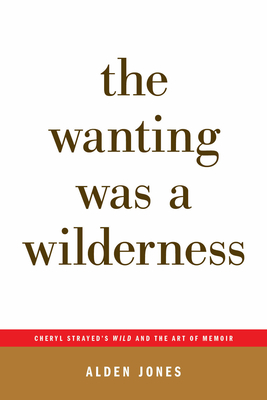 Jones also considers the precedents of wilderness literature and the 1990s memoir boom that paved the way for Wild. I most enjoyed this middle section, which, like Mary Karr’s The Art of Memoir, surveys some of the key publications from a burgeoning genre. Another key point of reference is Vivian Gornick, who draws a distinction between “the situation” (the particulars or context) and “the story” (the message) – sometimes the map or message comes first, and sometimes you only discover it as you go along.
I was a bit less interested in Jones’s reminiscences of her own three-month wilderness experience during college, when, with Outward Bound, she went to North Carolina and Mexico and hiked part of the Appalachian Trail and a volcano. This was the trip on which she faced up to her sexuality and had a short-lived relationship with a fellow camper, Melissa. But working out that she was bisexual and marrying a woman were both, as presented here, false endings. The real ending was her decision to leave her marriage – even though they had three children; even though the relationship was often fine. She attributes her courage to go, believing something better was possible, to Strayed’s work. And that’s the point of this series: rereading a contemporary classic until it becomes part of your own story.
My rating: 
My thanks to Fiction Advocate for the free e-copy for review.
Two poetry releases:
Growlery by Katherine Horrex
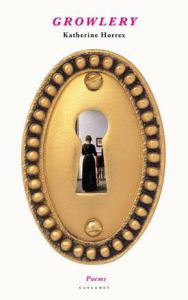 As in Red Gloves by Rebecca Watts, released by Carcanet in June, I noted the juxtaposition of natural and industrial scenes. Horrex’s “Four Muses” include a power plant and a steelworks, and she writes about pottery workers and the Manchester area, but she also explores Goat Fell on foot. Two of my favorite poems were nature-based: “Omen,” about corpse flowers, and “Wood Frog.” Alliteration, metaphors and smells are particularly effective in the former. Though I quailed at the sight of an entry called “Brexit,” it’s a subtle offering that depicts mistrust and closed minds – “People personable as tents zipped shut”. By contrast, “House of Other Tongues” revels in the variety of languages and foods in an international student dorm. A few poems circle around fertility and pregnancy. The linking themes aren’t very strong across the book, but there are a few gems.
My rating: 
My thanks to Carcanet Press for the free e-copy for review.
How to Fly (in Ten Thousand Easy Lessons) by Barbara Kingsolver
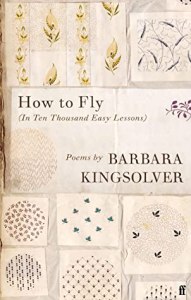 Kingsolver may not be well known for her poetry, but this is actually her second collection of verse after the bilingual Another America/Otra America (1992). The opening segment, “How to Fly,” is full of folk wisdom from nature and the body’s intuitive knowledge. “Pellegrinaggio” is a set of travel poems about accompanying her Italian mother-in-law back to her homeland. “This Is How They Come Back to Us” is composed of elegies for the family’s dead; four shorter remaining sections are inspired by knitting, literature, daily life, and concern for the environment. As with The Undying by Michel Faber, the book’s themes are stronger than its poetic techniques, but Kingsolver builds striking natural imagery and entrancing rhythms.
Two favorite passages to whet your appetite:
How to drink water when there is wine— / Once I knew all these brick-shaped things, / took them for the currency of survival. / Now I have lived long and I know better.
Tiptoe past the dogs of the apocalypse / asleep in the shade of your future. / Pay at the window. You’ll be surprised: you / can pass off hope like a bad check. You still / have time, that’s the thing. To make it good.
(To be reviewed in full, in conjunction with other recent/upcoming poetry releases, including Dearly by Margaret Atwood, for Shiny New Books.)
My rating:
I read an advanced e-copy via Edelweiss. (I’m unsure of the line breaks above because of the formatting.)
And finally, a much-anticipated release – bonus points for it having “Summer” in the title!
Summerwater by Sarah Moss
This is nearly as compact as Moss’s previous novella, Ghost Wall, yet contains a riot of voices. Set on one long day at a Scottish holiday park, it moves between the minds of 12 vacationers disappointed by the constant rain – “not that you come to Scotland expecting sun but this is a really a bit much, day after day of it, torrential” – and fed up with the loud music and partying that’s come from the Eastern Europeans’ chalet several nights this week. In the wake of Brexit, the casual xenophobia espoused by several characters is not surprising, but still sobering, and paves the way for a climactic finale that was not what I expected after some heavy foreshadowing involving a teenage girl going off to the pub through the woods.
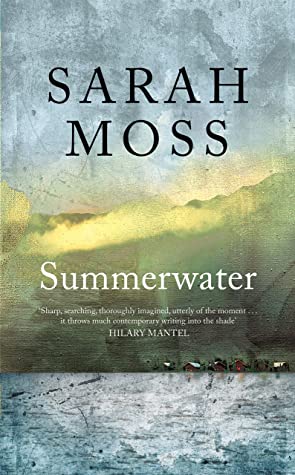 The day starts at 5 a.m. with Justine going for a run, despite a recent heart health scare, and spends time with retirees, an engaged couple spending most of their time in bed, a 16-year-old kayaker, a woman with dementia, and more. We see different aspects of family dynamics as we revisit a previous character’s child, spouse or sibling. I had to laugh at Milly picturing Don Draper during sex with Josh, and at Claire getting an hour to herself without the kids and having no idea what to do with it beyond clean up and make a cup of tea. Moss gets each stream-of-consciousness internal monologue just right, from a frantic mum to a sarcastic teen.
Yet I had to wonder what it all added up to; this feels like a creative writing student exercise, with the ending not worth waiting for. Cosmic/nature interludes are pretentious à la Reservoir 13. It’s not the first time this year that I’ve been disappointed by the latest from a favorite author (see also Hamnet). But my previous advice stands: If you haven’t read Sarah Moss, do so immediately.
My rating:
My thanks to Picador for the free copy for review.
What August releases can you recommend?
My (Not the) Booker Prize Reading
A week from today, on the 14th (my birthday, as well as Susan’s – be sure to wish her a happy one!), this year’s Booker Prize will be announced. The Prize’s longlist didn’t contain much that piqued my interest this time around; I read one book from it and didn’t get on with it well at all, and I also DNFed another three.
Read
Frankissstein by Jeanette Winterson
 Winterson does her darndest to write like Ali Smith here (no speech marks, short chapters and sections, random pop culture references). Cross Smith’s Seasons quartet with the vague aims of the Hogarth Shakespeare project and Margaret Atwood’s The Heart Goes Last and you get this odd jumble of a novel that tries to combine the themes and composition of Frankenstein with the modern possibilities of transcending bodily limitations. Her contemporary narrator is Ry Shelley, a transgender doctor sponsored by the Wellcome Trust who supplies researcher Victor Stein with body parts for his experiments in Manchester. In Memphis for a tech expo, Ry meets Ron Lord, a tactless purveyor of sexbots.
Their interactions alternate with chapters narrated by Mary Shelley in the 1810s; I found this strand much more engaging and original, perhaps because I haven’t read that much about Shelley and her milieu, whereas it feels like I’ve read a lot about machine intelligence and transhumanism recently (To Be a Machine, Murmur, Machines Like Me). I think Winterson’s aim was to link the two time periods through notions of hybridness and resistance to death. It never really came together for me. 
DNFed
 Night Boat to Tangier by Kevin Barry – I read the first 76 pages. The other week two grizzled Welsh guys came to deliver my new fridge. Their barely comprehensible banter reminded me of that between Maurice and Charlie, two ageing Irish gangsters. The long first chapter is terrific. At first these fellas seem like harmless drunks, but gradually you come to realize just how dangerous they are. Maurice’s daughter Dilly is missing, and they’ll do whatever is necessary to find her. Threatening to decapitate someone’s dog is just the beginning – and you know they could do it. “I don’t know if you’re getting the sense of this yet, Ben. But you’re dealing with truly dreadful fucken men here,” Charlie warns at one point. I loved the voices; if this was just a short story it would have gotten a top rating, but I found I had no interest in the backstory of how these men got involved in heroin smuggling.
The Wall by John Lanchester – I lost interest in it and wasn’t drawn in by the first pages.
 The Man Who Saw Everything by Deborah Levy – I read the first 35 pages. There’s a lot of repetition; random details seem deliberately placed as clues. I’m sure there’s a clever story in here somewhere, but apart from a few intriguing anachronisms (in 1988 a smartphone is just “A small, flat, rectangular object … lying in the road. … The object was speaking. There was definitely a voice inside it”) there is not much plot or character to latch onto. I suspect there will be many readers who, like me, can’t be bothered to follow Saul Adler from London’s Abbey Road, where he’s hit by a car in the first paragraph, to East Berlin.
 There’s only one title from the Booker shortlist that I’m interested in reading: Girl, Woman, Other by Bernardine Evaristo. I’ll be reviewing it later this month as part of a blog tour celebrating the Aké Book Festival, but as a copy hasn’t yet arrived from either the publisher or the library I won’t have gotten far into it before the Prize announcement.
As for the other five on the shortlist…
- I’m a conscientious objector to Margaret Atwood’s The Testaments. I haven’t appreciated her previous dystopian sequels, and I’ve never really understood all the hype around The Handmaid’s Tale.
- I don’t plan on reading Lucy Ellmann’s Ducks, Newburyport – unless some enterprising soul produces an abridged version of no more than 250 pages.*

Ducks, Newbury
- I didn’t rate The Fishermen highly enough to give Chigozie Obioma’s An Orchestra of Minorities a try.
- I forced myself through Midnight’s Children some years back. What a pointless slog! Lukewarm reviews of his recent work mean I’m now doubly determined to avoid Salman Rushdie’s Quichotte.
- Although the setup appeals to me (a prostitute’s whole life spooling out in front of her in the moments before her death) and I enjoyed her previous novel well enough, I’ve not heard enough good things to pick up Elif Shafak’s 10 Minutes 38 Seconds in this Strange World.
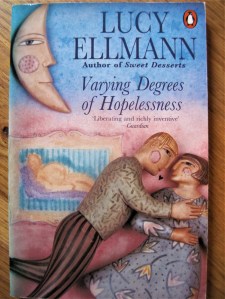 *However, I was delighted to find a copy of her 1991 novel, Varying Degrees of Hopelessness (just 182 pages, with short chapters often no longer than a paragraph and pithy sentences) in a 3-for-£1 sale at our local charity warehouse. Isabel, a 31-year-old virgin whose ideas of love come straight from the romance novels of ‘Babs Cartwheel’, hopes to find Mr. Right while studying art history at the Catafalque Institute in London (a thinly veiled Courtauld, where Ellmann studied). She’s immediately taken with one of her professors, Lionel Syms, whom she dubs “The Splendid Young Man.” Isabel’s desperately unsexy description of him had me snorting into my tea:
He had a masculinity.
His broad shoulders and narrow hips gave him a distinctive physique.
He held seminars and wore red socks.
To hold seminars seemed to indicate a wish to develop a rapport with his students.
The red socks seemed to indicate testosterone.
I swooned in admiration of him.
Unfortunately, the Splendid Young Man is more interested in Isabel’s portly flatmate, Pol. There’s a screwball charm to this campus novel full of love triangles and preposterous minor characters. I laughed at many of Ellmann’s deadpan lines, and would recommend this to fans of David Lodge’s academic comedies. But if you wish to, you could read this as a cautionary tale about the dangers of romantic fantasies. Ellmann even offers two alternate endings, one melodramatic and one more prosaic but believable. I’ll seek out the rest of her back catalogue – so thanks to the Booker for putting her on my radar. 
In the meantime, I did a bit better with the “Not the Booker Prize” (administered by the Guardian) shortlist, reading three out of their six:
Flames by Robbie Arnott
 This strange and somewhat entrancing debut novel is set in Arnott’s native Tasmania. The women of the McAllister family are known to return to life – even after a cremation, as happened briefly with Charlotte and Levi’s mother. Levi is determined to stop this from happening again, and decides to have a coffin built to ensure his 23-year-old sister can’t ever come back from the flames once she’s dead. The letters that pass between him and the ill-tempered woodworker he hires to do the job were my favorite part of the book. In other strands, we see Charlotte traveling down to work at a wombat farm in Melaleuca, a female investigator lighting out after her, and Karl forming a close relationship with a seal. This reminded me somewhat of The Bus on Thursday by Shirley Barrett and Orkney by Amy Sackville. At times I had trouble following the POV and setting shifts involved in this work of magic realism, though Arnott’s writing is certainly striking.
A favorite passage:
“The Midlands droned on, denuded hill after denuded hill, until I rolled into sprawling suburbs around noon. Here’s a list of the places I’d choose to visit before the capital: hell, anywhere tropical, the Mariana Trench, a deeper pit of hell, my mother’s house.”
My thanks to Atlantic Books for the free paperback copy for review.
See Susan’s review for a more enthusiastic response.
 The Unauthorised Biography of Ezra Maas by Daniel James: A twisty, clever meta novel about “Daniel James” trying to write a biography of Ezra Maas, an enigmatic artist who grew up a child prodigy in Oxford and attracted a cult following in 1960s New York City, where he was a friend of Warhol et al. (See my full review.)
Supper Club by Lara Williams: A great debut novel with strong themes of female friendship and food. The Supper Club Roberta and Stevie create is performance art, but it’s also about creating personal meaning when family and romance have failed you. (See my full review.)
The other three books on the shortlist are:
- Skin by Liam Brown: A dystopian novel in which people become allergic to human contact. I think I’ll pass on this one.
 Please Read This Leaflet Carefully by Karen Havelin: A debut novel by a Norwegian author that proceeds backwards to examine the life of a woman struggling with endometriosis and raising a young daughter. I’m very keen to read this one.
- Spring by Ali Smith: I’ve basically given up on Ali Smith – and certainly on the Seasons quartet, after DNFing Winter.
(The Not the Booker Prize will be announced on the Guardian website this Friday the 11th.)
Have you read something from the (Not the) Booker shortlist(s)? Any predictions for next week?
Recent and Upcoming Poetry Releases from Carcanet Press
Many thanks to the publisher for free print or e-copies of these three books for review.
In Nearby Bushes by Kei Miller
 “Are there stories you have heard about Jamaica? / Well here are the stories underneath.” The last two lines of “The Understory” reveal Miller’s purpose in this, his fifth collection of poetry. The title is taken from Jamaican crime reports, which often speak of a victim’s corpse being dumped in, or perpetrators escaping to, “nearby bushes.” It’s a strange euphemism that calls to mind a dispersed underworld where bodies are devalued. Miller persistently contrasts a more concrete sense of place with that iniquitous nowhere. Most of the poems in the first section open with the word “Here,” which is also often included in their titles and repeated frequently throughout Part I. Jamaica is described with shades of green: a fertile, feral place that’s full of surprises, like an escaped colony of reindeer.
As usual, Miller slips in and out of dialect as he reflects on the country’s colonial legacy and the precarious place of homosexuals (“A Psalm for Gay Boys” is a highlight). Although I enjoyed this less than the other books I’ve read by Miller, I highly recommend his work in general; the collection The Cartographer Tries to Map a Way to Zion is a great place to start.
Some favorite lines:
“Here that cradles the earthquakes; / they pass through the valleys // in waves, a thing like grief, / or groaning that can’t be uttered.” (from “Hush”)
“We are insufficiently imagined people from an insufficiently imagined place.” (from “Sometimes I Consider the Names of Places”)
“Cause woman is disposable as that, / and this thing that has happened is … common as stone and leaf and breadfruit tree. You should have known.” (from “In Nearby Bushes” XIII.III)
My rating:
In Nearby Bushes was published on 29th August.
So Many Rooms by Laura Scott
 Art, Greek mythology, the seaside, the work of Tolstoy, death, birds, fish, love and loss: there are lots of repeating themes and images in this debut collection. While there are a handful of end rhymes scattered through, what you mostly notice is alliteration and internal rhyming. The use of color is strong, and not just in the poems about paintings. A few of my favorites were “Mulberry Tree” (“My mother made pudding with its fruit, / white bread drinking / colour just as the sheets waited / for the birds to stain them purple.”), “Direction,” and “A Different Tune” (“oh my heavy heart how can I / make you light again so I don’t have to // lug you through the years and rooms?”). There weren’t loads of poems that stood out to me here, but I’ll still be sure to look out for more of Scott’s work.
My rating:
So Many Rooms was published on 29th August.
A Kingdom of Love by Rachel Mann
Rachel Mann, a transgender Anglican priest, was Poet-in-Residence at Manchester Cathedral from 2009 to 2017 and is now a Visiting Fellow in Creative Writing and English at Manchester Metropolitan University. Her poetry is full of snippets of scripture and liturgy (both English and Latin), and the cadence is often psalm-like. The final five poems are named after some of the daily offices, and “Christening” and “Extreme Unction” are two stand-outs that describe performing rituals for the beginning and end of life. The poet draws on Greek myth as well as on the language of Christian classics from St. Augustine to R.S. Thomas.
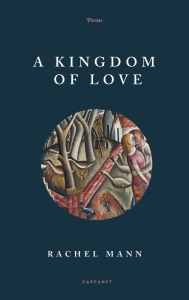 Human fragility is an almost comforting undercurrent (“Be dust with me”), with the body envisioned as the site of both sin and redemption. A focus on words leads to a preoccupation with mouths and the physical act of creating and voicing language. There is surprisingly anatomical vocabulary in places: the larynx, the palate. Mann also muses on Englishness, and revels in the contradictions of ancient and modern life: Chaucer versus a modern housing development, “Reading Ovid on the Underground.” She undertakes a lot of train rides and writes of passing through stations, evoking the feeling of being in transit(ion).
You wouldn’t know the poet had undergone a sex change unless you’d already read about it in the press materials or found other biographical information, but knowing the context one finds extra meaning in “Dress,” about an eight-year-old coveting a red dress (“To simply have known it was mine / in those days”) and “Give It a Name,” about the early moments of healing from surgery.
This is beautiful, incantatory free verse that sparkles with alliteration and allusions that those of a religious background will be sure to recognize. It’s sensual as well as headily intellectual. Doubt, prayer and love fuel many of my favorite lines:
“Love should taste of something, / The sea, I think, brined and unsteady, / Of scale and deep and all we crawled out from.” (from “Collect for Purity”)
“I don’t know what ‘believe in’ means / In the vast majority of cases, / Which is to say I think it enough // To acknowledge glamour of words – / Relic, body, bone – I think / Mystery is laid in syllables, syntax” (from “Fides Quarens”)
“Offer the fact of prayer – a formula, / And more: the compromise of centuries / Made valid.” (from “A Kingdom of Love (2)”)
Particularly recommended for readers of Malcolm Guite and Christian Wiman.
My rating:
Official release date: September 26th – but already available from the Carcanet website.
Any recent poetry reads you’d recommend?
Rebecca Stott, Duke Special & More at Greenbelt 2018
After five years away, we finally made it back to Greenbelt, a progressive Christian summer arts festival held on the grounds of Boughton House, on the Bank Holiday. The festival is a mixture of talks, music, performances and more, and given how much we’d paid and how far we’d traveled just for the one day, we tried to pack in as much as possible.

We started the day with “Beyond Forgiveness,” a presentation by Jo Berry and Pat Magee. Berry’s father, a Tory MP, was killed when the IRA bombed the Conservative Party conference in Brighton in 1984. Magee spent 14 years in prison for his role in the bombing. When he got out of jail, he met Berry at her request and they talked and listened to each other for several hours. For the first time, Magee said, he could see her father as a real person and realized that the IRA had been just as guilty of dehumanizing and misrepresenting people as the English were. Berry, too, felt that “I’d met my enemy and seen his humanity.” The two have now shared a stage more than 200 times, speaking about the value of empathy in healing broken relationships while also addressing imbalances of power that lead to violence.
To my surprise, cookery displays and musical comedy seemed to be the order of the day. A model kitchen is a new addition to the festival, giving celebrity chefs hour-long sessions to demonstrate a particular dish. Jack Monroe, promoting her new book Cooking on a Bootstrap, cooked a sausage lasagna. She made us all laugh with her idea of “the inverse sausage fallacy” – the cheaper a sausage is, the better it tastes because of all the salt, sugar and spices added to cheaper bits of meat. She started writing recipes when she was a single mother on the dole, and so she encouraged audience members to donate nice things you would like to eat, as well as everyday hygiene products, to food banks. For a “What Vegans Eat” session, Brett Cobley (aka EpiVegan) made a pea and asparagus risotto and answered questions about protein sources, egg replacements, plant milks and harder-to-find ingredients.
Uproarious musical comedy came in the form of Harry & Chris, who made up impromptu raps about New Year’s Day, the Teletubbies and phobias, and Flo & Joan, who sang about divorce statistics, unnecessary inventions for women, and sex robots (the show was fairly crude and came with an 18+ warning). The overall musical highlight of the day was Duke Special, a Greenbelt favorite we’ve seen play quite a number of times now. His pop combines his smooth Belfast tenor with music hall and Big Band stylings, and his songs are often drawn from poetry and 1920s–40s songbooks. His latest project, Hallow, is a beautiful set of Michael Longley poems set to music. He played “Another Wren” and “Emily Dickinson” from that album, various covers (including two bizarre ditties by Ivor Cutler), and crowd favorites “Last Night I Nearly Died,” “Freewheel” and “Our Love Goes Deeper than This.” We also sampled performances by Martyn Joseph, Wallis Bird and CC Smugglers.
Duke Special was a good bridge between music and literature. From the literature program I also saw Rabbi Jonathan Wittenberg speak on “Things My Dog Has Taught Me about Being a Better Human,” the title of his recent book. (His dog Mitzpah had a special dispensation to join him on stage; no animals are allowed on site otherwise!) The rabbi spoke about lessons in listening, attention, trust and seizing the moment. Mitzi and his previous dog Safi have also given him a connection with the rest of creation. Although he lives in the London suburbs and has an inner-city synagogue, they have accompanied him on long walks in Scotland and Germany. Wittenberg was a warm and witty speaker and I very much liked the sound of his book. It could make a good follow-up to The Power of Dog.
My other festival highlight was Rebecca Stott, in conversation with Radio 4 presenter Malcolm Doney. I read her Costa Prize-winning memoir In the Days of Rain: A daughter. A father. A cult in April and it’s been one of my stand-out reads of the year so far. The book conveys a huge amount of information about the Exclusive Brethren and Stott’s family history but never loses sight of what is most important: what it was like to be in a cult and have your life defined by its rules and its paranoia about the outside world. Stott remembers 6 a.m. Sunday communion services and her constant terror of being left behind in the Rapture.
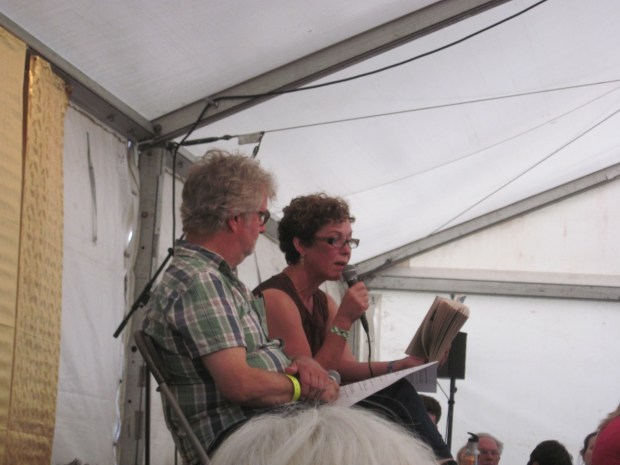
Rebecca Stott reading from In the Days of Rain.
Unfortunately, the talk didn’t add much to my experience of reading her book. The interviewer, catering to those who haven’t read the book yet, led her through her whole story bit by bit, and because I’d read it fairly recently it was all familiar. However, Stott spoke wonderfully and was full of wry compassion for her younger self. I was most interested to hear about the book’s aftermath: she’s received 300 letters from ex-Brethren that her daughter is transcribing to send to a Brethren Church archive in Manchester. When asked during a Q&A where she sees cult tendencies today, she mentioned Trump supporters!


Whereas I read In the Days of Rain from the library, I happen to own two Stott books I haven’t read yet, so I cheekily brought along my paperback of Ghostwalk for signing. She was intrigued to see the older cover design and told me she thinks the prose style in her debut novel is much richer than in Rain, and she hopes I’ll like it. I thanked her for the talk, told her how much I’d enjoyed her memoir, and recommended her two books vaguely about cults: Educated by Tara Westover, which she already knew well, having done some events with Westover, and The Incendiaries by R.O. Kwon, which was new to her (my blog tour review is coming up on Monday). I caught myself using the word “brilliant” three times in speaking about Stott’s work and these other books – nuance and vocabulary alike clearly go out the window when nervously speaking to admired authors!
Some readers of this blog would have been delighted by the event I rushed to straight after Stott’s talk: Jon McGregor giving readings from Reservoir 13, with Sigur Rós-esque backing and interlude music from Haiku Salut. I heard about the police reconstruction with actors from Manchester, and collecting bilberries on the heath in August. Unfortunately, I found it just as dull read aloud as I did when I tried the book last year, and I left early.
During bits of down time I pulled out a Katherine Mansfield story collection I found in a charity shop last week and read “Bank Holiday” and “The Garden Party.” The former is a very short piece whose carnival atmosphere rises to a note of indeterminate striving:
“And up, up the hill come the people, with ticklers and golliwogs, and roses and feathers. Up, up they thrust into the light and heat, shouting, laughing, squealing, as though they were being pushed by something, far below, and by the sun, far ahead of them – drawn up into the full, bright, dazzling radiance to…what?”
 It was my first time reading the famous “The Garden Party,” which likewise moves from a blithe holiday mood into something weightier. The Sheridans are making preparations for a lavish garden party dripping with flowers and food. Daughter Laura is dismayed when news comes that a man from the cottages has been thrown from his horse and killed, and thinks they should cancel the event. Everyone tells her not to be silly; of course it will go on as planned. The story ends when, after visiting his widow to hand over leftover party food, she unwittingly sees the man’s body and experiences an epiphany about the simultaneous beauty and terror of life. “Don’t cry,” her brother says. “Was it awful?” “No,” she replies. “It was simply marvellous.” Mansfield is especially good at first and last paragraphs. I’ll read more by her someday.
How did you all spend your Bank Holiday? / How do you plan to spend Labor Day?
Did any reading get done?
Reviews Roundup, September–October
One of my goals with this blog is to have one convenient place where I can gather together all my writing that has appeared in disparate online locations. To that end, once a month I’ll provide links to all the book reviews I’ve published elsewhere, with a rating (below each description) and a short taster so you can decide whether to click to read more. A couple of exceptions: I won’t point out my Kirkus Indie, BlueInk or Publishers Weekly reviews since I don’t get a byline.
The Bookbag
Rising Strong by Brené Brown: Brown, a qualitative researcher in the field of social work, encourages readers to embrace vulnerability and transform failure and shame through a simple process of re-evaluating the stories we tell ourselves. The gimmicky terminology and frequent self-referencing grated on me a bit, but I appreciated how the book made me reconsider events from my own life. It’s the ideas that carry Rising Strong, so as long as you come to it expecting a useful tool rather than a literary experience you shouldn’t be disappointed. Genuinely helpful self-help.

 Life After You by Lucie Brownlee: With honesty and humor, Brownlee reconstructs the two years following her husband’s sudden death. My sister is still a new widow, so I read this expecting it to resonate with her situation, and it certainly does. I had an issue with the title and marketing, though. When originally published last year, the book had the title Me After You. That’s been changed to sound a little less like a Jojo Moyes novel, but the cover is more chick lit than ever, which doesn’t really match the contents of the book.
The Glass Girl by Sandy Hogarth (& interview): Moving between Australia and England and spanning several decades of Ruth Bishop’s life, this debut novel explores the psychological effects of sexual trauma and betrayal. The middle of the book feels a little meandering, and the chronology is sometimes over-complicated. However, Ruth’s is a warm first-person voice, and the ending hints at welcome resolution to unanswered questions. My favorite aspect of the novel, though, is the frequent observations of the natural world.

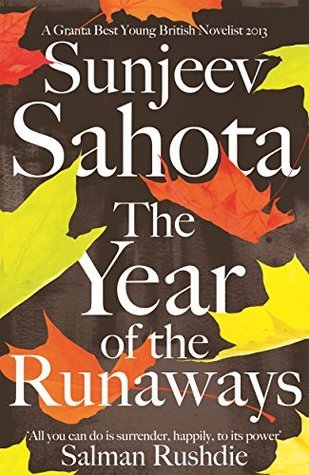 The Year of the Runaways by Sunjeev Sahota: With multilingual slang and several Sikh characters, Sahota’s second novel illuminates aspects of the South Asian experience that might be unfamiliar. Daily life is a struggle for Tochi, Randeep and Avtar: they work multiple jobs to make ends meet, serving at Crunchy Fried Chicken, cleaning sewers, or building a luxury hotel in Leeds. The fourth protagonist is Randeep’s visa-wife, Narinder. Through flashbacks we discover each one’s past. It’s a harrowing read, but you can’t help but sympathize with the four runaways as they make and dissolve connections over the year.
The Gap of Time by Jeanette Winterson: This contemporary ‘cover version’ of The Winter’s Tale links a London financier, a Parisian singer, and a blended family in New Orleans. Winterson creates clear counterparts for each Shakespeare characters, often tweaking names so they are recognizable but more modern. Inventive and true to the themes and imagery (time, adoption; angels, bears, statues) of the original, but ultimately adds little to one’s experience of Shakespeare. I’ll hope for better things from the rest of the Hogarth Shakespeare series. (Still to come: Margaret Atwood on The Tempest, Howard Jacobson on The Merchant of Venice and Anne Tyler on The Taming of the Shrew, among others.)
BookBrowse
 After the Parade by Lori Ostlund [subscription service, but the full text of my review will be available for free during the week of October 20th as part of Editor’s Choice]: Ostlund’s debut novel explores trauma and loneliness through the past and present of the protagonist, an ESL teacher who has just left his long-term partner, as well as the stories of those he meets. Although set over a six-month period, the novel is so full of flashbacks that it feels dense with the weight of the past. At times this can seem more like a set of short stories, only loosely connected through Aaron. Still, the overarching theme is strong and resonant: “after the parade,” after everything has changed irrevocably, you must keep going, pushing past the sadness to build a new life.
BookTrib
 The Best Small Fictions 2015, ed. by Tara L. Masih and Robert Olen Butler: In this very strong anthology of flash fiction, stories range from Tweet length to a few pages, but are always under 1,000 words. Titles and first lines carry a lot of weight. One of the best openers is “I didn’t recognize her without her head” (“Before She Was a Memory,” Emma Bolden). In genre the stories run the gamut from historical fiction to whimsical fantasy. You’ll be introduced to a wealth of fresh and existing talent. There are literally dozens of stand-outs here, but if I had to choose a top 3, they’d be “A Notice from the Office of Reclamation” by J. Duncan Wiley, “The Lunar Deep” by David Mellerick Lynch, and (overall favorite) “Something Overheard” by Yennie Cheung.
For Books’ Sake
 Fates and Furies by Lauren Groff: An incisive study of a marriage, beautifully written and rich with allusions to Shakespeare and Greek mythology. Short, verbless sentences pile up to create exquisite descriptions, as in “Sunset. House on the dunes like a sun-tossed conch. Pelicans thumb-tacked in the wind.” However, I was less sure about the necessity of the bracketed phrases, which seem to represent a Greek chorus giving omniscient commentary, and the use of slang and nicknames can grate. Groff makes it onto a short list of women I expect to produce the Great American Novel.
Foreword Reviews
 When All Goes Quiet by Augustinus F. Lodewyks: This religious memoir should interest those who are curious about how spiritual experience can infiltrate everyday life. “When all goes quiet, I know that Heaven is trying to show me its glory,” Lodewyks writes. In autobiographical vignettes, he vividly expresses his mystical visions, particularly those featuring Jesus, the Virgin Mary and angels, who tend to appear in times of crisis and during events of ritual significance like weddings, funerals and religious pilgrimages. Some will still object to the overt proselytizing, especially in the book’s last quarter.

The Blessing of Movement by Deborah Konrad: Konrad’s story is an inspirational memoir about life with disability and caring for dying relatives. Her sister Sandra became a quadriplegic in her twenties. Throughout the book, Konrad investigates the secret strength that underlay “the sunny disposition of the pretty paralyzed woman.” She concludes that it was all about thankfulness, as proven by Sandra’s gratitude journal. Konrad’s own life undeniably gets sidelined, though; more self-reflection would provide a good match for her insights into her sister’s character.
 DNA of Mathematics by Mehran Basti: Drawing on his academic specialty in mathematics, Basti explores how scientific theories have been used and misused through history. The book lacks focus due to frequent unrelated asides. It may be difficult to grant credibility to a scientist who dismisses the big bang because it was theorized through “semi-broken scientific methods” and seems to have a personal vendetta against Stephen Hawking. Most importantly, the mathematics that forms the book’s basis is never fully explained.

From Hell to Heaven, One Man’s Journey by Gustav Daffy: This book was inspired by an acrimonious divorce and other family troubles; although Christian faith helped Gustav adjust his thinking, many of the poems still feel like the angry outpourings of a man with an ax to grind. Moreover, formulaic rhyming and poor spelling and grammar mar this overlong collection. It would take a professional copyeditor to hone this into a concise set of linguistically and stylistically acute poems. However, the author’s in-the-moment reactions are easy to relate to.
Shiny New Books
 Grief Is the Thing with Feathers by Max Porter: It may seem perverse to twist Emily Dickinson’s words about hope into a reflection on bereavement, but Porter’s exceptional debut does just that: tweak poetic forebears – chiefly Poe’s “The Raven” and Ted Hughes’s Crow – to create a hybrid response to loss. The novella is composed of three first-person voices: Dad, Boys and Crow (the soul of the book: witty, onomatopoeic, often macabre). Dad and his two young sons are adrift in mourning; the boys’ mum died after an unspecified accident in their London flat. The three narratives resemble monologues in a play, with short lines laid out on the page more like stanzas of a poem.
We Love This Book
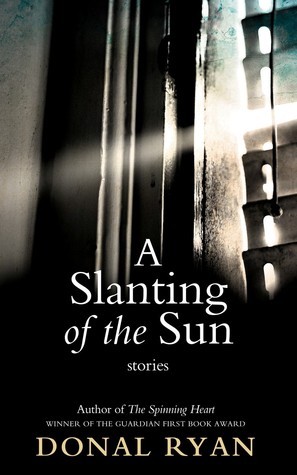 A Slanting of the Sun by Donal Ryan: The Irish author of the novels The Spinning Heart (winner of the Guardian First Book Award in 2013) and The Thing About December, returns with 20 jolting, voice-driven short stories suffused with loneliness and anger. Nineteen of the 20 are in the first person, echoing the chorus of voices that made The Spinning Heart so effective. Many of the narrators speak in thick dialect and run-on sentences, which helps to immerse you in the rhythms of Irish speech. In a book full of lonely people, it is the moments of connection – however fleeting – that matter. For example, in “Long Puck,” one of the best stories, a Catholic priest posted to Syria initiates interfaith hurling matches that temporarily lift everyone’s spirits.
I also post reviews of most of my casual reading and skimming on Goodreads.
 The River by Helen Humphreys: Humphreys has lived along Ontario’s Napanee River for over a decade. I was expecting a blend of personal reflection and natural observations, but instead the book is mostly composed of brief fictional passages illuminating a handful of species. I liked the passages about the heron best – Humphreys successfully imagines the life of a plume hunter and contrasts it with the excitement of two women involved in the foundation of a bird conservation charity. However, much of the book felt like unconnected vignettes, not building to any kind of grander picture of a location.

The Mountain Can Wait by Sarah Leipciger: The novel opens and closes with a hit-and-run, but in between those momentous peaks it’s a quieter tale of a single father trying to guide his son and daughter into young adulthood in the wilds of Canada’s west and islands. Tom Berry’s work is not cutting trees down but planting them – an interesting adaptation of a traditional woodsman’s activity to a new eco age. I found the story a little sleepy but loved Leipciger’s writing, especially her account of the daily drudgery of manual labor and her descriptions of wilderness scenery.
 Decline of the Animal Kingdom by Laura Clarke: Bizarre, in-your-face poetry from a 30-year-old Canadian: business jargon, YouTube videos, fast food…and, yes, animals. Many of the poems feature mules and lions, including weird dialogues between a mule and its supervisor / domestic partner / psychiatrist. With plays on words and sexualized vocabulary, Clarke considers inter-species altruism and the inevitable slide towards extinction. Two favorite lines: “You forget you live parallel to violence” (from “Carnivora”); “The Tasmanian tiger live-tweets its extinction from the Hobart zoo in 1933” (from “Extirpation”).
Do No Harm: Stories of Life, Death and Brain Surgery by Henry Marsh: “Terrible job, neurosurgery. Don’t do it.” Lucky for us, Henry Marsh reports back from the frontlines of brain surgery so we don’t have to. He’s nearing retirement age after a career divided between a London hospital and medical missions to Ukraine. The punchy chapters are named after conditions he has treated or observed. Marsh comes across as having a hot temper, exhibiting extreme frustration with NHS bureaucracy. At the same time, he gets very emotional over his patients declining and dying, and experiences profound guilt over operations that go wrong or were ultimately unnecessary.

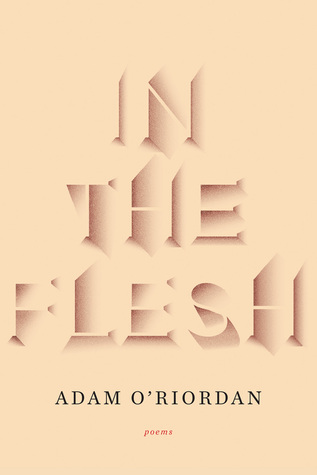 In the Flesh by Adam O’Riordan: My favorite poems in O’Riordan’s debut collection were about Victorian Manchester, 1910s suffragettes and the Wordsworths, this last based on the author’s year in residence at their Lake District cottage. I also liked “The Corpse Garden” – about the outdoor forensic lab in Knoxville, Tennessee – and a couple of multi-part poems that seem to enliven family history. It’s the vocabulary and alliteration that make these poems; there are only a handful of rhyming couplets.
A Circle of Quiet by Madeleine L’Engle: If, like me, you only knew L’Engle through her Wrinkle in Time children’s series, this journal should come as a revelation. I didn’t know she wrote any nonfiction for adults. The Crosswicks books cannot be called simple memoirs, however; there’s so much more going on. In this journal (published 1972) of a summer spent at their Connecticut farmhouse, L’Engle muses on theology, purpose, children’s education, the writing life, the difference between creating stories for children and adults, neighbors and fitting into a community, and much besides.
 A View of the Harbour by Elizabeth Taylor: My third Taylor – not as good as Mrs. Palfrey, but better than Angel. It’s about the everyday family and romantic entanglements of a small English harbor village in the 1940s. Beth is a preoccupied writer who doesn’t notice that her husband, the local doctor, is carrying on an affair with her best friend, the divorcée Tory, who is also their next-door neighbor. As always, Taylor has great insight into the human psyche and unlikely relationships. The plot is low on thrills for sure, but it’s pleasant reading, especially if you’re on holiday at the seaside (I started reading it on the coast near Dublin).
Amazing Grace: A Vocabulary of Faith by Kathleen Norris: This makes the shortlist of books I would hand to skeptics to show them there might be something to this Christianity nonsense after all. Norris spent 20 years away from the faith but gradually made her way back, via the simple Presbyterianism of her Dakota relatives but also through becoming an oblate at a Benedictine monastery – two completely different expressions of the same faith. In few-page essays, she gives each word or phrase a rich backstory through anecdote, scripture and lived philosophy, ensuring that it’s not just religious jargon anymore.
 Undermajordomo Minor by Patrick deWitt: What The Sisters Brothers did for the Western, this does for the Gothic fairytale. It’s not quite as fun or successful as the previous book, but has a nicely campy Dracula or Jane Eyre feel. Lucien “Lucy” Minor, a compulsive liar, sets out to find adventure and romance as undermajordomo of a castle in the quaint German countryside. Here he meets pickpockets, a periodically insane baron, a randy maiden, and a strapping rival who’s a soldier in the absurdist local conflict. DeWitt’s understated humor is not as clearly on display here; there’s also, strangely, quite a bit of sex.
Sentenced to Life by Clive James: James, an Australian critic and all-round man of letters, was first diagnosed with leukemia in 2010. After a setback in 2013, he’s rallied, but these poems are certainly infused with a sense of imminent mortality. The incessant ABAB rhyming in the early poems set up a jaunty rhythm I didn’t find appropriate to the subject matter; I much prefer the later unrhymed poems. “Plot Points” is my favorite, artfully linking disparate historical moments.
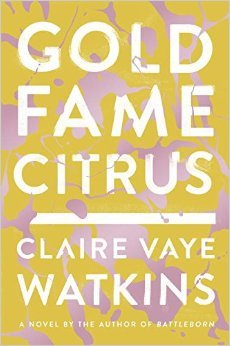 Gold Fame Citrus by Claire Vaye Watkins: Gold, fame, citrus: reasons people once came to California. Now, only a desperate remnant remains in this waterless wasteland. Luz and Ray squat in a starlet’s abandoned mansion and live off of Luz’s modeling money – she was once the environmental movement’s poster child, “Baby Dunn.” When they take charge of a baby called Ig, however, their priorities change. They set off for the strangely beautiful sea of dunes, the Amargosa, leaving behind the ‘frying pan’ of exposure to the elements for the ‘fire’ of a desert cult. There is some absolutely beautiful prose. This is the book that California (Edan Lepucki) wanted to be.
Satin Island by Tom McCarthy: U. is a corporate anthropologist in London, coming off the success of the Koob–Sassen contract and facing the blank page of the Great Report he’s tasked with writing. Not much happens here; the book is more about his anthropological observations and the things he fixates on, like oil spills, a sabotaged parachutist, and Satin Island – a place he encounters in a dream and then, by word association, likens to Staten Island, a destination he doesn’t quite make it to. For me the most interesting parts were about narrative. I found this too clever for its own good; not Booker Prize material.
Literary Tourism in Manchester
Over the August bank holiday weekend, my husband and I went to Manchester for the first time. Big cities aren’t our usual vacation destinations of choice, but we were going for the Sufjan Stevens gig at the O2 Apollo on the 31st and wanted to do the city justice while we were there, so stayed two nights at a chain hotel and worked out everything we wanted to see and do there, including two literary pilgrimages for me: Elizabeth Gaskell’s House and Chetham’s Library, where Karl Marx and Friedrich Engels met and discussed ideas in the summer of 1845. Armed only with a two-page map sliced out of an eleven-year-old Rough Guide, we felt perhaps a little ill-equipped, but managed to have a nice time nonetheless.
In preparation, I read The Communist Manifesto on the train ride north. It’s only 50 pages, and even with an introduction and multiple prefaces my Vintage Classics copy only comes to 70-some pages. That’s not to say it’s an easy read. I’ve never been politically or economically minded, so I struggled to follow the thread of the argument at times. Mostly what I appreciated was the language. In fact, it had never occurred to me that this was first issued in Marx’s native German; like Darwin’s Origin of Species, another seminal Victorian text, it has so many familiar lines and wonderful metaphors that have entered into common discourse that I simply assumed it was composed in English.

After leaving our bags at the hotel on Sunday afternoon, we wandered over to the Gaskell House. It’s only open a few days a week, so we were lucky to be around during its opening hours. All of the house’s contents were sold at auction early in the twentieth century, so none of the furnishings are original, but the current contents have been painstakingly chosen to suggest what the house would have looked like at the time Gaskell and her family – a Unitarian minister husband and their four daughters – lived there. I especially enjoyed seeing William’s study and hearing how Charlotte Brontë hid behind the curtains in the drawing room so she wouldn’t have to socialize with the Gaskells’ visitors. The staff are knowledgeable and unfussy; unlike in your average National Trust house, they let you sit on the furniture and touch the objects. The gardens are also beautifully landscaped.


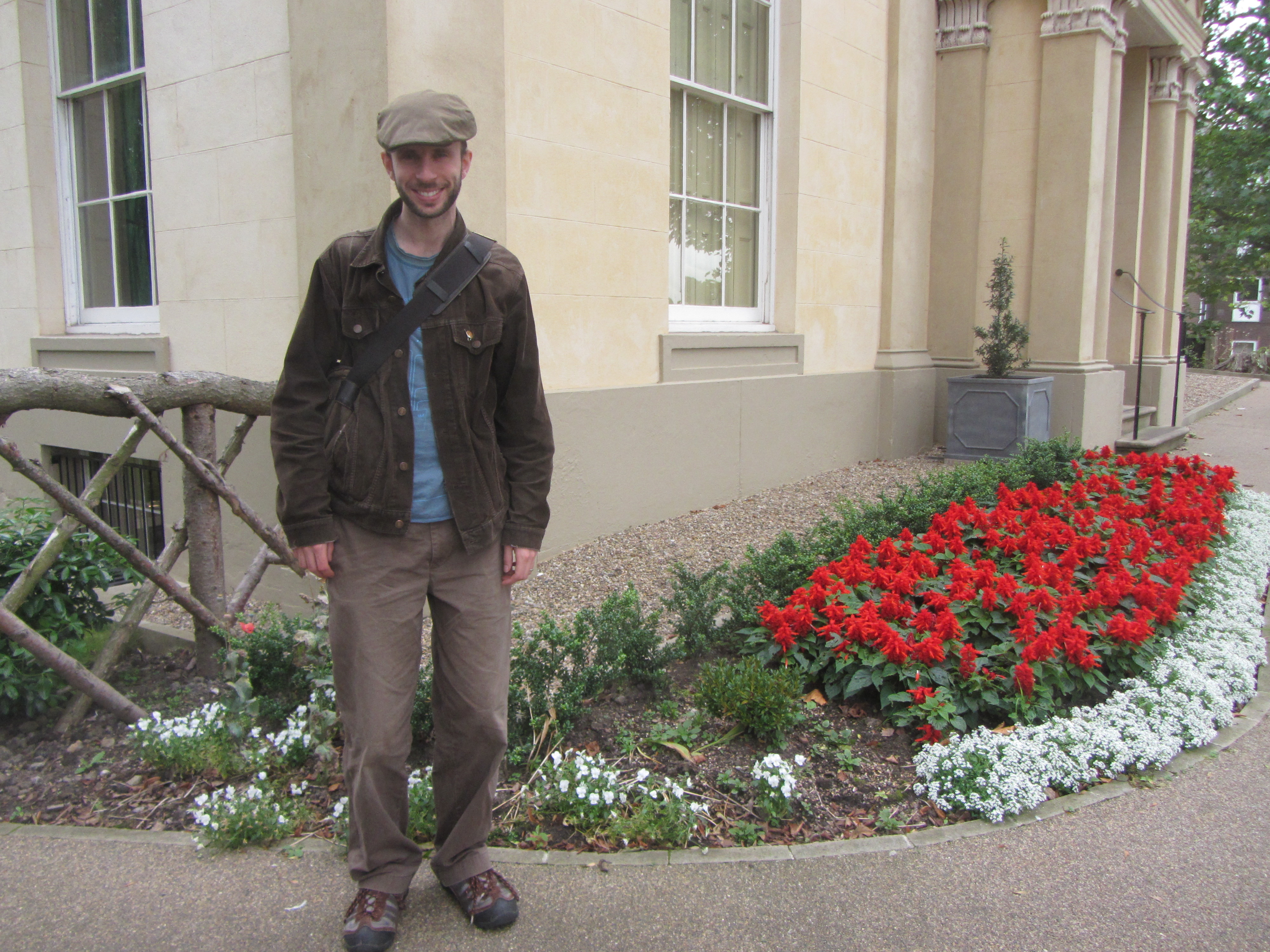
Talk about a contrast, though: look across the street and you see council housing and rubbish piled up on the pavement. In Gaskell’s time this was probably a genteel suburb, but now it’s an easy walk from the city center and in a considerably down-at-heel area. Indeed, we were taken aback by how grimy parts of Manchester were, and by how many homeless we encountered.

I’ve read four of Gaskell’s books: Mary Barton, North and South, Cranford and The Life of Charlotte Brontë. She’s not one of my favorite Victorian novelists, but I enjoyed each of those and intend to – someday – read Sylvia’s Lovers and Wives and Daughters, which was a few pages from completion when Gaskell died of a sudden heart attack in their second home in Hampshire, aged 55, in 1865.
Afterwards we stopped into the city’s Art Gallery and then headed to Mr Thomas’s Chop House for roast lamb and corned beef hash, then on to Sugar Junction to meet a blogger friend, the fabulous Lucy (aka Literary Relish), who I’d been corresponding with online for about two years but never met in real life. She graciously treated us to drinks and dessert at this cute café (one of the city’s many hip eateries) where she often hosts the Manchester Book Club, and we chatted about books and travel spots for a pleasant hour and a half.
On Monday we explored the Castlefield area with its canals and Roman ruins and went round both the Museum of Science and Industry and the People’s Museum, which together give a powerful sense of the city’s industrial and revolutionary past. We also toured the cathedral, took a peek at a Special Collections exhibit on the Gothic plus the main reading room at John Rylands Library, and browsed the huge selection at the main Waterstones branch. (On a future visit we are reliably informed that we must go find Sharston Books, a warehouse-scale secondhand shop out of town.) After a necessary pit stop for caffeine at The Foundation Coffee House and the best pizza we’ve ever had in the UK at Slice (including a Nutella and banana calzone for pudding), we headed over to the gig, which was terrific but not the purpose of this blog post.
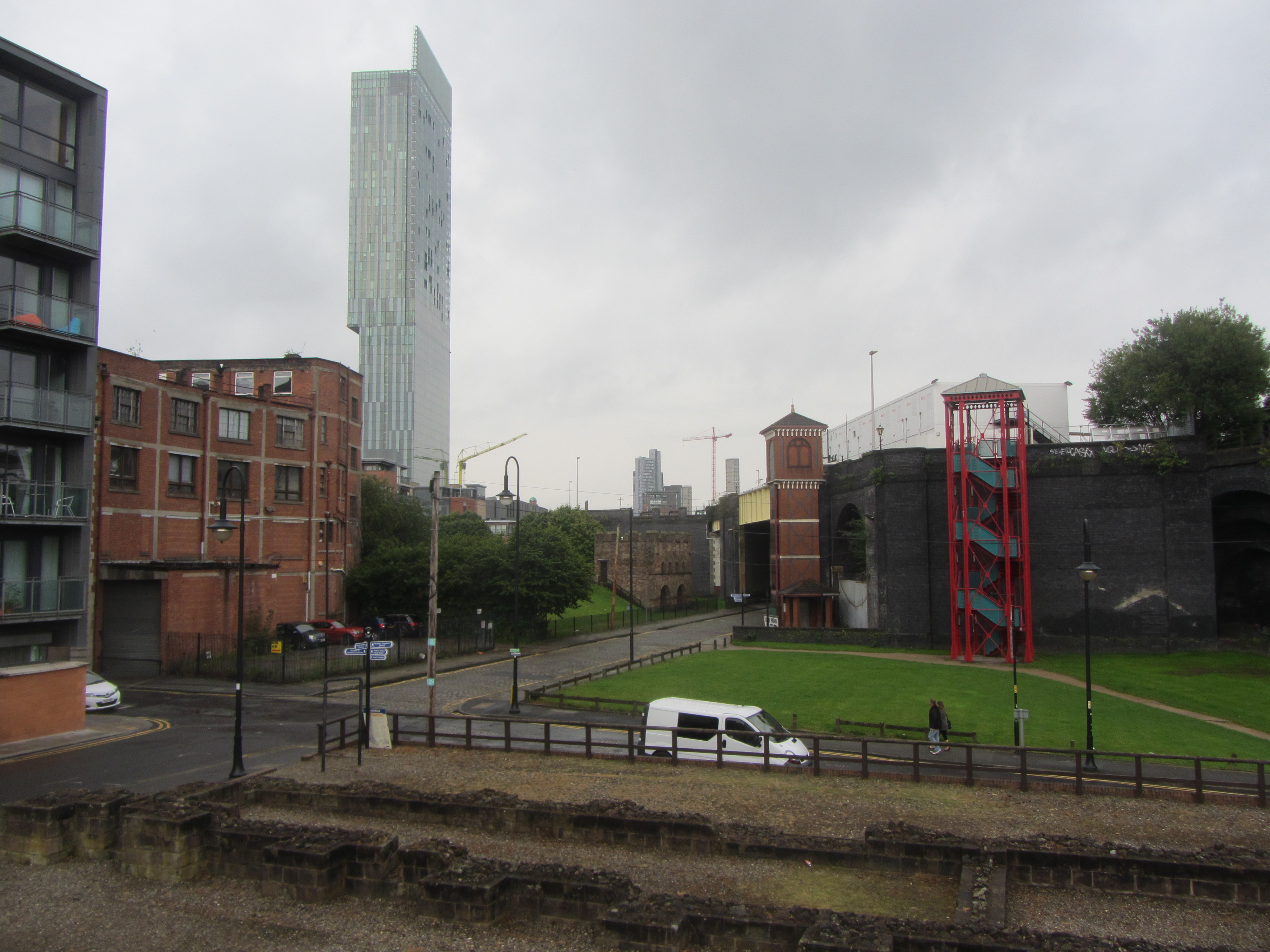
Contrast between old and new Manchester: the hideous Beetham Tower on the left and Roman ruins in the foreground.
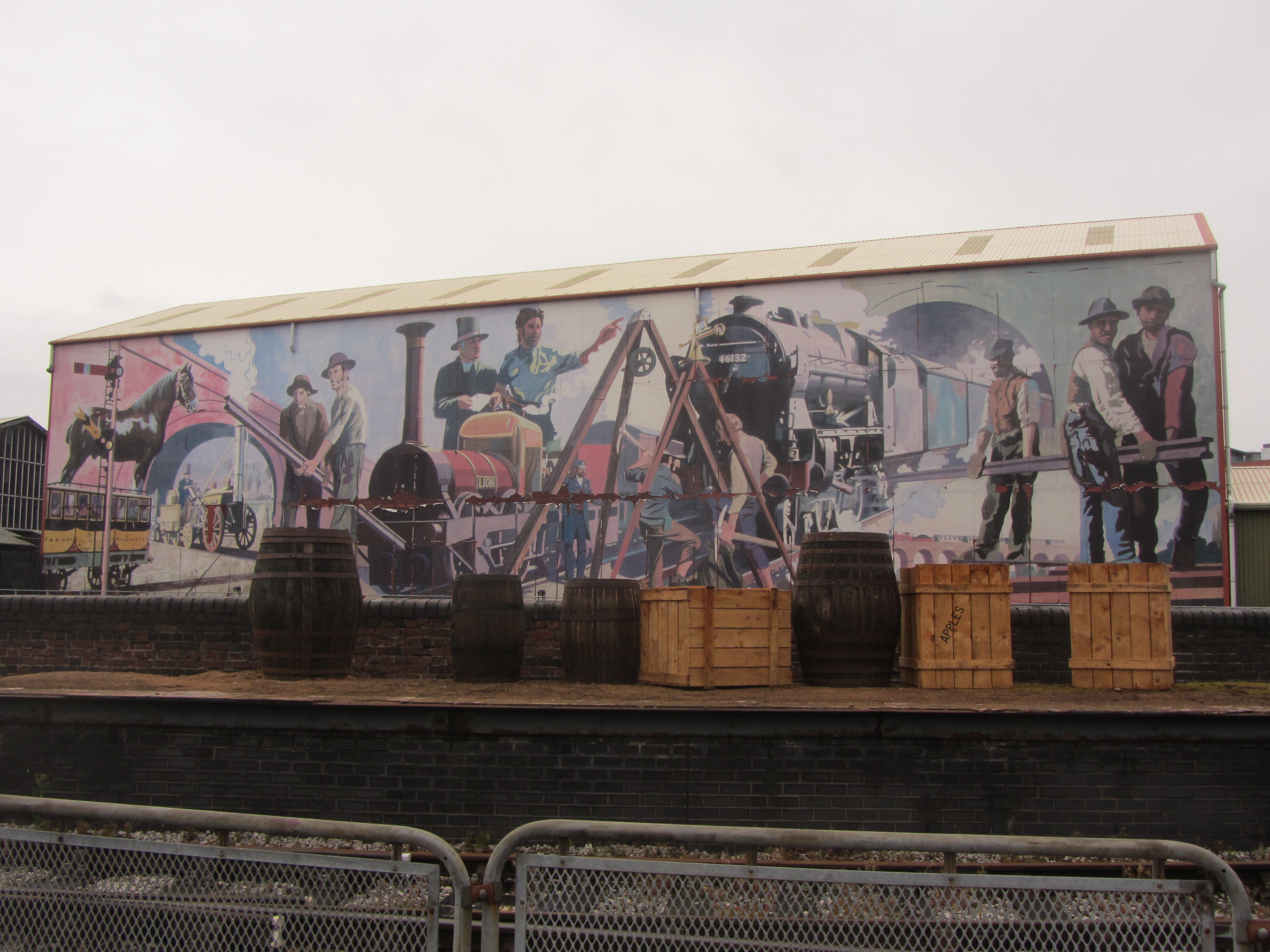
A mural at the Museum of Science and Industry.

Our trip only spanned a Sunday and a bank holiday, so we missed seeing the inside of the hugely impressive Central Library and the 19th-century Portico Library. On Tuesday morning, though, we had just enough time before our train back to stop into Chetham’s Library. It’s a beautiful old library with rank after rank of leather-bound books sheltering amidst dark wood and mullioned windows. I love being in these kinds of places. They smell divine, and you can imagine holing up in a corner and reading all day, with the atmosphere beaming all kinds of lofty thoughts into your brain. We had the place to ourselves on this sunny morning and sat for a while in the bright alcove where Marx and Engels studied.

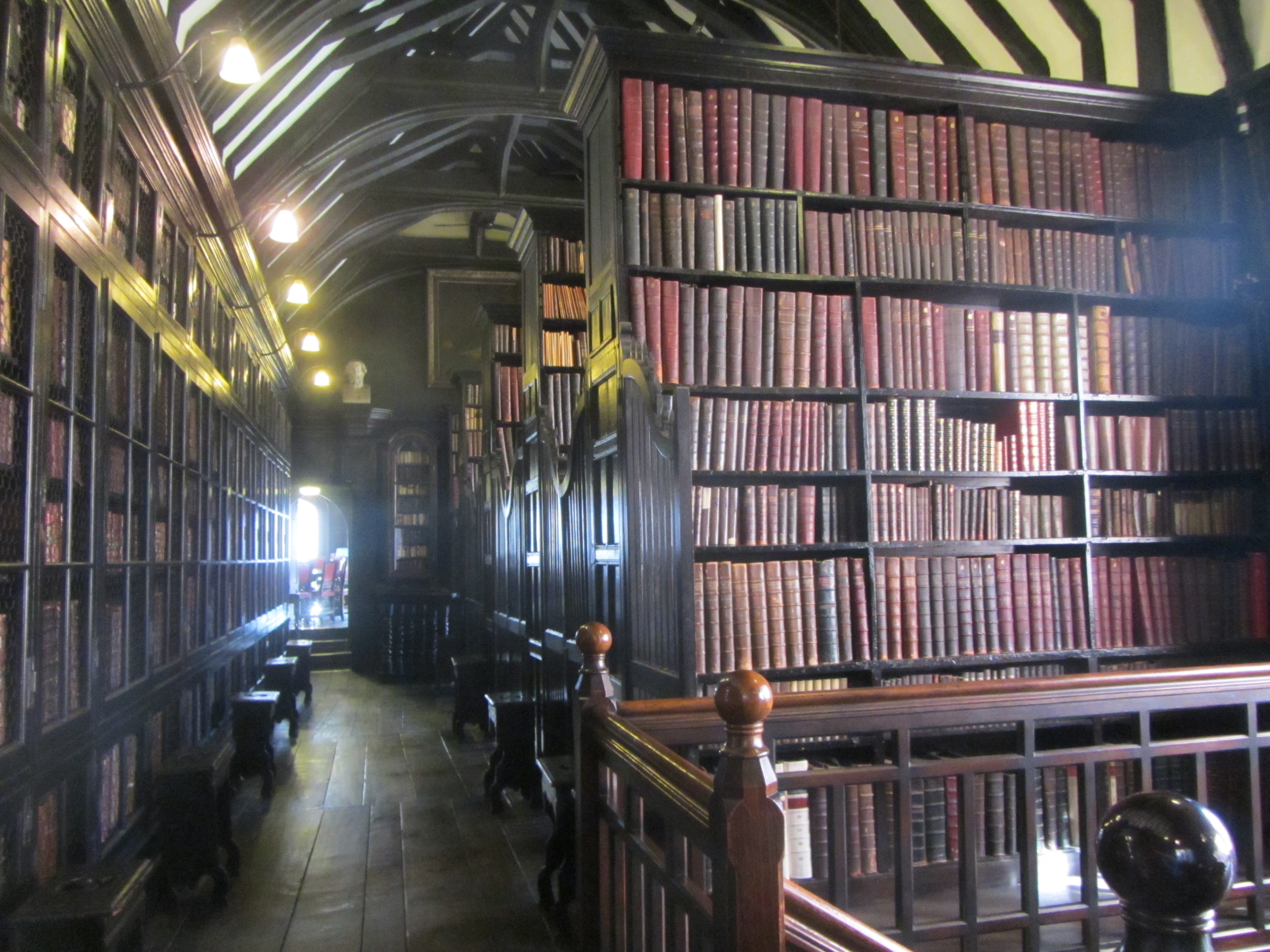

The Marx/Engels alcove
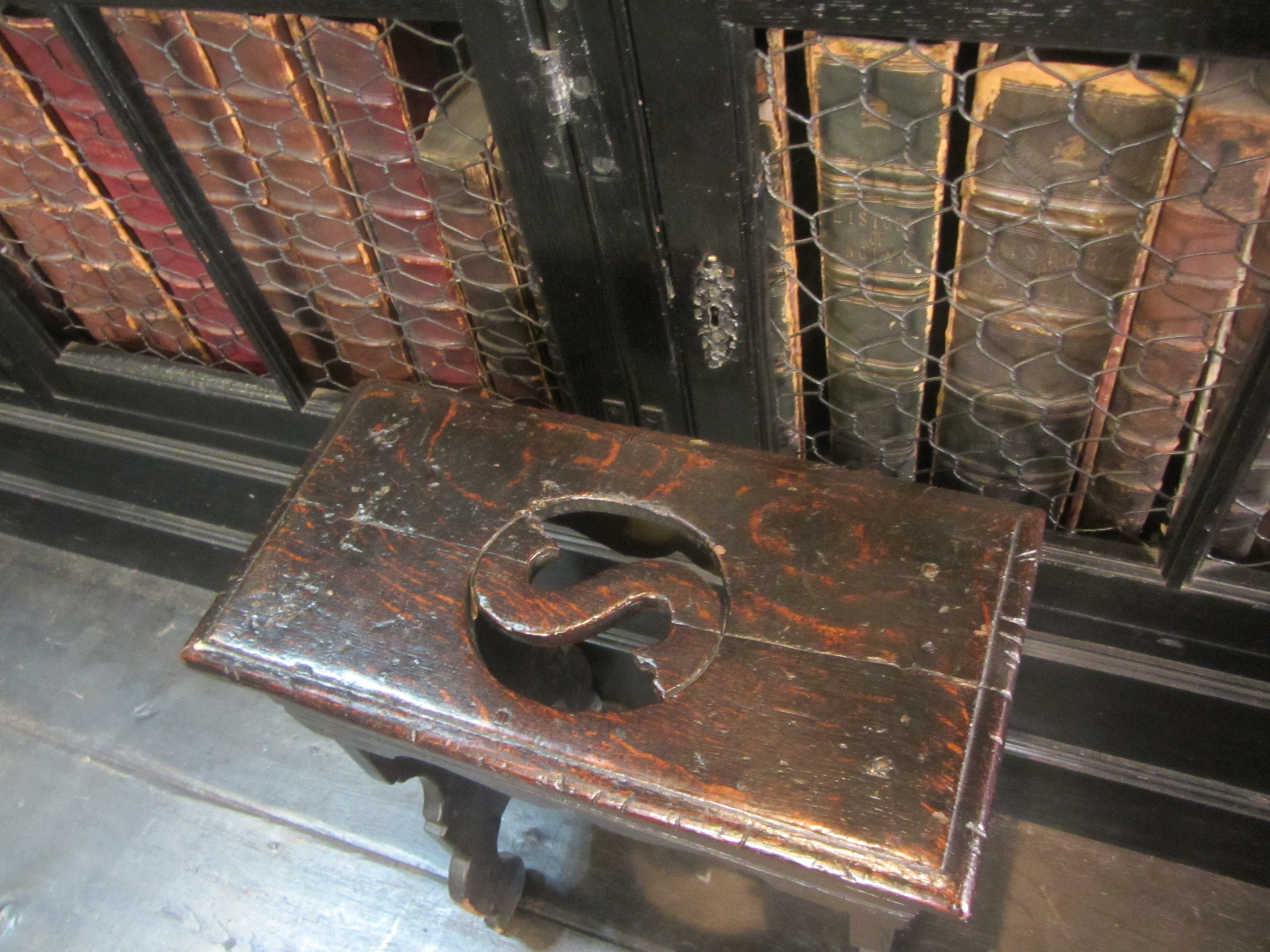
Apart from The Communist Manifesto, my reading on this trip was largely unrelated: My Salinger Year by Joanna Rakoff, a delightful literary memoir (review coming later this month); Number 11 by Jonathan Coe, a funny and mildly disturbing state-of-England and coming-of-age novel (releases November 11th); and The Mountain Can Wait by Sarah Leipciger, an atmospheric family novel set in the forests of Canada.
What have been some of your recent literary destinations? Do you like to read books related to the place you’re going, or do you choose your holiday reading at random?
 Bookish Beck = Rebecca Foster. American transplant to England. Freelance proofreader and book reviewer.
 Bookish Beck