2025 Releases Read So Far, Including a Review of Aerth by Deborah Tomkins
I’ve gotten to 22 books with a 2025 publication date so far, most of them for paid reviews for Foreword Reviews or Shelf Awareness. I give review excerpts, links where available, and ratings below to pique your interest. (I’ll follow up on Friday with a list of my 25 Most Anticipated titles for the first half of the year!) First, though, it’s time to introduce you to the joint winner of the inaugural Weatherglass Novella Prize, as chosen by Ali Smith – I reviewed the other winner, Astraea by Kate Kruimink, as part of Novellas in November.
Aerth by Deborah Tomkins
At Weatherglass Books’ “The Future of the Novella” event in September (my write-up is here), I was intrigued to learn about this sci-fi novella in flash set on alternative Earths. The draft title was “First, Do No Harm,” referring to one of the five mantras for life on Aerth, a peaceful matriarchal planet that has been devastated by a pandemic. Magnus, the Everyman protagonist, is his parents’ only surviving offspring after their first nine children died of the virus. We meet Magnus in what seems an idyllic childhood of seasonal celebrations and his mother’s homemade cakes. But the weight of his parents’ expectations is too much, and after his relationship with Tilly disintegrates, he decides to fulfil a long-held ambition of becoming an astronaut and travelling to Urth. Here he starts off famous – a sought-after talking head in the media with the ear of the prime minister – but public opinion eventually turns against him.

Urth could be modelled on contemporary London: polluted, capitalist and celebrity-obsessed. But it would be oversimplifying to call Aerth a pre-industrial foil; although at first its lifestyle seems more wholesome, later revelations force us to question why it developed in this way. The planets are twins with potentially parallel environmental and societal trajectories and some exact counterparts; the hints about this “mirrorverse” are eerie. It all could have added up to an unsubtle allegory in which Aerth represents what we should aspire to and Urth symbolizes what we must resist, but Tomkins makes it more nuanced than that. Magnus’s homesickness when he fears he’s trapped on Urth is a heart-rending element, and the diverse styles and formats (such as lists, documents, and second-person sections) keep things interesting. The themes of parenting and loneliness are particularly potent.
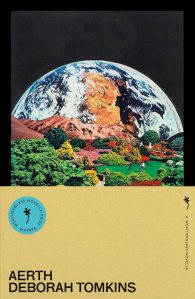 Tomkins first wrote this for the Bath Prize in 2018 and was longlisted. She initially sent the book out to science fiction publishers but was told that it wasn’t ‘sci-fi enough’. I can see how it could fall into the gap between literary fiction and genre fiction: though it’s set on other planets and involves space travel, its speculative nature is understated; it feels more realist. A memorable interrogation of longing and belonging, this novella ponders the value of individuals and their choices in the midst of inexorable planetary trajectories.
(Wowee, Aerth made it onto Eric of Lonesome Reader’s Top Ten list for 2024!)
With thanks to Weatherglass Books for the free copy for review. Aerth will be released on 25 January.
My top recommendations so far for 2025:
(in alphabetical order) All: 
 Save Me, Stranger by Erika Krouse (Flatiron Books, January 21): These 12 first-person narratives are voiced by people in crisis, for whom encounters with strangers tender the possibility of transformation. In the title story, the narrator is taken hostage in a convenience store hold-up. Krouse frequently focuses on young women presented with dilemmas. In “The Pole of Cold,” Vera meets Theo, the son of the American weather researchers who died in the same Siberian plane crash that killed her reindeer herder father. Travel is a recurring element, with stories set in Thailand and Japan as well as various U.S. states. The book exhibits tremendous range, imagining a myriad places, minds, and situations. Krouse often eschews tidy endings, leaving characters on the brink and allowing readers to draw inferences about what they will decide. Fans of Danielle Evans and Lauren Groff have a treat in store.
 Immemorial by Lauren Markham (Transit Books, February 4): This outstanding book-length essay compares language, memorials, and rituals as strategies for coping with climate anxiety and grief. The dichotomies of the physical versus the abstract and the permanent versus the ephemeral are explored; the past, present, and future dance through the text. With language not changing at the pace of the climate, Markham turns to the “Bureau of Linguistical Reality” for help coining a new term for anticipatory ecological grief. The title is one candidate, “premation” another. Forthright, wistful, and determined, the book treats grief as a positive, as “fuel” or a “portal.” Hope is not theoretical in this setup, but solidified in action. In Markham’s case, becoming a parent embodied her trust in the future. Immemorial is an elegant meditation on memory and impermanence in an age of climate crisis.
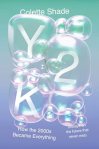 Y2K: How the 2000s Became Everything (Essays on the Future that Never Was) by Colette Shade (out today from Dey Street Books!): Shade’s debut collection contains 10 perceptive essays that contrast the promise and political pitfalls of “the Y2K Era” (1997–2008). The author was an adolescent at the turn of the millennium and recalls the thrill of early Internet use and celebrity culture. Consumerism was a fundamental doctrine but the financial crash prompted a loss of faith in progress. It’s a feast of millennial nostalgia but also a hard-hitting work of cultural criticism.
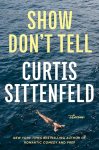 Show Don’t Tell by Curtis Sittenfeld (Random House, February 25; Transworld, 27 February): Sittenfeld’s second collection features characters negotiating principles and privilege in midlife. The 12 stories spotlight everyday marital and parenting challenges. Dual timelines offer opportunities for hindsight on the events of decades ago. College and boarding school experiences, in particular, remain pivotal. The arbitrary nature of wealth and celebrity is a central theme. Warm, witty, and insightful.
Other 2025 releases:
(in publication date order)
 How Isn’t It Going? Conversations after October 7 by Delphine Horvilleur [trans. from the French by Lisa Appignanesi] (out today from Europa Editions!): There is by turns a stream of consciousness or folktale quality to the narrative as Horvilleur enacts 11 dialogues – some real and others imagined – with her late grandparents, her children, or even abstractions. She draws on history, scripture and her own life, wrestling with thoughts that come during insomniac early mornings. It’s a lament for the Jewish condition, and a warning of the continuing and insidious nature of antisemitism. But it’s not all mourning; there is sometimes a wry sense of humour that feels very Jewish.
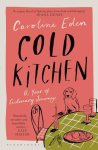 Cold Kitchen: A Year of Culinary Travels by Caroline Eden (Out in UK since May 2024; U.S. release: Bloomsbury, January 14): Eden cooks and writes in the basement kitchen of her Edinburgh apartment. When wanderlust strikes, she revisits favorite places via their cuisine. Her sumptuous fourth book journeys across Central Asia and Eastern Europe, harvesting memories and recipes. (Plus my Shelf Awareness interview)
 North of Ordinary by John Rolfe Gardiner (Bellevue Literary Press, January 14): I read 5 of 10 stories about young men facing life transitions and enjoyed the title one set at a thinly veiled Liberty University but found the rest dated in outlook; all have too-sudden endings.
 If Nothing by Matthew Nienow (Alice James Books, January 14): Straightforward poems about giving up addiction and seeking mental health help in order to be a good father.
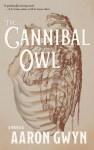 The Cannibal Owl by Aaron Gwyn (Belle Point Press, January 28): An orphaned boy is taken in by the Comanche in 1820s Texas in a brutal novella for fans of Cormac McCarthy.
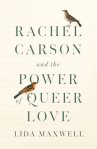 Rachel Carson and the Power of Queer Love by Lida Maxwell (Stanford University Press, January 28): Maxwell’s enthusiastic academic study reappraises scientist Rachel Carson’s motivations in light of ecological crisis and queer studies.
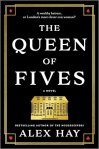 The Queen of Fives by Alex Hay (Graydon House, January 21; Headline, 30 January): Quinn Le Blanc, the latest in a dynasty of London con artists, resolves to pose as a debutante and marry a duke for his fortune – all in just five days in 1898. Like The Housekeepers, it’s a playful romp featuring strong female characters.
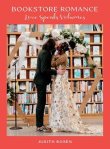 Bookstore Romance: Love Speaks Volumes by Judith Rosen (Brandeis University Press, February 1): A bibliophile’s time capsule and an enduring record of love and literary obsessions, this is a swoon-worthy coffee table book about couples who formalized their relationships in bookstores.
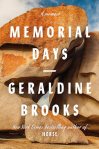 Memorial Days by Geraldine Brooks (Viking, February 4): This elegant bereavement memoir chronicles the sudden death of Brooks’s husband (journalist Tony Horwitz) in 2019 and her grief retreat to Flinders Island, Australia.
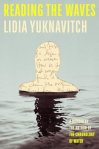 Reading the Waves by Lidia Yuknavitch (Riverhead, February 4): Yuknavitch’s bold memoir-in-essays focuses on pivotal scenes and repeated themes from her life as she reckons with trauma and commemorates key relationships. (A little too much repeated content from The Chronology of Water for me.)
 The Book of Flaco: The World’s Most Famous Bird by David Gessner (Blair, February 11): Gessner’s engaging nature book tells the story of the escaped Central Park Zoo Eurasian eagle-owl. It’s a touching tribute and a subtle challenge to reconsider human effects on wildlife.
 We Would Never by Tova Mirvis (Avid Reader Press, February 11): Mirvis’s fourth novel, inspired by real-life headlines, tells the taut story of an acrimonious divorce case gone horribly wrong. It explores the before and after of a murder, as the victim’s soon-to-be-ex-wife comes under suspicion and her family huddles around to protect her.
 The Café with No Name by Robert Seethaler [trans. from the German by Katy Derbyshire] (Europa Editions, 25 February): Set in 1960s and 1970s Vienna, where World War II still reverberates, this tender novel about a restaurateur’s interactions with acquaintances and customers meditates on the passage of time and bonds that last.
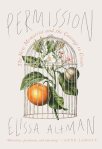 Permission: The New Memoirist and the Courage to Create by Elissa Altman (David R. Godine, March 4): Full of stories drawn from Altman’s life and other authors’ experience, this is an inspirational guide to defusing shame through self-disclosure and claiming the time and focus to write.
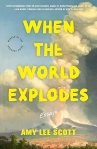 When the World Explodes: Essays by Amy Lee Scott (Mad Creek Books, March 6): Eleven inquisitive pieces set personal crises alongside natural disasters and gun violence. Scott was adopted as a baby from Korea; motherhood and adoption are potent themes across the book.
 Beasts by Ingvild Bjerkeland [trans. from the Norwegian by Rosie Hedger] (Levine Querido, April 1): In this chilling young adult novella, a teenager tries to keep his little sister safe and reunite with their father in a hazardous postapocalyptic world.
 Nine Minds: Inner Lives on the Spectrum by Daniel Tammet (Out in UK since July 2024; U.S. release: The Experiment, April 1): A biographical mosaic of neurodivergence built of stories of individuals whose struggles and achievements defy the clichés surrounding autism. (Notable inclusions: actor Dan Aykroyd, novelist Naoise Dolan.)
Will you look out for one or more of these?
Any other 2025 reads you can recommend?
February Releases by Hess, Kim, Sides (#ReadIndies); Atwood and Shah
I’m pleased to have, between this post and yesterday’s review catch-up, featured 9 books from 8 independent publishers for Read Indies this month. (I have also done some indie reading from my shelves, which I’ll summarize early in March.) Three of the books in my February review stacks were indie releases. I’ve got a hybrid memoir that blends poetic exploration of scripture with personal psychological reflections; an out-of-the-ordinary mystery about a father’s disappearance that comments on disability, racism and much more; and a terrific set of fabulist short stories. My two bonus (non-indie) February books are an unconvincing collaborative novel and a counselling-focussed bibliotherapy guide.

When Fragments Make a Whole: A Personal Journey through Healing Stories in the Bible by Lory Widmer Hess
 Some of you may know Lory, who is training as a spiritual director, from her blog, Enter Enchanted. It was so kind of her to get in touch offering her first book for review. It’s a unique combination of poetry, scriptural exegesis, and fragments of memoir. Each chapter considers a different healing story from the Gospels. As in the lectio divina I learned from college Christian fellowships, the idea with the verse retellings from the Bible is to imagine oneself into a character’s position and consider the crises that led to seeking Jesus’ help. I especially liked the poem “Talitha, Koum,” which links the stories of the woman with the issue of blood and the resurrection of Jairus’ daughter. In both, faith reverses a seemingly hopeless situation.
The short sections of commentary draw in a lot of context as well as etymology from the Greek. The autobiographical essays chart a history of physical and mental challenges, including dissociation, low self-esteem and shame, and offer openness to healing as its own miracle when there are no easy answers. They are notable for their vulnerability, especially when discussing marital problems. The outlook is intellectual and psychological rather than the spiritualizing I’m used to from my evangelical background – Lory comes from the anthroposophy tradition, which I don’t claim to fully understand but (I think) eschews dogma like original sin and atonement and instead makes the spiritual journey a matter of human reconnection with God through free will and the intellect. This is nicely balanced, though, by her work with developmentally disabled adults in residential homes in New England and Switzerland, which reminds her “there is a truth beyond intellectual knowledge, a language beyond words”. It is a calm, honest, methodical book that will intrigue anyone interested in thinking through how the Bible is applicable to the challenges of daily life.
With thanks to the author and Floris Books (Edinburgh) for the free copy for review.
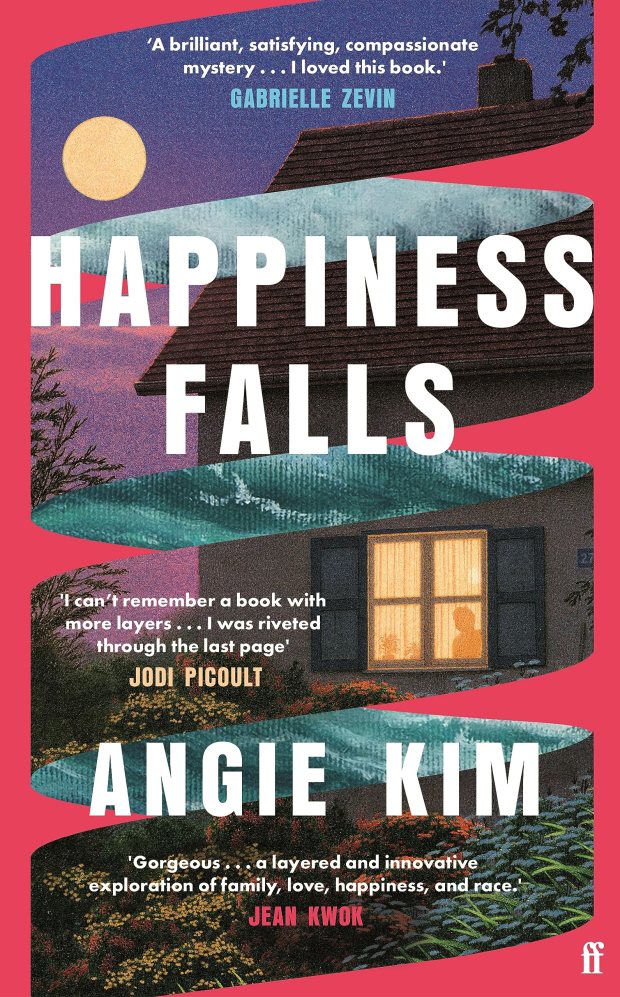
Happiness Falls by Angie Kim
Buzz from across the pond about Kim’s novels led me to request this even though I don’t typically read mysteries. The bulk is set over 2.5 days in June 2020 as the Korean American Parkson family investigates, on their own and with the help of police and various local tip-offs, what happened to the father, Adam, who’d been at River Falls Park with the severely disabled 14-year-old son, Eugene, who is autistic and has mosaic Angelman syndrome. Mother Hannah and 20-year-old twins Mia and John, home from college for the lockdown, quickly realise something is wrong when Eugene, who has blood on his shirt and under his nails, stumbles home on his own and Adam is unreachable by phone. There’s more to the setup than that, and many complicated side-tracks to the investigation, but the basic questions remain for 300+ pages: What happened to Adam? and What was Eugene’s part in it?
Mia narrates, and it’s a pleasure spending time with her quick, systematic brain as she runs through all the options and deals with each new theory and red herring. She clearly gets it from her father, whose recovered notebook is full of amateur experimentation on the “Happiness Quotient”. Her wit and garrulousness (sample aside: “I’m sorry, but I don’t care how much you love fun fonts—you cannot talk about prison rape in Comic Sans”) spills over into footnotes as if in effusive counterpoint to Eugene, who is nonspeaking.
The pandemic setting places interesting constraints on the official proceedings, and the prospect of a new communication method (involving painstaking spelling with a letter stencil) revolutionizes this family as they grasp that Eugene is far from nonverbal and has been ‘locked in’ all along. The account a therapist elicits from him seems to clinch the case, but uncertainty lingers.
This is like a blend of Celeste Ng’s Everything I Never Told You, Rebecca Makkai’s I Have Some Questions for You, and Naoki Higashida’s The Reason I Jump; if you’ve liked one or more of these, I would strongly recommend it. Mystery readers may lack patience for the digressions. The solution is eclipsed by the many issues – prejudice based on race and disability, how one’s circumstances affect contentment, nuances of communication, sibling relationships and twin ESP – explored along the way. Because I am not a crime reader, the pace was no problem for me. My annoyances were with the preponderance of hindsight (“I wish I’d said something,” “It didn’t occur to me until much later”) and the fact that Mia says “begs the question” for raising a question (misuse of a rhetorical term) several times. I found personal meaning in the book because of the Washington, DC-area locales and my severely disabled, nonverbal goddaughter. What if there really is something going on in her mind, and we could find out what it was… I mused. I’ll be keen to read Kim’s debut, Miracle Creek.
With thanks to Faber for the free copy for review.
Crocodile Tears Didn’t Cause the Flood by Bradley Sides
 These 17 flash fiction stories fully embrace the possibilities of magic and weirdness, particularly to help us reconnect with the dead. Brad and I are literary acquaintances from our time working on (the now defunct) Bookkaholic web magazine in 2014–15. I liked this even more than his first book, Those Fantastic Lives (2021), although the contours are very similar. Young people, animals and monsters abound – and sometimes the lines between those identities are unclear. There’s a lot of experimentation with form: a choose-your-own-adventure narrative, a police transcript, a two-truths-and-a-lie challenge, a story all in questions, an English exam, and a letter. A few of my favorite stories were “The Guide to King George,” about an amusement farm’s resident pond monster; “Claire & Hank,” in which a paleontologist’s unearthed Pteranodon becomes a sister to his motherless son; and “Dying at Allium Farm,” whose sassy undead owners think they’re fooling their Tennessee customers. And can you imagine a better title and cover combination?!
With thanks to Montag Press and publicist Lori Hettler for the e-copy for review.
And a couple of bonus February releases that are not from indie publishers:
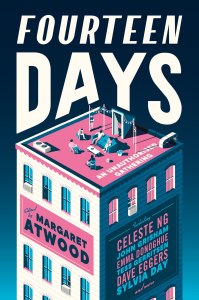
Fourteen Days, ed. Margaret Atwood and Douglas Preston
This Authors Guild Foundation collaborative project is a Covid-era Decameron update in which the residents of an increasingly derelict New York City apartment complex meet on the rooftop every evening for two early lockdown weeks to clap for healthcare workers, indulge in adult beverages, and swap random stories. The tenants all go by nicknames like “Hello Kitty,” “Florida” and “Vinegar.” The frame narrative has the building superintendent (Yessie, a lesbian of Romanian heritage) worrying over her father’s wellbeing in a care home and surreptitiously recording the oral stories on her phone to later transcribe into the “bible” kept by the previous super. We’re told up front that the manuscript ends up in police custody.
 I had a misconception that each chapter would be written by a different author. I think that would actually have been the more interesting approach. Instead, each character is voiced by a different author, and sometimes by multiple authors across the 14 chapters (one per day) – a total of 36 authors took part. I soon wearied of the guess-who game. I most enjoyed the frame story, which was the work of Douglas Preston, a thriller author I don’t otherwise know.
There was a promising idea here, but problems with the execution. One is that, for the most part, the stories are pointless. The characters get hung up on whether they’re ‘true’ or not, but for readers it’s all made up and, while one or two individual tales might be amusing, they do nothing to build a plot and so I found myself mostly skipping over them to get back to the interactions on the roof and the super’s commentary. Another is that, to stand out from an ensemble cast, a voice needs to be really distinctive, and only “Eurovision” (flamboyantly gay) was that for me – based on my love for his rabbit story in particular, I should be reading Joseph Cassara. And finally, the book culminates with an annoying twist that made me cross.
With thanks to Chatto & Windus (Penguin) for the proof copy for review.
Bibliotherapy: The Healing Power of Reading by Bijal Shah
Bibliotherapy is one of my niche bookish interests (see my write-up of my bibliotherapy appointment with Ella Berthoud at the School of Life), so I was delighted to be offered a copy of another relevant book. Bijal Shah grew up in an East African Indian community before moving to the UK with her family as a teenager. When she was in training as a psychodynamic counsellor and attended therapy sessions herself, she realised how helpful literature was in helping her think through traumatic experiences from her past, such as sexism, colourism and a painful break-up. “I have lived half my life in the pages of books,” she observes, “relying on them to put my real life into perspective.” I feel the same way.

The emphasis is very much on therapy here, as Shah elaborates on practices such as literary journaling, recording audio notes, writing poetry, and focusing on gratitude. About half of the book is given over to anonymized sample case studies where she looks at the reasons why a client might come to her for bibliotherapy, the books and exercises she prescribed them, and the sorts of realizations people came to when reflecting on their own lives in relation to what they read. I suspect that the majority of readers, unless they have a vested interest in counselling, will, like me, most enjoy browsing the A–Z list of book prescriptions in the final 20% of the book (with more on Shah’s website). There is good variety to these in terms of author diversity, new vs. backlist reads, and both YA and adult fiction, though most of the recommendations are nonfiction, particularly psychology and self-help: these are much more literal (and, generally, obvious) prescriptions than Berthoud and Elderkin’s playful take.
With thanks to the author and Piatkus (Hachette) for the free copy for review.
All My Wild Mothers by Victoria Bennett & I Have Some Questions for You by Rebecca Makkai
I’m catching up with reviews of two February releases that I spent the whole of last month submerged in. These are early entries on my Best of 2023 list: A lovely memoir about grief and gardening, caring for an ill child and a dying parent; and a riveting true crime-inspired novel, set on a boarding school campus, that rages at injustice and violence against women.
All My Wild Mothers: Motherhood, loss and an apothecary garden by Victoria Bennett
Early in February, I attended the online book launch via Sam Read Bookseller in Grasmere. With conversation, readings and song, it was the ideal introduction to the themes of this debut memoir by a poet. The book is composed of dozens of brief autobiographical, present-tense essays, each titled after a wildflower with traditional healing properties. The chapters are headed by a black-and-white woodcut of each plant (by Bennett’s husband, Adam Clarke) and a précis of its medicinal uses, as well as where it is found. Again and again, these descriptions site the flora on edgelands or “disturbed ground” – the perfect metaphorical tie-in to Bennett’s tumultuous life and the comfort that creating an apothecary garden brought.
Bennett is the youngest of six children. When she was expecting her son – much longed for after multiple pregnancy losses – news came that her eldest sister had died in a canoeing accident. At age two, her son was diagnosed with type 1 diabetes; managing his condition has imposed a heavy emotional burden. And years later, she was the primary caregiver for her elderly mother as she was dying of mesothelioma. The memoir’s format – which arose in part because it was written over the course of 10 years, during stolen moments – realistically presents bereavement and caring as ongoing, cyclical challenges rather than one-time events.

There are no simple solutions offered here, nothing so pat as that ‘gardening heals all hurts’, but Bennett writes into the broken places and finds joy in what comes to life spontaneously in nature or in her ramshackle yard on a social housing estate in Cumbria. She recalls a horse chestnut tree that looked over her outside the window of her childhood home; she and her son take impish delight in guerrilla gardening and sometimes disastrous cooking projects with foraged fruit. Some of my favourite individual vignettes were “Elder,” about the magic and medicine of making elderberry syrup from the few village trees that escape the chainsaw; “Dandelion,” about her trio of older sisters, who were Greenham Common protestors and always tried to protect her as well as nature; “Herb Robert,” about her sister-in-law’s funeral; and especially “Honeysuckle,” about a local agricultural show where the officious organizers make them feel like interlopers yet her son wins first place for their feral, fecund garden.
Many side topics twine into the narrative as well: a difficult relationship with a controlling mother; a family history that takes in boarding schools, cults, road trips, risk taking and mental health issues; the economic disparity that leads to one set of rules for the rich and another for those on benefits. But the core of the book is a tender mother–son relationship. “I can give him this: a seed, with all its defiant hope against the dark; and the memory that once, we grew a garden out of rock, and waste, and all things broken, and it thrived.” Sitting somewhere between creative nonfiction and nature essays, it’s a beautiful read for any fan of women’s life writing, especially if you share the interests in grief or gardening. I hope we’ll see it recognized on the Barbellion and Wainwright Prize shortlists alike.
Readalikes I have reviewed: A Still Life by Josie George, The Book of Difficult Fruit by Kate Lebo, The Cure for Sleep by Tanya Shadrick
With thanks to Victoria Bennett and Two Roads for the free copy for review.
I Have Some Questions for You by Rebecca Makkai
I’m a big fan of Makkai’s first two novels, The Borrower and The Hundred-Year House, and have her other two books lined up to read, so I was excited to hear about this new work and put it on my Most Anticipated list for the year. My interest was redoubled by Laura’s review, which likens it to a cross between Prep and My Dark Vanessa – irresistible.
Bodie Kane grew up in a deprived and dysfunctional family in Indiana, and has beneficent Mormon neighbours to thank for the tuition money that allowed her to attend Granby, an exclusive New Hampshire boarding school, in the early to mid-1990s. She was an angry and awkward high school student, yet her memories of Granby and the friendships she made there are still an emotional mainstay more than two decades later. In 2018, she is a successful film professor with a podcast about Hollywood starlets. Although she is separated from Jerome, her artist husband, he lives next door and they co-parent their two children.
After an invitation comes from Granby to teach a two-week course on podcasting, Bodie trades Los Angeles for a bitter New England winter. It’s the perfect excuse to indulge her obsession with the 1995 murder of her former Granby roommate, Thalia Keith, who was found dead in the swimming pool one March morning after a play performance. Bodie has never been comfortable with the flawed case against the Black athletics coach, Omar Evans, who has been imprisoned ever since. When one of her students chooses to make Thalia’s murder the subject of a podcast, it’s all the justification Bodie needs to dive deep into her pet hypothesis: Thalia was sleeping with the music director, Denny Bloch, and he was involved in her death in some way. Her blinkered view threatens to exclude a key explanation. Still, the informal sleuthing she and her students do is enough to warrant a follow-up hearing in 2022, but they – and Omar – are up against a broken system.

Makkai has taken her cues from the true crime genre and constructed a convincing mesh of evidence and theories. There’s a large cast of secondary characters, from Dorian, the bully who once humiliated Bodie with sexual slurs, to Fran, the faculty kid/gay best friend who now lives and works on campus herself and continues to be Bodie’s trusty backup. The combinations of background + teenage behaviour + 40-something lives all feel authentic in their randomness (when I saw that Makkai sourced 24 names from indie bookstore supporters, I realized afresh just how real, as opposed to ‘made-up’, these characters feel).
At times I wondered if there was too much detail on the case and the former classmates; I might even have streamlined the novel by doing away with the 2022 section altogether, though it ends up being crucial to the plot. But Makkai has so carefully crafted these pen portraits, and so intimately involved us in Bodie’s psyche, that it’s easy to become invested in the story. What’s more, the novel introduces a seam of rage about violence towards women – so predictably excused and allowed to recur by a justice system weighted against victims –
What’s as perfect as a girl stopped dead, midformation? Girl as blank slate. Girl as reflection of your desires, unmarred by her own. Girl as sacrifice to the idea of girl.
let’s say it was the one where the rugby team covered up the girl’s death and the school covered for the rugby team. Actually it was the one where the therapist spent years grooming her. It was the one where the senator, then a promising teenager, shoved his d*ck in the girl’s face. … It was the one where her body was never found. It was the one where her body was found in the snow. It was the one where he left her body for dead under the tarp.
– yet also finds nuance in the situation when Bodie’s ex-husband is subjected to exaggerated #MeToo accusations. It’s timely, daring, intelligent, enthralling storytelling. Susan (review here) and I are both hoping to see this make the Women’s Prize longlist next week.
Readalikes I have reviewed: Ghost Wall by Sarah Moss, My Dark Vanessa by Kate Elizabeth Russell, The Bass Rock by Evie Wyld
With thanks to Fleet for the proof copy for review.
What are the best 2023 books you’ve read so far?
The Mystery of Henri Pick by David Foenkinos (Walter Presents Blog Tour)
A library populated entirely by rejected books? Such was Richard Brautigan’s brainchild in one of his novels, and after his suicide a fan made it a reality. Now based in Vancouver, Washington, the Brautigan Library houses what French novelist David Foenkinos calls “the world’s literary orphans.” In The Mystery of Henri Pick, he imagines what would have happened had a French librarian created its counterpart in a small town in Brittany and a canny editor discovered a gem of a bestseller among its dusty stacks.
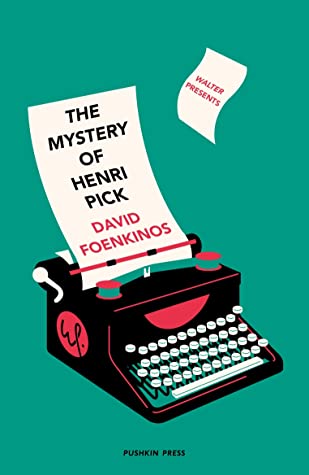 Delphine Despero is a rising Parisian editor who’s fallen in love with her latest signed author, Frédéric Koskas. Unfortunately, his novel The Bathtub is a flop, but he persists in writing a second, The Bed. On a trip home to Brittany so Frédéric can meet her parents, he and Delphine drop into the library of rejected books at Crozon and find a few amusing turkeys – but also a masterpiece. The Last Hours of a Love Affair is what it says on the tin, but also incorporates the death of Pushkin. The name attached to it is that of the late pizzeria owner in Crozon. His elderly widow and middle-aged daughter had no idea that their humble Henri had ever had literary ambitions, let alone that he had a copy of Eugene Onegin in the attic.
The Last Hours of a Love Affair becomes a publishing sensation – for its backstory more than its writing quality – yet there are those who doubt that Henri Pick could have been its author. The doubting faction is led by Jean-Michel Rouche, a disgraced literary critic who, having lost his job and his girlfriend, now has all the free time in the world to research the foundation of the Library of Rejects and those who deposited manuscripts there. Just when you think matters are tied up, Foenkinos throws a curveball.
This was such a light and entertaining read that I raced through. It has the breezy, mildly zany style I associate with films like Amélie. Despite the title, there’s not that much of a mystery here, but that suited me since I pretty much never pick up a crime novel. Foenkinos inserts lots of little literary in-jokes (not least: this is published by Pushkin Press!), and through Delphine he voices just the jaded but hopeful attitude I have towards books, especially as I undertake my own project of assessing unpublished manuscripts:
She had about twenty books to read during August, and they were all stored on her e-reader. [Her friends] asked her what those novels were about, and Delphine confessed that, most of the time, she was incapable of summarizing them. She had not read anything memorable. Yet she continued to feel excited at the start of each new book. Because what if it was good? What if she was about to discover a new author? She found her job so stimulating, it was almost like being a child again, hunting for chocolate eggs in a garden at Easter.
Great fun – give it a go!
My rating: 
(Originally published in 2016. Translation from the French by Sam Taylor, 2020.)
My thanks to Poppy at Pushkin Press for arranging my e-copy for review.
(Walter Presents, a foreign-language drama streaming service, launched in the UK (on Channel 4) in 2016 and is also available in the USA, Australia, and various European countries.)
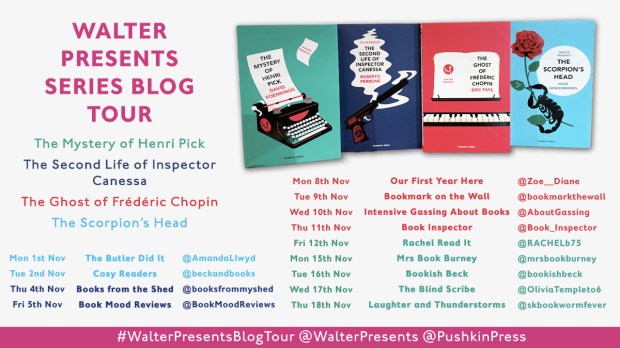
I was delighted to be part of the Walter Presents blog tour. See below for details of where other books and reviews have featured.
Reading with the Seasons: Summer 2021, Part I
I’m more likely to choose lighter reads and dip into genre fiction in the summer than at other times of year. The past few weeks have felt more like autumn here in southern England, but summer doesn’t officially end until September 22nd. So, if I get a chance (there’s always a vague danger to labelling something “Part I”!), before then I’ll follow up with another batch of summery reads I have on the go: Goshawk Summer, Klara and the Sun, Among the Summer Snows, A Shower of Summer Days, and a few summer-into-autumn children’s books.
For this installment I have a quaint picture book, a mystery, a travel book featured for its title, and a very English classic. I’ve chosen a representative quote from each.
Summer Story by Jill Barklem (1980)
 One of a quartet of seasonal “Brambly Hedge” stories in small hardbacks. It wouldn’t be summer without weddings, and here one takes place between two mice, Poppy Eyebright and Dusty Dogwood (who work in the dairy and the flour mill, respectively), on Midsummer’s Day. I loved the little details about the mice preparing their outfits and the wedding feast: “Cool summer foods were being made. There was cold watercress soup, fresh dandelion salad, honey creams, syllabubs and meringues.” We’re given cutaway views of various tree stumps, like dollhouses, and the industrious activity going on within them. Like any wedding, this one has its mishaps, but all is ultimately well, like in a classical comedy. This reminded me of the Church Mice books or Beatrix Potter’s works: very sweet, quaint and English.
Source: Public library
My rating: 
These next two give a real sense of how heat affects people, physically and emotionally.
Heatstroke by Hazel Barkworth (2020)
“In the heat, just having a human body was a chore. Just keeping it suitable for public approval was a job”
 From the first word (“Languid”) on, this novel drips with hot summer atmosphere, with its opposing connotations of discomfort and sweaty sexuality. Rachel is a teacher of adolescents as well as the mother of a 15-year-old, Mia. When Lily, a pupil who also happens to be one of Mia’s best friends, goes missing, Rachel is put in a tough spot. I mostly noted how Barkworth chose to construct the plot, especially when to reveal what. By the one-quarter point, Rachel works out what’s happened to Lily; by halfway, we know why Rachel isn’t telling the police everything.
The dynamic between Rachel and Mia as they decide whether to divulge what they know is interesting. This is not the missing person mystery it at first appears to be, and I didn’t sense enough literary quality to keep me wanting to know what would happen next. I ended up skimming the last third. It would be suitable for readers of Rosamund Lupton, but novels about teenage consent are a dime a dozen these days and this paled in comparison to My Dark Vanessa. For a better sun-drenched novel, I recommend A Crime in the Neighborhood.
Source: Public library
My rating: 
The Shadow of the Sun: My African Life by Ryszard Kapuściński (1998; 2001)
[Translated from the Polish by Klara Glowczewska]
“Dawn and dusk—these are the most pleasant hours in Africa. The sun is either not yet scorching, or it is no longer so—it lets you be, lets you live.”
 The Polish Kapuściński was a foreign correspondent in Africa for 40 years and lent his name to an international prize for literary reportage. This collection of essays spans decades and lots of countries, yet feels like a cohesive narrative. The author sees many places right on the cusp of independence or in the midst of coup d’états. Living among Africans rather than removed in a white enclave, he develops a voice that is surprisingly undated and non-colonialist. While his presence as the observer is undeniable – especially when he falls ill with malaria and then tuberculosis – he lets the situation on the ground take precedence over the memoir aspect. I read the first half last year and then picked the book back up again to finish this year. The last piece, “In the Shade of a Tree, in Africa” especially stood out. In murderously hot conditions, shade and water are two essentials. A large mango tree serves as an epicenter of activities: schooling, conversation, resting the herds, and so on. I appreciated how Kapuściński never resorts to stereotypes or flattens differences: “Africa is a thousand situations, varied, distinct, even contradictory … everything depends on where and when.”
Along with Patrick Leigh Fermor’s A Time of Gifts and the Jan Morris anthology A Writer’s World, this is one of the best few travel books I’ve ever read.
Source: Free bookshop
My rating: 
August Folly by Angela Thirkell (1936)
“The sun was benignantly hot, the newly mown grass smelt sweet, bees were humming in a stupefying way, Gunnar was purring beside him, and Richard could hardly keep awake.”
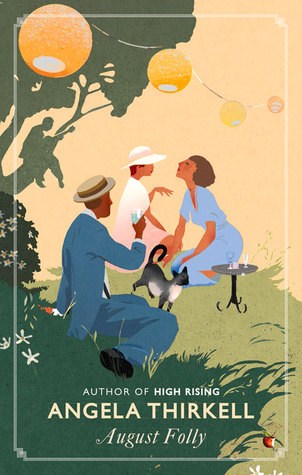 I’d been curious to try Thirkell, and this fourth Barsetshire novel seemed as good a place to start as any. Richard Tebben, not the best and brightest that Oxford has to offer, is back in his parents’ village of Worsted for the summer and dreading the boredom to come. That is, until he meets beautiful Rachel Dean and is smitten – even though she’s mother to a brood of nine, most of them here with her for the holidays. He sets out to impress her by offering their donkey, Modestine, for rides for the children, and rather accidentally saving her daughter from a raging bull. Meanwhile, Richard’s sister Margaret can’t decide if she likes being wooed, and the villagers are trying to avoid being roped into Mrs Palmer’s performance of a Greek play. The dialogue can be laughably absurd. There are also a few bizarre passages that seem to come out nowhere: when no humans are around, the cat and the donkey converse.
This was enjoyable enough, in the same vein as books I’ve read by Barbara Pym, Miss Read, and P.G. Wodehouse, though I don’t expect I’ll pick up more by Thirkell. (No judgment intended on anyone who enjoys these authors. I got so much flak and fansplaining when I gave Pym and Wodehouse 3 stars and dared to call them fluffy or forgettable, respectively! There are times when a lighter read is just what you want, and these would also serve as quintessential English books revealing a particular era and class.)
Source: Public library
My rating:
As a bonus, I have a book about how climate change is altering familiar signs of the seasons.
Forecast: A Diary of the Lost Seasons by Joe Shute (2021)
“So many records are these days being broken that perhaps it is time to rewrite the record books, and accept the aberration has become the norm.”
 Shute writes a weather column for the Telegraph, and in recent years has reported on alarming fires and flooding. He probes how the seasons are bound up with memories, conceding the danger of giving in to nostalgia for a gloried past that may never have existed. However, he provides hard evidence in the form of long-term observations (phenology) such as temperature data and photo archives that reveal that natural events like leaf fall and bud break are now occurring weeks later/earlier than they used to. He also meets farmers, hunts for cuckoos and wildflowers, and recalls journalistic assignments.
The book deftly recreates its many scenes and conversations, and inserts statistics naturally. It also delicately weaves in a storyline about infertility: he and his wife long for a child and have tried for years to conceive, but just as the seasons are out of kilter, there seems to be something off with their bodies such that something that comes so easily for others will not for them. A male perspective on infertility is rare – I can only remember encountering it before in Native by Patrick Laurie – and these passages are really touching. The tone is of a piece with the rest of the book: thoughtful and gently melancholy, but never hopeless (alas, I found The Eternal Season by Stephen Rutt, on a rather similar topic, depressing).
Forecast is wide-ranging and so relevant – the topics it covers kept coming up and I would say to my husband, “oh yes, that’s in Joe Shute’s book.” (For example, he writes about the Ladybird What to Look For series and then we happened on an exhibit of the artwork at Mottisfont Abbey.) I can see how some might say it crams in too much or veers too much between threads, but I thought Shute handled his material admirably.
Source: Public library
My rating: 
Have you been reading anything particularly fitting for summer this year?
Autumn Reading: The Pumpkin Eater and More
I’ve been gearing up for Novellas in November with a few short autumnal reads, as well as some picture books bedecked with fallen leaves, pumpkins and warm scarves.
An Event in Autumn by Henning Mankell (2004)
[Translated from the Swedish by Laurie Thompson, 2014]
 My first and probably only Mankell novel; I have a bad habit of trying mystery series and giving up after one book – or not even making it through a whole one. This was written for a Dutch promotional deal and falls chronologically between The Pyramid and The Troubled Man, making it #9.5 in the Wallander series. It opens in late October 2002. After 30 years as a police officer, Kurt Wallander is interested in living in the countryside instead of the town-center flat he shares with his daughter Linda, also a police officer. A colleague tells him about a house in the country owned by his wife’s cousin and Wallander goes to have a look.
Of course things aren’t going to go smoothly with this venture. You have to suspend disbelief when reading about the adventures of investigators; it’s like they attract corpses. So it’s not much of a surprise that while he’s walking the grounds of this house he finds a human hand poking out of the soil, and eventually the remains of a middle-aged couple are unearthed. The rest of the book is about finding out what happened on the property at the time of the Second World War. Wallander says he doesn’t believe in ghosts, but victims of wrongful death are as persistent as ghosts: they won’t be ignored until answers are found.
This was a quick and easy read, but nothing about it (setting, topics, characterization, prose) made me inclined to read further in the author’s work.
My rating:
The Pumpkin Eater by Penelope Mortimer (1962)
 (Classic of the Month, #1)
Like a nursery rhyme gone horribly wrong, this is the story of a woman who can’t keep it together. She’s the woman in the shoe, the wife whose pumpkin-eating husband keeps her safe in a pumpkin shell, the ladybird flying home to find her home and children in danger. Aged 31 and already on her fourth husband, the narrator, known only as Mrs. Armitage, has an indeterminate number of children. Her current husband, Jake, is a busy filmmaker whose philandering soon becomes clear, starting with the nanny. A breakdown at Harrods is the sign that Mrs. A. isn’t coping, and she starts therapy. Meanwhile, they’re building a glass tower as their countryside getaway, allowing her to contemplate an escape from motherhood.
An excellent 2011 introduction by Daphne Merkin reveals how autobiographical this seventh novel was for Mortimer. But her backstory isn’t a necessary prerequisite for appreciating this razor-sharp period piece. You get a sense of a woman overwhelmed by responsibility and chafing at the thought that she’s had no choice in what life has dealt her. Most chapters begin in medias res and are composed largely of dialogue, including with Jake or her therapist. The book has a dark, bitter humor and brilliantly recreates a troubled mind. I was reminded of Janice Galloway’s The Trick Is to Keep Breathing and Elizabeth Hardwick’s Sleepless Nights. If you’re still looking for ideas for Novellas in November, I recommend it highly.
My rating:
Snow in Autumn by Irène Némirovsky (1931)
[Translated from the French by Sandra Smith, 2007]
(Classic of the Month, #2)
 I have a copy of Suite Française, Némirovsky’s renowned posthumous classic, in a box in America, but have never gotten around to reading it. This early tale of the Karine family, forced into exile in Paris after the Russian Revolution, draws on the author’s family history. The perspective is that of the family’s old nanny, Tatiana Ivanovna, who guards the house for five months after the Karines flee and then, joining them in Paris after a shocking loss, longs for the snows of home. “Autumn is very long here … In Karinova, it’s already all white, of course, and the river will be frozen over.” Nostalgia is not as innocuous as it might seem, though. This gloomy short piece brought to mind Gustave Flaubert’s story “A Simple Heart.” I wouldn’t say I’m taken by Némirovsky’s style thus far; in fact, the frequent ellipses drove me mad! The other novella in my paperback is Le Bal, which I’ll read next month.
My rating:
Plus a quartet of children’s picture books from the library:

Pumpkin Soup by Helen Cooper: A cat, a squirrel and a duck live together in a teapot-shaped cabin in the woods. They cook pumpkin soup and make music in perfect harmony, each cheerfully playing their assigned role, until the day Duck decides he wants to be the one to stir the soup. A vicious quarrel ensues, and Duck leaves. Nothing is the same without the whole trio there. After some misadventures, when the gang is finally back together, they’ve learned their lesson about flexibility … or have they? Adorably mischievous.
Moomin and the Golden Leaf by Richard Dungworth: Beware: this is not actually a Tove Jansson plot, although her name is, misleadingly, printed on the cover (under tiny letters “Based on the original stories by…”). Autumn has come to Moominvalley. Moomin and Sniff find a golden leaf while they’re out foraging. He sets out to find the golden tree it must have come from, but the source is not what he expected. Meanwhile, the rest are rehearsing a play to perform at the Autumn Ball before a seasonal feast. This was rather twee and didn’t capture Jansson’s playful, slightly melancholy charm. 
Little Owl’s Orange Scarf by Tatyana Feeney: Ungrateful Little Owl thinks the orange scarf his mother knit for him is too scratchy. He tries “very hard to lose his new scarf” and finally manages it on a trip to the zoo. His mother lets him choose his replacement wool, a soft green. I liked the color blocks and the simple design, and the final reveal of what happened to the orange scarf is cute, but I’m not sure the message is one to support (pickiness vs. making do with what you have).
Christopher Pumpkin by Sue Hendra and Paul Linnet: The witch of Spooksville needs help preparing for a big party, so brings a set of pumpkins to life. Something goes a bit wrong with the last one, though: instead of all things ghoulish, Christopher Pumpkin loves all things fun. He bakes cupcakes instead of stirring gross potions and strums a blue ukulele instead of inducing screams. The witch threatens to turn Chris into soup if he can’t be scary. The plan he comes up with is the icing on the cake of a sweet, funny book delivered in rhyming couplets. Good for helping kids think about stereotypes and how we treat those who don’t fit in.
Have you read any autumn-appropriate books lately?
Doorstopper of the Month: The Crow Road by Iain Banks (1992)
This was a rare case of reading a novel almost entirely because of its famous first line: “It was the day my grandmother exploded.” I was familiar with the quote from the Bookshop Band song “Once Upon a Time” (video on bottom right here), which is made up of first lines from books, but had never read anything by the late Iain Banks, so when a copy of The Crow Road turned up in the free bookshop where I volunteered weekly in happier times, I snapped it up.
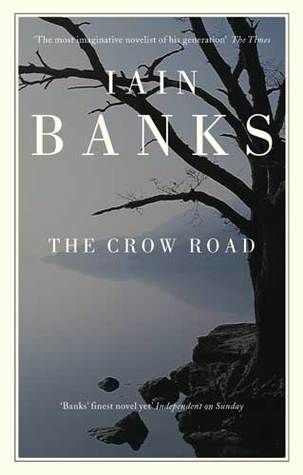 There’s a prosaic explanation for that magical-sounding opening: Grandma Margot had a pacemaker that the doctor forgot to remove before her cremation. Talk about going out with a bang! To go “away the crow road” is a Scottish saying for death, and on multiple occasions a sudden or unexplained death draws the McHoan clan together. As the book starts, Prentice McHoan, a slothful student of history at the university in Glasgow, is back in Gallanach (on the west coast of Scotland, near Oban), site of the family glassworks, for Margot’s funeral. He’ll be summoned several more times before the story is through.
Amid clashes over religion with his father Kenneth, a writer of children’s fantasy stories, plenty of carousing and whiskey-drinking, and a spot of heartbreak when his brother steals his love interest, Prentice gets drawn into the mystery of what happened to Uncle Rory, a travel writer who disappeared years ago. The bulk of the book is narrated by Prentice, but shifts into the third person indicate flashbacks. Many of these vignettes recount funny mishaps from Kenneth or Prentice’s growing-up years, but others – especially those in italics – reveal darker matters. As Prentice explores Uncle Rory’s files from a project called “Crow Road,” he stumbles on a secret that completely changes how he perceives his family history.
This reminded me of John Irving at his 1970s‒80s peak: a sprawling coming-of-age story, full of quirky people and events, that blends humor and pathos. In all honesty, I didn’t need the mystery element on top of the character study, but it adds direction to what is otherwise a pleasant if lengthy meander through the decades with the McHoans. I particularly appreciated how Prentice’s view of death evolves: at first he’s with Uncle Hamish, believing there has to be something beyond death – otherwise, what makes human life worthwhile? But Kenneth’s atheism seeps in thanks to the string of family deaths and the start of the Gulf War. “They were here, and then they weren’t, and that was all there was,” Prentice concludes; the dead live on only in memory, or in the children and work they leave behind. I can’t resist quoting this whole paragraph, my favorite passage from the novel:
Telling us straight or through his stories, my father taught us that there was, generally, a fire at the core of things, and that change was the only constant, and that we – like everybody else – were both the most important people in the universe, and utterly without significance, depending, and that individuals mattered before their institutions, and that people were people, much the same everywhere, and when they appeared to do things that were stupid or evil, often you hadn’t been told the whole story, but that sometimes people did behave badly, usually because some idea had taken hold of them and given them an excuse to regard other people as expendable (or bad), and that was part of who we were too, as a species, and it wasn’t always possible to know that you were right and they were wrong, but the important thing was to keep trying to find out, and always to face the truth. Because truth mattered.
That seems like a solid philosophy to me. I’ll try more by Banks. I also nabbed a free copy of The Wasp Factory, which I take it is very different in tone. Any recommendations after that? Could I even cope with his science fiction (published under the name Iain M. Banks)?
Page count: 501
My rating:
#1920Club Classics of the Month: Agatha Christie and F. Scott Fitzgerald
I’m sneaking in a couple of quick reviews on the final day to join in with Simon and Karen’s latest reading week, The 1920 Club. Speaking of books that were published a century ago, I happened to review Chéri by Colette as one of my monthly classics last year, and I’m currently reading The Age of Innocence by Edith Wharton in advance of our May book club meeting.

The Mysterious Affair at Styles by Agatha Christie
 I don’t think I’ve read an Agatha Christie mystery since I was about … 13? (It was And Then There Were None.) But over the years I’ve watched countless Poirot and Miss Marple cases on TV with my mother. This was Poirot’s first outing, and it’s narrated by Hastings, the slightly dim Watson to the Belgian detective’s Sherlock Holmes.
One July, invalided home from the war at age 30, Hastings goes to visit old family friends at Styles, their Essex manor house: brothers John and Lawrence Cavendish and their elderly stepmother, who has recently (and somewhat shockingly) remarried. When old Mrs. Cavendish is found dead of strychnine poisoning, Poirot is brought in to sort through the potential suspects. Coffee and cocoa cups, a fragment of a charred will, a fake beard, a candle wax stain and a bolted door will be among his major clues.
Like Hastings, we as readers are quick to point to the obvious: hey, that foreigner who happens to be an expert on poisons, it’s him, right?! But as Poirot carefully explains, again and again, “If the fact will not fit the theory, let the theory go. … Real evidence is usually vague and unsatisfactory. It has to be examined, sifted. But here the whole thing is cut and dried.”
I rarely pick up a mystery novel, though when I can get stuck in I do tend to enjoy them. This was a super-quick read and I found myself turning to it more often than to other books on my stack that felt weightier in subject matter. In the end I find crime novels inconsequential, so can’t imagine needing to try another Poirot or Marple for another 20 years or so. But if you’re struggling to read in a time of anxiety, you could certainly do worse than a Christie novel.
My rating:
This Side of Paradise by F. Scott Fitzgerald
 Fitzgerald has long been one of my literary blind spots. The Great Gatsby is a masterpiece, sure: I studied it in school and have read it another couple of times since, as well as lots of background nonfiction and some contemporary novels that riff on the story line. But everything else of his that I’ve tried (Tender Is the Night was the other one) has felt aimless and more stylish than substantive.
Amory Blaine is a wealthy Midwesterner who goes from boarding school to Princeton and has literary ambitions and various love affairs. He’s convinced he’s a “boy marked for glory.” But Monsignor Darcy, his guru, encourages the young man to focus on developing his character more than his dashing personality.
Hugely popular at its first release, this debut novel won Fitzgerald his literary reputation – as well as Zelda Sayre’s hand in marriage. What with the slang (“Oh my Lord, I’m going to cast a kitten”), it felt very much like a period piece to me, most impressive for its experimentation with structure: parts are written like a film script or Q&A, and there are also some poems and lists. This novelty may well be a result of the author cobbling together drafts and unpublished odds and ends, but still struck me as daring.
In a strange way, though, the novel is deliberately ahistorical in that it glosses over world events with a flippancy that I find typical of Fitzgerald. Even though Amory is called up to serve, his general reaction to the First World War is dispatched in a paragraph; Prohibition doesn’t get much more of a look-in.
I understand that the book is fairly autobiographical and in its original form was written in the first person, which I might have preferred if it led to greater sincerity. I could admire some of the witty banter and the general coming-of-age arc, but mostly felt indifferent to this one.
My rating:
Recommended March Releases: Magnusson, May, Moor and More
March has been a huge month for new releases. With so many authors feeling let down about book tours and events being cancelled, it’s a great time for bloggers to step in and help. I attended two virtual book launches on Twitter on the 19th and have another one coming up on the 31st. I also have three more March releases on order from my local indie bookstore: Greenery by Tim Dee, tracking the arrival of spring; Footprints by David Farrier, about the fossil traces modern humans will leave behind; and The Bass Rock by Evie Wyld, a novel about violence against women set on the Scottish coast in three different time periods.
Today I have short reviews of five March releases I recommend (plus a bonus one now out in paperback): a Victorian pastiche infused with Scottish folklore, an essay collection about disparate experiences of motherhood, a thriller about victims of domestic violence, poems in graphic novel form, a novel about natural and personal disasters in Australia, and a lovely story of friendship and literature changing a young man’s life forever. All:
The Ninth Child by Sally Magnusson
(Published by Two Roads on the 19th)
 Like Hannah Kent’s The Good People and Sarah Perry’s The Essex Serpent, this is an intense, convincing work of fiction that balances historical realism with magical elements. In mid-1850s Britain, in the wake of a cholera epidemic, there is a drive to ensure clean water. Alexander Aird, hired as the on-site physician for the Glasgow waterworks, moves to the Loch Katrine environs with his wife, Isabel, who has had eight miscarriages or stillbirths. With no living babies requiring her care, Isabel spends her days wandering the hills and meets a strange scarecrow of a man, Reverend Robert Kirke … who died in 1692.
A real-life Episcopalian minister, Kirke wrote a book about fairies and other Celtic supernatural beings and, legend has it (as recounted by Sir Walter Scott and others), was taken into the faery realm after his death and continued to walk the earth looking for rest. It takes a while for Isabel to learn the truth about Kirke – though her servant, Kirsty McEchern, immediately intuits that something isn’t right about the man – and longer still to understand that he wants something from her. “Whatever else, Robert Kirke could be relied on to ruffle this mind of hers that was slowly opening to experience again, and to thinking, and to life.”
This was a rollicking read that drew me in for its medical elements (premature birth, a visit to Joseph Lister, interest in Florence Nightingale’s nursing methods) as well as the plot. It often breaks from the omniscient third-person voice to give testimonies from Kirsty and from Kirke himself. There are also amusing glimpses into the Royal household when Victoria and Albert stay at Balmoral and return to open the waterworks during the “heaviest, windiest, most umbrella-savaging, face-slashing deluge that Scotland had experienced in twenty years.” Best of all, it gives a very different picture of women’s lives in the Victorian period.
My thanks to the publisher for the proof copy for review.
The Best Most Awful Job: Twenty Writers Talk Honestly about Motherhood, edited by Katherine May
(Published by Elliott & Thompson on the 19th)
 These are essays for everyone who has had a mother – not just everyone who has been a mother. I enjoyed every piece separately, but together they form a vibrant collage of women’s experiences. Care has been taken to represent a wide range of situations and attitudes. The reflections are honest about physical as well as emotional changes, with midwife Leah Hazard (author of Hard Pushed) kicking off with an eye-opening rundown of the intimate scarring some mothers will have for the rest of their lives. We hear from a mother of six who’s “addicted” to pregnancy (Jodi Bartle), but also from a woman who, after an ectopic pregnancy, realized “there are lots of ways to mother, even if your body won’t let you” (Peggy Riley, in one of my two favorite pieces in the book).
Women from BAME communities recount some special challenges related to cultural and family expectations, but others that are universal. An autistic mother (Joanne Limburg) has to work out how to parent a neurotypical child; queer parents (including author Michelle Tea) wonder how to raise a son at a time of toxic masculinity. There are also several single mothers, one of them disabled (Josie George – hers was my other favorite essay; do follow her on Twitter via @porridgebrain if you don’t already).
What I most appreciated is that these authors aren’t saying what they think they should say about motherhood; they’re willing to admit to boredom, disappointment and rage: “motherhood is an infinite, relentless slog from which there is no rest or recuperation … a ceaseless labour, often devoid of acknowledgment, recognition and appreciation” (Javaria Akbar); “I step barefoot on a rogue piece of Lego and it’s game over. I scream” (Saima Mir). These are punchy, distinctive slices of life writing perfectly timed for Mother’s Day. I plan to pass the book around my book club; mothers or not, I know everyone will appreciate it.
My thanks to the publisher for the proof copy for review.
Keeper by Jessica Moor
(Published by Viking/Penguin on the 19th)
 Val McDermid and Jeanette Winterson are among the fans of this, Penguin’s lead debut title of 2020. When a young woman is found drowned at a popular suicide site in the Manchester area, the police plan to dismiss the case as an open-and-shut suicide. But the others at the women’s shelter where Katie Straw worked aren’t convinced, and for nearly the whole span of this taut psychological thriller readers are left to wonder if it was suicide or murder.
The novel alternates between chapters marked “Then” and “Now”: in the latter story line, we follow the police investigation and meet the women of the refuge; in the former, we dive into Katie’s own experience of an abusive relationship back in London. While her mother was dying of cancer she found it comforting to have a boyfriend who was so attentive to her needs, but eventually Jamie’s obsessive love became confining.
I almost never pick up a mystery, but this one was well worth making an exception for. I started suspecting the twist at maybe the two-thirds point, but that didn’t detract from my enjoyment. Based on Moor’s year working in the violence against women sector, it’s a gripping and grimly fascinating story of why women stay with their abusers and what finally drives them to leave.
I picked up a proof copy at a Penguin Influencers event.
 Poems to See by: A Comic Artist Interprets Great Poetry by Julian Peters
(To be published by Plough Publishing House on the 31st)
Peters is a comics artist based in Montreal. Here he has chosen 24 reasonably well-known poems by the likes of e.e. cummings, Emily Dickinson, Robert Frost, Seamus Heaney, Langston Hughes, Edgar Allan Poe, Christina Rossetti and W.B. Yeats and illustrated each one in a markedly different fashion. From black-and-white manga to a riot of color and music, from minimalist calligraphy-like Japanese watercolor to imitations of Brueghel, there is such a diversity of style here that at first I presumed there were multiple artists involved (as in one of my favorite graphic novels of last year, ABC of Typography, where the text was written by one author but each chapter had a different illustrator). But no, this is all Peters’ work; I was impressed by his versatility.
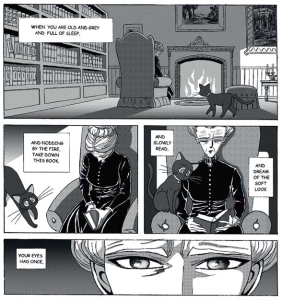
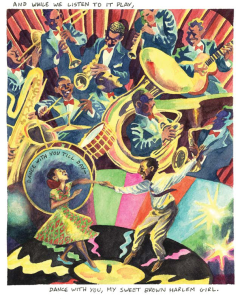
The illustrations range from realistic to abstract, with some more obviously cartoon-like. A couple of sequences reminded me of the style of Raymond Briggs. For “Caged Bird” by Maya Angelou, lines are inlaid on the squares of a painted patchwork quilt. Other sets look to have been done via wood engraving, or with old-fashioned crayons. You could quibble with the more obvious poetry selections, but I encountered a few that were new to me, including “Buffalo Dusk” by Carl Sandburg and “Conscientious Objector” by Edna St. Vincent Millay. Peters has grouped them into six thematic categories: self, others, art, nature, time and death. Teenagers, especially, will enjoy the introduction to a variety of poets and comics styles.
I read an e-copy via NetGalley.
The Inland Sea by Madeleine Watts
(Published by ONE/Pushkin on the 5th)
 “Emergency police fire, or ambulance?” The young female narrator of this debut novel lives in Sydney and works for Australia’s emergency call service. Over her phone headset she gets appalling glimpses into people’s worst moments: a woman cowers from her abusive partner; a teen watches his body-boarding friend being attacked by a shark. Although she strives for detachment, her job can’t fail to add to her anxiety – already soaring due to the country’s flooding and bush fires.
Against that backdrop of natural disasters, a series of minor personal catastrophes play out. The narrator is obsessed with a rape/murder case that’s dominating the television news, and narrowly escapes sexual assault herself. She drinks to excess, keeps hooking up with her ex-boyfriend, Lachlan, even after he gets a new girlfriend, and seems to think abortion and the morning after pill are suitable methods of birth control. Irresponsible to the point of self-sabotage, she’s planning a move to London but in the meantime is drifting through life, resigned to the fact that there is no unassailable shelter and no surefire way to avoid risk.
The title comes from the quest of John Oxley (presented here as the narrator’s ancestor), who in 1817 searched for a water body in the Australian interior. Quotations from his journals and discussions of the work of Patrick White, the subject of Lachlan’s PhD thesis, speak to the search for an Australian identity. But the inland sea is also the individual psyche, contradictory and ultimately unknowable. Like a more melancholy version of Jenny Offill’s Weather or a more cosmic autofiction than Yara Rodrigues Fowler’s Stubborn Archivist, this is a timely, quietly forceful story of how women cope with concrete and existential threats.
My thanks to the publisher for the PDF copy for review.
And a bonus…
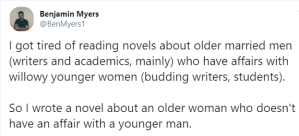
The Offing by Benjamin Myers (2019)
(Paperback published by Bloomsbury on the 5th)
 With the Second World War only recently ended and nothing awaiting him apart from the coal mine where his father works, sixteen-year-old Robert Appleyard sets out on a journey. From his home in County Durham, he walks southeast, doing odd jobs along the way in exchange for food and lodgings. One day he wanders down a lane near Robin Hood’s Bay and gets a surprisingly warm welcome from a cottage owner, middle-aged Dulcie Piper, who invites him in for tea and elicits his story. Almost accidentally, he ends up staying for the rest of the summer, clearing scrub and renovating her garden studio.
Dulcie is tall, outspoken and unconventional – I pictured her as (Meryl Streep as) Julia Child in the movie Julie & Julia. She introduces Robert to whole new ways of thinking: that not everyone believes in God, that Germans might not be all bad, that life can be about adventure and pleasure instead of duty. “The offing” is a term for the horizon, as well as the title of a set of poems Robert finds in the dilapidated studio, and both literature and ambition change his life forever. Bright, languid and unpredictable, the novel delights in everyday sensual pleasures like long walks with a dog, dips in the ocean and an abundance of good food. I can’t think of another book I’ve read that’s quite like it – how refreshing is that?
I pre-ordered the paperback using a Waterstones voucher I got for Christmas.
What recent releases can you recommend?
Paul Auster Reading Week: Winter Journal & The New York Trilogy
Before this year, I’d read only one book by Paul Auster: Timbuktu, which fit into last year’s all-animal 20 Books of Summer for its canine main character. This year I’ve enjoyed having Annabel’s Paul Auster Reading Week as an excuse to binge on more Auster, including one of his memoirs, Winter Journal, and his most famous set of novels, the New York Trilogy. I’m reading another two Auster books, one fiction and nonfiction, and will see if I can finish and write them up before the week ends.

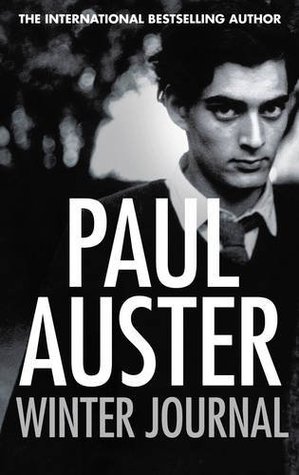
Winter Journal (2012)
This is one of the most remarkable memoirs I’ve ever read. Approaching age 64 and the winter of his life, Auster decided to assemble his most visceral memories. Here he parades them past in a seemingly random order yet manages to give a sense of the sweep of his life. The use of the second person draws readers in to (re-)experience things along with the author, while also creating an artistic distance between the subject and his reminiscences. Auster describes his aim thus:
Time is running out, after all. Perhaps it is just as well to put aside your stories for now and try to examine what it has felt like to live inside this body from the first day you can remember being alive until this one. A catalogue of sensory data. What one might call a phenomenology of breathing.
 His life reappears through scars, through accidents and near-misses, through what his hands felt and his eyes observed. A three-year-old rips his cheek open on a protruding nail in a department store. A teenager slowly builds up a portfolio of sexual experiences. A young man lives and works in Paris and the South of France. A marriage to one fellow author (Lydia Davis) ends and a relationship with another (Siri Hustvedt) begins. A fiftysomething rushing to get home to the toilet makes an ill-advised turn against traffic and totals his car – luckily, he and his family escape unhurt. Numbness after his mother’s death cedes to a panic attack.
I particularly enjoyed the 53-page section in which Auster gives tours through the 21 places he’s lived since infancy, recounting the details he remembers of the dwellings and what happened during his time there. It’s impressive how much he can condense, but also how much he can convey in just a few pages on each home. This is the sort of format I could imagine borrowing for a short autobiographical piece – it would be a way of redeeming that involuntarily nomadic period when my husband and I moved every six to 18 months.
Reading this alongside the New York Trilogy allowed me to spot the ways, big and small, in which those novels draw on Auster’s life story. I’m now keen to read more of his nonfiction, especially The Invention of Solitude, which offended his relatives by revealing the shameful family story of how his grandmother shot and killed his grandfather in their kitchen.
Annabel says: “The book is written in the second person – addressing himself; it gives a real sense of intimacy to his story. … Auster is an unconventional, analytical and eloquent writer, and this unconventional memoir was a delight to read, he can look with humour at himself as well as being serious.”
Laura F. says: “You know how people say they’d read anything by their favourite author, even a grocery list? Winter Journal gets pretty close to that territory. … I’ve never read a memoir like this, and though focused on the physical, it’s a fully emotional experience.”
Some favorite lines:
“as long as you continue to travel, the nowhere that lies between the here of home and the there of somewhere else will continue to be one of the places where you live.”
“We are all aliens to ourselves, and if we have any sense of who we are, it is only because we live inside the eyes of others.”
“you can only conclude that every life is marked by a number of close calls, that everyone who manages to reach the age you have come to now has already wriggled out of a number of potentially absurd, nonsensical deaths. All in the course of what you would call ordinary life.”
Readalikes: I Am, I Am, I Am by Maggie O’Farrell & The Lost Properties of Love by Sophie Ratcliffe
The New York Trilogy
(also my Doorstopper of the Month at 580 pages)
City of Glass (1985)
 A metafictional mystery about a crime writer named Daniel Quinn who turns private investigator when he gets a phone call asking for the Paul Auster Detective Agency. This is one of those books where what actually happens is a lot less important than the atmosphere it creates. So what feels essential to me here is the sense of a labyrinthine New York City and a confusion of languages and relationships. Quinn, who is helpfully untethered after the death of his wife and son, is hired to tail Peter Stillman’s father, who has recently been released from a mental hospital, where he was sentenced after being judged insane for keeping his son in isolation in a dark apartment for nine years.
Feral children, maps, eggs, the Tower of Babel and Don Quixote are some of the recurring sources of metaphors in a deliberately disorienting and intertextually rich short novel that kept me turning the pages even when I didn’t know precisely what was going on. We get a glimpse of Auster himself, and are invited to muse on such tiny subjects as destiny, the limitations of language, the purpose of books, and the nature of truth. I’m curious to see whether the other two novels follow on from the story at all or just resemble it thematically.
Ghosts (1986)
I jumped straight into this from City of Glass, and it suffered by comparison. It is not a sequel per se, because it has different characters and is set in the late 1940s instead of the early 1980s, but it shares some of the same concerns (with literature, identity, doubling, the essential otherness of the writer, and so on) and again is a sort of metafictional mystery.
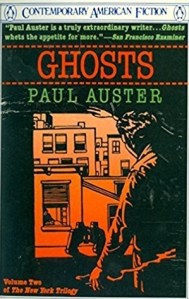 Part of why I couldn’t take this novella entirely seriously is the silly naming: White hires Blue to trail Black (really; all of the secondary characters are named after colors, too). It turns out Black is a writer who does little besides sit in his apartment, writing. Only when Blue disguises himself as a tramp and then as a salesman and meets Black in various other contexts does he realize that Black, too, is an investigator … writing up a case of following a writer who hardly leaves his desk.
While I appreciated the circularity and the uncertainty over whether these accidental twins would destroy each other, as well as the literary references to Whitman, Thoreau and Hawthorne, the whole felt slightly inconsequential (“Blue watches Black, and little of anything happens.”). Plotlessness is part of the point, but makes for only a moderately interesting read.
[There is one coded reference to Auster here: the fact that the book opens on February 3, 1947, the day he was born.]
The Locked Room (1986)
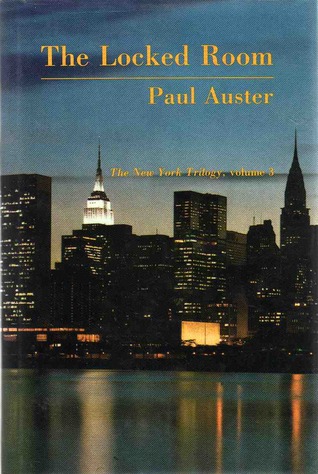 While most of the New York Trilogy is told in the third person, this is a first-person narrative that seems to pick up where City of Glass left off. It begins in 1977, when the unnamed narrator gets a letter from Sophie Fanshawe, the wife of his childhood best friend, telling him that Fanshawe disappeared six months ago, and despite the best efforts of a detective, Quinn (in another link to CoG, the narrator encounters Peter Stillman on a later trip to Paris), no trace can be found. The narrator has been named Fanshawe’s literary executor and takes it upon himself to get the man’s unpublished work out into the world: plays are produced, novels are published. He also starts writing a biography of the friend he always envied.
Except it’s more like he’s becoming Fanshawe, especially when he marries Sophie. Doubling has been a major theme of the trilogy, and here the metaphorical kill-or-be-killed situation seems to turn literal at the conclusion, which I didn’t particularly understand (e.g. he acquires and destroys a red notebook – is this in some way meant to be the same red notebook Quinn left behind at the end of CoG?). The narrator presents himself as the author of all three books, and asserts, “These three stories are finally the same story, but each one represents a different stage in my awareness of what it is about. I don’t claim to have solved any problems.”
The metafictional aspect of this novel is that Fanshawe’s early life is a lot like Auster’s as revealed in Winter Journal, while Sophie’s resembles his wife Siri Hustvedt’s (and the pair would later name their daughter Sophie). 
 Themes of the trilogy:
- Identity complications, including disguises, doubles and substitutes
- Writers and writing; the creator versus characters
- The limits of language (e.g. Stillman’s monologue in CoG is astonishing)
- Freedom/randomness versus fate
One representative passage from each volume:
- “New York was an inexhaustible space, a labyrinth of endless steps, and no matter how far he walked, no matter how well he came to know its neighbourhoods and streets, it always left him with the feeling of being lost. Lost, not only in the city, but within himself as well. … New York was the nowhere he had built around himself” (City of Glass)
- “Writing is a solitary business. It takes over your life. In some sense, a writer has no life of his own. Even when he’s there, he’s not really there. / Another ghost. / Exactly.” (Ghosts)
- “In the end, each life is no more than the sum of contingent facts, a chronicle of chance intersections, of flukes, of random events that divulge nothing but their own lack of purpose.” (The Locked Room)
My rating for the trilogy as a whole:
 Bookish Beck = Rebecca Foster. American transplant to England. Freelance proofreader and book reviewer.
 Bookish Beck