Best Books of 2025: The Runners-Up
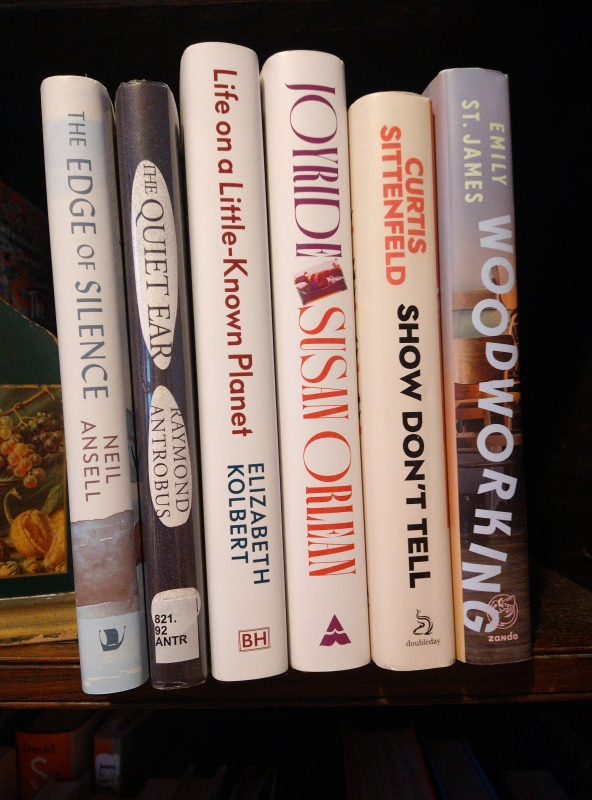
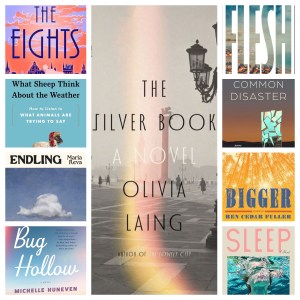
Coming up tomorrow: my list of the 15 best 2025 releases I’ve read. Here are 15 more that nearly made the cut. Pictured below are the ones I read / could get my hands on in print; the rest were e-copies or in-demand library books. Links are to my full reviews where available.
Fiction
 Bug Hollow by Michelle Huneven: A glistening portrait of a lovably dysfunctional California family beset by losses through the years but expanded through serendipity and friendship. Life changes forever for the Samuelsons (architect dad Phil; mom Sibyl, a fourth-grade teacher; three kids) when the eldest son, Ellis, moves into a hippie commune in the Santa Cruz Mountains. A rotating close third-person perspective spotlights each member. Fans of Jami Attenberg, Ann Patchett, and Anne Tyler need to try Huneven’s work pronto.
 Sleep by Honor Jones: A breathtaking character study of a woman raising young daughters and facing memories of childhood abuse. Margaret’s 1990s New Jersey upbringing seems idyllic, but upper-middle-class suburbia conceals the perils of a dysfunctional family headed by a narcissistic, controlling mother. Jones crafts unforgettable, crystalline scenes. There are subtle echoes throughout as the past threatens to repeat. Reminiscent of Sarah Moss and Evie Wyld, and astonishing for its psychological acuity, this promises great things from Jones.
 The Silver Book by Olivia Laing: Steeped in the homosexual demimonde of 1970s Italian cinema (Fellini and Pasolini films), with a clear antifascist message filtered through the coming-of-age story of a young Englishman trying to outrun his past. This offers the best of both worlds: the verisimilitude of true crime reportage and the intimacy of the close third person. Laing leavens the tone with some darkly comedic moments. Elegant and psychologically astute work from one of the most valuable cultural commentators out there.
 The Eights by Joanna Miller: Highly readable, book club-suitable fiction that is a sort of cross between In Memoriam and A Single Thread in terms of its subject matter: the first women to attend Oxford in the 1920s, the suffrage movement, and the plight of spare women after WWI. Different aspects are illuminated by the four central friends and their milieu. This debut has a good sense of place and reasonably strong characters. Despite some difficult subject matter, it remains resolutely jolly.
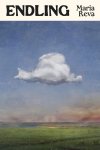 Endling by Maria Reva: What is worth doing, or writing about, in a time of war? That is the central question here, yet Reva brings considerable lightness to a novel also concerned with environmental devastation and existential loneliness. Yeva, a snail researcher in Ukraine, is contemplating suicide when Nastia and Sol rope her into a plot to kidnap 12 bride-seeking Western bachelors. The faux endings and re-dos are faltering attempts to find meaning when everything is breaking down. Both great fun to read and profound on many matters.
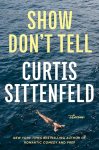 Show Don’t Tell by Curtis Sittenfeld: Sittenfeld’s second collection features characters negotiating principles and privilege in midlife. Split equally between first- and third-person perspectives, the 12 contemporary storylines spotlight everyday marital and parenting challenges. Dual timelines offer opportunities for hindsight on the events of decades ago. Nostalgic yet clear-eyed, these witty stories exploring how decisions determine the future are perfect for fans of Rebecca Makkai, Kiley Reid, and Emma Straub.
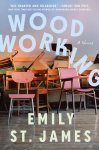 Woodworking by Emily St. James: When 35-year-old English teacher Erica realizes that not only is there another trans woman in her small South Dakota town but that it’s one of her students, she lights up. Abigail may be half her age but is further along in her transition journey and has sassy confidence. But this foul-mouthed mentor has problems of her own, starting with parents who refuse to refer to her by her chosen name. This was pure page-turning enjoyment with an important message, reminiscent of Celia Laskey and Tom Perrotta.
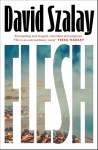 Flesh by David Szalay: Szalay explores modes of masculinity and channels, by turns, Hemingway; Fitzgerald and St. Aubyn; Hardy and McEwan. Unprocessed trauma plays out in Istvan’s life as violence against himself and others as he moves between England and Hungary and sabotages many of his relationships. He comes to know every sphere from prison to the army to the jet set. The flat affect and sparse style make this incredibly readable: a book for our times and all times and thus a worthy Booker Prize winner.
Nonfiction
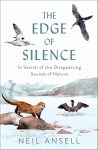 The Edge of Silence: In Search of the Disappearing Sounds of Nature by Neil Ansell: I owe this a full review. I’ve read all five of Ansell’s books and consider him one of the UK’s top nature writers. Here he draws lovely parallels between his advancing hearing loss and the biodiversity crisis we face because of climate breakdown. The world is going silent for him, but rare species may well become silenced altogether. His defiant, low-carbon adventures on the fringes offer one last chance to hear some of the UK’s beloved species, mostly seabirds.
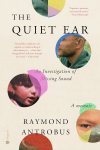 The Quiet Ear: An Investigation of Missing Sound by Raymond Antrobus: (Another memoir about being hard of hearing!) Antrobus’s first work of nonfiction takes up the themes of his poetry – being deaf and mixed-race, losing his father, becoming a parent – and threads them into an outstanding memoir that integrates his disability and celebrates his role models. This frank, fluid memoir of finding one’s way as a poet illuminates the literal and metaphorical meanings of sound. It offers an invaluable window onto intersectional challenges.
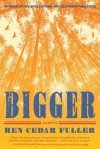 Bigger: Essays by Ren Cedar Fuller: Fuller’s perceptive debut work offers nine linked autobiographical essays in which she seeks to see herself and family members more clearly by acknowledging disability (her Sjögren’s syndrome), neurodivergence (she theorizes that her late father was on the autism spectrum), and gender diversity (her child, Indigo, came out as transgender and nonbinary; and she realizes that three other family members are gender-nonconforming). This openhearted memoir models how to explore one’s family history.
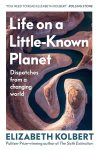 Life on a Little-Known Planet: Dispatches from a Changing World by Elizabeth Kolbert: These exceptional essays encourage appreciation of natural wonders and technological advances but also raise the alarm over unfolding climate disasters. There are travelogues and profiles, too. Most pieces were published in The New Yorker, whose generous article length allows for robust blends of research, on-the-ground experience, interviews, and in-depth discussion of controversial issues. (Review pending for the Times Literary Supplement.)
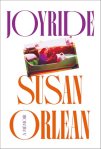 Joyride by Susan Orlean: Another one I need to review in the new year. As a long-time staff writer for The New Yorker (like Kolbert!), Orlean has had the good fortune to be able to follow her curiosity wherever it leads, chasing the subjects that interest her and drawing readers in with her infectious enthusiasm. She gives behind-the-scenes information on lots of her early stories and on each of her books. The Orchid Thief and the movie not-exactly-based on it, Adaptation, are among my favourites, so the long section on them was a thrill for me.
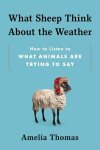 What Sheep Think About the Weather: How to Listen to What Animals Are Trying to Say by Amelia Thomas: A comprehensive yet conversational book that effortlessly illuminates the possibilities of human–animal communication. Rooted on her Nova Scotia farm but ranging widely through research, travel, and interviews, Thomas learned all she could from scientists, trainers, and animal communicators. Full of fascinating facts wittily conveyed, this elucidates science and nurtures empathy. (I interviewed the author, too.)
Poetry
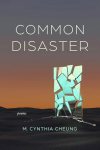 Common Disaster by M. Cynthia Cheung: Cheung is both a physician and a poet. Her debut collection is a lucid reckoning with everything that could and does go wrong, globally and individually. Intimate, often firsthand knowledge of human tragedies infuses the verse with melancholy honesty. Scientific vocabulary abounds here, with history providing perspective on current events. Ghazals with repeating end words reinforce the themes. These remarkable poems gild adversity with compassion and model vigilance during uncertainty.
Book Serendipity, September through Mid-November
I call it “Book Serendipity” when two or more books that I read at the same time or in quick succession have something in common – the more bizarre, the better. This is a regular feature of mine every couple of months. Because I usually have 20–30 books on the go at once, I suppose I’m more prone to such incidents. People frequently ask how I remember all of these coincidences. The answer is: I jot them down on scraps of paper or input them immediately into a file on my PC desktop; otherwise, they would flit away.
Thanks to Emma and Kay for posting their own Book Serendipity moments! (Liz is always good about mentioning them as she goes along, in the text of her reviews.)
The following are in roughly chronological order.
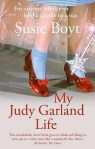
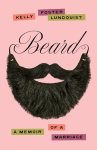
- An obsession with Judy Garland in My Judy Garland Life by Susie Boyt (no surprise there), which I read back in January, and then again in Beard: A Memoir of a Marriage by Kelly Foster Lundquist.
- Leaving a suicide note hinting at drowning oneself before disappearing in World War II Berlin; and pretending to be Jewish to gain better treatment in Aimée and Jaguar by Erica Fischer and The Lilac People by Milo Todd.
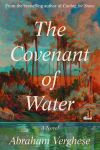
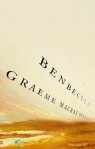
- Leaving one’s clothes on a bank to suggest drowning in The Covenant of Water by Abraham Verghese, read over the summer, and then Benbecula by Graeme Macrae Burnet.
- A man expecting his wife to ‘save’ him in Amanda by H.S. Cross and Beard: A Memoir of a Marriage by Kelly Foster Lundquist.
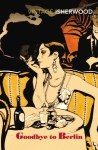 A man tells his story of being bullied as a child in Goodbye to Berlin by Christopher Isherwood and Beard by Kelly Foster Lundquist.
- References to Vincent Minnelli and Walt Whitman in a story from Touchy Subjects by Emma Donoghue and Beard by Kelly Foster Lundquist.
- The prospect of having one’s grandparents’ dining table in a tiny city apartment in Beard by Kelly Foster Lundquist and Wreck by Catherine Newman.
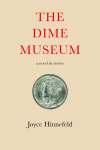
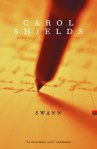
- Ezra Pound’s dodgy ideology was an element in The Dime Museum by Joyce Hinnefeld, which I reviewed over the summer, and recurs in Swann by Carol Shields.
- A character has heart palpitations in Andrew Miller’s story from The BBC National Short Story Award 2025 anthology and Endling by Maria Reva.
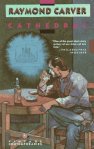
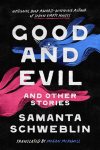
- A (semi-)nude man sees a worker outside the window and closes the curtains in one story of Cathedral by Raymond Carver and one from Good and Evil and Other Stories by Samanta Schweblin.
- The call of the cuckoo is mentioned in The Edge of Silence by Neil Ansell and Of All that Ends by Günter Grass.
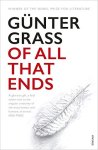 A couple in Italy who have a Fiat in Of All that Ends by Günter Grass and Caoilinn Hughes’s story from The BBC National Short Story Award 2025 anthology.
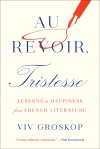
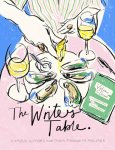
- Balzac’s excessive coffee consumption was mentioned in Au Revoir, Tristesse by Viv Groskop, one of my 20 Books of Summer, and then again in The Writer’s Table by Valerie Stivers.
- The main character is rescued from her suicide plan by a madcap idea in The Wedding People by Alison Espach and Endling by Maria Reva.
- The protagonist is taking methotrexate in Sea, Poison by Caren Beilin and Wreck by Catherine Newman.
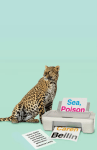
- A man wears a top hat in Benbecula by Graeme Macrae Burnet and one story of Cathedral by Raymond Carver.
- A man named Angus is the murderer in Benbecula by Graeme Macrae Burnet and Swann by Carol Shields.
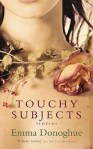 The thing most noticed about a woman is a hair on her chin in the story “Pluck” in Touchy Subjects by Emma Donoghue and Swann by Carol Shields.
- The female main character makes a point of saying she doesn’t wear a bra in Sea, Poison by Caren Beilin and Find Him! by Elaine Kraf.
- A home hairdressing business in one story of Cathedral by Raymond Carver and Emil & the Detectives by Erich Kästner.
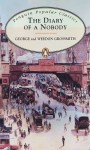
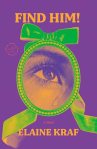
- Painting a bathroom fixture red: a bathtub in The Diary of a Nobody by George Grossmith, one of my 20 Books of Summer; and a toilet in Find Him! by Elaine Kraf.
- A teenager who loses a leg in a road accident in individual stories from A Wild Swan by Michael Cunningham and the Racket anthology (ed. Lisa Moore).
- Digging up the casket of a loved one in the wee hours features in Pet Sematary by Stephen King, one of my 20 Books of Summer; and one story of Pretty Monsters by Kelly Link.
- A character named Dani in the story “The St. Alwynn Girls at Sea” by Sheila Heti and The Silver Book by Olivia Laing; later, author Dani Netherclift (Vessel).
 Obsessive cultivation of potatoes in Benbecula by Graeme Macrae Burnet and The Martian by Andy Weir.
- The story of Dante Gabriel Rossetti digging up the poems he buried with his love is recounted in Sharon Bala’s story in the Racket anthology (ed. Lisa Moore) and one of the stories in Pretty Monsters by Kelly Link.
- Putting French word labels on objects in Alone in the Classroom by Elizabeth Hay and Find Him! by Elaine Kraf.
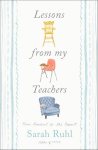 A man with part of his finger missing in Find Him! by Elaine Kraf and Lessons from My Teachers by Sarah Ruhl.
- In Minor Black Figures by Brandon Taylor, I came across a mention of the Italian film director Pier Paolo Pasolini, who is a character in The Silver Book by Olivia Laing.
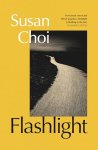
- A character who works in an Ohio hardware store in Flashlight by Susan Choi and Buckeye by Patrick Ryan (two one-word-titled doorstoppers I skimmed from the library). There’s also a family-owned hardware store in Alone in the Classroom by Elizabeth Hay.
- A drowned father – I feel like drownings in general happen much more often in fiction than they do in real life – in The Homecoming by Zoë Apostolides, Flashlight by Susan Choi, and Vessel by Dani Netherclift (as well as multiple drownings in The Covenant of Water by Abraham Verghese, one of my 20 Books of Summer).
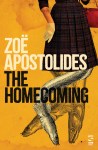
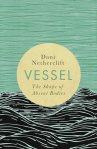
- A memoir by a British man who’s hard of hearing but has resisted wearing hearing aids in the past: first The Quiet Ear by Raymond Antrobus over the summer, then The Edge of Silence by Neil Ansell.
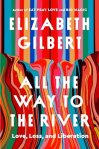 A loved one is given a six-month cancer prognosis but lives another (nearly) two years in All the Way to the River by Elizabeth Gilbert and Lessons from My Teachers by Sarah Ruhl.
- A man’s brain tumour is diagnosed by accident while he’s in hospital after an unrelated accident in Flashlight by Susan Choi and Saltwash by Andrew Michael Hurley.
- Famous lost poems in What We Can Know by Ian McEwan and Swann by Carol Shields.
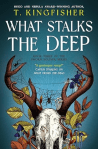
- A description of the anatomy of the ear and how sound vibrates against tiny bones in The Edge of Silence by Neil Ansell and What Stalks the Deep by T. Kingfisher.
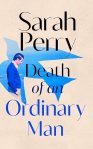
- Notes on how to make decadent mashed potatoes in Beard by Kelly Foster Lundquist, Death of an Ordinary Man by Sarah Perry, and Lessons from My Teachers by Sarah Ruhl.
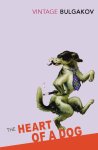
- Transplant surgery on a dog in Russia and trepanning appear in The Heart of a Dog by Mikhail Bulgakov and the poetry collection Common Disaster by M. Cynthia Cheung.
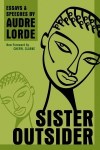
- Audre Lorde, whose Sister Outsider I was reading at the time, is mentioned in Lessons from My Teachers by Sarah Ruhl. Lorde’s line about the master’s tools never dismantling the master’s house is also paraphrased in Spent by Alison Bechdel.
- An adult appears as if fully formed in a man’s apartment but needs to be taught everything, including language and toilet training, in The Heart of a Dog by Mikhail Bulgakov and Find Him! by Elaine Kraf.
 Two sisters who each wrote a memoir about their upbringing in Spent by Alison Bechdel and Vessel by Dani Netherclift.
- The fact that ragwort is bad for horses if it gets mixed up into their feed was mentioned in Ghosts of the Farm by Nicola Chester and Understorey by Anna Chapman Parker.
- The Sylvia Plath line “the O-gape of complete despair” was mentioned in Vessel by Dani Netherclift, then I read it in its original place in Ariel later the same day.
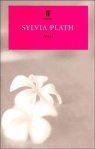
- A mention of the Baba Yaga folk tale (an old woman who lives in the forest in a hut on chicken legs) in Common Disaster by M. Cynthia Cheung and Woman, Eating by Claire Kohda. [There was a copy of Sophie Anderson’s children’s book The House with Chicken Legs in the Little Free Library around that time, too.]
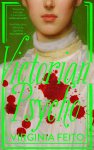
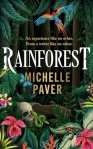
- Coming across a bird that seems to have simply dropped dead in Victorian Psycho by Virginia Feito, Vessel by Dani Netherclift, and Rainforest by Michelle Paver.
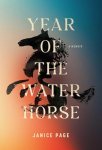
- Contemplating a mound of hair in Vessel by Dani Netherclift (at Auschwitz) and Year of the Water Horse by Janice Page (at a hairdresser’s).
- Family members are warned that they should not see the body of their loved one in Vessel by Dani Netherclift and Rainforest by Michelle Paver.
- A father(-in-law)’s swift death from oesophageal cancer in Year of the Water Horse by Janice Page and Death of an Ordinary Man by Sarah Perry.
- I saw John Keats’s concept of negative capability discussed first in My Little Donkey by Martha Cooley and then in Understorey by Anna Chapman Parker.
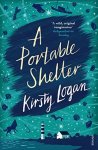
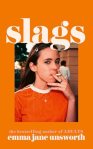
- I started two books with an Anne Sexton epigraph on the same day: A Portable Shelter by Kirsty Logan and Slags by Emma Jane Unsworth.
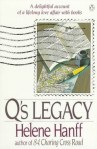
- Mentions of Martin Luther King, Jr.’s assassination in Q’s Legacy by Helene Hanff and Sister Outsider for Audre Lorde, both of which I was reading for Novellas in November.
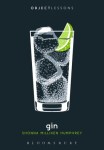
- Mentions of specific incidents from Samuel Pepys’s diary in Q’s Legacy by Helene Hanff and Gin by Shonna Milliken Humphrey, both of which I was reading for Nonfiction November/Novellas in November.
- Starseed (aliens living on earth in human form) in Beautyland by Marie-Helene Bertino and The Conspiracists by Noelle Cook.
- Reading nonfiction by two long-time New Yorker writers at the same time: Life on a Little-Known Planet by Elizabeth Kolbert and Joyride by Susan Orlean.
- The breaking of a mirror seems like a bad omen in The Spare Room by Helen Garner and The Bell Jar by Sylvia Plath.
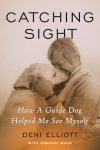 The author’s husband (who has a name beginning with P) is having an affair with a lawyer in Catching Sight by Deni Elliott and Joyride by Susan Orlean.
- Mentions of Lewis Hyde’s book The Gift in Lessons from My Teachers by Sarah Ruhl and The Serviceberry by Robin Wall Kimmerer; I promptly ordered the Hyde secondhand!
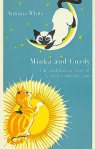
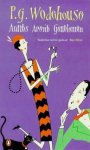
- The protagonist fears being/is accused of trying to steal someone else’s cat in Minka and Curdy by Antonia White and Aunts Aren’t Gentlemen by P.G. Wodehouse, both of which I was reading for Novellas in November.
What’s the weirdest reading coincidence you’ve had lately?
Most Anticipated Books of the Second Half of 2025
My “Most Anticipated” designation sometimes seems like a kiss of death, but other times the books I choose for these lists live up to my expectations, or surpass them!
(Looking back at the 25 books I selected in January, I see that so far I have read and enjoyed 8, read but been disappointed by 4, not yet read – though they’re on my Kindle or accessible from the library – 9, and not managed to get hold of 4.)
This time around, I’ve chosen 15 books I happen to have heard about that will be released between July and December: 7 fiction and 8 nonfiction. (In release date order within genre. UK release information generally given first, if available. Note given on source if I have managed to get hold of it already.)
Fiction
 The Girls Who Grew Big by Leila Mottley [10 July, Fig Tree (Penguin) / June 24, Knopf]: I was impressed with the confident voice in Mottley’s debut, Nightcrawling. She’s just 22 years old so will only keep getting better. This is “about the joys and entanglements of a fierce group of teenage mothers in a small town on the Florida panhandle. … When [16-year-old Adela] tells her parents she’s pregnant, they send her from … Indiana to her grandmother’s in Padua Beach, Florida.” I’ve read one-third so far. (Digital review copy)
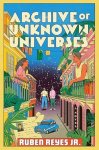 Archive of Unknown Universes by Ruben Reyes Jr. [21 Aug., Footnote Press (Bonnier) / July 1, Mariner Books]: There Is a Rio Grande in Heaven was a strong speculative short story collection and I’m looking forward to his debut novel, which involves alternative history elements. (Starred Kirkus review.) “Cambridge, 2018. Ana and Luis’s relationship is on the rocks, despite their many similarities, including … mothers who both fled El Salvador during the war. In her search for answers, and against her best judgement, Ana uses The Defractor, an experimental device that allows users to peek into alternate versions of their lives.”
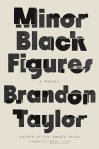 Minor Black Figures by Brandon Taylor [Oct. 7, Riverhead / 5 March 2026, Jonathan Cape (Penguin)]: I’ve read all of his works … but I’m so glad he’s moving past campus settings now. “A newcomer to New York, Wyeth is a Black painter who grew up in the South and is trying to find his place in the contemporary Manhattan art scene. … When he meets Keating, a white former seminarian who left the priesthood, Wyeth begins to reconsider how to observe the world, in the process facing questions about the conflicts between Black and white art, the white gaze on the Black body, and the compromises we make – in art and in life.” (Edelweiss download)
 Heart the Lover by Lily King [16 Oct., Canongate / Oct. 7, Grove Press]: I’ve read several of her books and after Writers & Lovers I’m a forever fan. “In the fall of her senior year of college, [Jordan] meets two star students from her 17th-Century Lit class, Sam and Yash. … she quickly discovers the pleasures of friendship, love and her own intellectual ambition. … when a surprise visit and unexpected news brings the past crashing into the present, Jordan returns to a world she left behind and is forced to confront the decisions and deceptions of her younger self.” (Edelweiss download)
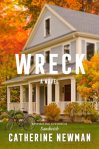 Wreck by Catherine Newman [28 Oct., Transworld / Harper]: This is a sequel to Sandwich, and in general sequels should not exist. However, I can make a rare exception. Set two years on, this finds “Rocky, still anxious, nostalgic, and funny, obsessed with a local accident that only tangentially affects them—and with a medical condition that, she hopes, won’t affect them at all.” In a recent Substack post, Newman compared it to Small Rain, my book of 2024, for the focus on a mystery medical condition. (Edelweiss download)
 Palaver by Bryan Washington [Nov. 4, Farrar, Straus, and Giroux / 1 Jan. 2026, Atlantic]: I’ve read all his work and I’m definitely a fan, though I wish that (like Taylor previously) he wouldn’t keep combining the same elements each time. I’ll be reviewing this early for Shelf Awareness; hooray that I don’t have to wait until 2026! “He’s entangled in a sexual relationship with a married man, and while he has built a chosen family in Japan, he is estranged from his family in Houston, particularly his mother … Then, in the weeks leading up to Christmas, ten years since they’ve last seen each other, the mother arrives uninvited on his doorstep. Separated only by the son’s cat, Taro, the two of them bristle against each other immediately.” (Edelweiss download)
The Silver Book by Olivia Laing [6 Nov., Hamish Hamilton (Penguin) / 11 Nov., Farrar, Straus and Giroux]: I’ve read all but one of Laing’s books and consider her one of our most important contemporary thinkers. I was also pleasantly surprised by Crudo so will be reading this second novel, too. I’ll be reviewing it early for Shelf Awareness as well. “September 1974. Two men meet by chance in Venice. One is a young English artist, in panicked flight from London. The other is Danilo Donati, the magician of Italian cinema. … The Silver Book is at once a queer love story and a noirish thriller, set in the dream factory of cinema. (Edelweiss download)
Nonfiction
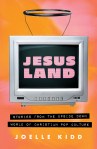 Jesusland: Stories from the Upside[-]Down World of Christian Pop Culture by Joelle Kidd [Aug. 12, ECW]: “Through nine incisive, honest, and emotional essays, Jesusland exposes the pop cultural machinations of evangelicalism, while giving voice to aughts-era Christian children and teens who are now adults looking back at their time measuring the length of their skirts … exploring the pop culture that both reflected and shaped an entire generation of young people.” Yep, that includes me! Looking forward to a mixture of Y2K and Jesus Freak. (NetGalley download)
 Somebody Is Walking on Your Grave: My Cemetery Journeys by Mariana Enríquez; translated from Spanish by Megan McDowell [25 Sept., Granta / Sept. 30, Hogarth]: I’ve enjoyed her creepy short stories, plus I love touring graveyards. “In 2013, when the body of a friend’s mother who was disappeared during Argentina’s military dictatorship was found in a common grave, she began to examine more deeply the complex meanings of cemeteries and where our bodies come to rest. In this vivid, cinematic book … Enriquez travels North and South America, Europe and Australia … [and] investigates each cemetery’s history, architecture, its dead (famous and not), its saints and ghosts, its caretakers and visitors.” (Edelweiss download, for Shelf Awareness review)
 Ghosts of the Farm: Two Women’s Journeys Through Time, Land and Community by Nicola Chester [30 Sept., Chelsea Green]: Nicola is our local nature writer and is so wise on class and countryside matters. On Gallows Down was her wonderful debut and, though I know very little about it, I’m looking forward to her second book. “This is the story of Miss White, a woman who lived in the author’s village 80 years ago, a pioneer who realised her ambition to become a farmer during the Second World War. … Moving between Nicola’s own attempts to work outdoors and Miss White’s desire to farm a generation earlier, Nicola explores the parallels between their lives – and the differences.”
 Death of an Ordinary Man by Sarah Perry [2 Oct., Vintage (Penguin)]: I’ve had a very mixed experience with Perry’s fiction, but a short bereavement memoir should be right up my street. “Sarah Perry’s father-in-law, David, died at home nine days after a cancer diagnosis and having previously been in the good health. The speed of his illness outstripped that of the NHS and social care, so the majority of nursing fell to Sarah and her husband. They witnessed what happens to the body and spirit, hour by hour, as it approaches death.”
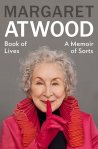 Book of Lives: A Memoir of Sorts by Margaret Atwood [4 Nov., Vintage (Penguin) / Doubleday]: It’s Atwood; ’nuff said, though I admit I’m daunted by the page count. “Raised by ruggedly independent, scientifically minded parents – entomologist father, dietician mother – Atwood spent most of each year in the wild forest of northern Quebec. … [She links] seminal moments to the books that have shaped our literary landscape. … In pages bursting with bohemian gatherings … and major political turning points, we meet poets, bears, Hollywood actors and larger-than-life characters straight from the pages of an Atwood novel.”
 Tigers Between Empires: The Improbable Return of Great Cats to the Forests of Russia and China by Jonathan C. Slaght [4 Nov., Allen Lane / Farrar, Straus and Giroux]: Slaght’s Owls of the Eastern Ice was one of the best books I read in 2022; he’s a top-notch nature and travel writer with an environmentalist’s conscience. After the fall of the Soviet Union, “scientists came together to found the Siberian Tiger Project[, which …] captured and released more than 114 tigers over three decades. … [C]haracters, both feline and human, come fully alive as we travel with them through the quiet and changing forests of Amur.” (NetGalley download)
Joyride by Susan Orlean [6 Nov., Atlantic Books / Oct. 14, Avid Reader Press (Simon & Schuster)]: I’m a fan of Orlean’s genre-busting nonfiction, e.g. The Orchid Thief and The Library Book, and have always wanted to try more by her. “Joyride is her most personal book ever—a searching journey through finding her feet as a journalist, recovering from the excruciating collapse of her first marriage, falling head-over-heels in love again, becoming a mother while mourning the decline of her own mother, sojourning to Hollywood for films based on her work. … Joyride is also a time machine to a bygone era of journalism.”
 A Long Game: Notes on Writing Fiction by Elizabeth McCracken [Dec. 2, Ecco]: I’m not big on craft books, but will occasionally read one by an author I admire; McCracken won my heart with The Hero of This Book. “How does one face the blank page? Move a character around a room? Deal with time? Undertake revision? The good and bad news is that in fiction writing, there are no definitive answers. … McCracken … has been teaching for more than thirty-five years [… and] shares insights gleaned along the way, offering practical tips and incisive thoughts about her own work as an artist.” (Edelweiss download)
As a bonus, here are two advanced releases that I reviewed early:
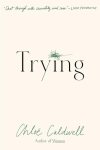 Trying: A Memoir by Chloe Caldwell [Aug. 5, Graywolf] (Reviewed for Foreword): Caldwell devoted much of her thirties to trying to get pregnant via intrauterine insemination. She developed rituals to ease the grueling routine: After every visit, she made a stop for luxury foodstuffs and beauty products. But then her marriage imploded. When she began dating women and her determination to become a mother persisted, a new conception strategy was needed. The book’s fragmentary style suits its aura of uncertainty about the future. Sparse pages host a few sentences or paragraphs, interspersed with wry lists.
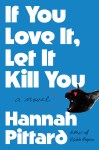 If You Love It, Let It Kill You by Hannah Pittard [July 15, Henry Holt] (Reviewed for Shelf Awareness): A quirky work of autofiction about an author/professor tested by her ex-husband’s success, her codependent family, and an encounter with a talking cat. Hana P. (or should that be Pittard?) relishes flouting the “rules” of creative writing. With her affectations and unreliability, she can be a frustrating narrator, but the metafictional angle renders her more wily than precious. The dialogue and scenes sparkle, and there are delightful characters This gleefully odd book is perfect for Miranda July and Patricia Lockwood fans.
I can also recommend:
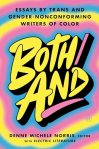
Both/And: Essays by Trans and Gender-Nonconforming Writers of Color, ed. Denne Michele Norris [Aug. 12, HarperOne / 25 Sept., HarperCollins] (Review to come for Shelf Awareness)
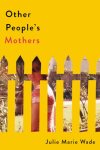
Other People’s Mothers by Julie Marie Wade [Sept. 2, Univ. of Florida Press] (Review pending for Foreword)
Which of these catch your eye? Any other books you’re looking forward to in this second half of the year?
Book Serendipity, August to October 2024
I call it “Book Serendipity” when two or more books that I read at the same time or in quick succession have something in common – the more bizarre, the better. This is a regular feature of mine every couple of months. Because I usually have 20–30 books on the go at once, I suppose I’m more prone to such incidents. People frequently ask how I remember all of these coincidences. The answer is: I jot them down on scraps of paper or input them immediately into a file on my PC desktop; otherwise, they flit away!
The following are in roughly chronological order.
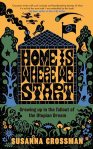
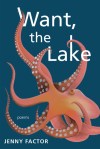
- The William Carlos Williams line “no ideas but in things” is quoted in Home Is Where We Start by Susanna Crossman and echoed with a slight adaptation in Want, the Lake by Jenny Factor.
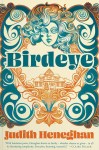
- A woman impulsively stops into a tattoo parlour in We Are Animals by Jennifer Case and Birdeye by Judith Heneghan.
- Cleaning up a partner’s bristles from the sink in 300 Arguments by Sarah Manguso and The Echoes by Evie Wyld.
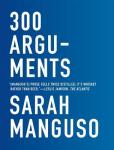
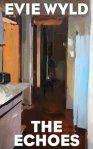
- Sarah Manguso, by whom I was reading two books for a Bookmarks article, was quoted in Some of Us Just Fall by Polly Atkin.
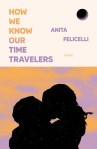
- Someone is annoyed at their spouse making a mess cooking lemon preserves in How We Know Our Time Travelers by Anita Felicelli and Liars by Sarah Manguso, both of which are set in California.
- Rumpelstiltskin is referenced in one short story of a speculative collection: How We Know Our Time Travelers by Anita Felicelli and The Man in the Banana Trees by Marguerite Sheffer.
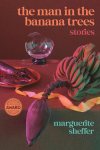
- A father who is hard of hearing, and an Australian woman looking for traces of her grandmother’s life in England in The House with All the Lights On by Jessica Kirkness and The Echoes by Evie Wyld.
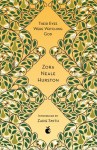
- A character named Janie or Janey in Their Eyes Were Watching God by Zora Neale Hurston and The Echoes by Evie Wyld. The Pre-Raphaelite model Janey is also mentioned in The Garden Against Time by Olivia Laing.
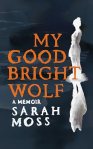 Contrasting one’s childhood love of the Little House on the Prairie books with reading them as an adult and being aware of the racial and colonial implications in Home Is Where We Start by Susanna Crossman and My Good Bright Wolf by Sarah Moss.
- A mention of Little Women in A Perfect Arrangement by Suzanne Berne and My Good Bright Wolf by Sarah Moss.
- A character grew up in a home hair-dressing business in A Perfect Arrangement by Suzanne Berne and Home Is Where We Start by Susanna Crossman.
- The discovery of an old pram in an outbuilding in Instructions for a Heatwave by Maggie O’Farrell and Mina’s Matchbox by Yōko Ogawa.
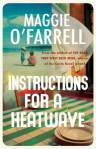
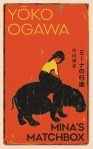
- An Irish woman named Aoife in My Good Bright Wolf by Sarah Moss and Instructions for a Heatwave by Maggie O’Farrell.
- Cooking then throwing out entire meals in My Good Bright Wolf by Sarah Moss and The Echoes by Evie Wyld. (Also throwing out a fresh meal in Birdeye by Judith Heneghan. Such scenes distress me!)
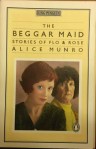 A new lover named Simon in one story of The Beggar Maid by Alice Munro and The Echoes by Evie Wyld.
- A character writes a recommendation letter for someone who then treats them vindictively, because they assumed the letter was negative when it wasn’t, in A Perfect Arrangement by Suzanne Berne and one story of The Beggar Maid by Alice Munro.
- After her parents’ divorce, the author never had a designated bedroom in her father’s house in Home Is Where We Start by Susanna Crossman and The Garden Against Time by Olivia Laing.
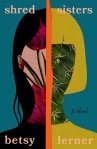 Reading The Bell Jar as a teenager in Shred Sisters by Betsy Lerner and My Good Bright Wolf by Sarah Moss.
- A contentious Town Hall meeting features in A Perfect Arrangement by Suzanne Berne and Birdeye by Judith Heneghan.
- The wife is pregnant with twins in A Perfect Arrangement by Suzanne Berne and The Year of Living Biblically by A.J. Jacobs. (There are also twins in Birdeye by Judith Heneghan. In general, I find that they occur far more often in fiction than in real life!)
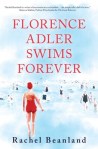
- 1930s Florida as a setting in Florence Adler Swims Forever by Rachel Beanland and Their Eyes Were Watching God by Zora Neale Hurston.
- Dorothy Wordsworth and her journals are discussed in Some of Us Just Fall by Polly Atkin and My Good Bright Wolf by Sarah Moss.
- Wordsworth’s daffodils are mentioned in Signs, Music by Raymond Antrobus and My Good Bright Wolf by Sarah Moss.
- “F*ck off” is delivered in an exaggerated English accent in Birdeye by Judith Heneghan and The Souvenir Museum by Elizabeth McCracken.
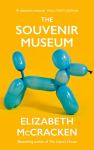
- The main character runs a country store in Their Eyes Were Watching God by Zora Neale Hurston and The Beggar Maid by Alice Munro.
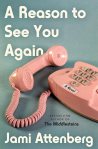 Reading a second novel this year in which the younger sister of a pair wants to go into STEM and joins the Mathletes in high school: first was A Reason to See You Again by Jami Attenberg; later was Shred Sisters by Betsy Lerner.
- An older sister who has great trouble attending normal school and so is placed elsewhere (including a mental institution) for a total of two years in Learning to Think by Tracy King and Shred Sisters by Betsy Lerner.
- The idea of trees taking revenge on people for environmental destruction in one story of The Secret Life of Insects by Bernardo Esquinca and one poem of The Holy & Broken Bliss by Alicia Ostriker.
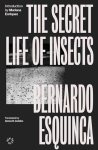
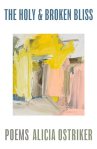
- An illiterate character in Instructions for a Heatwave by Maggie O’Farrell and Also Here by Brooke Randel.
-
 Controversy over throwing a dead body into the trash in Birdeye by Judith Heneghan and Strange Sally Diamond by Liz Nugent.
- A publishing assistant who wears a miniskirt and Doc Martens in Shred Sisters by Betsy Lerner and Summer Fridays by Suzanne Rindell.
- Ancestors’ experience in Auschwitz in Also Here by Brooke Randel and Transgenesis by Ava Winter.
- The protagonist finds it comforting when her boyfriend lies down with his full weight on her in Shred Sisters by Betsy Lerner and The Echoes by Evie Wyld.
- A woman badgers her ex-husband about when his affair with his high school/college sweetheart started (before or after the divorce) in Shred Sisters by Betsy Lerner and Liars by Sarah Manguso.
 I encountered an Irish matriarch who married the ‘wrong’ brother, not Frank, in The Bee Sting by Paul Murray earlier in the year, and then in Instructions for a Heatwave by Maggie O’Farrell.
- A boy is playing in the family car on the driveway when it rolls backwards and kills someone in A Perfect Arrangement by Suzanne Berne and Tell Me Everything by Elizabeth Strout.
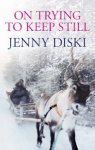
- Quantoxhead, Somerset is mentioned in On Trying to Keep Still by Jenny Diski and A House Unlocked by Penelope Lively.
- Tapeworms are mentioned in On Trying to Keep Still by Jenny Diski and one story of The Best Short Stories 2023: The O. Henry Prize Winners, ed. Lauren Groff.
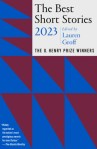
- A description of horrific teeth in one story of The Best Short Stories 2023: The O. Henry Prize Winners, ed. Lauren Groff, and one story of The Long Swim by Terese Svoboda.
- A character researches potato blight, and another keeps his smoking a secret from his wife, in one story of The Best Short Stories 2023: The O. Henry Prize Winners, ed. Lauren Groff, and Tell Me Everything by Elizabeth Strout.
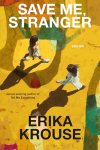 A piano gets mauled out of anger in one story of Save Me, Stranger by Erika Krouse and Strange Sally Diamond by Liz Nugent.
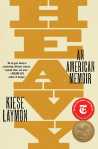
- Men experiencing eating disorders in Heavy by Kiese Laymon and Heartstopper Volumes 3 and 4 by Alice Oseman.
- Black people deliberately changing their vocabulary and speech register when talking to white people in James by Percival Everett and Heavy by Kiese Laymon.
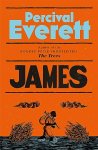
- My second book of the year in which a woman from centuries ago who magically appears in the present requests to go night clubbing: first The Ministry of Time by Kaliane Bradley, then Isabella & Blodwen by Rachael Smith.
- Characters named Sadie in James by Percival Everett, The Souvenir Museum by Elizabeth McCracken, and Still Life at Eighty by Abigail Thomas.
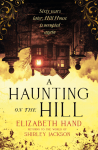
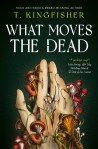
- Creepy hares in horror: A Haunting on the Hill by Elizabeth Hand and What Moves the Dead by T. Kingfisher. There were weird rabbits in I’m the King of the Castle by Susan Hill, too.
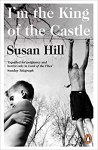
- I read two scenes of a calf being born, one right after the other: in Dangerous Enough by Becky Varley-Winter, then I’m the King of the Castle by Susan Hill.
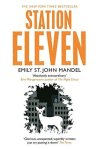
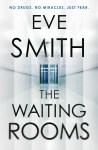
- I read about an animal scratch leading to infection leading to death in a future with no pharmaceuticals in Station Eleven by Emily St. John Mandel in the morning and then in the afternoon heard Eve Smith mention the same thing happening due to antibiotic resistance in her novel The Waiting Rooms. Forget about R.I.P.; this is the stuff that scares me…
What’s the weirdest reading coincidence you’ve had lately?
Three on a Theme: English Gardeners (Bradbury, Laing and Mabey)
These three 2024 releases share a passion for gardening – but not the old-fashioned model of bending nature to one’s will to create aesthetically pleasing landscapes. Instead, the authors are also concerned with sustainability and want to do the right thing in a time of climate crisis (all three mention the 2022 drought, which saw the first 40 °C day being recorded in the UK). They seek to strike a balance between human interference and letting a site go wild, and they are cognizant of the wider political implications of having a plot of land of one’s own. All three were borrowed from the public library. #LoveYourLibrary
One Garden against the World: In Search of Hope in a Changing Climate by Kate Bradbury
Bradbury is Wildlife Editor of BBC Gardeners’ World Magazine and makes television appearances in the UK. She’s owned her suburban Brighton home for four years and has tried to turn its front and back gardens into havens, however small, for wildlife. The book covers April 2022 to June 2023, spotlighting the drought summer. “It’s about a little garden in south Portslade and one terrified, angry gardener.” Month by month, present-tense chapters form not quite a diary, but a record of what she’s planting, pruning, relocating, and so on. There is also a species profile at the end of each chapter, usually of an insect (as in the latest Dave Goulson book) – she’s especially concerned that she’s seeing fewer, yet she’s worried for local birds, trees and hedgehogs, too.
Often, she takes matters into her own hands. She plucks caterpillars from vegetation in the path of strimmers in the park and raises them at home; protects her garden’s robins from predators and provides enough food so they can nest and raise five fledglings; undertakes to figure out where her pond’s amphibians have come from; rescues hedgehogs; and bravely writes to neighbours who have scaffolding up (for roof repairs, etc.) beseeching them to put up swift boxes while they’re at it. Sometimes it works: a pub being refurbished by new owners happily puts up sparrow boxes when she tells them the birds have always nested in crevices in the building. Sometimes it doesn’t; people ignore her letters and she can’t seem to help but take it personally.
For individuals, it’s all too easy to be overtaken by anxiety, helplessness and despair, and Bradbury acknowledges that collective action and solidarity are vital. “I am reminded, once again, that it’s the community that will save these trees, not me. I’m reminded that community is everything.” She bands together with other environmentally minded people to resist a local development, educate the public about hedgehogs through talks, and oppose “Drone Bastard,” who flies drones at seagulls nesting on rooftops (not strictly illegal; disappointingly, their complaint doesn’t get anywhere with the police, RSPB or RSPCA).

Along the way, there are a few insights into the author’s personal life. She lives with her partner Emma and dog Tosca and accesses wild walks even right on the edge of a city in the Downs. Separate visits to her divorced parents are chances for more nature spotting – in Suffolk to see her father, she hears her first curlew and lapwings – but also involve some sadness, as her mother has aphasia and fatigue after a stroke.
Nearly every day of the chronology seems to bring more bad news for nature. “It’s hard, sometimes,” she admits, “trying to enjoy natural, wonderful events, trying to keep the clawing sense of unease at bay”. She is staunch in her fond stance: “I will love it, with all my heart, whatever has managed to remain, whatever is left.” And she models through her own amazingly biodiverse garden the ways we can extend refuge to other creatures if we throw out that pointless notion of ‘tidiness.’ “The UK’s 30 million gardens represent 30 million opportunities to create green spaces that hold on to water and carbon, create shade, grow food and provide habitats for wildlife that might otherwise not survive.” Reading this made me feel less guilty about the feral tangle of buddleia, ragwort, hemp agrimony and bindweed overtaking the parts of our back garden that aren’t given over to meadow, pond and hedge. Every time I venture back there I see tons of insects and spiders, and that’s all that matters.
My main critique is that one year would have been adequate, cutting the book to 250 pages rather than 300 and ensuring less repetition while still being a representative time period. But Bradbury is impressive for her vigilance and resolve. Some might say that she takes herself and life too seriously, but it’s really more that she’s aware of the scale of destruction already experienced and realistic about what we stand to lose.
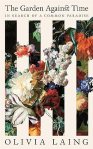
The Garden Against Time: In Search of a Common Paradise by Olivia Laing
I consider Laing one of our most important public thinkers. I saw her introduce the book via the online Edinburgh Book Festival event “In Search of Eden,” in which she appeared on screen and was interviewed by JC Niala. Laing explained that this is not a totally new topic for her as she has been involved in environmental activism and in herbalism. But in 2020, when she and her much older husband bought a house in Suffolk – the first home she has owned after a life of renting – she started restoring its walled garden, which had been created in the 1960s by Mark Rumary. For a year, she watched and waited to see what would happen in the garden, only removing obvious weeds. This coincided with lockdown, so visits to gardens and archives were limited; she focused more on the creation of her own garden and travelling through literature. A two-year diary resulted, in seven notebooks.
Niala observed that the structure of the book, with interludes set in the Suffolk garden, means that the reader has a place to come back to between the deep dives into history. Why make a garden? she asked Laing. Beauty, pleasure, activity: these would be pat answers, Laing insisted. Instead, as with all her books, the reason is the impulse to make complicated structures. Repetitive tasks can be soothing; “the drudgery can be compelling as well.”
Laing spoke of a garden as both refuge and resistance, a mix of wild and cultivated. In this context, Derek Jarman’s Dungeness garden was a “wellspring of inspiration” for her, “a riposte to a toxic atmosphere” of nuclear power and the AIDS crisis (Rumary, like Jarman, was gay). It’s hard to tell where the beach ends and his garden begins, she noted, and she tried to make her garden similarly porous by kicking a hole in the door so frogs could get in. She hopes it will be both vulnerable and robust, a biodiversity hotspot. With Niala, she discussed the idea of a garden as a return to innocence. We have a “tarnished Eden” due to climate change, and we have to do what we can to reverse that.
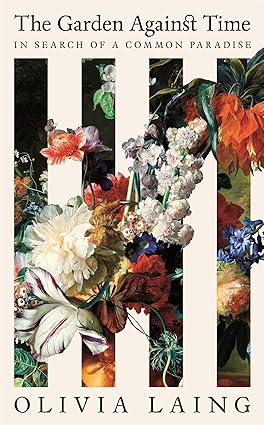
The event was brilliant – just the level of detail I wanted, with Laing flitting between subjects and issuing amazingly intelligent soundbites. The book, though, seemed like page after page about Milton (Paradise Lost) and Iris Origo or the Italian Renaissance. I liked it best when it stayed personal to her family and garden project. There are incredible lyric passages, but just stringing together floral species’ names – though they’re lovely and almost incantatory – isn’t art; it also shuts out those of us who don’t know plants, who aren’t natural gardeners. I wasn’t about to Google every plant I didn’t know (though I did for a few). Also, I have read a lot about Derek Jarman in particular. So my reaction was admiration rather than full engagement, and I only gave the book a light skim in the end. It is striking, though, how she makes this subject political by drawing in equality of access and the climate crisis. (Shortlisted for the Kirkus Prize and the Wainwright Prize.) 
Some memorable lines:
“A garden is a time capsule, as well as a portal out of time.”
“A garden is a balancing act, which can take the form of collaboration or outright war. This tension between the world as it is and the world as humans desire it to be is at the heart of the climate crisis, and as such the garden can be a place of rehearsal too, of experimenting with this relationship in new and perhaps less harmful ways.”
“the garden had become a counter to chaos on a personal as well as a political level”
“the more sinister legacy of Eden: the fantasy of perpetual abundance”
The Accidental Garden: Gardens, Wilderness and the Space in Between by Richard Mabey
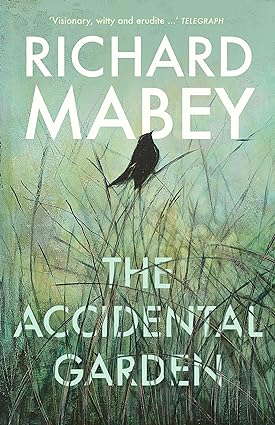 Mabey gives a day-to-day description of a recent year on his two-acre Norfolk property, but also an overview of the past 20 years of change – which of course pretty much always equates to decline. He muses on wildflowers, growing a meadow and hedgerow, bird behaviour, butterfly numbers, and the weather becoming more erratic and extreme. What he sees at home is a reflection of what is going on in the world at large. “It would be glib to suggest that the immeasurably complex problems of a whole world are mirrored in the small confrontations and challenges of the garden. But maybe the mindset needed for both is the same: the generosity to reset the power balance between ourselves and the natural world.” He seeks to create “a fusion garden” of native and immigrant species, trying to intervene as little as possible. The goal is to tend the land responsibly and leave it better off than he found it. As with the Laing, I found many good passages, but overall I felt this was thin – perhaps reflecting his age and loss of mobility – or maybe a swan song. Again, I just skimmed, even though it’s only 160 pages.
Some memorable lines:
“being Earth’s creatures ourselves, we too have a right to a niche. So in our garden we’ve had more modest ambitions, for ‘parallel development’ you might say, and a sense of neighbourliness with our fellow organisms.”
“We feel embattled at times, and that we should try to make some sort of small refuge, a natural oasis.”
“A garden, with its complex interactions between humans and nature, is often seen as a metaphor for the wider world. But if so, is our plot a microcosm of this troubled arena or a refuge from it?”
You might think I would have been more satisfied by Mabey’s contemplative bent, or Laing’s wealth of literary and historical allusions. It turns out that when it comes to gardening, Bradbury’s practical approach was what I was after. But you may gravitate to any of these, depending on whether you want something for the hands, intellect or memory.
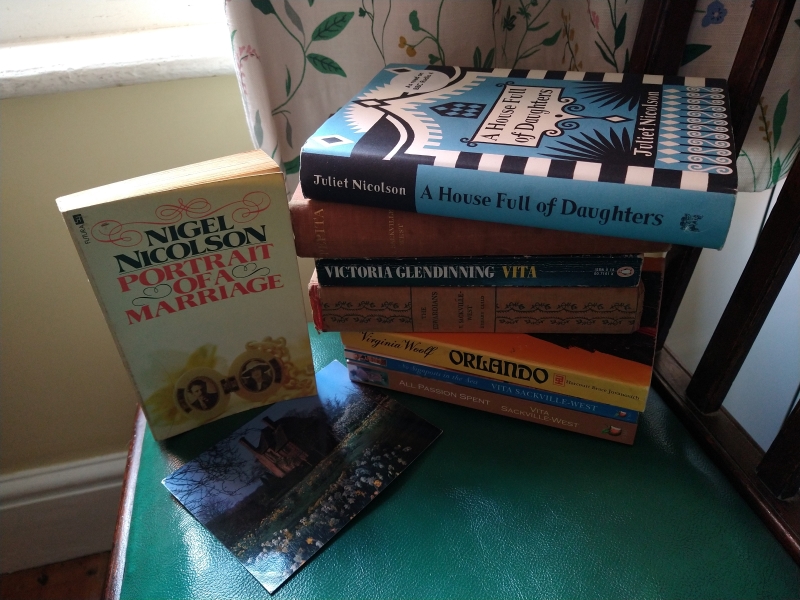
20 Books of Summer, 5: A House Full of Daughters by Juliet Nicolson
Journalist and popular historian Juliet Nicolson is Vita Sackville-West’s granddaughter and one of the few remaining guardians of her living memory. This 2015 family memoir chronicles the lives of seven (eight, really) generations of women and travels from Malaga in the 1830s to present-day England. Nicolson acknowledges the inherited privilege that has typified this clan since the time of Vita’s grandmother but prefers to emphasize the roles that place and talent have played. It is enough of a biography of Vita to have won a Bisexual Book Award but, even though Vita only had sons, the focus is on mother–daughter bonds and how values and experiences have recurred across nearly two centuries.
First came Pepita, who rose from poverty in southern Spain to be a legendary dancer (“the Beyoncé of her day,” Nicolson quipped at an online event I attended – see below) and catch the eye of an English diplomat, Lionel Sackville-West, at a performance in Paris. Although Pepita was already married to her dancing teacher, she shook off her controlling mother and became Sackville-West’s longtime mistress, bearing him seven children. They could all have been disinherited for illegitimacy, however, had Pepita’s daughter Victoria not secured the link – and access to the family estate, Knole – by marrying her cousin, young Lionel Sackville-West. Vita wrote in Pepita, her joint biography of her mother and grandmother, “My mother appears to have been born with the faculty of attracting the most peculiar and improbable happenings,” such as a proposal of marriage from the recently widowed U.S. president, Chester Arthur, when she accompanied her father to Washington, DC.

Vita is the book’s presiding spirit and pivot point, but I already knew a lot about her from reading Victoria Glendinning’s biography plus two of her novels, so this material was too familiar. The fact that we then leap from daughters to a daughter-in-law (Nicolson’s mother, Philippa Tennyson-d’Eyncourt – these figures are all posher than posh!) is unfortunate as it dilutes the theme. However, Nicolson gives a behind-the-scenes look at Sissinghurst and the marriages between Vita and Harold, loving but also a cover for same-sex relationships for both of them; and Nigel and Philippa, which was a disaster almost from the start. Nicolson is also brave to admit the alcoholism that she subconsciously received from her mother. Philippa died at 58, but by admitting she had a problem Nicolson was able to get help and turn things around. Two generations followed: her two daughters and one granddaughter, who is now 11.
Nicolson sees patterns repeating across the generations: emotional abandonment by parents, “the lack of confidence, the fear of failure, and the seeking of approval where there was none” as well as “writing about the life and work of an earlier generation.” She hopes that with this book she has marked the arrival of “an increasingly tolerant and accepting generation, one that is not afraid to learn from the mistakes of the past and is determined not to repeat them”. (Fun but unrelated fact: Penelope Fitzgerald was one of Nicolson’s teachers.)

On the staircase leading up to Vita’s study in the tower, September 2009.
I visited Sissinghurst in 2009 – I can’t believe I haven’t been back in the past 15 years – and when we briefly lived in Sevenoaks in 2012 we also went to Knole. Both are magical places, especially Sissinghurst. For a few years there I was on a kick of reading a lot by and about Vita (I can recommend No Signposts in the Sea) and I also absorbed a fair bit via Adam Nicolson’s books (that’s Juliet’s brother) and his wife Sarah Raven’s – her recipes are to die for, and she’s kept up the gardens in a way that would make Vita proud. So I’d say it probably helps to have an existing interest in the family, but it should be a reasonably engrossing read in any case. (Free from a neighbour)
Yesterday I watched “The Inspiration of Vita Sackville-West,” a recording of an RSL event held at the London Library in October that was aired to tie in with their annual Dalloway Day as well as the 95th anniversary of the publication of Virginia Woolf’s Orlando (for which Vita was a model) and, of course, Pride Month. The panelists were Juliet Nicolson; trans novelist Shola von Reinhold, whose LOTE (2020) won the Republic of Consciousness and James Tait Black Memorial Prizes; fashion critic Charlie Porter; and writer Olivia Laing. The discussion was expertly chaired by Shahidha Bari, an academic, fashion writer and presenter of BBC Two’s Inside Culture. She opened by asking each speaker to define Vita in one word. Nicolson chose “lover,” which von Reinhold echoed. Porter said “physical.” Laing cheated with a made-up compound word: “androgynous-aristocratic-aesthete.”
And the conversation went on from there. Nicolson spoke of her grandmother as a formidable woman, tall and tobacco-scented, and remembered the exotic treasures she and her siblings found in Vita’s tower study, such as a bottle of emerald-green nail polish. She described Vita as enigmatic and representing duality: she was born a Victorian but has been embraced by modernist and queer studies; she was conventional in some ways, but also a rebel. Porter has written about fashion and the Bloomsbury circle, with Woolf as one of his subjects, so he thinks about Vita mostly as a muse. He read from Vita’s letter to Harold describing meeting Woolf, whom she thought “quite old” and “atrociously dressed.” Nonetheless, she’d lost her heart. Woolf in her turn commented on Vita’s moustache, which was likely a sign of her Spanish heritage rather than excess testosterone as some have theorized.
For von Reinhold, Vita is an early example of androgyny, a precursor to today’s trans and nonbinary identities. Laing, who has recently published a book on gardening, focused on Vita as a garden writer and designer. She said she doesn’t really value Vita’s novels but thinks her garden books (collections of her Observer columns) are extraordinary and read a passage in which she dreamt up the famous White Garden she would create at Sissinghurst (I read a kinda crummy novel about it a few years ago, The White Garden by Stephanie Barron).
The event gave a very good sense of Vita as a person but not as a writer. Audience questions brought up her poetry (oh God, it’s awful!) and travel books but that was as far as it went, and there was no discussion of the novels. Nicolson mentioned Pepita in passing but mostly talked about Portrait of a Marriage, which was half written by Vita and then finished by Nigel, a publisher (he was half of Weidenfeld and Nicolson, aka W&N). He had the courage to reveal his mother’s sexuality and Nicolson said that she believes Vita’s legacy is courage – to create a garden from scratch as a self-taught amateur, yes; but mostly to be oneself.
Preposterous #NovNov23 Catch-Up Post
I have a big pile of novellas I read last month but never wrote about, plus a few more I’ve sneaked in by finishing them over the past couple of days. I tweaked my shoulder last weekend and the discomfort has moved into my neck, making daily life, and sleep, difficult. A taste of what it’s like to live with chronic pain, I suppose. Add in the freezing temperatures of recent days and I’ve been feeling pretty sorry for myself and haven’t succeeded in sitting at a computer for the time required to write at least a bit about these short books. But as today is the day our link-up finishes, I’m tucked up in bed with laptop, electric blanket, heater, cat, cup of tea and ice pack, ready to do all 16 the best justice I can through a paragraph each.
Fiction:
In the Sweep of the Bay by Cath Barton (2020)
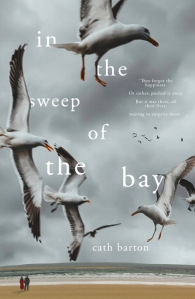 Susan put this on my radar and I bought it in publisher Louise Walters Books’ closing-down sale. Set in Morecambe, this bittersweet story of a half-century marriage and the figures on its margins – co-workers, children, even strangers – is both ambitious and intimate. Ted and Rene Marshall marry in the 1950s and soon drift into drudgery and traditional gender roles; “They forgot the happiness. Or rather, they pushed it away.” While Ted becomes a celebrated ceramics designer in the family company, Rene stagnates at home. It is not so much suspected infidelity as simply taking each other for granted that threatens their relationship. Barton moves through the decades and varies the perspective, letting us hear from one of the Marshalls’ daughters and giving kind attention to a gay couple. Strictly Come Dancing fans and those familiar with the northwest might take particular pleasure, but I enjoyed this quiet book reminiscent of Anne Tyler’s French Braid and (though less political) Jonathan Coe’s Bournville. (New purchase) [104 pages]
The Visitor by Maeve Brennan (2000)
 This posthumous novella was written in the 1940s but never published in Brennan’s lifetime. From Dublin, she was a longtime New Yorker staff member and wrote acclaimed short stories. After her mother’s death, Anastasia King travels from Paris, where the two set up residence after leaving her father, to Ireland to stay in the family home with her grandmother. Anastasia considers it a return, a homecoming, but her spiteful grandmother makes it clear that she is an unwelcome interloper. Mrs King can’t forgive the wrong done to her son, and so won’t countenance Anastasia’s plan to repatriate her mother’s remains. Rejection and despair eat away at Anastasia’s mental health (“She saw the miserable gate of her defeat already open ahead. There only remained for her to come up to it and pass through it and be done with it”) but she pulls herself together for an act of defiance. Most affecting for me was a scene in which we learn that Anastasia is so absorbed in her own drama that she does not fulfill the simple last wish of a dying friend. This brought to mind James Joyce’s The Dead. (Secondhand purchase – The Bookshop, Wigtown) [81 pages]
Bear by Marian Engel (1976)
 If you’ve heard of this, it’ll be for the fact that the main character – Lou, a librarian sent to archive the holdings of an octagonal house on an island one summer – has sex with a bear. That makes it sound much more repulsive and/or titillating than it actually is. The further I read the more I started to think of it as an allegory for women’s awakening; perhaps the strategy inspired Melissa Broder’s The Pisces (stuffed full of sex with a merman). “I have an odd sense of being reborn,” Lou writes to her boss, the Institute director, with whom she’d been having an affair. The bear lives in an outbuilding and at first Lou is indifferent, only feeding him as necessary. Then he becomes a friend, joining her for swims. Then he comes into the house. Bestiality is a taboo for a reason, but what mostly bothers me is the lack of mutuality, the sense of taking advantage. I’m also wary of stories in which animals have a primarily instrumental or metaphorical role. Still, this was a solid read, offbeat and nearly as shocking today as when it first appeared. (Secondhand purchase online) [167 pages]
So Late in the Day by Claire Keegan (2023)
 Several of us reviewed this for #NovNov though unsure it counts: in the UK the title story (originally for the New Yorker) was published in a standalone volume by Faber, while the U.S. release includes two additional earlier stories; I read the latter. The title story has Cathal spending what should have been his wedding weekend moping about Sabine calling off their engagement at the last minute. It’s no mystery why she did: his misogyny, though not overt, runs deep, most evident in the terms in which he thinks about women. And where did he learn it? From his father. (“The Long and Painful Death” is from Keegan’s second collection, Walk the Blue Fields, and concerns a woman on a writing residency at an author’s historic house in Ireland. She makes a stand for her own work by refusing to cede place to an entitled male scholar. The final story is “Antarctica,” the lead story in that 1999 volume and a really terrific one I’d already experienced before. It’s as dark and surprising as an early Ian McEwan novel.) Keegan proves, as ever, to be a master at portraying emotions and relationships, but the one story is admittedly slight on its own, and its point obvious. (Read via Edelweiss) [64 pages]
Swallowing Geography by Deborah Levy (1993)
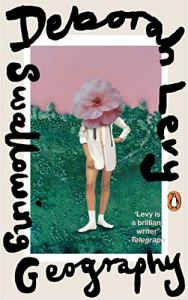 “She is Europe’s eerie child, and she is part of the storm.” J.K. is a young woman who totes her typewriter around different European locations, sleeps with various boyfriends, hears strangers’ stories, and so on. Many of the people she meets are only designated by an initial. By contrast, the most fully realized character is her mother, Lillian Strauss. The chapters feel unconnected and the encounters within them random, building to nothing. Though a bit like Crudo, this has very little detail to latch onto and so was pretentious in its opacity. I’ve generally gotten on much better with Levy’s nonfiction (see below) than her fiction. This, along with the Keegan (above), was my chosen train entertainment for the Booker Prize evening. I got so little out of it that it seemed like wasted reading time. Here’s a decent excerpted passage: “The arrogance of metaphor when facts save people’s lives. The succour of metaphor when facts inadequately describe people’s lives.” (Public library) [83 pages]
Nonfiction:
Starting with two from the Bloomsbury Object Lessons series, a great source of short monographs. These have been among my favourites so far.
Grave by Allison C. Meier (2023)
 Meier is a cemetery tour guide in Brooklyn, where she lives. She surveys American burial customs in particular, noting the lack of respect for Black and Native American burial grounds, the Civil War-era history of embalming, the increasing popularity of cremation, and the rise of garden cemeteries such as Mount Auburn in Cambridge, Massachusetts, which can serve as wildlife havens. The mass casualties and fear of infection associated with Covid-19 brought back memories of the AIDS epidemic, especially for those in New York City. Meier travels to a wide range of resting places, from potter’s fields for unclaimed bodies to the most manicured cemeteries. She also talks about newer options such as green burial, body composting, and the many memorial objects ashes can be turned into. I’m a dedicated reader of books about death and so found this fascinating, with the perfect respectful and just-shy-of-melancholy tone. It’s political and philosophical in equal measures. (Read via NetGalley) [168 pages]
Pregnancy Test by Karen Weingarten (2023)
 Laboratory pregnancy tests have been available since the 1930s and home pregnancy tests – the focus here – since the 1970s. All of them work by testing urine for the hormone hCG (human chorionic gonadotropin). What is truly wild is that pregnancy used to be verifiable only with laboratory animals – female mice and rabbits had to be sacrificed to see if their ovaries had swelled after the injection of a woman’s urine; later, female Xenopus toads were found to lay eggs in response, so didn’t need to be killed. Home pregnancy kits were controversial and available in Canada before the USA because it was thought that they could be unreliable or that they would encourage early abortions. Weingarten brings together the history, laypeople-friendly science, and cultural representations (taking a pregnancy test is excellent TV shorthand) in a readable narrative and makes a clear feminist statement: “the home pregnancy test gave back to women what should have always been theirs: first-hand knowledge about how their bodies worked” and thus “had the potential to upend a paternalistic culture.” (Read via NetGalley) [160 pages]
And from a different Bloomsbury series for monographs about seminal albums, 33 1/3:
Jesus Freak by Will Stockton and D. Gilson (2019)
 The dc Talk album Jesus Freak (1995) is the first CD I ever owned. My best friend and I listened to it (along with Bloom by Audio Adrenaline and Take Me to Your Leader by Newsboys) so many times that we knew every word and note by heart. So it’s hard for me to be objective rather than nostalgic; I was intrigued to see what two secular academics would have to say. Crucially, they were teenage dc Talk fans, now ex-Evangelicals and homosexual partners. As English professors, their approach is to spot musical influences (Nirvana on the title track; R&B and gospel elsewhere), critically analyse lyrics (with “Colored People” proving problematic for its “neoliberal multiculturalism and its potential for post-racial utopianism”), and put a queer spin on things. For those who don’t know, dc Talk were essentially a boy band with three singers, one Black and two white – one of these a rapper. Stockton and Gilson chronicle the confusion of living with a same-sex attraction they couldn’t express as teens, and cheekily suggest there may have been something going on between dc Talk members Toby McKeehan and Michael Tait, who were roommates at Liberty University and apparently dismantled their bunk beds so they could sleep side by side. Hmmm! I was interested enough in the subject matter to overlook the humanities jargon. (Birthday gift from my wish list last year) [132 pages]
And the rest:
Fifty Days of Solitude by Doris Grumbach (1994)
 Grumbach died last year at age 104. This was my third of her books; I read two previous memoirs, Extra Innings and The Presence of Absence, when they were brought back into print as Open Road Media e-books. I knew of Grumbach through her association with May Sarton, and the two in fact had a lot in common, including lesbianism, living in Maine and writing about older age. I was expecting something on a par with Sarton’s Journal of a Solitude, one of my favourite books, but this fell short in comparison. Grumbach spent a month and a half alone in Maine during the winter of 1993 while her partner, Sybil, was away amassing stock for their bookstore. The book is a collection of unconnected meditations about nature, the cold, creativity and so on. She finds herself writing fiction so the characters can keep her company, and notes “how much more I was aware of my vices.” Although she tries to avoid the news, word reaches her of acquaintances’ demises, and she recalls the recent death from AIDS of a young local man. Amusingly, she rereads Bear (see above) during the 50 days. Some atmosphere, but low on insight. (Secondhand purchase – Wonder Book and Video, Hagerstown) [114 pages]
Things I Don’t Want to Know: On Writing by Deborah Levy (2013)
 It feels like I made an error by reading Levy’s “Living Autobiography,” out of order. I picked up the middle volume of the trilogy, The Cost of Living, for #NovNov in 2021 and it ended up being my favourite nonfiction read of that year. I then read part of the third book, Real Estate, last year but set it aside. And now I’ve read the first because it was the shortest. It’s loosely structured around George Orwell’s four reasons for writing: political purpose, historical impulse, sheer egoism and aesthetic enthusiasm. The frame story has her flying to Majorca at a time when she was struggling with her mental health. She vaguely follows in the footsteps of George Sand and then pauses to tell a Chinese shopkeeper the story of her upbringing in apartheid-era South Africa and the family’s move to London. Although I generally admire recreations of childhood and there are some strong pen portraits of minor characters, overall there was little that captivated me here and I was too aware of the writerly shaping. (Secondhand purchase – 2nd & Charles, Hagerstown) [111 pages]
The Private Life of the Hare by John Lewis-Stempel (2019)
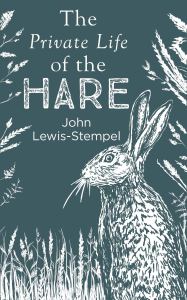 I reviewed a couple of JLS’s species-specific monographs for #NovNov in 2018: The Secret Life of the Owl and The Glorious Life of the Oak. There’s a similar range of material here: anatomy, natural history and cultural significance, including in poetry. There are chapters on hunting, the hare as food, and its appearances in myth and religion. I was engaged about half of the time; I tended to skip over longer excerpts from historical documents. The reliance on lengthy quotations and use of bullet points make it feel like a half-finished research project, with the kind of information you could find anywhere else. Too many of his recent books have felt like they were rushed into print. I would only pick this up if you’re particularly fascinated by hares. (Public library) [99 pages]
The Cancer Journals by Audre Lorde (1980)
 I’ve read so many cancer stories that it takes a lot to make one stand out. This feels like a random collection of documents rather than a coherent memoir. One of the three essays was originally a speech, and two were previously printed in another of her books. Lorde was diagnosed with breast cancer in 1978 and had a mastectomy. A Black lesbian feminist, she resisted wearing prostheses and spoke up about the potential environmental causes of breast cancer that need to be addressed in research (“I may be a casualty in the cosmic war against radiation, animal fat, air pollution, McDonald’s hamburgers and Red Dye No. 2”). Her actual journal entries make up little of the text, which is for the best because fear and pain can bring out the cliches in us – but occasionally a great quote like “if bitterness were a whetstone, I could be sharp as grief.” Another favourite line: “Pain does not mellow you, nor does it ennoble, in my experience.” I’m keen to read her memoir Zami. (University library) [77 pages]
A Month in Siena by Hisham Matar (2019)
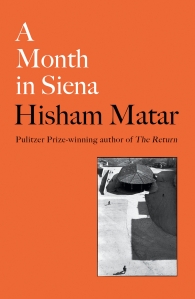 I’d not read Matar before I spotted this art book-cum-memoir and thought, why not. A Libyan American novelist who lives in London, Matar had long been fascinated by the Sienese School of painting (13th to 15th centuries), many of whose artists depicted biblical scenes or religious allegories – even though he’s not a Christian. He spent a month in Italy immersed in the art he loves; there are 15 colour reproductions here. His explications of art history are generalist enough to be accessible to all readers, but I engaged more with the glimpses into his own life. For instance, he meets a fellow Arabic speaker and they quickly form a brotherly attachment, and a Paradise scene gives him fanciful hope of being reunited with his missing father – the subject of his Folio Prize-winning memoir The Return, which I’d like to read soon. His prose is beautiful as he reflects on history, death and how memories occupy ‘rooms’ in the imagination. A little more interest in the art would have helped, though. (Little Free Library) [118 pages]
A Childhood in Scotland by Christian Miller (1981)
 I had high hopes for this childhood memoir that originally appeared in the New Yorker and was reprinted as part of the Canongate Classics series. But I soon resorted to skimming as her recollections of her shabby upper-class upbringing in a Highlands castle are full of page after page of description and dull recounting of events, with few scenes and little dialogue. This would be of high historical value for someone wanting to understand daily life for a certain fraction of society at the time, however. When Miller’s father died, she was only 10 and they had to leave the castle. I was intrigued to learn from her bio that she lived in Newbury for a time. (Secondhand purchase – Barter Books) [98 pages]
Here and Now: Living in the Spirit by Henri J.M. Nouwen (1994)
 This collection of micro-essays under themed headings like “Living in the Present” and “Suffering” was a perfect introduction to Nouwen’s life and theology. The Dutch Catholic priest lived in an Ontario community serving the physically and mentally disabled, and died of a heart attack just two years after this was published. I marked out many reassuring or thought-provoking passages. Here’s a good pre-Christmas one:
“God became a little child in the midst of a violent world. Are we surprised by joy or do we keep saying: ‘How nice and sweet, but the reality is different.’ What if the child reveals to us what is really real?”
I was taken by the ideas that the life of compassion is one of “downward mobility” and that inner freedom only comes when you don’t judge anyone. He encourages readers to not live in a past of shame and regret, but to be grateful for opportunities for God’s mercy and guidance. Very peaceful and readable; a good bedside devotional book. (Free from my stepfather) [175 pages] 
De Profundis by Oscar Wilde (1897)
 My only reread for the month. Wilde wrote this from prison. No doubt he had a miserable time there, but keeping in mind that he was a flamboyant dramatist and had an eye to this being published someday, this time around I found it more exaggerated and self-pitying than I had before. “Suffering is one very long moment. … Where there is sorrow there is holy ground,” he writes, stating that he has found “harmony with the wounded, broken, and great heart of the world.” He says he’s not going to try to defend his behaviour … but what is this but one extended apologia and humble brag, likening himself to a Greek tragic hero (“The gods had given me almost everything. But I let myself be lured into long spells of senseless and sensual ease. I amused myself with being a flâneur, a dandy, a man of fashion”) and even to Christ in his individuality as well as in his suffering at the hands of those who don’t understand him (the scene where he was pilloried consciously mimics a crucifixion tableau). As a literary document, it’s extraordinary, but I didn’t buy his sincerity. He feigns remorse but, really, wasn’t sorry about anything, merely sorry he got caught. (Free from a neighbour) [151 pages]
Original rating (2011):
Rating now:
Average:
Which of these have you read?
And which do you want to read? (You may choose no more than 4!)
In total, I read 27 novellas this November – close to my 2021 record of 29. The highlights included the Barton, Meier, Nouwen and Weingarten above plus Train Dreams by Denis Johnson and Western Lane by Chetna Maroo, but the best of the lot was Absolutely and Forever by Rose Tremain.
Coming right up, final statistics on the month’s participants and posts!
Novellas in November, Week 1: My Year in Novellas (#NovNov23)
Novellas in November begins today! Cathy (746 Books) and I are delighted to be celebrating the art of the short book with you once again. Remember to let us know about your posts here, via the Inlinkz service or through a comment. How impressive is it that before November even started we were already up to 20 blog and social media posts?! I have a feeling this will be a record-breaking year for participation.

I’m kicking off our first weekly prompt:
Week 1 (starts Wednesday 1 November): My Year in Novellas
- During this partial week, tell us about any novellas you have read since last NovNov.

(See the announcement post for more info about the other weeks’ prompts and buddy reads.)
I relish building rather ludicrous stacks of novellas through the year. When I’m standing in front of a Little Free Library, browsing in secondhand bookstores and charity shops, or perusing the shelves at the public library where I volunteer, I’m always thinking about what I could add to my piles for November.
But I do read novella-length books at other times of year, too. Forty-six of them so far this year, according to my Goodreads shelves. That seems impossible, but I guess it reflects the fact that I often choose to review novellas for BookBrowse, Foreword and Shelf Awareness. I’ve read a real mixture, but predominantly literature in translation and autobiographical works. Here are seven highlights:
Fiction


How Strange a Season by Megan Mayhew Bergman: A strong short story collection with the novella-length “Indigo Run” being a Southern Gothic tale of betrayal and revenge.
Loved and Missed by Susie Boyt: The heart-wrenching story of a woman who adopts her granddaughter due to her daughter’s drug addiction. Its brevity speaks emotional volumes.
Crudo by Olivia Laing: A wry, all too relatable take on recent events and our collective hypocrisy and sense of helplessness. Biography + autofiction + cultural commentary.
Nonfiction
Diary of a Tuscan Bookshop by Alba Donati: Lovely snapshots of a bookseller’s personal and professional life.
La Vie: A Year in Rural France by John Lewis-Stempel: A ‘peasant farmer’ chronicles a year in the quest to become self-sufficient. His best book in an age, ideal for armchair travel.

My Neglected Gods by Joanne Nelson: The poignant microessays locate epiphanies in the everyday.
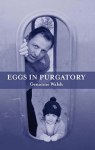
Eggs in Purgatory by Genanne Walsh: A stunning autobiographical essay about the last few months of her father’s life.
I currently have five novellas underway, and I’ve laid out a pile of potential one-sitting reads for quiet mornings in the weeks to come.
Here’s hoping you all are as excited about short books as I am!
Why not share some recent favourites with us in a post of your own?
Alone by Daniel Schreiber (Blog Tour)
Daniel Schreiber is a Berlin-based essayist and biographer of Susan Sontag. These philosophical reflections on solitude and loneliness, coinciding with the first year of the pandemic, reveal his ambivalence about living alone and his frustration that the idea of the couple so defines society that anyone who does not fall in line is considered aberrant.
“I never made a conscious decision to live alone,” Schreiber says. Although he has had many partners, some of them long term, and even lived with two of them for a time, he is single at the time of writing, and can’t help but think that his state implies some kind of deficiency. Part of this he attributes to queer shame that he must have subconsciously internalized, and part to Pauline Boss’s concept of the “ambiguous loss” – missing what one has never had.
The author has many friends, men and women, but feels that society tells us platonic love is less than romantic love; “friendship is thus reduced to a time of transition … a threshold state that ends when one successfully integrates into traditional forms of cohabitation.” His friend novelist Hanya Yanagihara (who gives a quote on the cover) corroborates this suspicion, which A Little Life affirms: “In the end, she said, you are always alone when you are single.”
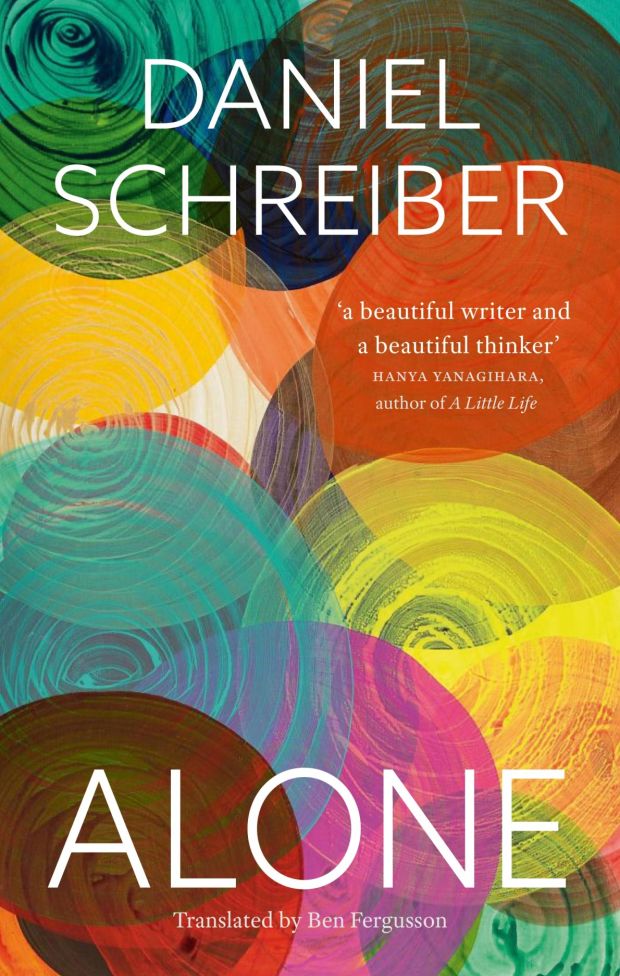
The “Never So Lonely” chapter is about the Covid-19 situation in particular. Schreiber acknowledges that being alone does not have to equate to loneliness, yet the less he saw of people during lockdowns, the more he struggled mentally and emotionally. “At some point, a self-reinforcing dynamic of fear set in: the lonelier I felt, the less I could talk about it. And the less I talked about it, the lonelier I felt.”
Hiking, gardening, yoga and, eventually, foreign travel were among his coping strategies. This is as much a mini-memoir as it is a work of cultural criticism. Its academic tone is evident from a glance at the bibliography: Hannah Arendt, Roland Barthes, Joan Didion, Deborah Levy, Audre Lorde, Maggie Nelson and so on. This resonated with other loneliness- or solitude-themed books I’ve read, such as The Lonely City by Olivia Laing and Journal of a Solitude by May Sarton. It offers not answers, but solemn, quiet thoughts.
(Original publication: 2021. Translated from the German by Ben Fergusson.)
With thanks to Reaktion Books for the proof copy for review.
Book Serendipity, June to July 2023
I call it “Book Serendipity” when two or more books that I read at the same time or in quick succession have something in common – the more bizarre, the better.
Are all of these pure coincidence? Or, as a character says in The Year of Pleasures by Elizabeth Berg, maybe it’s true that “Sometimes serendipity is just intention, unmasked.”
This is a regular feature of mine every couple of months. Because I usually have 20–30 books on the go at once, I suppose I’m more prone to such incidents. The following are in roughly chronological order.
- A deadbeat boyfriend named Andrew in Yellowface by Rebecca F. Kuang and The Legacy of Elizabeth Pringle by Kirsty Wark.
- A partner’s piano playing is by turns annoying (practice) and revelatory (performance) in The Happy Couple by Naoise Dolan and The Late Americans by Brandon Taylor.

- Frequent meals of potatoes due to poverty, and a character sneaking salt in, in Music in the Dark by Sally Magnusson and How Much of These Hills Is Gold by C Pam Zhang.
- Getting close to a seal even though the character knows it might bite in Salt & Skin by Eliza Henry-Jones and one story in High-Wire Act by JoeAnn Hart.
- Rev. Robert Kirk’s writings on fairies are mentioned in The Archaeology of Loss by Sarah Tarlow and The Legacy of Elizabeth Pringle by Kirsty Wark (and were also a major element in Sally Magnusson’s previous novel, The Ninth Child; I happened to be reading her most recent novel at the same time as the above two!).
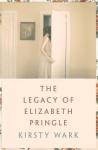
- Menthols are smoked in Death of a Bookseller by Alice Slater and The Late Americans by Brandon Taylor.
- Joan Didion’s The Year of Magical Thinking is mentioned in Death of a Bookseller by Alice Slater and The Archaeology of Loss by Sarah Tarlow.
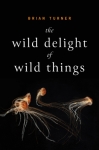 An ant farm as a metaphor in The Happy Couple by Naoise Dolan and The Wild Delight of Wild Things by Brian Turner.
- The main character, in buying a house, inherits the care of a large, elaborate garden from an older woman who kept it immaculate, in The Year of Pleasures by Elizabeth Berg and one story in High-Wire Act by JoeAnn Hart.
- A widow, despite her feminist ideals, wishes she had a man to take care of DIY and other house stuff for her in The Year of Pleasures by Elizabeth Berg and The Archaeology of Loss by Sarah Tarlow.
- A spouse’s death in 2016 and a description of cremation in The Archaeology of Loss by Sarah Tarlow and The Wild Delight of Wild Things by Brian Turner.
- A character deliberately burns a sexual partner’s cheek with a cigarette in Death of a Bookseller by Alice Slater and The Late Americans by Brandon Taylor.
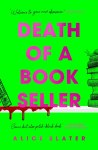
- Counting down the days, then hours, until a wedding, in The Year of Pleasures by Elizabeth Berg, The Happy Couple by Naoise Dolan, and Crudo by Olivia Laing.
- Similar sentiments – about reading to find our own experiences expressed in a way we never would have thought to put them – in passages I encountered on the same day from A Life of One’s Own by Joanna Biggs (“I want to have that moment of recognition, finding something on the page I’ve felt but haven’t put into words”) and The Librarianist by Patrick deWitt (“the reader says to him or herself, Yes, that’s how it is, only I didn’t know it to describe it”).
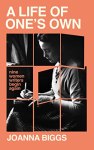
- I encountered mentions of “Believe” by Cher in The Country of the Blind by Andrew Leland and House Gone Quiet by Kelsey Norris on the same evening.
- Calculating how old a newborn child will be on a certain date in the future – and fearing what the world will be like for them then – in Matrescence by Lucy Jones and Milk by Alice Kinsella.
- Moving with twin sons is a key part of the setup in Dirt by Bill Buford and Speak to Me by Paula Cocozza.


- I read scenes of a mother’s death from brain cancer in The Librarianist by Patrick deWitt and One Last Thing by Wendy Mitchell in the same evening.
- There’s a mint-green house, and a house with a rope banister (the same house in one case, but not in the other) in both Speak to Me by Paula Cocozza and The Librarianist by Patrick deWitt, two 6 July 2023 releases.
- Connective tissue in the body is compared to the threads of textiles in Cross-Stitch by Jazmina Barrera and Floppy by Alyssa Graybeal.

- The metaphorical framework of one day is used as the structure in One Midsummer’s Day by Mark Cocker and The Farmer’s Wife by Helen Rebanks.
- I’ve read two chef’s memoirs this summer with a scene of pig slaughter: A Cook’s Tour by Anthony Bourdain and Dirt by Bill Buford.
- A character who lost an arm in the First World War in The Librarianist by Patrick deWitt and Haweswater by Sarah Hall.
 I read descriptions of fried egg residue on a plate, one right after the other in the same evening, in The Dead Are Gods by Eirinie Carson and The Wren The Wren by Anne Enright.
What’s the weirdest reading coincidence you’ve had lately?
 Bookish Beck = Rebecca Foster. American transplant to England. Freelance proofreader and book reviewer.
 Bookish Beck