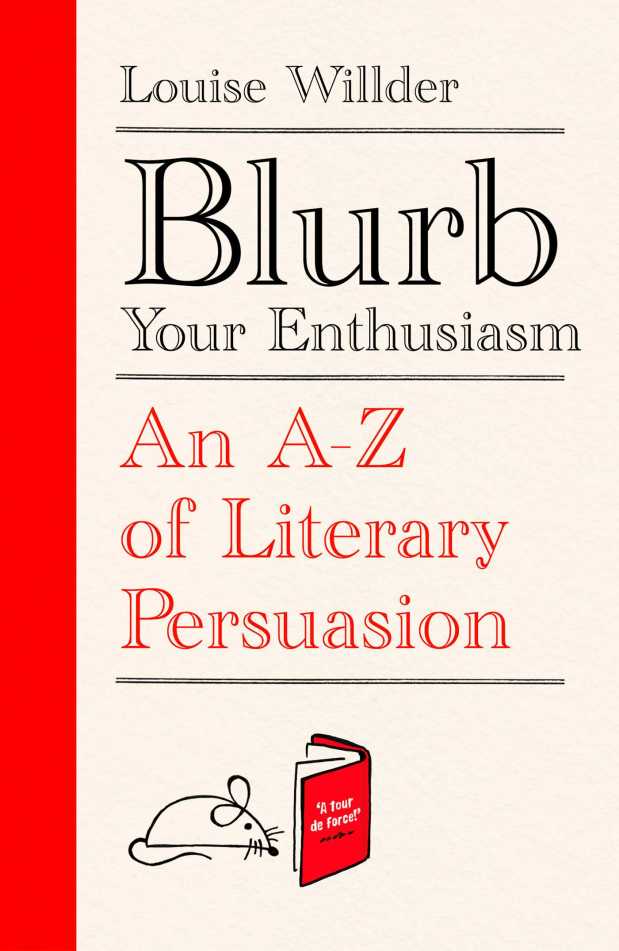
Blurb Your Enthusiasm by Louise Willder
At last, I’m caught up reviewing September releases! It’s one of the busier months in the publishing calendar, so I shouldn’t be surprised that I had such a bounteous crop. Now I can pay more attention to R.I.P. selections, catching up on others’ blog posts, and getting ahead before the start of Novellas in November.
Blurb Your Enthusiasm is a delightful bibliophile’s miscellany with a great title – not just for the play on words, but also for how it encapsulates what this is about: ways of pithily spreading excitement about books. The first part of the subtitle, “An A–Z of Literary Persuasion,” is puzzling in that the structure is scattershot rather than strictly alphabetical, but the second is perfect: from the title and cover to the contents, Louise Willder is interested in what convinces people to acquire and read a book.
Over the last 25 years, she has written the jacket copy for thousands of Penguin releases, so she has it down to a science as well as an art. Book reviewing seems to me to be an adjacent skill. I know from nine years of freelance writing about books, in which I’ve had to produce reviews ranging from 100 to 2,000 words, that the shortest and most formulaic reviews can be the most difficult to compose, but are also excellent writing discipline. As Willder puts it, “Writing short, for whatever reason you do it, forces rigour, and it reminds you that words are a precious and powerful resource. Form both limits and liberates.”
How to do justice to the complexity of several hundred pages of an author’s hard work in just 150 words or so? How to suggest the tone and contents without a) resorting to clichés (“luminous” and “unflinching” are a couple of my bugbears), b) giving too much away, c) overstating the case, or misleading anyone about the merits of a Marmite book, or d) committing the cardinal sin of boring readers before they’ve even opened to the first page?
it can be easy to forget that a potential reader hasn’t read it: they don’t know anything about it. You can’t sell them the experience of the book – you have to sell them the expectation of reading it; the idea of it. And that’s when a copywriter can be an author’s best friend.
[An aside: Literary critics and blog reviewers generally see themselves as having different roles: making objective (pah!) pronouncements about literary value versus cheerleading for the books they love and want others to discover (a sort of unpaid partnership with publicists). I’m in the odd position of being both, and feel I engage in the two activities pretty much equally, perhaps leaning more towards the former. There’s some crossover, of course, with bloggers such as myself happy to publish the occasional more critical review. But we aren’t generally, as Willder is, in the business of selling books, so unless we’re pals with the author on Twitter we don’t tend to have a vested interest in seeing the book do well.]
Each reader will home in on certain topics here: the art of the first line, Dickens’s serialization and self-promotion, Orwell’s guidelines for good writing, the differences between British and American jacket copy, the use of punctuation, and so much more. I particularly loved the mock and bad blurbs she cites (we’ve both commented on the ludicrous one for The Country Girls!), including one an AI created for this book, and her rundown of the conventions of blurb-writing for various genres, everything from children’s books to science fiction. She frequently breaks her own rules (e.g., she’s anti-adjective and -ellipses, yet I found five of the one and two of the other in the Crace blurb; see below) and is very funny to boot.
Here’s some of the bookish and word-nerd trivia that captivated me:
- J. D. Salinger didn’t allow blurbs on his books.
- The American usage of the word “blurb” is for advance review quotes that fellow authors contribute for inclusion on the cover. I didn’t realize I used the word interchangeably for either meaning; in the UK, one might call such a quote a “puff.”
- Marshall McLuhan invented the “page 69 test” – to decide whether you want to buy/read a book, turn to that page instead of (or maybe in addition to) looking at the first paragraph.
- A New York publishing CEO once joked that Lincoln’s Doctor’s Dog would be an optimal title to appeal to readers (respected president + health + animal), but there are actually now six books bearing some variation on that title and all were presumably flops!
- “Wackaging” is the word for quirky marketing that has products talk to us (Innocent Smoothies, established in 1999, is thought to have started the trend).
- I pulled out my copy of Jim Crace’s Quarantine to see how Willder managed to write a blurb about a novel about Jesus without mentioning Jesus (“a Galilean who they say has the power to work miracles”)!
Some more favourite lines:
“There’s always something to love and learn from in a book, especially if it lasts as long as these books [children’s classics] have, and part of the job of people like me is to pick out what makes it special and pass it on.”
“always ask yourself, what’s really going on here? Why should anyone care? And how do we make them care?”
For all of us who value books, whether we write about them or not, those seem like important points to remember. We read to learn, but also to feel, and when we share our love of books with other people we can do so on the basis of how they have engaged our brains and hearts. This was thoroughly entertaining and has prompted me to pay that bit more attention to the few paragraphs on the inside of a book jacket. (See also Susan’s review.) 
With thanks to Oneworld for the free copy for review.
Review Catch-Up: Jhalak and Women’s Prize Nominees, Etc.
Another in an ongoing series as I catch up on the current and previous year releases I’ve been sent for review. Today I have four books by women: a poetry collection about living between countries and languages, a magic realist novel about vengeful spirits in Vietnam, a memoir in verse about the disabled body and queer parenting, and a novel set in gentrifying Puerto Rican neighbourhoods of New York City.
From the Jhalak Prize longlist:
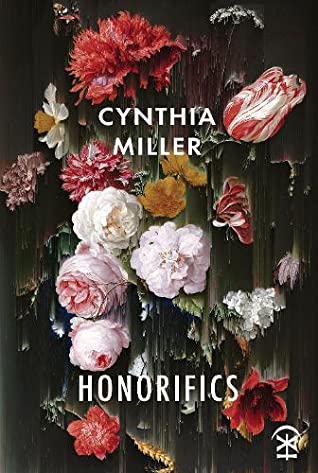
Honorifics by Cynthia Miller (2021)
Miller is a Malaysian American poet currently living in Edinburgh. Honorifics was also shortlisted for the Forward Prize for Best First Collection. Its themes resonate with poetry I’ve read by other Asian women like Romalyn Ante and Jenny Xie and with the works of mixed-race authors such as Jessica J. Lee and Nina Mingya Powles: living between two or more countries and feeling like an exile versus finding a sense of home.
Nightly, you rosary American synonyms for success learned the hard way: suburb – 10-year visa – promotion – carpool – mortgage – parent-teacher conference – nuclear family – assimilation … Homecoming is the last, hardest thing you’ll ask yourself to do.
(from “Homecoming”)
 “Loving v. Virginia” celebrates interracial love: “Look at us, improper. Look at us, indecent. Look at us, incandescent and loving.” Food is a vehicle for memory, as are home videos. Like Ante, Miller has a poem based on her mother’s voicemail messages. “Glitch honorifics” gives the characters for different family relationships, comparing Chinese and Hokkien. The imagery is full of colour and light, plants and paintings. A terrific central section called “Bloom” contains 10 jellyfish poems (“We bloom like nuclear hydrangea … I’m an unwound chandelier, / a 150-foot-long coil of cilia, // made up of a million gelatinous foxgloves.”).
Miller incorporates a lot of unusual structures, some of them traditional forms (“Sonnet with lighthouses,” “Moon goddess ghazal,” “Persimmon abecedarian”) and others freer forms like a numbered list, columns, dictionary definitions or prose paragraphs. Six of the poems cite an inspiration; I could particularly see the influence in “The Home Office after Caroline Bird” – an absurdist take on government immigration policy.
There’s much variety here, and so many beautiful lines and evocative images. “Malaysiana,” a tour through everything she loves about the country of her birth, was my single favourite poem, and a couple more passages I loved were “the heart measuring breaths like levelling sugar / for a batter, the heart saying / why don’t you come in from the cold.” (from “The impossible physiology of the free diver”) and the last two stanzas of “Lupins”: “Some days / their purple spines // are the only things / holding me up.” Flora and fauna references plus a consideration of the expat life meant this was custom made for me, but I’d recommend it to anyone looking to try out different styles of contemporary poetry.
With thanks to Nine Arches Press for the free copy for review.
From the Women’s Prize longlist:
Build Your House around My Body by Violet Kupersmith (2021)
 Back in 2014, I reviewed Kupersmith’s debut collection, The Frangipani Hotel, for BookBrowse. I was held rapt by its ghostly stories of Vietnam, so I was delighted to hear that she had written a debut novel, and it was one of my few correct predictions for the Women’s Prize nominees. The main action takes place between when Winnie – half white and half Vietnamese – arrives in Saigon to teach English in 2010, and when she disappears from the house she shared with her boyfriend of three months, Long, in March 2011. But the timeline darts about to tell a much more expansive story, starting with the Japanese invasion of Vietnam in the 1940s. Each date is given as the number of months or years before or after Winnie’s disappearance.
Winnie starts off living with a great-aunt and cousins, and meets a family friend, Dr. Sang, who’s been experimenting on a hallucinogenic drug made from cobra venom. Long and his brother, Tan, a policeman, were childhood friends with a fearless young woman named Binh – now a vengeful ghost haunting them both. Meanwhile, the Saigon Spirit Eradication Company, led by the Fortune Teller, is called upon to eradicate a ghost – which from time to time seems to inhabit a small dog – from a snake-infested highland estate. These strands are bound to meet, and smoke and snakes wind their way through them all.
I enjoyed Kupersmith’s energetic writing, which reminded me by turns of Nicola Barker, Ned Beauman, Elaine Castillo and Naoise Dolan, and the glimpses of Cambodia and Vietnam we get through meals and motorbike rides. What happens with Belly the dog towards the end is fantastic. But the chronology feels needlessly complex, with the flashbacks to colonial history and even to Binh’s story not adding enough to the narrative. While I’d still like to see Kupersmith make the shortlist, I can recommend her short stories that bit more highly.
With thanks to Oneworld for the free copy for review.
Handbook for the Newly Disabled: A Lyric Memoir by Allison Blevins (2022)
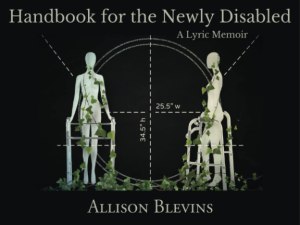 Allison Blevins, a poet, has published five chapbooks or collections and has another forthcoming. Based in Missouri and the director of an indie press, she tells her story of chronic illness and queer parenting in 10 “chapters” composed of multi-part poems. She moves through brain fog and commemorates pain and desire, which cannot always coexist (as in “How to F**k a Disabled Body”).
I’ll never
ride a bike again, hike, carry my children. I’m learning to number what I’ve lost.
Because of the pills, I no longer fall into sleep, I stop. I used to hate queer at 19
when I was a dyke. I can’t be disabled. I need a better word. I need a body that floats—
translucent and liquid—to my daughter’s bed, to cover her like cotton-red quilted stars.
(from “Brain Fog”)
Sometimes the title is enough: “My Neurologist (Who Doesn’t Have MS) Explains Pain Is Not a Symptom of MS.” Other times, what is left out, or erased (as in “Five by Five”) is what matters the most. For instance, the Photo Illustrations promised in the titles of two chapters are replaced by Accessibility Notes. That strategy reminded me of one Raymond Antrobus has used. Alliteration, synesthesia and the language of the body express the complexities of a friend’s cancer, having a trans partner, and coming to terms with sexuality (“I think now that being queer was easy, easy as forgetting / being born”). A really interesting work and an author I’d like to read more from.
Published by BlazeVOX [books] on 22 March. With thanks to the author for the e-copy for review.
Olga Dies Dreaming by Xóchitl González (2022)
 This was on my radar thanks to a starred Kirkus review. It would have been a good choice for the Women’s Prize longlist, with its bold heroine, Latinx and gay characters, and blend of literary and women’s fiction. The Puerto Rican immigrant community and gentrifying neighbourhoods of New York City are appealing locales, and Olga is a clever, gutsy protagonist. As the novel opens in 2017, she’s working out how best to fleece the rich families whose progeny’s weddings she plans. Today it’s embezzling napkins for her cousin Mabel’s wedding. Next: stockpiling cut-price champagne. Olga’s brother Prieto, a slick congressman inevitably nicknamed the “Latino Obama,” is a closeted gay man. Their late father was a drug addict; their mother left to be part of a revolutionary movement back in PR and sends her children occasional chiding letters when they appear to be selling out.
The aftermath of Hurricane Maria coincides with upheaval in Olga’s and Prieto’s personal and professional lives. The ins and outs of Puerto Rican politics went over my head somewhat, and the various schemes and conspiracy theories get slightly silly. The thread that most engaged me was Olga’s relationship with Matteo, a hoarder. I hoped that, following the satire of earlier parts (“Olga realized she’d allowed herself to become distracted from the true American dream—accumulating money—by its phantom cousin, accumulating fame. She would never make that mistake again”), there might be a message about the emptiness of the pursuit of wealth. So I ended up a little disappointed by a late revelation about Matteo.
However, I did appreciate the picture of how Olga is up against it as both a woman and a person of colour (“no person of color serious about being taken seriously was ever late to meet white people”). This debut was perhaps a little unsure of what it wanted to be, but the novelty of the main elements was enough to make it worth reading.
With thanks to Fleet for the free copy for review.
Would you be interested in reading one or more of these?
2022 Proof Copies & Early Recommendations (Julia Armfield’s Debut Novel, Lily King’s Short Stories)
I didn’t feel like I’d done a lot of pre-release reading yet, but put it all together and somehow it looks like a lot…
My top recommendations for 2022 (so far):
Our Wives Under the Sea by Julia Armfield
Coming on March 3rd from Picador (UK) and on July 12th from Flatiron Books (USA)
I loved Armfield’s 2019 short story collection Salt Slow, which I reviewed when it was shortlisted for the Sunday Times Young Writer of the Year Award. Her strategy in her debut novel is similar: letting the magical elements seep in gradually so that, lulled into a false sense of familiarity, you find the creepy stuff all the more unsettling.
 Miri is relieved to have her wife back when Leah returns from an extended Centre for Marine Inquiry expedition. But something went wrong with the craft while in the ocean depths and it was too late to evacuate. What happened to Leah and the rest of the small crew? Miri starts to worry that Leah – who now spends 70% of her time in the bathtub – will never truly recover. Chapters alternate between Miri describing their new abnormal and Leah recalling the voyage. As Miri tries to tackle life admin for both of them, she feels increasingly alone and doesn’t know how to deal with persistent calls from the sister of one of the crew members.
This is a really sensitive consideration of dependency and grief – Miri recently lost her mother and Leah’s father also died. I especially liked the passages about Miri’s prickly mother: it was impossible not to offend her, and she truly believed that if she resisted ageing she might never die. Leah seems shell-shocked; her matter-of-fact narration is a contrast to Miri’s snark. Armfield gives an increasingly eerie story line a solid emotional foundation, and her words about family and romantic relationships ring true. I read this in about 24 hours in early December, on my way back from a rare trip into London; it got the 2022 releases off to a fab start to me. Plus, the title and cover combo is killer. I’d especially recommend this to readers of Carmen Maria Machado and Banana Yoshimoto. (Read via NetGalley) 
Five Tuesdays in Winter by Lily King
Coming on January 20th from Picador (UK); released in the USA in November 2021
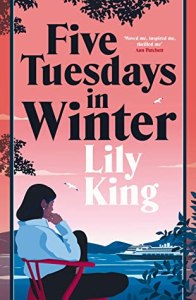 The same intimate understanding of emotions and interactions found in Euphoria and Writers & Lovers underlies King’s first short story collection. Some stories are romantic; others are retrospective coming-of-age narratives. Most are set in New England, but the time and place varies from the 1960s to the present day and from Maine to northern Europe. Several stories look back to a 1980s adolescence. “South” and “The Man at the Door” are refreshingly different, incorporating touches of magic and suspense. However, there are also a few less engaging stories, and there aren’t particularly strong linking themes. Still, the questions of love’s transience and whether any relationship can ever match up to expectations linger. I’d certainly recommend this to fans of King’s novels. (See my full review at BookBrowse. See also my related article on contemporary New England fiction.)
With thanks to Picador for the proof copy for review.
Other 2022 releases I’ve read:
(In publication date order)
 Write It All Down: How to put your life on the page by Cathy Rentzenbrink [Jan. 6, Bluebird] I’ve read all of Rentzenbrink’s books, but the last few have been disappointing. Alas, this is more of a therapy session than a practical memoir-writing guide. (Full review coming later this month.)
 Recovery: The Lost Art of Convalescence by Gavin Francis [Jan. 13, Wellcome Collection]: A short, timely book about the history and subjectivity of recovering from illness. (Full review and giveaway coming next week.)
 The Store-House of Wonder and Astonishment by Sherry Rind [Jan. 15, Pleasure Boat Studio]: In her learned and mischievous fourth collection, the Seattle poet ponders Classical and medieval attitudes towards animals. (Full review coming to Shelf Awareness soon.)
 Stepmotherland by Darrel Alejandro Holnes [Feb. 1, University of Notre Dame Press]: Holnes’s debut collection, winner of the Andrés Montoya Poetry Prize, ponders a mixed-race background and queerness through art, current events and religion. Poems take a multitude of forms; the erotic and devotional mix in provocative ways. (See my full review at Foreword.)
 Rise and Float: Poems by Brian Tierney [Feb. 8, Milkweed Editions]: A hard-hitting debut collection with themes of bereavement and mental illness – but the gorgeous imagery lifts it above pure melancholy. (Full review coming to Shelf Awareness soon.)
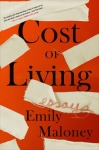 Cost of Living: Essays by Emily Maloney [Feb. 8, Henry Holt]: Probing mental illness and pain from the medical professional’s perspective as well as the patient’s, 16 autobiographical essays ponder the value of life. (Full review coming to Shelf Awareness soon.)
 Circle Way: A Daughter’s Memoir, a Writer’s Journey Home by Mary Ann Hogan [Feb. 15, Wonderwell]: A posthumous memoir of family and fate that focuses on a father-daughter pair of writers. A fourth-generation Californian, Hogan followed in her father Bill’s footsteps as a local journalist. Collage-like, the book features song lyrics and wordplay as well as family anecdotes. (See my full review at Foreword.)
 Cold Enough for Snow by Jessica Au [Feb. 23, Fitzcarraldo Editions]: A delicate work of autofiction – it reads like a Chloe Aridjis or Rachel Cusk novel – about a woman and her Hong Kong-raised mother on a trip to Tokyo. (Full review coming up in a seasonal post.)
 The Carriers: What the Fragile X Gene Reveals about Family, Heredity, and Scientific Discovery by Anne Skomorowsky [May 3, Columbia UP]: Blending stories and interviews with science and statistics, this balances the worldwide scope of a disease with its intimate details. (Full review coming to Foreword soon.)
Currently reading:
(In release date order)
 This Boy We Made: A Memoir of Motherhood, Genetics, and Facing the Unknown by Taylor Harris [Jan. 11, Catapult] (Reading via Edelweiss; to review for BookBrowse)
To Paradise by Hanya Yanagihara [Jan. 11, Picador] (Blog review coming … eventually)
I Came All This Way to Meet You: Writing Myself Home by Jami Attenberg [Jan. 13, Serpent’s Tail] (Blog review coming later this month)
 Everything Is True: A Junior Doctor’s Story of Life, Death and Grief in a Time of Pandemic by Roopa Farooki [Jan. 20, Bloomsbury] (To review for Shiny New Books)
Some Integrity by Padraig Regan [Jan. 27, Carcanet] (Blog review coming later this month)
Additional proof copies on my shelf:
(In release date order; publisher blurbs from Goodreads/Amazon)

 What I Wish People Knew About Dementia by Wendy Mitchell [Jan. 20, Bloomsbury]: “When Mitchell was diagnosed with young-onset dementia at the age of fifty-eight, her brain was overwhelmed with images of the last stages of the disease – those familiar tropes, shortcuts and clichés that we are fed by the media, or even our own health professionals. … Wise, practical and life affirming, [this] combines anecdotes, research and Mitchell’s own brilliant wit and wisdom to tell readers exactly what she wishes they knew about dementia.”
 I Love You But I’ve Chosen Darkness by Claire Vaye Watkins [Came out in USA last year; UK release = Jan. 20, Quercus]: “Leaving behind her husband and their baby daughter, a writer gets on a flight for a speaking engagement in Reno, not carrying much besides a breast pump and a spiraling case of postpartum depression. … Deep in the Mojave Desert where she grew up, she meets her ghosts at every turn: the first love whose self-destruction still haunts her; her father, a member of the most famous cult in American history.”
 Beasts of a Little Land by Juhea Kim [Feb. 3, Oneworld]: “From the perfumed chambers of a courtesan school in Pyongyang to the chic cafes of a modernising Seoul and the thick forests of Manchuria, Juhea Kim’s unforgettable characters forge their own destinies as they shape the future of their nation. Immersive and elegant, firmly rooted in Korean folklore and legend, [this] unveils a world where friends become enemies, enemies become saviours, and beasts take many shapes.”

 Theatre of Marvels by Lianne Dillsworth [April 28, Hutchinson Heinemann]: “Unruly crowds descend on Crillick’s Variety Theatre. Young actress Zillah [a mixed-race orphan] is headlining tonight. … Rising up the echelons of society is everything Zillah has ever dreamed of. But when a new stage act disappears, Zillah is haunted by a feeling that something is amiss. Is the woman in danger? Her pursuit of the truth takes her into the underbelly of the city.” (Unsolicited) [Dillsworth is Black British.]
 The Secret Lives of Church Ladies by Deesha Philyaw [Came out in USA in 2020; UK release = May 5, Pushkin]: “explores the raw and tender places where Black women and girls dare to follow their desires and pursue a momentary reprieve from being good. … With their secret longings, new love, and forbidden affairs, these church ladies are as seductive as they want to be, as vulnerable as they need to be, as unfaithful and unrepentant as they care to be, and as free as they deserve to be.”
And on my NetGalley shelf:
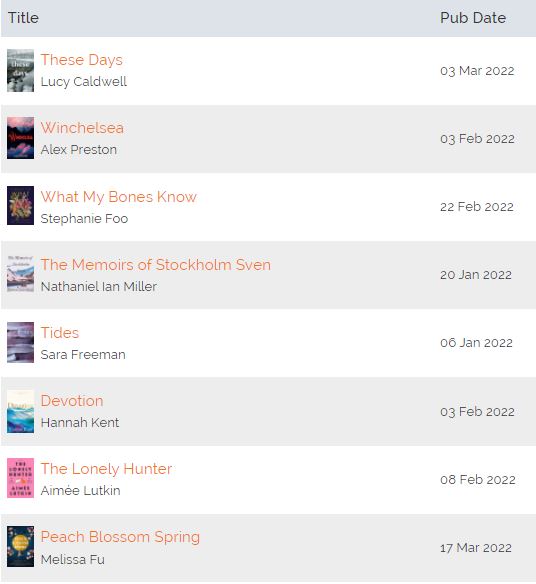
Will you look out for one or more of these titles?
Any other 2022 reads you can recommend?
Booker Prize 2020: Two More Shortlist Reviews and a Prediction
The 2020 Booker Prize will be announced on Thursday the 19th. (Delayed from the 17th, the date on my commemorative bookmark, so as not to be overshadowed by the release of the first volume of Barack Obama’s presidential memoirs.) After I reviewed Burnt Sugar and correctly predicted half of the shortlist in this post, I’ve managed to finish another two of the novels on the shortlist, along with two more from the longlist. As sometimes happens with prize lists – thinking also of the Women’s Prize race in 2019 – this year’s shortlist fell into rough pairs: two stark mother–daughter narratives, two novels set in Africa, and two gay coming-of-age stories.

The New Wilderness by Diane Cook
In a striking opening to a patchy novel, Bea goes off to the woods to give birth alone to a stillborn daughter. It’s such a different experience to when she birthed Agnes in a hospital eight years ago. Now, with coyotes and buzzards already circling, there’s no time for sentimentality; she turns her back on the baby and returns to the group. Bea is part of a wilderness living experiment that started out with 20 volunteers, but illness and accidents have since reduced their number.
 Back in the toxic, overcrowded City, Bea was an interior decorator and her partner a professor of anthropology. Bea left to give Agnes a better chance at life; like so many other children, she had become ill from her polluted surroundings. Now she is a bright, precocious leader in the making, fully participating in the community’s daily chores. Settlement tempts them, but the Rangers enforce nomadism. Newcomers soon swell their numbers, and there are rumors of other groups, too. Is it even a wilderness anymore if so many people live in it?
The cycles of seasons and treks between outposts make it difficult to get a handle on time’s passing. It’s a jolt to realize Agnes is now of childbearing age. Only when motherhood is a possibility can she fully understand her own mother’s decisions, even if she determines to not repeat the history of abandonment. The blurb promised a complex mother–daughter relationship, but this element of the story felt buried under the rigor of day-to-day survival.
It is as if Cook’s primary interest was in how humans would react to being returned to primitive hunter–gatherer conditions – she did a lot of research into Native American practices, for instance, and she explores the dynamics of sex and power and how legends arise. As a child I was fascinated by Native cultures and back-to-the-land stories, so I enjoyed the details of packing lists, habits, and early rituals that form around a porcelain teacup.
But for me some nuts and bolts of storytelling were lacking here: a propulsive plot, a solid backstory, secondary characters that are worthwhile in their own right and not just stereotypes and generic roles. The appealing description induced me to overcome my usual wariness about dystopian novels, but a plodding pace meant it took me months to read. A lovely short epilogue narrated by Agnes made me wonder how much less tedious this chronicle might have been if told in the first person by Bea and Agnes in turn. I’ll try Cook’s story collection, Man V. Nature, to see if her gifts are more evident in short form.
My rating: 
My thanks to Oneworld for the free copy for review.
Real Life by Brandon Taylor
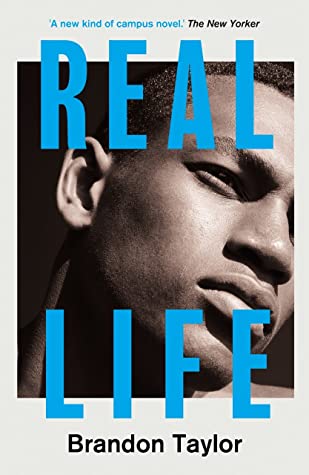 Over the course of one late summer weekend, Wallace questions everything about the life he has built. As a gay African American, he has always been an outsider at the Midwestern university where he’s a graduate student in biochemistry. Though they vary in background and include several homosexuals, some partnered and some unattached, most of his friends are white, and he’s been so busy that he’s largely missed out on evening socializing by the lake – and skipped his father’s funeral (though there are other reasons for that as well).
Tacit prejudice comes out into the open in ugly ways in these few days. When he finds his nematode experiments sabotaged, a female colleague at his lab accuses him of misogyny, brandishing his identity as a weapon against him: “you think that you get to walk around because you’re gay and black and act like you can do no wrong.” Then, in a deliciously awkward dinner party scene, an acquaintance brings up Wallace’s underprivileged Alabama upbringing as if it explains why he’s struggling to cope in his academic career.
Meanwhile, Wallace has hooked up with a male – and erstwhile straight – friend, and though there is unwonted tenderness in this relationship, there is also a hint of menace. The linking of sexuality and violence echoes the memories of abuse from Wallace’s childhood, which tumble out in the first-person stream of consciousness of Chapter 5. Other male friends, too, are getting together or breaking apart over mismatched expectations. Kindness is possible, but built-in injustice and cruelty, whether vengeful or motiveless, too often take hold.
There are moments when Wallace seems too passive or self-pitying, but the omniscient narration emphasizes that all of the characters have hidden depths and that emotions ebb and flow. What looks like despair on Saturday night might feel like no big deal come Monday morning. I so admired how this novel was constructed: the condensed timeframe, the first and last chapters in the past tense (versus the rest in the present tense), the contrast between the cerebral and the bodily, and the thematic and linguistic nods to Virginia Woolf. A very fine debut indeed.
My rating: 
I also read two more of the longlisted novels from the library:
Such a Fun Age by Kiley Reid
 Such a fun book! I’d read the first chapter earlier in the year and set it aside, thinking it was too hip for me. I’m glad I decided to try again – it was a great read, so assured and contemporary. Once I got past a slightly contrived first chapter, I found it completely addictive. The laser-precision plotting and characterization reminded me of Jennifer Egan, Jonathan Franzen and Zadie Smith at their peak, but the sassy voice is all Reid’s own. There are no clear villains here; Alix Chamberlain could easily have filled that role, but I felt for her and for Kelley as much as I did for Emira. The fact that I didn’t think anyone was completely wrong shows how much nuance Reid worked in. The question of privilege is as much about money as it is about race, and these are inextricably intertwined.
Love and Other Thought Experiments by Sophie Ward
 An intriguing set of linked short stories that combine philosophy and science fiction. Rachel and Eliza are preparing to have a baby together when an ant crawls into Rachel’s eye and she falls ill. Eliza wants to believe her partner but, as a scientist, can’t affirm something that doesn’t make sense (“We don’t need to resort to the mystical to describe physical processes,” she says). Other chapters travel to Turkey, Brazil and Texas – and even into space. It takes 60+ pages to figure out, but you can trust all the threads will converge around Rachel and her son, Arthur, who becomes an astronaut. I was particularly taken by a chapter narrated by the ant (yes, really) as it explores Rachel’s brain. Each section is headed by a potted explanation of a thought experiment from philosophy. I wasn’t entirely sure what to make of the alternative future of the two final chapters. Still, I was impressed with the book’s risk-taking and verve. It’s well worth making a rare dip into sci-fi for this one.
Back in September I still thought Hilary Mantel would win the whole thing, but since her surprise omission from the shortlist I’ve assumed the prize will go to Shuggie Bain by Douglas Stuart. This was a DNF for me, but I’ll try it again next year in case it was just a matter of bad timing (like the Reid and The Go-Between – two books I attempted a second time this year and ended up loving). Given that it was my favorite of the ones I read, I would be delighted to see Real Life win, but I think it unlikely. My back-up prediction is The Shadow King by Maaza Mengiste, which I would consider reserving from the library if it wins.

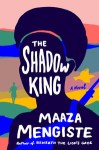
Have you read anything from the Booker shortlist?
Which book do you expect to win?
Five Early March Releases: Jami Attenberg, Tayari Jones and More
Last week was one of the biggest weeks in the UK’s publishing year. Even though I’ve cut down drastically on the number of review books I’m receiving in 2020, I still had six on my shelf with release dates last week. Of course, THE biggest title out on the 5th was The Mirror and the Light, the final volume in Hilary Mantel’s Thomas Cromwell trilogy, which I’m eagerly awaiting from the library – I’m #3 in a holds queue of 34 people, but there are three copies, all showing as “Received at HQ,” so mine should come in any day now.
But for those who are immune to Mantel fever, or just seeking other material, there’s plenty to keep you busy. I give short reviews of five books today: a couple of dysfunctional family stories, two very different graphic novels and some feminist nonfiction.
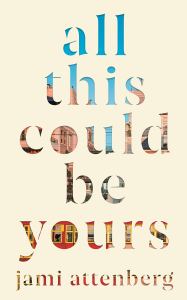
All This Could Be Yours by Jami Attenberg
(Published by Serpent’s Tail on the 5th; came out in the USA from Houghton Mifflin in October)
Most of the action in Attenberg’s seventh book takes place on one day, as 73-year-old Victor Tuchman, struck down by a heart attack, lies on his deathbed in a New Orleans hospital. There’s more than a whiff of Trump about Victor, who has a shadowy mobster past and was recently hit with 11 sexual harassment charges. Forced to face the music for the first time, he fled Connecticut with his wife Barbra, citing the excuse of wanting to live closer to their son Gary in Louisiana. Victor had been abusive to Barbra throughout their marriage, and was just as violent in his speech: he could crush their daughter Alex with one remark on her weight.
 So no one is particularly sad to see Victor dying. Alex goes through the motions of saying goodbye and telling her father she forgives him, knowing she doesn’t mean a word. Meanwhile, Gary is AWOL on a work trip to California, leaving his wife Twyla to take his place at Victor’s bedside. Twyla’s newfound piety is her penance for a dark secret that puts her at the heart of the family’s breakdown.
Attenberg spends time with each family member on this long day supplemented by flashbacks, following Alex from bar to bar in downtown New Orleans as she tries to drown her sorrows and exploring other forms of addiction through Barbra (redecorating; not eating or ageing) and Twyla – in a particularly memorable scene, she heaps a shopping cart full of makeup at CVS and makes it all the way to the checkout before she snaps out of it. There’s also an interesting pattern of giving brief glimpses into the lives of the incidental characters whose paths cross with the family’s, including the EMT who took Victor to the hospital.
This is a timely tragicomedy, realistic and compassionate but also marked by a sardonic tone. Although readers only ever see Victor through other characters’ eyes, any smug sense of triumph they may feel about seeing the misbehaving, entitled male brought low is tempered by the extreme sadness of what happens to him after his death. I didn’t love this quite as much as The Middlesteins, but for me it’s a close second out of the four Attenberg novels I’ve read. She’s a real master of the dysfunctional family novel.
My thanks to the publisher for the free copy for review.
Silver Sparrow by Tayari Jones (2011)
(Published for the first time in the UK by Oneworld on the 5th)
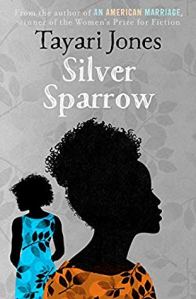 Speaking of messed-up families … Growing up in 1980s Atlanta, Dana and Chaurisse both call James Witherspoon their father – but Chaurisse’s mother doesn’t even know that Dana exists. Dana’s mother, however, has always been aware of her husband’s other family. That didn’t stop her from agreeing to a quick marriage over the state line. Jones establishes James’s bigamy in the first line; the rest of the novel is mostly in two long sections, the first narrated by Dana and the second by Chaurisse. Both girls recount how their parents met, as well as giving a tour through their everyday life of high school and boyfriends.
I was eager to read this after enjoying Jones’s Women’s Prize winner, An American Marriage, so much. Initially I liked Dana’s narration as she elaborates on her hurt at being in a secret family. The scene where she unexpectedly runs into Chaurisse at a science fair and discovers their father bought them matching fur coats is a highlight. But by the midpoint the book starts to drag, and Chaurisse’s voice isn’t distinct enough for her narration to add much to the picture. A subtle, character-driven novel about jealousy and class differences, this failed to hold my interest. Alternating chapters from the two girls might have worked better?
My thanks to the publisher for the proof copy for review.
New graphic novels from SelfMadeHero:
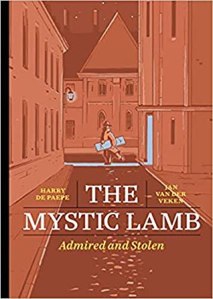 The Mystic Lamb: Admired and Stolen by Harry De Paepe and Jan Van Der Veken
[Translated by Albert Gomperts]
I’ve been to Ghent, Belgium twice. Any visitor will know that one of the city’s not-to-be-missed sights is the 15th-century altarpiece in St Bavo’s Cathedral, Jan van Eyck’s Adoration of the Mystic Lamb. On our first trip we bought timed tickets to see this imposing and vibrantly colored multi-paneled artwork, which depicts various figures and events from the Bible as transplanted into a typically Dutch landscape. De Paepe gives a comprehensive account of the work’s nearly six-century history.

Ghent altarpiece (Jan van Eyck / Public domain)
It’s been hidden during times of conflict or taken away as military spoils; it’s been split into parts and sold or stolen; it narrowly escaped a devastating fire. Overall, there was much more detail here than I needed, and far fewer illustrations than I expected. If you have a special interest in art history, you may well enjoy this. Just bear in mind that, although marketed as a graphic novel, it is mostly text.
Thoreau and Me by Cédric Taling
[Translated by Edward Gauvin]
 I can’t seem to get away from Henry David Thoreau in my recent reading. Last year I reviewed for the TLS two memoirs that consciously appropriated the 19th-century environmentalist’s philosophy and language; the other night I found mentions of Thoreau in a Wallace Stegner novel, a new nature book by Lucy Jones, and travel books by Nancy Campbell and Charlie English. So I knew I had to read this debut graphic novel (but is it a memoir or autofiction?) about a Paris painter who is plagued by eco-anxiety and plans to build his own off-grid home in the woods.
Cédric and his middle-class friends are assailed by “white hipster guilt.” A brilliant sequence has a dinner party discussion descend into a cacophony of voices as they list the ethical minefields they face. Though Cédric wishes he were a prepared alpha male with advanced survival skills that could save his family, his main strategy seems to be panic buying cold-weather gear. Thoreau, depicted sometimes as a wolf or faun and always with a thin, tubular mosquito’s nose (like a Socratic gadfly?), comes to him as an invisible friend and guru, with quotes from Walden and his journal appearing in jagged speech bubbles. This was a good follow-up to Jenny Offill’s Weather with its themes of climate-related angst and perceived helplessness. I enjoyed the story even though I found the drawing style slightly grotesque.

My thanks to the publisher for the free copies for review.
And one extra:
 The Home Stretch: Why It’s Time to Come Clean about Who Does the Dishes by Sally Howard
(Published by Atlantic Books on the 5th)
I only gave this feminist book about the domestic labor gap a quick skim as, unfortunately, it repeats a lot of the examples and statistics that were familiar to me from works like Invisible Women by Caroline Criado-Pérez (e.g. the Iceland women’s strike in the 1970s) and Fair Play by Eve Rodsky. The only chapter that stood out for me somewhat was about the “yummy mummy” stereotype perpetuated by the likes of Jools Oliver and Gwyneth Paltrow.
My thanks to the publisher for the proof copy for review.
What recent releases can you recommend?
Humiliation: Stories by Paulina Flores
Paulina Flores, a young Chilean author and high school teacher, won the Roberto Bolaño Short Story Prize for the title story in her debut collection. These nine stories are about how we relate to the past, particularly our childhood – whether with nostalgia or regret – and about the pivotal moments that stand out in the memory. The first two, “Humiliation” and “Teresa,” I previewed in one of my Women in Translation Month posts. They feature young fathers and turn on a moment of surprise: An unemployed father takes his two daughters along to his audition; a college student goes home with a single father for a one-night stand.
 Of the rest, my favorites were “Talcahuano,” about teenage friends whose plan to steal musical instruments from the local evangelical church goes awry when there’s a crisis with the narrator’s father, a laid-off marine (readalike: Sweet Sorrow by David Nicholls); and “Forgetting Freddy,” in which a young woman who ends up back in her mother’s apartment after a breakup listens to the neighbors fighting and relives childhood fears during her long baths (readalike: History of Wolves by Emily Fridlund).
“American Spirit” recalls two friends’ time waitressing (readalike: Sweetbitter by Stephanie Danler), and in “Last Vacation” a young man recounts his last trip to La Serena with his aunt before everything went wrong for his family. “Laika” is a troubling one in that the protagonist remembers her childhood brush with pedophilia not with terror or disgust but with a sort of fondness. A number of the stories conclude that you can’t truly remake your life, nor can you escape the memories that have shaped you – even if you might like to.
A fairly common feature in story volumes is closing with a novella. Almost invariably, I like these long stories the least, and sometimes skip them. Here, the 72-page “Lucky Me” could easily be omitted. Denise, a librarian who watches porn and reads the Old Testament in her spare time (“what she needed was to feel something. She needed pleasure and spirituality”), lets the upstairs neighbor use her bedroom for sex; Nicole, a fourth-grader, has her world turned upside down when her best friend’s mother becomes their housekeeper. Although the story brings its strands, one in the first person and one in the third (giving the book an even 4.5/4.5 split), together in a satisfying manner, it was among my least favorites in the collection.
Overall, though, these are sharp and readable stories I can give a solid recommendation.
My rating: 
Humiliation (2016; English translation by Megan McDowell, 2019) is published by Oneworld today, November 7th,; it came out on the 5th from Catapult in the USA. My thanks to Margot Weale for a proof copy for review.
Women in Translation Month 2019, Part II: Almada and Fenollera
All Spanish-language choices this time: an Argentinian novella, a Spanish novel, and a couple of Chilean short stories to whet your appetite for a November release.
The Wind that Lays Waste by Selva Almada (2012; English translation, 2019)
[Translated by Chris Andrews]
 Selva Almada’s debut novella is also her first work to appear in English. Though you might swear this is set in the American South, it actually takes place in her native Argentina. The circadian narrative pits two pairs of characters against each other. On one hand we have the Reverend Pearson and his daughter Leni, itinerants who are driven ever onward by the pastor’s calling. On the other we have “The Gringo” Brauer, a mechanic, and his assistant, José Emilio, nicknamed “Tapioca.”
On his way to visit Pastor Zack, Reverend Pearson’s car breaks down. While the Gringo sets to work fixing the vehicle, the preacher tries witnessing to Tapioca. He senses something special in the boy, perhaps even recognizing a younger version of himself, and wants him to have more of a chance in life than he’s currently getting at the garage. As a violent storm comes up, we’re left to wonder how Leni’s cynicism, the Reverend’s zealousness, the Gringo’s suspicion, and Tapioca’s resolve will all play out.
Different as they are, there are parallels to be drawn between these characters, particularly Leni and Tapioca, who were both abandoned by their mothers. I particularly liked the Reverend’s remembered sermons, printed in italics, and Leni’s sarcastic thoughts about her father’s vocation: “They always ended up doing what her father wanted, or, as he saw it, what God expected of them” and “she admired the Reverend deeply but disapproved of almost everything her father did. As if he were two different people.”
The setup and characters are straight out of Flannery O’Connor. The book doesn’t go as dark as I expected; I’m not sure I found the ending believable, even if it was something of a relief.
My rating: 
My thanks to Charco Press for the free copy for review. Last year I reviewed two Charco releases: Die, My Love and Fish Soup.
See also Susan’s review.
The Awakening of Miss Prim by Natalia Sanmartin Fenollera (2013; English translation, 2014)
[Translated by Sonia Soto]
 San Ireneo de Arnois is a generically European village that feels like it’s been frozen in about 1950: it’s the sort of place that people who are beaten down by busy city life retreat to so they can start creative second careers. Prudencia Prim comes here to interview for a job as a librarian, having read a rather cryptic job advertisement. Her new employer, The Man in the Wingchair (never known by any other name), has her catalogue his priceless collection of rare books, many of them theological treatises in Latin and Greek. She’s intrigued by this intellectual hermit who doesn’t value traditional schooling yet has the highest expectations for the nieces and nephews in his care.
In the village at large, she falls in with a group of women who have similarly ridiculous names like Hortensia and Herminia and call themselves feminists yet make their first task the finding of a husband for Prudencia. All of this is undertaken with the aid of endless cups of tea or hot chocolate and copious sweets. The village and its doings are, frankly, rather saccharine. No prizes for guessing who ends up being Prudencia’s chief romantic interest despite their ideological differences; you’ll guess it long before she admits it to herself at the two-thirds point.
As much as this tries to be an intellectual fable for bibliophiles (Prudencia insists that The Man in the Wingchair give Little Women to his niece to read, having first tried it himself despite his snobbery), it’s really just a thinly veiled Pride and Prejudice knock-off – and even goes strangely Christian-fiction in its last few pages. If you enjoyed The Readers of Broken Wheel Recommend and have a higher tolerance for romance and chick lit than I, you may well like this. It’s pleasantly written in an old-fashioned Pym-homage style, but ultimately it goes on my “twee” shelf and will probably return to a charity shop, from whence it came.
My rating: 
Humiliation by Paulina Flores (2016; English translation, 2019)
[Translated by Megan McDowell]
I’ve read the first two stories so far, “Humiliation” and “Teresa,” which feature young fathers and turn on a moment of surprise. An unemployed father takes his two daughters along to his audition; a college student goes home with a single father for a one-night stand. In both cases, what happens next is in no way what you’re expecting. These are sharp and readable, and I look forward to making my way through the rest over the next month or two.
My rating:
Humiliation will be published by Oneworld on November 7th. My thanks to Margot Weale for a proof copy. I will publish a full review closer to the time.
Did you do any special reading for Women in Translation month this year?
August’s Reading Plans: Too Many Projects!
My August is looking chock-full of reading projects – many of them self-imposed, to be fair.
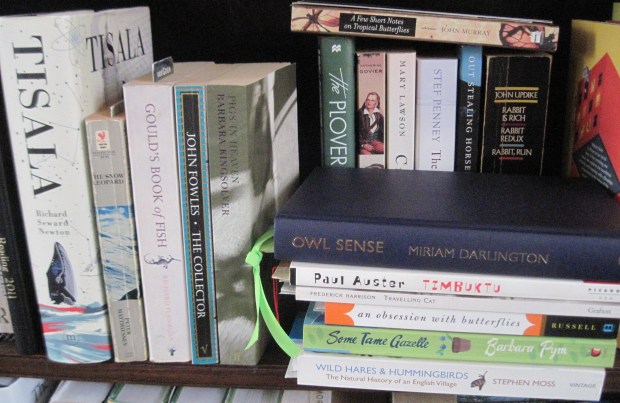
20 Books of Summer: I’ve finished a few more books and just need to write them up; I’m in the middle of another nine, including Tisala as my doorstopper for the month.
Summer theme: Books with summer/sun/shine in the title, and others set in summer, like The Go-Between by L.P. Hartley, my classic for the month.

Women in Translation month: I’ve started the Ferrante and also want to get to the Fenollera and start the Flores stories (all those Fs!), which are coming out from Oneworld in November. Also, in yesterday’s post I received a surprise copy of a forthcoming Fitzcarraldo Editions essay by Annie Ernaux about her mother’s dementia, so I will squeeze that in too.

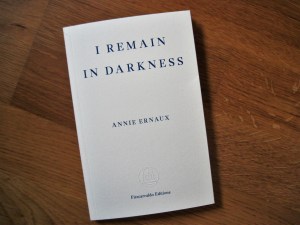
Robertson Davies week: In the final week of August I’ll be joining in with Lory’s (The Emerald City Book Review) Robertson Davies readalong by starting Fifth Business, the first volume in The Deptford Trilogy.

May Sarton article: I’m writing a profile for Bookmarks magazine this month, and am currently in the throes of research: finishing the Margot Peters biography I started last year and set aside for ages; reading another novel or two by Sarton; skimming back through various of the journals, novels and poems I’ve read before; and exploring other external sources. Luckily, my husband was able to forage for loads from his university library for me.
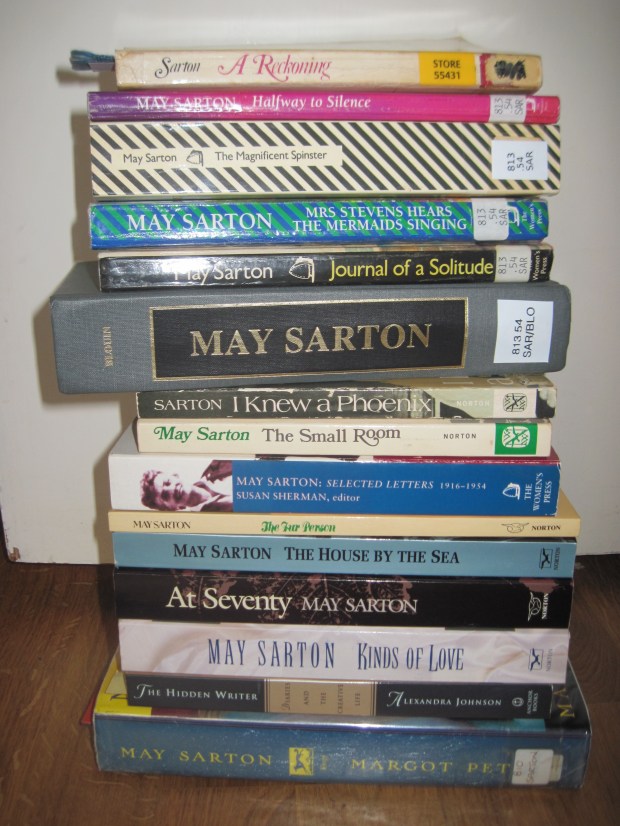
What’s keeping you busy this month?
Heart and Mind: New Nonfiction by Sandeep Jauhar and Jan Morris
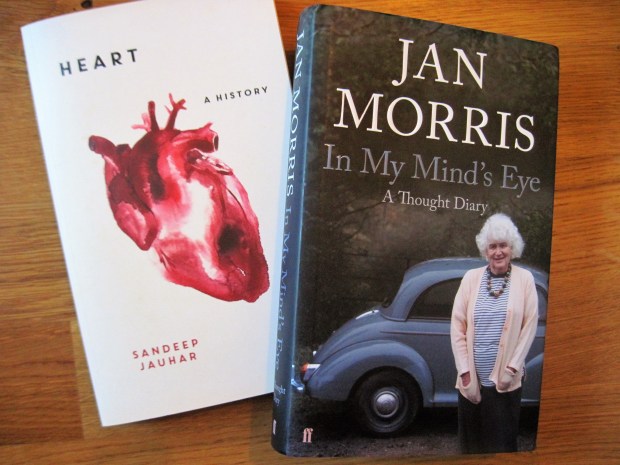
Heart: A History, by Sandeep Jauhar
There could hardly be an author better qualified to deliver this thorough history of the heart and the treatment of its problems. Sandeep Jauhar is the director of the Heart Failure Program at Long Island Medical Center. His family history – both grandfathers died of sudden cardiac events in India, one after being bitten by a snake – prompted an obsession with the heart, and he and his brother both became cardiologists. As the book opens, Jauhar was shocked to learn he had up to a 50% blockage of his own coronary vessels. Things had really gotten personal.
Cardiovascular disease has been the #1 killer in the West since 1910 and, thanks to steady smoking rates and a continuing rise in obesity and sedentary lifestyles, will still affect 60% of Americans. However, the key is that fewer people will now die of heart disease thanks to the developments of the last six decades in particular. These include the heart–lung machine, cardiac catheterization, heart transplantation, and artificial hearts.
 Along the timeline, Jauhar peppers in bits of his own professional and academic experience, like experimenting on frogs during high school in California and meeting his first cadaver at medical school. My favorite chapter was the twelfth, “Vulnerable Heart,” which is about how trauma can cause heart arrhythmias; it opens with an account of the author’s days cataloguing body parts in a makeshift morgue as a 9/11 first responder. I also particularly liked his account of being called out of bed to perform an echocardiogram, which required catching a taxi at 3 a.m. and avoiding New York City’s rats.
Maybe I’ve read too much surgical history this year (The Butchering Art by Lindsey Fitzharris and Face to Face by Jim McCaul), though, because I found myself growing fairly impatient with the medical details in the long Part II, which centers on the heart as a machine, and was drawn more to the autobiographical material in the first and final sections. Perhaps I would prefer Jauhar’s first book, Intern: A Doctor’s Initiation.
In terms of readalikes, I’d mention Siddhartha Mukherjee’s The Gene, in which the personal story also takes something of a backseat to the science, and Gavin Francis’s Shapeshifters, which exhibits a similar interest in the metaphors applied to the body. While I didn’t enjoy this quite as much as two other heart-themed memoirs I’ve read, The Sanctuary of Illness by Thomas Larson and Echoes of Heartsounds by Martha Weinman Lear, I still think it’s a strong contender for next year’s Wellcome Book Prize (the judging panel is announced tomorrow!).
Some favorite lines:
“it is increasingly clear that the biological heart is extraordinarily sensitive to our emotional system—to the metaphorical heart, if you will.”
“Who but the owner can say what lies inside a human heart?”“As a heart-failure specialist, I’d experienced enough death to fill up a lifetime. At one time, it was difficult to witness the grief of loved ones. But my heart had been hardened, and this was no longer that time.”
My rating:
Heart is published in the UK today, September 27th, by Oneworld. My thanks to the publisher for the proof copy for review.
In My Mind’s Eye: A Thought Diary, by Jan Morris
I’ve been an admirer of Jan Morris’s autobiographical and travel writing for 15 years or more. In this diary covering 2017 into early 2018, parts of which were originally published in the Financial Times and the Welsh-language literary newspaper O’r Pedwar Gwynt, we get a glimpse into her life in her early nineties. It was a momentous time in the world at large but a fairly quiet and reflective span for her personally. Though each day’s headlines seem to herald chaos and despair, she’s a blithe spirit – good-natured about the ravages of old age and taking delight in the routines of daily one-mile walks down the lane and errands in local Welsh towns with her beloved partner Elizabeth, who’s in the early stages of dementia.
 There are thrilling little moments, though, when a placid domestic life (a different kind of marmalade with breakfast each day of the week!) collides with exotic past experiences, and suddenly we’re plunged into memories of travels in Swaziland and India. Back when she was still James, Morris served in World War II, was the Times journalist reporting from the first ascent of Everest, and wrote a monolithic three-volume history of the British Empire. She took her first airplane flight 70 years ago, and is nostalgic for the small-town America she first encountered in the 1950s. Hold all that up against her current languid existence among the books and treasures of Trefan Morys and it seems she’s lived enough for many lifetimes.
There’s a good variety of topics here, ranging from current events to Morris’s love of cats; I particularly liked the fragments of doggerel. However, as is often the case with diaries, read too many entries in one go and you may start to find the sequence of (non-)events tedious. Each piece is only a page or two, so I tried never to read many more than 10 pages at a time. Even so, I noticed that the plight of zoo animals, clearly a hobby-horse, gets mentioned several times. It seemed to me a strange issue to get worked up about, especially as enthusiastic meat-eating and killing mice with traps suggest that she’s not applying a compassionate outlook consistently.
In the end, though, kindness is Morris’s cardinal virtue, and despite minor illness, telephone scams and a country that looks to be headed to the dogs, she’s encouraged by the small acts of kindness she meets with from friends and strangers alike. Like Diana Athill (whose Alive, Alive Oh! this resembles), I think of Morris as a national treasure, and I was pleased to spend some time seeing things from her perspective.
Some favorite lines:
“If I set out in the morning for my statutory thousand daily paces up the lane, … I enjoy the fun of me, the harmless conceit, the guileless complexity and the merriment. When I go walking in the evening, on the other hand, … I shall recognize what I don’t like about myself – selfishness, self-satisfaction, foolish self-deceit and irritability. Morning pride, then, and evening shame.” (from Day 99)
“Good or bad, virile or senile, there’s no life like the writer’s life.” (from Day 153)
My rating:
In My Mind’s Eye was published by Faber & Faber on September 6th. My thanks to the publisher for the free copy for review.
Polishing off My 20 Books of Summer with Hay, Jones & Markham
I finished off strong with a few books I’ve been meaning to read for months or years.
Late Nights on Air by Elizabeth Hay (2007)
 (This was a Twitter buddy read with Naomi of Consumed by Ink and Penny of Literary Hoarders.) I read my first novel by Hay, A Student of Weather, last year. It was wonderfully rewarding even though it took me a month to read. By contrast, I read the Giller Prize-winning Late Nights on Air in half that time. Most of it is set in 1975–7 in Yellowknife, a small city in Canada’s Northwest Territories. Here winter lasts for eight months and you can still meet with snow and frozen lakes in early July. A tight-knit cast gathers around the local radio station: Harry and Gwen, refugees from Ontario starting new lives; Dido, an alluring Dutch newsreader; Ralph, the freelance book reviewer; menacing Eddie; and pious Eleanor.
Everyone is in love with everyone else, so you get these layers of unrequited romance and a sense of exposure: not just to the elements, but to the vulnerabilities of admitting one’s feelings and risking professional failure. The novel is also about appearances and assumptions – “You don’t look anything like how you sound,” Gwen says to Harry – and the dangers of obsession. Four of the station employees set out one summer to recreate the six-week journey of Arctic explorer John Hornby, a trip that ends up being as wondrous as it is fraught. Hay’s foreshadowing is a bit heavy-handed, and I found the final chapters after the expedition a slight letdown, but overall this is a marvellous story of quiet striving and dislocation. I saw bits of myself in each of the characters, and I loved the extreme setting, both mosquito-ridden summer and bitter winter. I need to read the rest of Hay’s oeuvre stat.
Favorite passages:
Harry’s professional advice to Gwen: “Radio was like poetry, he told her. At its best it could be, while television was like a blockbuster novel: one made you think and feel, the other dulled your mind. … ‘To be any good you have to believe it’s hard. It’s called creative tension. … And you won’t be any good until you’re dedicated to something outside yourself.’ … I learned that a mistake is just something you go on from.”
“Something blossoms in an unlikely place. An oasis of trees miles above the treeline. An arctic river warmer than any other water they’d come upon. The four of them bathed in the waters of the Thelon, wading out into it, almost swimming. On shore they towelled themselves dry and dressed, and there was no feeling to equal the splendour of warm clothes on river-cold skin.”
My rating:
I ran out of time for Half of a Yellow Sun by Chimamanda Ngozi Adichie so substituted in…
An American Marriage by Tayari Jones (2018)
(If it’s good enough for Barack Obama and Oprah Winfrey, it’s good enough for me!)
 The title feels like an echo of An American Tragedy. It’s both monolithic and generic, as if saying: Here’s a marriage; make of it what you will. Is it representative of the average American situation, or is it exceptional? Roy and Celestial only get a year of happy marriage before he’s falsely accused of rape and sentenced to 12 years in prison in Louisiana. Through their alternating first-person narration and their letters back and forth while Roy is incarcerated, we learn more about this couple: how their family circumstances shaped them, how they met, and how they drift apart as Celestial turns to her childhood friend, Andre, for companionship. When Roy is granted early release, he returns to Georgia to find Celestial and see what might remain of their marriage. I ached for all three main characters: It’s an impossible situation. The novel ends probably the only way it could, on a realistic yet gently optimistic note. Life goes on, if not how you expect, and there will be joys still to come.
This would make a great book club pick: there’s a lot to probe about the characters’ personalities and motivations, and about how they reveal or disguise themselves through their narration. I found it remarkable how the letters, which together make up not even one-fifth of the text, enhance the raw honesty of the book. There are other marriages on display besides Roy and Celestial’s, their range providing a snapshot of African-American lower-middle- and upper-middle-class life in the South. I especially liked the use of two totem objects, Roy’s tooth and the hickory tree outside Celestial’s childhood home (what you see on the cover).
Favorite lines:
Celestial: “I believed that our marriage was a fine-spun tapestry, fragile but fixable. We tore it often and mended it, always with a silken thread, lovely but sure to give way.”
Andre: “I don’t believe that blood makes a family; kin is the circle you create, hands held tight.”
Celestial: “Our marriage was a sapling graft that didn’t have time to take.”
Roy: “mostly my life is good, only it’s a different type of good from what I figured on.”
My rating:
An American Marriage was published in the UK by Oneworld on April 5th. My thanks to the publisher for the free copy for review.
West With the Night by Beryl Markham (1942)
 (Another Twitter buddy read, with Laila of Big Reading Life.) I’ve meant to pick this up ever since I read Paula McLain’s fantastic novel about Beryl Markham, Circling the Sun. I loved Markham’s memoir even more. She writes so vividly about the many adventures of her life in Africa: hunting lions, training race horses, and becoming one of the continent’s first freelance pilots, delivering mail and locating elephant herds.
It took me a while to get used to the structure – this is a set of discrete stories rather than a chronological narrative – but whether she’s reflecting on the many faces of Africa or the peculiar solitude of night flights, the prose is just stellar. Ernest Hemingway once asserted in a letter that Markham could “write rings around all of us who consider ourselves as writers,” and I certainly enjoyed this more than anything I’ve read by Hemingway.
The text is bookended by two momentous flights: it opens with Markham scrambling to deliver oxygen to an injured miner, and ends with her completing the first east–west solo flight across the Atlantic in 1936. Her engine cut out multiple times; it’s no less than a miracle that she survived to crash land in Nova Scotia. Laila and I agree that Markham’s life is so exciting it’s crying out for a movie version. In the meantime, I’d like to read some more about her circle – Denys Finch Hatton; and Baron von Blixen and his wife Karen (aka Danish writer Isak Dinesen, famous for Out of Africa). In my Circling the Sun review for BookTrib, I wrote that “Markham was the kind of real-life action adventure heroine you expect to find in Indiana Jones movies,” and that sense was only confirmed by her own account.
Favorite passages:
“to fly in unbroken darkness without even the cold companionship of a pair of ear-phones or the knowledge that somewhere ahead are lights and life and a well-marked airport is something more than just lonely. It is at times unreal to the point where the existence of other people seems not even a reasonable possibility. The hills, the forests, the rocks, and the plains are one with the darkness, and the darkness is infinite. The earth is no more your planet than is a distant star—if a star is shining; the plane is your planet and you are its sole inhabitant.”
“I saw how a man can be master of a craft, and how a craft can be master of an element. I saw the alchemy of perspective reduce my world, and all my other life, to grains in a cup. I learned to watch, to put my trust in other hands than mine. And I learned to wander. I learned what every dreaming child needs to know—that no horizon is so far that you cannot get above it or beyond it.”
My rating:
So how did I do on my first-ever #20BooksofSummer challenge? In that I read and reviewed (more than) 20 books by women that I owned in print, it was a smashing success. However, I only read 7 of the books I’d intended to, substituting in the rest from my review pile, books I owned in America, and others that grabbed my attention more than those I’d picked out in early June. Looks like I’m not great at sticking with the specific reading plans I set!
At any rate, as bonuses, here are the additional books by women that I read in print from my own shelves over the summer, not counting ones already reviewed on the blog (in chronological order, with ratings and links to any Goodreads reviews):
- Blue Horses, Mary Oliver
- The Egg and I, Betty Macdonald
- Eye of the Shoal: A Fish-watcher’s Guide to Life, the Ocean and Everything, Helen Scales
- The Partly Cloudy Patriot, Sarah Vowell
- Talk before Sleep, Elizabeth Berg
- The Incendiaries, R.O. Kwon [blog tour review coming on Monday]

- The Artist’s Way: A Spiritual Path to Higher Creativity, Julia Cameron
- Gross Anatomy: My Curious Relationship with the Female Body (The Top Half and the Bottom Half), Mara Altman [Glamour UK review coming soon]
- Questions of Travel, Elizabeth Bishop
- Writers & Company, Eleanor Wachtel

- Help Me!: One woman’s quest to find out if self-help really can change her life, Marianne Power
- Mrs Gaskell & Me: Two Women, Two Love Stories, Two Centuries Apart, Nell Stevens
I’d call that a result!
What have been the best books of the summer? Of the final 20, The Invisible Bridge by Julie Orringer was the winner, followed closely by The Life and Loves of Lena Gaunt by Tracy Farr, Late Nights on Air by Elizabeth Hay, and West With the Night by Beryl Markham. There were no real duds. I’m still very interested in all but one of the books I chose back in June, so I’ll see how many of the rest I can fit into this autumn and winter’s reading.
 Bookish Beck = Rebecca Foster. American transplant to England. Freelance proofreader and book reviewer.
 Bookish Beck