#NovNov25 Catch-Up: Dodge, Garner, O’Collins, Sagan and A. White
As promised, I’m catching up on five novella-length works I finished in November. In fiction, I have an odd duck of a family story, a piece of autofiction about caring for a friend with cancer, a record of an affair, and a tale of settling two new cats into home life in the 1950s. And in nonfiction, a short book about the religious approach to midlife crisis.
Fup by Jim Dodge (1983)
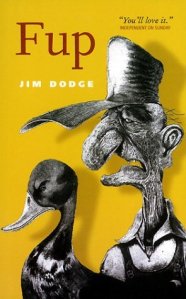 I’d never heard of this but picked it up because of my low-key project of reading books from my birth year. After his daughter died in a freak accident, Grandaddy Jake Santee adopted his grandson “Tiny.” With that touch of backstory dabbed in, we’re in the northern California hills in 1978 with grandfather and grandson – now 99 and 22, respectively. Tiny builds fences, while Grandaddy is famous for his incredibly strong, home-distilled whiskey, “Ol’ Death Whisper.” One day, Tiny rescues a filthy creature from a posthole where it’s been chased by their nemesis, Lockjaw the wild boar. It turns out to be a duckling that grows into a hen mallard named Fup Duck (it’s a spoonerism…) who eats so much she’s too heavy to fly. Grandaddy plans to continue drinking and gambling indefinitely, but the hunt for Lockjaw – who he thinks may be a reincarnation of his Native American friend, Seven Moons – breaks the household apart. This was very weird: it starts out a mixture of grit (those grotesque Harry Horse drawings!) and Homer Hickam schmaltz and then goes full Jonathan Livingston Seagull. (Secondhand – Community Furniture Project, Newbury) [89 pages]
The Spare Room by Helen Garner (2008)
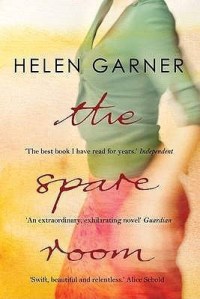 Who knew there was such a market for novels about helping a friend through cancer treatment? Or maybe it’s just that I love them so much I home right in on them. As a work of autofiction – the no-nonsense narrator, Helen, gives her old friend Nicola a place to stay in Melbourne for several weeks while she undergoes experimental procedures – this is most like What Are You Going Through by Sigrid Nunez (but I also had in mind Talk Before Sleep by Elizabeth Berg, We All Want Impossible Things by Catherine Newman, and Some Bright Nowhere by Ann Packer). Helen thinks The Theodore Institute peddles quack medicine, whereas Nicola is willing to shell out thousands of dollars for its coffee enemas and vitamin C infusions, even though they leave her terrifyingly fragile. Nicola is the only character who doesn’t acknowledge that her case is terminal. The pages turn effortlessly as Helen covers her frustration with Nicola, Nicola’s essential optimism, and the realities of living while dying. “Oh, I loved her for the way she made me laugh. She was the least self-important person I knew, the kindest, the least bitchy. I couldn’t imagine the world without her.” I’ll read more by Garner for sure. (Secondhand – Awesomebooks.com) [195 pages]
Second Journey: Spiritual Awareness and the Mid-Life Crisis by Gerald O’Collins SJ (1978; 1995)
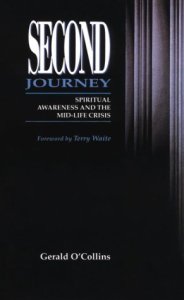 O’Collins, a Jesuit priest, sought a more constructive term than “midlife crisis” for the unease and difficult decisions that many face in their forties. He chooses instead the language of journeys, specifically one embarked upon because a previous way of life was no longer working. There are several types of triggers that O’Collins illustrates through brief case studies of famous individuals or anonymous acquaintances. The shift might be prompted by a sense of failure (John Wesley, Jimmy Carter), by literal exile (Dante), by falling in love (someone who left the priesthood to marry), by experiencing severe illness (John Henry Newman) or fighting in a war (Ignatius of Loyola), or simply by a longing for “something more” (Mother Teresa). But there are only two end points, O’Collins offers: a new place or situation; or a fresh appreciation of the old one – he quotes Eliot’s “to arrive where we started / And know the place for the first time.” This is practical and relatable, but light on actual advice. It also pales by comparison to Richard Rohr’s more recent work on spirituality in the different stages of life (especially in Falling Upward). (Free from a church member’s donations) [100 pages]
A Certain Smile by Françoise Sagan (1956)
[Translated from French by Irene Ash]
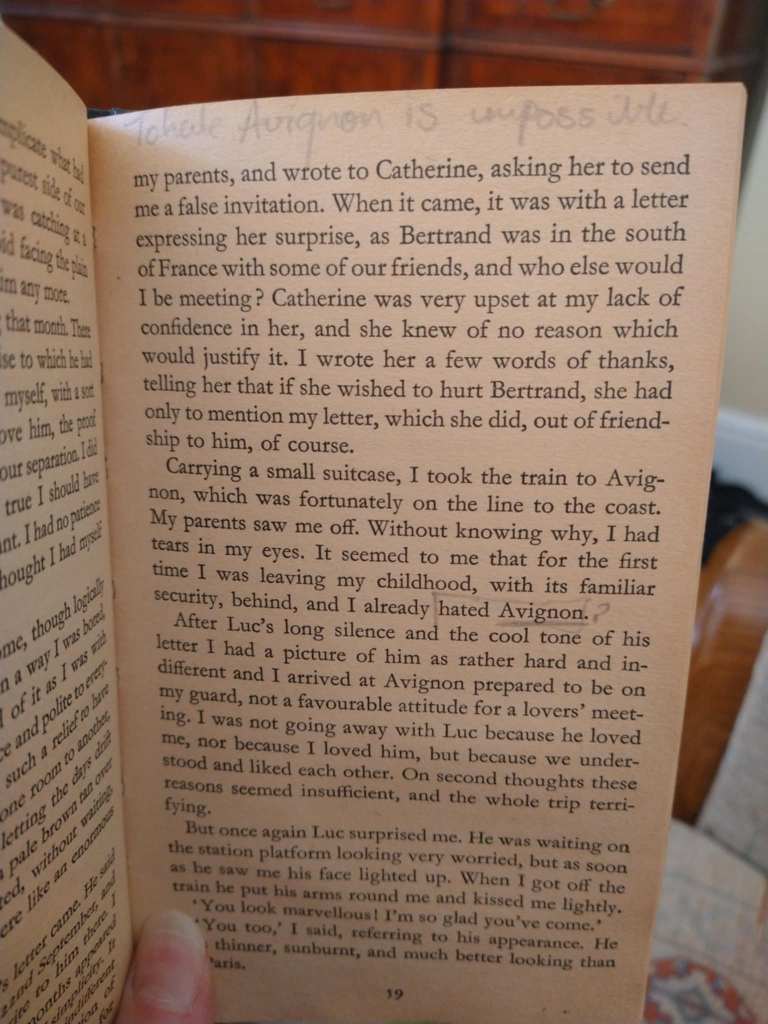
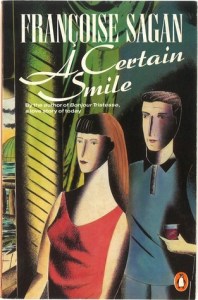 Law student Dominique is lukewarm on her boyfriend Bertrand and starts seeing his married uncle, Luc, instead. The high point is when they manage to go on a ‘honeymoon’ trip of several weeks to Avignon. Both Bertrand and Luc’s wife, Françoise, eventually find out, but everyone is very grown-up about it. The struggle is never external so much as within Dominique to accept that she doesn’t mean as much to Luc as he does to her, and that the relationship will only be a little blip in her early adulthood. I found this a disappointment compared to Bonjour Tristesse and Aimez-Vous Brahms – it really is just the story of an affair; nothing more – but Sagan is always highly readable. I read this in two days, a big section of it on a chilly beach in Devon. In its frank, cool assessment of relationship dynamics, this felt like a model for Sally Rooney. I had to laugh at the righteously angry and rather ungrammatical marginalia below (“To hate Avignon is unpossible”). (University library) [112 pages]
Minka and Curdy by Antonia White; illus. Janet and Anne Johnstone (1957)
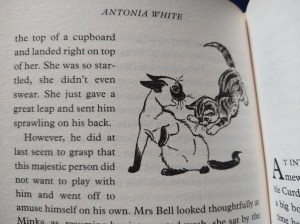
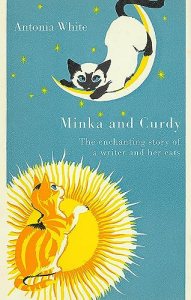 After Mrs Bell’s formidable cat Victoria dies, she hankers to get a new kitten to keep her company – she works at home as a writer. She finds herself greeting all the neighbourhood cats and, in her enthusiasm to help a ‘stray’, accidentally overfeeds someone else’s pet with fresh fish. Her heart is set on a marmalade kitten, so she reserves one from an impending litter in Kent. But then the opportunity to take on a beautiful young female Siamese cat, for free, comes her way, and though she feels guilty about the ginger tom she’s been promised, she adopts Minka anyway. When Coeur de Lion (“Curdy”) arrives a few weeks later, her challenge is to get the kitties to coexist peacefully in her London flat. This reminded me so much of myself back in February and March, when I was so glum over losing Alfie that we rushed into adopting a giant kitten who has been a bit much for us. But we’re already contemplating getting Benny a little sister or two, so I read with interest to see how she made it happen. Well, this is fiction, so it starts out fraught but then is somewhat magically fine. No matter – White writes about cats’ antics and personalities with all the warmth and delight of Derek Tangye, Doreen Tovey and the like, and this 2023 Virago reprint is adorable. (Secondhand – Awesomebooks.com) [113 pages]
I also had a few DNFs last month:
- The Book of Colour by Julia Blackburn (1995) seemed a good bet because I’ve enjoyed some of Blackburn’s nonfiction and it was on the Orange Prize shortlist. But after 60 pages I still had no idea what was going on amid the Mauritius-set welter of family history and magic realism. (Secondhand – Bas Books charity shop, 2022)
- A Single Man by Christopher Isherwood (1964) lured me because I’d so loved Goodbye to Berlin and I remember liking the Colin Firth film. But this story of an Englishman secretly mourning his dead partner while trying to carry on as normal as a professor in Los Angeles was so dreary I couldn’t persist. (Public library)
- Night Life: Walking Britain’s Wild Landscapes after Dark by John Lewis-Stempel (2025) – JLS could write one of these mini nature volumes in his sleep. (Maybe he did with this one, actually?) I’d rather one full-length book from him every few years than bitty, redundant ones annually. (Public library)
- Aunts Aren’t Gentlemen by P.G. Wodehouse (1974) – I’ve read one Jeeves & Wooster book before and enjoyed it well enough. This felt inconsequential, so as I already had way too many novellas on the go I sent it back whence it came. (Little Free Library)
Final statistics for #NovNov25 coming up tomorrow!
The 2025 McKitterick Prize Winner & SoA Awards Ceremony
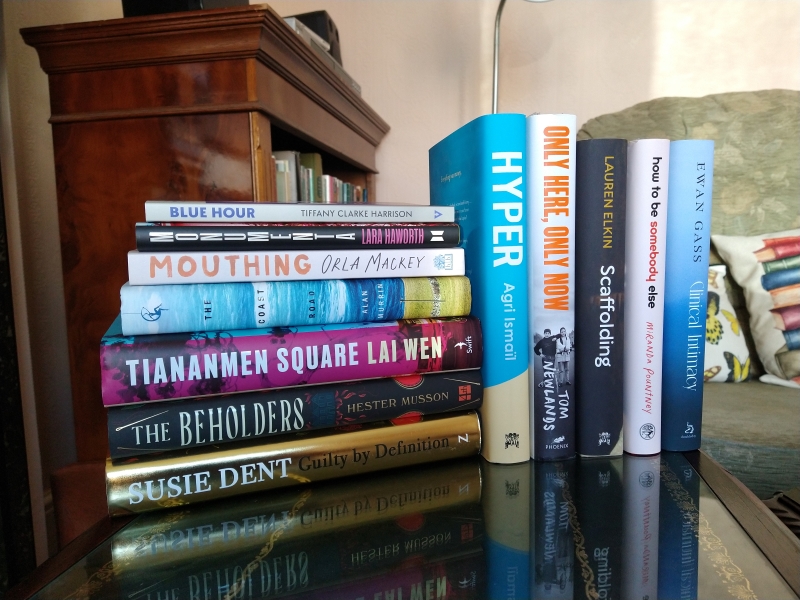
Yesterday the Society of Authors’ awards were announced and the prizes handed out at a ceremony in London. As a McKitterick Prize judge, I was asked last month to give a 50-word blurb on the shortlist as a whole—
Each of these six novels has a fully realized style. So confident and inviting are they that it’s hard to believe they are debuts. With nuanced characters and authentic settings and dilemmas, they engage the mind and delight the emotions. I will be following these authors’ careers with keen interest.
—and on each individual shortlisted title:
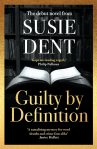 Etymology and Shakespeare studies are the keys to solving a cold case in Susie Dent’s clever, engrossing mystery, Guilty by Definition.
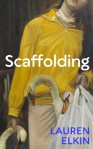 Psychoanalysis, motherhood, and violence against women are resounding themes in Lauren Elkin’s Scaffolding. As history repeats itself one sweltering Paris summer, the personal and political structures undergirding the protagonists’ parallel lives come into question. This fearless, sophisticated work ponders what to salvage from the past—and what to tear down.
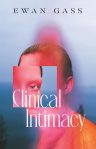 Clinical Intimacy’s mysterious antihero comes to life through interviews with his family, friends and clients. The brilliant oral history format builds a picture of isolation among vulnerable populations, only alleviated by care and touch—especially during Covid-19. Ewan Gass’s intricate story reminds us of the ultimate unknowability of other people.
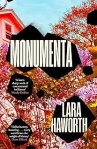
In Monumenta, Lara Haworth braids satire, magic realism, and metafiction into a compact and surprising meditation on how we seek to memorialise the tragedies of history.
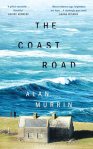
Set in small-town Ireland, The Coast Road is a subtle, compassionate novel in which the characters learn to write their own stories rather than bow to convention and fate. Alan Murrin is a must-read author for fans of Claire Keegan, Louise Kennedy, and Colm Tóibín.
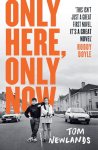 Only Here, Only Now is bursting with vitality. With her broken heart and fizzing brain, Cora Mowat vows to escape her grim Fife town. Tom Newlands’s evocation of the 1990s—and of his teenage narrator—is utterly convincing. Soaring above grief, poverty, and substance abuse, Cora’s voice is pure magic.
Our winner was Tom Newlands for Only Here, Only Now and our runner-up was Lauren Elkin for Scaffolding. (What an honour to have my blurb for the former used in the winners press release, the ceremony programme, and social media publicity.)


Newlands was also a runner-up for the ADCI Literary Prize “for a disabled or chronically ill writer, for an outstanding novel containing a disabled or chronically ill character or characters.” Here’s an excerpt from his statement for the press release:
To have my debut novel recognised in these two categories is particularly meaningful for me because they are linked by my experience. I didn’t start writing until the age of 40, in large part because growing up neurodivergent I didn’t feel my thought processes or methods of working were compatible with the production of a novel. There were no role models out there publishing stories like mine, and in the end, I wrote Only Here, Only Now because I couldn’t find the novel I wanted to read – a warm, vivid and funny story that examined poverty, disability and belonging, and that featured characters rarely found in British fiction.
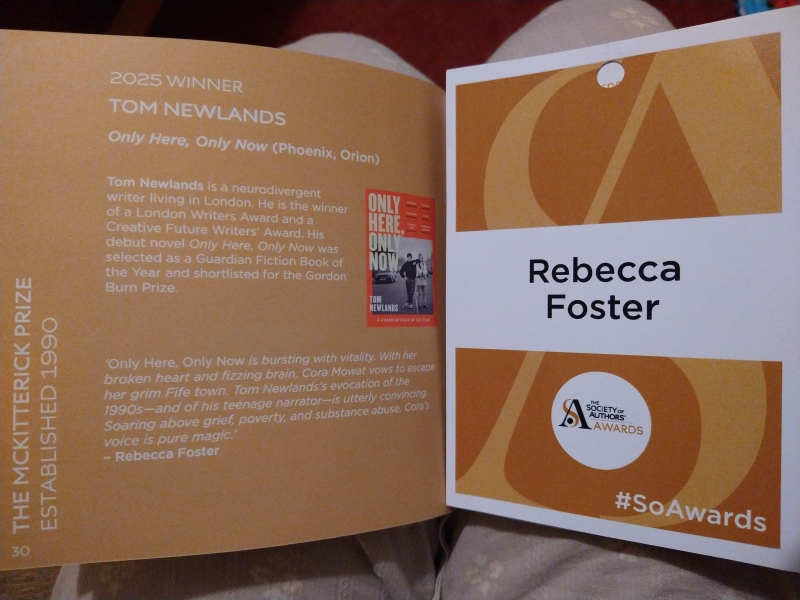
Looking back to early on in this prize journey (which started back in November) … here was some of my early reading:
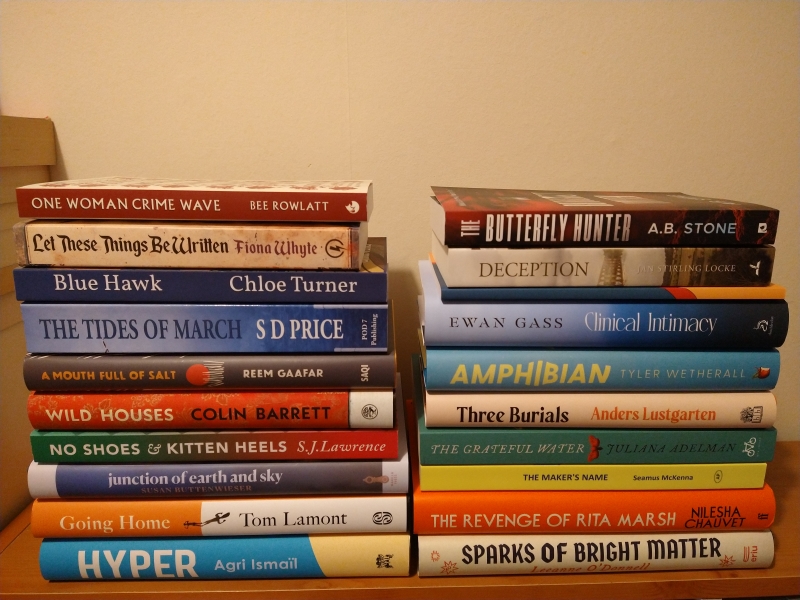
And our longlist:
A couple of my favourite books from my reading that didn’t make the shortlist were:
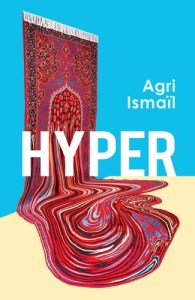 Hyper by Agri Ismaïl [I longlisted it – and then shortlisted it – but was outvoted]
Following a Kurdish family across several decades, this is a zeitgeist-y story that examines questions of national and personal autonomy. With its Dubai, Baghdad, London, and New York settings, it sets the second generation’s luxury, high finance, and fully online worlds against their parents’ bitter experience of exile after a failed independence movement. With its themes of dysfunction and failures and the long view of how we got here from there, it reminded me of Jonathan Franzen’s body of work.
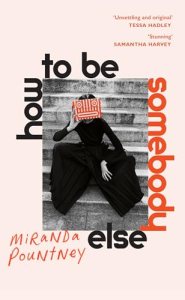 How to Be Somebody Else by Miranda Pountney [It had two votes to make the shortlist, but because it was so similar to Scaffolding in its basics (a thirtysomething woman in a big city, the question of motherhood, and pregnancy loss) we decided to cut it.]
This is the addictively readable story of Dylan, a late-thirties English woman who gives up her New York City advertising job and ponders authorship and motherhood while house-sitting an acquaintance’s apartment—and carrying on an affair with the married downstairs neighbour. As we see her interact with family and friends, we come to appreciate her not as some stereotypical ‘sad girl’ or ‘disaster woman’, but as an Everywoman seeking the time and space to become herself. It’s a sharp and witty novel for fans of Sally Rooney.
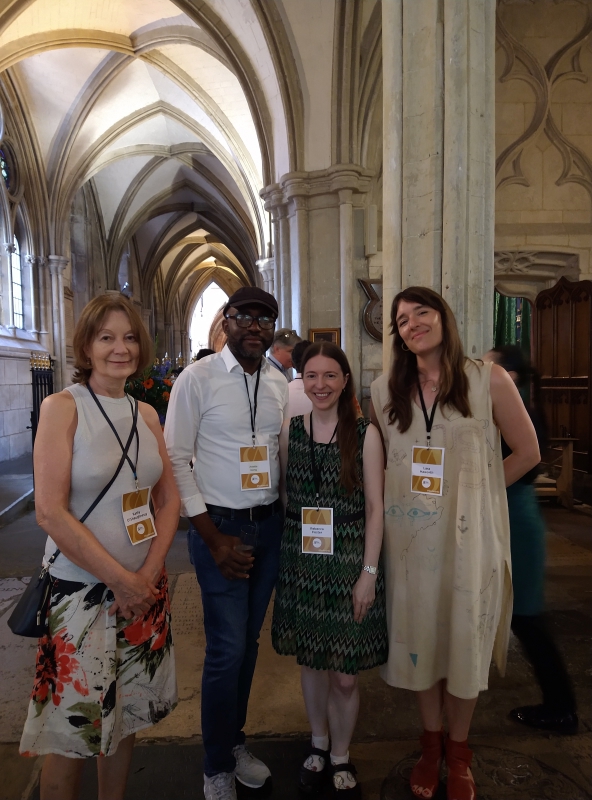
For the first time, I got to attend the SoA Awards ceremony in person yesterday. It was a hot day to be travelling in London, and after the oven of the Bakerloo line I was grateful to escape into the cool of Southwark Cathedral and its grounds. It was such a juxtaposition between the sleek City architecture and the ancient refuge of a church.
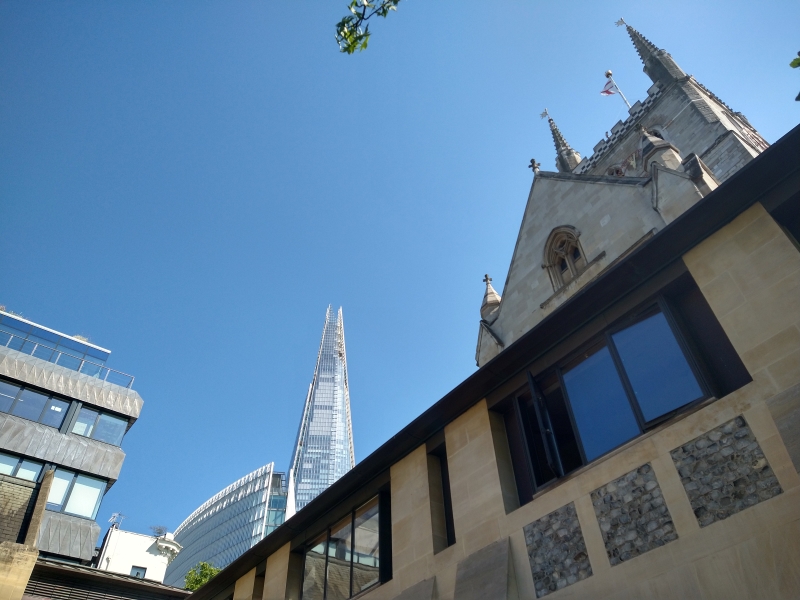
I worried that on such a warm and then busy day Hodge the cathedral cat wouldn’t show himself, but as I picked up my name badge he was asking to be let inside from the courtyard. He didn’t seem interested in strokes so I followed him at a respectful distance and let him settle in for a watchful rest.


Nominated authors and judges were treated to an exceptional afternoon tea, followed by the ceremony and drinks reception. It was lovely to meet my fellow judges Anietie Isong and Kathy O’Shaughnessy (author of the fantastic In Love with George Eliot, which won the SoA’s Paul Torday Memorial Prize) in the flesh as I’d only met them on Zoom before. We chatted a good bit with Lara Haworth, one of our shortlistees, and with Anne Booth, one of the Queen’s Knickers Award (children’s books) nominees, and also got to briefly meet Tom Newlands when he arrived for the ceremony. I always look out for literary ‘celebrities’ at such events and yesterday spotted Naomi Alderman, Caroline Bird, Joanne Harris and Alice Jolly.


Dean Rev. Mark Oakley gave a welcome address via video, praising authors for bringing “resonance” rather than just “relevance.” He exhorted us, in the words of David Copperfield, to “read as if for life.” Joseph Coelho then gave a terrific keynote speech celebrating words written by humans (as opposed to an inaccurate AI-written bio of himself that he once encountered) and encouraging shortlistees, especially, to take time to bask in their achievement. Rejection is an ongoing, annual thing for him even at this stage of his career – he still remembers the £50 poetry gigs, changing in library toilets and school staff rooms; and the 12 years he spent trying to get published – even after he became the youngest-ever children’s laureate in 2022. “Wait for no one,” he challenged us: no one is going to give you permission or come save you, so go out there and do what you’re meant to do.
What an all-round fantastic experience this was! I’m so grateful to the Society of Authors for the opportunity.
Other notable winners announced yesterday included:
- Ashani Lewis (the only double winner): the Betty Trask Prize and Somerset Maugham award for Winter Animals
- Hisham Matar & Elif Shafak: the Gordon Bowker Volcano Prize (for a novel focusing on the experience of travel away from home), joint winners for My Friends and There Are Rivers in the Sky
Best Books of 2024: My Top 20
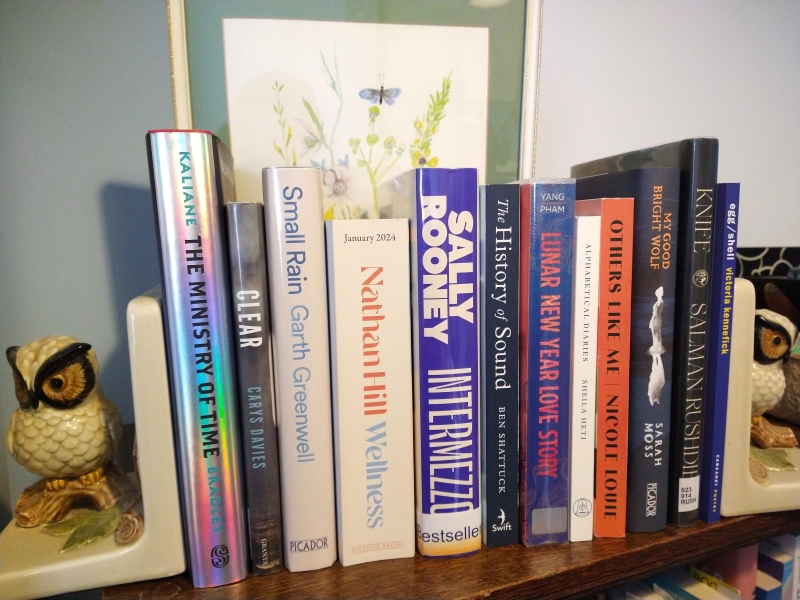
I’m keeping it simple again this year with one post covering all genres: these are the 20 current-year releases that stood out the most for me. (No rankings.) Those that aren’t repeated from my Best Books from the First Half of 2024 post didn’t quite make the cut but should be considered as runners-up well worth your time. Unsurprisingly, health is a common theme across many of my selections, especially as it touches women’s lives. Pictured below are the books I read in print; the others were all electronic copies. Links are to my full reviews where available.
Fiction
 The Worst Journey in the World, Volume 1: Making Our Easting Down: The Graphic Novel by Sarah Airriess: The thrilling opening to a cinematically vivid adaptation of Apsley Cherry-Garrard’s 1922 memoir. He was an assistant zoologist on Robert Falcon Scott’s perilous 1910-13 Terra Nova expedition to the South Pole. The book resembles a full-color storyboard for a Disney-style maritime adventure film. There is jolly camaraderie as the men sing sea shanties to boost morale. The next volume can’t arrive soon enough.
 The Ministry of Time by Kaliane Bradley: This nuanced debut alternately goes along with and flouts the tropes of spy fiction and time travel sci-fi, making clever observations about how we frame stories of empire and progress. The narrator is a “bridge” helping to resettle a Victorian polar explorer in near-future London. You just have to suspend disbelief and go with it. Bradley’s descriptive prose is memorable but never quirky for the sake of it. I haven’t had so much fun with a book since Romantic Comedy. A witty, sexy, off-kilter gem.
 Behind You Is the Sea by Susan Muaddi Darraj: Darraj’s novel-in-stories is a shimmering composite portrait of a Palestinian American community in Baltimore. Across nine stellar linked stories, she explores the complex relationships between characters divided by—or connected despite—class, language, and traditional values. Each of the stories (four in the first person, five in the third person) spotlights a particular character. The book depicts the variety of immigrant and second-generation experience, especially women’s.
 Clear by Carys Davies: Depicts the Highland Clearances in microcosm though Ivar, last resident of a remote Scottish island between Shetland and Norway. John is a minister sent by the landowner to remove Ivar. Mary, John’s wife, journeys from the mainland to rescue him. Davies writes striking scenes that bring the island scenery to life. Her deceptively simple prose captures the slow building of emotion and moments that change everything. For a trio that seemed on course for tragedy, there is the grace of a happier ending.
 Small Rain by Garth Greenwell: A poet and academic (who both is and is not Greenwell) endures a Covid-era medical crisis that takes him to the brink of mortality and the boundary of survivable pain. Over two weeks, we become intimately acquainted with his every test, intervention, setback and fear. Experience is clarified precisely into fluent language that also flies far above a hospital bed, into a vibrant past, a poetic sensibility, a hoped-for normality. I’ve never read so remarkable an account of what it is to be a mind in a fragile body.
 Wellness by Nathan Hill: A state-of-the-nation story filtered through one Chicago family experiencing midlife and marital crises: underperforming academic Jack; his wife Elizabeth, a placebo researcher at Wellness; and their YouTube-obsessed son Toby. They’ve recently invested their life savings in a new condo. The addictive and spot-on novel asks questions about authenticity, purpose, and nurture. Is love itself a placebo? Hill is clearly fascinated with psychological experimentation but also questions it to humorous effect.
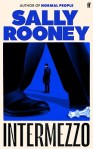 Intermezzo by Sally Rooney: Twenty- and thirtysomethings having lots of sex, yes, but now a solemn tone: Characters’ suffering and failures have deepened their thinking, sense of self, and ability to feel for others. Peter and Ivan lost their father to cancer; Sylvia is in chronic pain after an accident; Naomi is evicted and aimless; Margaret is ashamed of having an estranged alcoholic husband. Chess is a clever metaphor for their interactions; the depiction of grief rings true. A stylistic leap forward, too. Her best, most mature work by a mile.
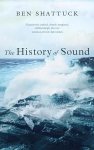 The History of Sound by Ben Shattuck: A dozen stories form a “hook-and-chain” formation of five couplets, bookended by a first and last story related to each other. Links are satisfyingly overt: A pair takes place in the same New England house in different centuries; a companion piece fills in the history of the characters from the previous. All are historically convincing, and the very human themes of lust, parenthood, sorrow and frustrated ambition resonate across centuries and state lines. Really beautiful (and better than North Woods).
 Lunar New Year Love Story by Gene Luen Yang (illus. LeUyen Pham): A super-cute teen graphic novel with gorgeous illustrations prioritizing pink and red to suit the theme. We follow Vietnamese American Valentina through high school as she plays host to an internal debate between cynicism and romanticism. Ever since her mother left, she’s longed to believe in romance but feared that love is a doomed prospect for her family. The Asian community of Oakland, California and a new hobby of lion dancing provide engrossing cultural detail.
Nonfiction
 Grief Is for People by Sloane Crosley: A bereavement memoir like no other. Heart-wrenching yet witty, it bears a unique structure and offers fascinating glimpses into the New York City publishing world. Crosley’s Manhattan apartment was burgled exactly a month before the suicide of her best friend and former boss, Russell. Throughout, the whereabouts of her family jewelry is as much of a mystery as the reason for Russell’s death, and investigating the stolen goods in parallel serves as a displacement activity for her.
 Alphabetical Diaries by Sheila Heti: Heti put 10 years of diary contents into a spreadsheet, alphabetizing each sentence, and then ruthlessly culled the results. The recurring topics are familiar from the rest of her oeuvre: obsessive cogitating about relationships, art and identity, but also the practicalities of trying to make a living as a woman in a creative profession. Heti transcends the quotidian by exploding chronology. Amazingly, the collage approach produces a genuine, crystalline vision of the self. A sui generis work of life writing.
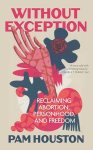 Without Exception: Reclaiming Abortion, Personhood, and Freedom by Pam Houston: If you’re going to read a polemic, make sure it’s as elegantly written and expertly argued as this one. Houston responds to the overturning of Roe v. Wade with 60 micro-essays – one for each full year of her life – about what it means to be in a female body in a country that seeks to control and systematically devalue women. The cycling of topics makes for an exquisite structure. Houston is among my recommendations for top-notch authors you might not know.
 The Body Alone: A Lyrical Articulation of Chronic Pain by Nina Lohman: Chronic Daily Headaches: Having a clinical term for extreme pain did nothing to solve it; no treatment Lohman has tried over a decade has helped much either. Medical professionals and friends alike downplay her experience because she is able to pass as well and raise two children. The fragmentary pieces read like poems. Bodily realities defy language, yet she employs words exquisitely. The tone flows from enraged to resigned to cynical and back.
 Others Like Me: The Lives of Women without Children by Nicole Louie: This impassioned auto/biographical collage combines the strengths of oral history, group biography and a fragmented memoir. “Motherhood as the epicentre of women’s lives was all I’d ever witnessed” via her mother and grandmother, Louie writes, so finding examples of women living differently was key. As readers, we watch her life, her thinking and the book all take shape. It’s warm and empathetic, with layers of stories that reflect diversity of experience.
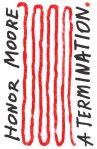 A Termination by Honor Moore: A fascinatingly discursive memoir that circles a 1969 abortion and contrasts societal mores across her lifetime. Moore was a 23-year-old drama student; the termination was “my first autonomous decision,” she insists, a way of saying, “I want this life, not that life.” Family and social factors put her life into perspective. The concise text is composed of crystalline fragments, incorporating occasional second- and third-person narration. The kaleidoscopic yet fluid approach is stunning.
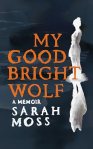 My Good Bright Wolf by Sarah Moss: Moss effectively contrasts the would-be happily ever after of generally getting better after eight years of disordered eating with her anorexia returning with a vengeance at age 46. The mood shifts so that what threatens to be slightly cloying in the childhood section turns academically curious and then, somehow, despite distancing pronouns (mostly second- but also some third-person narration), intimate. Shape-shifting, devastating, staunchly pragmatic; a unique model for converting life into art.
 Knife: Meditations after an Attempted Murder by Salman Rushdie: I’ve not had much success with Rushdie’s fiction, but this is excellent, with intriguing side tendrils and many quotable lines. It traces lead-up and aftermath; unexpected echoes, symbolism and ironies. Although Rushdie goes into some medical detail about his recovery, you get the sense of him more as an unchanging mind and a resolute will. The most noteworthy section imagines dialogues he might have with the imprisoned assailant, probing his beliefs and motivations.
Poetry
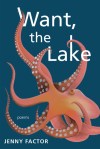 Want, the Lake by Jenny Factor: Factor’s long, intricate poetry collection showcases the tension between past and present and envisions womanhood as a tug of war between desire and constraint. “Elegy for a Younger Self” poems string together vivid reminiscences. In “Sapphics on Nursing” and elsewhere, romantic friendships edge toward homoeroticism; heterosexual marriage and motherhood represent either delightful intimacy or a snare. Allusion and experience, slant rhymes and wordplay craft a lavish tapestry.
 Inconsolable Objects by Nancy Miller Gomez: This debut collection recalls a Midwest girlhood of fairground rides and lake swimming, tornadoes and cicadas. But her Kansas isn’t all rose-tinted nostalgia; there’s an edge of sadness and danger. “Missing History” notes how women’s stories, such as her grandmother’s, are lost to time. In “Tilt-A-Whirl,” her older sister’s harmless flirtation with a ride operator becomes sinister. She also takes inspiration from headlines. The alliteration and slant rhymes are to die for.
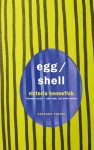 Egg/Shell by Victoria Kennefick: Motherhood and the body are overarching themes. The speaker has multiple miscarriages and names her lost children after plants. Becoming a mother is a metamorphosis all its own, while another long section is about her husband’s transition. Bird metaphors are inescapable. The structure varies throughout: columns, stanzas; a list, a recipe. Amid the sadness, there is dark humour and one-line rejoinders. If you’re wondering how life can be captured in achingly beautiful poetry, look no further.
If I had to choose just one of each? This trio trying out complementary strategies for transmuting life into literature: Small Rain, Alphabetical Diaries and Egg/Shell.


Have you read any of these? Or might you now, based on my recommendation?
Some 2024 Reading Superlatives
Longest book read this year: The Bee Sting by Paul Murray

Shortest books read this year: The Wood at Midwinter by Susanna Clarke – a standalone short story (unfortunately, it was kinda crap); After the Rites and Sandwiches by Kathy Pimlott – a poetry pamphlet
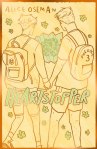 Authors I read the most by this year: Alice Oseman (5 rereads), Carol Shields (3 rereads); Margaret Atwood, Rachel Cusk, Pam Houston, T. Kingfisher, Sarah Manguso, Maggie O’Farrell, and Susan Allen Toth (2 each)
Publishers I read the most from: (Besides the ubiquitous Penguin Random House and its myriad imprints,) Carcanet (15), Bloomsbury & Faber (12 each), Alice James Books & Picador/Pan Macmillan (9 each)
My top author ‘discoveries’ of the year: Sherman Alexie and Bernardine Bishop

Proudest bookish achievements: Reading almost the entire Carol Shields Prize longlist; seeing The Bookshop Band on their huge Emerge, Return tour and not just getting my photo with them but having it published on both the Foreword Reviews and Shelf Awareness websites

Most pinching-myself bookish moment: Getting a chance to judge published debut novels for the McKitterick Prize
Books that made me laugh: Lots, but particularly Fortunately, the Milk… by Neil Gaiman, The Year of Living Biblically by A.J. Jacobs, and You Don’t Have to Be Mad to Work Here by Benji Waterhouse
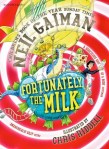
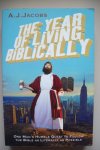
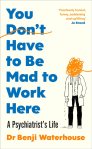
Books that made me cry: On Chesil Beach by Ian McEwan, My Good Bright Wolf by Sarah Moss
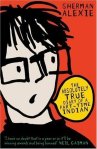
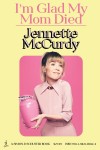 Two books that hit the laughing-and-crying-at-the-same-time sweet spot: The Absolutely True Diary of a Part-Time Indian by Sherman Alexie and I’m Glad My Mom Died by Jennette McCurdy
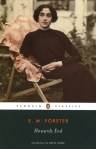
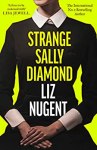
Best book club selections: Clear by Carys Davies, Howards End by E.M. Forster, Strange Sally Diamond by Liz Nugent
Best first lines encountered this year:
- From Cocktail by Lisa Alward: “The problem with parties, my mother says, is people don’t drink enough.”
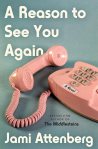
- From A Reason to See You Again by Jami Attenberg: “Oh, the games families play with each other.”
- From The Snow Queen by Michael Cunningham: “A celestial light appeared to Barrett Meeks in the sky over Central Park, four days after Barrett had been mauled, once again, by love.”

Best last lines encountered this year:
- From The Ministry of Time by Kaliane Bradley: “Forgiveness and hope are miracles. They let you change your life. They are time-travel.”
- From Mammoth by Eva Baltasar: “May I know to be alert when, at the stroke of midnight, life sends me its cavalry.”
- From Private Rites by Julia Armfield: “For now, they stay where they are and listen to the unwonted quiet, the hush in place of rainfall unfamiliar, the silence like a final snuffing out.”
- From Come to the Window by Howard Norman: “Wherever you sit, so sit all the insistences of fate. Still, the moment held promise of a full life.”
- From Intermezzo by Sally Rooney: “It doesn’t always work, but I do my best. See what happens. Go on in any case living.”
- From Barrowbeck by Andrew Michael Hurley: “And she thought of those Victorian paintings of deathbed scenes: the soul rising vaporously out of a spent and supine body and into a starry beam of light; all tears wiped away, all the frailty and grossness of a human life transfigured and forgiven at last.”
- From Small Rain by Garth Greenwell: “Pure life.”

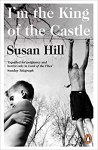
Books that put a song in my head every time I picked them up: I’m the King of the Castle by Susan Hill (“Crash” by Dave Matthews Band); Y2K by Colette Shade (“All Star” by Smashmouth)
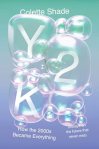
Shortest book titles encountered: Feh (Shalom Auslander) and Y2K (Colette Shade), followed by Keep (Jenny Haysom)
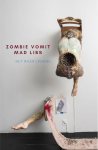
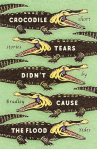 Best 2024 book titles: And I Will Make of You a Vowel Sound, I Can Outdance Jesus, Zombie Vomit Mad Libs, Crocodile Tears Didn’t Cause the Flood, This Is Why We Can’t Have Nice Things
Best book titles from other years: Recipe for a Perfect Wife, Tripping over Clouds, Waltzing the Cat, Dressing Up for the Carnival, The Met Office Advises Caution
Favourite title and cover combo of the year: I’m Mostly Here to Enjoy Myself by Glynnis MacNicol

Best punning title (and nominative determinism): Knead to Know: A History of Baking by Dr Neil Buttery
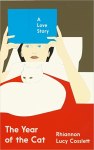 Biggest disappointments: The Glassmaker by Tracy Chevalier (I didn’t get past the first chapter because of all the info dumping from her research); The Year of the Cat by Rhiannon Lucy Cosslett; milk and honey by Rupi Kaur (that … ain’t poetry); 2 from the Observer’s 10 best new novelists feature (here and here)
A couple of 2024 books that everyone was reading but I decided not to: Creation Lake by Rachel Kushner, You Are Here by David Nicholls
 The worst books I read this year: Mammoth by Eva Baltasar, A Spy in the House of Love by Anaïs Nin
The downright strangest books I read this year: Zombie Vomit Mad Libs, followed by The Peculiar Life of a Lonely Postman. All Fours by Miranda July (I am at 44% now) is pretty weird, too.

Book Serendipity, November to December 2024
I call it “Book Serendipity” when two or more books that I read at the same time or in quick succession have something in common – the more bizarre, the better. This is a regular feature of mine every couple of months. Because I usually have 20–30 books on the go at once, I suppose I’m more prone to such incidents. People frequently ask how I remember all of these coincidences. The answer is: I jot them down on scraps of paper or input them immediately into a file on my PC desktop; otherwise, they would flit away! The following are in roughly chronological order.
- Characters who were in a chess club and debating society in high school/college in Playground by Richard Powers and Intermezzo by Sally Rooney.
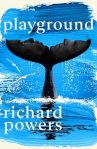
- Pondering the point of a memorial and a mention of hiring mourners in Immemorial by Lauren Markham and Basket of Deplorables by Tom Rachman.
- A mention of Rachel Carson, and her The Sea Around Us in particular, in Playground by Richard Powers, while I was also reading for review Rachel Carson and the Power of Queer Love by Lida Maxwell.
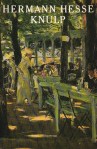
- A character pretends to be asleep when someone comes into the room to check on them in Knulp by Hermann Hesse and Rental House by Weike Wang.
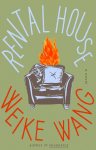
- A mention of where a partner puts his pistachio shells in After the Rites and Sandwiches by Kathy Pimlott and Rental House by Weike Wang.
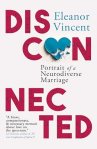 A character who startles very easily (in the last two cases because of PTSD) in Life before Man by Margaret Atwood, A History of Sound by Ben Shattuck, and Disconnected by Eleanor Vincent.
- The husband is named Nate in Life before Man by Margaret Atwood and Rental House by Weike Wang.
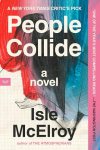
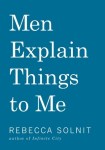
- In People Collide by Isle McElroy, there’s a mention of Elizabeth reading “a popular feminist book about how men explained things to women.” The day I finished reading the novel, I started reading the book in question: Men Explain Things to Me by Rebecca Solnit.
- I learned about the “he’s-at-home” (19th-century dildo) being used by whalers’ wives on Nantucket while the husbands are away at sea through historical fiction – Daughters of Nantucket by Julie Gerstenblatt, which I read last year – and encountered the practice again through an artefact found in the present day in The History of Sound by Ben Shattuck. Awfully specific!
- A week after I finished reading Station Eleven by Emily St. John Mandel, it turned up in a discussion of Vancouver Island in Island by Julian Hanna.
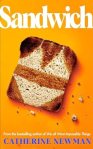
- A Cape Cod setting in Sandwich by Catherine Newman (earlier in the year) plus The History of Sound by Ben Shattuck and Rental House by Weike Wang.
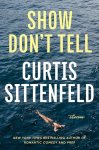
- A gay character references Mulder and Scully (of The X-Files) in the context of determining sexual preference, and there’s a female character named Kit, in The Old Haunts by Allan Radcliffe and one story of Show Don’t Tell by Curtis Sittenfeld.
- A mention of The Truman Show in the context of delusions in The Year of Living Biblically by A.J. Jacobs and You Don’t Have to Be Mad to Work Here by Benji Waterhouse.
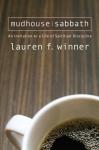
- St. Lucia is mentioned in Beasts by Ingvild Bjerkeland, Brightly Shining by Ingvild Rishøi (two Norwegian authors named Ingvild there!), and Mudhouse Sabbath by Lauren Winner.
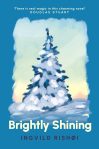
- A pet named Darwin: in Levels of Life by Julian Barnes it’s Sarah Bernhardt’s monkey; in Cold Kitchen by Caroline Eden it’s her beagle. Within days I met another pet beagle named Darwin in Island by Julian Hanna. (It took me a moment to realize why it’s a clever choice!)
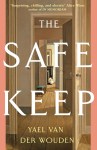
- A character named Henrik in The Place of Tides by James Rebanks and one story of Show Don’t Tell by Curtis Sittenfeld, and a Hendrik in The Safekeep by Yael van der Wouden.
- A hat with a green ribbon in The Safekeep by Yael van der Wouden and one story of Show Don’t Tell by Curtis Sittenfeld (in which it’s an emoji).
- Romanian neighbours who speak very good English in Island by Julian Hanna and Rental House by Weike Wang.
- A scene of returning to a house one used to live in in Hyper by Agri Ismaïl, The Old Haunts by Allan Radcliffe, and one story of Show Don’t Tell by Curtis Sittenfeld.
- A woman has had three abortions in The House of Dolls by Barbara Comyns and Without Exception by Pam Houston.
- Household items keep going missing and there’s broken china in The House of Dolls by Barbara Comyns and The Safekeep by Yael van der Wouden.
- Punctuated equilibrium (a term from evolutionary biology) is used as a metaphor in Hyper by Agri Ismaïl and Men Explain Things to Me by Rebecca Solnit.
 The author’s mother repeatedly asked her daughter a rhetorical question along the lines of “Do you know what I gave up to have you?” in Permission by Elissa Altman and Without Exception by Pam Houston.
- The author/character looks in the mirror at the end of a long day and hardly recognizes him/herself in The Place of Tides by James Rebanks, You Don’t Have to Be Mad to Work Here by Benji Waterhouse, and Amphibian by Tyler Wetherall.
- A man is afraid to hold his boyfriend’s hand in public in another country because he’s unsure about the cultural attitudes towards homosexuality in Clinical Intimacy by Ewan Gass and Small Rain by Garth Greenwell.
- The author’s mother is a therapist/psychologist and the author her/himself is undergoing some kind of mental health treatment in Unattached by Reannon Muth and You Don’t Have to Be Mad to Work Here by Benji Waterhouse.
- A man declares that dying in one’s mid-40s is nothing to complain about in A Beginner’s Guide to Dying by Simon Boas and Small Rain by Garth Greenwell.
- A woman ponders whether her ongoing anxiety is related to the stressful circumstances of her birth in Unattached by Reannon Muth and When the World Explodes by Amy Lee Scott.
What’s the weirdest reading coincidence you’ve had lately?
Carol Shields Prize Reading: Daughter and Dances
Two more Carol Shields Prize nominees today: from the shortlist, the autofiction-esque story of a father and daughter, both writers, and their dysfunctional family; and, from the longlist, a debut novel about the physical and emotional rigours of being a Black ballet dancer.
Daughter by Claudia Dey
Like her protagonist, Mona Dean, Dey is a playwright, but the Canadian author has clearly stated that her third novel is not autofiction, even though it may feel like it. (Fragmentary sections, fluidity between past and present, a lack of speech marks; not to mention that Dey quotes Rachel Cusk and there’s even a character named Sigrid.) Mona’s father, Paul, is a serial adulterer who became famous for his novel Daughter and hasn’t matched that success in the 20 years since. He left Mona and Juliet’s mother, Natasha, for Cherry, with whom he had another daughter, Eva. There have been two more affairs. Every time Mona meets Paul for a meal or a coffee, she’s returned to a childhood sense of helplessness and conflict.
I had a sordid contract with my father. I was obsessed with my childhood. I had never gotten over my childhood. Cherry had been cruel to me as a child, and I wanted to get back at Cherry, and so I guarded my father’s secrets like a stash of weapons, waiting for the moment I could strike.
It took time for me to warm to Dey’s style, which is full of flat, declarative sentences, often overloaded with character names. The phrasing can be simple and repetitive, with overuse of comma splices. At times Mona’s unemotional affect seems to be at odds with the melodrama of what she’s recounting: an abortion, a rape, a stillbirth, etc. I twigged to what Dey was going for here when I realized the two major influences were Hemingway and Shakespeare.
 Mona’s breakthrough play is Margot, based on the life of one Hemingway granddaughter, and she’s working on a sequel about another. There are four women in Paul’s life, and Mona once says of him during a period of writer’s block, “He could not write one true sentence.” So Paul (along with Mona, along with Dey) may be emulating Hemingway.
And then there’s the King Lear setup. (I caught on to this late, perhaps because I was also reading a more overt Lear update at the time, Private Rites by Julia Armfield.) The larger-than-life father; the two older daughters and younger half-sister; the resentment and estrangement. Dey makes the parallel explicit when Mona, musing on her Hemingway-inspired oeuvre, asks, “Why had Shakespeare not called the play King Lear’s Daughters?”
Were it not for this intertextuality, it would be a much less interesting book. And, to be honest, the style was not my favourite. There were some lines that really irked me (“The flowers they were considering were flamboyant to her eye, she wanted less flamboyant flowers”; “Antoine barked. He was barking.”; “Outside, it sunned. Outside, it hailed.”). However, rather like Sally Rooney, Dey has prioritized straightforward readability. I found that I read this quickly, almost as if in a trance, inexorably drawn into this family’s drama.
Related reads: Monsters by Claire Dederer, The Wren, The Wren by Anne Enright, The Wife by Meg Wolitzer, Mrs. Hemingway by Naomi Wood
With thanks to publicist Nicole Magas and Farrar, Straus and Giroux for the free e-copy for review.
Also from the shortlist:
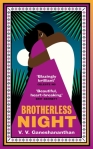 Brotherless Night by V.V. Ganeshananthan – The only novel that is on both the CSP and Women’s Prize shortlists. I dutifully borrowed a copy from the library, but the combination of the heavy subject matter (Sri Lanka’s civil war and the Tamil Tigers resistance movement) and the very small type in the UK hardback quickly defeated me, even though I was enjoying Sashi’s quietly resolute voice and her medical training to work in a field hospital. I gave it a brief skim. The author researched this second novel for 20 years, and her narrator is determined to make readers grasp what went on: “You must understand: that word, terrorist, is too simple for the history we have lived … You must understand: There is no single day on which a war begins.” I know from Laura and Marcie that this is top-class historical fiction, never mawkish or worthy, so I may well try it some other time when I have the fortitude.
Longlisted:
Dances by Nicole Cuffy
This was a buddy read with Laura (see her review); I think we both would have liked to see it on the shortlist as, though we’re not dancers ourselves, we’re attracted to the artistry and physicality of ballet. It’s always a privilege to get an inside glimpse of a rarefied world, and to see people at work, especially in a field that requires single-mindedness and self-discipline. Cuffy’s debut novel focuses on 22-year-old Celine Cordell, who becomes the first Black female principal in the New York City Ballet. Cece marvels at the distance between her Brooklyn upbringing – a single mother and drug-dealing older brother, Paul – and her new identity as a celebrity who has brand endorsements and gets stopped on the street for selfies.
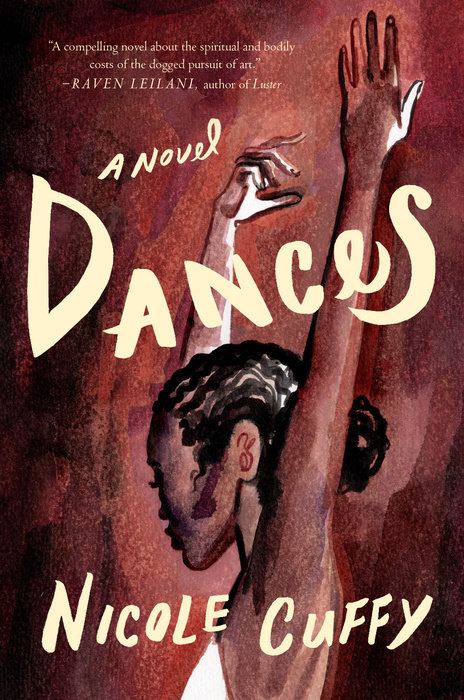
Even though Kaz, the director, insists that “Dance has no race,” Cece knows it’s not true. (And Kaz in some ways exaggerates her difference, creating a role for her in a ballet based around Gullah folklore from South Carolina.) Cece has always had to work harder than the others in the company to be accepted:
Ballet has always been about the body. The white body, specifically. So they watched my Black body, waited for it to confirm their prejudices, grew ever more anxious as it failed to do so, again and again.
A further complication is her relationship with Jasper, her white dance partner. It’s an open secret in the company that they’re together, but to the press they remain coy. Cece’s friends Irine and Ryn support her through rocky times, and her former teachers, Luca and Galina, are steadfast in their encouragement. Late on, Cece’s search for Paul, who has been missing for five years, becomes a surprisingly major element. While the sibling bond helps the novel stand out, I most enjoyed the descriptions of dancing. All of the sections and chapters are titled after ballet terms, and even when I was unfamiliar with the vocabulary or the music being referenced, I could at least vaguely picture all the moves in my head. It takes real skill to render other art forms in words. I’ll look forward to following Cuffy’s career. 
With thanks to publicist Nicole Magas and One World for the free e-copy for review.
Currently reading:
(Shortlist) Coleman Hill by Kim Coleman Foote
(Longlist) Between Two Moons by Aisha Abdel Gawad
Up next:
(Longlist) You Were Watching from the Sand by Juliana Lamy
I’m aiming for one more batch of reviews (and a prediction) before the winner is announced on 13 May.
Four for #WITMonth: Jansson, Lamarche, Lunde and Vogt
I’ve managed four novels for this year’s Women in Translation month: a nostalgic, bittersweet picture of island summers poised between childhood and old age; a brief, impressionistic account of domestic violence and rape; the third in a series looking at how climate change and species loss reverberate amid family situations; and a visceral meditation on women’s bodies and relationships. Two of these were review copies from the recently launched Héloïse Press, which “champions world-wide female talent”.

The Summer Book by Tove Jansson (1972; 1974)
[Translated from the Swedish by Thomas Teal]
It was just the same long summer, always, and everything lived and grew at its own pace.
 This was only the second time I’ve read one of Jansson’s books aimed at adults (as opposed to five from the Moomins series). Whereas A Winter Book didn’t stand out to me when I read it in 2012 – though I will try it again this winter, having acquired a free copy from a neighbour – this was a lovely read, so evocative of childhood and of languid summers free from obligation. For two months, Sophia and Grandmother go for mini adventures on their tiny Finnish island. Each chapter is almost like a stand-alone story in a linked collection. They make believe and welcome visitors and weather storms and poke their noses into a new neighbour’s unwanted construction.
Six-year-old Sophia, based on Jansson’s niece of the same name, is precocious and opinionated, liable to change her mind in an instant. In “The Cat,” one of my favourite stand-alone bits, she’s fed up with their half-feral pet who kills lots of birds and swaps him for a friend’s soppy lap cat, but then regrets it. She’s learning that logic and emotion sometimes contradict each other, which becomes clearer as she peppers Grandmother with questions about religion and superstition.
As is common to Jansson’s books, there’s a melancholy undercurrent here.
Everything was fine, and yet everything was overshadowed by a great sadness. It was August, and the weather was sometimes stormy and sometimes nice, but for Grandmother, no matter what happened, it was only time on top of time, since everything is vanity and a chasing after the wind.
Sophia’s mother died, and although her grandmother has the greater presence, Papa is also around, dealing with practicalities in the background. Death stalks around the edges, reminding Grandmother of her mortality through bouts of vertigo that have her grabbing for her heart medication. On just the second page we have this memento mori:
“When are you going to die?” the child asked.
And Grandmother answered, “Soon. But that is not the least concern of yours.”
And so it doesn’t feel like our concern either; the focus is on the now, on these beautiful little moments of connection across the generations – like in “Playing Venice,” when Grandmother stays up all night rebuilding Sophia’s model city that was washed away by the rain. (Public library)
The Memory of the Air by Caroline Lamarche (2014; 2022)
[Winner of an English PEN Award; translated from the French by Katherine Gregor]
 In a hypnotic monologue, a woman tells of her time with a violent partner (the man before, or “Manfore”) who thinks her reaction to him is disproportionate and all due to the fact that she has never processed being raped two decades ago. When she goes in for a routine breast scan, she shows the doctor her bruised arm, wanting there to be a definitive record of what she’s gone through. It’s a bracing echo of the moment she walked into a police station to report the sexual assault (and oh but the questions the male inspector asked her are horrible).
The novella opens with an image that returns in dreams but is almost more a future memory of what might have been: “I went down into a ravine and, at the bottom, found a dead woman. She was lying in a shroud, on a carpet of fallen leaves.” I read this in one sitting – er, yoga session – and it has stayed in my mind in intense flashes like that and the flounce of her red dress on the summer day that turned into a nightmare. At an intense 70 pages, this reminded me of Annie Ernaux’s concise autofiction (I’ve reviewed Happening and I Remain in Darkness). An introduction by Dr Dominique Carlini-Versini contextualizes the work by considering the treatment of rape in contemporary French women’s writing.
The Memory of the Air will be published on 26 September. With thanks to Héloïse Press for the proof copy for review.
The Last Wild Horses by Maja Lunde (2019; 2022)
[Translated from the Norwegian by Diane Oatley]
The third in Lunde’s “Climate Quartet,” with its recurring elements of migration, shortages and environmental collapse. Always, though, the overall theme is parent–child relationships and the love that might be the only thing that keeps us going in the face of unspeakable challenges. Here she returns to the tripartite structure of The History of Bees (much my favourite of the three): a historical strand, a near-contemporary one, and a dystopian future story line. The link between the three is Przewalski’s horses (aka takhi).
 In the early 1880s, Mikhail Alexandrovich Kovrov, assistant director of St. Petersburg Zoo, is brought the hide and skull of an ancient horse species assumed extinct. Although a timorous man who still lives with his mother, he becomes part of an expedition to Mongolia to bring back live specimens. In 1992, Karin, who has been obsessed with Przewalski’s horses since encountering them as a child in Nazi Germany, spearheads a mission to return the takhi to Mongolia and set up a breeding population. With her is her son Matthias, tentatively sober after years of drug abuse. In 2064 Norway, Eva and her daughter Isa are caretakers of a decaying wildlife park that houses a couple of wild horses. When a climate migrant comes to stay with them and the electricity goes off once and for all, they have to decide what comes next. This future story line engaged me the most.
I appreciated some aspects: queer and middle-aged romances, the return of a character from The End of the Ocean, the consideration across all three plots of what makes a good mother. However, the horses seemed neither here nor there. There are also many, many animal deaths. Perhaps an unsentimental attitude is necessary to reflect past and future values, and the apparent cruelty of natural processes, but it limits the book’s appeal to animal lovers. Maybe the tone fits the Norwegian prose, which the translator describes as lean.
The fourth book of the quartet, publishing in Norway next month, is called something like The Dream of a Tree; a focus on trees would be a draw for me. After the disappointment of Books 2 and 3, I’m unsure whether I want to bother with the final volume, but it makes sense to do so, if only to grasp Lunde’s full vision. (Public library)
What Concerns Us by Laura Vogt (2020; 2022)
[Translated from the German by Caroline Waight]
 Vogt’s Swiss-set second novel is about a tight-knit matriarchal family whose threads have started to unravel. For Rahel, motherhood has taken her away from her vocation as a singer. Boris stepped up when she was pregnant with another man’s baby and has been as much of a father to Rico as to Leni, the daughter they had together afterwards. But now Rahel’s postnatal depression is stopping her from bonding with the new baby, and she isn’t sure this quartet is going to make it in the long term.
Meanwhile, Rahel’s sister Fenna knows she’s pregnant but refuses a doctor’s care. When she comes to stay with Rahel, she confides that the encounter with her partner, Luc, that led to conception was odd, rough; maybe not consensual. And all this time, the women’s mother, Verena, has been undergoing treatment for breast cancer. All three characters appear to be matter-of-factly bisexual; Rahel and Fenna’s father has long been out of the picture, replaced in Verena’s affections by Inge.
As I was reading, I kept thinking of the declaration running through A Ghost in the Throat by Doireann Ní Ghríofa: “This is a female text.” Vogt’s vision is all breasts and eggs, genitals actual and metaphorical. I loved the use of food in the novel: growing up, the girls cherished “silly nights” when their mother prepared an egg feast and paired it with a feminist lecture on reproduction. Late on, there’s a wonderful scene when the three main characters gorge on preserved foodstuffs from the cellar and share their secrets. (Their language is so sexually frank; would anyone really talk to their mother and siblings in that way?!) As in the Lunde, the main question is what it means to be a mother, but negotiating their relationships with men stretches the bonds of this feminine trio. One for fans of Rachel Cusk and Sally Rooney.
With thanks to Héloïse Press for the proof copy for review.
20 Books of Summer, 8–10: Marram, Orchid Summer, and Bonsai
Halfway through my flora-themed reading challenge with less than half of the summer left to go. However, I’m actually partway through another seven relevant reads, so I’m confident I’ll get to 20. The sticking point for me, as always, is finishing what I’ve started!
Today I have brief responses to the two nature/travel quest memoirs I took with me to the Outer Hebrides, plus a forthcoming Chilean novella about how a relationship is to be memorialized.
Marram: Memories of Sea and Spider Silk by Leonie Charlton (2020)
I think I’d already downloaded this to my Kindle when I saw Charlton interviewed by the Bookshop Band on their breakfast-time variety show during the 2020 online Wigtown Book Festival. In 2017, Charlton and her friend Shuna undertook a three-week pony trek through the Outer Hebrides. Like many, they worked their way south to north, starting at Barra and finishing on Lewis (we travelled in the opposite direction on our recent trip).
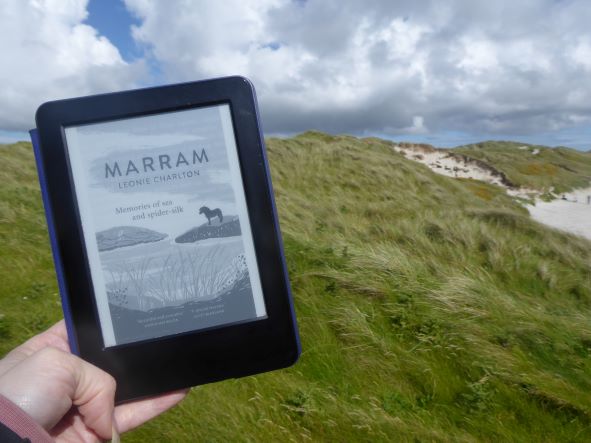
Marram grass on a Benbecula beach.
Although it was a low-key fundraising project for her daughter’s traditional music school, for Charlton there was another underlying reason. Her difficult mother, a jewellery maker, had died of brain cancer seven years before, and she had the idea of leaving beads from her mum’s collection (she’d actually nicknamed her daughter “Beady,” though for her eyes) along the route to lay her and their complicated relationship to rest. As one of her mother’s friends put it, “She was a nightmare, and wonderful, and totally impossible.”
I enjoyed the blend of topics – the amazing scenery, the rigours of the trail, the kindness of acquaintances and strangers who gave them places to camp and graze the ponies, and painful memories – and probably got more out of it because I was reading on location. Her regrets about her mother formed a larger part of the book than expected, but that wasn’t a problem for me; you might steer clear if this would be triggering, though. (Read via NetGalley)
Orchid Summer: In Search of the Wildest Flowers of the British Isles by Jon Dunn (2018)
Dunn saw all but one of Britain’s native species of orchid (51–55, depending on how you count; subspecies are still being debated) between the spring and autumn of 2016; only the ghost orchid eluded him. He alternates between his whistlestop travels, the backstory to his nature obsession, and the historical and cultural associations with orchids. “I was rapidly learning that orchids exert an influence unlike any other plant upon those who fall under their spell, he writes” (in that vein, I also recommend Susan Orlean’s The Orchid Thief).
I most enjoyed the chapters set in North Uist – where he goes to find the Hebridean marsh orchid – and his adopted home of Shetland; it’s always fun to read about somewhere I am or have been before (also including Lindisfarne). The number-driven quest seems like a peculiarly male undertaking, e.g. the similar The Butterfly Isles by Patrick Barkham, and orchids in particular are surrounded by secrecy – you have to be in the know to locate rarities, which often seem to be in roadside ditches. Dunn evades potential accusations of elitism or machismo, though, by recounting vulnerable moments: when he inadvertently strayed onto a golf course and got verbally abused; when some lads stopped their car to harass him.
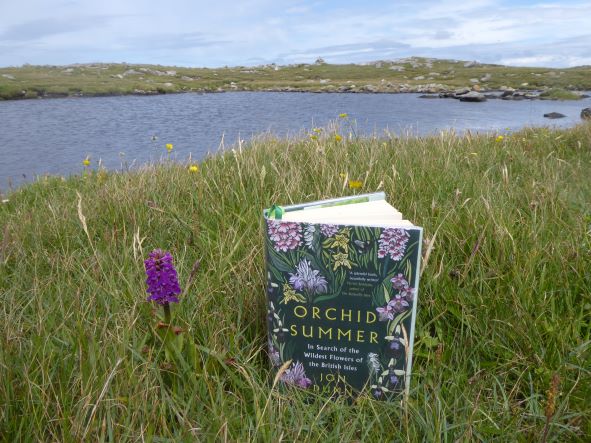
A marsh orchid at Balranald nature reserve, North Uist.
In general, this is denser with information than all but the keenest amateur botanists need, so I didn’t engage with it as much as his book about hummingbirds, The Glitter in the Green, but Dunn is a top-class nature and travel writer who really brings places and species to life on the page through his enthusiastic descriptions. Still, I wish this could have been illustrated with colour plates, as the author is an equally accomplished photographer. (Public library)
Bonsai by Alejandro Zambra (2006; 2022)
[Translated from the Spanish by Megan McDowell]
“In Emilia and Julio’s story … there are more omissions than lies, and fewer omissions than truths”
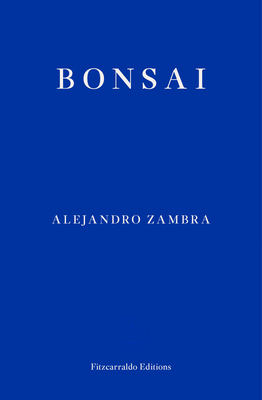 These college students’ bond is primarily physical, with an overlay of intellectual pretentiousness: they read to each other from the likes of Proust before they go to bed. Zambra, a Chilean poet and fiction writer, zooms in and out to spotlight each one’s other connections with friends and lovers and presage how the past will lead to separate futures. Already we see Julio thinking about how this time-limited relationship will be remembered in memory and in writing. The plot of a story Zambra references in this allusion-heavy work, “Tantalia” by Macedonio Fernández, provides the title: a couple buy a small plant to signify their love, but realize that maybe wasn’t a great idea given that plants can die.
Tending a bonsai is like writing, thinks Julio. Writing is like tending a bonsai, Julio thinks.
At scarcely 60 pages, with plenty of blank space between sections, this feels most like a short story. Bonsai symbolism aside, I didn’t find much to latch onto. Zambra is playing literary games here – “Let’s say her name is or was Emilia and that his name is, was, and will be Julio,” he writes in the first paragraph – and indulging an appetite for metafiction. Drawing attention to the arbitrary nature of creation made this feel generic and soulless, like the author wasn’t committed to or fond of his characters and their story. This wasn’t my cup of tea, but fans of Open Water and Normal People who also love spare writing in translation might enjoy it.
With thanks to Fitzcarraldo Editions for the free copy for review. Bonsai will be published on August 17th.
Reading Ireland Month: Erskine, O’Farrell, Quinn and Tóibín
Reading Ireland Month is hosted each year by Cathy of 746 Books. I’m sneaking in on the final day of March (there’s a surprise snow squall out the window as I write this) with four short reviews and feeling rather smug that my post covers lots of bases: short stories, a novel, a book of autobiographical pieces, and a poetry collection.
Dance Move by Wendy Erskine (2022)
 The 11 stories in Erskine’s second collection do just what short fiction needs to: dramatize an encounter, or moment, that changes life forever. Her characters are ordinary, moving through the dead-end work and family friction that constitute daily existence, until something happens, or rises up in the memory, that disrupts the tedium.
Erskine being from Belfast, evidence of the Troubles is never far away. In “Nostalgie,” a washed-up rocker is asked to perform his hit song at a battalion’s party. A woman and her lodger are welded together by a violent secret in “Bildungsroman,” which reminded me of a tale from Bernard MacLaverty’s Blank Pages and Other Stories. “Gloria and Max” struck me most of all: a drive to a film festival becomes a traumatic flashback when they’re first on the scene of an accident.
Erskine’s writing is blunt and edgy, the kind that might be stereotyped as male but nowadays is also, inevitably for Irish authors, associated with Sally Rooney: matter-of-fact; no speech marks, flat dialogue and slang. A couple of other favourites: “Mathematics,” in which a cleaner finds an abandoned child in a hotel room and tries to do right by her; and “Memento Mori,” about two deaths, one drawn out and one sudden; both equally unexpected; and only enough compassion to cope with one. (Public library) 
After You’d Gone by Maggie O’Farrell (2000)
 In form this is similar to O’Farrell’s The Distance Between Us, one of my Reading Ireland selections from last year: short sections of a few pages flit between times and perspectives. (There’s also an impulsive trip from London to Scotland in both.) But whereas in her third novel I found the jump cuts confusing and unnecessary, here they just work, and elegantly, to build a portrait of Alice Raikes, in a coma after what may have been a suicide attempt. That day she’d taken a train from London to Edinburgh at the last minute, met her sisters at the station, seen something that threw her, and gotten right on a return train. Back in London and on the way to the shop for cat food, she stepped off the kerb and into the path of a car.
Scenes from Alice’s childhood in Scotland are interspersed with her love affairs; her parents’ disappointing marriage serves as a counterpoint to her great passion for John. The setup of three female generations in North Berwick and the question of sexual autonomy reminded me strongly of Evie Wyld’s The Bass Rock.
This is a bold debut novel, refusing to hold readers’ hands through shifts from now to near past to further ago, from third to second to first person (even Alice from her coma: “my body still clings to life, and I find myself suspended like Persephone between two states … I am somewhere. Drifting. Hiding.”). Loss, secrets and family inheritance may be familiar themes, but when this was published at the millennium it must have seemed thrillingly fresh; it still does now.
I only have one unread O’Farrell novel awaiting me now, My Lover’s Lover. I’ll be saving that up, maybe for this time next year. Having not much enjoyed Hamnet, I’m disappointed that her forthcoming novel will also be historical and will probably skip it; I miss her stylish contemporary commentary. (Secondhand from a charity shop)
A Portrait of the Artist as a Young Girl, ed. John Quinn (1986)
 These autobiographical essays were compiled by Quinn based on interviews he conducted with nine women writers for an RTE Radio series in 1985. I’d read bits of Dervla Murphy’s and Edna O’Brien’s work before, but the other authors were new to me (Maeve Binchy, Clare Boylan, Polly Devlin, Jennifer Johnston, Molly Keane, Mary Lavin and Joan Lingard). The focus is on childhood: what their family was like, what drove these women to write, and what fragments of real life have made it into their books.
I read the first couple of pieces but then started to find the format repetitive and didn’t want to read out-of-context illustrative passages from novels I’d never heard of, so only skimmed through the rest. You can work out what Quinn’s questions were based on how the essays spin out: What is your earliest memory? What was your relationship with your parents? What was your schooling? Were you lonely? What part did books and writing play in your childhood? Distant fathers, a strict Catholic upbringing, solitude/boredom and escaping into novels are common elements. Some had happier childhoods than others, but all are grateful for the life of the mind: A solid base of familial love and the freedom to explore were vital.
The best passage comes from Seamus Heaney’s foreword: “The woman writer, like everybody else, is in pursuit of coherence, attempting to bring into significant alignment the creature she was and the being she is striving to become.” (Secondhand from Bookbarn International) 
Vinegar Hill by Colm Tóibín (2022)
 I didn’t realize when I started it that this was Tóibín’s debut collection; so confident is his verse that I assumed he’s been publishing poetry for decades. He’s one of those polymaths who’s written in many genres – contemporary fiction, literary criticism, travel memoir, historical fiction – and impresses in all. I’ve been finding his recent Folio Prize winner, The Magician, a little too dry and biography-by-rote for someone with no particular interest in Thomas Mann (I’ve only ever read Death in Venice), so I will likely just skim it before returning it to the library, but I can highly recommend his poems as an alternative.
There’s such a range of tone, structures and topics here. Bereavements and chemotherapy are part of a relatable current events background, as in “Lines Written After the Second Moderna Vaccine at Dodgers’ Stadium Los Angeles, 27 February 2021.” Irish-Catholic nostalgia animates the very witty sequence from “The Nun” to “Vatican II.” You can come along on some armchair travels: “In Washington DC,” “In San Clemente,” “Canal Water” (Venice), “Jericho,” and so on. The poems are based around anecdotes or painterly observations; there are both short phrases and prose paragraphs. The line breaks are unfailingly fascinating (any other enjambment geeks out there?). I particularly loved “Kennedy in Wexford,” “In the White House,” “Eccles Street” and “Eve.”

With thanks to Carcanet Press for the e-copy for review.
Have you read any Irish literature this month?
Women’s Prize 2022: Longlist Wishes vs. Predictions
Next Tuesday the 8th, the 2022 Women’s Prize longlist will be announced.
First I have a list of 16 novels I want to be longlisted, because I’ve read and loved them (or at least thought they were interesting), or am currently reading and enjoying them, or plan to read them soon, or am desperate to get hold of them.
Wishlist
Brown Girls by Daphne Palasi Andreades
Our Wives Under the Sea by Julia Armfield (my review)
Ghosted by Jenn Ashworth (my review)
These Days by Lucy Caldwell

Damnation Spring by Ash Davidson – currently reading
Olga Dies Dreaming by Xóchitl González – currently reading
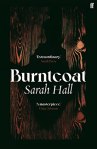
Burntcoat by Sarah Hall (my review)
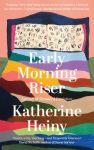
Early Morning Riser by Katherine Heiny (my review)


Pure Colour by Sheila Heti
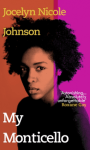
My Monticello by Jocelyn Nicole Johnson (my review)
Devotion by Hannah Kent – currently reading
Build Your House Around My Body by Violet Kupersmith – currently reading



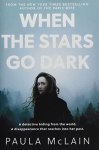
When the Stars Go Dark by Paula McLain (my review)
The Swimmers by Julie Otsuka – review coming to Shiny New Books on Thursday
Brood by Jackie Polzin (my review)
The Performance by Claire Thomas (my review)


Then I have a list of 16 novels I think will be longlisted mostly because of the buzz around them, or they’re the kind of thing the Prize always recognizes (like danged GREEK MYTHS), or they’re authors who have been nominated before – previous shortlistees get a free pass when it comes to publisher submissions, you see – or they’re books I might read but haven’t gotten to yet.
Predictions
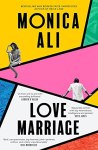
Love Marriage by Monica Ali
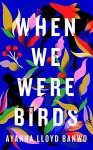
When We Were Birds by Ayanna Lloyd Banwo
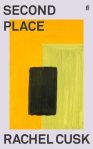
Second Place by Rachel Cusk (my review)
Matrix by Lauren Groff

Free Love by Tessa Hadley
The Other Black Girl by Zakiya Dalila Harris (my review)
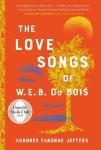
The Love Songs of W.E.B. Du Bois by Honorée Fanonne Jeffers
The Fell by Sarah Moss (my review)



My Phantoms by Gwendoline Riley
Beautiful World, Where Are You by Sally Rooney (my review)
Ariadne by Jennifer Saint
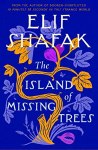
The Island of Missing Trees by Elif Shafak


Great Circle by Maggie Shipstead
Pandora by Susan Stokes-Chapman
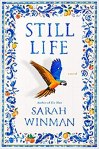
Still Life by Sarah Winman
To Paradise by Hanya Yanagihara – currently reading



*A wildcard entry that could fit on either list: Sorrow and Bliss by Meg Mason (my review).*

Okay, no more indecision and laziness. Time to combine these two into a master list that reflects my taste but also what the judges of this prize generally seem to be looking for. It’s been a year of BIG books – seven of these are over 400 pages; three of them over 600 pages even – and a lot of historical fiction, but also some super-contemporary stuff. Seven BIPOC authors as well, which would be an improvement over last year’s five and closer to the eight from two years prior. A caveat: I haven’t given thought to publisher quotas here.
MY WOMEN’S PRIZE FORECAST
Love Marriage by Monica Ali
Our Wives Under the Sea by Julia Armfield
When We Were Birds by Ayanna Lloyd Banwo
Olga Dies Dreaming by Xóchitl González
Matrix by Lauren Groff
The Love Songs of W.E.B. Du Bois by Honorée Fanonne Jeffers
Devotion by Hannah Kent
Build Your House Around My Body by Violet Kupersmith
The Fell by Sarah Moss
My Phantoms by Gwendoline Riley
Beautiful World, Where Are You by Sally Rooney
Ariadne by Jennifer Saint
The Island of Missing Trees by Elif Shafak
Great Circle by Maggie Shipstead
Pandora by Susan Stokes-Chapman
To Paradise by Hanya Yanagihara
What do you think?
See also Laura’s, Naty’s, and Rachel’s predictions (my final list overlaps with theirs on 10, 5 and 8 titles, respectively) and Susan’s wishes.
Just to further overwhelm you, here are the other 62 eligible 2021–22 novels that were on my radar but didn’t make the cut:
In Every Mirror She’s Black by Lola Akinmade Åkerström
Violeta by Isabel Allende
The Leviathan by Rosie Andrews
Somebody Loves You by Mona Arshi
The Stars Are Not Yet Bells by Hannah Lillith Assadi
The Manningtree Witches by A.K. Blakemore
Mary Jane by Jessica Anya Blau
Defenestrate by Renee Branum
Songs in Ursa Major by Emma Brodie
Assembly by Natasha Brown
We Were Young by Niamh Campbell
The Raptures by Jan Carson
A Very Nice Girl by Imogen Crimp
Scary Monsters by Michelle de Kretser
Empire of Wild by Cherie Dimaline
Infinite Country by Patricia Engel
Love & Saffron by Kim Fay
Mrs March by Virginia Feito
Booth by Karen Joy Fowler
Tides by Sara Freeman
I Couldn’t Love You More by Esther Freud
Of Women and Salt by Gabriela Garcia
Libertie by Kaitlyn Greenidge
Listening Still by Anne Griffin
The Twyford Code by Janice Hallett
Mrs England by Stacey Halls
Three Rooms by Jo Hamya
The Giant Dark by Sarvat Hasin
The Paper Palace by Miranda Cowley Heller
Violets by Alex Hyde
Fault Lines by Emily Itami
Beasts of a Little Land by Juhea Kim
Woman, Eating by Claire Kohda
Notes on an Execution by Danya Kukafka
Paul by Daisy Lafarge
Circus of Wonders by Elizabeth Macneal
The Truth About Her by Jacqueline Maley
Wahala by Nikki May
Once There Were Wolves by Charlotte McConaghy
Cleopatra and Frankenstein by Coco Mellors
The Exhibitionist by Charlotte Mendelson
Chouette by Claire Oshetsky
The Book of Form and Emptiness by Ruth Ozeki
The Anthill by Julianne Pachico
The Vixen by Francine Prose
The Five Wounds by Kirstin Valdez Quade
Malibu Rising by Taylor Jenkins Reid
Cut Out by Michèle Roberts
This One Sky Day by Leone Ross
Secrets of Happiness by Joan Silber
Cold Sun by Anita Sivakumaran
Hear No Evil by Sarah Smith
Oh William! by Elizabeth Strout
Animal by Lisa Taddeo
Daughter of the Moon Goddess by Sue Lynn Tan
Lily by Rose Tremain
French Braid by Anne Tyler
We Run the Tides by Vendela Vida
I Love You but I’ve Chosen Darkness by Claire Vaye Watkins
Black Cake by Charmaine Wilkerson
The Dictionary of Lost Words by Pip Williams
Nightbitch by Rachel Yoder
 Bookish Beck = Rebecca Foster. American transplant to England. Freelance proofreader and book reviewer.
 Bookish Beck