Three on a Theme for Mother’s Day: Baker, Diski and Sampson
It’s Mothering Sunday in the UK today, so, like last year, I’m featuring three very different books about mothers and motherhood: a memoir, a novel and a poetry anthology. There are complex emotions at play in the first two due to grief, abuse and disability. The poems are cheerier (thankfully) and reflect on the experience of motherhood but also of being mothered. On that last point, I’ve added my response to a relevant short story I happened to read today.
Reading My Mother Back: A memoir in childhood animal stories by Timothy C. Baker (2022)
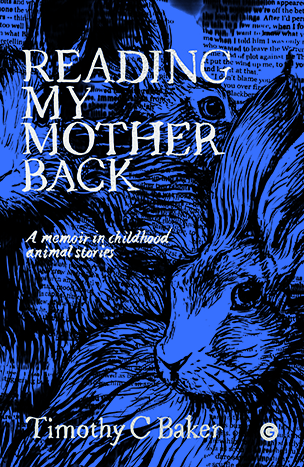 Baker is a lecturer in Scottish literature at the University of Aberdeen. His first non-academic publication is a curiously beguiling novella-length reappraisal of favourite children’s books. “To misquote Heraclitus, you cannot read the same book twice.” While he’s sheepish about including so many 19th- and early-20th-century white male authors, he can’t do otherwise as these are the texts that first taught him about death, loneliness and friendship: Charlotte’s Web, The Wind in the Willows, The Magician’s Nephew and Watership Down. (Also The Secret Garden.) Baker grew up in Maryland and Vermont, lonesome and closeted, with parents who briefly joined a cult. In his memory, his mother (who had been abused) always suffered with chronic illness and pain. In each chapter, he weaves together a discussion of a plot with stories from his early life and critical opinion on the value of rereading. It helped that I was familiar with six of the nine books Baker features (and others by Gallico, though not The Man Who Was Magic); I’d not even heard of Merle the High Flying Squirrel or The Book of the Dun Cow.
I spotted this in the Wigtown Festival Shop* on our 2023 visit to Scotland’s Book Town and could hardly believe it existed because it seemed so perfectly suited to me: I loved animal books, especially Watership Down, as a child; I’ll read any bereavement memoir going; I grew up 30 miles from Baltimore, where Baker spent his early life; he and I both had strict religious upbringings; and his mother experienced kidney failure (after eating a foxglove??), a link to my family’s history of kidney disease. There are plentiful differences, too, of course, but Baker emphasises connection. “If reading these books has taught me anything,” he concludes, “it is that all of my stories are individual, and all of them are universal. What we share is the unshareability of our grief … [but also] the joy of knowing that we have loved.” And for such a seemingly niche book (from Goldsmiths Press), I have actually found myself mentioning it to two blogger friends in recent days, so that’s proof he was right. 
[*As to how the book finally came into my possession: I added it to my wishlist and an acquaintance (a former mayor of Newbury, in fact) bought it for me for my 40th birthday. However, he forgot to bring the gift to our joint party and it took another 2+ years to extract it from him – through explicit reminders when we invited him to join us on a quiz team.]
Like Mother by Jenny Diski (1988)
I’ve enjoyed the late Jenny Diski’s travel memoirs (Skating to Antarctica and Stranger on a Train) and essays (On Trying to Keep Still). This novella was my first taste of her fiction and, while it’s dark as hell, I admired the psychological acuity and playfulness with narration. Occasional chapters introduce a dialogue between Nony and an imaginary interlocutor whose role is to listen to the story of her mother, Frances, a former dancer. That family history is the substance of the rest of the book, which is in an omniscient third person. The artificiality of the setup is blatant, though; Nony can neither think nor speak, having been born without a brain (hydranencephaly). Nony’s full name is thus Frances’s cruel joke.
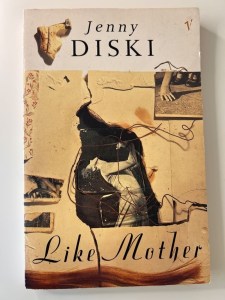
By necessity, the story stretches back to Frances’s parents, Ivy and Gerald, whose postwar optimism soon ceded to the reality of addiction, adultery and the attrition of love. A semiferal Frances escaped her unhappy home for the streets of London and engaged in sex play with Stuart on a bombsite. This went on for years. For Stuart, it blossomed into genuine love, but the numb Frances could never return his feelings and only used him. There are some really painful scenes here, such as Stuart stealing ether from the chemistry supply cupboard so she can huff herself into temporary oblivion, and a drunk Ivy molesting adolescent Frances. “Like mother, like daughter” is a bitter confirmation of inherited trauma. Nony might well be a symbolic manifestation of Frances’s desire to cultivate nothingness. To the extent that she is a literal baby – I’m really not sure – Frances does seem to love her and care for her physical needs, even as she’s grateful that the relationship will be short-lived.
Diski draws attention to the falsity of her narrative technique at the very end. It’s a disturbing yet intriguing novel that I think must be trying to make a wider point about postwar disillusionment. (Enough to make one question one’s growing antipathy towards Boomers?) I was reminded faintly of Nutshell by Ian McEwan, which is from the perspective of a fetus, and I Am Clarence by Elaine Kraf, a troubling story of a mentally ill mother and her disabled son. I have another novella plus a short story collection by Diski on the shelf, and I daresay after those I’ll have to seek out everything else she wrote. (University library) 
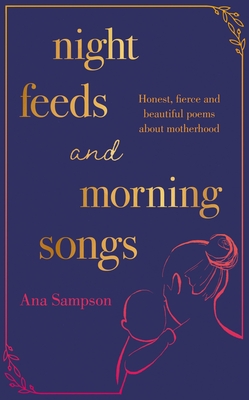
Night Feeds and Morning Songs, ed. Ana Sampson (2021)
“I crossed the border into the Republic of Motherhood
and found it a queendom, a wild queendom.”
~Liz Berry
It would have been easy to make such an anthology samey and sentimental, so kudos to Sampson for curating a solid mix of contemporary and period work. The poems are grouped into loose categories covering pregnancy, the sleepless nights of early motherhood, the power of womanly solidarity, the legacy (or absence) of one’s own mother, and the milestones of life as a child grows up and moves away. (Jackie Kay marvels that her baby boy is now a 6-foot-2 world traveller.) However, there are almost as many emotional approaches and poetic forms as there are contributors. Exhilaration meets exhaustion; guilt and grief threaten to overwhelm the good times. Sometimes the infant is addressed directly. The tone might be sombre, outraged or satirical. A few excerpts:
from “Labour Ward Prayer” by Vicky Thomas
Give us this day our daily miracle.
Exchange our offering of sweat and tears
and, most of all, of blood,
for new life, crumpled as a new leaf bud.
 from “The Visitor” by Idra Novey
…more dragon
than spaniel, more flammable
than fluid …
All wet mattress to my analysis,
he’s stayed the loudest and longest
of any houseguest
from “What My Kids Will Write about Me in Their Future Tell-All Book” by January Gill O’Neil
They will say that no was my favourite word,
More than stop, or eat, or love.
That some morning, I’d rather stay in bed,
laptop on lap, instead of making breakfast
…
They will say they have seen me naked.
Front side, back side – none of which
were my good side.
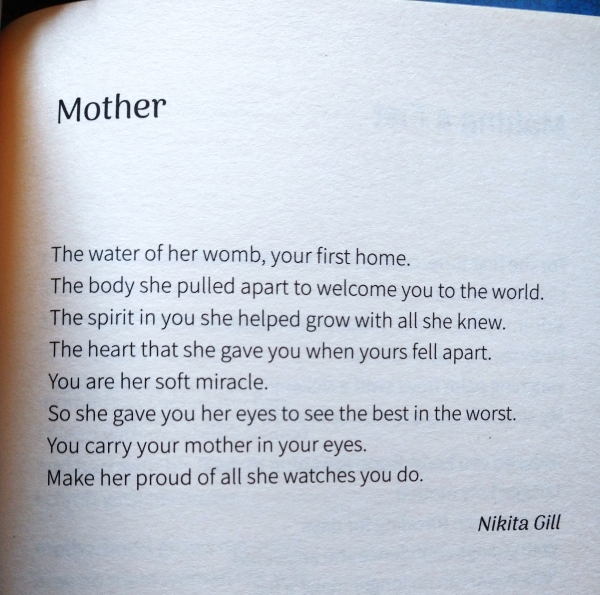
I enjoyed re-encountering work by some personal favourite poets such as Caroline Bird, though most entries were new to me. Sampson’s section introductions aren’t particularly illuminating and often reference poems that aren’t actually in the part in question. Some of the 19th-century and earlier material is quaintly twee, but I did love discovering Christina Rossetti’s “To My First Love, My Mother.” This is the poem that made me cry, though:
(Little Free Library)
And a bonus short story:
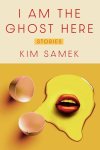 “Egg Mother” by Kim Samek (from I Am the Ghost Here): I’m two stories into Samek’s gently surreal collection. This second story combines the themes of parenting and grief prevalent above. Her openings are knockout: “At thirty-six I turn into a scrambled egg. It happens a few months after I give birth.” In therapy, the narrator discovers that she’s been repressing her grief over her mother, who died of cancer when the narrator was 13. The therapist suggests that she and her husband hold a joint ‘funeral’ for her mother and her younger self in a graveyard. But even after the ritual, she doesn’t return to herself. It’s a sobering but realistic message: some things one just doesn’t get over.
“Every story that I read becomes the story of my mother.”
~Timothy C. Baker
Last night, we saw Brooklyn expat singer-songwriter Annie Dressner (and Sean Duggan of Steady Habits) in concert at a church hall. I was mostly underwhelmed by her quirky confessional songs and little-girl voice, but a couple of songs stood out for me. One, “I Just Realized,” includes the line “And I hope that I can be just like my mother.”
Today was a more emotional day than I was expecting. I got a sweet posy from church, but having a whole service focussed on mothers and mothering was hard for me. I had to mostly switch off to get through it.
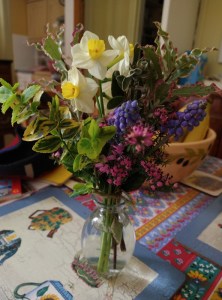
Just in my current stack, there are so many books about mothers or mothering…
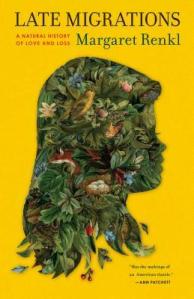 the loss of a mother (Eva Luna by Isabel Allende; The Memory of Borrowed Books by Meg Anderson; The Curious Incident of the Dog in the Night-Time by Mark Haddon; Late Migrations by Margaret Renkl; I Capture the Castle by Dodie Smith) – so common an element in novels that I have to think it’s shorthand for a character who has to pluckily rely on their own psychological resources
- mothers’ protective instinct (The Benefactors by Wendy Erskine)
- emotional distance from an unstable mother (Carrie by Stephen King; First Rain in Paradise by Gwyneth Lewis; Blonde by Joyce Carol Oates; The First Day of Spring by Nancy Tucker, which also includes the struggle to be a good mother in turn)
- mixed feelings about the inability to have a child (Mare by Emily Haworth-Booth)
- a mother’s grief at the loss of a child (Ordinary Saints by Niamh Ni Mhaoileoin)
I know it’s a subject I’ll be reading and thinking about for the rest of my life.
The Bookshop Band in Abingdon & 20 Books of Summer, 6: Orphans of the Carnival by Carol Birch
The Bookshop Band have been among my favourite musical acts since I first saw play live at the Hungerford Literary Festival in 2014. Initially formed of three local musicians for hire, they got their start in 2010 as the house band at Mr B’s Emporium of Reading Delights in Bath, England. For their first four years, they wrote a pair of original songs about a new book, often the very day of an author’s event in the shop, and performed them on guitar, cello, and ukulele as an interlude to the evening’s reading and discussion.
Notable songs from their first 13 albums are based on Glow by Ned Beauman (“We Are the Foxes”), Don’t Let’s Go to the Dogs Tonight by Alexandra Fuller (“Bobo and the Cattle”), The Unlikely Pilgrimage of Harold Fry by Rachel Joyce (“How Not to Woo a Woman”), and Bring Up the Bodies by Hilary Mantel (“You Make the Best Plans, Thomas”). They have also written responses to classic literature, with songs inspired by Alice in Wonderland, various Shakespeare plays, and a compilation of first lines called “Once Upon a Time.”
I got to see the band live five times pre-pandemic, even after husband-and-wife-duo Ben Please and Beth Porter moved nearly 400 miles away to Wigtown, the Book Town of Scotland. During the first six months of Covid-19 lockdown, the livestream concerts from their attic were weekly treats to look forward to. They also interviewed authors for a breakfast chat show as part of the Wigtown Book Festival, which went online that year.

In the years since, the band has kept busy with other projects (not to mention two children). Porter sings and performs on the two Spell Songs albums based on Robert Macfarlane’s The Lost Words and its sequel. Together they composed the soundtrack to Aardman Animations’ short film, Robin Robin (2021) – winning Best Music at the British Animation Awards, and wrote an album of songs based on Scottish children’s literature. And they have continued writing one-off book songs, such as for the launch of Birnam Wood by Eleanor Catton. (I’m disappointed their songs about All My Wild Mothers by Victoria Bennett and The Spinning Heart by Donal Ryan still haven’t made it onto record.)
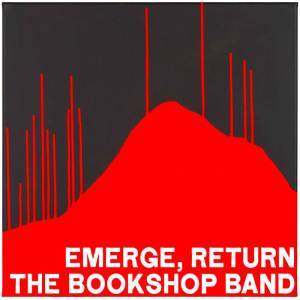 I’ve been enthusing about them for nearly a decade, but they’ve remained mostly under the radar in that time. Not so any longer; their recent album Emerge, Return was produced by Pete Townshend of The Who; the production value has notably advanced while retaining their indie spirit. Foreword Reviews kindly agreed to pay me to fangirl – er, write a blog – about Emerge, Return and the tour supporting it, so I’ll leave it there for the music criticism (their complete discography is now available on Bandcamp and Spotify). I’ll just add that a number of these ‘new’ songs have been kicking around for six to ten years but went unrecorded until now. For that reason, I worried that it might feel like a collection of cast-offs, but in fact they’ve managed to produce something sonically and thematically cohesive. It’s darker than some of their previous work, with moody minor chords and slightly sinister subjects.

Julia Pastrana after death. George Wick, Public domain, via Wikimedia Commons.
I’ve often found that the band will zero in on a detail, scene, or idea that never would have stood out to me while reading a book but, in retrospect, evokes the whole with great success. I decided to test this out by reading Carol Birch’s Orphans of the Carnival in the weeks leading up to seeing them on their months-long UK summer/autumn tour. It’s a historical novel about real-life 1850s Mexican circus “freak” Julia Pastrana, who had congenital conditions that caused her face and body to be covered in thick hair and her jaw and lips to protrude. Cruel contemporaries called her the world’s ugliest woman and warned that pregnant women should not be allowed to see her on tour lest the shock cause them to miscarry. Medical doctors posited, in all seriousness, that she was a link between humans and orangutans.
My copy of Birch’s novel was a remainder, and it is certainly a minor work compared to the Booker Prize-shortlisted Jamrach’s Menagerie. Facts about Julia’s travel itinerary and fellow oddballs quickly grow tedious, and while one of course sympathizes when children throw rocks at her, she never becomes a fully realized character rather than a curiosity.
There is also a bizarre secondary storyline set in 1983, in which Rose fills her London apartment with hoarded objects, including a doll she rescues from a skip and names Tattoo. She becomes obsessed with the idea of visiting a doll museum in Mexico. I thought that Tattoo would turn out to be Julia’s childhood doll Yatzi (similar to in A Council of Dolls by Mona Susan Power, where dolls have sentimental and magical power across the centuries), but the connection, though literal, was not as I expected. It’s more grotesque than that. And stranger than fiction, frankly.
{SPOILERS AHEAD}
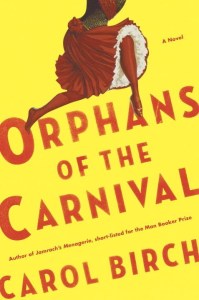 Birch sticks to the known details of Julia’s life. She had various agents, the final one being Theo Lent, who married her. (In the novel, he can’t bring himself to kiss her, but he can, you know, impregnate her.) She died of a fever soon after childbirth. Her son, Theo Junior, who inherited her hypertrichosis, also died within days. Both bodies were embalmed, sold, and exhibited. Theo then married another hairy woman, Marie Bartel of Germany, who took the name “Zenora” and posed as Julia’s sister. Theo died, syphilitic (or so Birch implies) and insane, in a Russian asylum. Julia and Theo Junior’s remains were displayed and mislaid at various points over the years, with Julia’s finally repatriated to Mexico for a proper burial in 2013. In the novel, Tattoo is, in fact, Theo Junior’s mummy.
Two Bookshop Band songs from the new album are about the novel: “Doll” and “Waggons and Wheels.” “Doll” is one of the few more lighthearted numbers on the album. It ended up being a surprise favourite track for me (along with the creepy “Eve in Your Garden,” about Margaret Atwood’s The Testaments, and “Room for Three,” a sombre yet resolute epic written for the launch of Philip Pullman’s La Belle Sauvage) because of its jaunty music-hall tempo; the pattern of repeating most nouns three times; and the hand claps, “deedily” vocal fills, unhinged recorder playing, and springy sound effects. The lyrics are almost a riddle: “When’s a doll (doll doll) not a doll (doll doll)?” They somehow avoid all spoilers while conveying something of the mental instability of a couple of characters.
The gorgeous “Waggons and Wheels” picks up on the melancholy tone and parental worries of earlier tracks from the album. The chorus has a wistful air as Julia ponders the passage of time and her constant isolation: “old friends, new deals / Winter or spring, I am hiding … Winter or spring, I’ll be travelling.” Porter’s mellow soprano tempers Julia’s outrage at mistreatment: “who are you to shout / Indecency and shame? / Shocking, I shock, so lock me out / I’m locked into this face.” She fears, too, what will happen to her child, “a beast or a boy, a monster or joy”. Listening to the song, I feel that the band saw past the specifics to plumb the universal feelings that get readers empathizing with Julia as a protagonist. They’ve gotten to the essence of the story in a way that Birch perhaps never did. Mediocre book; lovely songs. (New (bargain) purchase – Dollar Tree, Bowie, Maryland) 
I caught the Emerge, Return tour at St Nicolas’ Church in Abingdon (an event hosted by Mostly Books) last night. It was my sixth time seeing the Bookshop Band in concert – see also my write-ups of two 2016 events plus one in 2018 and another in 2019 – but the first time in person since the pandemic. I got to show off my limited-edition T-shirt. How nice it was to meet up again with blogger friend Annabel, too! Fun fact for you: Ben was born in Abingdon but hadn’t been back since he was two. Beth’s cousin turned up to the show as well. Although they have their daughters, 2 and 7, on the tour with them, they were being looked after elsewhere for the evening so the parents could relax a bit. Across the two sets, they played seven tracks from the new album, six old favourites, and two curios: one Spell Song, and an untitled song they wrote for the audiobook of Jackie Morris’s The Unwinding. It was a brilliant evening!


Preposterous #NovNov23 Catch-Up Post
I have a big pile of novellas I read last month but never wrote about, plus a few more I’ve sneaked in by finishing them over the past couple of days. I tweaked my shoulder last weekend and the discomfort has moved into my neck, making daily life, and sleep, difficult. A taste of what it’s like to live with chronic pain, I suppose. Add in the freezing temperatures of recent days and I’ve been feeling pretty sorry for myself and haven’t succeeded in sitting at a computer for the time required to write at least a bit about these short books. But as today is the day our link-up finishes, I’m tucked up in bed with laptop, electric blanket, heater, cat, cup of tea and ice pack, ready to do all 16 the best justice I can through a paragraph each.
Fiction:
In the Sweep of the Bay by Cath Barton (2020)
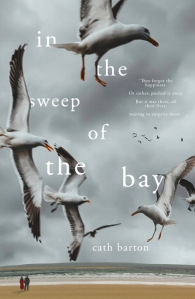 Susan put this on my radar and I bought it in publisher Louise Walters Books’ closing-down sale. Set in Morecambe, this bittersweet story of a half-century marriage and the figures on its margins – co-workers, children, even strangers – is both ambitious and intimate. Ted and Rene Marshall marry in the 1950s and soon drift into drudgery and traditional gender roles; “They forgot the happiness. Or rather, they pushed it away.” While Ted becomes a celebrated ceramics designer in the family company, Rene stagnates at home. It is not so much suspected infidelity as simply taking each other for granted that threatens their relationship. Barton moves through the decades and varies the perspective, letting us hear from one of the Marshalls’ daughters and giving kind attention to a gay couple. Strictly Come Dancing fans and those familiar with the northwest might take particular pleasure, but I enjoyed this quiet book reminiscent of Anne Tyler’s French Braid and (though less political) Jonathan Coe’s Bournville. (New purchase) [104 pages]
The Visitor by Maeve Brennan (2000)
 This posthumous novella was written in the 1940s but never published in Brennan’s lifetime. From Dublin, she was a longtime New Yorker staff member and wrote acclaimed short stories. After her mother’s death, Anastasia King travels from Paris, where the two set up residence after leaving her father, to Ireland to stay in the family home with her grandmother. Anastasia considers it a return, a homecoming, but her spiteful grandmother makes it clear that she is an unwelcome interloper. Mrs King can’t forgive the wrong done to her son, and so won’t countenance Anastasia’s plan to repatriate her mother’s remains. Rejection and despair eat away at Anastasia’s mental health (“She saw the miserable gate of her defeat already open ahead. There only remained for her to come up to it and pass through it and be done with it”) but she pulls herself together for an act of defiance. Most affecting for me was a scene in which we learn that Anastasia is so absorbed in her own drama that she does not fulfill the simple last wish of a dying friend. This brought to mind James Joyce’s The Dead. (Secondhand purchase – The Bookshop, Wigtown) [81 pages]
Bear by Marian Engel (1976)
 If you’ve heard of this, it’ll be for the fact that the main character – Lou, a librarian sent to archive the holdings of an octagonal house on an island one summer – has sex with a bear. That makes it sound much more repulsive and/or titillating than it actually is. The further I read the more I started to think of it as an allegory for women’s awakening; perhaps the strategy inspired Melissa Broder’s The Pisces (stuffed full of sex with a merman). “I have an odd sense of being reborn,” Lou writes to her boss, the Institute director, with whom she’d been having an affair. The bear lives in an outbuilding and at first Lou is indifferent, only feeding him as necessary. Then he becomes a friend, joining her for swims. Then he comes into the house. Bestiality is a taboo for a reason, but what mostly bothers me is the lack of mutuality, the sense of taking advantage. I’m also wary of stories in which animals have a primarily instrumental or metaphorical role. Still, this was a solid read, offbeat and nearly as shocking today as when it first appeared. (Secondhand purchase online) [167 pages]
So Late in the Day by Claire Keegan (2023)
 Several of us reviewed this for #NovNov though unsure it counts: in the UK the title story (originally for the New Yorker) was published in a standalone volume by Faber, while the U.S. release includes two additional earlier stories; I read the latter. The title story has Cathal spending what should have been his wedding weekend moping about Sabine calling off their engagement at the last minute. It’s no mystery why she did: his misogyny, though not overt, runs deep, most evident in the terms in which he thinks about women. And where did he learn it? From his father. (“The Long and Painful Death” is from Keegan’s second collection, Walk the Blue Fields, and concerns a woman on a writing residency at an author’s historic house in Ireland. She makes a stand for her own work by refusing to cede place to an entitled male scholar. The final story is “Antarctica,” the lead story in that 1999 volume and a really terrific one I’d already experienced before. It’s as dark and surprising as an early Ian McEwan novel.) Keegan proves, as ever, to be a master at portraying emotions and relationships, but the one story is admittedly slight on its own, and its point obvious. (Read via Edelweiss) [64 pages]
Swallowing Geography by Deborah Levy (1993)
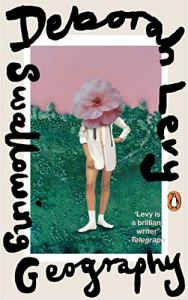 “She is Europe’s eerie child, and she is part of the storm.” J.K. is a young woman who totes her typewriter around different European locations, sleeps with various boyfriends, hears strangers’ stories, and so on. Many of the people she meets are only designated by an initial. By contrast, the most fully realized character is her mother, Lillian Strauss. The chapters feel unconnected and the encounters within them random, building to nothing. Though a bit like Crudo, this has very little detail to latch onto and so was pretentious in its opacity. I’ve generally gotten on much better with Levy’s nonfiction (see below) than her fiction. This, along with the Keegan (above), was my chosen train entertainment for the Booker Prize evening. I got so little out of it that it seemed like wasted reading time. Here’s a decent excerpted passage: “The arrogance of metaphor when facts save people’s lives. The succour of metaphor when facts inadequately describe people’s lives.” (Public library) [83 pages]
Nonfiction:
Starting with two from the Bloomsbury Object Lessons series, a great source of short monographs. These have been among my favourites so far.
Grave by Allison C. Meier (2023)
 Meier is a cemetery tour guide in Brooklyn, where she lives. She surveys American burial customs in particular, noting the lack of respect for Black and Native American burial grounds, the Civil War-era history of embalming, the increasing popularity of cremation, and the rise of garden cemeteries such as Mount Auburn in Cambridge, Massachusetts, which can serve as wildlife havens. The mass casualties and fear of infection associated with Covid-19 brought back memories of the AIDS epidemic, especially for those in New York City. Meier travels to a wide range of resting places, from potter’s fields for unclaimed bodies to the most manicured cemeteries. She also talks about newer options such as green burial, body composting, and the many memorial objects ashes can be turned into. I’m a dedicated reader of books about death and so found this fascinating, with the perfect respectful and just-shy-of-melancholy tone. It’s political and philosophical in equal measures. (Read via NetGalley) [168 pages]
Pregnancy Test by Karen Weingarten (2023)
 Laboratory pregnancy tests have been available since the 1930s and home pregnancy tests – the focus here – since the 1970s. All of them work by testing urine for the hormone hCG (human chorionic gonadotropin). What is truly wild is that pregnancy used to be verifiable only with laboratory animals – female mice and rabbits had to be sacrificed to see if their ovaries had swelled after the injection of a woman’s urine; later, female Xenopus toads were found to lay eggs in response, so didn’t need to be killed. Home pregnancy kits were controversial and available in Canada before the USA because it was thought that they could be unreliable or that they would encourage early abortions. Weingarten brings together the history, laypeople-friendly science, and cultural representations (taking a pregnancy test is excellent TV shorthand) in a readable narrative and makes a clear feminist statement: “the home pregnancy test gave back to women what should have always been theirs: first-hand knowledge about how their bodies worked” and thus “had the potential to upend a paternalistic culture.” (Read via NetGalley) [160 pages]
And from a different Bloomsbury series for monographs about seminal albums, 33 1/3:
Jesus Freak by Will Stockton and D. Gilson (2019)
 The dc Talk album Jesus Freak (1995) is the first CD I ever owned. My best friend and I listened to it (along with Bloom by Audio Adrenaline and Take Me to Your Leader by Newsboys) so many times that we knew every word and note by heart. So it’s hard for me to be objective rather than nostalgic; I was intrigued to see what two secular academics would have to say. Crucially, they were teenage dc Talk fans, now ex-Evangelicals and homosexual partners. As English professors, their approach is to spot musical influences (Nirvana on the title track; R&B and gospel elsewhere), critically analyse lyrics (with “Colored People” proving problematic for its “neoliberal multiculturalism and its potential for post-racial utopianism”), and put a queer spin on things. For those who don’t know, dc Talk were essentially a boy band with three singers, one Black and two white – one of these a rapper. Stockton and Gilson chronicle the confusion of living with a same-sex attraction they couldn’t express as teens, and cheekily suggest there may have been something going on between dc Talk members Toby McKeehan and Michael Tait, who were roommates at Liberty University and apparently dismantled their bunk beds so they could sleep side by side. Hmmm! I was interested enough in the subject matter to overlook the humanities jargon. (Birthday gift from my wish list last year) [132 pages]
And the rest:
Fifty Days of Solitude by Doris Grumbach (1994)
 Grumbach died last year at age 104. This was my third of her books; I read two previous memoirs, Extra Innings and The Presence of Absence, when they were brought back into print as Open Road Media e-books. I knew of Grumbach through her association with May Sarton, and the two in fact had a lot in common, including lesbianism, living in Maine and writing about older age. I was expecting something on a par with Sarton’s Journal of a Solitude, one of my favourite books, but this fell short in comparison. Grumbach spent a month and a half alone in Maine during the winter of 1993 while her partner, Sybil, was away amassing stock for their bookstore. The book is a collection of unconnected meditations about nature, the cold, creativity and so on. She finds herself writing fiction so the characters can keep her company, and notes “how much more I was aware of my vices.” Although she tries to avoid the news, word reaches her of acquaintances’ demises, and she recalls the recent death from AIDS of a young local man. Amusingly, she rereads Bear (see above) during the 50 days. Some atmosphere, but low on insight. (Secondhand purchase – Wonder Book and Video, Hagerstown) [114 pages]
Things I Don’t Want to Know: On Writing by Deborah Levy (2013)
 It feels like I made an error by reading Levy’s “Living Autobiography,” out of order. I picked up the middle volume of the trilogy, The Cost of Living, for #NovNov in 2021 and it ended up being my favourite nonfiction read of that year. I then read part of the third book, Real Estate, last year but set it aside. And now I’ve read the first because it was the shortest. It’s loosely structured around George Orwell’s four reasons for writing: political purpose, historical impulse, sheer egoism and aesthetic enthusiasm. The frame story has her flying to Majorca at a time when she was struggling with her mental health. She vaguely follows in the footsteps of George Sand and then pauses to tell a Chinese shopkeeper the story of her upbringing in apartheid-era South Africa and the family’s move to London. Although I generally admire recreations of childhood and there are some strong pen portraits of minor characters, overall there was little that captivated me here and I was too aware of the writerly shaping. (Secondhand purchase – 2nd & Charles, Hagerstown) [111 pages]
The Private Life of the Hare by John Lewis-Stempel (2019)
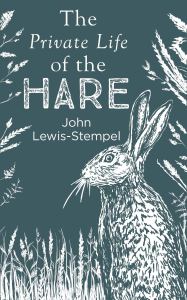 I reviewed a couple of JLS’s species-specific monographs for #NovNov in 2018: The Secret Life of the Owl and The Glorious Life of the Oak. There’s a similar range of material here: anatomy, natural history and cultural significance, including in poetry. There are chapters on hunting, the hare as food, and its appearances in myth and religion. I was engaged about half of the time; I tended to skip over longer excerpts from historical documents. The reliance on lengthy quotations and use of bullet points make it feel like a half-finished research project, with the kind of information you could find anywhere else. Too many of his recent books have felt like they were rushed into print. I would only pick this up if you’re particularly fascinated by hares. (Public library) [99 pages]
The Cancer Journals by Audre Lorde (1980)
 I’ve read so many cancer stories that it takes a lot to make one stand out. This feels like a random collection of documents rather than a coherent memoir. One of the three essays was originally a speech, and two were previously printed in another of her books. Lorde was diagnosed with breast cancer in 1978 and had a mastectomy. A Black lesbian feminist, she resisted wearing prostheses and spoke up about the potential environmental causes of breast cancer that need to be addressed in research (“I may be a casualty in the cosmic war against radiation, animal fat, air pollution, McDonald’s hamburgers and Red Dye No. 2”). Her actual journal entries make up little of the text, which is for the best because fear and pain can bring out the cliches in us – but occasionally a great quote like “if bitterness were a whetstone, I could be sharp as grief.” Another favourite line: “Pain does not mellow you, nor does it ennoble, in my experience.” I’m keen to read her memoir Zami. (University library) [77 pages]
A Month in Siena by Hisham Matar (2019)
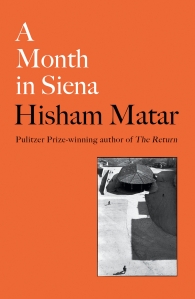 I’d not read Matar before I spotted this art book-cum-memoir and thought, why not. A Libyan American novelist who lives in London, Matar had long been fascinated by the Sienese School of painting (13th to 15th centuries), many of whose artists depicted biblical scenes or religious allegories – even though he’s not a Christian. He spent a month in Italy immersed in the art he loves; there are 15 colour reproductions here. His explications of art history are generalist enough to be accessible to all readers, but I engaged more with the glimpses into his own life. For instance, he meets a fellow Arabic speaker and they quickly form a brotherly attachment, and a Paradise scene gives him fanciful hope of being reunited with his missing father – the subject of his Folio Prize-winning memoir The Return, which I’d like to read soon. His prose is beautiful as he reflects on history, death and how memories occupy ‘rooms’ in the imagination. A little more interest in the art would have helped, though. (Little Free Library) [118 pages]
A Childhood in Scotland by Christian Miller (1981)
 I had high hopes for this childhood memoir that originally appeared in the New Yorker and was reprinted as part of the Canongate Classics series. But I soon resorted to skimming as her recollections of her shabby upper-class upbringing in a Highlands castle are full of page after page of description and dull recounting of events, with few scenes and little dialogue. This would be of high historical value for someone wanting to understand daily life for a certain fraction of society at the time, however. When Miller’s father died, she was only 10 and they had to leave the castle. I was intrigued to learn from her bio that she lived in Newbury for a time. (Secondhand purchase – Barter Books) [98 pages]
Here and Now: Living in the Spirit by Henri J.M. Nouwen (1994)
 This collection of micro-essays under themed headings like “Living in the Present” and “Suffering” was a perfect introduction to Nouwen’s life and theology. The Dutch Catholic priest lived in an Ontario community serving the physically and mentally disabled, and died of a heart attack just two years after this was published. I marked out many reassuring or thought-provoking passages. Here’s a good pre-Christmas one:
“God became a little child in the midst of a violent world. Are we surprised by joy or do we keep saying: ‘How nice and sweet, but the reality is different.’ What if the child reveals to us what is really real?”
I was taken by the ideas that the life of compassion is one of “downward mobility” and that inner freedom only comes when you don’t judge anyone. He encourages readers to not live in a past of shame and regret, but to be grateful for opportunities for God’s mercy and guidance. Very peaceful and readable; a good bedside devotional book. (Free from my stepfather) [175 pages] 
De Profundis by Oscar Wilde (1897)
 My only reread for the month. Wilde wrote this from prison. No doubt he had a miserable time there, but keeping in mind that he was a flamboyant dramatist and had an eye to this being published someday, this time around I found it more exaggerated and self-pitying than I had before. “Suffering is one very long moment. … Where there is sorrow there is holy ground,” he writes, stating that he has found “harmony with the wounded, broken, and great heart of the world.” He says he’s not going to try to defend his behaviour … but what is this but one extended apologia and humble brag, likening himself to a Greek tragic hero (“The gods had given me almost everything. But I let myself be lured into long spells of senseless and sensual ease. I amused myself with being a flâneur, a dandy, a man of fashion”) and even to Christ in his individuality as well as in his suffering at the hands of those who don’t understand him (the scene where he was pilloried consciously mimics a crucifixion tableau). As a literary document, it’s extraordinary, but I didn’t buy his sincerity. He feigns remorse but, really, wasn’t sorry about anything, merely sorry he got caught. (Free from a neighbour) [151 pages]
Original rating (2011):
Rating now:
Average:
Which of these have you read?
And which do you want to read? (You may choose no more than 4!)
In total, I read 27 novellas this November – close to my 2021 record of 29. The highlights included the Barton, Meier, Nouwen and Weingarten above plus Train Dreams by Denis Johnson and Western Lane by Chetna Maroo, but the best of the lot was Absolutely and Forever by Rose Tremain.
Coming right up, final statistics on the month’s participants and posts!
Scottish Travels & Book Haul: Wigtown, Arran, Islay and Glasgow
When I was a kid, one-week vacations were rare and precious – Orlando or Raleigh for my dad’s church conferences, summer camp in Amish-country Pennsylvania, spring break with my sister in California – and I mourned them when they were over. As an adult, I find that after a week I’m ready to be home … and yet just days after we got back from Scotland, I’m already wondering why I thought everyday life was so great. Oh well. I like to write up my holidays because otherwise it’s all too easy to forget them. This one had fixed start and end points – several days of beetle recording in Galloway for my husband; meeting up with my sister and nephew in Glasgow one evening the next week – and we filled in the intervening time with excursions to two new-to-us Scottish islands; we’re slowly collecting them all.
First Stop, Wigtown
Hard to believe it had been over five years since our first trip to Wigtown. The sleepy little town had barely changed; a couple of bookshops had closed, but there were a few new ones I didn’t remember from last time. The weather was improbably good, sunny and warm enough that I bought a pair of cutoffs at the Community Shop. Each morning my husband set off for bog or beach or wood for his fieldwork and I divided the time until he got back between bits of paid reviewing, reading and book shopping. Our (rather spartan) Airbnb apartment was literally a minute’s walk into town and so was a perfect base.


I paced myself and parcelled out the eight bookshops and several other stores that happen to sell books across the three and a bit days that I had. It felt almost like living there – except I would have to ration my Reading Lasses visits, as a thrice-weekly coffee-and-cake habit would soon get expensive as well as unhealthy. (I spent more on books than on drinks and cakes over the week, though only ~25% more: £44 vs. £32.)


I also had the novelty of seeing my husband interact with his students when we were invited to a barbecue at one’s family home on the Mull of Galloway – and realizing that we’re almost certainly closer in age to the mum than to the student. Getting there required two rural bus journeys to the middle of nowhere, an experience all in itself.
‘Pro’ tips: New Chapter Books was best for bargains, with sections for 50p and £1 paperbacks and free National Geographics. Well-Read Books was good for harder-to-find fiction: among my haul were two Jane Urquhart novels, and the owner was knowledgeable and pleasant. Byre Books carries niche subjects and has scant opening hours, but I procured two poetry collections and a volume of Dorothy Wordsworth’s journals. The Old Bank Bookshop and The Bookshop are the two biggest shops; wander for an hour or more if you can. The Open Book tends to get castoffs from other shops and withdrawn library stock, but I still made two purchases and ended up being the first customer for the week’s hosts: Debbie and Jenny, children’s book authors and long-distance friends from opposite coasts of the USA. Overall, I was pleased with my novella, short story and childhood memoir acquisitions. A better haul than last time.

‘Celebrity’ sightings: On our walk down to the bird hide on the first evening, we passed Jessica Fox, an American expat who’s been influential in setting up the literary festival and The Open Book. She gave us a cheery “hello.” I also spotted Ben of The Bookshop Band twice, once in Reading Lasses and another time on his way to the afternoon school run. Both times he had the baby in tow and I decided not to bother him, not even to introduce myself as one of their Patreon supporters.
On our last morning in town, we lucked out and found Shaun Bythell behind the counter at The Bookshop. He’d just taken delivery of a book-print kilt his staff surprised him by ordering with his credit card, and Nicky (not as eccentric as she’s portrayed in Diary of a Bookseller; she’s downright genteel, in fact) had him model it. He posted a video to Facebook that includes The Open Book hosts on the 23rd, if you wish to see it, and his new cover photo shows him and his staff members wearing the jackets that match the kilt. I bought a few works of paperback fiction and then got him to sign my own copies of two of his books.


As last time, he was chatty and polite, taking an interest in our travels and exhorting us to come back sooner than five years next time. I congratulated him on his success and asked if we could expect more books. He said that depends on his publisher, who worry the market is saturated at the moment, though he has another SIX YEARS of diaries in draft form and the Remainders of the Day epilogue would be quite different if he wrote it now. Tantalizing!
Note to self: Next time, plan to be in town through a Friday evening – we left at noon, so I was sad to miss out on a Beth Porter (the other half of The Bookshop Band) children’s songs concert at Foggie Toddle Books at 3:00, followed by a low-key cocktail party at The Open Book at 5:30 – but not until a Monday, as pretty much everything shuts that day. How I hope someone buys Reading Lasses (the owner is retiring) and maintains the café’s high standard!
 Appropriate reading: I read the first third of Dorothy L. Sayers’s The Five Red Herrings because it’s set in the area (first line: “If one lives in Galloway, one either fishes or paints”), and found it entertaining, though not enough to care whodunnit. In general, I’m terrible for trying mystery series and DNFing or giving up after the first book. Lord Peter Wimsey seemed like he’d be an amusing detective in the Sherlock Holmes vein, but the rendering of Scottish accents was OTT and the case relied too much on details of train schedules and bicycles.
Arran
Our short jaunt to Arran started off poorly with a cancelled ferry sailing, leaving us stranded in Ardrossan (which Bythell had almost prophetically dubbed a “sh*thole” that morning!) for several hours until the next one, and we struggled with a leaky rear tyre and showery weather for much of the time, but we were still enamoured with this island that calls itself “Scotland in miniature.” That was particularly delightful for me because I come from the state nicknamed “America in miniature,” Maryland. This Airbnb was plush by comparison, we obtained excellent food from the Blackwater Bakehouse and a posh French takeaway, and we enjoyed walks at the Machrie stone circles and Brodick Castle as well as at the various bays (one with a fossilized dinosaur footprint) that we stopped off at on our driving tour.


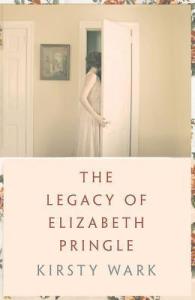 Appropriate reading: The Legacy of Elizabeth Pringle by Kirsty Wark, the only Arran-set novel on my library’s catalogue, is an enjoyable dual-timeline story linked by the Lamlash home of the title character. When she died in her nineties in 2006, she bequeathed her home to a kind woman who used to walk past on summer holidays with her daughter in a pram. Martha Morrison was that baby, and with her mother, Anna, suffering from dementia, it’s up to her to take possession and root out Elizabeth’s secrets. Every other chapter is a first-person fragment from Elizabeth’s memoir, cataloguing her losses of parents and lovers and leading ever closer to the present, when she befriended Saul, an American Buddhist monk based at Holy Island across the water, and Niall, a horticulturist at Brodick Castle. It’s a little too neat how the people in her life pair off (sub-Maggie O’Farrell; more Joanna Trollope, perhaps), but it was fun to be able to visualize the settings and to learn about Arran’s farming traditions and wartime history.
Islay
Islay is a tourist mecca largely because of its nine distilleries – what a pity we don’t care for whiskey! – but we sought it out for its wildlife and scenery, which were reminiscent of what we saw in the Outer Hebrides last year. Our B&B was a bit fusty (there was a rotary phone in the hall!), but we had an unbeatable view from our window and enjoyed visiting two RSPB reserves. The highlight for me was the walk to the Mull of Oa peninsula and the cow-guarded American Monument, which pays tribute to the troops who died in two 1918 naval disasters – a torpedoed boat and a shipwreck – and the heroism of locals who rescued survivors.


We spent a very rainy Tuesday mooching from one distillery shop to another. There are two gin-makers whose products we were eager to taste, but we also relished our mission to buy presents for two landmark birthdays, one of an American friend who’s a whiskey aficionado. Even having to get the tyre replaced didn’t ruin the day. There’s drink aplenty on Islay, but quality food was harder to acquire, so if we went back we’d plump for self-catering.


Incidental additional hauls: I found this 50th anniversary Virago tote bag under a bench at Bowmore harbour after our meal at Peatzeria. I waited a while to see if anyone would come back for it, but it was so sodden and sandy that it must have been there overnight. I cleaned it up and brought home additional purchases in it: two secondhand finds at a thrift store in Tarbert, the first town back on the mainland, and a Knausgaard book I got free with my card points from a Waterstones in Glasgow.


Glasgow
 My 15-year-old nephew is currently on a school trip to Scotland and my sister went along as an unofficial chaperone. I couldn’t let them come to the UK without meeting up, so for months we’d pencilled in an evening in Glasgow. When we booked our Airbnb room in a suburb, it was because it was on a super-convenient train line … which happened to be closed for engineering works while we were there. Plan B: rail replacement buses, which were fine. We greatly enjoyed the company of Santos the Airbnb cat, who mugged us for scraps of our breakfasts.
With our one day in Glasgow, we decided to prioritize the Burrell Collection, due to the enthusiastic recommendations from Susan, our Arran hosts, and Bill Bryson in Notes on a Small Island (“Among the city’s many treasures, none shines brighter, in my view”). It’s a museum with a difference, housed in a custom-built edifice that showcases the wooded surroundings as much as the stunning objects. We were especially partial to the stained glass.


Our whistle-stop city tour also included a walk past the cathedral, a ramble through the Necropolis (where, pleasingly, I saw a grave for one Elizabeth Pringle), and the Tenement Museum, a very different sort of National Trust house that showed how one woman, a spinster and hoarder, lived in the first half of the 20th century. Then on to an exceptional seafood-heavy meal at Kelp, also recommended by Susan, and an all-too-brief couple of hours with my family at their hotel and a lively pub.


We keep returning to Scotland. Where next in a few years? Possibly the southern islands of the Outer Hebrides, which we didn’t have time for last year, or the more obscure of the Inner Hebrides, before planning return visits to some favourites. All the short ferry rides were smooth this time around, so I can cope with the thought of more.

We got home to find our mullein plants attempting to take over the world.
Remainders of the Day by Shaun Bythell & What Remains? by Rupert Callender
I raced to finish all the September releases on my stack by the 30th, thinking I’d review them in one go, but that ended up being far too unwieldy. There was way too much to say about each of these excellent books (the first two pairs are here and here; Blurb Your Enthusiasm by Louise Willder is still to come, probably on Wednesday). I’ve mentioned before that the month’s crop of nonfiction was about either books or death. Here’s one of each, linked by their ‘remain’ titles. Both: 
Remainders of the Day: More Diaries from The Bookshop, Wigtown by Shaun Bythell
 It’s just over five years since many of us were introduced to Wigtown and the ups and downs of running a bookshop there through Shaun Bythell’s The Diary of a Bookseller. (I’ve also reviewed the follow-up, Confessions of a Bookseller, which was an enjoyable read for me during a 2019 trip to Milan, and 2020’s Seven Kinds of People You Find in Bookshops.)
This third volume opens in February 2016. As in its predecessors, each monthly section is prefaced by an epigraph from a historical work on bookselling – this time R. M. Williamson’s 1904 Bits from an Old Bookshop. It’s the same winning formula as ever: the nearly daily entries start with the number of online orders received and filled, and end with the number of customers and the till takings for the day. (The average spend seems to be £10 per customer, which is fine in high tourist season but not so great in November and December when hardly anyone walks through the door.) In between, Bythell details notable customer encounters, interactions with shop helpers or local friends, trips out to buy book collections or go fishing, Wigtown events including the book festival, and the occasional snafu like the boiler breaking during a frigid November or his mum being hospitalized with a burst ulcer.
Reading May Sarton’s Encore recently, I came across a passage where she is reading a fellow writer’s journal (Doris Grumbach’s Coming into the End Zone):
I find hers extremely good reading, so I cannot bear to stop. I am reading it much too fast and I think I shall have to read it again. I know that I must not swallow it whole. There is something about a journal, I think, that does this to readers. So many readers tell me that they cannot put my journals down.
I’ve heard Zadie Smith say the same about Karl Ove Knausgaard’s My Struggle: it’s just the stuff of prosaic, everyday life and yet she refers to his memoirs/autofiction as literary crack.
I often read a whole month’s worth of entries at a sitting. I can think of a few specific reasons why Bythell’s journals are such addictive reading:
- “Sometimes you want to go where everybody knows your name.” Small-town settings are irresistible for many readers, and by now the fairly small cast of characters in Bythell’s books feel like old friends. Especially having been to Wigtown myself, I can picture many of the locations he writes about, and you get the rhythm of the seasons and the natural world as well as the town’s ebb and flow of visitors.
- (A related point) You know what to expect, and that’s a comforting thing. Bythell makes effective use of running gags. You know that when Granny, an occasional shop helper from Italy, appears, she will complain about her aches and pains, curse at Bythell and give him the finger. Petra’s belly-dancing class (held above the shop) will inevitably be poorly attended. If Eliot is visiting, he is sure to leave his shoes right where everyone will trip over them. Captain the cat will be portly and infuriating.
- What I most love about the series is the picture of the life cycle of books, from when they first enter the shop, or get picked up in his van, to when rejects are dropped at a Glasgow recycling plant. What happens in the meantime varies, with once-popular authors falling out of fashion while certain topics remain perennial bestsellers in the shop (railways, ornithology). There’s many a serendipitous moment when he comes across a book and it’s just what a customer wants, or buys a book as part of a lot and then sells it online the very next day. New, unpriced stock is always quick to go.
Also of note in this volume are his break-up with Amazon, after his account falls victim to algorithms and is suspended, the meta moment where he signs his first book contract with Profile, and the increasing presence of the Bookshop Band, who moved to Wigtown later in 2017. Bythell doesn’t seem to get much time to read – it’s a misconception of the bookselling life that you do nothing but read all day; you’d be better off as a book reviewer if that’s what you want – but when he does, it’s generally an intense experience: E.M. Forster’s sci-fi novella The Machine Stops (who knew it existed?!), Barbara Comyns’s A Touch of Mistletoe, Jonathan Safran Foer’s Everything Is Illuminated, and Oscar Wilde’s De Profundis.
I’m torn as to whether I hope there will be more year by year volumes filling in to the present day. As Annabel noted, the ‘where they are now’ approach in the Epilogue rather suggests that he and his publisher will leave it here at a trilogy. This might be for the best, as a few more pre-Covid years of the same routines could get old, though nosey parkers like myself will want to know how a confirmed bachelor turned into a family man…
Some favourite lines:
“Quiet day in the shop; even the cat looked bored.” (31 October)
“The life of the secondhand bookseller mainly involves moving boxes from one place to another, and trying to make them fit into a small space, like some sort of awful game of Tetris.”
(10 February and 15 March are great stand-alone entries that give a sense of what the whole is like. There are a lot of black-and-white photos printed amid the text in the first month; it’s a shame these don’t carry on through.)
With thanks to Profile Books for the free copy for review.
What Remains?: Life, Death and the Human Art of Undertaking by Rupert Callender
Call me morbid or call me realistic; in the last decade and a half I have read a lot of books about death, including terminal illness and bereavements. I’ve even read several nonfiction works by American mortician Caitlin Doughty. But I’ve not read anything quite like punk undertaker Rupert Callender’s manifesto about modern death and how much we get wrong in our conceptualization and conversations. It was poignant to be reading this in the weeks surrounding Queen Elizabeth II’s death – a time when death got more discussion than usual, yes, but when there was also some ridiculous pomp that obscured the basic human facts of it.
Callender is not okay with death, and never has been. When he was seven, his father died of a heart attack at age 63. His 1970s Edinburgh upbringing was shattered and his mother, who he has no doubt was doing her best, made a few terrible mistakes. First, a year before, she’d reassured him that his father wasn’t going to die. Second, she didn’t make him attend the funeral. (I still wish my mother had made me go back to tour my late grandmother’s house one final time when I was seven; instead, I stayed behind and played on a Ouija board with my cousins.) Third, she soon sent Callender away to boarding school, which left him feeling alone and betrayed. And lastly, when she died of cancer when he was 25, she had planned every detail of her funeral – whereas he believes that is a task for the survivors.
An orphan in his late twenties, Callender came across The Natural Death Handbook and it sealed his future. He’d been expelled from school and blown his inheritance; acid house culture had given him a sense of community. Now he had a vocation. The first funeral he coordinated was for a postman named Barry. The fourth was a suicide. Their first child burial was one of his partner’s daughter’s classmates.

Over the next two decades, he and his (now ex-)wife Claire based Totnes’ The Green Funeral Company on old-fashioned values and homespun ceremonies. They oppose the overmedicalization of death and the clinical detachment of places like crematoria. Callender is vehemently anti-embalming – an intrusive process that involves toxic substances. They encourage the bereaved to keep the body at home for the week before a funeral, if they feel able (ice packs like you’d use in a picnic cool bag will work a treat), and to be their own pallbearers to make the memory of the funeral day a physical one. He performs the eulogies himself, and they use cardboard coffins.
This is a slippery work for how it intersperses personal stories with polemic and poetic writing. Despite a roughly chronological throughline, it feels more like a thematic set of essays than a sequential narrative. Callender has turned death rituals into both performance art (including at festivals and in collaboration with The KLF) and political protests (e.g., a public funeral he conducted for a homeless man who died of exposure, the third such death in his town that year). While he doesn’t shy away from the gruesome realities of dealing with corpses, he always brings it back to fundamentals: matter is what we are, but who we were lives on in others’ loving memories. Death rituals plug us into a human lineage and proclaim meaning in the face of nothingness. Whether you’ve seen/read it all or never considered picking up a book about death, I recommend Callender’s sui generis approach.
Some favourite lines:
“[The practice of having official pallbearers] is all part of the emotional infantilising encouraged by the funeral industry, all part of being turned into an audience at one of the most significant moments in your family history, instead of being empowered as a family and a community.”
“each death we experience contains every death we have ever lived through, Russian dolls of bereavement waiting to be unpacked.”
“Only once you are dead can the full arc of your life be clearly seen, and telling that story out loud and truthfully to the people who shared it is a powerful social act that both binds us together and place us within our culture.”
With thanks to Chelsea Green for the proof copy for review.
And as a bonus, given that today is Indigenous Peoples’ Day in the USA, here’s an excerpt from my Shelf Awareness review of another book that came out last month:
No Country for Eight-Spot Butterflies: A Lyric Essay by Julian Aguon
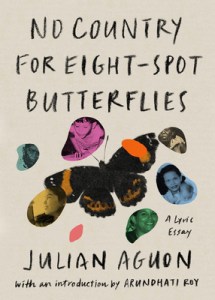 An indigenous human rights lawyer, Aguon is passionate about protecting his homeland of Guam, which is threatened by climate change and military expansion. His tender collage of autobiographical vignettes and public addresses inspires activism and celebrates beauty worth preserving. The U.S. Department of Defense’s plan to site more Marines and firing ranges on Guam will destroy more than 1,000 acres of limestone forest—home to endemic and endangered species, including the Mariana eight-spot butterfly. Aguon has been a lead litigator in appeals rising all the way to the U.S. Supreme Court. Rejecting fatalism, he endorses peaceful resistance. Two commencement speeches, poems, a eulogy and an interview round out the varied and heartfelt collection.
Three for Novellas in November: Bythell, Carey and Diop
I started my reading for Novellas in November early with these three review books, one nonfiction and two fiction. They have in common the fact that they are published today –although I believe two were released early to beat the lockdown. Don’t worry, though; there are still plenty of ways of getting hold of new books: most publishers and bookshops are still filling orders, or you can use the UK’s newly launched Bookshop.org site and support your local indie.
Seven Kinds of People You Find in Bookshops by Shaun Bythell
[137 pages]
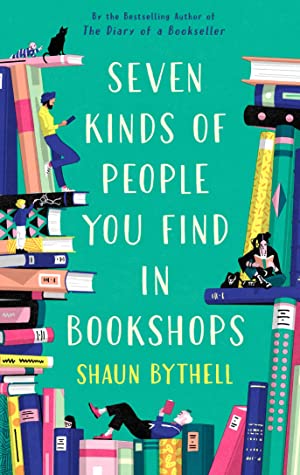 Cheerfully colored and sized to fit into a Christmas stocking, this is a fun follow-up to Bythell’s accounts of life at The Bookshop in Wigtown, The Diary of a Bookseller and Confessions of a Bookseller. Within his seven categories are multiple subcategories, all given tongue-in-cheek Latin names as if naming species. When I saw him chat with Lee Randall at the opening event of the Wigtown Book Festival, he introduced a few, such as the autodidact who knows more than you and will tell you all about their pet subject (the Homo odiosus, or bore). This is not the same, though, as the expert who shares genuinely useful knowledge – of a rare cover version on a crime paperback, for instance (Homo utilis, a helpful person).
There’s also the occultists, the erotica browsers, the local historians, the self-published authors, the bearded pensioners (Senex cum barba) holidaying in their caravans, and the young families – now that he has one of his own, he’s become a bit more tolerant. Setting aside the good-natured complaints, who are his favorite customers? Those who revel in the love of books and don’t quibble about the cost. Generally, these are not antiquarian book experts looking for a bargain, but everyday shoppers who keep a low-key collection of fiction or maybe specifically sci-fi and graphic novels, which fly off the shelves for good prices.
So which type am I? Well, occasionally I’m a farter (Crepans), but you won’t hold that against me, will you? I’d like to think I fit squarely into the normal people category (Homines normales) when I visited Wigtown in April 2018: we went in not knowing what we wanted but ended up purchasing a decent stack and even had a pleasant conversation with the man himself at the till – he’s much less of a curmudgeon in person than in his books. I do recommend this to those who have read and loved his other work.
With thanks to Profile Books for the free copy for review.
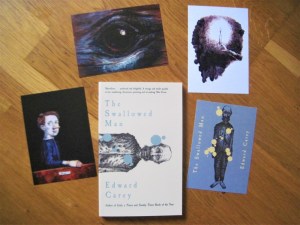
The Swallowed Man by Edward Carey
[160 pages]
 Carey’s historical novel Little was one of my highlights of 2018, so I jumped at the chance to read his new book. Interestingly, this riff on the Pinocchio story, narrated by Geppetto from the belly of a giant shark, originally appeared in Italian to accompany an exhibition hosted by the Fondazione Nazionale Carlo Collodi at the Parco di Pinocchio in Collodi. Geppetto came from a pottery-painting family but turned to wood when creating a little companion for his loneliness, the wooden boy who astounded him by coming to life. Now a son rather than a mere block of wood, Pinocchio sets off for school but never comes home. When he gets word that a troublesome automaton has been thrown into the sea, Geppetto sets out in a dinghy to find his son but is swallowed by the enormous fish that has been seen off the coast.
The picture of this new world-within-a-world is enthralling. Geppetto finds himself inside a swallowed ship, the Danish schooner Maria. Within the vessel is all he needs to occupy himself, at least for now: wood on which to paint the women he has loved; candle wax and hardtack for sculpting figures. Seaweed to cover his bald spot. Squid ink for his pen so he can write this notebook. A crab that lives in his beard. Relics of the captain’s life to intrigue him.
As a narrator, Geppetto is funny and gifted at wordplay (“This tome is my tomb”; “I unobjected him. Can you object to that?”), yet haunted by his decisions. Carey deftly traces Geppetto’s state of mind as he muses on his loss and imprisonment. The Afterword adds a sly pseudohistorical note to the fantasy. There are black-and-white illustrations throughout, as well as photos of the objects described in the text (and, presumably, featured in the exhibition). For me this didn’t live up to Little, but it would be a great introduction to Carey’s work.
With thanks to Gallic Books for the free copy for review.
At Night All Blood Is Black by David Diop
[145 pages; translated from the French by Anna Moschovakis]
 I had no idea that Africans (“Chocolat soldiers”) fought for France in World War I. Diop’s second novel, which has already won several major European prizes, is about two Senegalese brothers-in-arms caught up in trench warfare. Alfa Ndaiye, aged 20, considers Mademba Diop his blood brother or “more-than-brother” (the novel’s French title is “Soul Brother”). From the start we know that Mademba has died. Gravely injured in battle, entrails spilling out, he begged Alfa to end his misery; three times Alfa refused. Having watched his friend die in agony, he knows he did the wrong thing. Slitting the man’s throat would have been the compassionate choice. From now on, Alfa will atone by brutally wreaking Mademba’s method of death on Germans. “The captain’s France needs our savagery, and because we are obedient, myself and the others, we play the savage.” Alas, I thought this bleak exploration of (in)humanity was marred by the repetitive language and unpleasantly sexualized metaphors.
With thanks to Pushkin Press for the proof copy for review.
Do any of these novellas take your fancy?
What November releases can you recommend?
Wigtown Book Festival 2020: The Bookshop Band, Bythell, O’Connell & Stuart
During the coronavirus pandemic, we have had to take small pleasures where we can. One of the highlights of lockdown for me has been the chance to participate in literary events like book-themed concerts, prize shortlist announcements, book club discussions, live literary award ceremonies and book festivals that time, distance and cost might otherwise have precluded.
In May I attended several digital Hay Festival events, and this September to early October I’ve been delighted to journey back to Wigtown, Scotland – even if only virtually.
The Bookshop Band
The Bookshop Band have been a constant for me this year. After watching their 21 Friday evening lockdown shows on Facebook, as well as a couple of one-off performances for other festivals, I have spent so much time with them in their living room that they feel more like family than a favorite band. Add to that four of the daily breakfast chat shows from the Wigtown Book Festival and I’ve seen them play over 25 times this year already!
(The still below shows them with, clockwise from bottom left, guests Emma Hooper, Stephen Rutt and Jason Webster.)

Ben and Beth’s conversations with featured authors and local movers and shakers, punctuated by one song per guest, were pleasant to have on in the background while working. The songs they performed were, ideally, written for those authors’ books, but other times just what seemed most relevant; at times this was a stretch! I especially liked seeing Donal Ryan, about whose The Spinning Heart they’ve recently written a terrific song; Kate Mosse, who has been unable to write during lockdown so (re)read 200 books instead, including all of Agatha Christie, Ngaio Marsh et al.; and Ned Beauman, who is nearing the deadline for his next novel, a near-future story of two scientists looking for traces of the venomous lumpsucker (a made-up fish) in the Baltic Sea. Closer to science fiction than his previous work, it’s a funny take on extinctions, he said. I’ve read all of his published work, so I’m looking forward to this one.
Shaun Bythell
The opening event of the Festival was an in-person chat between Lee Randall and Shaun Bythell in Wigtown, rather than the split-screen virtual meet-ups that made up the rest of my viewing. Bythell, owner of The Book Shop, has become Wigtown’s literary celebrity through The Diary of a Bookseller and its sequel. In early November he has a new book coming out, Seven Kinds of People You Find in Bookshops. I’m halfway through it and it has more substance than its stocking-stuffer dimensions would imply. Within his seven categories are multiple subcategories, all given tongue-in-cheek Latin names, as if he’s naming species.
The Book Shop closed for 116 days during COVID-19: the only time in more than 40 years that it has been closed for longer than just over the Christmas holidays. He said that it has been so nice to see customers again; they’ve been a ray of sunshine for him, something the curmudgeon would never usually say! Business has been booming since his reopening, with Agatha Christie his best seller – it’s not just Mosse who’s turning to cozy mysteries. He’s also been touched by the kindness of strangers, such as one from Monaco who sent him £300, having read an article by Margaret Atwood about how hard it is for small businesses just now and hoping it would help the shop survive until they could get there in person.
(Below: Bythell on his 50th birthday, with Captain the cat.)

Randall and Bythell discussed a few of the types of customers he regularly encounters. One is the autodidact, who knows more than you and intends for you to know it. This is not the same, though, as the expert who actually helps you by sharing their knowledge (of a rare cover version on an ordinary-looking crime paperback, for instance). There’s also the occultists, the erotica browsers, the local historians and the young families – now that he has one of his own, he’s become a bit more tolerant.
Mark O’Connell
 Appearing from Dublin, Mark O’Connell was interviewed by Scottish writer and critic Stuart Kelly about his latest book, Notes from an Apocalypse (my review). He noted that, while all authors hope their books are timely, perhaps he overshot with this one! The book opens with climate change as the most immediate threat, yet now he feels that “has receded as the locus of anxiety.” O’Connell described the “flattened” experience of being alive at the moment and contrasted it with the existential awfulness of his research travels. For instance, he read a passage from the book about being at an airport Yo Sushi! chain and having a vision of horror at the rampant consumerism its conveyor belt seemed to represent.
Kelly characterized O’Connell’s personal, self-conscious approach to the end of the world as “brave,” while O’Connell said, “in terms of mental health, I should have chosen any other topic!” Having children creates both vulnerability and possibility, he contended, and “it doesn’t do you any good as a parent to indulge in those predilections [towards extreme pessimism].” They discussed preppers’ white male privilege, New Zealand and Mars as havens, and Greta Thunberg and David Attenborough as saints of the climate crisis.

O’Connell pinpointed Dr. Seuss’s The Lorax as the work he spends more time on in his book than any other; none of your classic nihilist literature here, and he deliberately avoided bringing up biblical references in his secular approach. In terms of the author he’s reached for most over the last few years, and especially during lockdown, it’s got to be Annie Dillard. Speaking of the human species, he opined, “it should not be unimaginable that we should cease to exist at some point.”
This talk didn’t add much to my experience of reading the book (vice versa would probably be true, too – I got the gist of Roman Krznaric’s recent thinking from his Hay Festival talk and so haven’t been engaging with his book as much as I’d like), but it was nice to see O’Connell ‘in person’ since he couldn’t make it to the 2018 Wellcome Book Prize ceremony.
Douglas Stuart
Glasgow-born Douglas Stuart is a fashion designer in New York City. Again the interviewer was Lee Randall, an American journalist based in Edinburgh – she joked that she and Stuart have swapped places. Stuart said he started writing his Booker-shortlisted novel, Shuggie Bain, 12 years ago, and kept it private for much of that time. Although he and Randall seemed keen to downplay how autobiographical the work is, like his title character, Stuart grew up in 1980s Glasgow with an alcoholic single mother. As a gay boy, he felt he didn’t have a voice in Thatcher’s Britain. He knew many strong women who were looked down on for being poor.
 It’s impossible to write an apolitical book about poverty (or a Glasgow book without dialect), Stuart acknowledged, yet he insisted that the novel is primarily “a portrait of two souls moving through the world,” a love story about Shuggie and his mother, Agnes. The author read a passage from the start of Chapter 2, when readers first meet Agnes, the heart of the book. Randall asked about sex as currency and postulated that all Agnes – or any of these characters; or any of us, really – wants is someone whose face lights up when they see you.
The name “Shuggie” was borrowed from a small-town criminal in his housing scheme; it struck him as ironic that a thug had such a sweet nickname. Stuart said that writing the book was healing for him. He thinks that men who drink and can’t escape poverty are often seen as loveable rogues, while women are condemned for how they fail their children. Through Agnes, he wanted to add some nuance to that double standard.
The draft of Shuggie Bain was 900 pages, single-spaced, but his editor helped him cut it while simultaneously drawing out the important backstories of Agnes and some other characters. He had almost finished his second novel by the time Shuggie was published, so he hopes it will be with readers soon.
[I have reluctantly DNFed Shuggie Bain at p. 100, but I’ll keep my proof copy on the shelf in case one day I feel like trying it again – especially if, as seems likely, it wins the Booker Prize.]
20 Books of Summer, #15–16: Andrew Beahrs and Elizabeth Graver
Today I have a biography-cum-cultural history of America’s wild foods and a novel about beekeeping and mental illness.
Twain’s Feast: Searching for America’s Lost Foods in the Footsteps of Samuel Clemens by Andrew Beahrs (2010)
 (20 Books of Summer, #15) In 1879, Mark Twain, partway through the Grand Tour immortalized in A Tramp Abroad, was sick of bland, poor-quality European food and hankering for down-home American cooking. He drew up a list of 80 foodstuffs he couldn’t wait to get back to: everything from soft-shell crabs to proper ice water. “The menu shouts of a joyous abundance,” Beahrs writes. “It testifies to a deep bond in Twain’s mind between eating and tasting and celebrating … rooted food that would live forever in his memory.”
Beahrs goes in search of some of those trademark dishes and explores their changes in production over the last 150 years. In some cases, the creatures and their habitats are so endangered that we don’t eat them anymore, like Illinois’ prairie chickens and Maryland’s terrapins, but he has experts show him where remnant populations live. In San Francisco Bay, he helps construct an artificial oyster reef. He meets cranberry farmers in Massachusetts and maple tree tappers in Vermont. At the Louisiana Foodservice EXPO he gorges on “fried oysters and fried shrimp and fries. I haven’t had much green, but I’ve had pecan waffles with bacon, and I’ve inserted beignets and café au lait between meals with the regularity of an Old Testament prophet chanting ‘begat.’”
But my favorite chapter was about attending a Coon Supper in Arkansas, a local tradition that has been in existence since the 1930s. Raccoons are hunted, butchered, steamed in enormous kettles, and smoked before the annual fundraising meal attended by 1000 people. Raccoon meat is greasy and its flavor sounds like an acquired taste: “a smell like nothing I’ve smelled before but which I’ll now recognize until I die (not, I hope, as a result of eating raccoon).” Beahrs has an entertaining style and inserts interesting snippets from Twain’s life story, as well as recipes from 19th-century cookbooks. There are lots of books out there about the country’s increasingly rare wild foods, but the Twain connection is novel, if niche.
Source: A remainder book from Wonder Book (Frederick, Maryland)
My rating: 
The Honey Thief by Elizabeth Graver (1999)
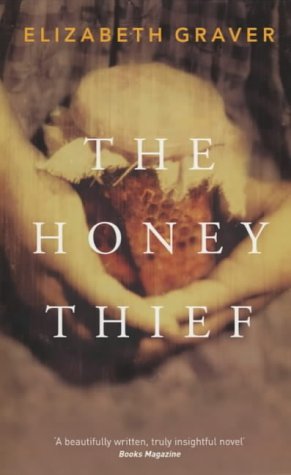 (20 Books of Summer, #16) Ever since I read The End of the Point (which featured in one of my Six Degrees posts), I’ve meant to try more by Graver. This was her second novel, a mother-and-daughter story that unearths the effects of mental illness on a family. Eleven-year-old Eva has developed a bad habit of shoplifting, so her mother Miriam moves them out from New York City to an upstate farmhouse for the summer. But in no time Eva, slipping away from her elderly babysitter’s supervision and riding her bike into the countryside, is stealing jars of honey from a roadside stand. She keeps going back and strikes up a friendship with the middle-aged beekeeper, Burl, whom she seems to see as a replacement for her father, Francis, who died of a heart attack when she was six.
Alternating chapters look back at how Miriam met Francis and how she gradually became aware of his bipolar disorder. This strand seems to be used to prop up Miriam’s worries about Eva (since bipolar has a genetic element); while it feels true to the experience of mental illness, it’s fairly depressing. Meanwhile, Burl doesn’t become much of a presence in his own right, so he and the beekeeping feel incidental, maybe only included because Graver kept/keeps bees herself. Although Eva is an appealingly plucky character, I’d recommend any number of bee-themed novels, such as The Secret Life of Bees by Sue Monk Kidd, The History of Bees by Maja Lunde, and even Generation A by Douglas Coupland, over this one.
Source: Secondhand copy from Beltie Books, Wigtown
My rating: 
Reading from the Wainwright Prize Longlists
Another day, another prize longlist! This year the Wainwright Prize has split into two awards for writing on 1) UK nature and 2) global conservation themes. Tomorrow (July 30th), they will be whittled down to shortlists. I happen to have read and reviewed 10 of the nominees already. I took the opportunity to experience a few more before the shortlist announcement. I give a paragraph on each below (forgive me for, in some cases, repeating the excerpts that appeared in my reviews roundups and best-of lists).
From the UK nature writing longlist:

 Dark, Salt, Clear: Life in a Cornish Fishing Town by Lamorna Ash: In her early 20s, Ash made multiple trips from London to stay in Newlyn: walking to the cove that bears her name, going out on fishing trawlers, and getting accepted into the small community. Gruelling and lonely, the fishermen’s way of life is fading away. The book goes deeper into Cornish history than non-locals need, but I enjoyed the literary allusions – the title is from Elizabeth Bishop. I liked the writing, but this was requested after me at the library, so I could only skim it.
 Wild Child: Coming Home to Nature by Patrick Barkham: Childhood has moved indoors over the course of three generations, the Guardian journalist observes. Highlighting activities that will engage budding naturalists in every season and accompanying his three children to outdoor nursery, he suggests how connection with nature can be part of everyday life. An engaging narrative not just for parents and educators but for anyone who has a stake in future generations’ resolve to conserve the natural world – which is to say, all of us. (Reviewed for Shiny New Books)
 Bird Therapy by Joe Harkness: In 2013, Harkness was in such a bad place that he attempted suicide. Although he’s continued to struggle with OCD and depression in the years since then, birdwatching has given him a new lease on life. Avoiding the hobby’s more obsessive, competitive aspects (like listing and twitching), he focuses on the benefits of outdoor exercise and mindfulness. He can be lyrical when describing his Norfolk patch and some of his most magical sightings, but the writing is weak. (My husband helped crowdfund the book via Unbound.)
 Dancing with Bees: A Journey Back to Nature by Brigit Strawbridge Howard: Bees were the author’s gateway into a general appreciation of nature, something she lost for a time in midlife because of the rat race and family complications. Allotment gardening gives her opportunities to observe bee behaviour and marvel at their various lookalikes (like hoverflies), identify plants, work on herbal remedies, and photograph her finds. She delights in discovery and is devoted to lifelong learning in a book characterized by curiosity and warmth. (On my runners-up of 2019 list)
 Surfacing by Kathleen Jamie: Jamie has a particular interest in birds, islands, archaeology and the oddities of the human body. The bulk of the book is three long pieces set in Alaska, Orkney and Tibet. Neolithic sites lead her to think about deep time – a necessary corrective to short-term thinking that has gotten us into environmental crisis. I connected with the few-page pieces on experiencing a cave, spotting an eagle or getting lost in a forest. Beautiful nature writing and relatable words on the human condition. (My #9 nonfiction book of 2019)
 Native: Life in a Vanishing Landscape by Patrick Laurie: Galloway may be the forgotten corner of Scotland, but this third-generation cattle farmer can’t imagine living anywhere else. In his year-long nature diary, each month brings rewards as well as challenges as he strives to manage the land in a manner beneficial to wildlife. I’m lucky to have visited Wigtown and the surrounding area. You needn’t have been in person, though, to appreciate this pensive account rich with the sense of place and balanced between solastalgia and practicality. (Reviewed for Shiny New Books)
 Wintering by Katherine May: May’s sympathetic memoir considers winter not only as a literal season, but also as an emotional state. Although “depression” could be substituted for “wintering” in most instances, the book gets much metaphorical mileage out of the seasonal reference as she recounts how she attempted to embrace rather than resist the gloom and chill through rituals such as a candlelit St. Lucia service and an early morning solstice gathering at Stonehenge. Wintering alternates travel and research, mind and body. (Reviewed for TLS)
 Diary of a Young Naturalist by Dara McAnulty: McAnulty is the UK’s answer to Greta Thunberg: a leader in the youth environmental movement and an impassioned speaker on the love of nature. This is a wonderfully observant and introspective account of his fifteenth year: of disruptions – moving house and school, of outrage at the state of the world and at individual and political indifference, of the complications of being autistic, but also of the joys of everyday encounters with wildlife. Impressive perspective and lyricism. (Reviewed for Shiny New Books; on my Best of 2020 so far list.)
 Wanderland: A Search for Magic in the Landscape by Jini Reddy: Reddy has often felt like a nomad and an outsider. Through a year of travelling to holy sites, she seeks to be rooted in the country she has come to call home. The quest takes her all over the British Isles, creating an accessible introduction to its sacred spots. Recovering a sense of reverence for nature can only help in the long-term mission to preserve it. Reddy is the first person of colour nominated for the Wainwright Prize in its seven-year history. (Reviewed for Shiny New Books)
 I think this year’s is an especially appealing longlist. It’s great to see small presses and debut authors getting recognition. I’ve now read 8 out of 13 (and skimmed one), and am interested in the rest, too, especially The Frayed Atlantic Edge by David Gange. The final three, all combining nature and (auto)biographical writing, are On the Red Hill by Mike Parker, The Well-Gardened Mind by Sue Stuart-Smith, and Rootbound: Rewilding a Life by Alice Vincent.
From the writing on global conservation longlist:

 Greenery: Journeys in Springtime by Tim Dee: From the Cape of Good Hope to the Arctic Circle, Dee tracks the spring as it travels north. From first glimpse to last gasp, moving between his homes in two hemispheres, he makes the season last nearly half the year. His main harbingers are migrating birds, starting with swallows. The book is steeped in allusions and profound thinking about deep time and what it means to be alive in an era when nature’s rhythms are becoming distorted. A fresh, masterful model of how to write about nature. (Review reprinted at Shiny New Books; on my Best of 2020 so far list.)
 Irreplaceable: The Fight to Save Our Wild Places by Julian Hoffman: Species and habitat loss are hard to comprehend even when we know the facts. This exquisitely written book is about taking stock, taking responsibility, and going beyond the numbers to tell the stories of front-line conservation work. Irreplaceable is an elegy of sorts, but, more importantly, it’s a call to arms. It places environmentalism in the hands of laypeople and offers hope that in working together in the spirit of defiance we can achieve great things. (Reviewed for Shiny New Books; my #1 nonfiction book of 2019)
 Losing Eden: Why Our Minds Need the Wild by Lucy Jones: While nature’s positive effect on human mental health is something we know intuitively and can explain anecdotally, Jones wanted to investigate the scientific mechanism behind it. She makes an empirical enquiry but also attests to the personal benefits nature has. Losing Eden is full of common sense and passion, cramming masses of information into 200 pages yet never losing sight of the big picture. Like Silent Spring, on which it is patterned, I can see this leading to real change. (Reviewed for Shiny New Books; on my Best of 2020 so far list.)
 Notes from an Apocalypse: A Personal Journey to the End of the World and Back by Mark O’Connell: The same satirical outlook that made O’Connell’s first book so funny is perfect for approaches to the end of the world, especially in the early chapter about preppers. Preparing = retreating, so he travels to South Dakota bunkers; a Mars Society Conference in Los Angeles; New Zealand, where billionaires plan to take refuge; and the wilderness of the Scottish Highlands. While pessimism strikes him as the only rational attitude, he decides constant anxiety is no way to live. (More extended thoughts here.)
The other book from this longlist that I’m interested in reading is Rebirding by Benedict Macdonald. I DNFed Bloom (all you ever wanted to know about algae!) last year; the other five seem too similar to other things I’ve read.
My predictions-cum-wish lists:
UK nature writing:
- The Frayed Atlantic Edge by David Gange
- Surfacing by Kathleen Jamie*
- On the Red Hill by Mike Parker
- Diary of a Young Naturalist by Dara McAnulty
- Wanderland by Jini Reddy
- Rootbound: Rewilding a Life by Alice Vincent
Writing on global conservation:
- Greenery by Tim Dee
- What We Need to Do Now for a Zero Carbon Future by Chris Goodall
- Irreplaceable by Julian Hoffman*
- Losing Eden by Lucy Jones
- Bloom by Ruth Kassinger
- Harvest: The Hidden Histories of Seven Natural Objects by Edward Posnett
*Predicted overall winners.
Have you read anything from the Wainwright Prize longlists? Do any of these books interest you?
Doris Lessing’s Centenary & The Grass Is Singing
Today would have been Doris Lessing’s 100th birthday; she in fact died in 2013. Reading Lara Feigel’s Free Woman last year encouraged me to try more from Lessing, and I’m glad that I did so this month. I started with The Fifth Child, a horror novella for R.I.P., followed by the novel Lessing brought with her when she left Southern Rhodesia (now Zimbabwe) for England.
.jpg)
Doris Lessing at Cologne Literature Festival, 2006. Elke Wetzig / Juan Pablo Arancibia Medina [CC BY-SA 3.0 (http://creativecommons.org/licenses/by-sa/3.0/)%5D.
The Grass Is Singing (1950)
I had trouble believing that this novel a) was Lessing’s debut and b) is now nearly 70 years old. It felt both fresh and timeless, and I could see how it has inspired writing about the white experience in Africa ever since, especially a book like Fiona Melrose’s Midwinter, in which an English farmer and his son are haunted by the violent death of the young man’s mother back in Zambia 10 years ago.
 For The Grass Is Singing begins with two sly words, “MURDER MYSTERY”: a newspaper headline announcing that Mary, wife of Rhodesian farmer Dick Turner, has been found murdered by their houseboy. It’s a tease because in one sense there’s no mystery to this at all: we know from the first lines what happened to Mary. And yet we are drawn in, wondering why she was killed and how the Turners went from an idealistic young couple enthusiastic about their various money-making schemes – a shop, chickens, tobacco – to a jaded, distant pair struggling for their health, both mental and physical.
The breakdown of their marriage and the failure of their farm form a dual tragedy that Lessing explores in searing psychological detail, all while exposing (with neither judgment nor approval) how Anglos felt about the natives at that time.
There’s a sense in which this was all fated: Dick is weak, someone Mary pities rather than loves and respects; and Mary’s mixed-up feelings toward her black servants – fear, contempt, curiosity and attraction – were bound to lead to an explosion. The land itself seems to be conspiring against them, too, or is at least indifferent to their plans and dreams.
So many passages struck me for their effortless profundity. I cringed to see myself so clearly in Mary’s boredom and restlessness, along with her ambivalence about the idea of motherhood: “She hated the idea of a baby, when she thought of its helplessness, its dependence, the mess, the worry. But it would give her something to do.”
This was the fifth full-length book I’ve read by Lessing, and by far the best.
My rating: 
Alas, I had a Lessing DNF this month, too:
The Memoirs of a Survivor (1974)
 This was shelved in with the memoirs in The Bookshop, Wigtown. I’m not blaming Mr. Bythell or his staff, as this would be a very easy shelving error to make, even for those well versed in literature. But I was disappointed to realize that it’s actually one of Lessing’s detached, dreamy dystopian novels. I tried really hard with this but couldn’t make it past page 48. There’s just not much detail to latch onto. You know that it is set in a vague but believable near future (London?) in which there has been political and social breakdown, followed by gangs, looting and fighting. The narrator hides out in her apartment and is able to live a fairly normal life (“We can get used to anything at all”), at least until an adolescent girl named Emily Cartright is deposited into her care. The novel still feels relevant – the comments on rumor and gossip being as important as news; the sense that the narrator’s generation has ruined things for Emily’s generation and should accept guilt and responsibility – but there is just no plot to speak of.
Next up for me from Lessing’s works will be at least one of her heavily autobiographical Martha Quest novels.
 Bookish Beck = Rebecca Foster. American transplant to England. Freelance proofreader and book reviewer.
 Bookish Beck