#WITMonth, Part II: Wioletta Greg, Dorthe Nors, Almudena Sánchez and More
My next four reads for Women in Translation month (after Part I here) were, again, a varied selection: a mixed volume of family history in verse and fragmentary diary entries, a set of nature/travel essays set mostly in Denmark, a memoir of mental illness, and a preview of a forthcoming novel about Mary Shelley’s inspirations for Frankenstein. One final selection will be coming up as part of my Love Your Library roundup on Monday.
(20 Books of Summer, #13)
Finite Formulae & Theories of Chance by Wioletta Greg (2014)
[Translated from the Polish by Marek Kazmierski]
 I loved Greg’s Swallowing Mercury so much that I jumped at the chance to read something else of hers in English translation – plus this was less than half price AND a signed copy. I had no sense of the contents and might have reconsidered had I known a few things: the first two-thirds is family wartime history in verse, the rest is a fragmentary diary from eight years in which Greg lived on the Isle of Wight, and the book is a bilingual edition, with Polish and English on facing pages (for the poems) or one after the other (for the diary entries). I’m not sure what this format adds for English-language readers; I can’t know whether Kazmierski has rendered anything successfully. I’ve always thought it must be next to impossible to translate poetry, and it’s certainly hard to assess these as poems. They are fairly interesting snapshots from her family’s history, e.g., her grandfather’s escape from a stalag, and have quite precise vocabulary for the natural world. There’s also been an attempt to create or reproduce alliteration. I liked the poem the title phrase comes from, “A Fairytale about Death,” and “Readers.” The short diary entries, though, felt entirely superfluous. (New purchase – Waterstones bargain, 2023)
(20 Books of Summer, #14)
A Line in the World: A Year on the North Sea Coast by Dorthe Nors (2021; 2022)
[Translated from the Danish by Caroline Waight]
 Nors’s first nonfiction work is a surprise entry on this year’s Wainwright Prize nature writing shortlist. I’d be delighted to see this work in translation win, first because it would send a signal that it is not a provincial award, and secondly because her writing is stunning. Like Patrick Leigh Fermor, Aldo Leopold or Peter Matthiessen, she doesn’t just report what she sees but thinks deeply about what it means and how it connects to memory or identity. I have a soft spot for such philosophizing in nature and travel writing.
You carry the place you come from inside you, but you can never go back to it.
I longed … to live my brief and arbitrary life while I still have it.
This eternal, fertile and dread-laden stream inside us. This fundamental question: do you want to remember or forget?
Nors lives in rural Jutland – where she grew up, before her family home was razed – along the west coast of Denmark, the same coast that reaches down to Germany and the Netherlands. In comparison to Copenhagen and Amsterdam, two other places she’s lived, it’s little visited and largely unknown to foreigners. This can be both good and bad. Tourists feel they’re discovering somewhere new, but the residents are insular – Nors is persona non grata for at least a year and a half simply for joking about locals’ exaggerated fear of wolves.
Local legends and traditions, bird migration, reliance on the sea, wanderlust, maritime history, a visit to church frescoes with Signe Parkins (the book’s illustrator), the year’s longest and shortest days … I started reading this months ago and set it aside for a time, so now find it difficult to remember what some of the essays are actually about. They’re more about the atmosphere, really: the remote seaside, sometimes so bleak as to seem like the ends of the earth. (It’s why I like reading about Scottish islands.) A bit more familiarity with the places Nors writes about would have pushed my rating higher, but her prose is excellent throughout. I also marked the metaphors “A local woman is standing there with a hairstyle like a wolverine” and “The sky looks like dirty mop-water.” 
With thanks to Pushkin Press for the proof copy for review.
Pharmakon by Almudena Sánchez (2021; 2023)
[Translated from the Spanish by Katie Whittemore]
 This is a memoir in micro-essays about the author’s experience of mental illness, as she tries to write herself away from suicidal thoughts. She grew up on Mallorca, always feeling like an outsider on an island where she wasn’t a native. Did her depression stem from her childhood, she wonders? She is also a survivor of ovarian cancer, diagnosed when she was 16. As her mind bounces from subject to subject, “trying to analyze a sick brain,” she documents her doctor visits, her medications, her dreams, her retweets, and much more. She takes inspiration from famous fellow depressives such as William Styron and Virginia Woolf. Her household is obsessed with books, she says, and it’s mostly through literature that she understands her life. The writing can be poetic, but few pieces stand out on the whole. My favourite opens: “Living in between anxiety and apathy has driven me to flowerpot decorating.”
With thanks to Fum d’Estampa Press for the free copy for review.
And a bonus preview:
Mary and the Birth of Frankenstein by Anne Eekhout (2021; 2023)
[Translated from the Dutch by Laura Watkinson]
 Anne Eekhout’s fourth novel and English-language debut is an evocative recreation of two momentous periods in Mary Shelley’s life that led – directly or indirectly – to the composition of her 1818 masterpiece. Drawing parallels between the creative process and motherhood and presenting a credibly queer slant on history, the book is full of eerie encounters and mysterious phenomena that replicate the Gothic science fiction tone of Frankenstein itself. The story lines are set in the famous “Year without a Summer” of 1816 (the storytelling challenge with Lord Byron) and during a period in 1812 that she spent living in Scotland with the Baxter family; Mary falls in love with the 17-year-old daughter, Isabella.
Coming out on 3 October from HarperVia. My full review for Shelf Awareness is pending.
#WITMonth, Part I: de Beauvoir, Jansson, NDiaye
My first four reads for Women in Translation month were quite a varied selection: a sobering autobiographical essay about the loss of a mother, a characteristically impish children’s novel, a confoundingly elliptical family memoir, and a preview of a forthcoming Mexican novel about women’s friendships and handicraft. Another four coming up later in August.
A Very Easy Death by Simone de Beauvoir (1964; 1965)
[Translated from the French by Patrick O’Brian]
“When someone you love dies you pay for the sin of outliving her with a thousand piercing regrets.”
I’d read a lot about Simone de Beauvoir but not one of her own works until this reissue came my way. It was right up my street as a miniature bereavement memoir (just 84 pages) that doesn’t shy away from the physical details of decline or the emotional complications of a fraught mother–daughter relationship.
 In October 1963, de Beauvoir was in Rome when she got a call informing her that her mother had had an accident. Expecting the worst, she was relieved – if only temporarily – to hear that it was a fall at home, resulting in a broken femur. But when Françoise de Beauvoir got to the hospital, what at first looked like peritonitis was diagnosed as stomach cancer with an intestinal obstruction. Her daughters knew that she was dying, but she had no idea (from what I’ve read, this paternalistic notion that patients must be treated like children and kept ignorant of their prognosis is more common on the Continent, and continues even today).
Over the next month, de Beauvoir and her sister Poupette took turns visiting. Initially alarmed by their mother’s condition, they soon grew used to the deterioration. “I was not worried by her nakedness any more: it was no longer my mother, but a poor tormented body.” They found her in varying states of awareness and discomfort. “In this race between pain and death we most earnestly hoped that death would come first.” Some nurses were better than others. De Beauvoir makes tantalizing references to the standoff between her and her mother about the Catholic faith Simone left behind. (I’ll need to read Memoirs of a Dutiful Daughter for more on that.) Even the hope of heaven didn’t fully neutralize self-pity and physical suffering for the dying woman because she feared her daughters wouldn’t be joining her.
The title is what a nurse told the grieving daughters: that their mother’s had been a very easy death in the end (and an upper-class one, de Beauvoir adds). The word used in French for easy, douce, can also be translated as “gentle,” a tie-in to the epigraph from Dylan Thomas’s “Do not go gentle into that good night.” Is it better for a loved one to die suddenly, or protractedly? I’ve debated this with myself and a few others since my mother’s death from a stroke in October. Ultimately, it’s pointless to ask; any death is an affront, hard to accept and adjust to no matter how much warning is given. I appreciated how matter-of-factly and concisely de Beauvoir’s essay encapsulates the duties and feelings surrounding a death. Frank and unshowy yet potent, this is a classic of the subgenre.
Published as Fitzcarraldo Editions Classics No. 2 in June. With thanks to the publisher for the free copy for review.
(Books of Summer, #10)
Finn Family Moomintroll by Tove Jansson (1948; 1950)
[Translated from the Swedish by Elizabeth Portch]
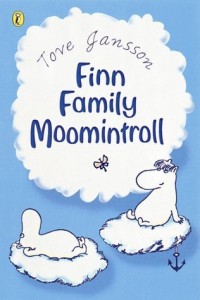 My sixth Moomins book, and ninth by Jansson overall. The novella’s gentle peril is set in motion by the discovery of the Hobgoblin’s Hat, which transforms anything placed within it. As spring moves into summer, this causes all kind of mild mischief until Thingumy and Bob, who speak in spoonerisms, show up with a suitcase containing something desired by both the Groke and the Hobgoblin, and make a deal that stops the disruptions.
As always, the creatures and events, conveyed by Jansson’s black-and-white drawings as much as by her words, are inventive and whimsical. There’s a cosy charm to the seasonal rituals, like the end-of-summer pancake party here. But what I value even more is the pointed accounts of the secondary characters’ neuroses. The Moomins are generally on a pretty even keel, though there is mention of Moominpappa’s sense of being hard done by because of childhood bullying and an enduring lack of respect. However, characters like the Muskrat and the Hemulen get a wry smile and shake of the head from me because their predicaments are so familiar: The Muskrat, terrified of mortifying situations, decides the life of a hermit might be preferable; the Hemulen gives up stamp collecting and switches to botanizing because there’s no joy in a finished quest, only in an ongoing search. The Moomins books offer the perfect combination of the familial and routine with the novel and adventurous. Even staid adults should give them a try. (Little Free Library)
Self-Portrait in Green by Marie NDiaye (2005; 2015)
[Translated from the French by Jordan Stump]
 I tend to love a memoir that tries something new or experimental with the form (such as Constructing a Nervous System or In the Dream House), but this was a step too far for me; the self referred to in the title is almost wholly absent. NDiaye, a French–Senegalese author, opens in 2003 with the expected flooding of the Garonne in southwest France. Fragments of narrative from 2000–2003 chart her encounters with various women dressed in green, starting with one she thinks she sees under a banana tree (though her four children see nothing). Then there’s Katia Depetiteville, dead 10 years … NDiaye’s stepmother, once her childhood best friend; her friend Jenny’s rival for Ivan’s affection; and her mother, who now has a new family. What is a ‘woman in green’? The author explicitly associates the colour with cruelty, with presumably the usual connotation of jealousy as well. But it still feels arbitrary.
It’s all rather dreamlike, with poetic repetition, rhetorical questions and black-and-white photos that seem marginally relevant. “I’m saying to myself: Is all this really real?” NDiaye writes, and the reader will surely be asking the same. “I’m always interested in stories,” she adds, and while I’d agree, I need to know that they’re being told to build to some greater meaning. It was only in the last fifth of the book, when the author goes to a literary symposium in Ouagadougou and visits her father (a many-times-married former restaurateur and amateur architect now suffering from cataracts) and stepmother that I felt like there was a purpose: a bringing together of past and present for psychological clarity. I was relieved that this was only 112 pages. (Edelweiss) 
The 10th anniversary edition is being reissued by Two Lines Press next month.
And a bonus preview:
Cross-Stitch by Jazmina Barrera (2021; 2023)
[Translated from the Spanish by Christina MacSweeney]
 In the inventive debut novel by Mexican author Jazmina Barrera, a sudden death provokes an intricate examination of three young women’s years of shifting friendship. Their shared hobby of embroidery occasions a history of women’s handiwork, woven into a relationship study that will remind readers of works by Elena Ferrante and Deborah Levy. Citlali, Dalia, and Mila had been best friends since middle school. Mila, a writer with a young daughter, is blindsided by news that Citlali has drowned off Senegal. While waiting to be reunited with Dalia for Citlali’s memorial service, she browses her journal to revisit key moments from their friendship, especially travels in Europe and to a Mexican village. Cross-stitch becomes its own metaphorical language, passed on by female ancestors and transmitted across social classes. Reminiscent of Still Born and A Ghost in the Throat. (Edelweiss)
Coming out on 7 November from Two Lines Press. My full review for Shelf Awareness is pending.
July Releases: Speak to Me & The Librarianist
I didn’t expect these two novels to have anything in common, but in fact they’re both about lonely, introverted librarians who have cause to plunge into memories of a lost relationship. (They also had a couple of random tiny details in common, for which see my next installment of Book Serendipity.) Tonally, however, they couldn’t be more different, and while the one worked for me the other did not at all. You might be surprised which! Read on…
Speak to Me by Paula Cocozza
I adored Cocozza’s debut, How to Be Human, so news of her follow-up was very exciting. The brief early synopses made it sound like it couldn’t be more up my street what with the theme of a woman frustrated by her husband’s obsession with his phone – I’m a smartphone refusenik and generally nod smugly along to arguments about how they’re an addiction that encourages lack of focus and time wasting. But it turns out that was only a peripheral topic; the novel is strangely diffuse and detached.
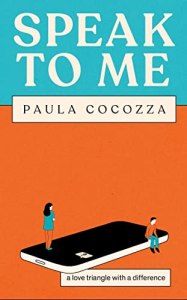 Susan is a middle-aged librarian and mother to teenage twin boys. She lives with them and her husband Kurt on a partially built estate in Berkshire full of soulless houses of various designs. Their “Beaufort” is not a happy place, and their marriage is failing, for several reasons. One is tech guru Kurt’s phone addiction. Susan refers to each new model as “Wendy,” and for her the last straw is when he checks it during the middle of sex on her 50th birthday. She joins a forum for likeminded neglected family members, and kills several Wendys by burial, washing machine, or sledgehammer.
But as the story goes on, Kurt’s issues fade into the background and Susan becomes more obsessed with the whereabouts of a leather suitcase that went missing during their move. The case contains letters and souvenirs from her relationship with Antony, whom she met at 16. She’s convinced that Kurt is hiding it, and does ever odder things in the quest to get it back, even letting herself into their former suburban London home. Soon her mission shifts: not only does she want Antony’s letters back; she wants Antony himself.
The message seems a fairly obvious one: the characters have more immediate forms of communication at their disposal than ever before, yet are not truly communicating with each other about what they need and want from life, and allowing secrets to come between them. “We both act as if talking will destroy us, but surely silence will, more slowly, and we will be undone by all the things we leave unsaid,” Susan thinks about her marriage. Nostalgia and futurism are both held up as problematic. Fair enough.
However, Susan is unforthcoming and delusional – but not in the satisfying unreliable narrator way – and delivers this piecemeal record with such a flat affect (reminding me of no one more than the title character from Kazuo Ishiguro’s Klara and the Sun; Susan even says, “Why do I feel scared that someone will find me out every time I tick the box that says ‘I am not a robot’?”) that I lost sympathy early on and couldn’t care what happened. A big disappointment from my Most Anticipated list.
With thanks to Tinder Press for the proof copy for review.
The Librarianist by Patrick deWitt
Bob Comet, a retired librarian in Portland, Oregon, gets a new lease on life at age 71. One day he encounters a lost woman with dementia and/or catatonia in a 7-Eleven and, after accompanying her back to the Gambell-Reed Senior Center, decides to volunteer there. A plan to read aloud to his fellow elderly quickly backfires, but the resident curmudgeons and smart-asses enjoy his company, so he’ll just come over to socialize.
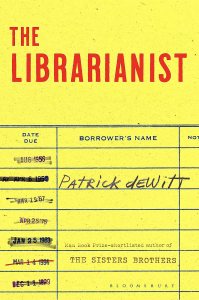 If it seems this is heading in a familiar A Man Called Ove or The Secret Diary of Hendrik Groen direction, think again. Bob has a run-in with his past that leads into two extended flashbacks: one to his brief marriage to Connie and his friendship with his best man, Ethan, in 1960; the other to when he ran away by train and bus at age 11.5 and ended up in a hotel as an assistant to two eccentric actresses and their performing dogs for a few days in 1945.
Imagine if Wes Anderson directed various Dickens vignettes set in the mid-20th-century Pacific Northwest – Oliver Twist with dashes of Great Expectations and Nicholas Nickleby. That’s the mood of Bob Comet’s early adventures. Witness this paragraph:
The next day Bob returned to the beach to practice his press rolls. The first performance was scheduled to take place thirty-six hours hence; with this in mind, Bob endeavored to arrive at a place where he could achieve the percussive effect without thinking of it. An hour and a half passed, and he paused, looking out to sea and having looking-out-to-sea thoughts. He imagined he heard his name on the wind and turned to find Ida leaning out the window of the tilted tower; her face was green as spinach puree, and she was waving at him that he should come up. Bob held the drum above his head, and she nodded that he should bring it with him.
(You can just picture the Anderson staginess: the long establishing shots; the jump cuts to a close-up on her face, then his; the vibrant colours; the exaggerated faces. I got serious The Grand Budapest Hotel vibes.) This whole section was so bizarre and funny that I could overlook the suspicion that deWitt got to the two-thirds point of his novel and asked himself “now what?!” The whole book is episodic and full of absurdist dialogue, and delights in the peculiarities of its characters, from Connie’s zealot father to the diner chef who creates the dubious “frizzled beef” entrée. And Bob himself? He may appear like a blank, but there are deep waters there. And his passion for books was more than enough to endear him to me:
“Bob was certain that a room filled with printed matter was a room that needed nothing.”
[Ethan:] “‘I keep meaning to get to books but life distracts me.’ ‘See, for me it’s just the opposite,’ Bob said.”
“All his life he had believed the real world was the world of books; it was here that mankind’s finest inclinations were represented.”
Weird and hilariously deadpan in just the way you’d expect from the author of The Sisters Brothers and French Exit, this was the pop of fun my summer needed. (See also Susan’s review.)
With thanks to Bloomsbury for the proof copy for review.
Would you read one or both of these?
20 Books of Summer, 9: Search by Michelle Huneven (2022)
Now this is what I want from my summer reading: pure pleasure; lit fic full of gossip and good food; the kind of novel I was always relieved to pick up and spend time with, usually as a reward for having gotten through my daily allotment in paid-review books and some more challenging reads. The Kirkus review was appealing enough to land this a place on my Most Anticipated list last year, but the only way to get hold of a copy was to spend my Bookshop.org voucher from my sister and have her bring it over in her suitcase in December.
The setup to Search might seem niche to many: a Southern California Unitarian church undergoes a months-long process to replace its retiring senior minister via a nationwide application process. But in fact it will resonate with, and elicit chuckles from, anyone who’s had even the most fleeting brush with bureaucracy – whether serving on a committee, conducting interviews, or trying to get a unanimous decision out of three or more people – and the framing story makes it warm and engrossing.
Dana Potowski is a middle-aged restaurant critic who has just released a successful cookbook based on what she grows on her smallholding. When she’s invited to be part of an eight-member task force looking for the right next minister for Arroyo Unitarian Universalist Community Church –
a “little chugger” of a church in a small unincorporated suburb of LA … three acres of raffish gardens, an ugly sanctuary, a deliquescing Italianate mansion, a jewel-box chapel used mostly for yoga classes
– she reluctantly agrees but soon wonders whether this could be interesting fodder for a second memoir (with identifying details changed, to be sure). You’ll quickly forget about the layers of fictionalization and become immersed in the interactions between the search committee members, who are of different genders, races and generations. They range from stalwart members, including a former church president and Dana the one-time seminarian, to a Filipino American recent Evangelical defector with a husband and young children.

Like the ministerial candidates, they’re all gloriously individual. You realize, however, that most of them have agendas and preconceived ideas. The church as a whole agreed that it wanted a gifted preacher and skilled site manager, but there’s also a collective sense that it’s time for a demographic change. A woman of colour is therefore a priority after decades of white male control, but a facilitator warns: “If you’re too focused on a specific category, you could overlook the best hire for your needs. Our goal is to get beyond thinking in categories to see the whole person.” Still, fault lines develop, with the younger contingent on the panel pushing for a thirtysomething candidate and the others giving more weight to experience.
Huneven develops all of her characters through the dialogue and repartee at the search committee’s meetings, which always take place over snacks, if not full meals with cocktails. Dana is not the only gifted home cook among the bunch (a section at the end gives recipes for some of the star dishes, like “Belinda’s Preserved Lemon Chicken,” “Dana’s Seafood Chowder,” and “Jennie’s Midmorning Glory Muffins”), and she also takes turns inviting her fellow committee members out on her restaurant assignments for the paper.
I was amazed by the formality and intensity of this decision-making process: a lengthy application packet, Skype interviews, watching/reading multiple sermons by the candidates, speaking to their references, and then an entire weekend of in-person activities with each of three top contenders. It’s clear that Huneven did a lot of research about how this works. The whole thing starts out casual and fun – Dana refers to the church and minister packets as “dating profiles” – but grows increasingly momentous. Completely different worship and leadership styles are at stake. People have their favourites, and with the future of a beloved institution at stake, compromise comes to feel more like a failure of integrity.
Keep in mind, of course, that we’re getting all of it from Dana’s perspective. She sets herself up as the objective recorder, but our admiration and distrust can only be guided by hers. And she’s a very likable narrator: intelligent and quick-witted, fond of gardening, passionate about food and spirituality, comfortable in her quiet life with her Jewish husband and her dog and donkeys. It’s possible not everyone will relate to her, or read meal plans and sermon transcripts as raptly, as I did. At the same time as I was totally absorbed in the narrative, I was also mentally transported to churches and pastors past, to petty dramas the ministers in my family have navigated, to the one Unitarian service I attended in Santa Fe in the summer of 2005… For me, this had it all. Both light and consequential; nostalgic and resolute about the future; frustrated with yet tender towards humanity. Delicious! I’ll seek out more by Huneven.
(New purchase with birthday money) 
Books of Summer, 6–8: Elizabeth Berg, Patricia Lockwood & Wendy Mitchell
Although I have foodie lit as a background theme for the summer’s reading, my main goal is simply to read books that I own, especially recent acquisitions and long-time shelf-sitters (whereas last year, in slavish conformity to a theme, I substituted in a bunch of library books, review books and e-books). My latest batch includes a slightly twee novel, an outlandish poetry collection, and an uneven nonfiction swan song.
The Year of Pleasures by Elizabeth Berg (2005)
 From the cover, I was expecting this to be more foodie than it was. The protagonist does enjoy cooking for other people and reading cookbooks, though. Betta Nolan, 55 and recently widowed by cancer, drives from Boston to the Midwest and impulsively purchases a house in a Chicago suburb, something she and her late husband had fantasized about doing in retirement. It’s the kind of sweet little town where the only realtor is a one-woman operation and Betta as a newcomer automatically gets invited onto the local radio show. She also reconnects with her college roommates, tries dating, and mulls over her dream of opening a women’s boutique that sells silk scarves, handmade journals, essential oils and brownies.
While Berg is true to the shifting emotions that accompany grief, and gives Betta plenty of cute opportunities to make friends across the generations – with Lydia, the nonagenarian former owner of her house, now in a nursing home; Matthew, the fickle young man who does some odd jobs for her; and Benny, the next-door neighbor’s nine-year-old boy – I found the subplot about Matthew’s messy house and relationships silly, and Betta’s “What a Woman Wants” shop idea is so stereotyping I could feel myself rolling my eyes. Still, Berg’s novels, of which this was my fifth, are always reliably light and pleasant reads in an Anne Tyler vein. (Secondhand – 2nd & Charles)
Motherland Fatherland Homelandsexuals by Patricia Lockwood (2014)
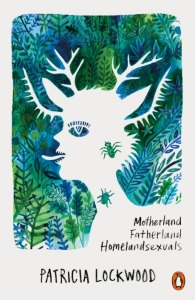 One of the more bizarre books I’ve ever read. I loved both Priestdaddy and No One Is Talking About This, but had no idea what to expect from Lockwood’s poems. They’re somewhere between absurdist monologues and thought experiments, often choosing an object or abstraction to animate (“A Recent Transformation Tries to Climb the Stairs”) and generally sexualized to the max (“Nessie Wants to Watch Herself Doing It”). Though they’re in stanzas, they aren’t heavy on poetic techniques. Some tangential topics are Bambi, Canada, basketball, waterfalls, King Kong adaptations, American poetry, Shirley Temple, and childhood hobbies like Animorphs, Egyptology and Magic Eye puzzles.
But really, her poetry is only “about” things in the loosest sense; the repetition, wordplay and snark are paramount. If you’ve heard of one, it’s likely to be the lengthy “Rape Joke,” which went as viral as it’s possible for a poem to and is, ironically, probably the sincerest entry here. Presumably based on her own bad experience with a teenage boyfriend, it is heartbreakingly banal: “The rape joke is that he was your father’s high school student … The rape joke is that come on, you should have seen it coming. … The rape joke is that you asked why he did it. The rape joke is he said he didn’t know, like what else would a rape joke say?”
A couple of my favourites were “List of Cross-Dressing Soldiers” and “He Marries the Stuffed-Owl Exhibit at the Indiana Welcome Center”; “The Father and Mother of American Tit-Pics,” in which a resurrected Emily Dickinson and Walt Whitman swap genders, had some of the more outrageous lines: “Walt Whitman is the Number Two Beach Body every year, because look at the way he snapped back into shape only months after giving birth to American Poetry.” Not really like any other poetry I’ve ever read. (New purchase with Christmas money)
One Last Thing: Conversations on Life, Death and Assisted Dying by Wendy Mitchell with Anna Wharton (2023)
“We talk so often about prolonging life, but we are actually prolonging death by not discussing the suffering part of it.”
Wendy Mitchell’s first two books, Somebody I Used to Know and What I Wish People Knew About Dementia, are valuable peeks into daily life with young-onset Alzheimer’s. She has been a dedicated activist and educator in the nine years since her diagnosis, and I admire the work she’s done to get dementia services into the public eye.
 The problem with her final book is that I’ve read so much about preparations for dying and the question of assisted suicide and she doesn’t bring much new to the discussion – apart from the specific viewpoint of someone deciding when and how to end their life when they don’t know what the future course of their illness looks like. Mitchell believes people should have this choice, but current UK law does not allow for assisted dying. A loophole is voluntarily stopping eating and drinking (VSED), which she deems her best option. She stopped attending assessments in 2017 and has filed forms with her GP refusing treatment – her nightmare situation is being reliant on care in hospital and she doesn’t want to become that future, dependent Wendy.
Like Henry Marsh’s farewell book, And Finally, this gives the impression of having been written in a hurry and rushed into print, and so could have been edited more. As it is, it’s fairly scattered, repetitive and unpolished. The interviews could all be streamlined and tidied up, and the one with Kathryn Mannix is split up in a confusing way.
For readers new to the topic, however, this could be a useful introduction to the issues. It’s up-to-date in that Mitchell attends a Death Café, meets an end-of-life doula, and talks through the different forms (power of attorney, advance directive and so on) with experts. I also thought the epilogue was a lovely touch: after going for a ‘wing walking’ airplane adventure, she imagines that, having taken a bus into York, she sees her pre-diagnosis self and tells her everything she would want her to know, good and bad, about the challenges to come. (Proof copy from Hungerford Bookshop Summer Reading Celebration) [Different subtitle on finished edition?] 
Summery Reading, Part I: The Greengage Summer & Sunburn by Watson
Brief thoughts on a first pair of summer-themed reads: coming-of-age stories about teenage girls who trade England for somewhere more exciting – France or Greece – for a summer and awaken to the complications of sex when let down by the adults in their lives. Both:
The Greengage Summer by Rumer Godden (1958)
 We wanted to read something by Godden in my book club’s women’s classics subgroup, and decided on this almost purely for the evocative title. Cecil is the second of five children who run amok at a French hotel while their father is botanizing in Tibet and their mother in hospital with an infected horsefly bite. Hotel staff and hangers-on are engaged in all sorts of shenanigans – affairs and casual molestation of the maids, for instance – and the children, caught up in the thrill of it, attach themselves to Eliot, the English lover of Mademoiselle Zizi. The adults get Cecil and her older sister, Joss, drunk on champagne. Joss is the belle of the ball and attracts an inappropriate suitor; Cecil gets her first period and tells Eliot, of all people. It’s a familiar message in mid-century fiction, I suppose: loss of sexual innocence leads to disaster. I found this quite melodramatic, with a sudden ending; it didn’t live up to the terrific premise. I was similarly underwhelmed by Black Narcissus. (University library)
Sunburn by Andi Watson; illus. Simon Gane (2022)
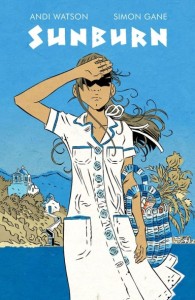 We open in suburban London in what appears to be the 1950s. Sixteen-year-old Rachel is offered a lucky escape from a summer of working at the butcher shop to stay with her parents’ friends, the Warners, at their home on a Greek island. Their life is a heady mix of languorous shopping, swimming and nightly parties. There’s a big contrast between the sophisticated expats and the local peasantry. When Rachel meets Ben, a fellow English teenager, it seems like her idyllic summer is complete, but things sour between them. Over the course of the book, Rachel realizes that not all grown-ups can be trusted. The plot took a twist I wasn’t expecting, which is always refreshing, but I should probably have been ready for it based on the depictions. The graphic novel is all in shades of blue, with white and light brown accents, as befitting the Greek flag and scenery. A problem I had was that most of the characters look the same – the artist has just the one way of drawing faces, so Rachel, Mrs. Warner and Ben have pretty much identical features. I would have catalogued this in YA. (Public library)
Both at least had a steamy summer atmosphere! My next seasonal read, picked up from the library today, will be One Midsummer’s Day by Mark Cocker, which is all about swifts. We have a pair nesting in our eaves again this year – hurrah! – and have been enjoying watching their (albeit diminished) screaming parties tear down the streets on warm summer evenings.
Any “summer” or “sun” books for you this year?
Summer Fishing in Lapland by Juhani Karila (Blog Tour)
What a madcap adventure, set at the ends of the Earth. Though Elina Ylijaako’s father’s family home is in Lapland, when she travels up there from further south in Finland each summer she feels like an outsider. She has to run the gauntlet of weird locals in her mission to catch an enchanted pike from the mosquito-surrounded pond. The novel is set over five days – the length of time she has to be successful in her quest.
The stakes couldn’t be higher, but several legendary creatures are ranged against Elina: a knacky (some kind of water sprite?), a frakus, a raskel. All of them seem more mischievous than dangerous, but you never can tell. As in fairy tales, there are alliances and tricks and betrayals to come.
 In the meantime, a female police detective named Janatuinen is newly arrived in town. Sections devoted to her, and flashbacks to Elina’s relationship with a school friend and first love interest, Jousia, widen the frame.
And then a rumour of further fantastical combatants, with the mayor possessed by a wraith that makes him ravenous all the time. Elina has to defeat the knacky and catch the pike, all while serving as bait for the locals’ broader plan to entrap the wraith…
I think Summer Fishing in Lapland may be only the fourth Finnish novel I’ve encountered, after Mr. Darwin’s Gardener by Kristina Carlson, The Year of the Hare by Arto Paasilinna, and Land of Snow and Ashes by Petra Rautiainen; it had the most in common with the Paasilinna, in terms of sheer oddness.
This is journalist Karila’s debut, first published in 2019. It’s been a bestseller in its native Finland. The press materials compared the work to Murakami, which was a draw. In the end I found it rather silly, but those more comfortable with fantasy may feel differently.
I did love the place descriptions, including some lovely incidental nature writing and unexpected metaphors: “Thick, dark clouds like the burnt bottom of a rice pudding were gathering there.” Is a summer trip to Lapland for you?
(Translated from the Finnish by Lola Rogers.)
With thanks to Pushkin Press for the proof copy for review.
I was happy to close out the blog tour for Summer Fishing in Lapland. See below for where other reviews have appeared, including Annabel’s, which is significantly more enthusiastic!

20 Books of Summer, 5: Crudo by Olivia Laing (2018)
Behind on the challenge, as ever, I picked up a novella. It vaguely fits with a food theme as crudo, “raw” in Italian, can refer to fish or meat platters (depicted on the original hardback cover). In this context, though, it connotes the raw material of a life: a messy matrix of choices and random happenings, rooted in a particular moment in time.
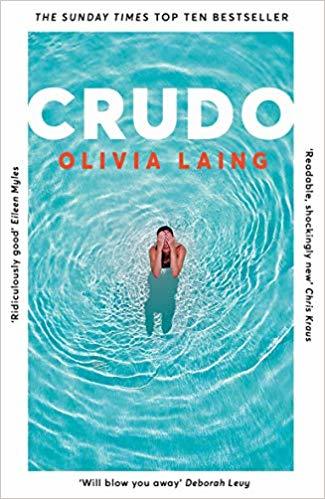 This is set over four and a bit months of 2017 and steeped in the protagonist’s detached horror at political and environmental breakdown. She’s just turned 40 and, in between two trips to New York City, has a vacation in Tuscany, dabbles in writing and art criticism, and settles into married life in London even though she’s used to independence and nomadism.
For as hyper-real as the contents are, Laing is doing something experimental, even fantastical – blending biography with autofiction and cultural commentary by making her main character, apparently, Kathy Acker. Never mind that Acker died of breast cancer in 1997.
I knew nothing of Acker but – while this is clearly born of deep admiration, as well as familiarity with her every written word – that didn’t matter. Acker quotes and Trump tweets are inserted verbatim, with the sources given in a “Something Borrowed” section at the end.
Like Jenny Offill’s Weather, this is a wry and all too relatable take on current events and the average person’s hypocrisy and sense of helplessness, with the lack of speech marks and shortage of punctuation I’ve come to expect from ultramodern novels:
she might as well continue with her small and cultivated life, pick the dahlias, stake the ones that had fallen down, she’d always known whatever it was wasn’t going to last for long.
40, not a bad run in the history of human existence but she’d really rather it all kept going, water in the taps, whales in the oceans, fruits and duvets, the whole sumptuous parade
This is how it is then, walking backwards into disaster, braying all the way.
 I’ve somehow read almost all of Laing’s oeuvre (barring her essays, Funny Weather) and have found books like The Trip to Echo Spring, The Lonely City and Everybody wide-ranging and insightful. Crudo feels as faithful to life as Rachel Cusk’s autofiction or Deborah Levy’s autobiography, but also like an attempt to make something altogether new out of the stuff of our unprecedented times. No doubt some of the intertextuality of this, her only fiction to date, was lost on me, but I enjoyed it much more than I expected to – it’s funny as well as eminently quotable – and that’s always a win. (Little Free Library)
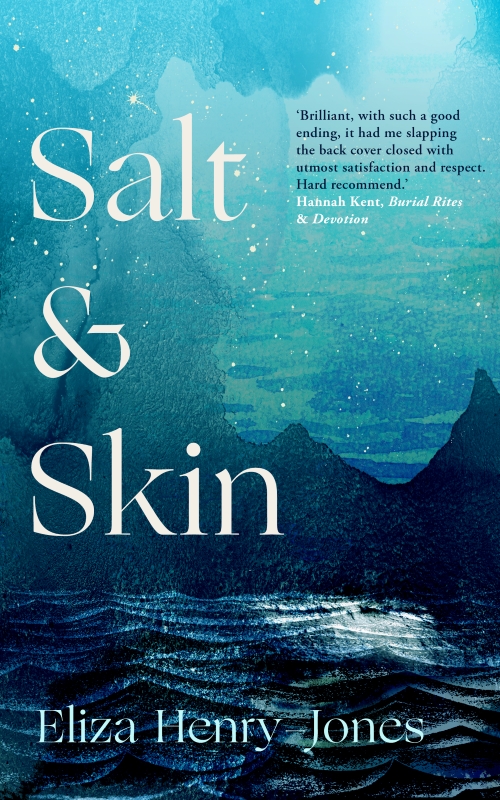
Salt & Skin by Eliza Henry-Jones (Blog Tour)
I was drawn to Eliza Henry-Jones’s fifth novel, Salt & Skin (2022), by the setting: the remote (fictional) island of Seannay in the Orkneys. It tells the dark, intriguing story of an Australian family lured in by magic and motivated by environmentalism. History overshadows the present as they come to realize that witch hunts are not just a thing of the past. This was exactly the right evocative reading for me to take on my trip to some other Scottish islands late last month. The setup reminded me of The Last Animal by Ramona Ausubel, while the novel as a whole is reminiscent of The Night Ship by Jess Kidd and Night Waking by Sarah Moss.
Only a week after the Managans – photographer Luda, son Darcy, 16, and daughter Min, 14 – arrive on the island, they witness a hideous accident. A sudden rockfall crushes a little girl, and Luda happens to have captured it all. The photos fulfill her task of documenting how climate change is affecting the islands, but she earns the locals’ opprobrium for allowing them to be published. It’s not the family’s first brush with disaster. The kids’ father died recently; whether in an accident or by suicide is unclear. Nor is it the first time Luda’s camera has gotten her into trouble. Darcy is still angry at her for selling a photograph she took of him in a dry dam years before, even though it raised a lot of money and awareness about drought.
The family live in what has long been known as “the ghost house,” and hints of magic soon seep in. Luda’s archaeologist colleague wants to study the “witch marks” at the house, and Darcy is among the traumatized individuals who can see others’ invisible scars. Their fate becomes tied to that of Theo, a young man who washed up on the shore ten years ago as a web-fingered foundling rumoured to be a selkie. Luda becomes obsessed with studying the history of the island’s witches, who were said to lure in whales. Min collects marine rubbish on her deep dives, learning to hold her breath for improbable periods. And Darcy fixates on Theo, who also attracts the interest of a researcher seeking to write a book about his origins.
It’s striking how Henry-Jones juxtaposes the current and realistic with the timeless and mystical. While the climate crisis is important to the framework, it fades into the background as the novel continues, with the focus shifting to the insularity of communities and outlooks. All of the characters are memorable, including the Managans’ elderly relative, Cassandra (calling to mind a prophetic figure from Greek mythology), though I found Father Lee, the meddlesome priest, aligned too readily with clichés. While the plot starts to become overwrought in later chapters, I appreciated the bold exploration of grief and discrimination, the sensitive attention to issues such as addiction and domestic violence, and the frank depictions of a gay relationship and an ace character. I wouldn’t call this a cheerful read by any means, but its brooding atmosphere will stick with me. I’d be keen to read more from Henry-Jones.
With thanks to Random Things Tours and September Publishing for the free copy for review.
Buy Salt & Skin from the Bookshop UK site. [affiliate link]
or
Pre-order Salt & Skin (U.S. release: September 5) from Bookshop.org. [affiliate link]
I was delighted to help kick off the blog tour for Salt & Skin on its UK publication day. See below for details of where other reviews have appeared or will be appearing soon.

Scottish Travels & Book Haul: Wigtown, Arran, Islay and Glasgow
When I was a kid, one-week vacations were rare and precious – Orlando or Raleigh for my dad’s church conferences, summer camp in Amish-country Pennsylvania, spring break with my sister in California – and I mourned them when they were over. As an adult, I find that after a week I’m ready to be home … and yet just days after we got back from Scotland, I’m already wondering why I thought everyday life was so great. Oh well. I like to write up my holidays because otherwise it’s all too easy to forget them. This one had fixed start and end points – several days of beetle recording in Galloway for my husband; meeting up with my sister and nephew in Glasgow one evening the next week – and we filled in the intervening time with excursions to two new-to-us Scottish islands; we’re slowly collecting them all.
First Stop, Wigtown
Hard to believe it had been over five years since our first trip to Wigtown. The sleepy little town had barely changed; a couple of bookshops had closed, but there were a few new ones I didn’t remember from last time. The weather was improbably good, sunny and warm enough that I bought a pair of cutoffs at the Community Shop. Each morning my husband set off for bog or beach or wood for his fieldwork and I divided the time until he got back between bits of paid reviewing, reading and book shopping. Our (rather spartan) Airbnb apartment was literally a minute’s walk into town and so was a perfect base.


I paced myself and parcelled out the eight bookshops and several other stores that happen to sell books across the three and a bit days that I had. It felt almost like living there – except I would have to ration my Reading Lasses visits, as a thrice-weekly coffee-and-cake habit would soon get expensive as well as unhealthy. (I spent more on books than on drinks and cakes over the week, though only ~25% more: £44 vs. £32.)


I also had the novelty of seeing my husband interact with his students when we were invited to a barbecue at one’s family home on the Mull of Galloway – and realizing that we’re almost certainly closer in age to the mum than to the student. Getting there required two rural bus journeys to the middle of nowhere, an experience all in itself.
‘Pro’ tips: New Chapter Books was best for bargains, with sections for 50p and £1 paperbacks and free National Geographics. Well-Read Books was good for harder-to-find fiction: among my haul were two Jane Urquhart novels, and the owner was knowledgeable and pleasant. Byre Books carries niche subjects and has scant opening hours, but I procured two poetry collections and a volume of Dorothy Wordsworth’s journals. The Old Bank Bookshop and The Bookshop are the two biggest shops; wander for an hour or more if you can. The Open Book tends to get castoffs from other shops and withdrawn library stock, but I still made two purchases and ended up being the first customer for the week’s hosts: Debbie and Jenny, children’s book authors and long-distance friends from opposite coasts of the USA. Overall, I was pleased with my novella, short story and childhood memoir acquisitions. A better haul than last time.

‘Celebrity’ sightings: On our walk down to the bird hide on the first evening, we passed Jessica Fox, an American expat who’s been influential in setting up the literary festival and The Open Book. She gave us a cheery “hello.” I also spotted Ben of The Bookshop Band twice, once in Reading Lasses and another time on his way to the afternoon school run. Both times he had the baby in tow and I decided not to bother him, not even to introduce myself as one of their Patreon supporters.
On our last morning in town, we lucked out and found Shaun Bythell behind the counter at The Bookshop. He’d just taken delivery of a book-print kilt his staff surprised him by ordering with his credit card, and Nicky (not as eccentric as she’s portrayed in Diary of a Bookseller; she’s downright genteel, in fact) had him model it. He posted a video to Facebook that includes The Open Book hosts on the 23rd, if you wish to see it, and his new cover photo shows him and his staff members wearing the jackets that match the kilt. I bought a few works of paperback fiction and then got him to sign my own copies of two of his books.


As last time, he was chatty and polite, taking an interest in our travels and exhorting us to come back sooner than five years next time. I congratulated him on his success and asked if we could expect more books. He said that depends on his publisher, who worry the market is saturated at the moment, though he has another SIX YEARS of diaries in draft form and the Remainders of the Day epilogue would be quite different if he wrote it now. Tantalizing!
Note to self: Next time, plan to be in town through a Friday evening – we left at noon, so I was sad to miss out on a Beth Porter (the other half of The Bookshop Band) children’s songs concert at Foggie Toddle Books at 3:00, followed by a low-key cocktail party at The Open Book at 5:30 – but not until a Monday, as pretty much everything shuts that day. How I hope someone buys Reading Lasses (the owner is retiring) and maintains the café’s high standard!
 Appropriate reading: I read the first third of Dorothy L. Sayers’s The Five Red Herrings because it’s set in the area (first line: “If one lives in Galloway, one either fishes or paints”), and found it entertaining, though not enough to care whodunnit. In general, I’m terrible for trying mystery series and DNFing or giving up after the first book. Lord Peter Wimsey seemed like he’d be an amusing detective in the Sherlock Holmes vein, but the rendering of Scottish accents was OTT and the case relied too much on details of train schedules and bicycles.
Arran
Our short jaunt to Arran started off poorly with a cancelled ferry sailing, leaving us stranded in Ardrossan (which Bythell had almost prophetically dubbed a “sh*thole” that morning!) for several hours until the next one, and we struggled with a leaky rear tyre and showery weather for much of the time, but we were still enamoured with this island that calls itself “Scotland in miniature.” That was particularly delightful for me because I come from the state nicknamed “America in miniature,” Maryland. This Airbnb was plush by comparison, we obtained excellent food from the Blackwater Bakehouse and a posh French takeaway, and we enjoyed walks at the Machrie stone circles and Brodick Castle as well as at the various bays (one with a fossilized dinosaur footprint) that we stopped off at on our driving tour.


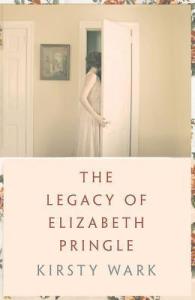 Appropriate reading: The Legacy of Elizabeth Pringle by Kirsty Wark, the only Arran-set novel on my library’s catalogue, is an enjoyable dual-timeline story linked by the Lamlash home of the title character. When she died in her nineties in 2006, she bequeathed her home to a kind woman who used to walk past on summer holidays with her daughter in a pram. Martha Morrison was that baby, and with her mother, Anna, suffering from dementia, it’s up to her to take possession and root out Elizabeth’s secrets. Every other chapter is a first-person fragment from Elizabeth’s memoir, cataloguing her losses of parents and lovers and leading ever closer to the present, when she befriended Saul, an American Buddhist monk based at Holy Island across the water, and Niall, a horticulturist at Brodick Castle. It’s a little too neat how the people in her life pair off (sub-Maggie O’Farrell; more Joanna Trollope, perhaps), but it was fun to be able to visualize the settings and to learn about Arran’s farming traditions and wartime history.
Islay
Islay is a tourist mecca largely because of its nine distilleries – what a pity we don’t care for whiskey! – but we sought it out for its wildlife and scenery, which were reminiscent of what we saw in the Outer Hebrides last year. Our B&B was a bit fusty (there was a rotary phone in the hall!), but we had an unbeatable view from our window and enjoyed visiting two RSPB reserves. The highlight for me was the walk to the Mull of Oa peninsula and the cow-guarded American Monument, which pays tribute to the troops who died in two 1918 naval disasters – a torpedoed boat and a shipwreck – and the heroism of locals who rescued survivors.


We spent a very rainy Tuesday mooching from one distillery shop to another. There are two gin-makers whose products we were eager to taste, but we also relished our mission to buy presents for two landmark birthdays, one of an American friend who’s a whiskey aficionado. Even having to get the tyre replaced didn’t ruin the day. There’s drink aplenty on Islay, but quality food was harder to acquire, so if we went back we’d plump for self-catering.


Incidental additional hauls: I found this 50th anniversary Virago tote bag under a bench at Bowmore harbour after our meal at Peatzeria. I waited a while to see if anyone would come back for it, but it was so sodden and sandy that it must have been there overnight. I cleaned it up and brought home additional purchases in it: two secondhand finds at a thrift store in Tarbert, the first town back on the mainland, and a Knausgaard book I got free with my card points from a Waterstones in Glasgow.


Glasgow
 My 15-year-old nephew is currently on a school trip to Scotland and my sister went along as an unofficial chaperone. I couldn’t let them come to the UK without meeting up, so for months we’d pencilled in an evening in Glasgow. When we booked our Airbnb room in a suburb, it was because it was on a super-convenient train line … which happened to be closed for engineering works while we were there. Plan B: rail replacement buses, which were fine. We greatly enjoyed the company of Santos the Airbnb cat, who mugged us for scraps of our breakfasts.
With our one day in Glasgow, we decided to prioritize the Burrell Collection, due to the enthusiastic recommendations from Susan, our Arran hosts, and Bill Bryson in Notes on a Small Island (“Among the city’s many treasures, none shines brighter, in my view”). It’s a museum with a difference, housed in a custom-built edifice that showcases the wooded surroundings as much as the stunning objects. We were especially partial to the stained glass.


Our whistle-stop city tour also included a walk past the cathedral, a ramble through the Necropolis (where, pleasingly, I saw a grave for one Elizabeth Pringle), and the Tenement Museum, a very different sort of National Trust house that showed how one woman, a spinster and hoarder, lived in the first half of the 20th century. Then on to an exceptional seafood-heavy meal at Kelp, also recommended by Susan, and an all-too-brief couple of hours with my family at their hotel and a lively pub.


We keep returning to Scotland. Where next in a few years? Possibly the southern islands of the Outer Hebrides, which we didn’t have time for last year, or the more obscure of the Inner Hebrides, before planning return visits to some favourites. All the short ferry rides were smooth this time around, so I can cope with the thought of more.

We got home to find our mullein plants attempting to take over the world.
 Bookish Beck = Rebecca Foster. American transplant to England. Freelance proofreader and book reviewer.
