The 2026 Releases I’ve Read So Far
I happen to have read a number of pre-release books, generally for paid reviews for Foreword and Shelf Awareness. (I already previewed six upcoming novellas here.) Most of my reviews haven’t been published yet, so I’ll just give brief excerpts and ratings here to pique the interest. I link to the few that have been published already, then list the 2026 books I’m currently reading. Soon I’ll follow up with a list of my Most Anticipated titles.


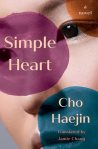 Simple Heart by Cho Haejin (trans. from Korean by Jamie Chang) [Other Press, Feb. 3]: A transnational adoptee returns to Korea to investigate her roots through a documentary film. A poignant novel that explores questions of abandonment and belonging through stories of motherhood.
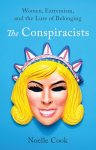 The Conspiracists: Women, Extremism, and the Lure of Belonging by Noelle Cook [Broadleaf Books, Jan. 6]: An in-depth, empathetic study of “conspirituality” (a philosophy that blends conspiracy theories and New Age beliefs), filtered through the outlook of two women involved in storming the Capitol on January 6, 2021.

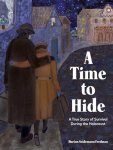
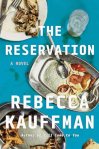 The Reservation by Rebecca Kauffman [Counterpoint, Feb. 24]: The staff members of a fine-dining restaurant each have a moment in the spotlight during the investigation of a theft. Linked short stories depict character interactions and backstories with aplomb. Big-hearted; for J. Ryan Stradal fans.


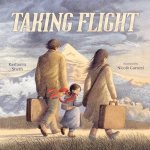 Taking Flight by Kashmira Sheth (illus. Nicolo Carozzi) [Dial Press, April 21]: A touching story of the journeys of three refugee children who might be from Tibet, Syria and Ukraine. The drawing style reminded me of Chris Van Allsburg’s. This left a tear in my eye.

Currently reading:
(Blurb excerpts from Goodreads; all are e-copies apart from Evensong)
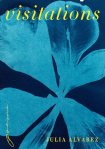 Visitations: Poems by Julia Alvarez [Knopf, April 7]: “Alvarez traces her life [via] memories of her childhood in the Dominican Republic … and the sisters who forged her, her move to America …, the search for mental health and beauty, redemption, and success.”
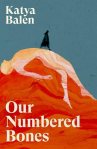 Our Numbered Bones by Katya Balen [Canongate, 12 Feb. / HarperVia, Feb. 17]: Her “adult debut [is] about a grieving author who heads to rural England for a writer’s retreat, only to stumble upon an incredible historical find” – a bog body!
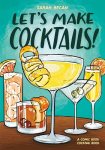 Let’s Make Cocktails!: A Comic Book Cocktail Book by Sarah Becan [Ten Speed Press, April 7]: “With vivid, easy-to-follow graphics, Becan guides readers through basic techniques such as shaking, stirring, muddling, and more. With all recipes organized by spirit for easy access, readers will delight in the panelized step-by-step comic instructions.”
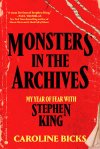 Monsters in the Archives: My Year of Fear with Stephen King by Caroline Bicks [Hogarth/Hodder & Stoughton, April 21]: “A fascinating, first of its kind exploration of Stephen King and his … iconic early books, based on … research and interviews with King … conducted by the first scholar … given … access to his private archives.”
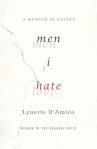 Men I Hate: A Memoir in Essays by Lynette D’Amico [Mad Creek Books, Feb. 17]: “Can a lesbian who loves a trans man still call herself a lesbian? As D’Amico tries to engage more deeply with the man she is married to, she looks at all the men—historical figures, politicians, men in her family—in search of clear dividing lines”.
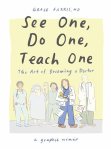 See One, Do One, Teach One: The Art of Becoming a Doctor: A Graphic Memoir by Grace Farris [W. W. Norton & Company, March 24]: “In her graphic memoir debut, Grace looks back on her journey through medical school and residency.”
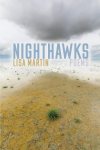 Nighthawks by Lisa Martin [University of Alberta Press, April 2]: “These poems parse aspects of human embodiment—emotion, relationship, mortality—and reflect on how to live through moments of intense personal and political upheaval.”
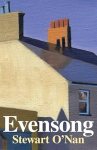 Evensong by Stewart O’Nan [published in USA in November 2025; Grove Press UK, 1 Jan.]: “An intimate, moving novel that follows The Humpty Dumpty Club, a group of women of a certain age who band together to help one another and their circle of friends in Pittsburgh.”
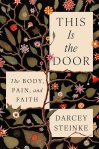 This Is the Door: The Body, Pain, and Faith by Darcey Steinke [HarperOne, Feb. 24]: “In chapters that trace the body—The Spine, The Heart, The Knees, and more—[Steinke] introduces sufferers to new and ancient understandings of pain through history, philosophy, religion, pop culture, and reported human experience.”
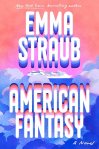 American Fantasy by Emma Straub [Riverhead, April 7 / Michael Joseph (Penguin), 14 May]: “When the American Fantasy cruise ship sets sail for a four-day themed voyage, aboard are all five members of a famous 1990s boyband, and three thousand screaming women who have worshipped them for thirty years.”
Additional pre-release review books on my shelf:
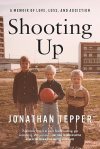 Shooting Up by Jonathan Tepper [Constable, 19 Feb.]: “Born into a family of American missionaries driven by unwavering faith … Jonathan’s home became a sanctuary for society’s most broken … AIDS hit Spain a few years after it exploded in New York and, like an invisible plague, … claimed countless lives – including those … in the family rehabilitation centre.”
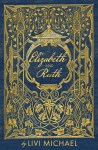 Elizabeth and Ruth by Livi Michael [Salt Publishing, 9 Feb.]: “Based on the real correspondence between Elizabeth Gaskell and Charles Dickens … [Gaskell] visits a young Irish prostitute in Manchester’s New Bailey prison. … [A] story of hypocrisy and suppression, and how Elizabeth navigates the … prejudice of the day to help the young girl”.
Will you look out for one or more of these?
Any other 2026 reads you can recommend?
May Releases, Part II (Fiction): Le Blevennec, Lynch, Puchner, Stanley, Ullmann, and Wald
A cornucopia of May novels, ranging from novella to doorstopper and from Montana to Tunisia; less of a spread in time: only the 1980s to now. Just a paragraph on each to keep things simple. I’ll catch up soon with May nonfiction and poetry releases I read.
Friends and Lovers by Nolwenn Le Blevennec (2023; 2025)
[Translated from French by Madeleine Rogers]
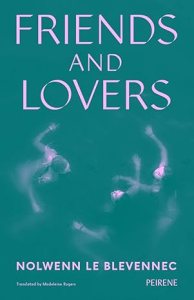 Armelle, Rim, and Anna are best friends – the first two since childhood. They formed a trio a decade or so ago when they worked on the same magazine. Now in their mid-thirties, partnered and with children, they’re all gripped by a sexual “great awakening” and long to escape Paris and their domestic commitments – “we went through it, this mutiny, like three sisters,” poised to blow up the “perfectly executed choreography of work, relationships, children”. The friends travel to Tunisia together in December 2014, then several years later take a completely different holiday: a disaster-prone stay in a lighthouse-keeper’s cottage on an island off the coast of Brittany. They used to tolerate each other’s foibles and infidelities, but now resentment has sprouted up, especially as Armelle (the narrator) is writing a screenplay about female friendship that’s clearly inspired by Rim and Anna. Armelle is relatably neurotic (a hilarious French blurb for the author’s previous novel is not wrong: “Woody Allen meets Annie Ernaux”) and this is wise about intimacy and duplicity, yet I never felt invested in any of the three women or sufficiently knowledgeable about their lives.
With thanks to Peirene Press for the free copy for review.
A Family Matter by Claire Lynch
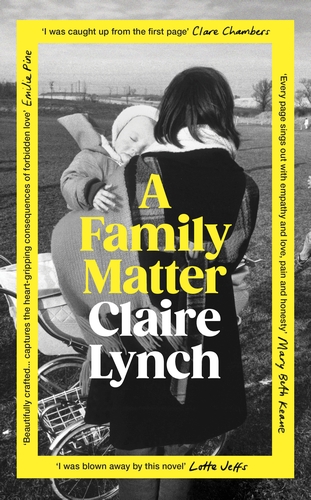 “The fluke of being born at a slightly different time, or in a slightly different place, all that might gift you or cost you.” At events for Small, Lynch’s terrific memoir about how she and her wife had children, women would speak up about how different their experience had been. Lesbians born just 10 or 20 years earlier didn’t have the same options. Often, they were in heterosexual marriages because that’s all they knew to do; certainly the only way they thought they could become mothers. In her research into divorce cases in the UK in the 1980s, Lynch learned that 90% of lesbian mothers lost custody of their children. Her aim with this earnest, delicate debut novel, which bounces between 2022 and 1982, is to imagine such a situation through close portraits of Heron, an ageing man with terminal cancer; his daughter, Maggie, who in her early forties bears responsibility for him and her own children; and Dawn, who loved Maggie desperately but felt when she met Hazel that she was “alive at last, at twenty-three.” How heartbreaking that Maggie knew only that her mother abandoned her when she was little; not until she comes across legal documents and newspaper clippings does she understand the circumstances. Lynch made the wise decision to invite sympathy for Heron from the start, so he doesn’t become the easy villain of the piece. Her compassion, and thus ours, is equal for all three characters. This confident, tender story of changing mores and steadfast love is the new Carol for our times. (Such a lovely but low-key novel was liable to make few ripples, so I’m delighted for Lynch that the U.S. release got a Read with Jenna endorsement.)
With thanks to Chatto & Windus (Penguin) for the proof copy for review.
Dream State by Eric Puchner
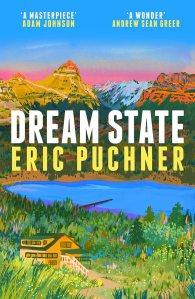 If it starts and ends with a wedding, it must be a comedy. If much of the in between is marked by heartbreak, betrayal, failure, and loss, it must be a tragedy. If it stretches towards 2050 and imagines a Western USA smothered in smoke from near-constant forest fires, it must be an environmental dystopian. Somehow, this novel is all three. The first 163 pages are pure delight: a glistening romantic comedy about the chaos surrounding Charlie and Cece’s wedding at his family’s Montana lake house in the summer of 2004. First half the wedding party falls ill with norovirus, then Charlie’s best friend, Garrett (who’s also the officiant), falls in love with the bride. Do I sound shallow if I admit this was the section I enjoyed the most? The rest of this Oprah’s Book Club doorstopper examines the fallout of this uneasy love triangle. Charlie is an anaesthesiologist, Cece a bookstore owner, and Garrett a wolverine researcher in Glacier National Park, which is steadily losing its wolverines and its glaciers. The next generation comes of age in a diminished world, turning to acting or addiction. There are still plenty of lighter moments: funny set-pieces, warm family interactions, private jokes and quirky descriptions. But this feels like an appropriately grown-up vision of idealism ceding to a reality we all must face. I struggled with a lack of engagement with the children, but loved Puchner’s writing so much on the sentence level that I will certainly seek out more of his work. Imagine this as a cross between Jonathan Franzen and Maggie Shipstead.
With thanks to Sceptre (Hodder) for the proof copy for review.
Consider Yourself Kissed by Jessica Stanley
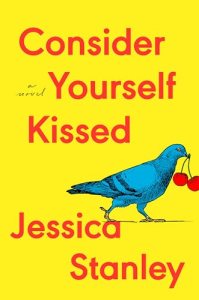 Coralie is nearing 30 when her ad agency job transfers her from Australia to London in 2013. Within a few pages, she meets Adam when she rescues his four-year-old, Zora, from a lake. That Adam and Coralie will be together is never really in question. But over the next decade of personal and political events, we wonder whether they have staying power – and whether Coralie, a would-be writer, will lose herself in soul-destroying work and motherhood. Adam’s job as a political journalist and biographer means close coverage of each UK election and referendum. As I’ve thought about some recent Jonathan Coe novels: These events were so depressing to live through, who would want to relive them through fiction? I also found this overlong and drowning in exclamation points. Still, it’s so likable, what with Coralie’s love of literature (the title is from The Group) and adjustment to expat life without her mother; and secondary characters such as Coralie’s brother Daniel and his husband, Adam’s prickly mother and her wife, and the mums Coralie meets through NCT classes. Best of all, though, is her relationship with Zora. This falls solidly between literary fiction and popular/women’s fiction. Given that I was expecting a lighter romance-led read, it surprised me with its depth. It may well be for you if you’re a fan of Meg Mason and David Nicholls.
With thanks to Hutchinson Heinemann for the proof copy for review.
Girl, 1983 by Linn Ullmann (2021; 2025)
[Translated from Norwegian by Martin Aitken]
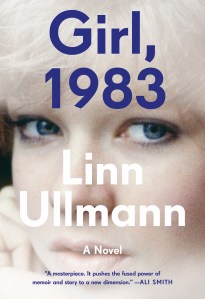 Ullmann is the daughter of actress Liv Ullmann and film director Ingmar Bergman. That pedigree perhaps accounts for why she got the opportunity to travel to Paris in the winter of 1983 to model for a renowned photographer. She was 16 at the time and spent the whole trip disoriented: cold, hungry, lost. Unable to retrace the way to her hotel and wearing a blue coat and red hat, she went to the only address she knew – that of the photographer, K, who was in his mid-forties. Their sexual relationship is short-lived and unsurprising, at least in these days of #MeToo revelations. Its specifics would barely fill a page, yet the novel loops around and through the affair for more than 250. Ullmann mostly pulls this off thanks to the language of retrospection. She splits herself both psychically and chronologically. There’s a “you” she keeps addressing, a childhood imaginary friend who morphs into a critical voice of conscience and then the self dissociated from trauma. And there’s the 55-year-old writer looking back with empathy yet still suffering the effects. The repetition made this something of a sombre slog, though. It slots into a feminist autofiction tradition but is not among my favourite examples.
With thanks to Hamish Hamilton (Penguin) for the proof copy for review.
The Bayrose Files by Diane Wald
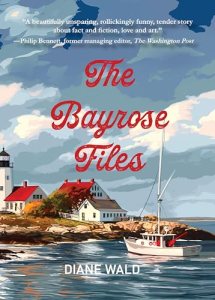 In the 1980s, Boston journalist Violet Maris infiltrates the Provincetown Home for Artists and Writers, intending to write a juicy insider’s exposé of what goes on at this artists’ colony. But to get there she has to commit a deception. Her gay friend Spencer Bayrose has a whole sheaf of unpublished short stories drawing on his Louisiana upbringing, and he offers to let her submit them as her own work to get a place at PHAW. Here Violet finds eccentrics aplenty, and even romance, but when news comes that Spence has AIDS, she has to decide how far she’ll go for a story and what she owes her friend. At barely over 100 pages, this feels more like a long short story, one with a promising setting and a sound plot arc, but not enough time to get to know or particularly care about the characters. I was reminded of books I’ve read by Julia Glass and Sara Maitland. It’s offbeat and good-natured but not top tier.
Published by Regal House Publishing. With thanks to publicist Jackie Karneth of Books Forward for the advanced e-copy for review.
A Family Matter was the best of the bunch for me, followed closely by Dream State.
Which of these do you fancy reading?
July Releases, II: Howard Norman, Andrés N. Ordorica, Neil D. A. Stewart
Three more July releases after yesterday’s Disability Pride Month special. Today is all fiction, but with rather different settings: Atlantic Canada, upstate New York and Mexico, and a London restaurant. The time period ranges from the last days of the First World War to 2013. The themes? Murder, plagues, accidental deaths and gourmet food in addition to those perennial subjects of finding love and coming to terms with identity.
Come to the Window by Howard Norman
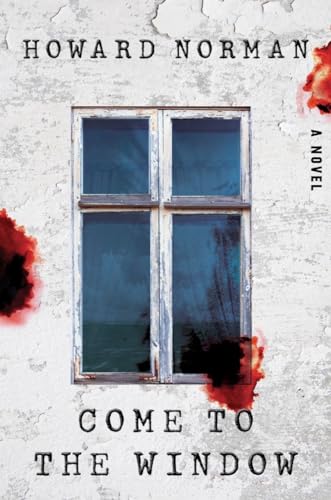 This was my eighth book by Norman and felt most similar to My Darling Detective and Next Life Might Be Kinder. Nothing much happens in the Nova Scotia fishing village of Parrsboro – until the night in April 1918 that Elizabeth Frame shoots dead her husband of 11 hours and throws the revolver into the blowhole of a beached whale. The story is a boon for Toby Havenshaw, a journalist with the Halifax Evening Mail, and quickly becomes an obsession. It’s never a whodunit so much as a why as Toby reports on the trial and follows Elizabeth when she goes on the lam. The sordid case just keeps getting stranger, drawing in bigamy, illegitimate pregnancy, and so on.
But Norman never treats all this too seriously; it is almost a tragicomic foil to the more consequential matters of world war and an influenza pandemic, which soon has Atlantic Canada in its grip as well. Toby’s wife, Amelia, is a hospital surgeon operating on returning veterans. She’s so quietly capable she makes Toby look a dunce, and their everyday rapport and unusual road to parenthood in their late thirties are charming. I also enjoyed Norman’s Dickensian naming (Bevel Cousins, Dr. S. S. Particulate) and literary references: the title phrase is from Matthew Arnold, and L. M. Montgomery gets a mention.
No doubt Norman wrote this as a Covid response; the parallel with the Spanish flu has been irresistible for many. He really captures the feeling of living through a uniquely terrible world situation. However, I’m not sure this short novel will prove memorable. Such has been true for his other recent novels, which pale in comparison with The Bird Artist. (Read via Edelweiss)
How We Named the Stars by Andrés N. Ordorica
I learned about this through the Observer’s 10 best new novelists feature and requested a copy via a Northern Fiction Alliance online showcase. There’s a sweet Heartstopper vibe to the story of an unlikely romance blooming between Daniel de la Luna and Sam Morris, his roommate at the University of Cayuga (= Cornell). Sam is a hunky jock while Daniel is a nervous would-be writer who has only just become comfortable with calling himself gay.
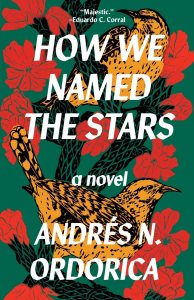 Ordorica, also a poet, immediately sets an elegiac tone by revealing Sam’s untimely death soon after the end of their freshman year. To cope with losing the love of his life, Daniel writes this text as if it’s an extended letter to Sam, recounting the course of their relationship – from strangers to best friends to secret lovers – and telling of his summer spent in Mexico exploring his family history, especially the parallels between his life and that of his late uncle and namesake, who was brave enough to be openly gay in the early days of the AIDS crisis.
Unfortunately, solid ideas and a warm-hearted approach are swamped by a host of problems. Ordorica writes a pretty good sex scene but the rest is clichéd, purple or awkward prose (“I snapped photo after photo of you, laughing all the while from your infectious elation”; “I felt unmoored, unsettled, and utterly liminal, in a state of flux”; “I sank into my pillows, muffling my tears as my mind floundered into even deeper waves of sadness”) and stiff dialogue. The cultural references and terminology feel all wrong for 2011, let alone for the 1988 diary entries of Uncle Daniel’s. The Mexico subplot is too tidy and Daniel’s breakdown after news of Sam’s death, which appears to involve full-blown alcohol addiction, is implausibly resolved within a chapter. The characterization of the secondary figures, particularly Daniel’s trio of queer Cayuga friends, is tissue thin.
It seems likely that Ordorica channeled much of his own experience into this queer coming-of-age narrative. He may have been aiming for star-crossed lovers and a groundbreaking own voices story, but this is run-of-the-mill stuff – more like a college student’s first draft than a finished book.
With thanks to Saraband for the proof copy for review.
Test Kitchen by Neil D. A. Stewart
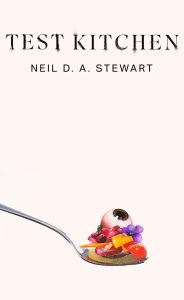 I spied this in one of Susan’s monthly previews. (If you haven’t already subscribed to her blog, do so at once. You’ll never be short of ideas for what to read.) Midgard is a fine dining restaurant with a tree in the middle whose multiple small courses evoke childhood memories and disguise one foodstuff as another. The London establishment earned two Michelin stars and has a perpetual waiting list, but as a news piece at the start presages, it will be forced to close its doors within five years after a series of disasters. Every other chapter introduces another set of diners, table by table: a first date, a reunion of old friends, a 12-year-old foodie trying to forestall his parents’ divorce, a restaurant critic and her freeloading acquaintances, and a solitary man who should really get that face wound seen to.
Many of these situations aren’t what they seem; the same goes for the intervening glimpses into the kitchen. Our host for these is Marley, the most recently hired waitress, who fled a chaotic home life in Melbourne. She didn’t show for work today; she’s in hiding, yet knows everything about the staff dynamics so is a perfect tour guide. There’s a mixture of nerves and bravado running through the kitchen as dinner starts. A knife accident, a food allergy, and a champagne cork hitting a customer are only the beginning of the evening’s mishaps. While I was initially drawn to the structure, which is almost like a linked short story collection, and I can’t resist a restaurant setting, the narrative trickery and the way that the mood evolves from slapstick to grotesque put me off. I enjoyed individual vignettes, but the whole didn’t come together as satisfyingly as in Sweetbitter or Service, among others.
With thanks to Corsair (Hachette) for the free copy for review.
Any July releases you’d recommend?
Preposterous #NovNov23 Catch-Up Post
I have a big pile of novellas I read last month but never wrote about, plus a few more I’ve sneaked in by finishing them over the past couple of days. I tweaked my shoulder last weekend and the discomfort has moved into my neck, making daily life, and sleep, difficult. A taste of what it’s like to live with chronic pain, I suppose. Add in the freezing temperatures of recent days and I’ve been feeling pretty sorry for myself and haven’t succeeded in sitting at a computer for the time required to write at least a bit about these short books. But as today is the day our link-up finishes, I’m tucked up in bed with laptop, electric blanket, heater, cat, cup of tea and ice pack, ready to do all 16 the best justice I can through a paragraph each.
Fiction:
In the Sweep of the Bay by Cath Barton (2020)
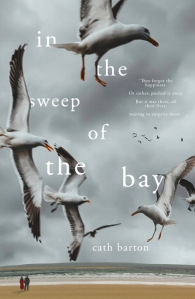 Susan put this on my radar and I bought it in publisher Louise Walters Books’ closing-down sale. Set in Morecambe, this bittersweet story of a half-century marriage and the figures on its margins – co-workers, children, even strangers – is both ambitious and intimate. Ted and Rene Marshall marry in the 1950s and soon drift into drudgery and traditional gender roles; “They forgot the happiness. Or rather, they pushed it away.” While Ted becomes a celebrated ceramics designer in the family company, Rene stagnates at home. It is not so much suspected infidelity as simply taking each other for granted that threatens their relationship. Barton moves through the decades and varies the perspective, letting us hear from one of the Marshalls’ daughters and giving kind attention to a gay couple. Strictly Come Dancing fans and those familiar with the northwest might take particular pleasure, but I enjoyed this quiet book reminiscent of Anne Tyler’s French Braid and (though less political) Jonathan Coe’s Bournville. (New purchase) [104 pages]
The Visitor by Maeve Brennan (2000)
 This posthumous novella was written in the 1940s but never published in Brennan’s lifetime. From Dublin, she was a longtime New Yorker staff member and wrote acclaimed short stories. After her mother’s death, Anastasia King travels from Paris, where the two set up residence after leaving her father, to Ireland to stay in the family home with her grandmother. Anastasia considers it a return, a homecoming, but her spiteful grandmother makes it clear that she is an unwelcome interloper. Mrs King can’t forgive the wrong done to her son, and so won’t countenance Anastasia’s plan to repatriate her mother’s remains. Rejection and despair eat away at Anastasia’s mental health (“She saw the miserable gate of her defeat already open ahead. There only remained for her to come up to it and pass through it and be done with it”) but she pulls herself together for an act of defiance. Most affecting for me was a scene in which we learn that Anastasia is so absorbed in her own drama that she does not fulfill the simple last wish of a dying friend. This brought to mind James Joyce’s The Dead. (Secondhand purchase – The Bookshop, Wigtown) [81 pages]
Bear by Marian Engel (1976)
 If you’ve heard of this, it’ll be for the fact that the main character – Lou, a librarian sent to archive the holdings of an octagonal house on an island one summer – has sex with a bear. That makes it sound much more repulsive and/or titillating than it actually is. The further I read the more I started to think of it as an allegory for women’s awakening; perhaps the strategy inspired Melissa Broder’s The Pisces (stuffed full of sex with a merman). “I have an odd sense of being reborn,” Lou writes to her boss, the Institute director, with whom she’d been having an affair. The bear lives in an outbuilding and at first Lou is indifferent, only feeding him as necessary. Then he becomes a friend, joining her for swims. Then he comes into the house. Bestiality is a taboo for a reason, but what mostly bothers me is the lack of mutuality, the sense of taking advantage. I’m also wary of stories in which animals have a primarily instrumental or metaphorical role. Still, this was a solid read, offbeat and nearly as shocking today as when it first appeared. (Secondhand purchase online) [167 pages]
So Late in the Day by Claire Keegan (2023)
 Several of us reviewed this for #NovNov though unsure it counts: in the UK the title story (originally for the New Yorker) was published in a standalone volume by Faber, while the U.S. release includes two additional earlier stories; I read the latter. The title story has Cathal spending what should have been his wedding weekend moping about Sabine calling off their engagement at the last minute. It’s no mystery why she did: his misogyny, though not overt, runs deep, most evident in the terms in which he thinks about women. And where did he learn it? From his father. (“The Long and Painful Death” is from Keegan’s second collection, Walk the Blue Fields, and concerns a woman on a writing residency at an author’s historic house in Ireland. She makes a stand for her own work by refusing to cede place to an entitled male scholar. The final story is “Antarctica,” the lead story in that 1999 volume and a really terrific one I’d already experienced before. It’s as dark and surprising as an early Ian McEwan novel.) Keegan proves, as ever, to be a master at portraying emotions and relationships, but the one story is admittedly slight on its own, and its point obvious. (Read via Edelweiss) [64 pages]
Swallowing Geography by Deborah Levy (1993)
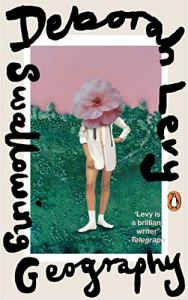 “She is Europe’s eerie child, and she is part of the storm.” J.K. is a young woman who totes her typewriter around different European locations, sleeps with various boyfriends, hears strangers’ stories, and so on. Many of the people she meets are only designated by an initial. By contrast, the most fully realized character is her mother, Lillian Strauss. The chapters feel unconnected and the encounters within them random, building to nothing. Though a bit like Crudo, this has very little detail to latch onto and so was pretentious in its opacity. I’ve generally gotten on much better with Levy’s nonfiction (see below) than her fiction. This, along with the Keegan (above), was my chosen train entertainment for the Booker Prize evening. I got so little out of it that it seemed like wasted reading time. Here’s a decent excerpted passage: “The arrogance of metaphor when facts save people’s lives. The succour of metaphor when facts inadequately describe people’s lives.” (Public library) [83 pages]
Nonfiction:
Starting with two from the Bloomsbury Object Lessons series, a great source of short monographs. These have been among my favourites so far.
Grave by Allison C. Meier (2023)
 Meier is a cemetery tour guide in Brooklyn, where she lives. She surveys American burial customs in particular, noting the lack of respect for Black and Native American burial grounds, the Civil War-era history of embalming, the increasing popularity of cremation, and the rise of garden cemeteries such as Mount Auburn in Cambridge, Massachusetts, which can serve as wildlife havens. The mass casualties and fear of infection associated with Covid-19 brought back memories of the AIDS epidemic, especially for those in New York City. Meier travels to a wide range of resting places, from potter’s fields for unclaimed bodies to the most manicured cemeteries. She also talks about newer options such as green burial, body composting, and the many memorial objects ashes can be turned into. I’m a dedicated reader of books about death and so found this fascinating, with the perfect respectful and just-shy-of-melancholy tone. It’s political and philosophical in equal measures. (Read via NetGalley) [168 pages]
Pregnancy Test by Karen Weingarten (2023)
 Laboratory pregnancy tests have been available since the 1930s and home pregnancy tests – the focus here – since the 1970s. All of them work by testing urine for the hormone hCG (human chorionic gonadotropin). What is truly wild is that pregnancy used to be verifiable only with laboratory animals – female mice and rabbits had to be sacrificed to see if their ovaries had swelled after the injection of a woman’s urine; later, female Xenopus toads were found to lay eggs in response, so didn’t need to be killed. Home pregnancy kits were controversial and available in Canada before the USA because it was thought that they could be unreliable or that they would encourage early abortions. Weingarten brings together the history, laypeople-friendly science, and cultural representations (taking a pregnancy test is excellent TV shorthand) in a readable narrative and makes a clear feminist statement: “the home pregnancy test gave back to women what should have always been theirs: first-hand knowledge about how their bodies worked” and thus “had the potential to upend a paternalistic culture.” (Read via NetGalley) [160 pages]
And from a different Bloomsbury series for monographs about seminal albums, 33 1/3:
Jesus Freak by Will Stockton and D. Gilson (2019)
 The dc Talk album Jesus Freak (1995) is the first CD I ever owned. My best friend and I listened to it (along with Bloom by Audio Adrenaline and Take Me to Your Leader by Newsboys) so many times that we knew every word and note by heart. So it’s hard for me to be objective rather than nostalgic; I was intrigued to see what two secular academics would have to say. Crucially, they were teenage dc Talk fans, now ex-Evangelicals and homosexual partners. As English professors, their approach is to spot musical influences (Nirvana on the title track; R&B and gospel elsewhere), critically analyse lyrics (with “Colored People” proving problematic for its “neoliberal multiculturalism and its potential for post-racial utopianism”), and put a queer spin on things. For those who don’t know, dc Talk were essentially a boy band with three singers, one Black and two white – one of these a rapper. Stockton and Gilson chronicle the confusion of living with a same-sex attraction they couldn’t express as teens, and cheekily suggest there may have been something going on between dc Talk members Toby McKeehan and Michael Tait, who were roommates at Liberty University and apparently dismantled their bunk beds so they could sleep side by side. Hmmm! I was interested enough in the subject matter to overlook the humanities jargon. (Birthday gift from my wish list last year) [132 pages]
And the rest:
Fifty Days of Solitude by Doris Grumbach (1994)
 Grumbach died last year at age 104. This was my third of her books; I read two previous memoirs, Extra Innings and The Presence of Absence, when they were brought back into print as Open Road Media e-books. I knew of Grumbach through her association with May Sarton, and the two in fact had a lot in common, including lesbianism, living in Maine and writing about older age. I was expecting something on a par with Sarton’s Journal of a Solitude, one of my favourite books, but this fell short in comparison. Grumbach spent a month and a half alone in Maine during the winter of 1993 while her partner, Sybil, was away amassing stock for their bookstore. The book is a collection of unconnected meditations about nature, the cold, creativity and so on. She finds herself writing fiction so the characters can keep her company, and notes “how much more I was aware of my vices.” Although she tries to avoid the news, word reaches her of acquaintances’ demises, and she recalls the recent death from AIDS of a young local man. Amusingly, she rereads Bear (see above) during the 50 days. Some atmosphere, but low on insight. (Secondhand purchase – Wonder Book and Video, Hagerstown) [114 pages]
Things I Don’t Want to Know: On Writing by Deborah Levy (2013)
 It feels like I made an error by reading Levy’s “Living Autobiography,” out of order. I picked up the middle volume of the trilogy, The Cost of Living, for #NovNov in 2021 and it ended up being my favourite nonfiction read of that year. I then read part of the third book, Real Estate, last year but set it aside. And now I’ve read the first because it was the shortest. It’s loosely structured around George Orwell’s four reasons for writing: political purpose, historical impulse, sheer egoism and aesthetic enthusiasm. The frame story has her flying to Majorca at a time when she was struggling with her mental health. She vaguely follows in the footsteps of George Sand and then pauses to tell a Chinese shopkeeper the story of her upbringing in apartheid-era South Africa and the family’s move to London. Although I generally admire recreations of childhood and there are some strong pen portraits of minor characters, overall there was little that captivated me here and I was too aware of the writerly shaping. (Secondhand purchase – 2nd & Charles, Hagerstown) [111 pages]
The Private Life of the Hare by John Lewis-Stempel (2019)
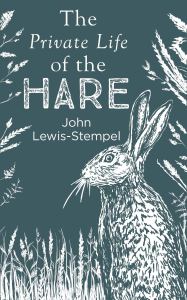 I reviewed a couple of JLS’s species-specific monographs for #NovNov in 2018: The Secret Life of the Owl and The Glorious Life of the Oak. There’s a similar range of material here: anatomy, natural history and cultural significance, including in poetry. There are chapters on hunting, the hare as food, and its appearances in myth and religion. I was engaged about half of the time; I tended to skip over longer excerpts from historical documents. The reliance on lengthy quotations and use of bullet points make it feel like a half-finished research project, with the kind of information you could find anywhere else. Too many of his recent books have felt like they were rushed into print. I would only pick this up if you’re particularly fascinated by hares. (Public library) [99 pages]
The Cancer Journals by Audre Lorde (1980)
 I’ve read so many cancer stories that it takes a lot to make one stand out. This feels like a random collection of documents rather than a coherent memoir. One of the three essays was originally a speech, and two were previously printed in another of her books. Lorde was diagnosed with breast cancer in 1978 and had a mastectomy. A Black lesbian feminist, she resisted wearing prostheses and spoke up about the potential environmental causes of breast cancer that need to be addressed in research (“I may be a casualty in the cosmic war against radiation, animal fat, air pollution, McDonald’s hamburgers and Red Dye No. 2”). Her actual journal entries make up little of the text, which is for the best because fear and pain can bring out the cliches in us – but occasionally a great quote like “if bitterness were a whetstone, I could be sharp as grief.” Another favourite line: “Pain does not mellow you, nor does it ennoble, in my experience.” I’m keen to read her memoir Zami. (University library) [77 pages]
A Month in Siena by Hisham Matar (2019)
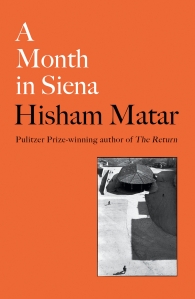 I’d not read Matar before I spotted this art book-cum-memoir and thought, why not. A Libyan American novelist who lives in London, Matar had long been fascinated by the Sienese School of painting (13th to 15th centuries), many of whose artists depicted biblical scenes or religious allegories – even though he’s not a Christian. He spent a month in Italy immersed in the art he loves; there are 15 colour reproductions here. His explications of art history are generalist enough to be accessible to all readers, but I engaged more with the glimpses into his own life. For instance, he meets a fellow Arabic speaker and they quickly form a brotherly attachment, and a Paradise scene gives him fanciful hope of being reunited with his missing father – the subject of his Folio Prize-winning memoir The Return, which I’d like to read soon. His prose is beautiful as he reflects on history, death and how memories occupy ‘rooms’ in the imagination. A little more interest in the art would have helped, though. (Little Free Library) [118 pages]
A Childhood in Scotland by Christian Miller (1981)
 I had high hopes for this childhood memoir that originally appeared in the New Yorker and was reprinted as part of the Canongate Classics series. But I soon resorted to skimming as her recollections of her shabby upper-class upbringing in a Highlands castle are full of page after page of description and dull recounting of events, with few scenes and little dialogue. This would be of high historical value for someone wanting to understand daily life for a certain fraction of society at the time, however. When Miller’s father died, she was only 10 and they had to leave the castle. I was intrigued to learn from her bio that she lived in Newbury for a time. (Secondhand purchase – Barter Books) [98 pages]
Here and Now: Living in the Spirit by Henri J.M. Nouwen (1994)
 This collection of micro-essays under themed headings like “Living in the Present” and “Suffering” was a perfect introduction to Nouwen’s life and theology. The Dutch Catholic priest lived in an Ontario community serving the physically and mentally disabled, and died of a heart attack just two years after this was published. I marked out many reassuring or thought-provoking passages. Here’s a good pre-Christmas one:
“God became a little child in the midst of a violent world. Are we surprised by joy or do we keep saying: ‘How nice and sweet, but the reality is different.’ What if the child reveals to us what is really real?”
I was taken by the ideas that the life of compassion is one of “downward mobility” and that inner freedom only comes when you don’t judge anyone. He encourages readers to not live in a past of shame and regret, but to be grateful for opportunities for God’s mercy and guidance. Very peaceful and readable; a good bedside devotional book. (Free from my stepfather) [175 pages] 
De Profundis by Oscar Wilde (1897)
 My only reread for the month. Wilde wrote this from prison. No doubt he had a miserable time there, but keeping in mind that he was a flamboyant dramatist and had an eye to this being published someday, this time around I found it more exaggerated and self-pitying than I had before. “Suffering is one very long moment. … Where there is sorrow there is holy ground,” he writes, stating that he has found “harmony with the wounded, broken, and great heart of the world.” He says he’s not going to try to defend his behaviour … but what is this but one extended apologia and humble brag, likening himself to a Greek tragic hero (“The gods had given me almost everything. But I let myself be lured into long spells of senseless and sensual ease. I amused myself with being a flâneur, a dandy, a man of fashion”) and even to Christ in his individuality as well as in his suffering at the hands of those who don’t understand him (the scene where he was pilloried consciously mimics a crucifixion tableau). As a literary document, it’s extraordinary, but I didn’t buy his sincerity. He feigns remorse but, really, wasn’t sorry about anything, merely sorry he got caught. (Free from a neighbour) [151 pages]
Original rating (2011):
Rating now:
Average:
Which of these have you read?
And which do you want to read? (You may choose no more than 4!)
In total, I read 27 novellas this November – close to my 2021 record of 29. The highlights included the Barton, Meier, Nouwen and Weingarten above plus Train Dreams by Denis Johnson and Western Lane by Chetna Maroo, but the best of the lot was Absolutely and Forever by Rose Tremain.
Coming right up, final statistics on the month’s participants and posts!
A May Sarton Birthday Celebration
These days I consider May Sarton one of my favourite authors, but I’ve only been reading her for about nine years, since I picked up Journal of a Solitude on a whim. (Ten years prior, when I was a senior in college working in a used bookstore on evenings and weekends, a customer came up and asked me if we had anything by May Sarton. I had never heard of her so said no, only later discovering that we shelved her in with Classic literature. Huh. I can only apologize to that long-ago customer for my ignorance and negligence.)
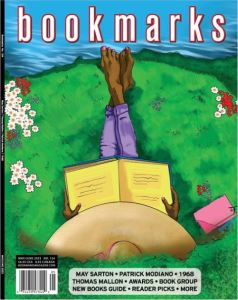 A general-interest article I wrote on May Sarton’s life and work appears in the May/June 2023 issue of Bookmarks magazine, for which I am an associate editor. I submitted this feature back in August 2019, so it’s taken quite some time for it to see the light of day, but I’m pleased that the publication happened to coincide with the anniversary of her birth. In fact, today, May 3rd, would have been her 111th birthday. For the article, I covered a selection of Sarton’s fiction and nonfiction, and gave a brief discussion of her poetry (which the magazine doesn’t otherwise cover).

The two below, a journal and a novel, are works I’ve read more recently. Both were secondhand purchases, I think from Awesomebooks.com.
Encore: A Journal of the Eightieth Year (1993)
 Sarton is one of those reasonably rare authors who published autobiography, fiction AND poetry. I know I’m not alone in thinking that the journals and memoirs are where she really shines. (She herself was proudest of her poetry, and resented the fact that publishers only seemed to be interested in novels because they were what sold.) I came to her through her journals, which she started writing in her sixties, and I love them for how frankly they come to terms with ageing and the ill health and loss it inevitably involves. They are also such good, gentle companions in that they celebrate seasonality and small joys: her beautiful New England homes, her gardening hobby, her pets, and her writing routines and correspondence.
Encore was the only journal I had left unread; soon it will be time to start rereading my top few. When Sarton wrote this in 1991–2, she was recovering from a spell of illness and assumed it would be her final journal. (In fact, At Eighty-Two would appear two years later.) Although she still struggles with pain and low energy, the overall tone is of gratitude and rediscovery of wonder. Whereas a few of the later journals can get a bit miserable because she’s so anxious about her health and the state of the world, here there is more looking back at life’s highlights. Perhaps because Margot Peters was in the process of researching her biography (which would not appear until after her death), she was nudged into the past more often. I especially appreciated a late entry where she lists “peak experiences,” ranging from her teen years to age 80. What a positive way of thinking about one’s life!
For many months I kept this as a bedside book and read just an entry or two a night. When I started reading it more quickly and straight through, I did note some repetition, which Sarton worried would result from her dictating into a recording device. But I don’t think this detracts significantly. In this volume, events of note include a trip to London and commemorative publications plus a conference all to mark her 80th birthday. She’s just as pleased with tiny signs of her success, though, such as a fan letter saying The House by the Sea inspired the reader to put up a bird feeder. 
The Education of Harriet Hatfield (1988)
This is my eighth Sarton novel. In general, I’ve had less success with her fiction as it can be formulaic: characters exist to play stereotypical roles and/or serve as mouthpieces for the author’s opinions. That’s certainly true of Harriet Hatfield, who, like the protagonist of Mrs. Stevens Hears the Mermaids Singing, is fairly similar to Sarton. After the death of her long-time partner, Vicky, who ran a small publishing house, sixty-year-old Harriet decides to open a women’s bookstore in a Boston suburb. She has no business acumen, just enthusiasm (and money, via the inheritance from Vicky). College girls, housewives, nuns and older feminists all become regulars, but Hatfield House also attracts unwanted attention in this dodgy neighbourhood, especially after a newspaper outs Harriet: graffiti, petty theft and worse. The police are little help, but Harriet’s brothers and a local gay couple promise to look out for her.
 The central struggle for Harriet is whether she will remain a private lesbian – as one customer says to her, “you are old and respectable and no one would ever guess”; that is, she can pass as straight – or become part of a more audible, visible movement toward equal rights. It’s cringe-worthy how unsubtly Sarton has Harriet recognize (the “Education” the title speaks of) her privilege and accept her parity with other minorities through friendships with a Black mother, a battered wife who gets an abortion, and a man whose partner is dying of AIDS. Harriet’s brother, too, comes out to her as gay, and I was uneasy with the portrayal of him and the AIDS patient as promiscuous to the point of bringing any suffering on themselves.
Still, when I consider that Sarton was in her late seventies at the time she was writing this, and that public knowledge of AIDS would have been poor at best, I think this was admirably edgy. Harriet’s dilemma reflects Sarton’s own identity crisis, as expressed in Encore: “I do not wish to be labeled as a lesbian and do not wish to be labeled as a woman writer but consider myself a universal writer who is writing for human beings.” Nowadays, though, what Harriet deems discretion comes across as cowardice and priggishness.
While there are elements of Harriet Hatfield that have not aged well, if you focus on the Bythell-esque bookshop stuff (“I find that the people I love best are those who come in to browse, the silent shy ones, who are hungry for books rather than for conversation”) rather than the consciousness-raising or the mystery subplot, you might enjoy it as much as I did. Kudos for the first and last lines, anyway: “How rarely is it possible for anyone to begin a new life at sixty!” and “It’s the real world and I am fully alive in it.”
To Paradise by Hanya Yanagihara (Doorstopper of the Quarter)
When I expressed interest in Hanya Yanagihara’s To Paradise on Twitter, having loved A Little Life and tepidly admired The People in the Trees, I didn’t expect to be chosen to receive one of my most anticipated releases of the year. A proof arrived while I was in the States for Christmas. As soon as I got back, I started it – with a vision of doing little else but reading it for a few days and reviewing it early in January. Instead, I read about 30 pages and set it aside, the 700-page heft mocking me from my coffee table stack for the better part of two months. Finally, I forced myself to set a daily reading goal: first 30 pages, then 40, then 60; and on Friday I read the last 100 pages over a couple sessions in the summerhouse. That regimented approach was what it took for me to get through my first doorstopper of the year.
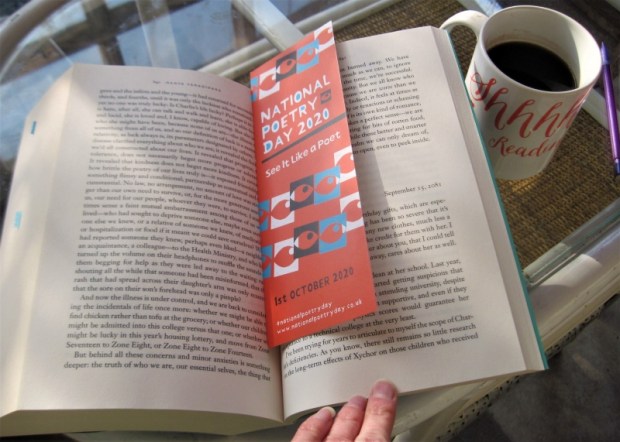
The novel is in three parts – discrete enough to feel like separate books – set largely in 1893, 1993, and 2093. New York City’s Washington Square, even one particular house, recurs as a setting in all three, with some references to the American West and South and with flashbacks to time in Hawaii linking Books II and III.
The overarching theme is the American project: is freedom, both individual and collective, a worthy and attainable goal? Or are the country’s schisms too deep to be overcome? Class, race, sexuality, and physical and mental illness are some of the differences that Yanagihara explores. Even when equality of treatment has been won in one time and scenario – same-sex marriage is de rigueur in her alternative version of the 1890s, where the USA is divided into several nations – there is always the threat of a taken-for-granted right being retracted.
In Book I, David Bingham, who is to inherit his grandfather’s Washington Square property, considers a family-approved arranged marriage with an older man, Charles, versus eloping with a lower-class male teacher, Edward, with whom he has fallen in love. Edward wants them to light out for California, where new opportunities await but homosexuality is outlawed. Can they live in freedom if they’re repressing an essential part of their identity? The austere, elegant tone is a pitch-perfect pastiche of Henry James or Edith Wharton. Although this section took me the longest to read, it was the one I most appreciated for its flawless evocation of the time period and a rigid class structure. As in The Underground Railroad, though, the alt-history angle wasn’t really the most memorable aspect.
In Book II, David Bingham, also known as Kawika, is a paralegal having a secret affair with Charles, a partner in his law firm. Various friends and former lovers in their circle have AIDS, but Charles’s best friend Peter is dying of cancer. Before Peter flies to Switzerland for an assisted death, Charles throws him one last dinner party. Meanwhile, David receives a long letter from his ill father recounting their descent from Indigenous nobility and his failed attempt to set up a self-sufficient farm on their inherited land in Hawaii. This strand is closest to Yanagihara’s previous novels, the gay friendship circle reminiscent of A Little Life and the primitive back-to-the-land story recalling The People in the Trees. I also thought of Mrs Dalloway – David wanted to get the flowers for the party himself – and of Three Junes.
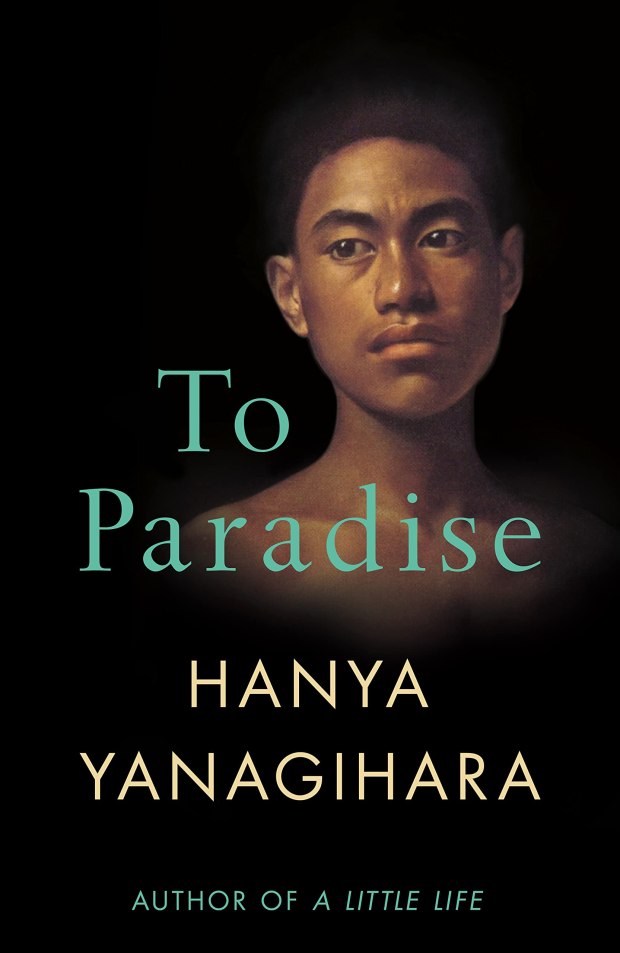 Book III is set in a dystopian future of extreme heat, rationing and near-constant pandemics. The totalitarian state institutes ever more draconian policies, with censorship, quarantine camps and public execution of insurgents. The narrator, intellectually disabled after a childhood illness, describes the restrictions with the flat affect of the title robot from Kazuo Ishiguro’s Klara and the Sun. When a stranger offers her the chance to escape, she is forced to weigh up freedom against safety. An alternating strand, based around letters sent by a Chinese Hawaiian character, traces how things got this bad, from the 2040s onwards.
While the closing speculative vision is all too plausible, two other literary/science fiction releases I’ve read this year, Sea of Tranquillity by Emily St. John Mandel and How High We Go in the Dark by Sequoia Nagamatsu, are more powerful and direct. Book III takes up half of the text and could stand alone, but the fact that it appears as a culmination of two other narratives creates false expectations that it can’t meet. The connections between the three are incidental – abandonment by a mother, a child raised by a grandparent, an arranged marriage, isolating illness – with recurring tactics like stories within stories and epistolary sections. The most overt cohesive strategy, the repeating of names across time periods, feels gimmicky and, again, sets readers up for a letdown by promising meaning that isn’t there.
Ultimately, the message seems to be: America’s problems are inherent, and so persist despite apparent progress. It takes a lot of words to build to that somewhat obvious point. I couldn’t suppress my disappointment that none of the storylines are resolved – this does, however, mean that one can choose to believe things will turn out happily for the characters. Their yearning for a more authentic life, even in a rotten state, makes it easy to empathize with their situations. I had high regard for the self-assured cross-genre prose (my interest waning only during the elder Kawika’s improbably long letter), but felt the ambition perhaps outshone the achievement.
As I learned when reviewing a recent book about American utopian projects, Heaven Is a Place on Earth, and interviewing its author, Adrian Shirk, an imagined utopia and a projected dystopia aren’t actually so different. Here was her response to one of my questions:
At one point you say, “utopia is never far from its opposite.” Dystopian novels are as popular as ever. To what extent do you think real-life utopias and fictional dystopias have the same aims?
I think real-life utopian experiments and fictional dystopias both offer warnings about the dangers of relying too much on ideology, and not enough on living, or choosing the person over the belief. So, in that way, real utopian experiments and fictional dystopian narratives are two sides of the same coin: a dystopia is a utopia that lost sight of—or never included—understanding itself as resistance to a violent empire, and thus starts to look like a violent empire itself.
Both start by diagnosing a societal sickness. The question is how we then get to paradise.
Page count: 701
Book I:
Book II:
Book III: 
My overall rating:
With thanks to Picador for the proof copy for review.
Three Junes by Julia Glass (2002)
I had the “wrong” introduction to Julia Glass’s work in that I started with The Whole World Over (2006) in January 2019 instead of the novel to which it is a rough sequel: her National Book Award-winning debut, Three Junes. This wasn’t really a problem, though. The main link between the two is the character Fenno, a Scottish transplant to New York City who runs a bookstore. He narrates the central and longest section of Three Junes, while the shorter bookend chapters are in the third person. All three pieces braid past and present together such that the novel’s 10-year span feels even more expansive.
 “Collies,” set in 1989, opens the book on Greece, where Paul McLeod has headed for a package holiday after the death from cancer of his wife, Maureen, who was an obsessive dog trainer. In “Upright,” which moves six years into the future, Paul’s son Fenno and his younger twin brothers, David and Dennis, are at the family home in Dumfries to divvy up the estate. Fenno’s mind drifts back through his time in New York City and particularly the lovers and friends of his life, some of whom died at the height of the AIDS crisis. In the present day, he faces a dilemma when his brother and sister-in-law ask him an intimate favor.
“Boys,” dated 1999, closes the book and centers on Fern, a young widow who is visiting a friend’s beach home in Long Island and contemplating how she will tell her new boyfriend (who happens to be her landlord’s son) that she is five months pregnant. This final chapter ropes in a few characters from previous sections – but, in a frustrating yet delicious instance of dramatic irony, the two main figures don’t realize there’s a couple of connections between them.
Many of the elements that I loved in The Whole World Over were present here, too: a New York City bookstore setting, the comfort of animals (David is a vet), gourmet meals (Dennis is a chef), and a matter-of-fact but tender consideration of loss. A minor character declares, “people overestimate the power of the past,” but this tripartite narrative puts the lie to that statement as the past continues to seep into everyday life. And the last line goes on my list of favourites encountered so far this year: “Here we are—despite the delays, the confusion, and the shadows en route—at last, or for the moment, where we always intended to be.”
I didn’t particularly warm to the first chapter and worried that this boded ill for the whole book, but as soon as Fenno’s voice took over at about page 60 I sank into the inviting prose. After my first taste of her work, I likened Glass to Louise Miller and Carolyn Parkhurst; now I’d add in Elizabeths Berg and Strout. I’ll read the rest of her books for sure. I have a paperback copy of I See You Everywhere and her latest, A House among the Trees, is on my Kindle.
Source: Secondhand purchase from Wonder Book and Video outdoor clearance area
My rating:
Three on a Theme: “Love”
I’m really not a Valentine’s Day person, yet this is the fifth year in a row that I’ve put together a themed post featuring books that have “Love” or a similar word in the title in the run-up to mid-February. (Here are the 2017, 2018, 2019 and 2020 posts. I’m also at work on a set of three “Heart” titles to post about on the 14th.) All three of the below books reflect, in their own ways, on how love perplexes and sustains us at different points in our lives.
The Emma Press Anthology of Love, ed. Rachel Piercey and Emma Wright (2018)
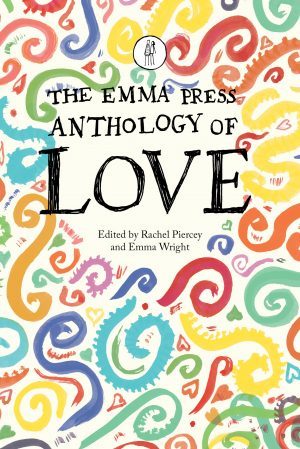 I read my first book from the publisher (Tiny Moons by Nina Mingya Powles) last summer and loved it, so when this one popped up in the Waterstones sale in January I snapped it up. Your average love poetry volume would trot out all the standards from Shakespeare’s sonnets to Carol Ann Duffy, whereas this features recent work from lesser-known contemporary poets. Of the 56 poets, I’d heard of just two before: Stephen Sexton, because I reviewed his collection, If All the World and Love Were Young, last year; and Rachel Long, because I was simultaneously reading her Costa Award-shortlisted debut, My Darling from the Lions.
What I most appreciated about the book is that it’s free of cliché. You can be assured there will be no ‘Roses are red, violets are blue’ simplicity of theme or style. It must be nigh on impossible to write about romantic and erotic love without resorting to the same old symbols, but here there is a fresh, head-turning metaphor every few pages. Rachel Plummer describes her first crush, on a video game character, in “Luigi.” Love is conveyed through endless cups of tea or practical skills that favor postapocalyptic survival; desire is sparked by the downy hair on a woman’s back or the deliberate way a lover pulls on a pair of tights. Anything might be a prelude to seduction: baking, preparing lab specimens, or taking a taster at the off-license.
There are no real duds here, but a couple of my overall favorites were “Note from Edinburgh” by Stav Poleg and “Not the Wallpaper Game” by Jody Porter (“her throat was a landmine grown over with roses / and her arms were the antidote to the sufferings of war”). I’m running low on poetry, so I’ve gone ahead and ordered three more original anthologies direct from The Emma Press (poems on the sea, illness, and aunts!). After all, it’s #ReadIndies month and I’m delighted to support this small publisher based in Birmingham.
Favorite lines:
I have a friend who always believed
love was like being touched
by a livewire or swimming
on her back in a lightning storm.
I want to tell her it’s homesickness,
how longing pulls us in funny ways.
(from “Falooda” by Cynthia Miller)
It’s today already
and we have only the rest of our lives.
Long may we dabble our feet in the clear Italian lakes.
Long may we mosey through the graveyards of the world.
(from “Romantic” by Stephen Sexton)
Love After Love by Ingrid Persaud (2020)
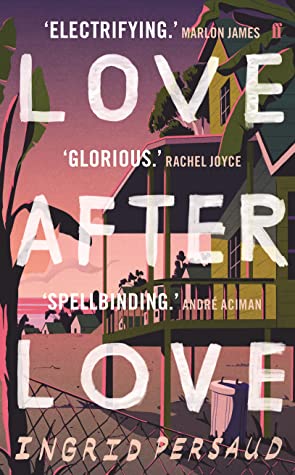 I saw the author read from this in November as part of a virtual Faber Live Fiction Showcase. My interest was then redoubled by the book winning the Costa First Novel Award. All three narrators – Betty, her son Solo, and their lodger Mr Chetan – are absolutely delightful, and I loved the Trini slang and the mix of cultures (for example, there is a Hindu temple where locals of Indian extraction go to practice devotion to the Goddess). Early on, I was reminded most, in voice and content, of Mr Loverman by Bernardine Evaristo.
But the lightness of Part One, which ends with a comically ill-fated tryst, soon fades. When Solo moves to New York City to make his own way in the world, he discovers that life is cruel and not everyone is good at heart. Indeed, my only hesitation in recommending this book is that it gets so very, very dark; the blurb and everything I had heard did not prepare me. If easily triggered, you need to know that there are many upsetting elements here, including alcoholism, domestic violence, self-harm, attempted suicide, sadomasochism, and gruesome murder. Usually, I would not list such plot elements for fear of spoilers, but it seems important to note that what seems for its first 100 pages to be such a fun, rollicking story becomes more of a somber commentary on injustices experienced by both those who leave Trinidad and those who stay behind.
A beautiful moment of reconciliation closes the story, but man, getting to that point is tough. The title speaks of love, yet this novel is a real heartbreaker. What that means, though, is that it makes you feel something. Not every author can manage that. So Persaud is a powerful talent and I would certainly recommend her debut, just with the above caveats.
Readalikes:
- Golden Child by Claire Adam
- A Little Life by Hanya Yanagihara
Love’s Work: A Reckoning with Life by Gillian Rose (1995)
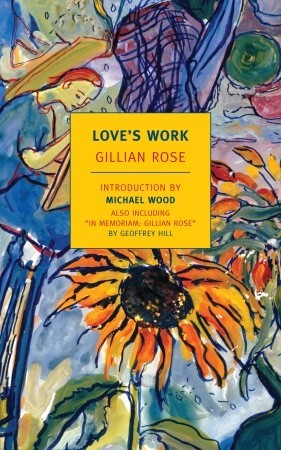 The English philosopher’s memoir-in-essays got on my radar when it was mentioned in two other nonfiction works I read in quick succession (one of my Book Serendipity incidents of late 2019): Notes Made while Falling by Jenn Ashworth and My Year Off by Robert McCrum. I had in mind that it was a cancer memoir, and while receiving a terminal diagnosis of ovarian cancer in her early forties is indeed an element, it is a wide-ranging short book that includes pen portraits of remarkable friends – an elderly woman, a man with AIDS – she met in New York City, musings on her Jewish family history and the place that religious heritage holds in her life, and memories of the contrast between the excitement of starting at Oxford and the dismay at her mother’s marriage to her stepfather (from whom she got her surname, having changed it by deed poll at age 16 from her father’s “Stone”) falling apart.
The mishmash of topics and occasional academic jargon (e.g., “These monitory anecdotes indicate, however, the anxiety of modernity” and “Relativism of authority does not establish the authority of relativism: it opens reason to new claimants”) meant I didn’t enjoy this as much as I’d expected to. 
Words about love:
“However satisfying writing is—that mix of discipline and miracle, which leaves you in control, even when what appears on the page has emerged from regions beyond your control—it is a very poor substitute indeed for the joy and the agony of loving.”
“There is no democracy in any love relation: only mercy. … each party … is absolute power as well as absolute vulnerability. … I am highly qualified in unhappy love affairs. My earliest unhappy love affair was with Roy Rogers.”
“To grow in love-ability is to accept the boundaries of oneself and others, while remaining vulnerable, woundable, around the bounds. Acknowledgement of conditionality is the only unconditionality of human love.”
If you read just one … Make it The Emma Press Anthology of Love. (But, if you’re feeling strong, add on Love After Love, too.)
Have you read any books about love lately?
Snow and Winter Reads, Part I
We’ve only had a couple of inches of snow, plus another afternoon of flurries, so far this winter, but January was the UK’s coldest month since 2013. As usual, I’m charting the season’s passage through books as well as by taking walks and looking out the window. I have a few more wintry books on the go that I’ll hope to report on at the end of the month. Today I have a few short works, ranging from poetry to nonfiction, plus a novel set partly in frigid Nebraska.

“The Snows of Kilimanjaro” by Ernest Hemingway (1936)
 During a laughably basic New Testament class in college, a friend and I passed endless notes back and forth, discussing everything but the Bible. I found these the last time I was back in the States going through boxes. My friend’s methodical cursive looked so much more grown-up than my off-topic scrawls. Though she was only two years older, I saw her as a kind of mentor, and when she told me the gist of this Hemingway story I took heed. We must have been comparing our writing ambitions, and I confessed a lack of belief in my ability. She summed up the point of this story more eloquently than Hem himself: if you waited until you were ready to write something perfectly, you’d never write it at all. Well, 19 years later and I’m still held back by lack of confidence, but I have, finally, read the story itself. It’s about a writer on safari in Africa who realizes he is going to die of this gangrene in his leg.
Now he would never write the things that he had saved to write until he knew enough to write them well. Well, he would not have to fail at trying to write them either. Maybe you could never write them, and that was why you put them off and delayed the stating. Well, he would never know, now.
he had always thought that he would write it finally. There was so much to write. He had seen the world change; not just the events; although he had seen many of them and had watched the people, but he had seen the subtler change and he could remember how the people were at different times. He had been in it and he had watched it and it was his duty to write of it; but now he never would.
This duty: to be a witness, to crystallize your perspective and experience as a way of giving back to the world that has sustained you – it’s a compelling vision. Of course, Hemingway was a chauvinist and so the protagonist is annoyingly dismissive of the woman in his life; she might as well be a servant. I still found this everyday tragedy affecting. I couldn’t, however, be bothered to read any further in the volume (mostly Nick Adams autobiographical stories).
The World Before Snow by Tim Liardet (2015)
 I couldn’t resist the title and creepy Magritte cover, so added this to my basket during the Waterstones online sale at the start of the year. Liardet’s name was unfamiliar to me, though this was the Bath University professor’s tenth poetry collection. Most of the unusual titles begin with “Self-Portrait” – for instance, “Self-Portrait as the Nashua Girl’s Reverse Nostalgia” and “Self-Portrait with Blind-Hounding Viewed in Panoramic Lens.” Apparently there is a throughline here, but if it weren’t for the blurb I would have missed it entirely. (“During a record-breaking blizzard in Boston, two poets met, one American and one English. This meeting marked the beginning of a life-transforming love affair.”) There were some turns of phrase and alliteration I liked, but overall I preferred the few poems that were not part of that pretentious central plot, e.g. “Ommerike” (part I) about mysterious mass deaths of birds and fish, “Nonagenaria,” a portrait of an old woman, and “The Guam Fever,” voiced by an ill soldier.
The Magician’s Assistant by Ann Patchett (1997)
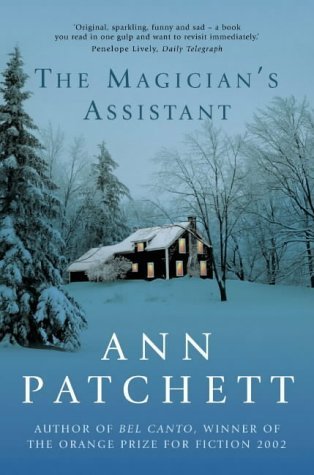 I’d only seen covers with a rabbit and top hat, so was confused that the secondhand copy I ordered with a birthday voucher featured a lit-up farmhouse set back into snowy woods. The first third of the novel takes place in Los Angeles, where Sabine lived with her husband Parsifal, the magician she assisted for 20 years, but the rest is set in winter-encased Nebraska. The contrast between the locations forms a perfect framework for a story of illusions versus reality.
SPOILERS FOLLOW – impossible to avoid them.
Patchett opens with the terrific lines “Parsifal is dead. That is the end of the story.” Ironically, his brain aneurysm burst while he was inside a hospital MRI machine, but it’s a mercy that he died quickly; he could have lingered for years with AIDS – like his lover, Phan, who died 14 months before. You see, while Parsifal while Sabine’s best friend, and in some ways the love of her life, their marriage was only a formality so that she could receive his assets. She knows little of his past; in taking on the name and persona of Parsifal the magician, he created a new life for himself. Only after his death does she learn from the will that his real name was Guy Fetters and that he has a mother, Dot, and sisters, Kitty and Bertie, back in Nebraska.
Dot and Bertie come out to L.A. to see how Guy lived and pay their respects at the cemetery, and then Sabine, lost without a magician to assist, flies out to Nebraska to stay with them for the week leading up to Bertie’s wedding. There is a tacit understanding among the family that Guy was gay, and Sabine assumes that’s why he was sent off to a boys’ reformatory. In fact, it’s because he was involved in his father’s accidental death. This kitchen has seen more than its fair share of climactic events.
END OF SPOILERS
The long section set in Nebraska went in directions I wasn’t expecting. It’s mostly based around late-night kitchen table and bedroom conversations; it’s a wonder it doesn’t become tedious. Patchett keeps the tension high as revelations emerge about what went on in this family. There are two moments when threat looks poised to spill into outright violence, in an echo of previous domestic violence.
For a long time I didn’t know what to make of the novel. It’s odd that all the consequential events happened before the first page and that we never truly meet Parsifal. Yet I loved the way that Sabine’s dreams and flashbacks widen the frame. Magic initially appears to be an arbitrary career choice, but gradually becomes a powerful metaphor of deception and control. Parsifal’s family are obsessed with a Johnny Carson performance he and Sabine once gave: they watch the video recording nightly, longing for the magic to be real. Maybe it is in the end?
Snow by Marcus Sedgwick (2016)
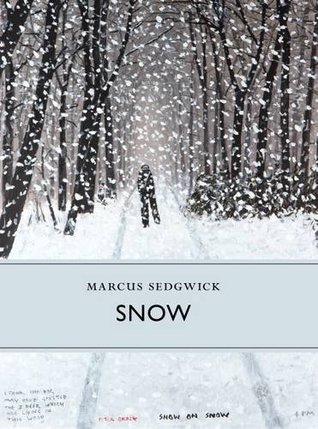 This Little Toller book is, at just over 100 pages, the perfect read for a wintry afternoon. It’s a lot like The Snow Tourist by Charlie English, though that book is travel-based, whereas for this one Sedgwick stayed put at his home in the Haute-Savoie, an alpine region of eastern France (and was even snowed in for part of the time), and wandered in his memory instead.
He writes that snow is “a form of nostalgia” for him, bringing back childhood days off school when he could just stay home and play – he loves it for “the freedom it represented.” He asks himself, “did it snow more when I was young, or is it just my desire and recreated memory?” Looking at weather statistics from Kent, he is able to confirm that, yes, it really did snow more in the 1960s and 70s.
Sedgwick briefly considers the science, history, art, and literature of snow, including polar expeditions and film, music, and paintings as well as Thomas Mann’s The Magic Mountain et al. He also likens the blank page to a snow-covered field, such that writers should not be daunted by it but excited by the possibility of creation.
In the Winter Dark by Tim Winton (1988)
 A taut early novella (just 110 pages) set in an Australian valley called the Sink. Animals have been disappearing: a pet dog snatched from its chain; livestock disemboweled. Four locals are drawn together by fear of an unidentified killer. Maurice Stubbs is the only one given a first-person voice, but passages alternate between his perspective and those of his wife Ida, Murray Jaccob, and Veronica, a pregnant teen. These are people on the edge, reckless and haunted by the past. The malevolent force comes to take on a vengeful nature. I was reminded of Andrew Michael Hurley’s novels. My first taste of Winton’s fiction has whetted my appetite to read more by him – I have Cloudstreet on the shelf.
Have you been reading anything particularly wintry this year?
Six Degrees of Separation: From Margaret to This Cold Heaven
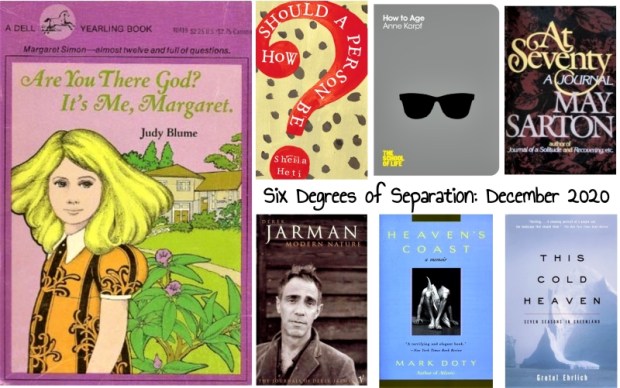
This month we’re starting with Are You There, God? It’s Me, Margaret (which I have punctuated appropriately!). See Kate’s opening post. I know I read this as a child, but other Judy Blume novels were more meaningful for me since I was a tomboy and late bloomer. The only line that stays with me is the chant “We must, we must, we must increase our bust!”
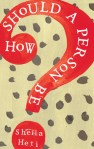 #1 Another book with a question in the title (and dominating the cover) is How Should a Person Be? by Sheila Heti. I found a hardback copy in the unofficial Little Free Library I ran in our neighborhood during the first lockdown before the public library reopened. Heti is a divisive author, but I loved Motherhood for perfectly encapsulating my situation. I think this one, too, is autofiction, and the title question is one I ask myself variations on frequently.
 #2 I’ve read quite a few “How to” books, whether straightforward explanatory/self-help texts or not. Lots happened to be from the School of Life series. One I found particularly enjoyable and helpful was How to Age by Anne Karpf. She writes frankly about bodily degeneration, the pursuit of wisdom, and preparation for death. “Growth and psychological development aren’t a property of our earliest years but can continue throughout the life cycle.”
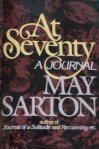 #3 Ageing is a major element in May Sarton’s journals, particularly as she moves from her seventies into her eighties and fights illnesses. I’ve read all but one of her autobiographical works now, and – while my favorite is Journal of a Solitude – the one I’ve chosen as most representative of her usual themes, including inspiration, camaraderie, the pressures of the writing life, and old age, is At Seventy.
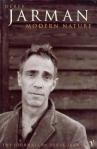 #4 Sarton was a keen gardener, as was Derek Jarman. I learned about him in the context of nature helping people come to terms with their mortality. Modern Nature reproduces the journal the gay, HIV-positive filmmaker kept in 1989–90. Prospect Cottage in Dungeness, Kent, and the unusual garden he cultivated there, was his refuge between trips to London and further afield, and a mental sanctuary when he was marooned in the hospital.
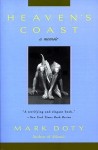 #5 One of the first memoirs I ever read and loved was Heaven’s Coast by Mark Doty, about his partner Wally’s death from AIDS. This sparked my continuing interest in illness and bereavement narratives, and it was through following up Doty’s memoirs with his collections of poems that I first got into contemporary poetry, so he’s had a major influence on my taste. I’ve had Heaven’s Coast on my rereading shelf for ages, so really must get to it in 2021.
 #6 Thinking of heaven, a nice loop back to Blume’s Margaret and her determination to find God … one of the finest travel books I’ve read is This Cold Heaven, about Gretel Ehrlich’s expeditions to Greenland and historical precursors who explored it. Even more than her intrepid wanderings, I was impressed by her prose, which made the icy scenery new every time. “Part jewel, part eye, part lighthouse, part recumbent monolith, the ice is a bright spot on the upper tier of the globe where the world’s purse strings have been pulled tight.”
A fitting final selection for this week’s properly chilly winter temperatures, too. I’ll be writing up my first snowy and/or holiday-themed reads of the year in a couple of weeks.
Join us for #6Degrees of Separation if you haven’t already! (Hosted on the first Saturday of each month by Kate W. of Books Are My Favourite and Best.)
 Bookish Beck = Rebecca Foster. American transplant to England. Freelance proofreader and book reviewer.
 Bookish Beck