Reading Ireland Month, Part II: Barrett, More Donoghue, O’Farrell x 2
My second set of contributions to Cathy’s Reading Ireland Month. Emma Donoghue also appeared in my first instalment of reviews. Today I’m featuring her latest novel, published just a couple of weeks ago, and taking a quick look at a few other Irish books I’ve read recently: a light-hearted debut featuring small-town criminals, and two by Maggie O’Farrell: a reread of her only nonfiction work to date (for book club), and her newest children’s book.
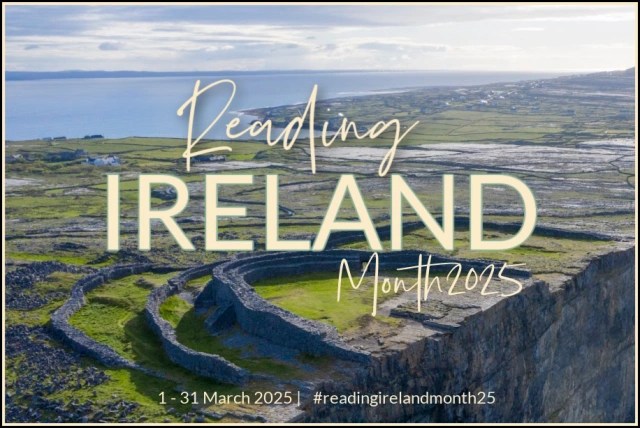
Wild Houses by Colin Barrett (2024)
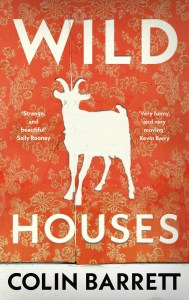 When Doll English is kidnapped by the Ferdia brothers in revenge for a huge loss on a drug deal, his girlfriend, mother and brother must go to unexpected lengths to set him free. There’s plenty of cursing and violence in this small-town crime caper, yet Barrett has a light touch; the dialogue, especially, is funny. The dialect is easy enough to decipher. Nicky, Doll’s girlfriend, lost both parents young and works in a hotel bar. She’s a strong character reminiscent of the protagonist in Trespasses. Overall, I felt that this was nicely written but that Barrett’s talent was somewhat wasted on a thin story. I’ve encountered similar plots in better books by Paul Murray and Donal Ryan. (Free from the publisher)
The Paris Express by Emma Donoghue
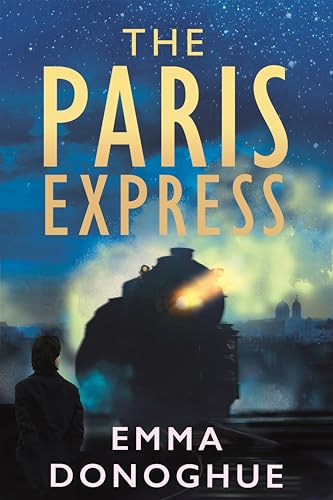 Inspired by a real-life disaster involving a train on the approach to Paris’s Montparnasse station in 1895. The Author’s Note at the end reveals the blend of characters included: people known to have been on that particular train, whether as crew or passengers; those who might have journeyed on it because they spent time in Paris at around that period (such as Irish playwright John Millington Synge); and those made up from scratch. It’s a who’s-who of historical figures, many of whom represent different movements or social issues, such as a woman medical student and an African American painter who can pass as white in certain circumstances. Donoghue clearly intends to encompass the entire social hierarchy, from a maid to a politician with a private carriage. She also crafts a couple of queer encounters.
The premise is appealing: a train hurtling toward catastrophe is in a sense a locked room, seeding much drama and intrigue. A young female radical is on board with a bomb, so all along you speculate about whether she’ll set it off and when. While I found the general thrust engaging, it was harder to develop interest in the large cast of characters. I also found the passages personifying the train (she “carries death in her belly”) hokey and thought that, as has sometimes been the case with Donoghue’s historical work, there’s too much research that’s there just for the sake of it, because she came across a fact she found fascinating and couldn’t bear to leave out (“These days every public building has three rubbish bins—one for the reclaiming of paper and cloth, the next for glass, ceramics, and oyster shells, and the last for perishables, which is where she drops the handkerchief.”). So this was enjoyable enough but not among her best.
With thanks to Picador for the proof copy for review.
I Am, I Am, I Am: Seventeen Brushes with Death by Maggie O’Farrell (2017)
 This was a reread for book club, and oh how brilliant it is. I’m more convinced than ever that the memoir-in-essays is a highly effective form because it focuses on themes or moments of great intensity and doesn’t worry about accounting for all the boring intermediate material. A few of these pieces feel throwaway, but together they form a vibrant picture of a life and also inspire awe at what the human body can withstand. No doubt on Wednesday we will each pick out different essays that resonated the most with us, perhaps because they run very close to our own experience. I imagine our discussion will start there – and with sharing our own NDEs. Stylistically, the book has a lot in common with O’Farrell’s fiction, which often employs the present tense and a complicated chronology. The present tense and a smattering of second person make the work immediate and invite readers to feel their way into her situations. Otherwise, my thoughts are as before – the last two essays are the pinnacle.
My original review from 2018:
We are, all of us, wandering about in a state of oblivion, borrowing our time, seizing our days, escaping our fates, slipping through loopholes, unaware of when the axe may fall.
O’Farrell captures fragments of her life through 17 essays on life-threatening illnesses and other narrow escapes she’s experienced. The pieces aren’t in chronological order and aren’t intended to be comprehensive. Instead, they crystallize the fear and pain of particular moments in time, and are rendered with the detail you’d expect from a scene in one of her novels. (Indeed, you can spot a lot of the real-life influences on her fiction, particularly This Must Be the Place – travels in China and Chile; eczema and stammering.)
She’s been mugged at machete point, has nearly drowned several times, had a risky first labour, and was almost the victim of a serial killer. (My life feels awfully uneventful by comparison!) But the best section of the book is its final quarter: an essay about her childhood encephalitis and its lasting effects, followed by another about her daughter’s extreme allergies. Only now, as a mother, can she understand how terrifying it must have been for her parents to wait at her side during days when she might not have survived. O’Farrell depicts parenthood better than any other author I can think of – letting those of us who haven’t experienced it do so vicariously. (Gift from my wish list)
My original rating (2018): 
My rating now: 
When the Stammer Came to Stay by Maggie O’Farrell (2024)
 This is actually her third children’s book, after Where Snow Angels Go (2020) and The Boy Who Lost His Spark (2022). All are illustrated by Daniela Jaglenka Terrazzini, who has a richly colourful and slightly old-fashioned style; she makes kids look as dignified as adults. The books are intended for slightly older children in that they’re on the longer side, have more words than pictures, and are more serious than average. They all weave in gentle magic as a way of understanding and coping with illness, a mental health challenge, or a disability.
When the Stammer Came to Stay is a perfect follow-on to I Am, I Am, I Am because it, too, draws on O’Farrell’s personal struggles. It’s the fable-like story of two sisters, Bea and Min, who share an attic room. The one is perfectly tidy; the other is a messy tomboy. When the stammer, pictured as a blob of silver ectoplasm above the shoulder, starts stealing Min’s words, they gather advice from their parents and the lodgers about how she can accept her new reality instead of fighting it or closing herself off by not speaking at all. The mycologist’s symbiosis metaphor is perhaps a bit too neat, but it contrasts with the impish connotations of the dibbuk, another useful parallel the girls discover. With this I’ve now read O’Farrell’s complete published works!
Most Anticipated Books of the First Half of 2025
As I said the other week, I sometimes wonder if designating a book as “Most Anticipated” is a curse – if the chosen books are doomed to fail to meet my expectations. Nonetheless, I can’t resist compiling such a list at least once each year.
Also on my radar: fiction by Claire Adam, Amy Bloom, Emma Donoghue, Sarah Hall, Michelle Huneven, Eowyn Ivey, Rachel Joyce, Heather Parry and Torrey Peters; nonfiction by Melissa Febos, Robert Macfarlane, Lucy Mangan, Suzanne O’Sullivan and Sophie Pavelle. (Further ahead, I’ll seek out I Want to Burn This Place Down: Essays by Maris Kreizman and The Girls Who Grew Big by Leila Mottley in July, The Savage Landscape by Cal Flyn in Oct. and Tigers between Empires by Jonathan C. Slaght in Nov.)
However, below I’ve narrowed it down to the 25 books I’m most looking forward to for the first half of 2025, 15 fiction and 10 nonfiction. I’m impressed that 4 are in translation! And 22/25 are by women (all the fiction is). In release date order, with UK publication info given first if available. The blurbs are adapted from Goodreads. I’ve taken the liberty of using whichever cover is my favourite (almost always the U.S. one).

Fiction
 Live Fast by Brigitte Giraud (trans. from the French by Cory Stockwell) [Feb. 11, Ecco]: I found out about this autofiction novella via an early Shelf Awareness review. It “follows one woman’s quest to comprehend the motorcycle accident that took the life of her partner Claude at age 41. The narrator … recounts the chain of events that led up to the fateful accident, tracing the tiny, maddening twists of fate that might have prevented its tragic outcome. Each chapter asks the rhetorical question, ‘what if’ … A sensitive elegy to her husband”.
 The Unworthy by Agustina Bazterrica (trans. from the Spanish by Sarah Moses) [13 Feb., Pushkin; March 4, Scribner]: I wasn’t enamoured of the Argentinian author’s short stories, but Tender Is the Flesh was awesome. This is a short dystopian horror set in a convent. “In the House of the Sacred Sisterhood, the unworthy live in fear of the Superior Sister’s whip. … Risking her life, one of the unworthy keeps a diary in secret. Slowly, memories surface from a time before the world collapsed, before the Sacred Sisterhood became the only refuge. Then Lucía arrives.” (PDF copy for Shelf Awareness review)
 Victorian Psycho by Virginia Feito [13 Feb., Fourth Estate; Feb. 4, Liveright]: Feito’s debut, Mrs March, was deliciously odd, and I love the (U.S.) cover for this one. It sounds like a bonkers horror take on Henry James’s The Turn of the Screw, “a gruesome and gleeful new novel that probes the psyche of a bloodthirsty governess. Winifred Notty arrives at Ensor House prepared to play the perfect Victorian governess—she’ll dutifully tutor her charges, Drusilla and Andrew, tell them bedtime stories, and only joke about eating children.”

Three Days in June by Anne Tyler [13 Feb., Chatto & Windus (Penguin) / Feb. 11, Knopf]: I’m not a Tyler completist, but she’s reliable and this is a novella! “It’s the day before her daughter’s wedding and things are not going well for Gail Baines. First …, she loses her job … Then her ex-husband Max turns up at her door expecting to stay for the festivities. He doesn’t even have a suit. Instead, he’s brought memories, a shared sense of humour – and a cat looking for a new home. … [And] daughter Debbie discovers her groom has been keeping a secret.” Susan vouches for this. (Edelweiss download / on order from library)
 The Swell by Kat Gordon [27 Feb., Manilla Press (Bonnier Books UK)]: I got vague The Mercies (Kiran Millwood Hargrave) vibes from the blurb. “Iceland, 1910. In the middle of a severe storm two sisters, Freyja and Gudrun, rescue a mysterious, charismatic man from a shipwreck near their remote farm. Sixty-five years later, a young woman, Sigga, is spending time with her grandmother when they learn a body has been discovered on a mountainside near Reykjavik, perfectly preserved in ice.” (NetGalley download)
 Dream Count by Chimamanda Ngozi Adichie [4 March, Fourth Estate/Knopf]: This is THE book I’m most looking forward to; I’ve read everything Adichie has published and Americanah was a 5-star read for me. So I did something I’ve never done before and pre-ordered the signed independent bookshop edition from my local indie, Hungerford Bookshop. “Chiamaka is a Nigerian travel writer living in America. Alone in the midst of the pandemic, she recalls her past lovers and grapples with her choices and regrets.” The focus is on four Nigerian American women “and their loves, longings, and desires.” (New purchase)
 Kate & Frida by Kim Fay [March 11, G.P. Putnam’s Sons]: “Frida Rodriguez arrives in Paris in 1991 … But then she writes to a bookshop in Seattle … A friendship begins that will redefine the person she wants to become. Seattle bookseller Kate Fair is transformed by Frida’s free spirit … [A] love letter to bookshops and booksellers, to the passion we bring to life in our twenties”. Sounds like a cross between The Paris Novel and 84 Charing Cross Road – could be fab; could be twee. We shall see! (Edelweiss download)
 The Antidote by Karen Russell [13 March, Chatto & Windus (Penguin) / March 11, Knopf]: I love Russell’s Swamplandia! but haven’t gotten on with her other work I’ve tried, so I’m only tentatively enthusiastic about the odd Wizard of Oz-inspired blurb: “a historic dust storm ravages the fictional town of Uz, Nebraska. But Uz is already collapsing—not just under the weight of the Great Depression … but beneath its own violent histories. The Antidote follows a ‘Prairie Witch,’ … a Polish wheat farmer …; his orphan niece, a … witch’s apprentice …; a voluble scarecrow; and a New Deal photographer”. (Requested from publisher)
 Elegy, Southwest by Madeleine Watts [13 March, ONE (Pushkin) / Feb. 18, Simon & Schuster]: Watts’s debut, The Inland Sea, was a hidden gem. Given the news from L.A., this seems all the more potent: “In November 2018, Eloise and Lewis rent a car in Las Vegas and take off on a two-week road trip across the American southwest … [w]hile wildfires rage. … Lewis, an artist working for a prominent land art foundation, is grieving the recent death of his mother, while Eloise is an academic researching the past and future of the Colorado River … [and] beginning to suspect she might be pregnant”. (Edelweiss download)
 O Sinners! by Nicole Cuffy [March 18, One World (Random House)]: Cuffy’s Dances, which was longlisted for the Carol Shields Prize, was very good. The length of this sophomore novel (464 pages) gives me pause, but I do generally gravitate towards stories of cults. “Faruq Zaidi, a young journalist reeling from the recent death of his father, a devout Muslim, takes the opportunity to embed in a cult called The Nameless [b]ased in the California redwoods and shepherded by an enigmatic [Black] Vietnam War veteran.”
 The Accidentals: Stories by Guadalupe Nettel (trans. from the Spanish by Rosalind Harvey) [10 April, Fitzcarraldo Editions / April 29, Bloomsbury]: I really enjoyed Nettel’s International Booker-shortlisted novel Still Born. “When an albatross strays too far from its home, or loses its bearings, it becomes an ‘accidental’, an unmoored wanderer. The protagonists of these eight stories each find the ordinary courses of their lives disrupted by an unexpected event. … Deft and disquieting, oscillating between the real and the fantastical”. (PDF copy for Shelf Awareness review)
 Ordinary Saints by Niamh Ni Mhaoileoin [24 April, Manilla Press (Bonnier Books UK)]: “Brought up in a devout household in Ireland, Jay is now living in London with her girlfriend, determined to live day to day and not think too much about either the future or the past. But when she learns that her beloved older brother, who died in a terrible accident, may be made into a Catholic saint, she realises she must at last confront her family, her childhood and herself.” Winner of the inaugural PFD Queer Fiction Prize and shortlisted for the Women’s Prize Discoveries Award.
 Heartwood by Amity Gaige [1 May, Fleet / April 1, Simon & Schuster]: I loved Gaige’s Sea Wife. “In the heart of the Maine woods, an experienced Appalachian Trail hiker goes missing. She is forty-two-year-old Valerie Gillis, who has vanished 200 miles from her final destination. … At the centre of the search is Beverly, the determined Maine State Game Warden tasked with finding Valerie, who is managing the search on the ground. While Beverly is searching, Lena, a seventy-six-year-old birdwatcher in a retirement community, becomes an unexpected armchair detective.”
 Are You Happy?: Stories by Lori Ostlund [May 6, Astra House]: Ostlund is not so well known, especially outside the USA, but I enjoyed her debut novel, After the Parade, back in 2015. “Nine masterful stories that explore class, desire, identity, and the specter of violence in America–and in American families–against women and the LGBTQ+ community. … [W]e watch Ostlund’s characters as they try—and often fail—to make peace with their pasts while navigating their present relationships and responsibilities.” (Edelweiss download)
 Ripeness by Sarah Moss [22 May, Picador / Sept. 9, Farrar, Straus and Giroux]: Though I was disappointed by her last two novels, I’ll read anything Moss publishes and hope for a return to form. “It is the [19]60s and … Edith finds herself travelling to rural Italy … to see her sister, ballet dancer Lydia, through the final weeks of her pregnancy, help at the birth and then make a phone call which will seal this baby’s fate, and his mother’s.” Promises to be “about migration and new beginnings, and about what it is to have somewhere to belong.”
Nonfiction
 The Forgotten Sense: The New Science of Smell by Jonas Olofsson [Out now! 7 Jan., William Collins / Mariner]: Part of a planned deep dive into the senses. “Smell is … one of our most sensitive and refined senses; few other mammals surpass our ability to perceive scents in the animal kingdom. Yet, as the millions of people who lost their sense of smell during the COVID-19 pandemic can attest, we too often overlook its role in our overall health. … For readers of Bill Bryson and Steven Pinker”. (On order from library)
 Bread and Milk by Karolina Ramqvist (trans. from the Swedish by Saskia Vogel) [13 Feb., Bonnier Books / Feb. 11, Coach House Books]: I think I first found about this via the early Foreword review. “Bread and Milk traces a life through food, from carefully restricted low-fat margarine to a bag of tangerines devoured in one sitting to the luxury of a grandmother’s rice pudding. In this radiant memoir from one of Northern Europe’s most notable literary stylists, we follow several generations of women and their daughters as they struggle with financial and emotional vulnerability, independence, and motherhood.”
 My Mother in Havana: A Memoir of Magic & Miracle by Rebe Huntman [Feb. 18, Monkfish]: I found out about this from Rebecca Moon Ruark and by the time the publisher offered it to me I’d already downloaded it. The themes of bereavement and religion are right up my street. “As she explores the memory of her own mother, interlacing it with her search for the sacred feminine, Huntman leads us into a world of séance and sacrifice, pilgrimage and sacred dance, which resurrect her mother and bring Huntman face to face with a larger version of herself.” (Edelweiss download)
 Mother Animal by Helen Jukes [27 Feb., Elliott & Thompson]: This may be the 2025 release I’ve known about for the longest. I remember expressing interest the first time the author tweeted about it; it’s bound to be a good follow-up to Lucy Jones’s Matrescence. “When Helen Jukes falls pregnant, … she widens her frame of reference, looking beyond humans to ask what motherhood looks like in other species. … As she enters the sleeplessness, chaos and intimate discoveries of life with a newborn, these animal stories become … companions and guides.” (Requested from publisher)
 Alive: An Alternative Anatomy by Gabriel Weston [6 March, Vintage (Penguin) / March 4, David R. Godine]: I’ve read Weston’s Direct Red and appreciate her perspective. “As she became a surgeon, a mother, and ultimately a patient herself, Weston found herself grappling with the gap between scientific knowledge and unfathomable complexity of human experience. … Focusing on our individual organs, not just under the intense spotlight of the operating theatre, but in the central role they play in the stories of our lives.”
 The Lost Trees of Willow Avenue: A Story of Climate and Hope on One American Street by Mike Tidwell [March 25, St. Martin’s Press]: A must-read for me because it’s set in Takoma Park, Maryland, where I was born. “A love letter to the magnificent oaks and other trees dying from record heat waves and bizarre rain, [activist] Tidwell’s story depicts the neighborhood’s battle to save the trees and combat climate change. … Tidwell chronicles people on his block sick with Lyme disease, a church struggling with floods, and young people anguishing over whether to have kids, … against the global backdrop of 2023’s record heat domes and raging wildfires and hurricanes.”
 Breasts: A Relatively Brief Relationship by Jean Hannah Edelstein [3 April, Phoenix (W&N)]: I loved Edelstein’s 2018 memoir This Really Isn’t About You, and I regularly read her Substack. “As [Edelstein] comes of age, she learns that breasts are a source of both shame and power. In early motherhood, she sees her breasts transform into a source of sustenance and a locus of pain. And then, all too soon, she is faced with a diagnosis and forced to confront what it means to lose and rebuild an essential part of yourself.”
 Poets Square: A Memoir in Thirty Cats by Courtney Gustafson [8 May, Fig Tree (Penguin) / April 29, Crown]: Gustafson became an Instagram and TikTok hit with her posts about looking after a feral cat colony in Tucson, Arizona. The money she raised via social media allowed her to buy her home and continue caring for animals. “[Gustafson] had no idea about the grief and hardship of animal rescue, the staggering size of the problem in neighborhoods across the country. And she couldn’t have imagined how that struggle … would help pierce a personal darkness she’d wrestled for with much of her life.” (Proof copy from publisher)
 Lifelines: Searching for Home in the Mountains of Greece by Julian Hoffman [15 May, Elliott & Thompson]: Hoffman’s Irreplaceable was my book of 2019. “In the summer of 2000, Julian Hoffman and his wife Julia found themselves disillusioned with city life. Overwhelmed by long commutes, they stumbled upon a book about Prespa, Greece – a remote corner of Europe filled with stone villages, snow-capped mountains and wildlife. What began as curiosity soon transformed into a life-changing decision: to make Prespa their home.” I know next to nothing about Greece and this is a part of it that doesn’t fit the clichés.
 Spent: A Comic Novel by Alison Bechdel [22 May, Jonathan Cape (Penguin) / May 20, Mariner Books]: Bechdel’s Fun Home is an absolute classic of the graphic memoir. I’ve lost track of her career a bit but like the sound of this one. “A cartoonist named Alison Bechdel, running a pygmy goat sanctuary in Vermont, is existentially irked by a climate-challenged world and a citizenry on the brink of civil war.” After her partner’s wood-chopping video goes viral, she decides to create her own ethical-living reality TV show. Features cameos from some characters from her Dykes to Watch Out For series.
Other lists of anticipated books:
Clare – we overlap on a couple of our picks
Kate – one pick in common, plus I’ve already read a couple of her others
Laura – we overlap on a couple of our picks
Paul (mostly science and nature)
What catches your eye here? What other 2025 titles do I need to know about?
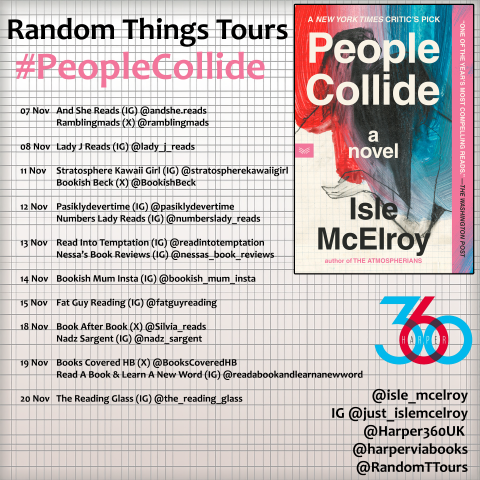
People Collide by Isle McElroy (Blog Tour)
People Collide (2023), nonbinary author Isle McElroy’s second novel, is a body swap story that explores the experiences and gender expectations of a heterosexual couple when they switch places. It’s not so much magic realism as a what-if experiment. Eli wakes up one morning in his wife Elizabeth’s body in their “pie slice of an apartment” in southern Bulgaria, where they moved for her government-sponsored teaching position. At first, finding himself alone, he thinks she’s disappeared and goes to the school to ask after her. The staff and students there, seeing him as Elizabeth, think they’re witnessing some kind of mental breakdown and send ‘her’ home. One of them is gone, yes, but it’s Elizabeth – in Eli’s body.
Both sets of parents get involved in the missing person case and, when a credit card purchase indicates Elizabeth is in Paris, Eli sets off after her. He is an apt narrator because he sees himself as malleable and inessential: “I wasn’t a person but a protean blob, intellectually and emotionally gelatinous, shaped by whatever surrounded me; “I could never shake the sense that I was, for [Elizabeth], like a supplementary arm grafted onto the center of her stomach.” He comes from a rough family background, has a history of disordered eating, and doesn’t have a career, so is mildly resentful of Elizabeth’s. She’s also an aspiring novelist and her solitary work takes priority while he cooks the meals and grades her students’ papers.

The couple already pushed against gender stereotypes, then, but it is still a revelation to Elizabeth how differently she is treated as a male. “I can’t name a single thing I don’t like about it. Everything’s become so much easier for me in your body,” she says to Eli when they finally meet up in Paris. There follows an arresting seven-page sex scene as they experience a familiar act anew in their partner’s body. “All that had changed was perspective.” But interactions with the partner’s parents assume primacy in much of the rest of the book.
This novel has an intriguing premise that offered a lot of potential, but it doesn’t really go anywhere with it. The sex scene actually struck me as the most interesting part, showing how being in a different body would help one understand desire. Beyond that, it feels like a stale rumination on passing as female (Elizabeth schooling Eli about menstruation and how to respond to her parents’ news about extended family) and women not being taken seriously in the arts (a lecture by a Rachel Cusk-like writer in the final chapter). I also couldn’t account for two unusual authorial decisions: Eli is caught up in a Parisian terrorist attack, but nothing results. Was it to shake things up at the one-third point, for want of a better idea? I also questioned the late shift to Elizabeth’s mother’s narration. Introducing a new first-person narrator, especially so close to the end, feels like cheating, or admitting defeat if there’s something important that Eli can’t witness. The author is skilled at creating backstory and getting characters from here to there. But in figuring out how the central incident would play out, the narrative falls short. Ultimately, I would have preferred this at short story length, where suggestion would be enough and more could have been left to the imagination.
With thanks to Anne Cater of Random Things Tours and HarperVia for the free copy for review.
Buy People Collide from Bookshop.org [affiliate link]
I was delighted to be part of the blog tour for People Collide. See below for details of where other reviews have appeared or will appear soon.
20 Books of Summer, 17–18: Suzanne Berne and Melissa Febos
Nearly there! I’ll have two more books to review for this challenge as part of roundups tomorrow and Saturday. Today I have a lesser-known novel by a Women’s Prize winner and a set of personal essays about body image and growing up female.
A Perfect Arrangement by Suzanne Berne (2001)
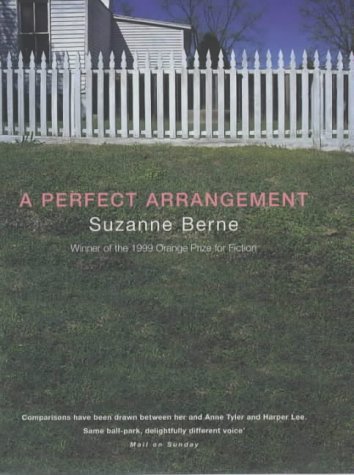 Berne won the Orange (Women’s) Prize for A Crime in the Neighbourhood in 1999. This is another slice of mild suburban suspense. The Boston-area Cook-Goldman household faces increasingly disruptive problems. Architect dad Howard is vilified for a new housing estate he’s planning, plus an affair that he had with a colleague a few years ago comes back to haunt him. Hotshot lawyer Mirella can’t get the work–life balance right, especially when she finds out she’s unexpectedly pregnant with twins at age 41. They hire a new nanny to wrangle their two under-fives, headstrong Pearl and developmentally delayed Jacob. If Randi Gill seems too good to be true, that’s because she’s a pathological liar. But hey, she’s great with kids.
It’s clear some Bad Stuff is going to happen to this family; the only questions are how bad and precisely what. Now, this is pretty much exactly what I want from my “summer reading”: super-readable plot- and character-driven fiction whose stakes are low (e.g., midlife malaise instead of war or genocide or whatever) and that veers more popular than literary and so can be devoured in large chunks. I really should have built more of that into my 20 Books plan! I read this much faster than I normally get through a book, but that meant the foreshadowing felt too prominent and I noticed some repetition, e.g., four or five references to purple loosestrife, which is a bit much even for those of us who like our wildflowers. It seemed a bit odd that the action was set back in the Clinton presidency; the references to the Lewinsky affair and Hillary’s “baking cookies” remark seemed to come out of nowhere. And seriously, why does the dog always have to suffer the consequences of humans’ stupid mistakes?!
This reminded me most of Friends and Strangers by J. Courtney Sullivan and a bit of Breathing Lessons by Anne Tyler, while one late plot turn took me right back to The Senator’s Wife by Sue Miller. While the Goodreads average rating of 2.93 seems pretty harsh, I can also see why fans of A Crime would have been disappointed. I probably won’t seek out any more of Berne’s fiction. (Secondhand – Community Furniture Project, Newbury)
Girlhood by Melissa Febos (2021)
I was deeply impressed by Febos’s Body Work (2022), a practical guide to crafting autobiographical narratives as a way of reckoning with the effects of trauma. Ironically, I engaged rather less with her own personal essays. One issue for me was that her highly sexualized experiences are a world away from mine. I don’t have her sense of always having had to perform for the male gaze, though maybe I’m fooling myself. Another was that it’s over 300 pages and only contains seven essays, so there were several pieces that felt endless. This was especially true of “The Mirror Test” (62 pp.) which is about double standards for girls as they played out in her simultaneous lack of confidence and slutty reputation, but randomly references The House of Mirth quite a lot; and “Thank You for Taking Care of Yourself” (74 pp.), which ponders why Febos has such trouble relaxing at a cuddle party and whether she killed off her ability to give physical consent through her years as a dominatrix.
 “Wild America,” about her first lesbian experience and the way she came to love a perceived defect (freakishly large hands; they look perfectly normal to me in her author photo), and “Intrusions,” about her and other women’s experience with stalkers, worked a bit better. But my two favourites incorporated travel, a specific relationship, and a past versus present structure. “Thesmophoria” opens with her arriving in Rome for a mother–daughter vacation only to realize she told her mother the wrong month. Feeling guilty over the error, she remembers other instances when she valued her mother’s forgiveness, including when she would leave family celebrations to buy drugs. The allusions to Greek myth were neither here nor there for me, but the words about her mother’s unconditional love made me cry.
I also really liked “Les Calanques,” which again draws on her history of heroin addiction, comparing a strung-out college trip to Paris when she scored with a sweet gay boy named Ahmed with the self-disciplined routines and care for her body she’d learned by the time she returns to France for a writing retreat. This felt like a good model for how to write about one’s past self. “I spend so much time with that younger self, her savage despair and fleeting reliefs, that I start to feel as though she is here with me.” The prologue, “Scarification,” is a numbered list of how she got her scars, something Paul Auster also gives in Winter Journal. As if to insist that we can only ever experience life through our bodies.
Although I’d hoped to connect to this more, and ultimately felt it wasn’t really meant for me (and maybe I’m a deficient feminist), I did admire the range of strategies and themes so will keep it on the shelf as a model for approaching the art of the personal essay. I think I would probably prefer a memoir from Febos, but don’t need to read more about her sex work (Whip Smart), so might look into Abandon Me. If bisexuality and questions of consent are of interest, you might also like Another Word for Love by Carvell Wallace, which I reviewed for BookBrowse. (Gift (secondhand) from my Christmas wish list last year) 
Book Serendipity, June to Mid-August 2024
I call it “Book Serendipity” when two or more books that I read at the same time or in quick succession have something in common – the more bizarre, the better. This is a regular feature of mine every couple of months. Because I usually have 20–30 books on the go at once, I suppose I’m more prone to such incidents. People frequently ask how I remember all of these coincidences. The answer is: I jot them on scraps of paper or input them immediately into a file on my PC desktop; otherwise, they would flit away!
The following are in roughly chronological order.
- A self-induced abortion scene in Recipe for a Perfect Wife by Karma Brown and Sleeping with Cats by Marge Piercy.
- A woman who cleans buildings after hours, and a character named Tova who lives in the Seattle area in A Reason to See You Again by Jami Attenberg and Remarkably Bright Creatures by Shelby Van Pelt.
- Flirting with a surf shop employee in Sandwich by Catherine Newman and Remarkably Bright Creatures by Shelby Van Pelt.
- Living in Paris and keeping ticket stubs from all films seen in Paris Trance by Geoff Dyer and The Invention of Hugo Cabret by Brian Selznick.
- A schefflera (umbrella tree) is mentioned in Cheri by Jo Ann Beard and Company by Shannon Sanders.

- The Plague by Albert Camus is mentioned in Knife by Salman Rushdie and Stowaway by Joe Shute.
- Making egg salad sandwiches is mentioned in Cheri by Jo Ann Beard and Sandwich by Catherine Newman.
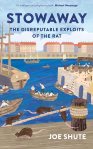
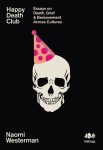
- Pet rats in Stowaway by Joe Shute and Happy Death Club by Naomi Westerman. Rats are also mentioned in Mammoth by Eva Baltasar, The Tale of Despereaux by Kate DiCamillo, and The Colour by Rose Tremain.
- Eels feature in Our Narrow Hiding Places by Kristopher Jansma, Late Light by Michael Malay, and The Colour by Rose Tremain.
- Atlantic City, New Jersey is a location in Florence Adler Swims Forever by Rachel Beanland and Company by Shannon Sanders.
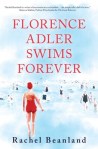 The father is a baker in Florence Adler Swims Forever by Rachel Beanland and Our Narrow Hiding Places by Kristopher Jansma.
- A New Zealand setting (but very different time periods) in Greta & Valdin by Rebecca K Reilly and The Colour by Rose Tremain.
- A mention of Melanie Griffith’s role in Working Girl in I’m Mostly Here to Enjoy Myself by Glynnis MacNicol and Happy Death Club by Naomi Westerman.
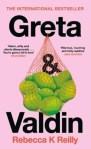 Ermentrude/Ermyntrude as an imagined alternate name in Greta & Valdin by Rebecca K Reilly and a pet’s name in Stowaway by Joe Shute.
- A poet with a collection that was published on 6 August mentions a constant ringing in the ears: Joshua Jennifer Espinoza (I Don’t Want to Be Understood) and Keith Taylor (What Can the Matter Be?).
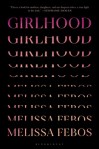
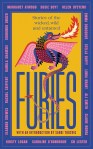
- A discussion of the original meaning of “slut” (a slovenly housekeeper) vs. its current sexualized meaning in Girlhood by Melissa Febos and Sandi Toksvig’s introduction to the story anthology Furies.
- An odalisque (a concubine in a harem, often depicted in art) is mentioned in I’m Mostly Here to Enjoy Myself by Glynnis MacNicol and The Shark Nursery by Mary O’Malley.
- Reading my second historical novel of the year in which there’s a disintegrating beached whale in the background of the story: first was Whale Fall by Elizabeth O’Connor, then Come to the Window by Howard Norman.
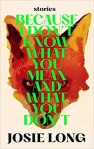 A short story in which a woman gets a job in online trolling in Because I Don’t Know What You Mean and What You Don’t by Josie Long and in the Virago Furies anthology (Helen Oyeyemi’s story).
- Her partner, a lawyer, is working long hours and often missing dinner, leading the protagonist to assume that he’s having an affair with a female colleague, in Recipe for a Perfect Wife by Karma Brown and Summer Fridays by Suzanne Rindell.
- A fierce boss named Jo(h)anna in Summer Fridays by Suzanne Rindell and Test Kitchen by Neil D.A. Stewart.
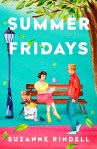
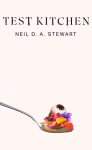
- An OTT rendering of a Scottish accent in Greta & Valdin by Rebecca K Reilly and Test Kitchen by Neil D.A. Stewart.
- A Padstow setting and a mention of Puffin Island (Cornwall) in The Cove by Beth Lynch and England as You Like It by Susan Allen Toth.
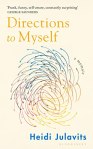
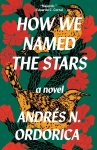
- A mention of the Big and Little Dipper (U.S. names for constellations) in Directions to Myself by Heidi Julavits and How We Named the Stars by Andrés N. Ordorica.
- A mention of Binghamton, New York and its university in We Are Animals by Jennifer Case and We Would Never by Tova Mirvis.
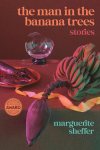
- A character accidentally drinks a soapy liquid in We Would Never by Tova Mirvis and one story of The Man in the Banana Trees by Marguerite Sheffer.
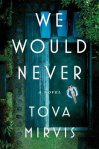 The mother (of the bride or groom) takes over the wedding planning in We Would Never by Tova Mirvis and Summer Fridays by Suzanne Rindell.
- The ex-husband’s name is Jonah in The Mourner’s Bestiary by Eiren Caffall and We Would Never by Tova Mirvis.
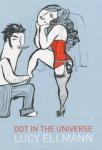
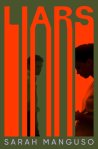
- The husband’s name is John in Dot in the Universe by Lucy Ellmann and Liars by Sarah Manguso.
- An affair is discovered through restaurant receipts in Summer Fridays by Suzanne Rindell and Test Kitchen by Neil D.A. Stewart.
- A mention of eating fermented shark in The Museum of Whales You Will Never See by A. Kendra Greene and Test Kitchen by Neil D.A. Stewart.
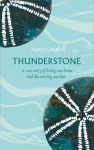
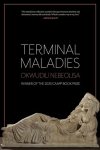
- A mention of using one’s own urine as a remedy in Thunderstone by Nancy Campbell and Terminal Maladies by Okwudili Nebeolisa.
- The main character tries to get pregnant by a man even though one of the partners is gay in Mammoth by Eva Baltasar and Until the Real Thing Comes Along by Elizabeth Berg.
- Motherhood is for women what war is for men: this analogy is presented in We Are Animals by Jennifer Case, Parade by Rachel Cusk, and Want, the Lake by Jenny Factor.
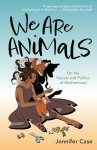 Childcare is presented as a lifesaver for new mothers in We Are Animals by Jennifer Case and Liars by Sarah Manguso.
- A woman bakes bread for the first time in Mammoth by Eva Baltasar and A Year of Biblical Womanhood by Rachel Held Evans.
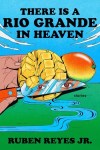
- A gay couple adopts a Latino boy in Greta & Valdin by Rebecca K Reilly and one story of There Is a Rio Grande in Heaven by Ruben Reyes, Jr.
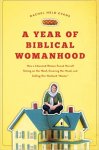 A husband who works on film projects in A Year of Biblical Womanhood by Rachel Held Evans and Liars by Sarah Manguso.
- A man is haunted by things his father said to him years ago in Parade by Rachel Cusk and one story in There Is a Rio Grande in Heaven by Ruben Reyes, Jr.
- Two short story collections in a row in which a character is a puppet (thank you, magic realism!): The Man in the Banana Trees by Marguerite Sheffer, followed by There Is a Rio Grande in Heaven by Ruben Reyes, Jr.
- A farm is described as having woodworm in Mammoth by Eva Baltasar and Parade by Rachel Cusk.
- Sebastian as a proposed or actual name for a baby in Signs, Music by Raymond Antrobus and Birdeye by Judith Heneghan.
What’s the weirdest reading coincidence you’ve had lately?
#WITMonth, Part I: Novellas by Eva Baltasar and Françoise Sagan
I’m starting off my Women in Translation month coverage with mini responses to two novellas: one Catalan and one French; both about disaffected women trying to work out what they want from life.
Mammoth by Eva Baltasar (2022; 2024)
[Translated from the Catalan by Julia Sanches]
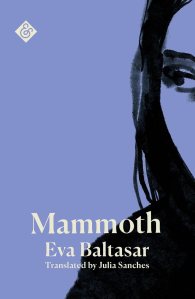 I’d been vaguely attracted by descriptions of the Spanish poet’s novels Permafrost and Boulder, which are also about lesbians in odd situations. Mammoth is the third book in a loose trilogy. Its 24-year-old narrator is so desperate for a baby that she’s decided to have unprotected sex with men until a pregnancy results. In the meantime, her sociology project at nursing homes comes to an end and she moves from Barcelona to a remote farm where she develops subsistence skills and forms an interdependent relationship with the gruff shepherd. “I’d been living in a drowning city, and I need this – the restorative silence of a decompression chamber. … my past is meaningless, and yet here, in this place, there is someone else’s past that I can set up and live in awhile.” For me this was a peculiar combination of distinguished writing (“The city pounces on the still-pale light emerging from the deep sea and seizes it with its lucrative forceps”) but absolutely repellent story, with a protagonist whose every decision makes you want to throttle her. An extended scene of exterminating feral cats certainly didn’t help matters. I’d be wary of trying Baltasar again.
With thanks to And Other Stories for the proof copy for review.
Aimez-vous Brahms… by Françoise Sagan (1959; 1960)
[Translated from the French by Peter Wiles]
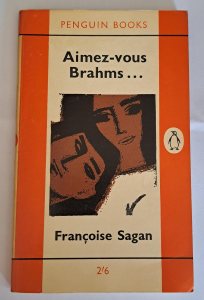 At age 39, divorced interior decorator Paule is “passionately concerned with her beauty and battling with the transition from young to youngish woman”. (Ouch. But true.) It’s an open secret that her partner Roger is always engaged in a liaison with a young woman; people pity her and scorn Roger for his infidelity. But when Paule has a dalliance with a client’s son, 25-year-old lawyer Simon, a double standard emerges: “they had never shown her the mixture of contempt and envy she was going to arouse this time.” Simon is an idealist, accusing her of “letting love go by, of neglecting your duty to be happy”, but he’s also indolent and too fond of drink. Paule wonders if she’s expected too much from an affair. “Everyone advised a change of air, and she thought sadly that all she was getting was a change of lovers: less bother, more Parisian, so common”.
I was by turns reminded of Chéri by Colette, In a Summer Season by Elizabeth Taylor, and even The Graduate (“Mrs. Robinson,” anyone?). Simon asks the title question to invite Paule to a concert; that she has to ponder it carefully tells her she’s “losing herself, losing track of herself”. But it’s all too easy for the status quo to be reinstated after a brave act. Middle-aged woman makes bid for freedom but ultimately nothing changes: same plot as The Funeral Cryer and any number of other books, but this was so much better. How did Sagan manage such insight at age 24 (and this was her fourth book)?! While not quite as memorable as Bonjour Tristesse, this is another incisive slice of fiction that has aged well apart from using “sodomite” and “Negress” as matter-of-fact terms for bit players. I’d read anything else I can find by Sagan. (Secondhand – Community Furniture Project, Newbury)
June Releases by Caroline Bird, Kathleen Jamie, Glynnis MacNicol and Naomi Westerman
These four books by women all incorporate life writing to an extent. Although the forms differ, a common theme – as in the other June releases I’ve reviewed, Sandwich and Others Like Me – is grappling with what a woman’s life should be, especially for those who have taken an unconventional path (i.e. are queer or childless) or are in midlife or later. I’ve got a poet up to her usual surreal shenanigans but with a new focus on lesbian parenting; a hybrid collection of poetry and prose giving snapshots of nature in crisis; an account of a writer’s hedonistic month in pandemic-era Paris; and mordant essays about death culture.
Ambush at Still Lake by Caroline Bird
 Caroline Bird has become one of my favourite contemporary poets over the past few years. Her verse is joyously cheeky and absurdist. A great way to sample it is via her selected poems, Rookie. This seventh collection is muted by age and circumstance – multiple weddings and a baby – but still hilarious in places. Instead of rehab or hospital as in In These Days of Prohibition, the setting is mostly the domestic sphere. Even here, bizarre things happen. The police burst in at 4 a.m. for no particular reason; search algorithms and the baby monitor go haywire. Her brother calls to deliver a paranoid rant (in “Up and at ’Em”), while Nannie Edna’s dying wish is to dangle her great-grandson from her apartment window (in “Last Rites”). The clinic calls to announce that their sperm donor was a serial killer – then ‘oops, wrong vial, never mind!’ A toddler son’s strange and megalomaniac demands direct their days. My two favourites were “Ants,” in which a kitchen infestation signals general chaos, and “The Frozen Aisle,” in which a couple scrambles to finish the grocery shop and get home to bed before a rare horny moment passes. A lesbian pulp fiction cover, mischievous wit and topics of addiction and queer parenting: this is not your average poetry.
With thanks to Carcanet Press for the free copy for review.
A sample poem:
Siblings
A woman gave birth
to the reincarnation
of Gilbert and Sullivan
or rather, two reincarnations:
one Gilbert, one Sullivan.
What are the odds
of both being resummoned
by the same womb
when they could’ve been
a blue dart frog
and a supply teacher
on separate continents?
Yet here they were, squidged
into a tandem pushchair
with their best work
behind them, still smarting
from the critical reception
of their final opera
described as ‘but an echo’
of earlier collaborations.
Cairn by Kathleen Jamie
 As she approached age 60, Kathleen Jamie found her style changing. Whereas her other essay collections alternate extended nature or travel pieces with few-page vignettes, Cairn eschews longer material and instead alternates poems with micro-essays on climate crisis and outdoor experiences. In the prologue she calls these “distillations and observations. Testimonies” that she has assembled into “A cairn of sorts.”
As in Surfacing, she writes many of the autobiographical fragments in the second person. The book is melancholy at times, haunted by all that has been lost and will be lost in the future:
What do we sense on the moor but ghost folk,
ghost deer, even ghost wolf. The path itself is a
phantom, almost erased in ling and yellow tormentil (from “Moor”)
In “The Bass Rock,” Jamie laments the effect that bird flu has had on this famous gannet colony and wishes desperately for better news:
The light glances on the water. The haze clears, and now the rock is visible; it looks depleted. But hallelujah, a pennant of twenty-odd gannets is passing, flying strongly, now rising now falling They’ll be Bass Rock birds. What use the summer sunlight, if it can’t gleam on a gannet’s back? You can only hope next year will be different. Stay alive! You call after the flying birds. Stay alive!
Natural wonders remind her of her own mortality and the insignificance of human life against deep time. “I can imagine the world going on without me, which one doesn’t at 30.” She questions the value of poetry in a time of emergency: “If we are entering a great dismantling, we can hardly expect lyric to survive. How to write a lyric poem?” (from “Summer”). The same could be said of any human endeavour in the face of extinction: We question the point but still we continue.
My two favourite pieces were “The Handover,” about going on an environmental march with her son and his friends in Glasgow and comparing it with the protests of her time (Greenham Common and nuclear disarmament) – doom and gloom was ever thus – and the title poem, which piles natural image on image like a cone of stones. Although I prefer the depth of Jamie’s other books to the breadth of this one, she is an invaluable nature writer for her wisdom and eloquence, and I am grateful we have heard from her again after five years.
With thanks to Sort Of Books for the free copy for review.
I’m Mostly Here to Enjoy Myself: One Woman’s Pursuit of Pleasure in Paris by Glynnis MacNicol
 I loved New York City freelance writer Glynnis MacNicol’s No One Tells You This (2018), which approached her 40th year as an adventure into the unknown. This second memoir is similarly frank and intrepid as MacNicol examines the unconscious rules that people set for women in their mid-forties and gleefully flouts them, remaining single and childfree and delighting in the freedom that allows her to book a month in Paris on a whim. She knows that she is an anomaly for being “untethered”; “I am ready for anything. To be anyone.”
This takes place in August 2021, when some pandemic restrictions were still in force, and she found the city – a frequent destination for her over the years – drained of locals, who were all en vacances, and largely empty of tourists, too. Although there was still a queue for the Mona Lisa, she otherwise found the Louvre very quiet, and could ride her borrowed bike through the streets without having to look out for cars. She and her single girlfriends met for rosé-soaked brunches and picnics, joined outdoor dance parties and took an island break.
And then there was the sex. MacNicol joined a hook-up app called Fruitz and met all sorts of men. She refused to believe that, just because she was 46 going on 47, she should be invisible or demure. “All the attention feels like pure oxygen. Anything is possible.” Seeing herself through the eyes of an enraptured 27-year-old Italian reminded her that her body was beautiful even if it wasn’t what she remembered from her twenties (“there is, on average, a five-year gap between current me being able to enjoy the me in the photos”). The book’s title is something she wrote while messaging with one of her potential partners.
As I wrote yesterday about Others Like Me, there are plenty of childless role models but you may have to look a bit harder for them. MacNicol does so by tracking down the Paris haunts of women writers such as Edith Wharton and Colette. She also interrogates this idea of women living a life of pleasure by researching the “odalisque” in 18th- and 19th-century art, as in the François Boucher painting on the cover. This was fun, provocative and thoughtful all at once; well worth seeking out for summer reading and armchair travelling.
(Read via Edelweiss) Published in the USA by Penguin Life/Random House.
Happy Death Club: Essays on Death, Grief & Bereavement across Cultures by Naomi Westerman
 Like Erica Buist (This Party’s Dead) and Caitlin Doughty (Smoke Gets in Your Eyes, From Here to Eternity and Will My Cat Eat My Eyeballs?), playwright Naomi Westerman finds the comical side of death. Part of 404 Ink’s Inklings series (“Big ideas, pocket-sized books” – perfect for anyone looking for short nonfiction for Novellas in November!), this is a collection of short essays about her own experiences of bereavement as well as her anthropological research into rituals and beliefs around death. “The Rat King of South London” is about her father’s sudden death from an abdominal aneurysm. An instantaneous death is a good one, she contends. More than 160,000 people die every day, and what to do with all those bodies is a serious question. A subversive sense of humour is there right from the start, as she gives a rundown of interment options. “Mummification: Beloved by Ancient Egyptians and small children going through their Ancient Egypt phase, it’s a classic for a reason!” Meanwhile, she legally owns her father’s plot so also buries dead pet rats there.
Other essays are about taking her mother’s ashes along on world travels, the funeral industry and “red market” sales of body parts, grief as a theme in horror films, the fetishization of dead female bodies, Mexico’s Day of the Dead festivities, and true crime obsession. In “Batman,” an excerpt from one of her plays, she goes to have a terrible cup of tea with the man she believes to be responsible for her mother’s death – a violent one, after leaving an abusive relationship. She also used the play to host an on-stage memorial for her mother since she wasn’t able to sit shiva. In the final title essay, Westerman tours lots of death cafés and finds comfort in shared experiences. These pieces are all breezy, amusing and easy to read, so it’s a shame that this small press didn’t achieve proper proofreading, making for a rather sloppy text, and that the content was overall too familiar for me.
With thanks to 404 Ink and publicist Claire Maxwell for the free copy for review.
Does one or more of these catch your eye?
What June releases can you recommend?
Nine Days in France and What I Read
Who would have predicted that the South of France would be colder and rainier than the England we left behind? Nonetheless, we had a pleasant, low-key week at the Limousin–Dordogne border. We stayed in a gîte at Le Moulin de Pensol, a complex run by an English couple who keep horses, donkeys and chickens but are otherwise rewilding their land (similar to the Wild Finca project we visited in Spain two years ago). Their site is known for butterflies, including multiple almost indistinguishable fritillary species, so there was plenty of insect and bird watching for my husband in brief bursts of sunshine between showers. When it was too wet to go out, we played board games, drank wine and read books.
-

- Our gite. Photos by Chris Foster.
-
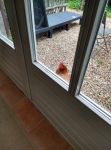
- The chickens wanted in!
-
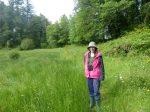
- Wandering the meadows
-
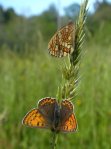
- Butterfly watching
However, we did manage a few short outings: the Trou de Philippou gorge; a peek at a Saturday morning repair café (I’m a volunteer doing admin and publicity for our local repair café, which started in February) and its “recyclerie” charity shop in a nearby village; and St-Jean-de-Côle, “one of the loveliest villages in the Dordogne” according to the Rough Guide. We were taken by the main square’s church, castle and screaming swift parties – so much bigger than back home – which we’d likewise watched circling the château in the attractive medieval town of Saumur on the Loire, where we stopped for a night on the way down. There were also fresh cheeses and produce, including the most delicious strawberries ever (the “Charlotte” variety), from the two closest markets. Piégut’s is the largest market in southwest France but we had to use our imaginations as the downpour kept plenty of sellers away.


-
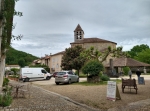
- St-Jean-de-Cole’s main square
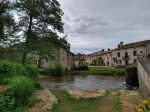
-
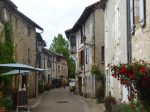
- Photo by Chris Foster.
The highlight of the trip was a visit to Grotte de Villars, a cave network with spectacular stalactites and stalagmites. Less well known than Lascaux, which is now inaccessible to visitors except via a reproduction, it too has prehistoric cave paintings of horses and bison, and 20,000-year-old bear claw marks. The paintings are gradually disappearing behind the constant calcite-creating drips; I pondered whether they will vanish before the human race does. We were lucky to find it so quiet that we got a private English-language tour. Proprietors were also so kind as to speak English to us when we shopped at a nano-brewery and did a tasting at a cider and calvados producer in Normandy on our way back to the ferry. Otherwise, we muddled through with the bare minimum of French at shops and eateries.
-
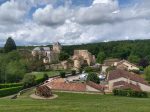
- Abbaye de Nouaillé-Maupertuis (lunch stop en route)
-

- (Photo at left by Chris Foster.)
-

- Saumur castle
My other highlight was finding two Little Free Libraries, a walk-in one that we happened to pass in Saint-Martin-l’Ars on our initial drive down south and another in Abjat-sur-Bandiat. I felt slightly bad about taking a book at the first because of its insistence on returning or replacing once you’d read it, so I made up for it by donating Cold Spring Harbor to the book exchange box in Abjat when we returned to its crêperie for our one meal out of the holiday.
-
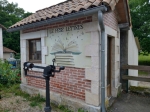
- Le Pese Lettres, Saint-Martin-l’Ars
-
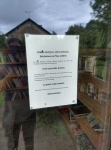
- Stricter than the usual LFL policy
-
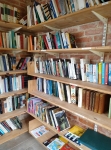
- Several English-language shelves
-
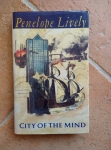
- My chosen book
-
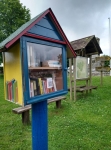
- Abjat-sur-Bandiat book exchange box
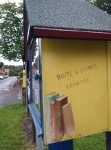
-
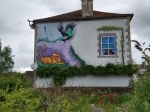
- Cute cat mural in Abjat
What I Read
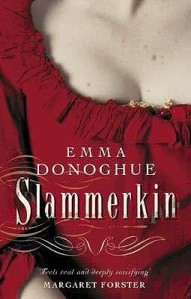 Slammerkin by Emma Donoghue (2000): A slammerkin was, in eighteenth-century parlance, a loose gown or a loose woman. Donoghue was inspired by the bare facts about Mary Saunders, a historical figure. In her imagining, Mary is thrown out by her family at age 14 and falls into prostitution in London. Within a couple of years, she decides to reform her life by becoming a dressmaker’s assistant in her mother’s hometown of Monmouth, but her past won’t let her go. The close third person narration shifts to depict the constrained lives of the other women in the household: the mistress, Mrs Jones, who has lost multiple children and pregnancies; governess Mrs Ash, whose initial position as a wet nurse was her salvation after her husband left her; and Abi, an enslaved Black woman. This was gripping throughout, like a cross between Alias Grace and The Crimson Petal and the White. The only thing that had me on the back foot was that, it being Donoghue, I expected lesbianism. (Secondhand purchase – Awesomebooks.com)
 Paris Trance by Geoff Dyer (1998): Only my second novel from Dyer, an annoyingly talented author who writes whatever he wants, in any genre, inimitably. This reminded me of Jeff in Venice, Death in Varanasi for its hedonistic travels. Luke and Alex, twentysomething Englishmen, meet as factory workers in Paris and quickly become best mates. With their girlfriends, Nicole and Sahra, they form what seems an unbreakable quartet. The couples carouse, dance in nightclubs high on ecstasy, and have a lot of sex. A bit more memorable are their forays outside the city for Christmas and the summer. The first-person plural perspective resolves into a narrator who must have fantasized the other couple’s explicit sex scenes; occasional flash-forwards reveal that only one pair is destined to last. This is nostalgic for the heady days of youth in the same way as Sweetbitter. I was intrigued to learn that random lines were sampled from Fiesta; though it is lad lit, I wouldn’t have expected a Hemingway homage from the style. (Secondhand purchase – Awesomebooks.com)
 Sanctuary in the South: The Cats of Mas des Chats by Margaret Reinhold (1993): Reinhold (still alive at 96?!) is a South African psychotherapist who relocated from London to Provence, taking her two cats with her and eventually adopting another eight, many of whom had been neglected by owners in the vicinity. This sweet and meandering book of vignettes about her pets’ interactions and hierarchy is generally light in tone, but with the requisite sadness you get from reading about animals ageing, falling ill or meeting with accidents, and (in two cases) being buried on the property. “Les chats sont difficiles,” as a local shop owner observes to her. But would we cat lovers have it any other way? Reinhold often imagines what her cats would say to her. Like Doreen Tovey, whose books this closely resembles, she is as fascinated by human foibles as by feline antics. One extended sequence concerns her doomed attempts to hire a live-in caretaker for the cats. She never learned her lesson about putting a proper contract in place; several chancers tried the role and took advantage of her kindness. (Secondhand purchase – Community Furniture Project)
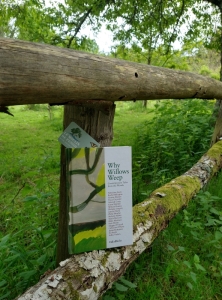
Why Willows Weep: Contemporary Tales from the Woods, ed. Tracy Chevalier and Simon Prosser (2011): These 19 short fictions, rather like Rudyard Kipling’s Just-So Stories, imagine how certain tree species developed their particular characteristics. I wasn’t expecting the fable setup and probably would have preferred a miscellany of essays and various fictional approaches. However, there is a run of great stories in the middle: from Susan Elderkin on “How the Blackthorn Got Its Flowers” to Terence Blacker on “Why Elms Die Young.” The stand-outs for me were by Rachel Billington and Maria McCann. It was a cute touch to have each author’s mini-bio end with their favourite tree, except, um, bamboo isn’t one (it’s a giant grass). I’ll probably keep this for the randomness of where I found it and the Leanne Shapton illustrations. (Secondhand purchase – La Monnerie recyclerie)
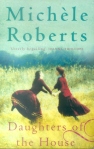 And the first two-thirds of Daughters of the House by Michèle Roberts (1993): Thérèse and Léonie are cousins: the one French and the other English but making visits to her relatives in Normandy every summer. In the slightly forbidding family home, the adolescent girls learn about life, loss and sex. Each short chapter is named after a different object in the house. That Thérèse seems slightly otherworldly can be attributed to her inspiration, which Roberts reveals in a prefatory note: Saint Thérèse, aka The Little Flower. Roberts reminds me of A.S. Byatt and Shena Mackay; her work is slightly austere and can be slow going, but her ideas always draw me in. (Secondhand – Newbury charity shop)
A DNF: Claudine at School by Colette (a free download), which was dull and in way too small a print on my e-reader.
Plus portions of: various e-books for paid reviews, two May review books, and several library books including Moominpappa at Sea by Tove Jansson and The Invention of Hugo Cabret by Brian Selznick.


I’m happy to be home with my cat and canal, the two things I miss most when we’re away.
Reading about Mothers and Motherhood: Cosslett, Cusk, Emma Press Poetry, Heti, and Pachico
It was (North American) Mother’s Day at the weekend, an occasion I have complicated feelings about now that my mother is gone. But I don’t think I’ll ever stop reading and writing about mothering. At first I planned to divide my recent topical reads (one a reread) into two sets, one for ambivalence about becoming a mother and the other for mixed feelings about one’s mother. But the two are intertwined – especially in the poetry anthology I consider below – such that they feel more like facets of the same experience. I also review two memoirs (one classic; one not so much) and two novels (autofiction vs. science fiction).

The Year of the Cat: A Love Story by Rhiannon Lucy Cosslett (2023)
This was on my Most Anticipated list last year. A Covid memoir that features adopting a cat and agonizing over the question of whether to have a baby sounded right up my street. And in the earlier pages, in which Cosslett brings Mackerel the kitten home during the first lockdown and interrogates the stereotype of the crazy cat lady from the days of witches’ familiars onwards, it indeed seemed to be so. But the further I got, the more my pace through the book slowed to a limp; it took me 10 months to read, in fits and starts.
 I’ve struggled to pinpoint what I found so off-putting, but I have a few hypotheses: 1) By the time I got hold of this, I’d tired of Covid narratives. 2) Fragmentary narratives can seem like profound reflections on subjectivity and silences. But Cosslett’s strategy of bouncing between different topics – worry over her developmentally disabled brother, time working as an au pair in France, PTSD from an attempted strangling by a stranger in London and being in Paris on the day of the Charlie Hebdo terrorist attack – with every page or even every paragraph, feels more like laziness or arrogance. Of course the links are there; can’t you see them?
3) Cosslett claims to reject clichéd notions about pets being substitutes for children, then goes right along with them by presenting Mackerel as an object of mothering (“there is something about looking after her that has prodded the carer in me awake”) and setting up a parallel between her decision to adopt the kitten and her decision to have a child. “Though I had all these very valid reasons not to get a cat, I still wanted one,” she writes early on. And towards the end, even after she’s considered all the ‘very valid reasons’ not to have a baby, she does anyway. “I need to find another way of framing it, if I am to do it,” she says. So she decides that it’s an expression of bravery, proof of overcoming trauma. I was unconvinced. When people accuse memoirists of being navel-gazing, this is just the sort of book they have in mind. I wonder if those familiar with her Guardian journalism would agree. (Public library)
A Life’s Work: On Becoming a Mother by Rachel Cusk (2001)
 When this was first published, Cusk was vilified for “hating” her child – that is, for writing honestly about the bewilderment and misery of early motherhood. We’ve moved on since then. Now women are allowed to admit that it’s not all cherubs and lullabies. I suspect what people objected to was the unemotional tone: Cusk writes like an anthropologist arriving in a new land. The style is similar to her novels’ in that she can seem detached because of her dry wit, elevated diction and frequent literary allusions.
I understand that crying, being the baby’s only means of communication, has any number of causes, which it falls to me, as her chief companion and link to the world, to interpret.
Have you taken her to toddler group, the health visitor enquired. I had not. Like vaccinations and mother and baby clinics, the notion instilled in me a deep administrative terror.
We [new parents] are heroic and cruel, authoritative and then servile, cleaving to our guesses and inspirations and bizarre rituals in the absence of any real understanding of what we are doing or how it should properly be done.
She approaches mumsy things as an outsider, clinging to intellectualism even though it doesn’t seem to apply to this new world of bodily obligation, “the rambling dream of feeding and crying that my life has become.” By the end of the book, she does express love for and attachment to her daughter, built up over time and through constant presence. But she doesn’t downplay how difficult it was. “For the first year of her life work and love were bound together, fiercely, painfully.” This is a classic of motherhood literature, and more engaging than anything else I’ve read by Cusk. (Secondhand purchase – Awesomebooks.com)
The Emma Press Anthology of Motherhood, ed. by Rachel Piercey and Emma Wright (2014)
There’s a great variety of subject matter and tone here, despite the apparently narrow theme. There are poems about pregnancy (“I have a comfort house inside my body” by Ikhda Ayuning Maharsi), childbirth (“The Tempest” by Melinda Kallismae) and new motherhood, but also pieces imagining the babies that never were (“Daughters” by Catherine Smith) or revealing the complicated feelings adults have towards their mothers.
“All My Mad Mothers” by Jacqueline Saphra depicts a difficult bond through absurdist metaphors: “My mother was so hard to grasp: once we found her in a bath / of olive oil, or was it sesame, her skin well-slicked / … / to ease her way into this world. Or out of it.” I also loved her evocation of a mother–daughter relationship through a rundown of a cabinet’s contents in “My Mother’s Bathroom Armoury.”
 In “My Mother Moves into Adolescence,” Deborah Alma expresses exasperation at the constant queries and calls for help from someone unconfident in English. “This, then, is how you should pray” by Flora de Falbe cleverly reuses the structure of the Lord’s Prayer as she sees her mother returning to independent life and a career as her daughter prepares to leave home. “I will hold you / as you held me / my mother – / yours are the bathroom catalogues / and the whole of a glorious future.”
I connected with these perhaps more so than the poems about becoming a mother, but there are lots of strong entries and very few unmemorable ones. Even within the mothers’ testimonials, there is ambivalence: the visceral vocabulary in “Collage” by Anna Kisby is rather morbid, partway to gruesome: “You look at me // like liver looks at me, like heart. You are familiar as innards. / In strip-light I clean your first shit. I’m not sure I do it right. / It sticks to me like funeral silk. … There is a window // guillotined into the wall. I scoop you up like a clod.”
A favourite pair: “Talisman” by Anna Kirk and “Grasshopper Warbler” by Liz Berry, on facing pages, for their nature imagery. “Child, you are grape / skins stretched over fishbones. … You are crab claws unfurling into cabbage leaves,” Kirk writes. Berry likens pregnancy to patient waiting for an elusive bird by a reedbed. (Free copy – newsletter giveaway)
Motherhood by Sheila Heti (2018)
I first read this nearly six years ago (see my original review), when I was 34; I’m now 40 and pretty much decided against having children, but FOMO is a lingering niggle. Even though I already owned it in hardback, I couldn’t resist picking up a nearly new paperback I saw going for 50 pence in a charity shop, if only for the Leanne Shapton cover – her simple, elegant watercolour style is instantly recognizable. Having a different copy also provided some novelty for my reread, which is ongoing; I’m about 80 pages from the end.
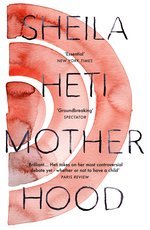 I’m not finding Heti’s autofiction musings quite as profound this time around, and I can’t deny that the book is starting to feel repetitive, but I’ve still marked more than a dozen passages. Pondering whether to have children is only part of the enquiry into what a woman artist’s life should be. The intergenerational setup stands out to me again as Heti compares her Holocaust survivor grandmother’s short life with her mother’s practical career and her own creative one.
For the past month or so, I’ve also been reading Alphabetical Diaries, so you could say that I’m pretty Heti-ed out right now, but I do so admire her for writing exactly what she wants to and sticking to no one else’s template. People probably react against Heti’s work as self-indulgent in the same way I did with Cosslett’s, but the former’s shtick works for me. (Secondhand purchase – Bas Books & Home, Newbury)
A few of the passages that have most struck me on this second reading:
I think that is how childbearing feels to me: a once-necessary, now sentimental gesture.
I don’t want ‘not a mother’ to be part of who I am—for my identity to be the negative of someone else’s positive identity.
The whole world needs to be mothered. I don’t need to invent a brand new life to give the warming effect to my life I imagine mothering will bring.
I have to think, If I wanted a kid, I already would have had one by now—or at least I would have tried.
Jungle House by Julianne Pachico (2023)
{BEWARE SPOILERS}
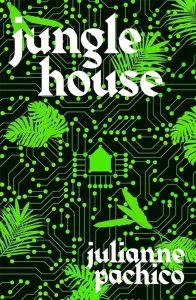 Pachico’s third novel is closer to sci-fi than I might have expected. Apart from Lena, the protagonist, all the major characters are machines or digital recreations: AI, droids, a drone, or a holograph of the consciousness of a dead girl. “Mother” is the AI security system that controls Jungle House, the Morel family’s vacation home in a country that resembles Colombia, where Pachico grew up and set her first two books. Lena, as the human caretaker, is forever grateful to Mother for rescuing her as a baby after the violent death of her parents, who were presumed rebels.
Mother is exacting but mercurial, strict about cleanliness yet apt to forget or overlook things during one of her “spells.” Lena pushes the boundaries of her independence, believing that Mother only wants to protect her but still longing to explore the degraded wilderness beyond the compound.
Mother was right, because Mother was always right about these kinds of things. The world was a complicated place, and Mother understood it much better than she did.
In the house, there was no privacy. In the house, Mother saw all.
Mother was Lena’s world. And Lena, in turn, was hers. No matter how angry they got at each other, no matter how much they fought, no matter the things that Mother did or didn’t do … they had each other.
It takes a while to work out just how tech-reliant this scenario is, what the repeated references to “the pit bull” are about, and how Lena emulated and resented Isabella, the Morel daughter, in equal measure. Even creepier than the satellites’ plan to digitize humans is the fact that Isabella’s security drone, Anton, can fabricate recorded memories. This reminded me a lot of Klara and the Sun. Tech themes aren’t my favourite, but I ultimately thought of this as an allegory of life with a narcissistic mother and the child’s essential task of breaking free. It’s not clinical and contrived, though; it’s a taut, subtle thriller with an evocative setting. (Public library)
See also: “Three on a Theme: Matrescence Memoirs”
Does one or more of these books take your fancy?
Women’s Prize for Non-Fiction, Writers’ Prize & Young Writer of the Year Award Catch-Up
This time of year, it’s hard to keep up with all of the literary prize announcements: longlists, shortlists, winners. I’m mostly focussing on the Carol Shields Prize for Fiction this year, but I like to dip a toe into the others where I can. I ask: What do I have time to read? What can I find at the library? and Which books are on multiple lists so I can tick off several at a go??
Women’s Prize for Non-Fiction

(Shortlist to be announced on 27 March.)
Read so far: Intervals by Marianne Brooker, Matrescence by Lucy Jones
&
A Flat Place by Noreen Masud
Past: Sunday Times/Charlotte Aitken Young Writer of the Year Award shortlist
Currently: Jhalak Prize longlist
I also expect this to be a strong contender for the Wainwright Prize for nature writing, and hope it doesn’t end up being a multi-prize bridesmaid as it is an excellent book but an unusual one that is hard to pin down by genre. Most simply, it is a travel memoir taking in flat landscapes of the British Isles: the Cambridgeshire fens, Orford Ness in Suffolk, Morecambe Bay, Newcastle Moor, and the Orkney Islands.
 But flatness is a psychological motif as well as a physical reality here. Growing up in Pakistan with a violent Pakistani father and a passive Scottish mother, Masud chose the “freeze” option when in fight-or-flight situations. When she was 15, her father disowned her and she moved with her mother and sisters to Scotland. Though no particularly awful things happened, a childhood lack of safety, belonging and love left her with complex PTSD that still affects how she relates to her body and to other people, even after her father’s death.
Masud is clear-eyed about her self and gains a new understanding of what her mother went through during their trip to Orkney. The Newcastle chapter explores lockdown as a literal Covid-era circumstance but also as a state of mind – the enforced solitude and stillness suited her just fine. Her descriptions of landscapes and journeys are engaging and her metaphors are vibrant: “South Nuns Moor stretched wide, like mint in my throat”; “I couldn’t stop thinking about the Holm of Grimbister, floating like a communion wafer on the blue water.” Although she is an academic, her language is never off-puttingly scholarly. There is a political message here about the fundamental trauma of colonialism and its ongoing effects on people of colour. “I don’t want ever to be wholly relaxed, wholly at home, in a world of flowing fresh water built on the parched pain of others,” she writes.
What initially seems like a flat authorial affect softens through the book as Masud learns strategies for relating to her past. “All families are cults. All parents let their children down.” Geography, history and social justice are all a backdrop for a stirring personal story. Literally my only annoyance was the pseudonyms she gives to her sisters (Rabbit, Spot and Forget-Me-Not). (Read via Edelweiss)
And a quick skim:
Doppelganger: A Trip into the Mirror World by Naomi Klein
Past: Writers’ Prize shortlist, nonfiction category
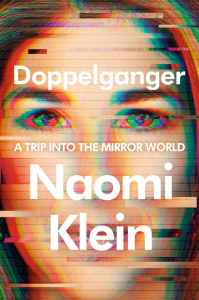 For years people have been confusing Naomi Klein (geography professor, climate commentator, author of No Logo, etc.) with Naomi Wolf (feminist author of The Beauty Myth, Vagina, etc.). This became problematic when “Other Naomi” espoused various right-wing conspiracy theories, culminating with allying herself with Steve Bannon in antivaxxer propaganda. Klein theorizes on Wolf’s ideological journey and motivations, weaving in information about the doppelganger in popular culture (e.g., Philip Roth’s novels) and her own concerns about personal branding. I’m not politically minded enough to stay engaged with this but what I did read I found interesting and shrewdly written. I do wonder how her publisher was confident this wouldn’t attract libel allegations? (Public library)
Predictions: Cumming (see below) and Klein are very likely to advance. I’m less drawn to the history or popular science/tech titles. I’d most like to read Some People Need Killing: A Memoir of Murder in the Philippines by Patricia Evangelista, Wifedom: Mrs Orwell’s Invisible Life by Anna Funder, and How to Say Babylon: A Jamaican Memoir by Safiya Sinclair. I’d be delighted for Brooker, Jones and Masud to be on the shortlist. Three or more by BIPOC would seem appropriate. I expect they’ll go for diversity of subject matter as well.
Writers’ Prize
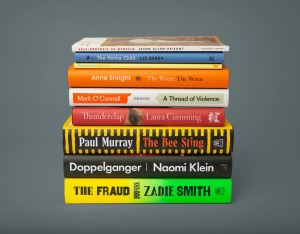
Last year I read most books from the shortlists and so was able to make informed (and, amazingly, thoroughly correct) predictions of the winners. I didn’t do as well this year. In particular, I failed with the nonfiction list in that I DNFed Mark O’Connell’s book and twice borrowed the Cumming from the library but never managed to make myself start it; I thought her On Chapel Sands overrated. (I did skim the Klein, as above.) But at least I read the poetry shortlist in full:
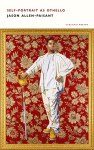 Self-Portrait as Othello by Jason Allen-Paisant: I found more to sink my teeth into here than I did with his debut collection, Thinking with Trees (2021). Part I’s childhood memories of Jamaica open out into a wider world as the poet travels to London, Paris and Venice, working in snippets of French and Italian and engaging with art and literature. “I’m haunted as much by the character Othello as by the silences in the story.” Part III returns home for the death of his grandmother and a coming to terms with identity. [Winner: Forward Prize for Best Collection; Past: T.S. Eliot Prize shortlist] (Public library)
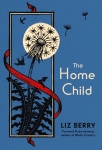 The Home Child by Liz Berry: A novel in verse “loosely inspired,” as Berry puts it, by her great-aunt Eliza Showell’s experience: she was a 12-year-old orphan when, in 1908, she was forcibly migrated from the English Midlands to Nova Scotia. The scenes follow her from her home to the Children’s Emigration Home in Birmingham, on the sea voyage, and in her new situation as a maid to an elderly invalid. Life is gruelling and lonely until a boy named Daniel also comes to the McPhail farm. This was a slow and not especially engaging read because of the use of dialect, which for me really got in the way of the story. (Public library)
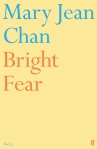 & Bright Fear by Mary Jean Chan (Current: Dylan Thomas Prize shortlist)
Three category winners:
- The Wren, The Wren by Anne Enright (Fiction)
- Thunderclap by Laura Cumming (Nonfiction) (Current: Women’s Prize for Non-Fiction longlist)
- The Home Child by Liz Berry (Poetry)
Overall winner: The Home Child by Liz Berry
Observations: The academy values books that cross genres. It appreciates when authors try something new, or use language in interesting ways (e.g. dialect – there’s also some in the Allen-Paisant, but not as much as in the Berry). But my taste rarely aligns with theirs, such that I am unlikely to agree with its judgements. Based on my reading, I would have given the category awards to Murray, Klein and Chan and the overall award perhaps to Murray. (He recently won the inaugural Nero Book Awards’ Gold Prize instead.)
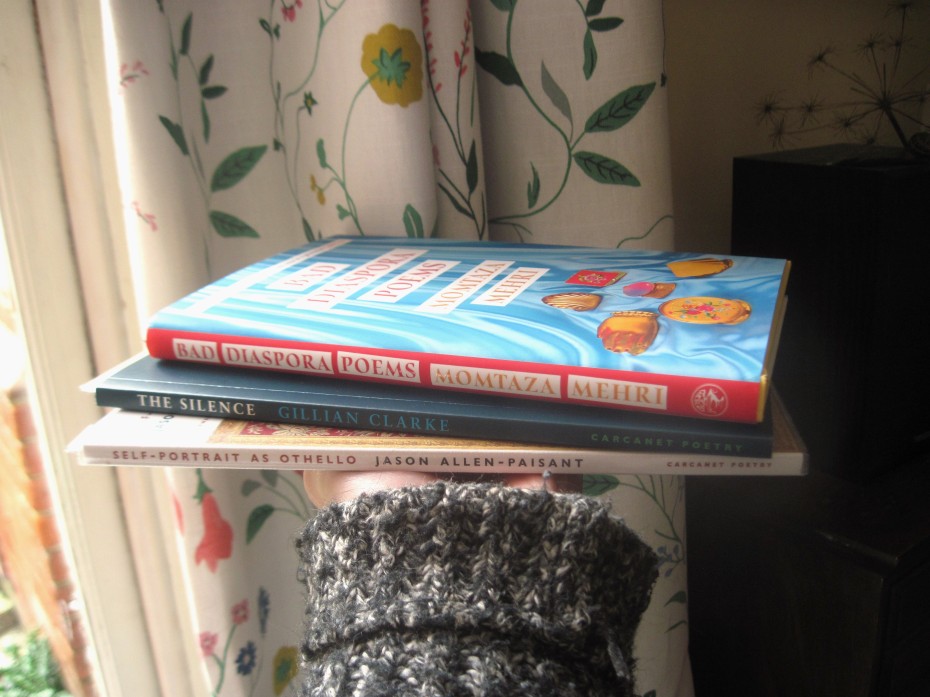
World Poetry Day stack last week
Young Writer of the Year Award
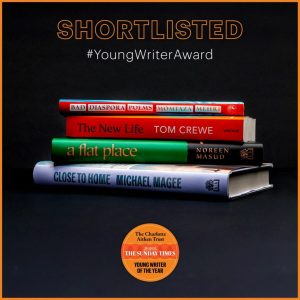
Shortlist:
- The New Life by Tom Crewe
 (Past: Nero Book Award shortlist, debut fiction)
 - Close to Home by Michael Magee (Winner: Nero Book Award, debut fiction category)
- A Flat Place by Noreen Masud (see above)
&
Bad Diaspora Poems by Momtaza Mehri
Winner: Forward Prize for Best First Collection
Nostalgia is bidirectional. Vantage point makes all the difference. Africa becomes a repository of unceasing fantasies, the sublimation of our curdled angst.
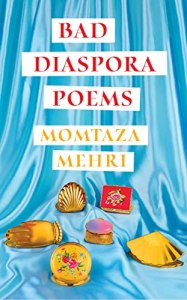 Crossing between Somalia, Italy and London and proceeding from the 1830s to the present day, this debut collection sets family history amid wider global movements. It’s peopled with nomads, colonisers, immigrants and refugees. In stanzas and prose paragraphs, wordplay and truth-telling, Mehri captures the welter of emotions for those whose identity is split between countries and complicated by conflict and migration. I particularly admired “Wink Wink,” which is presented in two columns and opens with the suspension of time before the speaker knew their father was safe after a terrorist attack. There’s super-clever enjambment in this one: “this time it happened / after evening prayer // cascade of iced tea / & sugared straws // then a line / break // hot spray of bullets & / reverb & // in less than thirty minutes we / they the land // lose twenty of our children”. Confident and sophisticated, this is a first-rate debut.
A few more favourite lines:
IX. Art is something we do when the war ends.
X. Even when no one dies on the journey, something always does.
(from “A Few Facts We Hesitantly Know to Be Somewhat True”)
You think of how casually our bodies are overruled by kin,
by blood, by heartaches disguised as homelands.
How you can count the years you have lived for yourself on one hand.
History is the hammer. You are the nail.
(from “Reciprocity is a Two-way Street”)
With thanks to Jonathan Cape (Penguin) for the free copy for review.
I hadn’t been following the Award on Instagram so totally missed the news of them bringing back a shadow panel for the first time since 2020. The four young female Bookstagrammers chose Mehri’s collection as their winner – well deserved.
Winner: The New Life by Tom Crewe
This was no surprise given that it was the Sunday Times book of the year last year (and my book of the year, to be fair). I’ve had no interest in reading the Magee. It’s a shame that a young woman of colour did not win as this year would have been a good opportunity for it. (What happened last year, seriously?!) But in that this award is supposed to be tied into the zeitgeist and honour an author on their way up in the world – as with Sally Rooney in my shadowing year – I do think the judges got it right.
 Bookish Beck = Rebecca Foster. American transplant to England. Freelance proofreader and book reviewer.
