Three on a Theme: Armchair Travels at the Italian Coast (Rachel Joyce, Sarah Moss and Jess Walter – #18 of 20 Books)
I’ve done a lot of journeying through Italy’s lakes and islands this summer. Not in real life, thank goodness – it would be far too hot! – but via books. I started with the Moss, then read the Joyce, and rounded off with the Walter, a book that had been on my TBR for 12 years and that many had heartily recommended, so I was delighted to finally experience it for myself.
The Homemade God by Rachel Joyce (2025)
Joyce has really upped her game. I’ve somehow read all of her books though I often found them, from Harold Fry onward, disappointingly sentimental and twee. But with this she’s entering the big leagues, moving into the more expansive, elegant and empathetic territory of novels by Anne Enright (The Green Road), Patrick Gale (Notes from an Exhibition), Maggie O’Farrell (Instructions for a Heatwave) and Tom Rachman (The Italian Teacher). It’s the story of four siblings, initially drawn together and then dramatically blown apart by their father’s death. Despite weighty themes of alcoholism, depression and marital struggles, there is an overall lightness of tone and style that made this a pleasure to read.
Vic Kemp, the title figure, was a larger-than-life, womanizing painter whose work divided critics. After his first wife’s early death from cancer, he raised three daughters and a son with the help of a rotating cast of nannies (whom he inevitably slept with). At 76 he delivered the shocking news that he was marrying again: Bella-Mae, an artist in her twenties – much younger than any of his children. They moved from London to his second home in Italy just weeks before he drowned in Lake Orta. Netta, the eldest daughter, is sure there’s something fishy; he knew the lake so well and would never have gone out for a swim with a mist rolling in. Did Bella-Mae kill him for his money? And where is his last painting? Funny how waiting for an autopsy report and searching for a new will and carping with siblings over the division of belongings can ruin what should be paradise.
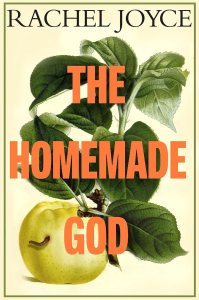
The interactions between Netta, Susan, Goose (Gustav) and Iris, plus Bella-Mae and her cousin Laszlo, are all flawlessly done, and through flashbacks and surges forward we learn so much about these flawed and flailing characters. The derelict villa and surrounding small town are appealing settings, and there are a lot of intriguing references to food, fashion and modern art.
My only small points of criticism are that Iris is less fleshed out than the others (and her bombshell secret felt distasteful), and that Joyce occasionally resorts to delivering some of her old obvious (though true) messages through an omniscient narrator, whereas they could be more palatable if they came out organically in dialogue or indirectly through a character’s thought process. Here’s an example: “When someone dies or disappears, we can only tell stories about what might have been the case or what might have happened next.” (One I liked better: “There were some things you never got over. No amount of thinking or talking would make them right: the best you could do was find a way to live alongside them.”) I also don’t think Goose would have been able to view his father’s body more than two months after his death; even with embalming, it would have started to decay within weeks.
You can tell that Joyce got her start in theatre because she’s so good at scenes and dialogue, and at moving people into different groups to see what they’ll do. She’s taken the best of her work in other media and brought it to bear here. It’s fascinating how Goose starts off seeming minor and eventually becomes the main POV character. And ending with a wedding (good enough for a Shakespearean comedy) offers a lovely occasion for a potential reconciliation after a (tragi)comic plot. More of this calibre, please! (Public library) 
Ripeness by Sarah Moss (2025)
One sneaky little line, “Ripeness, not readiness, is all,” a Shakespeare mash-up (“Ripeness is all” is from King Lear vs. “the readiness is all” is from Hamlet), gives a clue to how to understand this novel: As a work of maturity from Sarah Moss, presenting life with all its contradictions and disappointments, not attempting to counterbalance that realism with any false optimism. What do we do, who will we be, when faced with situations for which we aren’t prepared?
Now that she’s based in Ireland, Moss seems almost to be channelling Irish authors such as Claire Keegan and Maggie O’Farrell. The line-up of themes – ballet + sisters + ambivalent motherhood + the question of immigration and belonging – should have added up to something incredible and right up my street. While Ripeness is good, even very good, it feels slightly forced. As has been true with some of Moss’s recent fiction (especially Summerwater), there is the air of a creative writing experiment. Here the trial is to determine which feels closer, a first-person rendering of a time nearly 60 years ago, or a present-tense, close-third-person account of the now. [I had in mind advice from one of Emma Darwin’s Substack posts: “What you’ll see is that ‘deep third’ is really much the same as first, in the logic of it, just with different pronouns: you are locking the narrative into a certain character’s point-of-view, but you don’t have a sense of that character as the narrator, the way you do in first person.” Except, increasingly as the novel goes on, we are compelled to think about Edith as a narrator, of her own life and others’.
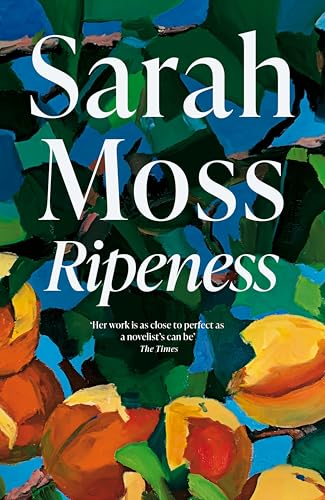
In the current story line, everyone in rural West Ireland seems to have come from somewhere else (e.g. Edith’s lover Gunter is German). “She’s going to have to find a way to rise above it, this tribalism,” Edith thinks. She’s aghast at her town playing host to a small protest against immigration. Fair enough, but including this incident just seems like an excuse for some liberal handwringing (“since it’s obvious that there is enough for all, that the problem is distribution not supply, why cannot all have enough? Partly because people like Edith have too much.”). The facts of Maman being French-Israeli and having lost family in the Holocaust felt particularly shoehorned in; referencing Jewishness adds nothing. I also wondered why she set the 1960s narrative in Italy, apart from novelty and personal familiarity. (Teenage Edith’s high school Italian is improbably advanced, allowing her to translate throughout her sister’s childbirth.)
Though much of what I’ve written seems negative, I was left with an overall favourable impression. Mostly it’s that the delivery scene and the chapters that follow it are so very moving. Plus there are astute lines everywhere you look, whether on dance, motherhood, or migration. It may simply be that Moss was taking on too much at once, such that this lacks the focus of her novellas. Ultimately, I would have been happy to have just the historical story line; the repeat of the surrendering for adoption element isn’t necessary to make any point. (I was relieved, anyway, that Moss didn’t resort to the cheap trick of having the baby turn out to be a character we’ve already been introduced to.) I admire the ambition but feel Moss has yet to return to the sweet spot of her first five novels. Still, I’m a fan for life. (Public library) 
#18 of my 20 Books of Summer
(Completing the second row on the Bingo card: Book set in a vacation destination)


Beautiful Ruins by Jess Walter (2012)
 I loved how Emma Straub described the ideal summer read in one of her Substack posts: “My plan for the summer is to read as many books as possible that make me feel that drugged-up feeling, where you just want to get back to the page.” I wish I’d been able to read this faster – that I hadn’t had so much on my plate all summer so I could have been fully immersed. Nonetheless, every time I returned to it I felt welcomed in. So many trusted bibliophiles love this book – blogger friends Laila and Laura T.; Emma Milne-White, owner of Hungerford Bookshop, who plugged it at their 2023 summer reading celebration; and Maris Kreizman, who in a recent newsletter described this as “One of my favorite summer reading novels ever … escapist magic, a lush historical novel.”
I’m relieved to report that Beautiful Ruins lived up to everyone’s acclaim – and my own high expectations after enjoying Walter’s So Far Gone, which I reviewed for BookBrowse earlier in the summer. I was immediately captivated by the shabby glamour of Pasquale’s hotel in Porto Vergogna on the coast of northern Italy. With refreshing honesty, he’s dubbed the place “Hotel Adequate View.” In April 1962, he’s attempting to build a cliff-edge tennis court when a boat delivers beautiful, dying American actress Dee Moray. It soon becomes clear that her condition is nothing nine months won’t fix and she’s been dumped here to keep her from meddling in the romance between the leads in Cleopatra, filming in Rome. In the present day, an elderly Pasquale goes to Hollywood to find out whatever happened to Dee.
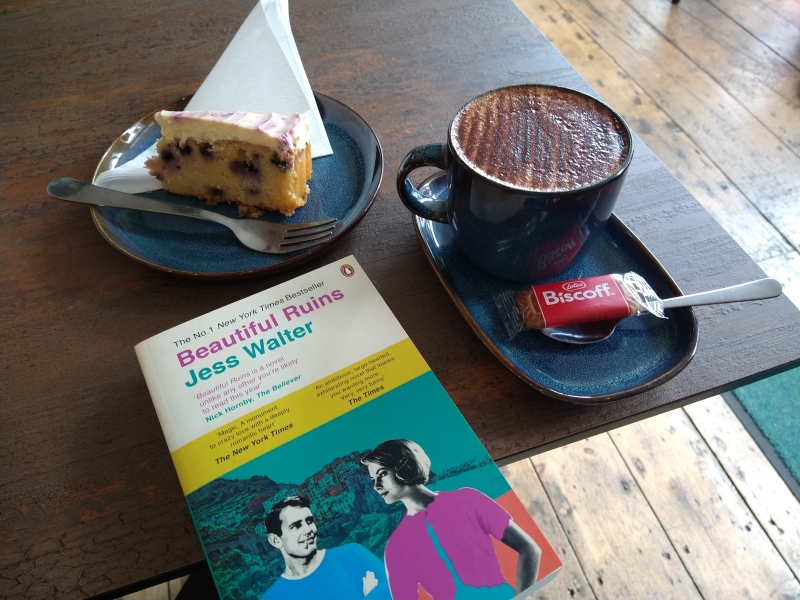
A myriad of threads and formats – a movie pitch, a would-be Hemingway’s first chapter of a never-finished wartime masterpiece, an excerpt from a producer’s autobiography and a play transcript – coalesce to flesh out what happened in that summer of 1962 and how the last half-century has treated all the supporting players. True to the tone of a novel about regret, failure and shattered illusions, Walter doesn’t tie everything up neatly, but he does offer a number of the characters a chance at redemption. This felt to me like a warmer and more timeless version of A Visit from the Goon Squad. There are so many great scenes, none better than Richard Burton’s drunken visit to Porto Vergogna, which had me in stitches. Fantastic. (Hungerford Bookshop – 40th birthday gift from my husband from my wish list) 
#WITMonth, II: Bélem, Blažević, Enríquez, Lebda, Pacheco and Yu (#17 of 20 Books)
Catching up with my Women in Translation month coverage, which concluded (after Part I, here) with five more short novels ranging from historical realism to animal-oriented allegory, plus a travel book.
The Rarest Fruit, or The Life of Edmond Albius by Gaëlle Bélem (2023; 2025)
[Translated from French by Hildegarde Serle]
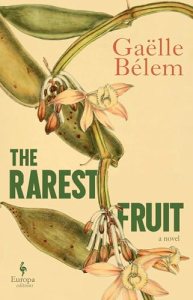 A fictionalized biography, from infancy to deathbed, of the Black botanist who introduced the world to vanilla – then a rare and expensive flavour – by discovering that the plant can be hand-pollinated in the same way as pumpkins. In 1829, the island colony of Bourbon (now the French overseas department Réunion) has just been devastated by a cyclone when widowed landowner Ferréol Bellier-Beaumont is brought the seven-week-old orphaned son of one of his sister’s enslaved women. Ferréol, who once hunted rare orchids, raises the boy as his ward. From the start, Edmond is most at home in the garden and swears he will follow in his guardian’s footsteps as a botanist. Bélem also traces Ferréol’s history and the origins of vanilla in Mexico. The inclusion of Creole phrases and the various uses of plants, including for traditional healing, chimed with Jason Allen-Paisant’s Jamaica-set The Possibility of Tenderness, and I was reminded somewhat of the historical picaresque style of Slave Old Man (Patrick Chamoiseau) and The Secret Diaries of Charles Ignatius Sancho (Paterson Joseph). The writing is solid but the subject matter so niche that this was a skim for me.
With thanks to Europa Editions, who sent an advanced e-copy for review.
In Late Summer by Magdalena Blažević (2022; 2025)
[Translated from Croatian by Anđelka Raguž]
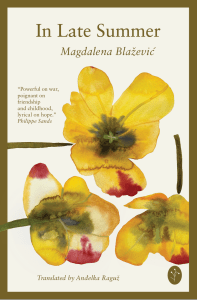 “My name is Ivana. I lived for fourteen summers, and this is the story of my last.” Blažević’s debut novella presents the before and after of one extended family, and of the Bosnian countryside, in August 1993. In the first half, few-page vignettes convey the seasonality of rural life as Ivana and her friend Dunja run wild. Mother and Grandmother slaughter chickens, wash curtains, and treat the children for lice. Foodstuffs and odours capture memory in that famous Proustian way. I marked out the piece “Camomile Flowers” for its details of the senses: “Sunlight and the scent of soap mingle. … The pantry smells like it did before, of caramel, lemon rind and vanilla sugar. Like the period leading up to Christmas. … My hair dries quickly in the sun. It rustles like the lace, dry snow from the fields.” The peaceful beauty of it all is shattered by the soldiers’ arrival. Ivana issues warnings (“Get ready! We’re running out of time. The silence and summer lethargy will not last long”) and continues narrating after her death. As in Sara Nović’s Girl at War, the child perspective contrasts innocence and enthusiasm with the horror of war. I found the first part lovely but the whole somewhat aimless because of the bitty structure.
With thanks to Linden Editions for the free copy for review.
Somebody Is Walking on Your Grave: My Cemetery Journeys by Mariana Enríquez (2013; 2025)
[Translated from Spanish by Megan McDowell]
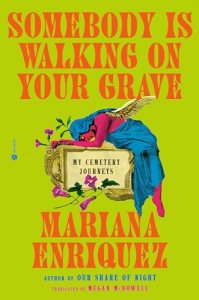 This made it onto my Most Anticipated list for the second half of the year due to my love of graveyards. Because of where Enríquez is from, a lot of the cemeteries she features are in Argentina (six) or other Spanish-speaking countries (another six including Chile, Cuba, Mexico, Peru and Spain). There are 10 more locations besides, and her journeys go back as far as 1997 in Genoa, when she was 25 and had sex with Enzo up against a gravestone. I took the most interest in those I have been to (Edinburgh) or could imagine myself travelling to someday (New Orleans and Savannah; Highgate in London and Montparnasse in Paris), but thought that every chapter got bogged down in research. Enríquez writes horror, so she is keen to visit at night and relay any ghost stories she’s heard. But the pages after pages of history were dull and outweighed the memoir and travel elements for me, so after a few chapters I ended up just skimming. I’ll keep this on my Kindle in case I go to one of her other destinations in the future and can read individual essays on location. (Edelweiss download)
Voracious by Małgorzata Lebda (2016; 2025)
[Translated from Polish by Antonia Lloyd-Jones]
Like the Blažević, this is an impressionistic, pastoral work that contrasts vitality and decay in short chapters of one to three pages. The narrator is a young woman staying in her grandmother’s house and caring for her while she is dying of cancer; “now is not the time for life. Death – that’s what fills my head. I’m at its service. Grandma is my child. I am my grandmother’s mother. And that’s all right, I think.” The house has just four inhabitants – the narrator, Grandma Róża, Grandpa, and Ann – and seems permeable: to the cold, to nature. Animals play a large role, whether pets, farmed or wild. There’s Danube the hound, the cows delivered to the nearby slaughterhouse, and a local vixen with whom the narrator identifies.
 Lebda is primarily known as a poet, and her delight in language is evident. One piece titled “Opioid,” little more than a paragraph long, revels in the power of language: “Grandma brings a beautiful word home … the word not only resonates, but does something else too – it lets light into the veins.” The wind is described as “the conscience of the forest. It’s the circulatory system. It’s the litany. It’s scented. It sings.”
In all three Linden Editions books I’ve read, the translator’s afterword has been particularly illuminating. I thought I was missing something, but Lloyd-Jones reassured me it’s unclear who Ann is: sister? friend? lover? (I was sure I spotted some homoerotic moments.) Lloyd-Jones believes she’s the mirror image of the narrator, leaning toward life while the narrator – who has endured sexual molestation and thyroid problems – tends towards death. The animal imagery reinforces that dichotomy.
The narrator and Ann remark that it feels like Grandma has been ill for a million years, but they also never want this time to end. The novel creates that luminous, eternal present. It was the best of this bunch.
With thanks to Linden Editions for the free copy for review.
Full review forthcoming for Foreword Reviews:
Pandora by Ana Paula Pacheco (2023; 2025)
[Translated from Portuguese by Julia Sanches]
 The Brazilian author’s bold novella is a startling allegory about pandemic-era hazards to women’s physical and mental health. Since the death of her partner Alice to Covid-19, Ana has been ‘married’ to a pangolin and a seven-foot-tall bat. At a psychiatrist’s behest, she revisits her childhood and interrogates the meanings of her relationships. The form varies to include numbered sections, the syllabus for Ana’s course “Is Literature a personal investment?”, journal entries, and extended fantasies. Depictions of animals enable commentary on economic inequalities and gendered struggles. Playful, visceral, intriguing.
#17 of my 20 Books of Summer:
Invisible Kitties by Yu Yoyo (2021; 2024)
[Translated from Chinese by Jeremy Tiang]
 Yu is the author of four poetry collections; her debut novel blends autofiction and magic realism with its story of a couple adjusting to the ways of a mysterious cat. They have a two-bedroom flat on a high-up floor of a complex, and Cat somehow fills the entire space yet disappears whenever the woman goes looking for him. Yu’s strategy in most of these 60 mini-chapters is to take behaviours that will be familiar to any cat owner and either turn them literal through faux-scientific descriptions, or extend them into the fantasy realm. So a cat can turn into a liquid or gaseous state, a purring cat is boiling an internal kettle, and a cat planted in a flowerbed will produce more cats. Some of the stories are whimsical and sweet, like those imagining Cat playing extreme sports, opening a massage parlour, and being the god of the household. Others are downright gross and silly: Cat’s removed testicles become “Cat-Ball Planets” and the narrator throws up a hairball that becomes Kitten. Mixed feelings, then. (Passed on by Annabel – thank you!)
I’m really pleased with myself for covering a total of 8 books for this challenge, each one translated from a different language!
Which of these would you read?
Literary Wives Club: Novel About My Wife by Emily Perkins (2008)
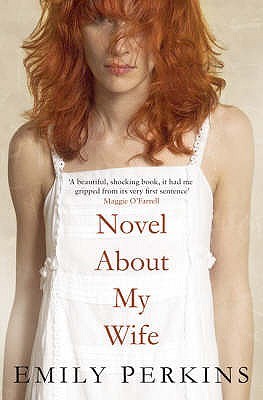 Although Emily Perkins was a new name to me, the New Zealand author has published five novels and a short story collection. Unfortunately, I never engaged with her London-set Novel About My Wife. On the one hand, it must have been an intriguing challenge for Perkins to inhabit a man’s perspective and examine how a widower might recreate his marriage and his late wife’s mental state. “I can’t speak for Ann[,] obviously, only about her,” screenwriter Tom Stone admits. On the other hand, Tom is so egotistical and self-absorbed that his portrait of Ann is more obfuscating than illuminating.
“If I could build her again using words, I would,” he opens, but that promising start just leads into paragraphs of physical description. Bare facts, such as that Ann was from Sydney and created radiation masks for cancer patients in a hospital, are hardly revealing. We mostly know Ann through her delusions. In her late thirties, when she was three months pregnant with their son Arlo, she was caught in an underground train derailment. Thereafter, she increasingly fell victim to paranoia, believing that she was being stalked and that their house was infested. We’re invited to speculate that pregnancy exacerbated her mental health issues and that postpartum psychosis may have had something to do with her death.
I mostly skimmed the novel, so I may have missed some plot points, but what stood out to me were Tom’s unpleasant depictions of women and complaints about his faltering career. (He’s envious of a new acquaintance, Simon, who’s back and forth to Hollywood all the time for successful screenwriting projects.) Interspersed are seemingly pointless excerpts from Tom’s screenplay about a trip he and Ann took to Fiji. I longed for the balance of another perspective. This had a bit of the flavour of early Maggie O’Farrell, but none of the warmth. (Secondhand – Awesomebooks.com) 
The main question we ask about the books we read for Literary Wives is:
What does this book say about wives or about the experience of being a wife?
Being generous to Perkins, perhaps the very point she was trying to make is that it’s impossible to get outside of one’s own perspective and understand what’s going on with a spouse, especially one who has mental health struggles. Had Tom been more attentive and supportive, might things have ended differently?
See Becky’s, Kate’s and Kay’s reviews, too! (Naomi is on a break this month.)
Coming up next, in December: The Soul of Kindness by Elizabeth Taylor.
Challenges Completed; Reviews to Come!
I have another 6 books to tell you about for Women in Translation Month, and I finished reading the last of my 20 Books of Summer today. But my grand plan to write everything up by the end of August did not come to fruition. Instead, it’s been one of those rare weekends where we had all-day events both Saturday and Sunday, plus did various cooking and baking projects, so I couldn’t fit in any time with a laptop. I’ll catch up during the first week of September.
20 Books of Summer, 13–16: Tony Chan, Jen Hadfield, Kenward Anthology, Catherine Taylor
Three from my initial list (all nonfiction) and one substitute picked up at random (poetry). These are strongly place-based selections, ranging from Sheffield to Shetland and drawing on travels while also commenting on how gender and dis/ability affect daily life as well as the experience of nature.
Four Points Fourteen Lines by Tony Chan (2016)
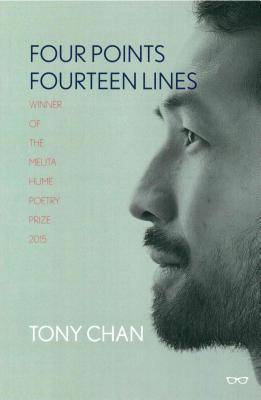 Chan is a schoolteacher who, in 2015, left his day job to undertake a 78-day solo walk between “the four extreme cardinal points of the British mainland”: Dunnet Head (North) to Ardnamurchan Point (West) in Scotland, down to Lowestoft Ness (East) in Suffolk and across to Lizard Point, Cornwall (South). It was a solo trek of 1,400 miles. He wrote one sonnet per day, not always adhering to the same rhyme scheme but fitting his sentiments into 14 lines of standard length. He doesn’t document much practical information, but does admit he stayed in decent hotels, ate hot meals, etc. Each poem is named for the starting point and destination, but the topic might be what he sees, an experience on the road, a memory, or whatever. “Evanton to Inverness” decries a gloomy city; “Inverness to Foyers” gives thanks for his shoes and lycra undershorts. He compares Highlanders to heroic Trojans: “Something sincere in their browned, moss-green tweeds, / In their greeting voice of gentle tenor. / From ancient Hector or from ancient clans, / Here live men most earnest in words and deeds.” None of the poems are laudable in their own right, but it’s a pleasant enough project. Too often, though, Chan resorts to outmoded vocabulary to fit the form or try to prove a poetic pedigree (“Suddenly comes an Old Testament of deluge and / Tempest, deluding the sense wholly”; “I know these streets, whence they come and whither / They run”; “I learnt well some verses of Tennyson / Years ago when noble dreams were begat”) when he might have been better off varying the form and/or using free verse. (Signed copy from Little Free Library)
Storm Pegs: A Life Made in Shetland by Jen Hadfield (2024)
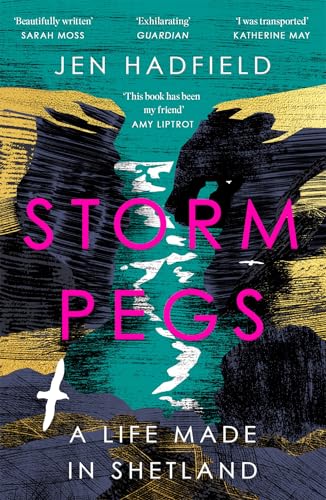 This is not so much a straightforward memoir as a set of atmospheric vignettes, each headed by a relevant word or phrase in the Shaetlan dialect. Hadfield, who is British Canadian, moved to the islands in her late twenties in 2006 and soon found her niche. “My new life quickly debunked those Edge-of-the-World myths – Shetland was too busy to feel remote, and had too strong a sense of its own identity to feel frontier-like.” It’s gently ironic, she notes, that she’s a terrible sailor and gets vertigo at height yet lives somewhere with perilous cliff edges that is often reachable only by sea. Living in a trailer waiting for her home to be built on West Burra, she feels the line between indoors and out is especially thin. It’s a life of wild swimming, beachcombing, fresh fish, folk music, seabirds, kind neighbours, and good cheer that warms long winter nights. After the isolation of the pandemic period comes the unexpected joy of a partner and a pregnancy in her mid-forties. Hadfield is a Windham-Campbell Prize-winning poet, and her lyrical prose is full of lovely observations that made me hanker to return to Shetland – it’s been 19 years since my only visit, after all. This was a slow read I savoured for its language and sense of place.
With thanks to Picador for the free paperback copy for review.
From Shetland authors, I have also reviewed:
Orchid Summer by Jon Dunn (Hadfield mentions him)
Sea Bean by Sally Huband (Hadfield meets her)
The Valley at the Centre of the World by Malachy Tallack
Moving Mountains: Writing Nature through Illness and Disability, ed. Louise Kenward (2023)
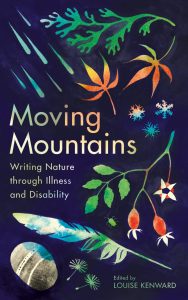 I often read memoirs about chronic illness and disability – the sort of narratives recognized by the Barbellion and ACDI Literary Prizes – and the idea of nature essays that reckon with health limitations was an irresistible draw. The quality in this anthology varies widely, from excellent to barely readable (for poor prose or pretentiousness). I’ll be kind and not name names in the latter category; I’ll only say the book has been poorly served by the editing process. The best material is generally from authors with published books: Polly Atkin (Some of Us Just Fall; see also her recent response to the Raynor Winn fiasco), Victoria Bennett (All My Wild Mothers), Sally Huband (as above!), and Abi Palmer (Sanatorium). For the first three, the essay feels like an extension of their memoir, while Palmer’s inventive piece is about recreating seasons for her indoor cats. My three favourite entries, however, were Louisa Adjoa Parker’s poem “This Is Not Just Tired,” Nic Wilson’s “A Quince in the Hand” (she’s an acquaintance through New Networks for Nature and has a memoir out this summer, Land Beneath the Waves), and Eli Clare’s “Moving Close to the Ground,” about being willing to scoot and crawl to get into nature. A number of the other pieces are repetitive, overlong or poorly shaped and don’t integrate information about illness in a natural way. Kudos to Kenward for including BIPOC and trans/queer voices, though. (Christmas gift from my wish list)
The Stirrings: Coming of Age in Northern Time by Catherine Taylor (2023)
“A typical family and an ordinary story, although neither the family nor the story seems commonplace when it is your family and your story.”
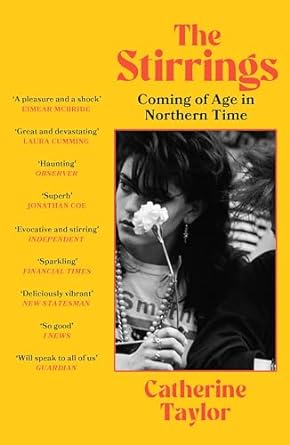 Taylor, who was born in New Zealand and grew up in Sheffield, won the Ackerley Prize for this memoir. (After Dunmore and King, this is the third in my intended four-in-a-row on the 20 Books of Summer Bingo card, fulfilling the “Book published in summer” category – August 2023.) It is bookended by two pivotal summers: 1976, the last normal season in her household before her father left; and 1989, the “Second Summer of Love,” when she had an abortion (the subject of “Milk Teeth,” the best individual chapter and a strong stand-alone essay). In between, fear and outrage overshadow her life: the Yorkshire Ripper is at large, nuclear war looms, mines are closing and protesters meet with harsh reprisals, and her own health falters until she gets a diagnosis of Graves’ disease. Then, in her final year at Cardiff, one of their housemates is found dead. Taylor draws reasonably subtle links to the present day, when fascism, global threats, and femicide are, unfortunately, as timely as ever. She’s the sort of personality I see at every London literary event I attend: Wellcome Book Prize ceremonies, Weatherglass’s Future of the Novella event, and so on. I got the feeling this book is more about bearing witness to history than revealing herself, and so I never warmed to it or to her on the page. But if you’d like to get a feel for the mood of the times, or you have experience of the settings and period, you may well enjoy it more than I did. (New purchase from Bookshop.org with a Christmas book token)
Love Your Library, August 2025
Thanks to Eleanor for posting about her recent library reading, including for 20 Books of Summer (here and here). Thanks also to Skai for joining in again!
Further to last month: My library system’s reclassification seems all the stranger the more I look at it, especially in the children’s section. Yellow stickers will have: one black stripe (Beginner Reads), two black stripes (Short Chapter Books), three black stripes (Picture Books for Older Readers) or a T (Teen). Okay, that last one makes sense, but taking in the number of stripes at a quick glance when organising a trolley or shelving? Seems like a recipe for misfiling.
Also, as a member of senior staff astutely observed, surely the length of a book is the one thing you can tell just by looking at it! So why make that its own designation? Especially when those double-stripe books will be mixed in with the rest of the chapter books, which from now on will not be given a very helpful label on the spine with the first letter of the author’s surname.
It’s having the two systems on the go at the same time that is most confusing. Apparently, these changes were handed down from on high, to keep us in line with other libraries, but no one consulted with the people who actually handle the books on a day-to-day basis. As in, the staff and volunteers. Ahem. We shall see how it goes.
My library use over the last month:
(links are to books not already reviewed on the blog)
I’ve been borrowing some Booker and Wainwright Prize list reads, as well as looking ahead to our mid-September trip to Berlin and Novellas in November.
READ
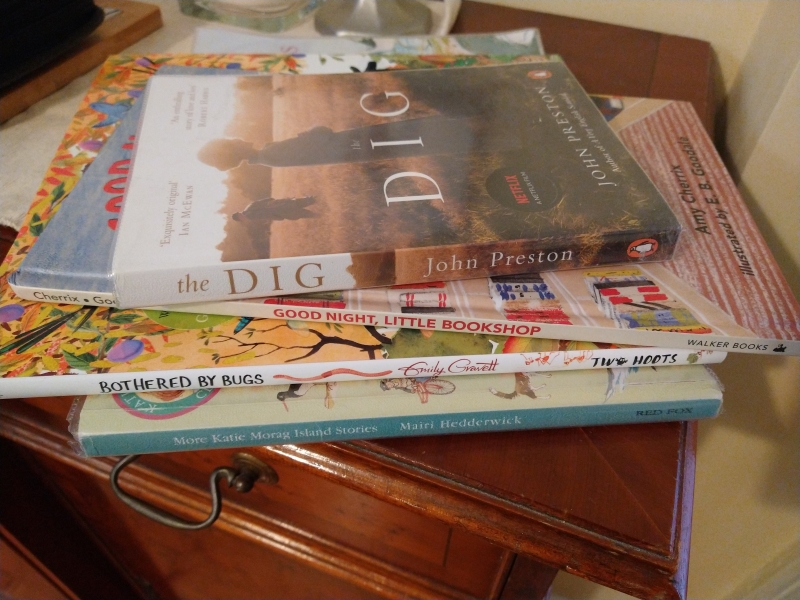
- Good Night, Little Bookshop by Amy Cherrix

- Bothered by Bugs by Emily Gravett
- More Katie Morag Island Stories by Mairi Hedderwick
- The Homemade God by Rachel Joyce
- The Dig by John Preston
Last month we joined my in-laws for a few days at the holiday cottage they’d rented in Suffolk. We crammed in loads: Orford Ness, a former military site with a very unusual shingle landscape where hares live and the wind howls; Minsmere RSPB reserve; and Sutton Hoo, the site of a famous Anglo-Saxon ship burial, discovered there during an archaeological dig of the mounds in 1939; and Woodbridge, the nearest town to the cottage, whose museum has a project underway to build a full-size replica of the ship. I didn’t put two and two together to realize that The Dig, adapted into a 2021 Netflix film starring Ralph Fiennes and Carey Mulligan (there was a big on-site exhibit about the filming), is about Sutton Hoo or I would have gotten it out of the library to take with us. Instead, I caught up afterward.


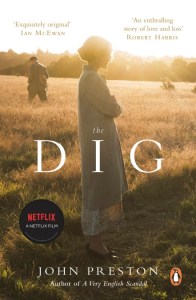 Preston focuses on the few spring and summer months of Basil Brown’s amateur excavation, which was then co-opted by museum professionals. Edith Pretty, the landowner, was a widow in her fifties, raising her plucky son Robert on her own and struggling with ill health (she had Robert at age 47, almost unheard of in those days, and would die after a stroke in 1942). The day to day of the excavation was engrossing and I enjoyed the interactions between Brown and Pretty. I didn’t need the third narrator, Peggy Piggott, wife of one of the archaeologists and excavation staff in her own right, nor the extra background about characters’ marriages and museum bureaucracy. Meanwhile, the epilogue from Robert returning to the site in the 1960s made me wish that there had been more of that retrospective viewpoint. This was enjoyable in a minor way but I wouldn’t have read it had I not been to Sutton Hoo. I wonder if the film would be, on the whole, more successful.
SKIMMED
- I Think I Like Girls by Rosie Day – I took a desultory look but the content seemed pretty lite and the writing style iffy. (Hadn’t heard of Day but I guess she’s a celebrity?)
SKIMMING
- Cuddy by Benjamin Myers (for book club; I also skimmed it when it first came out)
CURRENTLY READING
- The Most by Jessica Anthony
- The Honesty Box by Luzy Brazier
- Bellies by Nicola Dinan
- The Wedding People by Alison Espach
- The Summer I Turned Pretty by Jenny Han
- An Eye on the Hebrides by Mairi Hedderwick
- The Mermaid Chair by Sue Monk Kidd
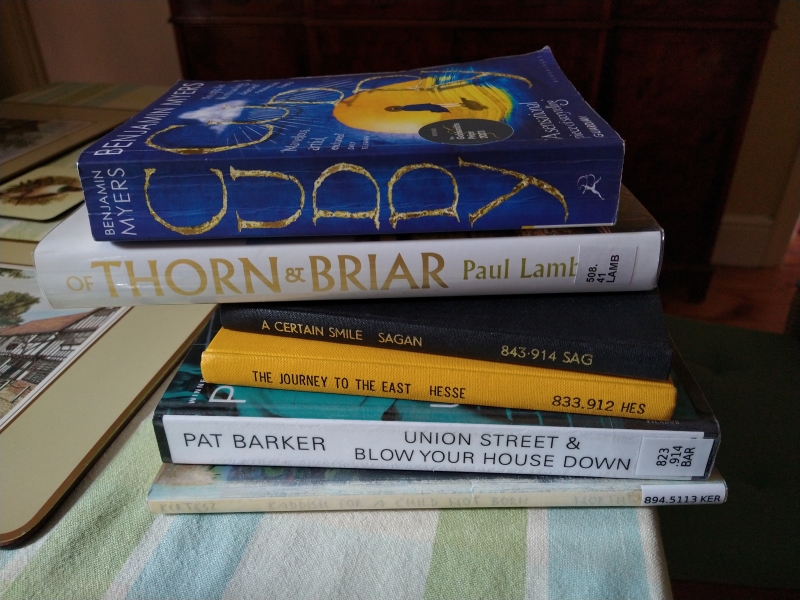
- Of Thorn & Briar: A Year with the West Country Hedgelayer by Paul Lamb
- The Land in Winter by Andrew Miller
- The Secret Lives of Booksellers and Librarians: True Stories of the Magic of Reading by James Patterson & Matt Eversmann
CHECKED OUT, TO BE READ
It’s nearly time for Novellas in November planning! Thus I borrowed a quartet of books from the university library (the bottom stack below), two of which were recommended by blog friends: the Barker (Blow Your House Down) by Margaret and the Hesse by Kaggsy. The Kertesz is on my radar thanks to C’s bandmate Jo. And I’ve enjoyed the two Sagan novellas I’ve read so far so thought I’d source another.
ON HOLD, TO BE COLLECTED
- Sojourn by Amit Chaudhuri
- The Names by Florence Knapp
- Love in Five Acts by Daniela Krien
- Red Pockets: An Offering by Alice Mah
- Birding by Rose Ruane
- Opt Out by Carolina Setterwall
- Slags by Emma Jane Unsworth
- Seascraper by Benjamin Wood
IN THE RESERVATION QUEUE
- The Two Roberts by Damian Barr
- All the Way to the River by Elizabeth Gilbert
- Helm by Sarah Hall
- The Haunted Wood: A History of Childhood Reading by Sam Leith
- What We Can Know by Ian McEwan
- The Eights by Joanna Miller
- Endling by Maria Reva
- Buckeye by Patrick Ryan
- Flesh by David Szalay
RETURNED UNREAD
- Fragile Minds by Bella Jackson
- Enchanted Ground: Growing Roots in a Broken World by Steven Lovatt
- Wife by Charlotte Mendelson
- The Forgotten Sense: The Nose and the Perception of Smell by Jonas Olofsson
I lost immediate interest in all of these but would be willing to try them again another time.
What have you been reading or reviewing from the library recently?

Share a link to your own post in the comments. Feel free to use the above image. The hashtag is #LoveYourLibrary.
20 Books of Summer, 11–12 (Victoriana): Edward Carey & George Grossmith
Neither of these appeared on my initial list, but I thought a middle-grade novel and a classic would be good for variety. Though I have an MA in Victorian Literature, I don’t often read from the period anymore because I’m allergic to wordy triple-deckers, so it was a delight to encounter something short and lighthearted. I’ve always been partial to a contemporary Victorian pastiche, though.
Heap House (Iremonger, #1) by Edward Carey (2013)
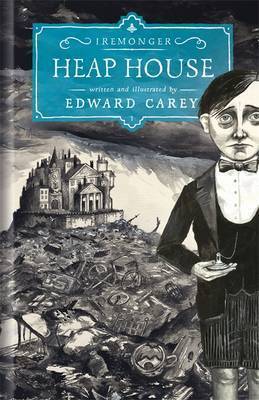 The Iremonger family wealth came from salvaging treasure from the rubbish heaps surrounding their London mansion. Every Iremonger has a birth object (like a daemon?) associated with them. Clodius Iremonger, adolescent descendant of the great family, has a special skill: he hears each birth object speaking its name. His own bath plug, for instance, cries out, “James Henry Hayward.” These objects house enchanted souls; people can change back into objects and vice versa. The narration alternates between Clod and plucky Lucy Pennant, who arrives from a local orphanage to work as a house servant. All staff and heap-workers are called “Iremonger,” but Lucy refuses to cede her identity and wants justice for the oppressed workers. She and Clod form a bond against the odds and there’s an upstairs–downstairs tinge to their ensuing adventures in the house and on the heaps.
Carey’s trademark twisted combination of Dickensian charm and Gothic gloom is certainly on display here. All the other names are slightly off-kilter: Rosamud, Moorcus, Aliver, Pinalippy and so on. I laughed out loud at a passage about the dubious purpose of doilies. Little truly won me over, but all my experiences with Carey’s work since then (also including The Swallowed Man, B: A Year in Plagues and Pencils, and Edith Holler) have been a slight letdown. This was highly readable and I galloped through the midsection, but I found the whole thing overlong; I’m undecided about reading the other books, though they do have higher average ratings on Goodreads. I got the second, Foulsham, from the Little Free Library and it’s significantly shorter. Shall I continue? (Secondhand – Awesomebooks.com)
The Diary of a Nobody by George Grossmith; illus. Weedon Grossmith (1892)
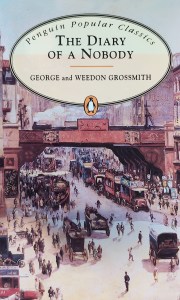 It must be rare for a fictional character to be memorialized in the dictionary. I was vaguely aware of the word “Pooterism” but thought it referred to small-minded, pompous, fussy individuals, so my preconception of City clerk Charles Pooter was probably more negative than is warranted. (In fact, “Pooterish” means taking oneself too seriously.) He’s actually a lovable, hapless Everyman who tries desperately to keep up with middle-class society but often gets it wrong. He can’t handle his champagne; and he wants so much to be funny – his are definite dad jokes avant la lettre – but only sometimes pulls it off. He regularly offends tradesmen, servants and neighbours alike, and tries but fails to ingratiate himself with his betters. Luckily, his mistakes are mild and just leave him out of favour – or pocket.

Charles and Lupin Pooter, as depicted by
Weedon Grossmith. Public domain, via Wikimedia Commons.
Originally serialized in Punch, the book is in short entries of one paragraph to a few pages, recounting the Pooters’ first 15 months in their new home. Events range from the mundane – home repairs and decoration – to the great excitement of being invited to the mayor’s ball. Charles and Carrie’s young adult son, Lupin (surely a partial inspiration for Roger Mortimer’s Dear Lupin and its sequels?), who comes back to live with them partway through, is a feckless bounder always being taken in by new money-making schemes and unsuitable ladies. Charles hopes to find Lupin steady employment and steer him away from his infatuation with Daisy Mutlar.
It’s well worth reading for its own sake, but also for the window onto daily Victorian life, including things that aren’t always recorded, such as fashion and slang. And it’s clever how Pooter’s pretensions get punctured by the others around him: longsuffering Carrie (“He tells me his stupid dreams every morning nearly”), insolent Lupin (“Look here, Guv.; excuse me saying so, but you’re a bit out of date”), and testy Gowing – that’s right, the neighbours are named Cummings and Gowing (“I would add, you’re a bigger fool than you look, only that’s absolutely impossible”). All very amusing. (Free from mall bookshop c. 2020)
Never fear, I’m still on track to finish the challenge by the 31st!
#WITMonth, Part I: Susanna Bissoli, Jente Posthuma and More
I’m starting off my Women in Translation month coverage with two short novels: one Italian and one Dutch; both about women navigating loss, family relationships, physical or mental illness, and the desire to be a writer.
Struck by Susanna Bissoli (2024; 2025)
[Translated from Italian by Georgia Wall]
Vera has been diagnosed a second time with breast cancer – the same disease that felled her mother a decade ago. “I’m fed up with feeling like a problem to be taken care of,” she thinks. Even as her treatment continues, she determines to find routes to a bigger life not defined by her illness. Writing is the solution. When she moves in with her grouchy octogenarian father, Zeno Benin, she discovers he’s secretly written a novel, A Lucky Man. The almost entirely unpunctuated document is handwritten across 51 notebooks Vera undertakes to type up and edit alongside her father as his health declines.
At the same time, she becomes possessed by the legend of local living ‘saint’ Annamaria Bigani, who has been visited multiple times by the Virgin Mary and learned her date of death. Wondering if there is a story here that she needs to tell, Vera interviews Bigani, then escapes to Greece for time and creative space. “Do they save us, stories? Or is it our job to save them? I believe writing that story, day in and day out for years, saved my father’s life. But I’m sorry, I don’t have time to save his story: I need to write my own. The saint, or so I thought.” In the end, we learn, Struck – the very novel we are reading – is Vera’s book.

The title comes from a scientific study conducted on people struck by lightning at a country festival in France. How did they survive, and what were the lasting effects? The same questions apply to Vera, who avoids talking about her cancer but whose relationship with her sister Nora is still affected by choices made while their mother was alive. There are many delightful small conversations and incidents here, often involving Vera’s niece Alice. Vera’s relationship with Franco, a doctor who works with asylum seekers, is a steady part of the background. A translator’s afterword helped me understand the thought that went into how to reproduce Vera and others’ use of dialect (La Bassa Veronese vs. standard Italian) through English vernacular – so Vera and her sister say “Mam” and her father uses colourful idioms.
Though I know nothing of Bissoli’s biography, this second novel has the feeling of autofiction. Despite its wrenching themes of illness and the inevitability of death, it’s a lighthearted family story with free-flowing prose that I can enthusiastically recommend to readers of Elizabeth Berg and Catherine Newman.
This was my introduction to new (est. 2023) independent publisher Linden Editions, which primarily publishes literature in translation. I have two more of their books underway for another WIT Month post later this month. And a nice connection is that I corresponded with translator Georgia Wall when she was the publishing manager for The Emma Press.
With thanks to Linden Editions for the free copy for review.
People with No Charisma by Jente Posthuma (2016; 2025)
[Translated from Dutch by Sarah Timmer Harvey]
 Dutch writer Jente Posthuma’s quirky, bittersweet first novel traces the ripples that grief and mental ill health send through a young woman’s life. The narrator’s mother was an aspiring actress; her father runs a mental hospital. A dozen episodic short chapters present snapshots from a neurotic existence as she grows from a child to a thirtysomething starting a family of her own. Some highlights include her moving to Paris to write a novel, and her father – a terrible driver – taking her on a road trip through France. Despite the deadpan humor, there’s heartfelt emotion here and the prose and incidents are idiosyncratic. (Full review forthcoming for Shelf Awareness)
& Reviewed for Foreword Reviews a couple of years ago:
What I Don’t Want to Talk About by Jente Posthuma (2020; 2023)
[Translated from Dutch by Sarah Timmer Harvey]
 A young woman bereft after her twin brother’s suicide searches for the seeds of his mental illness. The past resurges, alternating with the present in the book’s few-page vignettes. Their father leaving when they were 11 was a significant early trauma. Her brother came out at 16, but she’d intuited his sexuality when they were eight. With no speech marks, conversations blend into cogitation and memories here. A wry tone tempers the bleakness. (Shortlisted for the European Union Prize for Literature and the International Booker Prize.)
Both featured an unnamed narrator and a similar sense of humor. I concluded that Posthuma excels at exploring family dynamics and the aftermath of bereavement.
I got caught out when I reviewed The Appointment, too: Volckmer doesn’t technically count towards this challenge because she writes in English (and lives in London), but as she’s German, I’m adding in a teaser of my review as a bonus. Oddly, this novella did first appear in another language, French, in 2024, under the title Wonderf*ck. [The full title below was given to the UK edition.]
Calls May Be Recorded [for Training and Monitoring Purposes] by Katharina Volckmer (2025)
 Volckmer’s outrageous, uproarious second novel features a sex-obsessed call center employee who negotiates body and mommy issues alongside customer complaints. “Thank you for waiting. My name is Jimmie. How can I help you today?” each call opens. The overweight, homosexual former actor still lives with his mother. His customers’ situations are bizarre and his replies wildly inappropriate; it’s only a matter of time until he faces disciplinary action. As in her debut, Volckmer fearlessly probes the psychological origins of gender dysphoria and sexual behavior. Think of it as an X-rated version of The Office. (Full review forthcoming for Shelf Awareness)
20 Books of Summer, 9–10: Leave the World Behind & Leaving Atlanta
Halfway there! And I’m doing better than it might appear in that I’m in the middle of another 7 books and just have to decide what the final 3 will be. This was a sobering but satisfying pair of novels in which race and class play a part but the characters are ultimately helpless in the face of disasters and violence. Both:
Leave the World Behind by Rumaan Alam (2020)
The title heralds a perfect holiday read, right? A New York City couple, Amanda and Clay, have rented a secluded vacation home in Long Island with their teenagers, Archie and Rose, and plan on a week of great beach weather and mild hedonism: food, drink, secret cigarettes, a hot tub, maybe some sex. But late on the first night there’s a knock on the door from the owners, sixtysomething Black couple Ruth and G. H. Something is going on; although the house still has power, all phone and Internet services have gone down. Rather than return to a potentially chaotic city, the older couple set course for their country retreat to hunker down. George is in finance and believes money solves everything, so he offers Amanda and Clay $1000 cash for the inconvenience of having their holiday interrupted.
 From an amassing herd of deer to Archie’s sudden mystery illness, everything quickly turns odd. Glimpses of what’s happening in the wider world are surrounded by a menacing haziness, but the events seem to embody modern anxieties about being cut off from information and wondering who to trust. Given the blurbs and initial foreshadowing, I expected racial tension to be a main driver of an incendiary household climax. Instead, the threat is external and largely unexplained, and the couples are forced to rely on each other as tribalism sets in. (It’s uncanny that this was written before Covid, published during.)
This was a book club read and one of the most divisive I can remember. I was among the few who thought it gripping, intriguing, and even genuinely frightening. Others found the characters unlikable, the plot implausible or silly, and the writing heavy-handed. Alam is definitely poking fun at privileged bougie families. He draws attention to the author as puppet-master, inserting shrewd hints of what is occurring elsewhere or will soon befall certain characters. Some passages skirt pomposity with their anaphora and rhetorical questioning. Alliteration, repetition, and stark pronouncements make the prose almost baroque in places. Alam’s style is theatrical, even arch, but it suits the premonitory tone. I admired how he constantly upends genre expectations, moving from literary fiction to domestic drama to dystopia to magic realism to horror. The stuff of nightmares – being naked in front of strangers, one’s teeth falling out – becomes real, or at least real in the world of the book. The reminder is that we are never as in control as we think we are; always, disasters are unfolding. What will we do, and who will we be, as the inevitable unfolds?
You demanded answers, but the universe refused. Comfort and safety were just an illusion. Money meant nothing. All that meant anything was this—people, in the same place, together. This was what was left to them.
Absorbing, timely, controversial: read it! (Free from a neighbour)
Leaving Atlanta by Tayari Jones (2002)
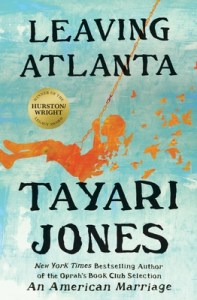 Jones’s debut novel is about the Atlanta Child Murders, a real-life serial killer spree that targeted 29 African American children between 1979 and 1982. (Two of the victims attended her elementary school.) Rather than addressing the gruesome reality, however, she takes a sideways look by considering the effect that fear has on students whose classmates start disappearing. Three sections rather like linked novellas take on the perspective of three different Oglethorpe Elementary fifth graders: LaTasha Baxter, Rodney Green, and Octavia Harrison. The POV moves from third to second to first person, a creative writing experiment that succeeds at pulling readers closer in. The AAVE-inflected dialogue and interactions feel genuine in each, and I liked the playful addition of “Tayari Jones” as a fringe character.
Even as their school is making news headlines, the children’s concerns are perennial adolescent ones: how to avoid bullying, who to sit with at lunch, how to be friendly yet not falsely encourage members of the opposite sex. And at home, all three struggle with an absent or overbearing father. At age 11, these kids are just starting to realize that their parents aren’t perfect and might not be able to keep them safe. I especially warmed to Octavia’s voice, even as her story made my heart ache: “cussing at myself for being too stupid to see that nothing lasts. That people get away from you like a handful of sweet smoke.” I preferred this offbeat, tender coming-of-age novel to Silver Sparrow and would place it on a par with An American Marriage. (Birthday gift from my wish list)
20 Books of Summer, 8: Au Revoir, Tristesse by Viv Groskop
This is a substitute I picked out as a potential (now belated) #ParisinJuly2025 contribution. There’s been little time for writing over the past week while we’ve been hosting my sister and brother-in-law. Their whirlwind trip was shortened by a day due to a cancelled flight from the States, but we managed to pack in a lot, including a two-night mini-break down in Devon.

Reminiscent of Something to Declare by Julian Barnes and How Proust Can Change Your Life by Alain de Botton, this is a lighthearted tour through a dozen great works of French literature and the lessons they might offer modern readers on how to live well. Ever since her school days of studying French and spending every family holiday in France, Groskop has been obsessed with the language and culture. In most of the chapters, she undertakes a rereading of a novel she first read as a teenager or Cambridge student, marveling at how much more she gets out of it with greater life experience.
 Although her choices are indisputable classics, she acknowledges they can only ever be an incomplete and biased selection, unfortunately all white and largely male, though she opens with Bonjour Tristesse and also includes Colette and Duras novels. I’d only read three of her dozen, in translation: along with the Sagan, Dangerous Liaisons and Madame Bovary (as well as other books by two of the additional authors), but it didn’t make much difference whether I was familiar with a plot or not. So long as one is not allergic to spoilers, it’s possible to enjoy these miniature essays’ witty combination of literary criticism, biographical information, self-help messaging, and a bit of autobiographical context.
The male writers tended to be syphilitic workaholics – Balzac is reputed to have drunk 50 cups of coffee per day to sustain his output – while the women flouted social conventions by drinking, taking much younger (and/or female) lovers and driving recklessly. While the subtitle promises “Lessons in Happiness,” from Hugo to Camus these are in fact pretty miserable narratives in which, as was especially common in the 19th century, protagonists are punished for ambition or transgressions, or never reach contentment because of self-delusion.
In boiling down each plot to one line of advice for a chapter title, Groskop’s tone alternates between earnest (“Our greatest weaknesses conceal our greatest strengths” = Cyrano de Bergerac) and tongue in cheek (“Social climbing rarely pays off, but you’ll probably want to do it anyway” = Le Rouge et le Noir). She describes the works with genuine affection and clearly believes they are still worth reading, yet isn’t afraid to question those aspects that have aged less well. Controversially, she suggests being selective with Proust’s mammoth oeuvre: “skim-read, rereading the passages you fall in love with and discarding the rest.” She also surveys how the stories live on through adaptations. Of the new-to-me, I’m most drawn to Bel-Ami but also fancy La Cousine Bette. This was a delight I wouldn’t hesitate to recommend to fellow Francophiles. (New purchase – remainder from Hay Cinema Bookshop) 

 Bookish Beck = Rebecca Foster. American transplant to England. Freelance proofreader and book reviewer.
 Bookish Beck