May Releases, Part II (Fiction): Le Blevennec, Lynch, Puchner, Stanley, Ullmann, and Wald
A cornucopia of May novels, ranging from novella to doorstopper and from Montana to Tunisia; less of a spread in time: only the 1980s to now. Just a paragraph on each to keep things simple. I’ll catch up soon with May nonfiction and poetry releases I read.
Friends and Lovers by Nolwenn Le Blevennec (2023; 2025)
[Translated from French by Madeleine Rogers]
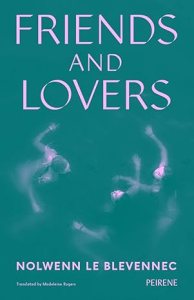 Armelle, Rim, and Anna are best friends – the first two since childhood. They formed a trio a decade or so ago when they worked on the same magazine. Now in their mid-thirties, partnered and with children, they’re all gripped by a sexual “great awakening” and long to escape Paris and their domestic commitments – “we went through it, this mutiny, like three sisters,” poised to blow up the “perfectly executed choreography of work, relationships, children”. The friends travel to Tunisia together in December 2014, then several years later take a completely different holiday: a disaster-prone stay in a lighthouse-keeper’s cottage on an island off the coast of Brittany. They used to tolerate each other’s foibles and infidelities, but now resentment has sprouted up, especially as Armelle (the narrator) is writing a screenplay about female friendship that’s clearly inspired by Rim and Anna. Armelle is relatably neurotic (a hilarious French blurb for the author’s previous novel is not wrong: “Woody Allen meets Annie Ernaux”) and this is wise about intimacy and duplicity, yet I never felt invested in any of the three women or sufficiently knowledgeable about their lives.
With thanks to Peirene Press for the free copy for review.
A Family Matter by Claire Lynch
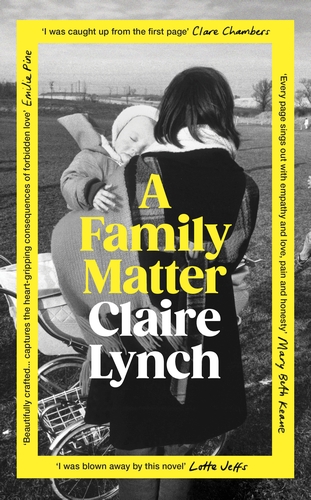 “The fluke of being born at a slightly different time, or in a slightly different place, all that might gift you or cost you.” At events for Small, Lynch’s terrific memoir about how she and her wife had children, women would speak up about how different their experience had been. Lesbians born just 10 or 20 years earlier didn’t have the same options. Often, they were in heterosexual marriages because that’s all they knew to do; certainly the only way they thought they could become mothers. In her research into divorce cases in the UK in the 1980s, Lynch learned that 90% of lesbian mothers lost custody of their children. Her aim with this earnest, delicate debut novel, which bounces between 2022 and 1982, is to imagine such a situation through close portraits of Heron, an ageing man with terminal cancer; his daughter, Maggie, who in her early forties bears responsibility for him and her own children; and Dawn, who loved Maggie desperately but felt when she met Hazel that she was “alive at last, at twenty-three.” How heartbreaking that Maggie knew only that her mother abandoned her when she was little; not until she comes across legal documents and newspaper clippings does she understand the circumstances. Lynch made the wise decision to invite sympathy for Heron from the start, so he doesn’t become the easy villain of the piece. Her compassion, and thus ours, is equal for all three characters. This confident, tender story of changing mores and steadfast love is the new Carol for our times. (Such a lovely but low-key novel was liable to make few ripples, so I’m delighted for Lynch that the U.S. release got a Read with Jenna endorsement.)
With thanks to Chatto & Windus (Penguin) for the proof copy for review.
Dream State by Eric Puchner
 If it starts and ends with a wedding, it must be a comedy. If much of the in between is marked by heartbreak, betrayal, failure, and loss, it must be a tragedy. If it stretches towards 2050 and imagines a Western USA smothered in smoke from near-constant forest fires, it must be an environmental dystopian. Somehow, this novel is all three. The first 163 pages are pure delight: a glistening romantic comedy about the chaos surrounding Charlie and Cece’s wedding at his family’s Montana lake house in the summer of 2004. First half the wedding party falls ill with norovirus, then Charlie’s best friend, Garrett (who’s also the officiant), falls in love with the bride. Do I sound shallow if I admit this was the section I enjoyed the most? The rest of this Oprah’s Book Club doorstopper examines the fallout of this uneasy love triangle. Charlie is an anaesthesiologist, Cece a bookstore owner, and Garrett a wolverine researcher in Glacier National Park, which is steadily losing its wolverines and its glaciers. The next generation comes of age in a diminished world, turning to acting or addiction. There are still plenty of lighter moments: funny set-pieces, warm family interactions, private jokes and quirky descriptions. But this feels like an appropriately grown-up vision of idealism ceding to a reality we all must face. I struggled with a lack of engagement with the children, but loved Puchner’s writing so much on the sentence level that I will certainly seek out more of his work. Imagine this as a cross between Jonathan Franzen and Maggie Shipstead.
With thanks to Sceptre (Hodder) for the proof copy for review.
Consider Yourself Kissed by Jessica Stanley
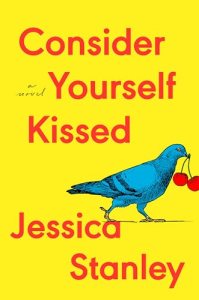 Coralie is nearing 30 when her ad agency job transfers her from Australia to London in 2013. Within a few pages, she meets Adam when she rescues his four-year-old, Zora, from a lake. That Adam and Coralie will be together is never really in question. But over the next decade of personal and political events, we wonder whether they have staying power – and whether Coralie, a would-be writer, will lose herself in soul-destroying work and motherhood. Adam’s job as a political journalist and biographer means close coverage of each UK election and referendum. As I’ve thought about some recent Jonathan Coe novels: These events were so depressing to live through, who would want to relive them through fiction? I also found this overlong and drowning in exclamation points. Still, it’s so likable, what with Coralie’s love of literature (the title is from The Group) and adjustment to expat life without her mother; and secondary characters such as Coralie’s brother Daniel and his husband, Adam’s prickly mother and her wife, and the mums Coralie meets through NCT classes. Best of all, though, is her relationship with Zora. This falls solidly between literary fiction and popular/women’s fiction. Given that I was expecting a lighter romance-led read, it surprised me with its depth. It may well be for you if you’re a fan of Meg Mason and David Nicholls.
With thanks to Hutchinson Heinemann for the proof copy for review.
Girl, 1983 by Linn Ullmann (2021; 2025)
[Translated from Norwegian by Martin Aitken]
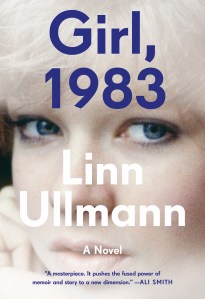 Ullmann is the daughter of actress Liv Ullmann and film director Ingmar Bergman. That pedigree perhaps accounts for why she got the opportunity to travel to Paris in the winter of 1983 to model for a renowned photographer. She was 16 at the time and spent the whole trip disoriented: cold, hungry, lost. Unable to retrace the way to her hotel and wearing a blue coat and red hat, she went to the only address she knew – that of the photographer, K, who was in his mid-forties. Their sexual relationship is short-lived and unsurprising, at least in these days of #MeToo revelations. Its specifics would barely fill a page, yet the novel loops around and through the affair for more than 250. Ullmann mostly pulls this off thanks to the language of retrospection. She splits herself both psychically and chronologically. There’s a “you” she keeps addressing, a childhood imaginary friend who morphs into a critical voice of conscience and then the self dissociated from trauma. And there’s the 55-year-old writer looking back with empathy yet still suffering the effects. The repetition made this something of a sombre slog, though. It slots into a feminist autofiction tradition but is not among my favourite examples.
With thanks to Hamish Hamilton (Penguin) for the proof copy for review.
The Bayrose Files by Diane Wald
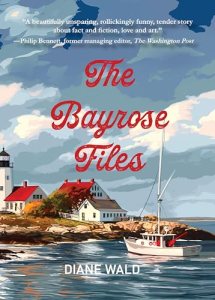 In the 1980s, Boston journalist Violet Maris infiltrates the Provincetown Home for Artists and Writers, intending to write a juicy insider’s exposé of what goes on at this artists’ colony. But to get there she has to commit a deception. Her gay friend Spencer Bayrose has a whole sheaf of unpublished short stories drawing on his Louisiana upbringing, and he offers to let her submit them as her own work to get a place at PHAW. Here Violet finds eccentrics aplenty, and even romance, but when news comes that Spence has AIDS, she has to decide how far she’ll go for a story and what she owes her friend. At barely over 100 pages, this feels more like a long short story, one with a promising setting and a sound plot arc, but not enough time to get to know or particularly care about the characters. I was reminded of books I’ve read by Julia Glass and Sara Maitland. It’s offbeat and good-natured but not top tier.
Published by Regal House Publishing. With thanks to publicist Jackie Karneth of Books Forward for the advanced e-copy for review.
A Family Matter was the best of the bunch for me, followed closely by Dream State.
Which of these do you fancy reading?
Three on a Theme: Christmas Novellas I (Re-)Read This Year
I wasn’t sure I’d manage any holiday-appropriate reading this year, but thanks to their novella length I actually finished three, two in advance and one in a single sitting on the day itself. Two of these happen to be in translation: little slices of continental Christmas.
Twelve Nights by Urs Faes (2018; 2020)
[Translated from the German by Jamie Lee Searle]
 In this Swiss novella, the Twelve Nights between Christmas and Epiphany are a time of mischief when good folk have to protect themselves from the tricks of evil spirits. Manfred has trekked back to his home valley hoping to make things right with his brother, Sebastian. They have been estranged for several decades – since Sebastian unexpectedly inherited the family farm and stole Manfred’s sweetheart, Minna. These perceived betrayals were met with a vengeful act of cruelty (but why oh why did it have to be against an animal?). At a snow-surrounded inn, Manfred convalesces and tries to summon the courage to show up at Sebastian’s door. At only 84 small-format pages, this is more of a short story. The setting and spare writing are appealing, as is the prospect of grace extended. But this was over before it began; it didn’t feel worth what I paid. Perhaps I would have been happier to encounter it in an anthology or a longer collection of Faes’s short fiction. (Secondhand – Hungerford Bookshop)
Through a Glass, Darkly by Jostein Gaarder (1993; 1998)
[Translated from the Norwegian by Elizabeth Rokkan]
On Christmas Day, Cecilia is mostly confined to bed, yet the preteen experiences the holiday through the sounds and smells of what’s happening downstairs. (What a cosy first page!)
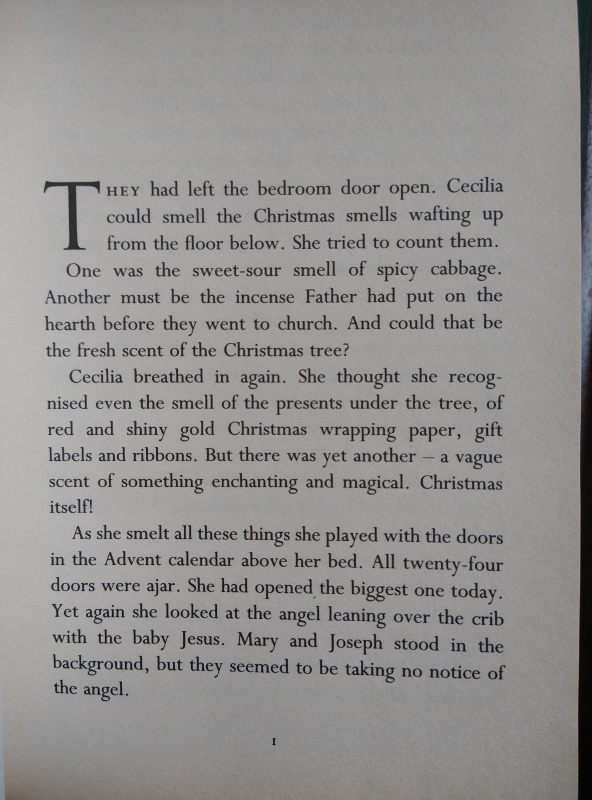
 Her father later carries her down to open her presents: skis, a toboggan, skates – her family has given her all she asked for even though everyone knows she won’t be doing sport again; there is no further treatment for her terminal cancer. That night, the angel Ariel appears to Cecilia and gets her thinking about the mysteries of life. He’s fascinated by memory and the temporary loss of consciousness that is sleep. How do these human processes work? “I wish I’d thought more about how it is to live,” Cecilia sighs, to which Ariel replies, “It’s never too late.” Weeks pass and Ariel engages Cecilia in dialogues and takes her on middle-of-the-night outdoor adventures, always getting her back before her parents get up to check on her. The book emphasizes the wonder of being alive: “You are an animal with the soul of an angel, Cecilia. In that way you’ve been given the best of both worlds.” This is very much a YA book and a little saccharine for me, but at least it was only 161 pages rather than the nearly 400 of Sophie’s World. (Secondhand – Community Furniture Project, Newbury)
Small Things Like These by Claire Keegan (2021)
I idly reread this while The Muppet Christmas Carol played in the background on a lazy, overfed Christmas evening.
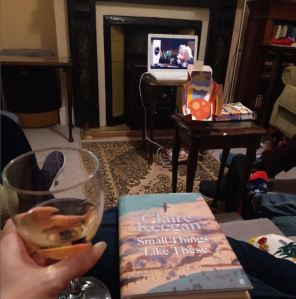
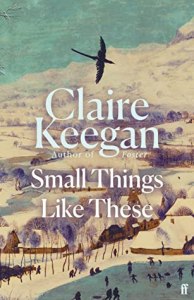 It was an odd experience: having seen the big-screen adaptation just last month, the blow-by-blow was overly familiar to me and I saw Cillian Murphy and Emily Watson, if not the minor actors, in my mind’s eye. I realized fully just how faithful the screenplay is to the book. The film enhances not just the atmosphere but also the plot through the visuals. It takes what was so subtle in the book – blink-and-you’ll-miss-it – and makes it more obvious. Normally I might think it a shame to undermine the nuance, but in this case I was glad of it. Bill Furlong’s midlife angst and emotional journey, in particular, are emphasized in the film. It was probably a mistake to read this a third time within so short a span of time; it often takes me more like 5–10 years to appreciate a book anew. So I was back to my ‘nice little story’ reaction this time, but would still recommend this to you – book or film – if you haven’t yet experienced it. (Free at a West Berkshire Council recycling event)
Previous ratings:  (2021 review);
  (2022 review)
My rating this time:
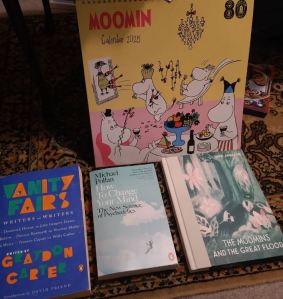
We hosted family for Christmas for the first time, which truly made me feel like a proper grown-up. It was stressful and chaotic but lovely and over all too soon. Here’s my lil’ book haul (but there was also a £50 book token, so I will buy many more!).
I hope everyone has been enjoying the holidays. I have various year-end posts in progress but of course the final Best-of list and statistics will have to wait until the turning of the year.
Coming up:
Sunday 29th: Best Backlist Reads of the Year
Monday 30th: Love Your Library & 2024 Reading Superlatives
Tuesday 31st: Best Books of 2024
Wednesday 1st: Final statistics on 2024’s reading
Book Serendipity, November to December 2024
I call it “Book Serendipity” when two or more books that I read at the same time or in quick succession have something in common – the more bizarre, the better. This is a regular feature of mine every couple of months. Because I usually have 20–30 books on the go at once, I suppose I’m more prone to such incidents. People frequently ask how I remember all of these coincidences. The answer is: I jot them down on scraps of paper or input them immediately into a file on my PC desktop; otherwise, they would flit away! The following are in roughly chronological order.
- Characters who were in a chess club and debating society in high school/college in Playground by Richard Powers and Intermezzo by Sally Rooney.
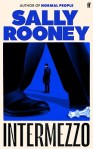
- Pondering the point of a memorial and a mention of hiring mourners in Immemorial by Lauren Markham and Basket of Deplorables by Tom Rachman.
- A mention of Rachel Carson, and her The Sea Around Us in particular, in Playground by Richard Powers, while I was also reading for review Rachel Carson and the Power of Queer Love by Lida Maxwell.
- A character pretends to be asleep when someone comes into the room to check on them in Knulp by Hermann Hesse and Rental House by Weike Wang.
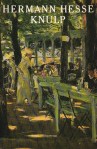
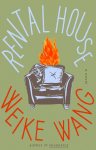
- A mention of where a partner puts his pistachio shells in After the Rites and Sandwiches by Kathy Pimlott and Rental House by Weike Wang.
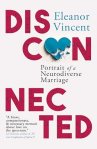 A character who startles very easily (in the last two cases because of PTSD) in Life before Man by Margaret Atwood, A History of Sound by Ben Shattuck, and Disconnected by Eleanor Vincent.
- The husband is named Nate in Life before Man by Margaret Atwood and Rental House by Weike Wang.
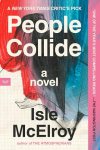
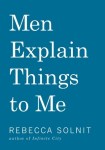
- In People Collide by Isle McElroy, there’s a mention of Elizabeth reading “a popular feminist book about how men explained things to women.” The day I finished reading the novel, I started reading the book in question: Men Explain Things to Me by Rebecca Solnit.
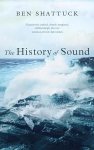
- I learned about the “he’s-at-home” (19th-century dildo) being used by whalers’ wives on Nantucket while the husbands are away at sea through historical fiction – Daughters of Nantucket by Julie Gerstenblatt, which I read last year – and encountered the practice again through an artefact found in the present day in The History of Sound by Ben Shattuck. Awfully specific!
- A week after I finished reading Station Eleven by Emily St. John Mandel, it turned up in a discussion of Vancouver Island in Island by Julian Hanna.
- A Cape Cod setting in Sandwich by Catherine Newman (earlier in the year) plus The History of Sound by Ben Shattuck and Rental House by Weike Wang.
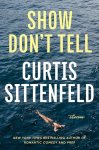
- A gay character references Mulder and Scully (of The X-Files) in the context of determining sexual preference, and there’s a female character named Kit, in The Old Haunts by Allan Radcliffe and one story of Show Don’t Tell by Curtis Sittenfeld.
- A mention of The Truman Show in the context of delusions in The Year of Living Biblically by A.J. Jacobs and You Don’t Have to Be Mad to Work Here by Benji Waterhouse.
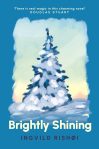
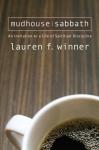
- St. Lucia is mentioned in Beasts by Ingvild Bjerkeland, Brightly Shining by Ingvild Rishøi (two Norwegian authors named Ingvild there!), and Mudhouse Sabbath by Lauren Winner.
- A pet named Darwin: in Levels of Life by Julian Barnes it’s Sarah Bernhardt’s monkey; in Cold Kitchen by Caroline Eden it’s her beagle. Within days I met another pet beagle named Darwin in Island by Julian Hanna. (It took me a moment to realize why it’s a clever choice!)
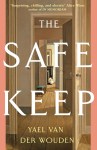
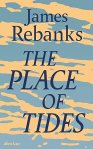
- A character named Henrik in The Place of Tides by James Rebanks and one story of Show Don’t Tell by Curtis Sittenfeld, and a Hendrik in The Safekeep by Yael van der Wouden.
- A hat with a green ribbon in The Safekeep by Yael van der Wouden and one story of Show Don’t Tell by Curtis Sittenfeld (in which it’s an emoji).
- Romanian neighbours who speak very good English in Island by Julian Hanna and Rental House by Weike Wang.
- A scene of returning to a house one used to live in in Hyper by Agri Ismaïl, The Old Haunts by Allan Radcliffe, and one story of Show Don’t Tell by Curtis Sittenfeld.
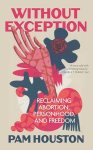
- A woman has had three abortions in The House of Dolls by Barbara Comyns and Without Exception by Pam Houston.
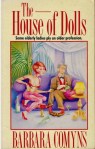
- Household items keep going missing and there’s broken china in The House of Dolls by Barbara Comyns and The Safekeep by Yael van der Wouden.
- Punctuated equilibrium (a term from evolutionary biology) is used as a metaphor in Hyper by Agri Ismaïl and Men Explain Things to Me by Rebecca Solnit.
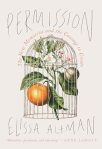 The author’s mother repeatedly asked her daughter a rhetorical question along the lines of “Do you know what I gave up to have you?” in Permission by Elissa Altman and Without Exception by Pam Houston.
- The author/character looks in the mirror at the end of a long day and hardly recognizes him/herself in The Place of Tides by James Rebanks, You Don’t Have to Be Mad to Work Here by Benji Waterhouse, and Amphibian by Tyler Wetherall.
- A man is afraid to hold his boyfriend’s hand in public in another country because he’s unsure about the cultural attitudes towards homosexuality in Clinical Intimacy by Ewan Gass and Small Rain by Garth Greenwell.
- The author’s mother is a therapist/psychologist and the author her/himself is undergoing some kind of mental health treatment in Unattached by Reannon Muth and You Don’t Have to Be Mad to Work Here by Benji Waterhouse.
- A man declares that dying in one’s mid-40s is nothing to complain about in A Beginner’s Guide to Dying by Simon Boas and Small Rain by Garth Greenwell.
- A woman ponders whether her ongoing anxiety is related to the stressful circumstances of her birth in Unattached by Reannon Muth and When the World Explodes by Amy Lee Scott.
What’s the weirdest reading coincidence you’ve had lately?
November Releases Including #NovNov24: Bennett, Pimlott, Rishøi, Shattuck
Two belated novellas: one a morbid farce set at an old folks’ home; the other a sweet Norwegian tale that offers sisterhood and magic as ways to survive a rough upbringing. Plus a lovely poetry pamphlet about the early days of widowhood and a linked short story collection spanning several centuries of art and relationships in New England.
Killing Time by Alan Bennett
I’d only previously read The Uncommon Reader by Alan Bennett; I perpetually have him confused with Arnold Bennett, by whom I know more. It could be debated whether this is a novella by word count, but even if more of a short story, for me it counts for #NovNov24 because it’s in a stand-alone volume, as publishing partner Faber produced for Claire Keegan’s So Late in the Day last year.
I polished this off in one sitting. Bennett’s black comedy is set at a posh home for the elderly, the Edwardian mansion Hill Topp House. (Residents know to be on their best behaviour lest they be demoted to an inferior neighbouring facility, Low Moor.) When a prospective client calls, Mrs McBryde enthusiastically lists the assets:
We have a choir and on special occasions a glass of dry sherry. It’s less of a home and more of a club and very much a community. We go on frequent trips out. Only last week we went to a local farm where they have a flamingo. … We don’t vegetate at Hill Topp. And the cuisine is not unadventurous. It’s not long since we had a Norwegian evening.
 The dialogue is sparkling, just like you’d expect from a playwright. As in the Hendrik Groen books and Elizabeth Taylor’s Mrs Palfrey at the Claremont, the situation invites cliques and infantilizing. The occasional death provides a bit more excitement than jigsaws and knitting. Ageing bodies may be pitiable (the incontinence!), but sex remains a powerful impulse.
Here is where readers might start to feel disconnected from Bennett’s dated humour. The window cleaner turned gigolo is somewhat amusing; the repeated gag of a flasher, not so much. “Has she seen the sights yet?” two ladies ask. And a jesting conversation about clerical sexual abuse scandals seems particularly ill considered given recent news.
The story is most interesting and fresh once Covid comes onto the scene. Some perish early on; the survivors, ungoverned, do their best. I loved the detail of a resident turning a velvet dress into 60 masks. Two objects, one of them depicted on the cover (it’s not a grenade as I thought at first!), come to have particular importance. I liked this but thought by favouring broad humour it sacrificed characterization or compassion. You’ll enjoy it if you’re fond of wicked comedy by the likes of Alan Ayckbourn. [112 pages]
With thanks to Profile Books for the free copy for review.
After the Rites and Sandwiches: Poems by Kathy Pimlott
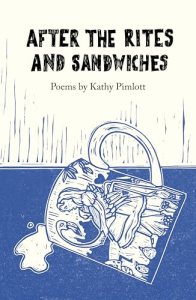 The 18 poems in this pamphlet (in America it would be called a chapbook) orbit the sudden death of Pimlott’s husband a few years ago. By the time she found Robert at the bottom of the stairs, there was nothing paramedics could do. What next? The callousness of bureaucracy: “Your demise constitutes a quarter off council tax; / the removal of a vote you seldom cast and then / only to be contrary; write-off of a modest overdraft; / the bill for an overpaid pension” (from “Death Admin I”). Attempts at healthy routines: “I’ve written my menu for the week. Today’s chowder. / I manage ten pieces of the 1000-piece jigsaw’s scenes / from Jane Austen. Tomorrow I’ll visit friends and say // it’s alright, it’s alright, seventy, eighty percent / alright” (from “How to be a widow”). Pimlott casts an eye over the possessions he left behind, remembering him in gardens and on Sunday walks of the sort they took together. Grief narratives can err towards bitter or mawkish, but this one never does. Everyday detail, enjambment and sprightly vocabulary lend the wry poems a matter-of-fact grace. I plan to pass on my copy to a new book club member who was widowed unexpectedly in May – no doubt she’ll recognise the practical challenges and emotional reality depicted.
With thanks to The Emma Press for the free copy for review.
Brightly Shining by Ingvild Rishøi (2021; 2024)
[Translated from the Norwegian by Caroline Waight]
 Ten-year-old Ronja and her teenage sister Melissa have to stick together – their single father may be jolly and imaginative, but more often than not he’s drunk and unemployed. They can’t rely on him to keep food in their Tøyen flat; they subsist on cereal. When Ronja hears about a Christmas tree seller vacancy, she hopes things might turn around. Their father lands the job but, after his crew at a local pub pull him back into bad habits, Melissa has to take over his hours. Ronja hangs out at the Christmas tree stand after school, even joining in enthusiastically with publicity. The supervisor, Tommy, doesn’t mind her being around, but it’s clear that Eriksen, the big boss, is uncomfortable with even a suggestion of child labour.
It’s touching to see Melissa take on a caring role and to meet the few indisputably good people who help the sisters, such as their elderly neighbour, Aronsen. Ronja’s innocent narration emphasizes her disbelief at their father’s repeated failings and also sets the story up for a late swerve into what seems like magic realism. I’m genuinely not sure what’s supposed to happen at the end, but the sisters find themselves alone in a wintry storm and the language of miracles is used. Rishøi’s debut will surely be compared to Small Things Like These and other classic holiday novellas. I found it a little obvious and saccharine, but if you find the right mood and moment it might just tug at your heart in the run-up to Christmas. [182 pages]
With thanks to Grove Press UK for the free copy for review.
The History of Sound by Ben Shattuck
“history is personal, even when it isn’t”
The dozen stories of Shattuck’s fiction debut form a “hook-and-chain” structure of five couplets, bookended by a first and last story that are related to each other. The links are satisfyingly overt: A pair might take place in the same house in different centuries, or the second will fill in the history of the characters from the first. In “Edwin Chase of Nantucket,” the eponymous figure recognizes his bereaved mother’s loneliness and does her a kindness. “Silver Clip,” which follows, is separated by 200 years, but its accounts of a young painter living in his ancestral island home reprises the motifs of grief, compassion and memory. “Graft,” about a woman spurned in the 1880s, and “Tundra Swan,” in which a man concocts a swindle to pay for his son’s rehab in the present day, are connected by a Cape Cod orchard. Artefacts and documents also play important roles: a journal accounts for a mysterious mass death, a radio transcript and a photograph explain a well-meaning con, and an excerpt from a history textbook follows up on the story of the religious cult in “The Children of New Eden.”
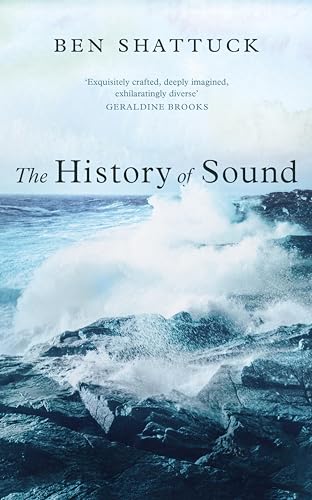 My favourite individual story was “August in the Forest,” about a poet whose artist’s fellowship isn’t all it cracked up to be – the primitive cabin being no match for a New Hampshire winter. His relationships with a hospital doctor, Chloe, and his childhood best friend, Elizabeth, seem entirely separate until Elizabeth returns from Laos and both women descend on him at the cabin. Their dialogues are funny and brilliantly awkward (“Sorry not all of us are quietly chiseling toward the beating heart of the human experience, August. One iamb at a time”) and it’s fascinating to watch how, years later, August turns life into prose. But the crowning achievement is the opening title story and its counterpart, “Origin Stories,” about folk music recordings made by two university friends during the First World War – and the afterlife of both the songs and the men.
From the start I was reminded strongly of North Woods by Daniel Mason, and particular sequences recall Shoot the Horses First by Leah Angstman and An Account of the Decline of the Great Auk, According to One Who Saw It by Jessie Greengrass. It’s a slight shame for Shattuck that what he was doing here didn’t seem as original to me because of my familiarity with these predecessors. Yet, to my surprise, I found that The History of Sound was more consistent than any of those. With the exception of a few phrases from “Graft” (“living room,” “had sex” and “boring” don’t strike me as 1880s lingo), all of the stories are historically convincing, and the very human themes of lust, parenthood, sorrow and frustrated ambition resonate across centuries and state lines. Really beautiful. (See Susan’s review too.)
[Some you-couldn’t-make-it-up trivia about Shattuck: he’s married to Jenny Slate (author of Little Weirds et al., as well as an actress known to me as Mona Lisa from Parks and Recreation); and he runs the oldest general store in America, built in 1793.]
With thanks to Swift Press for the free copy for review.
Which of these November releases catches your eye? What others can you recommend?
For Thy Great Pain… and Ti Amo for #NovNov22
On Friday evening we went to see Aqualung give his first London show in 12 years. (Here’s his lovely new song “November.”) I like travel days because I tend to get loads of reading done on my Kindle, and this was no exception: I read both of the below novellas, plus two-thirds of a poetry collection. Novellas aren’t always quick reads, but these were.
For Thy Great Pain Have Mercy on My Little Pain by Victoria Mackenzie (2023)
 Two female medieval mystics, Julian of Norwich and Margery Kempe, are the twin protagonists of Mackenzie’s debut. She allows each to tell her life story through alternating first-person strands that only braid together very late on when she posits that Margery visited Julian in her cell and took into safekeeping the manuscript of her “shewings.” I finished reading Julian’s Revelations of Divine Love earlier this year and, apart from a couple of biographical details (she lost her husband and baby daughter to an outbreak of plague, and didn’t leave her cell in Norwich for 23 years), this added little to my experience of her work.
I didn’t know Margery’s story, so found her sections a little more interesting. A married mother of 14, she earned scorn for preaching, prophesying and weeping in public. Again and again, she was told to know her place and not dare to speak on behalf of God or question the clergy. She was a bold and passionate woman, and the accusations of heresy were no doubt motivated by a wish to see her humiliated for claiming spiritual authority. But nowadays, we would doubtless question her mental health – likewise for Julian when you learn that her shewings arose from a time of fevered hallucination. If you’re new to these figures, you might be captivated by their bizarre life stories and religious obsession, but I thought the bare telling was somewhat lacking in literary interest. (Read via NetGalley) [176 pages] 
Coming out on January 19th from Bloomsbury.
Ti Amo by Hanne Ørstavik (2020; 2022)
[Translated from the Norwegian by Martin Aitken; Archipelago Books]
 Ørstavik wrote this in the early months of 2020 while she was living in Milan with her husband, Luigi Spagnol, who was her Italian publisher as well as a painter. They had only been together for four years and he’d been ill for half of that. The average life expectancy for someone who had undergone his particular type of pancreatic cancer surgery was 15–20 months; “We’re at fifteen months now.” Indeed, Spagnol would die in June 2020. But Ørstavik writes from that delicate in-between time when the outcome is clear but hasn’t yet arrived:
What’s real is that you’re still here, and at the same time, as if embedded in that, the fact that soon you’re going to die. Often I don’t feel a thing.
She knows, having heard it straight from his doctor’s lips, that her husband is going to die in a matter of months, but he doesn’t know. And now he wants to host a New Year’s Eve party, as is their annual tradition. Ørstavik skips between the present, the couple’s shared past, and an incident from her recent past that she hasn’t yet told anyone else: not long ago, while in Mexico for a literary festival, she fell in love with A., her handler. And while she hasn’t acted on that, beyond a kiss on the cheek, it’s smouldering inside her, a secret from the husband she still loves and can’t bear to hurt. Novels are where she can be most truthful, and she knows the one she needs to write will be healing.
There are many wrenching scenes and moments here, but it’s all delivered in a fairly flat style that left little impression on me. I wonder if I’d appreciate her fiction more. (Read via Edelweiss) [124 pages] 

Four for #WITMonth: Jansson, Lamarche, Lunde and Vogt
I’ve managed four novels for this year’s Women in Translation month: a nostalgic, bittersweet picture of island summers poised between childhood and old age; a brief, impressionistic account of domestic violence and rape; the third in a series looking at how climate change and species loss reverberate amid family situations; and a visceral meditation on women’s bodies and relationships. Two of these were review copies from the recently launched Héloïse Press, which “champions world-wide female talent”.

The Summer Book by Tove Jansson (1972; 1974)
[Translated from the Swedish by Thomas Teal]
It was just the same long summer, always, and everything lived and grew at its own pace.
 This was only the second time I’ve read one of Jansson’s books aimed at adults (as opposed to five from the Moomins series). Whereas A Winter Book didn’t stand out to me when I read it in 2012 – though I will try it again this winter, having acquired a free copy from a neighbour – this was a lovely read, so evocative of childhood and of languid summers free from obligation. For two months, Sophia and Grandmother go for mini adventures on their tiny Finnish island. Each chapter is almost like a stand-alone story in a linked collection. They make believe and welcome visitors and weather storms and poke their noses into a new neighbour’s unwanted construction.
Six-year-old Sophia, based on Jansson’s niece of the same name, is precocious and opinionated, liable to change her mind in an instant. In “The Cat,” one of my favourite stand-alone bits, she’s fed up with their half-feral pet who kills lots of birds and swaps him for a friend’s soppy lap cat, but then regrets it. She’s learning that logic and emotion sometimes contradict each other, which becomes clearer as she peppers Grandmother with questions about religion and superstition.
As is common to Jansson’s books, there’s a melancholy undercurrent here.
Everything was fine, and yet everything was overshadowed by a great sadness. It was August, and the weather was sometimes stormy and sometimes nice, but for Grandmother, no matter what happened, it was only time on top of time, since everything is vanity and a chasing after the wind.
Sophia’s mother died, and although her grandmother has the greater presence, Papa is also around, dealing with practicalities in the background. Death stalks around the edges, reminding Grandmother of her mortality through bouts of vertigo that have her grabbing for her heart medication. On just the second page we have this memento mori:
“When are you going to die?” the child asked.
And Grandmother answered, “Soon. But that is not the least concern of yours.”
And so it doesn’t feel like our concern either; the focus is on the now, on these beautiful little moments of connection across the generations – like in “Playing Venice,” when Grandmother stays up all night rebuilding Sophia’s model city that was washed away by the rain. (Public library)
The Memory of the Air by Caroline Lamarche (2014; 2022)
[Winner of an English PEN Award; translated from the French by Katherine Gregor]
 In a hypnotic monologue, a woman tells of her time with a violent partner (the man before, or “Manfore”) who thinks her reaction to him is disproportionate and all due to the fact that she has never processed being raped two decades ago. When she goes in for a routine breast scan, she shows the doctor her bruised arm, wanting there to be a definitive record of what she’s gone through. It’s a bracing echo of the moment she walked into a police station to report the sexual assault (and oh but the questions the male inspector asked her are horrible).
The novella opens with an image that returns in dreams but is almost more a future memory of what might have been: “I went down into a ravine and, at the bottom, found a dead woman. She was lying in a shroud, on a carpet of fallen leaves.” I read this in one sitting – er, yoga session – and it has stayed in my mind in intense flashes like that and the flounce of her red dress on the summer day that turned into a nightmare. At an intense 70 pages, this reminded me of Annie Ernaux’s concise autofiction (I’ve reviewed Happening and I Remain in Darkness). An introduction by Dr Dominique Carlini-Versini contextualizes the work by considering the treatment of rape in contemporary French women’s writing.
The Memory of the Air will be published on 26 September. With thanks to Héloïse Press for the proof copy for review.
The Last Wild Horses by Maja Lunde (2019; 2022)
[Translated from the Norwegian by Diane Oatley]
The third in Lunde’s “Climate Quartet,” with its recurring elements of migration, shortages and environmental collapse. Always, though, the overall theme is parent–child relationships and the love that might be the only thing that keeps us going in the face of unspeakable challenges. Here she returns to the tripartite structure of The History of Bees (much my favourite of the three): a historical strand, a near-contemporary one, and a dystopian future story line. The link between the three is Przewalski’s horses (aka takhi).
 In the early 1880s, Mikhail Alexandrovich Kovrov, assistant director of St. Petersburg Zoo, is brought the hide and skull of an ancient horse species assumed extinct. Although a timorous man who still lives with his mother, he becomes part of an expedition to Mongolia to bring back live specimens. In 1992, Karin, who has been obsessed with Przewalski’s horses since encountering them as a child in Nazi Germany, spearheads a mission to return the takhi to Mongolia and set up a breeding population. With her is her son Matthias, tentatively sober after years of drug abuse. In 2064 Norway, Eva and her daughter Isa are caretakers of a decaying wildlife park that houses a couple of wild horses. When a climate migrant comes to stay with them and the electricity goes off once and for all, they have to decide what comes next. This future story line engaged me the most.
I appreciated some aspects: queer and middle-aged romances, the return of a character from The End of the Ocean, the consideration across all three plots of what makes a good mother. However, the horses seemed neither here nor there. There are also many, many animal deaths. Perhaps an unsentimental attitude is necessary to reflect past and future values, and the apparent cruelty of natural processes, but it limits the book’s appeal to animal lovers. Maybe the tone fits the Norwegian prose, which the translator describes as lean.
The fourth book of the quartet, publishing in Norway next month, is called something like The Dream of a Tree; a focus on trees would be a draw for me. After the disappointment of Books 2 and 3, I’m unsure whether I want to bother with the final volume, but it makes sense to do so, if only to grasp Lunde’s full vision. (Public library)
What Concerns Us by Laura Vogt (2020; 2022)
[Translated from the German by Caroline Waight]
 Vogt’s Swiss-set second novel is about a tight-knit matriarchal family whose threads have started to unravel. For Rahel, motherhood has taken her away from her vocation as a singer. Boris stepped up when she was pregnant with another man’s baby and has been as much of a father to Rico as to Leni, the daughter they had together afterwards. But now Rahel’s postnatal depression is stopping her from bonding with the new baby, and she isn’t sure this quartet is going to make it in the long term.
Meanwhile, Rahel’s sister Fenna knows she’s pregnant but refuses a doctor’s care. When she comes to stay with Rahel, she confides that the encounter with her partner, Luc, that led to conception was odd, rough; maybe not consensual. And all this time, the women’s mother, Verena, has been undergoing treatment for breast cancer. All three characters appear to be matter-of-factly bisexual; Rahel and Fenna’s father has long been out of the picture, replaced in Verena’s affections by Inge.
As I was reading, I kept thinking of the declaration running through A Ghost in the Throat by Doireann Ní Ghríofa: “This is a female text.” Vogt’s vision is all breasts and eggs, genitals actual and metaphorical. I loved the use of food in the novel: growing up, the girls cherished “silly nights” when their mother prepared an egg feast and paired it with a feminist lecture on reproduction. Late on, there’s a wonderful scene when the three main characters gorge on preserved foodstuffs from the cellar and share their secrets. (Their language is so sexually frank; would anyone really talk to their mother and siblings in that way?!) As in the Lunde, the main question is what it means to be a mother, but negotiating their relationships with men stretches the bonds of this feminine trio. One for fans of Rachel Cusk and Sally Rooney.
With thanks to Héloïse Press for the proof copy for review.
The Beginning of Spring with Penelope Fitzgerald & Karl Ove Knausgaard
(From To Star the Dark by Doireann Ní Ghríofa)
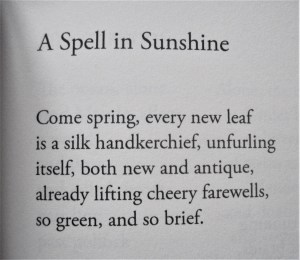
Reading with the seasons is one way I mark time. This is the first of two, or maybe three, batches of spring reading for me this year. The daffodils have already gone over; bluebells and peonies are coming out; and all the trees, including the two wee apple trees we’ve planted at our new house, are sprouting hopeful buds.
The Beginning of Spring by Penelope Fitzgerald (1988)
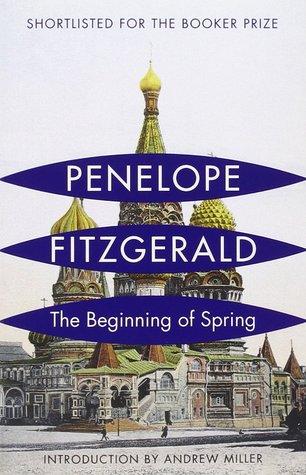 My fourth from Fitzgerald. One of her later novels, this was shortlisted for the Booker Prize. Its pre-war Moscow setting seemed to take on extra significance as I read it during the early weeks of the Russian occupation of Ukraine. Its title is both literal, referring to the March days in 1913 when “there was the smell of green grass and leaves, inconceivable for the last five months” and the expatriate Reid family can go to their dacha once again, and metaphorical. For what seems to printer Frank Reid – whose wife Nellie has taken a train back to England and left him to raise their three children alone – like an ending may actually presage new possibilities when his accountant, Selwyn, hires a new nanny for the children.
I have previously found Fitzgerald’s work slight, subtle to the point of sailing over my consciousness without leaving a ripple. While her characters and scenes still underwhelm – I always want to go deeper – I liked this better than the others I’ve read (The Bookshop, Offshore, and The Blue Flower), perhaps simply because it’s not a novella so is that little bit more expansive. And though she’s not an author you’d turn to for plot, more does actually happen here, including a gunshot. Frank is a genial Everyman, fond of Russia yet exasperated with its bureaucracy and corruption – this “magnificent and ramshackle country.” He knows how things work and isn’t above giving a bribe when it’s expedient for his business:
He took an envelope out of his drawer, and, conscious of taking only a mild risk, since the whole unwieldy administration of All the Russias, which kept working, even if only just, depended on the passing of countless numbers of such envelopes, he slid it across the top of the desk. The inspector opened it without embarrassment, counted out the three hundred roubles it contained and transferred them to a leather container, half way between a wallet and a purse, which he kept for ‘innocent income’.
I particularly liked Uncle Charlie’s visit, the glimpses of Orthodox Easter rituals, and a strangely mystical moment of communion with some birch trees. A part of me did wonder if the setting was neither here nor there, if a few plastered-on descriptions of Moscow were truly enough to constitute convincing historical fiction. That’s a question for those more familiar with Russia and its literature to answer, but I enjoyed the seasonal awakening. (Secondhand, charity shop in Bath) 
Spring by Karl Ove Knausgaard (2016; 2018)
[Translated from the Norwegian by Ingvild Burkey; illustrated by Anna Bjerger]
 Knausgaard is a repeat presence in my seasonal posts: I’ve also reviewed Autumn, Winter and Summer. I read his quartet out of order, finishing with the one that was published third. The project was conceived as a way to welcome his fourth child, Anna, into the world. Whereas the other books prioritize didactic essays on seasonal experiences, this is closer in format to Knausgaard’s granular autofiction: the throughline is a journey through an average day with his baby girl, from when she wakes him before 6 a.m. to a Walpurgis night celebration (“the evening when spring is welcomed in with song in Sweden”). They see the other kids off to school, then make a disastrous visit to a mental hospital – he forgets his bank card and ID, the baby’s bottle, everything, and has to beg cash from his bank to buy petrol to get home.
Looming over the circadian narrative is his wife’s mental health crisis the summer before (his ex-wife Linda Boström Knausgård, a writer in her own right, has bipolar disorder), while she was pregnant with Anna, and the repercussions it has had for their family. Other elements echo those of the previous books: the formation of memories, to what extent his personality is fixed, whether he’s fated to turn into his father, minor health concerns, and so on. Although this volume is less aphoristic than the previous books, there are still moments when he muses on life and gives general advice:
Self-deception is perhaps the most human thing of all. … And perhaps the following is nothing but self-deception: the easy life is nothing to aspire to, the easy choice is never the worthiest solution, only the difficult life is a life worth living. I don’t know. But I think that’s how it is. What would seem to contradict this, is that I wish you and your siblings simple, easy, long and happy lives. … The advantage of having siblings is that it is a lifelong attachment, and that nothing can break it.
All in all, this was the highlight of the series for me. Each of the four is illustrated by a different contemporary artist. Bjerger is less abstract than some of the others, which I count as a plus. (New bargain/remainder copy, Minster Gate Bookshop, York) 

This daffodil bookmark was embroidered by local textile artist Christine Highnett. My mother bought it for me from Sandham Memorial Chapel’s gift shop last summer.
A favourite random moment: A creeper coming through the tile roof of his office pushes a book off the shelf. It’s American Psycho. “I still found it incredible. And a little frightening, the blind force of growth”.
Speaking of meaningful, or perhaps ironic, timing: He records a conversation with his neighbour, who was mansplaining about Russian aggression and the place of Ukraine: “Kiev was the first great city in what became the Russian empire. … The Ukraine and Russia are like twins. … They belong together. At least the Russians see it that way. … The very idea of Russia is imperialistic.”
Any spring reads on your plate?
Sophie’s World by Jostein Gaarder for #NordicFINDS
For my meager contribution to Annabel’s five-week Nordic FINDS challenge, I got out my copy of Sophie’s World by Jostein Gaarder that came from the free mall bookshop in 2020.
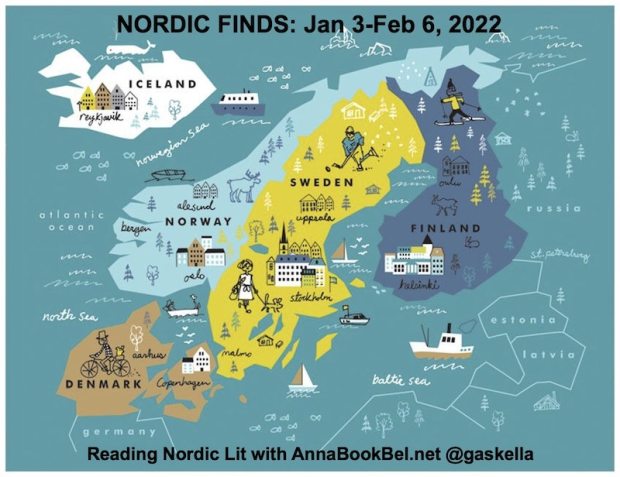
Sophie’s World: A Novel about the History of Philosophy (1994)
[Translated from the Norwegian by Paulette Møller]
 Sophie Amundsen, 14 going on 15, starts receiving mysterious letters asking her life’s big questions: Who are you? Where does the world come from? Soon her anonymous correspondent starts sending whole sheaves of paper elaborating on episodes from the unfolding history of philosophy, from creation myths through the Greek philosophers to Marxism and Darwinism via the Renaissance and Enlightenment. She’s so engrossed in her impromptu philosophy course that she starts to neglect her schoolwork and worry her mother. Sophie identifies the letter-writer as one Alberto Knox, who perhaps lives in a lake cabin nearby, and starts to interact with him by writing back. (I loved that their letters are delivered by a golden Labrador named Hermes.) Meanwhile, she’s perplexed by all the postcards she receives addressed to “Hilde,” also 15. Is she reading Hilde’s story, or is Hilde reading hers?
I’ll be honest … I made it just 96 pages (out of 394) before I started skimming, flipping past big chunks to get to the story. As to what I did experience, my feelings are mixed:
- On the one hand, this is certainly a more fun way to encounter philosophy than the textbook I had in college, while still offering accurate and thorough information.
- On the other hand, is the novel’s young adult audience really going to stick around for all the talky/preachy bits surrounding the slightly magical, mind-bending plot?
I think this became a word-of-mouth bestseller a couple of decades ago because of its novelty value. It’s a book that asks and assumes a lot of its readers: that we be curious and diligent, that we engage in the universal search of meaning. As Alberto writes in his first proper letter, “We feel we are part of something mysterious and we would like to know how it all works.” I feel I missed my moment to read it, though I can admire its aim.
(See Annabel’s review here.)
My current Scandinavian read is Land of Snow and Ashes by Petra Rautiainen, a Finnish author, about the treatment of Sámi people during World War II (coming out from Pushkin Press tomorrow).
Two Recent Reviews for BookBrowse
The Bell in the Lake by Lars Mytting
 A legend from Mytting’s hometown tells of two centuries-old church bells that, like conjoined twins, were never meant to be separated. Inspired by that story and by the real-life move of a stave church from Norway to what is now Poland, he embarked on a trilogy in which history and myth mingle to determine the future of the isolated village of Butangen. The novel is constructed around compelling dichotomies. Astrid Hekne, a feminist ahead of her time, is in contrast with the local pastor’s conventional views on gender roles. She also represents the village’s unlearned folk; Deborah Dawkin successfully captures Mytting’s use of dialect in her translation, making Astrid sound like one of Thomas Hardy’s rustic characters.
- See my full review at BookBrowse.
- See also my related article on stave churches.
- One of the coolest things I did during the first pandemic lockdown in the UK was attend an online book club meeting on The Bell in the Lake, run by MacLehose Press, Mytting’s UK publisher. It was so neat to see the author and translator speak “in person” via a Zoom meeting and to ask him a couple of questions in the chat window.
- A readalike (and one of my all-time favorite novels) is Carsten Jensen’s We, the Drowned.
Memorial by Bryan Washington
 In Washington’s debut novel, set in Houston and Osaka, two young men reassess their commitments to their families and to each other. The narration is split between Benson and Mike, behind whose apparent lack of affect is a quiet seam of emotion. Both young men are still shaken by their parents’ separations, and haunted by patterns of abuse and addiction. Flashbacks to how they met create a tender backstory for a limping romance. Although the title (like most of the story titles in Lot) refers to a Houston neighborhood, it has broader significance, inviting readers to think about the place our loved ones have in our memories. Despite the tough issues the characters face, their story is warm-hearted rather than grim. Memorial is a candid, bittersweet work from a talented young writer whose career I will follow with interest.
- See my full review at BookBrowse.
- See also my related article on the use of quotation marks (or not!) to designate speech.
 I enjoyed this so much that I immediately ordered Lot with my birthday money. I’d particularly recommend it if you want an earthier version of Brandon Taylor’s Booker-shortlisted Real Life (which I’m halfway through and enjoying, though I can see the criticisms about its dry, slightly effete prose).
- This came out in the USA from Riverhead in late October, but UK readers have to wait until January 7th (Atlantic Books).
Four June Releases (Fiction & Poetry): Bennett, Gabrielsen, Kwek and Watts
(A rare second post in a day from me, to make way for tomorrow’s list of the best books of the first half of the year.) My four new releases for June are a novel about the complications of race and sexuality in 1950s–80s America, a novella in translation about a seabird researcher struggling through a time of isolation, and two new poetry books from Carcanet Press. As a bonus just in time for Pride Month, I finish with a mini write-up of The Book of Queer Prophets, an anthology of autobiographical essays that was published late last month.
The Vanishing Half by Brit Bennett
 Like some lost mid-career gem from Toni Morrison, this novel is meaty with questions of racial and sexual identity and seems sure to follow in the footsteps of Ruby and An American Marriage with a spot in Oprah’s book club and on Barack Obama’s summer reading list.
It’s the story of light-skinned African American twins Stella and Desiree Vignes, and how their paths divide in 1954. Both are desperate to escape from Mallard, Louisiana, where their father was lynched and their mother cleans white people’s houses. Desiree works in fingerprinting for the FBI in Washington, D.C., but in 1968 leaves an abusive marriage to return to Mallard with her dark-skinned daughter, Jude Winston. Stella, on the other hand, has been passing as white for over a decade. She was a secretary for the man who became her husband, Blake Sanders, and now lives a life of comfort in a Los Angeles subdivision.
The twins’ decisions affect the next generation, too. Both have one daughter. Jude goes to college in L.A., where she meets and falls in love with photographer Reese (born Therese), who is, in a different sense, “passing” until he can afford the surgery that will align his body with his gender. In a coincidence that slightly strains belief, Jude runs into Stella’s daughter, Kennedy, and over the next seven years the cousins – one a medical student; the other an actress – continue to meet occasionally, marvelling at how two family lines that started in Mallard, a tiny town that doesn’t even exist anymore, could have diverged so dramatically.
This is Bennett’s second novel, after The Mothers, which I’m keen to read. It’s perceptive and beautifully written, with characters whose struggles feel genuine and pertinent. Though its story line ends in the late 1980s, it doesn’t feel passé at all. The themes of self-reinvention and running from one’s past resonate. I expected certain characters to be forced into moments of reckoning, but the plot is a little messier than that – and that’s more like real life. A shoo-in for next year’s Women’s Prize list.
My rating: 
My thanks to Dialogue Books for the free copy for review.
Ankomst by Gøhril Gabrielsen (2017)
[Translated from the Norwegian by Deborah Dawkin]
 The unnamed narrator of Gabrielsen’s fifth novel is a 36-year-old researcher working towards a PhD on the climate’s effects on populations of seabirds, especially guillemots. During this seven-week winter spell in the far north of Norway, she’s left her three-year-old daughter behind with her ex, S, and hopes to receive a visit from her lover, Jo, even if it involves him leaving his daughter temporarily. In the meantime, they connect via Skype when signal allows. Apart from that and a sea captain bringing her supplies, she has no human contact.
Daily weather measurements and bird observations still leave too much time alone in a cramped cabin, and this starts to tell in the protagonist’s mental state: she’s tormented by sexual fantasies, by memories of her life with S, and by the thought of a local family, the Berthelsens, who experienced a disastrous house fire in 1870. More and more frequently, she finds herself imagining what happened to Olaf and Borghild Berthelsen. Solitude and this growing obsession with ghosts of the past make her start to lose her grip on reality.
I’d encountered an unreliable narrator and claustrophobic setting before from Gabrielsen with her second novel, The Looking-Glass Sisters. Extreme weather and isolation account for this being paired with Snow, Dog, Foot by Claudio Morandini as the first two books in Peirene’s 2020 “Closed Universe” trilogy. I was also reminded of Sarah Moss’s Night Waking. However, I found this novella’s metaphorical links – how seabirds and humans care for their young; physical and emotional threats; lowering weather and existential doom – too obvious.
My rating:
My thanks to Peirene Press for the free copy for review.
Moving House by Theophilus Kwek
 This is the first collection of the Chinese Singaporean poet’s work to be published in the UK. Infused with Asian history, his elegant verse ranges from elegiac to romantic in tone. Many of the poems are inspired by historical figures and real headlines. There are tributes to soldiers killed in peacetime training and accounts of high-profile car accidents; “The Passenger” is about the ghosts left behind after a tsunami. But there are also poems about the language and experience of love. I also enjoyed the touches of art and legend: “Monologues for Noh Masks” is about the Pitt-Rivers Museum collection, while “Notes on a Landscape” is about Iceland’s geology and folk tales. In most places alliteration and enjambment produce the sonic effects, but there are also a handful of rhymes and half-rhymes, some internal.
My individual favorite poems included “Prognosis,” “Sophia” (made up of two letters Sir Thomas Stamford Raffles writes home to his wife while surveying in Singapore), and “Operation Thunderstorm.” As an expat and something of a nomad, I especially loved the title poem, which comes last and explains the cover image: “every house has a skeleton – / while the body learns it must carry less / from place to place, a kind of tidiness / that builds, hardens. Some call it fear, // of change, or losing what we cannot keep. / Others, experience.” Recommended to fans of Mary Jean Chan, Nausheen Eusuf, Kei Miller and Ocean Vuong.
My rating:
My thanks to Carcanet Press for the PDF copy for review.
Red Gloves by Rebecca Watts
 I noted the recurring comparison of natural and manmade spaces; outdoors (flowers, blackbirds, birds of prey, the sea) versus indoors (corridors, office life, even Emily Dickinson’s house in Massachusetts). The style shifts from page to page, ranging from prose paragraphs to fragments strewn across the layout. Most of the poems are in recognizable stanzas, though these vary in terms of length and punctuation. Alliteration and repetition (see, as an example of the latter, her poem “The Studio” on the TLS website) take priority over rhymes. I was reminded of Elizabeth Bishop in places, while “Whereas” had me thinking of Stephen Dunn’s collection of that name (Layli Long Soldier also has a poetry book of the same title). A few of my individual favorite poems were “Surveillance,” “Building” and “Admission” (on a medical theme: “What am I afraid of? / The breaching of skin. / Violation of laws that / separate outside from in. / Liquidation of the thing / I call me.”).
My rating: 
My thanks to Carcanet Press for the PDF copy for review.
And a bonus for Pride Month:
The Book of Queer Prophets: 24 Writers on Sexuality and Religion, edited by Ruth Hunt
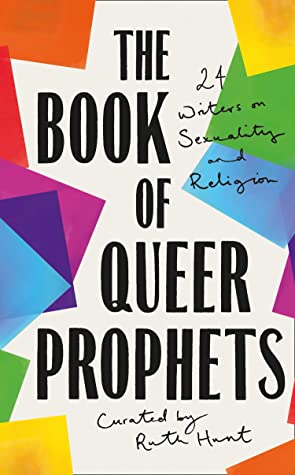 There isn’t, or needn’t be, a contradiction between faith and queerness, as the authors included in this anthology would agree. Many of them are stalwarts at Greenbelt, a progressive Christian summer festival – Church of Scotland minister John L. Bell even came out there, in his late sixties, in 2017. I’m a lapsed regular attendee, so a lot of the names were familiar to me, including those of poets Rachel Mann and Padraig O’Tuama.
Most of the contributors are Christian, then, including ordained priests like Desmond Tutu’s daughter, Mpho, and LGBT ally Kate Bottley, but we also hear from Michael Segalov, a gay Jewish man in London, and from Amrou Al-Kahdi (author of Unicorn: The Memoir of a Muslim Drag Queen), who describes the affirmation they found in the Sufi tradition. Dustin Lance Black tells of the exclusion LGBT Mormons still encounter.
Jarel Robinson-Brown addresses his lament on mistreatment to his nephew, as James Baldwin did in “My Dungeon Shook” (in The Fire Next Time). Tamsin Omond recounts getting married to Melissa on a London bridge in the middle of an Extinction Rebellion protest. Erin Clark, though bisexual, knows she can pass as straight because she’s marrying a man – so is she ‘gay enough?’ Two trans poets write of the way cathedrals drew them into faith. The only weaker pieces are by Jeanette Winterson (there’s nothing new if you’ve read her memoir) and Juno Dawson (entirely throwaway; ‘I’m an atheist, but it’s okay to be religious, too’).
Again and again, these writers voice the certainty that they are who God means them to be. A few of them engage with particular passages from the Bible, offering contextual critiques or new interpretations, but most turn to scripture for its overall message of love and justice. Self-knowledge is a key component of their search for truth. And the truth sets people free.
My rating:
I read an e-copy via NetGalley.
 Bookish Beck = Rebecca Foster. American transplant to England. Freelance proofreader and book reviewer.
 Bookish Beck