Summer Reading 2025: Anthony, Espach, Han & Teir
In the UK, summer doesn’t officially end until the 22nd, so even though I’ve been doing plenty of baking with apples and plums and we’ve had squashes delivered in our vegetable box, I’ve taken advantage of that extra time to finish a couple more summery books. This year I’m featuring four novels ranging in location from Rhode Island to Finland. I’ve got all the trappings of summer: a swimming pool, a wedding, a beach retreat, and a summer house.
The Most by Jessica Anthony (2024)
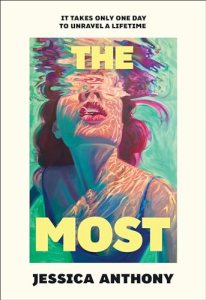 I can’t resist a circadian narrative. This novella takes place in Delaware on one day in early November 1957, but flashbacks and close third-person narration reveal everything we need to know about Virgil and Kathleen Beckett and their marriage. I’m including it in my summer reading because it’s set on an unseasonably warm Sunday and Kathleen decides to spend the entire day in their apartment complex’s pool. The mother of two drifts back in memory to her college tennis-playing days and her first great love, Billy Blasko, a Czech tennis coach who created a signature move called “The Most,” which means “bridge” in his language – the idea is to trap your opponent and then drop a bomb on them. Virgil, who after taking their two boys to church goes golfing with his insurance sales colleagues as is expected of him, loves jazz music and has just been sent the secret gift of a saxophone. Both spouses are harbouring secrets and, as Laika orbits the Earth overhead, they wonder if they can break free from the capsules they’ve built around their hearts and salvage their relationship. The storytelling is tight even as the book loops around the same events from the two perspectives. This was really well done, and a big step up from Enter the Aardvark. (Public library)
The Wedding People by Alison Espach (2024)
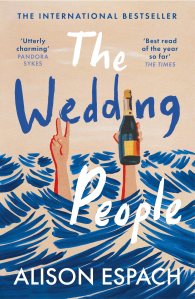 You’ve all heard about this one, right? It’s been a Read with Jenna selection and the holds are stacking up in my library system. No wonder it’s been hailed as a perfect summer read: it’s full of sparkling banter; heartwarming, very funny and quite sexy. And that despite a grim opening situation: Phoebe flies from St. Louis to Newport and checks into a luxury hotel, intending to kill herself. She’s an adjunct professor whose husband left her for their colleague after their IVF attempts failed, and she feels she’ll never finish writing her book, become a mother or find true love again. Little does she know that a Bridezilla type named Lila who’s spent $1 million of her inheritance on a week-long wedding extravaganza (culminating in a ceremony at The Breakers mansion) meant to book out the entire hotel. Phoebe somehow snagged the room with the best view. Lila isn’t about to let anyone ruin her wedding.
What follows is Cinderella-like yet takes into account the realities of bereavement, infidelity, infertility and blended families. Because of the one-week format, Phoebe’s depression is defused more quickly than is plausible, but I was relieved that Espach doesn’t plump for a full-blown happy ending. I did also find the novel unnecessarily crass in places, especially the gag about the car. Still, this has all the wit of Katherine Heiny and Curtis Sittenfeld. I’d recommend it if you enjoyed Dream State or Consider Yourself Kissed, and it’s especially reminiscent of Sorrow and Bliss for the mixture of humour and frank consideration of mental health. It’s as easy to relate to Phoebe’s feelings (“How much of her life had she spent in this moment, waiting for someone else to decide something conclusive about her?”; “It is so much easier to sit in things and wait for someone to save us”) as it is to laugh at the one-liners. “Garys are not wonderful. That’s just not what they are meant to be” particularly tickled me because I know a few Garys in real life. (Public library)
The Summer I Turned Pretty by Jenny Han (2008)
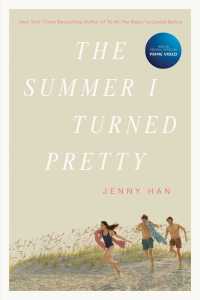 Every summer Belly and her mother and brother have joined her mother’s best friend Susannah and her sons Conrad and Jeremiah at their beach house. She’s had a crush on Conrad for what’s felt like forever, but she’s only ever been his surrogate little sister, fun for palling around with but never taken seriously. This summer is different, though: Belly is turning 16, it’s Conrad’s last summer before college, and his family seems to be falling apart. The novel kept being requested off me and I puzzled over how it could have eight reservations on it until I realized there’s an Amazon Prime Video adaptation now in its third and final season. I reckon the story will work better on screen because Belly’s narration was the main issue for me. She’s ever so shallow, so caught up in boys that she doesn’t realize Susannah is sick again. Her fixation on the brooding Conrad doesn’t make sense when she could have affable Jeremiah or sweet, geeky Cam, who met her through Latin club and liked her before she grew big boobs. He’s who she’s supposed to be with in this kind of story, right? I think this would appeal to younger, boy-crazy teens, but it just made me feel old and grumpy. (Public library)
The Summer House by Philip Teir (2017; 2018)
[Translated from Swedish by Tiina Nunnally]
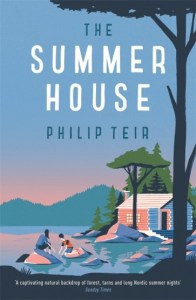 The characters are Finland-Swedish, like the author. Erik and Julia escape Helsinki with their children, Alice and Anton, to spend time at her father’s summer house. Erik has just lost his job in IT for a large department store, but hasn’t told Julia yet. Julia is working on a novel, but distracted by the fact that her childhood friend Marika, the not so secret inspiration for a character in her previous novel, is at another vacation home nearby with Chris, her Scottish partner. These two and their hangers-on have a sort of commune based around free love and extreme environmental realism: the climate crisis will not be solved (“accepting the grief instead of talking about hope all the time”) and the only thing to do is participate in de-civilisation. But like many a cult leader, Chris courts young female attention and isn’t the best role model. Both couples are strained to breaking point.
Meanwhile, Chris and Marika’s son, Leo, has been sneaking off with Alice; and Erik’s brother Anders shows up and starts seeing the widowed therapist neighbour. This was a reasonably likeable book about how we respond to crises personal and global, and how we react to our friends’ successes and problems – Erik is jealous of his college buddy’s superior performance in a tech company. But I thought it was a little aimless, especially in its subplots, and it suffered in comparison with Leave the World Behind, which has quite a similar setup but a more intriguing cosmic/dystopian direction. (Secondhand – Community Furniture Project, Newbury) 
Any final summer books for you this year?
April Releases by Chung, Ellis, Gaige, Lutz, McAlpine and Rubin
April felt like a crowded publishing month, though May looks to be twice as busy again. Adding this batch to my existing responses to books by Jean Hannah Edelstein & Emily Jungmin Yoon plus Richard Scott, I reviewed nine April releases. Today I’m featuring a real mix of books by women, starting with two foodie family memoirs, moving through a suspenseful novel about a lost hiker, a sparse Scandinavian novella, and a lovely poetry collection with themes of nature and family, and finishing up with a collection of aphorisms. I challenged myself to write just a paragraph on each for simplicity and readability.

Chinese Parents Don’t Say I Love You: A memoir of saying the unsayable with food by Candice Chung
“to love is to gamble, sometimes gastrointestinally … The stomach is a simple animal. But how do we settle the heart—a flailing, skittish thing?”
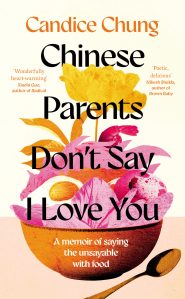 I got Caroline Eden (Cold Kitchen) and Nina Mingya Powles (Tiny Moons) vibes from this vibrant essay collection spotlighting food and family. The focus is on 2019–2021, a time of huge changes for Chung. She’s from Hong Kong via Australia, and reconnects with her semi-estranged parents by taking them along on restaurant review gigs for a Sydney newspaper. Fresh from a 13-year relationship with “the psychic reader,” she starts dating again and quickly falls in deep with “the geographer.” Sharing meals in restaurants and at home kindles closeness and keeps their spirits up after Covid restrictions descend. But when he gets a job offer in Scotland, they have to make decisions about their relationship sooner than intended. Although there is a chronological through line, the essays range in time and style, including second-person advice column (“Faux Pas”) and choose-your-own adventure (“Self-Help Meal”) segments alongside lists, message threads and quotes from the likes of Deborah Levy. My favourite piece was “The Soup at the End of the Universe.” Chung delicately contrasts past and present, singleness and being partnered, and different mental health states. The essays meld to capture a life in transition and the tastes and bonds that don’t alter.
With thanks to Elliott & Thompson for the free copy for review.
Chopping Onions on My Heart: On Losing and Preserving Culture by Samantha Ellis
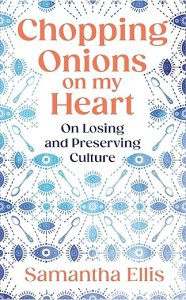 Ellis was distressed to learn that her refugee parents’ first language, Judeo-Iraqi Arabic, is in danger of extinction. Her own knowledge of it is piecemeal, mostly confined to its colourful food-inspired sayings – for example, living “eeyam al babenjan (in the days of the aubergines)” means that everything feels febrile and topsy-turvy. She recounts her family’s history with conflict and displacement, takes a Zoom language class, and ponders what words, dishes, and objects she would save on an imaginary “ark” that she hopes to bequeath to her son. Along the way, she reveals surprising facts about Ashkenazi domination of the Jewish narrative. “Did you know the poet [Siegfried Sassoon] was an Iraqi Jew?” His great-grandfather even invented a special variety of mango pickle. All of the foods described sound delicious, and some recipes are given. Ellis’s writing is enthusiastic and she braids the book’s various strands effectively. I wasn’t as interested in the niche history as I wanted to be, but I did appreciate learning about an endangered culture and language.
With thanks to Chatto & Windus (Vintage/Penguin) for the proof copy for review.
Heartwood by Amity Gaige
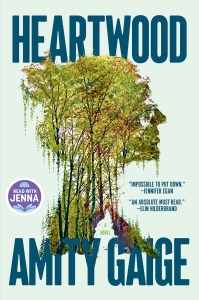 This was on my Most Anticipated list after how much I’d enjoyed Sea Wife when we read it for Literary Wives club. In July 2022, 42-year-old nurse Valerie Gillis, nicknamed “Sparrow,” goes missing in the Maine woods while hiking the Appalachian Trail. An increasingly desperate search ensues as the chances of finding her alive diminish with each day. The shifting formats – letters, transcripts, news reports, tip line messages – hold the interest. However, the chapters voiced by Lt. Bev, the warden who heads the mission, are much the most engaging, and it’s a shame that her delightful interactions with her sisters and nieces are so few and come so late. The third-person passages about Lena Kucharski in her Connecticut retirement home are intriguing but somehow feel like they belong in a different book. Gaige attempts to bring the threads together through three mother–daughter pairs, which struck me as heavy-handed. Mostly, this hits the sweet spot between mystery and literary fiction (apart from some red herrings), but because I wasn’t particularly invested in the characters, even Valerie, this fell a little short of my expectations. (Read via Edelweiss)
Wild Boar by Hannah Lutz (2016; 2025)
[Translated from Swedish by Andy Turner]
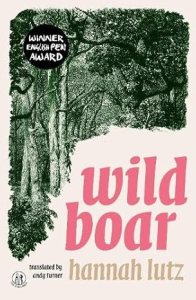 “I have seen them, the wild boar, they have found their way into my dreams!” Ritve travels from Finland to the forests of southern Sweden to track the creatures. Glenn, who appraises project applications for the council, has boar wander onto his property in the middle of the night. Mia, recipient of a council grant for her Recollections of a Sigga Child proposal, brings her ailing grandfather to record his memories for the local sound archive. As midsummer approaches, these three characters plus a couple of their partners will have encounters with the boar and with each other. Short sections alternate between their first-person perspectives. There is a strong sense of place and how migration poses challenges for both the human and more-than-human worlds. But it’s over before it begins. I found myself frustrated by how little happens, how stingily the characters reveal themselves, and how the boar, ultimately, are no more than a metaphor or plot device – a frequent complaint of mine when animals are central to a narrative. This might appeal to fans of Melissa Harrison’s fiction. In any case, I congratulate The Emma Press on their first novel, which won an English PEN Award.
With thanks to The Emma Press for the free copy for review.
Small Pointed Things by Erica McAlpine
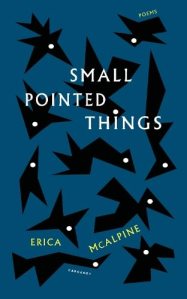 McAlpine is an associate professor of English at Oxford. Her second poetry collection is full of flora and fauna imagery. The title phrase comes from the opening poem, “Bats and Swallows” – in the “gloaming,” it’s hard to tell the difference between the flying creatures. The verse is bursting with alliteration and end rhymes, as just this first one shows (emphasis mine): “we couldn’t see / from where we stood in soft shadows / any signs that they were swallows // or bats”; “One seemed almost iridescent / as I tried to track / its crescent / flight across the hill.” Other poems consider moths, manatees, bees, swans and ladybirds; snowdrops and a cedar tree. Part II expands the view through conversations, theories and travel. What-ifs, consequences and regrets seep in. Parts III and IV incorporate mythical allusions, elegies and the concerns of motherhood. Sometimes the rhyme scheme adheres to a particular form. For instance, I loved “Triolet on My Mother’s 74th Birthday” – “You cannot imagine one season in another. … You cannot imagine life without your mother.” This is just my sort of poetry, sweet on the ear and rooted in nature and the everyday. A sample poem:
“Clementines”
New Year’s Day – another turning
of the sphere, with all we planned
in yesteryear as close to hand
as last night’s coals left unmanned
in the fire, still orange and burning.
It is the season for clementines
and citrus from Seville
and whatever brightness carries us until
leaves and petals once more fill
the treetops and the vines.
If ever you were to confess
some cold truth about love’s
dwindling, now would be the time – less
in order for things to improve
than for the half-bitter happiness
of peeling rinds
during mid-winter
recalling days that are behind
us and doors we cannot re-enter
and other doors we couldn’t find.
With thanks to Carcanet Press for the advanced e-copy for review.
Secrets of Adulthood: Simple Truths for Our Complex Lives by Gretchen Rubin
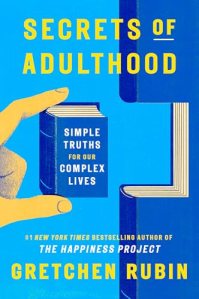 Rubin is one of the best self-help authors out there: Her books are practical, well-researched and genuinely helpful. She understands human nature and targets her strategies to suit different personality types. If you know her work, you’re likely aware of her fondness for aphorisms. “Sometimes, a single sentence can provide all the insight we need,” she believes. Here she collects her own pithy sayings relating to happiness, self-knowledge, relationships, work, creativity and decision-making. Some of the aphorisms were familiar to me through her previous books or her social media. They’re straightforward and sensible, distilling down to a few words truths we might be aware of but hadn’t truly absorbed. Like the great aphorists throughout history, Rubin relishes alliteration, repetition and contrasts. Some examples:
Accept yourself, and expect more from yourself.
I admire nature, and I am also nature. I resent traffic, and I am also traffic.
Work is the play of adulthood. If we’re not failing, we’re not trying hard enough.
Don’t wait until you have more free time. You may never have more free time.
This is not as meaty as her other work, and some parts feel redundant, but that’s the nature of the project. It would make a good bedside book for nibbles of inspiration. (Read via Edelweiss)
Which of these appeal to you?
The Moomins and the Great Flood (#Moomins80) & Poetry (#ReadIndies)
To mark the 80th anniversary of Tove Jansson’s Moomins books, Kaggsy, Liz et al. are doing a readalong of the whole series, starting with The Moomins and the Great Flood. I received a copy of Sort Of Books’ 2024 reissue edition for Christmas, so I was unknowingly all set to take part. I also give quick responses to a couple of collections I read recently from two favourite indie poetry publishers in the UK, The Emma Press and Carcanet Press. These are reads 9–11 for Kaggsy and Lizzy Siddal’s Reading Independent Publishers Month challenge.
The Moomins and the Great Flood by Tove Jansson (1945; 1991)
[Translated from the Swedish by David McDuff]
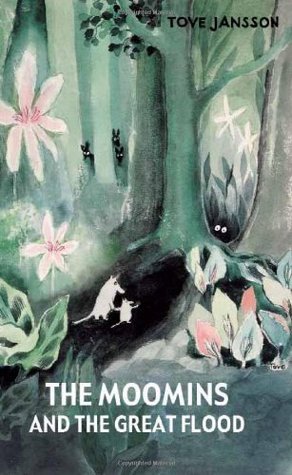 Moomintroll and Moominmamma are the only two Moomins who appear here. They’re nomads, looking for a place to call home and searching for Moominpappa, who has disappeared. With them are “the creature” (later known as Sniff) and Tulippa, a beautiful flower-girl. They encounter a Serpent and a sea-troll and make a stormy journey in a boat piloted by the Hattifatteners. My favourite scene has Moominmamma rescuing a cat and her kittens from rising floodwaters. The book ends with the central pair making their way to the idyllic valley that will be the base for all their future adventures. Sort Of and Frank Cottrell Boyce, who wrote an introduction, emphasize how (climate) refugees link Jansson’s writing in 1939 to today, but it’s a subtle theme. Still, one always worth drawing attention to.
I read my first Moomins tale in 2011 and have been reading them out of order and at random ever since; only one remains unread. Unfortunately, I did not find it rewarding to go right back to the beginning. At barely 50 pages (padded out by the Cottrell-Boyce introduction and an appendix of Jansson’s who’s-who notes), this story feels scant, offering little more than a hint of the delightful recurring characters and themes to come. Jansson had not yet given the Moomins their trademark rounded hippo-like snouts; they’re more alien and less cute here. It’s like seeing early Jim Henson drawings of Garfield before he was a fat cat. That just ain’t right. I don’t know why I’d assumed the Moomins are human-size. When you see one next to a marabou stork you realize how tiny they are; Jansson’s notes specify 20 cm tall. (Gift)
The Emma Press Anthology of Homesickness and Exile, ed. by Rachel Piercey and Emma Wright (2014)
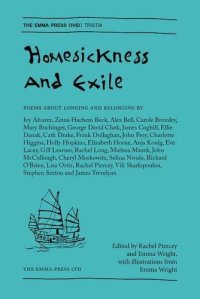 This early anthology chimes with the review above, as well as more generally with the Moomins series’ frequent tone of melancholy and nostalgia. A couple of excerpts from Stephen Sexton’s “Skype” reveal a typical viewpoint: “That it’s strange to miss home / and be in it” and “How strange home / does not stay as it’s left.” (Such wonderfully off-kilter enjambment in the latter!) People are always changing, just as much as places – ‘You can’t go home again’; ‘You never set foot in the same river twice’ and so on. Zeina Hashem Beck captures these ideas in the first stanza of “Ten Years Later in a Different Bar”: “The city has changed like cities do; / the bar where we sang has closed. / We have changed like cities do.”
Departures, arrivals; longing, regret: these are classic themes from Ovid (the inspiration for this volume) onward. Holly Hopkins and Rachel Long were additional familiar names for me to see in the table of contents. My two favourite poems were “The Restaurant at One Thousand Feet” (about the CN Tower in Toronto) by John McCullough, whose collections I’ve enjoyed before; and “The Town” by Alex Bell, which personifies a closed-minded Dorset community – “The town wraps me tight as swaddling … When I came to the town I brought things with me / from outside, and the town took them / for my own good.” Home is complicated – something one might spend an entire life searching for, or trying to escape. (New purchase from publisher)
Gold by Elaine Feinstein (2000)
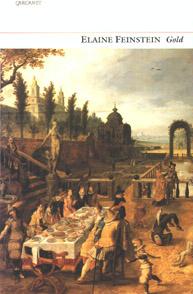 I’d enjoyed Feinstein’s poetry before. The long title poem, which opens the collection, is a monologue by Lorenzo da Ponte, a collaborator of Mozart. Though I was not particularly enraptured with his story, there were some great lines here:
I wanted to live with a bit of flash and brio,
rather than huddle behind ghetto gates.
The last two stanzas are especially memorable:
Poor Mozart was so much less fortunate.
My only sadness is to think of him, a pauper,
lying in his grave, while I became
Professor of Italian literature.
Nobody living can predict their fate.
I moved across the cusp of a new age,
to reach this present hour of privilege.
On this earth, luck is worth more than gold.
Politics, manners, morals all evolve
uncertainly. Best then to be bold.
Best then to be bold!
Of the discrete “Lyrics” that follow, I most liked “Options,” about a former fiancé (“who can tell how long we would have / burned together, before turning to ash?”) and “Snowdonia,” in which she’s surprised when a memory of her father resurfaces through a photograph. Talking to the Dead was more consistently engaging. (Secondhand purchase – Bridport Old Books, 2023)
Literary Wives Club: Euphoria by Elin Cullhed (2021)
Swedish author Elin Cullhed won the August Prize and was a finalist for the Strega European Prize with this first novel for adults. Euphoria is a recreation of Sylvia Plath’s state of mind in the last year of her life. It opens on 7 December 1962 in Devon with a list headed “7 REASONS NOT TO DIE,” most of which centre on her children, Frieda and Nick. She enumerates the pleasures of being in a physical body and enjoying coastal scenery. But she also doesn’t want to give her husband, poet Ted Hughes, the satisfaction of having his prophecies about her mental illness come true.
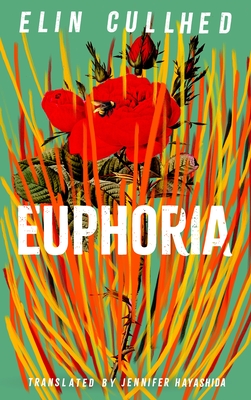 Flash back to the year before, when Plath is heavily pregnant with Nick during a cold winter and trying to steal moments to devote to writing. She feels gawky and out of place in encounters with the vicar and shopkeeper of their English village. “Who was I, who had let everything become a compromise between Ted’s Celtic chill and my grandiose American bluster?” She and Hughes have an intensely physical bond, but jealousy of each other’s talents and opportunities – as well as his serial adultery and mean and controlling nature – erodes their relationship. The book ends in possibility, with Plath just starting to glimpse success as The Bell Jar readies for publication and a collection of poems advances. Readers are left with that dramatic irony.
Cullhed seems to hew to biographical detail, though I’m not particularly familiar with the Hughes–Plath marriage. Scenes of their interactions with neighbours, Plath’s mother, and Ted’s lover Assia Wevill make their dynamic clear. The prose grows more nonstandard; run-on sentences and all-caps phrases indicate increasing mania. There are also lovely passages that seem apt for a poet: “Ted’s crystalline sly little mint lozenge eyes. Narrow foxish. Thin hard. His eyes, so embittered.” The use of language is effective at revealing Plath’s maternal ambivalence and shaky mental health. Somehow, though, I found this quite tedious by the end. Not among my favourite biographical novels, but surely a must-read for Plath fans.
Translated from the Swedish by Jennifer Hayashida in 2022 – our first read in translation, I think? And what a brilliant cover.
With thanks to Canongate for the free copy for review.
The main question we ask about the books we read for Literary Wives is:
What does this book say about wives or about the experience of being a wife?
Marriage is claustrophobic here, as in so many of the books we read. Much as she loves her children, Plath finds the whole wifehood–motherhood complex to be oppressive and in direct conflict with her ambitions as an author. Sharing a vocation with her husband, far from helping him understand her, only makes her more bitter that he gets the time and exposure she so longs for. More than 60 years later, Plath’s death still echoes, a tragic loss to literature.
See Kate’s, Kay’s and Naomi’s reviews, too!
Coming up next, in March: Lessons in Chemistry by Bonnie Garmus – I’ve read this before but will plan to skim back through a copy from the library.
#MoominWeek & #WITMonth, II: Moominpappa at Sea by Tove Jansson
My first two reads for Women in Translation month were Catalan and French novellas. With this third one I’m tying in with Moomin Week, hosted by Chris and Mallika in honour of Paula of Book Jotter. Happy nuptials to Paula! Not a blogger I’ve interacted with before, but I welcomed the excuse to finish a book I started a few months ago. I’ve actually reviewed five Moomin books here before: Moominvalley in November, Moominland Midwinter, Tales from Moominvalley, Moominsummer Madness, and Finn Family Moomintroll. (It’s also the third year in a row that I’ve reviewed something by Jansson for WIT Month.)

Appropriate reading at sea (on a ferry to France)
I didn’t grow up with the Moomins, but as an adult I’ve come to love the series for how it lovingly depicts everyday disasters and neuroses and, beneath the whimsical adventures, offers an extra level of thoughtfulness for adult readers. The setting of this one was particularly appropriate. Here’s the opening paragraph:
One afternoon at the end of August, Moominpappa was walking about in his garden feeling at a loss. He had no idea what to do with himself, because it seemed everything there was to be done had already been done or was being done by somebody else.
 The sense of being ‘all at sea’ persists for Pappa and the other characters even after they sail to ‘his’ island in the Gulf of Finland, drawn to see in person the lighthouse he has kept as a model on the shelf. They arrive to find the island mysteriously empty and the facilities derelict. Moomintroll goes exploring alone and meets intriguing “sea-horses” that look more equine than marine. Nature is alive and resistant to ‘improvements’ such as Moominmamma trying to tame the wildness with her rose bushes and apple trees. The forest also seems to be retreating from the sea; everything fears it, in fact. The sullen fisherman is no help, and the hulking Groke seems to be a metaphor for depression as well as a literal monster.
There is a sense of everything being awry, and by the close that’s only partially rectified. Pappa ends with conflicting feelings towards the island: proprietary yet timorous. I imagine this is based on Jansson’s own experiences living on a Finnish island (see also The Summer Book). This wasn’t among my favourite Moomin books, but I always appreciate the juxtaposition of the domestic and wild, the cosy and the melancholy. Just two more for me to find now (I’ve read them all in random order): The Moomins and the Great Flood and Moominpappa’s Memoirs.
[Translated from the Swedish by Kingsley Hart] (University library)


Summer Reads, Part II: Cocker, Kroon, Levy & Lewis-Stempel
(Part I was here, ICYMI.) Cooler days here as we say a drawn-out farewell to summer and welcome in early autumn; I’ve been seeing ripe blackberries and Vs of geese for a few weeks now. This batch of books I read from the library truly encapsulated summer: swifts flying overhead, cold lemonade as a reward for sticky outdoor activities, and travels through the confusing cities and inviting countryside of the Continent.
One Midsummer’s Day: Swifts and the Story of Life on Earth by Mark Cocker (2023)
We saw our last swift in Newbury somewhere around 13 August. The three and a half months they were with us passed in what felt like an instant, leaving us bereft until they come back.
 Why is it that books seem to bunch together by topic, with several about Henry James or swifts or whatever all being published within the same year or few years? It’s unfortunate for Mark Cocker, a well-respected author on birds and environmental issues in general, that he is two years behind Charles Foster and Sarah Gibson with this work on swifts. I also think he attempts too much, in terms of both literary strategy and subject matter (see the second part of the subtitle), and so loses focus.
The book employs a circadian structure, recording what he sees from his garden from one midsummer evening to the next as he looks up at the sky. Within this framework he delivers a lot of information about the world’s swift species, a fair bit of it familiar to me from those previous books; more novel are his stories of remarkable sightings, like a vagrant white-throated needletail in the Outer Hebrides (it later died in a collision with a wind turbine). But he also tries to set swifts in the context of the grand sweep of evolution. I skipped over these sections, which felt superfluous. With his literary allusions, Cocker is aiming for something like Tim Dee’s exceptional Greenery but falls short.
This could have made a superb concentrated essay, maybe as part of a collection devoting each chapter to a different species, because his passion is clear and his metaphors excellent as he holds up swifts as an emblem of the aerial life, and of hope (“In a social screaming display these weaponised shapes blaze together as a black-swarming meteor in a widening orbit that burns over the houses or between them”). The few-page run-on sentence about how humanity has gotten itself into the climate crisis is pretty great (though Lev Parikian did so much more concisely in Into the Tangled Bank: It’s “f***ing f***ed”). But Foster has written the definitive tribute to swifts, The Screaming Sky, and in just 150 small pages. 
Rhubarb Lemonade by Oskar Kroon (2019; 2023)
[Translated from the Swedish by A. A. Prime]
 This was like an update of The Summer Book by Tove Jansson: the delicious innocence of a Scandinavian island summer is threatened by change and, ultimately, death. Vinga is happy to escape her troubles for a simple island life with Grandpa. They eat the same foods day after day, do the same things week after week, and slowly work on refurbishing the wooden sailing boat he gave her. Ruth, the shopkeeper’s granddaughter, couldn’t be more different: she hates the sea, misses the city, and is fully immersed in social media and celebrity culture. Yet Vinga finds her captivating and tingles when she’s near. “Things would be so much easier if we’d never met. Things would be so much more boring if we’d never met.”
Prime won Sweden’s August Prize for this YA novel (spot the reference to The Murderer’s Ape, which won the same prize!). As will be familiar to regular readers of YA, we see Vinga dealing with issues like bullying, loneliness, body image, and family breakdown. She’s called back to the mainland to meet the baby her father has had by the new woman in his life – a trip that coincides with the worst storm the island has seen in ages and a chance for Grandpa to play the sea captain hero. But falling for Ruth, kissing a girl, is not a reason for angst. It’s just the way things are. Kroon makes no grand claim that this will be true love, forever. It’s a teen summer romance, and exaggerated by the cover. Maybe it will last; maybe it won’t. The deeper love is familial, particularly between Vinga and her grandfather. 
August Blue by Deborah Levy (2023)
 My third novel from Levy, and a typically confounding one. The facts are simple enough: Elsa M. Anderson is a pianist who has had something of a breakdown. She retreats from giving concerts, dyes her hair blue, and bounces between European capitals in the later days of the pandemic, giving music lessons and caring for her mentor and adoptive father, Arthur, who’s dying on Sardinia. In between there are laughs and lovers, searching and sadness, all muffled by Elsa’s (Levy’s) matter-of-factness. Meanwhile, there’s a touch of the uncanny in the doppelganger Elsa keeps seeing. First, her double buys the carousel horses she had her eye on in Athens. Then Elsa steals her twin’s trilby hat. There’s a confrontation late on but it doesn’t seem to make much difference. The doubling appears to be a way of making literal the adopted Elsa’s divided self. I’m not entirely sure what to say about this one. I enjoyed reading it well enough. Though I never felt compelled to pick it up, when I did I easily got through several chapters at a time. But I’m not convinced it meant much.
La Vie: A Year in Rural France by John Lewis-Stempel (2023)
Lewis-Stempel’s best book in an age; my favourite, certainly, since Meadowland. I’m featuring it in a summer post because, like Peter Mayle’s Provence series, it’s ideal for armchair travelling. Especially with the heat waves that have swept Europe this summer, I’m much happier reading about France or Italy than being there. The author has written much about his Herefordshire haunts, but he’s now relocated permanently to southwest France (La Roche, in the Charente). He proudly calls himself a peasant farmer, growing what he can and bartering for much of the rest. La Vie chronicles a year in his quest to become self-sufficient. It opens one January and continues through the December, an occasional diary with recipes.
 The family’s small-scale potager is organic agriculture at its best. He likens it to turning the clock back to the 1970s, or earlier, before England wrecked its countryside with industrial production. (His list of birds in the area is impressive, including some you’d be lucky to come across in the UK – turtledove, nightingale, stone curlew.) In fact, he estimates that his yield per square metre is triple what it was when he participated in that damaging system, for the same amount of work. His lifestyle is also a deliberate resistance to hyper-speed modernity: he scythes his grass, spends days preserving a haul of walnuts, and tries his hand at pressing oil and making spirits. There’s a make-do-and-mend attitude here: when his sheep-shearing equipment goes missing, he buys a beard trimmer at the supermarket and uses that instead.
It’s a peaceful, comforting read that’s attuned to the seasons and the land. There is also gentle mockery of the French with their bureaucracy and obsession with hunting, and self-deprecation of his own struggle to get his point across in a second language. I could never make a living by manual labour, but I like reading about back-to-the-land adventures, especially ones as bucolic as this – two-hour lunches, six-course dinners with homemade wine? Mais oui! 
Winter Reads, Part I: Patrick Gale & Tove Jansson (#NordicFINDS23)
This winter has been a disappointment: it’s bloody cold, but with no snow. It’s impossible to keep our house warm, even with extra loft insulation and new double-glazed windows (home ownership is boring and overrated), so I’m ready for signs of spring. Maybe by the time I review a second batch of seasonal reads in February, winter will truly be on its way out.
A Place Called Winter by Patrick Gale (2015)
 This was our January book club read. We’d had good luck with Gale before: his Notes from an Exhibition received our joint highest rating ever. As he’s often done in his fiction, he took inspiration from family history: here, the story of his great-grandfather Harry Cane, who emigrated to the Canadian prairies to farm in the most challenging of conditions. Because there is some uncertainty as to what precipitated his ancestor’s resettlement, Gale has chosen to imagine that Harry, though married and the father of a daughter, was in fact gay and left England to escape blackmailing and disgrace after his affair with a man was discovered.
There are very evocative descriptions of the pioneer life, lightened for Harry by his relationship with his closest neighbours, siblings Petra and Paul. The novel covers the First World War and the start of the Spanish flu epidemic, which provide much fodder for melodrama, but somehow I don’t mind it from Gale. Harry himself is so diffident as to seem blank, but that means he is free to become someone else in a new land. My other main criticism would be that the villain is implausibly evil. Some of our book club members also thought there were too many coincidences. Gale really makes you feel for these characters and their suffering, though. Sexuality and mental health, both so misunderstood at that time, are the two main themes and he explores them beautifully. In that both are historical fiction where homosexuality is simply a fact of life, not a titillating novelty, this reminded me a lot of Days Without End by Sebastian Barry. (Free from mall bookshop) 
A Winter Book: Selected Stories by Tove Jansson (2006)
[Translated from the Swedish by Silvester Mazzarella, David McDuff and Kingsley Hart]
 A brief second review for Nordic FINDS. It’s the third time I’ve encountered some of these autofiction stories: this was a reread for me, and 13 of the pieces are also in Sculptor’s Daughter, which I skimmed from the library a few years ago. And yet I remembered nothing; not a single one was memorable. Most of the pieces are impressionistic first-person fragments of childhood, with family photographs interspersed. In later sections, the protagonist is an older woman, Jansson herself or a stand-in. I most enjoyed “Messages” and “Correspondence,” round-ups of bizarre comments and requests she received from readers. Of the proper stories, “The Iceberg” was the best. It’s a literal object the speaker alternately covets and fears, and no doubt a metaphor for much else. This one had the kind of profound lines Jansson slips into her children’s fiction: “Now I had to make up my mind. And that’s an awful thing to have to do” and “if one doesn’t dare to do something immediately, then one never does it.” A shame this wasn’t a patch on The Summer Book. (Free from a neighbour)

Original rating in 2012: 
Rating now: 
Averaged rating: 
And a DNF:
Winter’s Tale by Mark Helprin (1983)
 Laila (Big Reading Life) and I attempted this as a buddy read, but we both gave up on it. I got as far as page 53 (in the 600+-page pocket paperback). The premise was alluring, with a magical white horse swooping in to rescue Peter Lake from a violent gang. I also appreciated the NYC immigration backstory, but not the adjective-heavy wordiness, the anachronistic exclamations (“Crap!” and “Outta my way, you crazy midget” – this is presumably set some time between the 1900s and 1920s) or the meandering plot. It was also disturbing to hear about Peter’s sex life when he was 12. From a Little Free Library (at Philadelphia airport) it came, and to a LFL (at the Bar Convent in York) it returned. Laila read a little further than me, enough to tell the library patron who recommended it to her that she’d given it a fair try.
Any snowy or icy reading (or weather) for you lately?
The Swedish Art of Ageing Well by Margareta Magnusson (#NordicFINDS23)
Annabel’s Nordic FINDS challenge is running for the second time this month. I hope to manage at least one more read for it; this one feels like a cheat as it’s not exactly in translation. Magnusson, who is Swedish, either wrote it in English or translated it herself for simultaneous 2022 publication in Sweden and the USA – where the title phrase was “Aging Exuberantly.” There is some quirky phrasing that a native speaker would never use, more so than in her Döstädning: The Gentle Art of Swedish Death Cleaning, which I reviewed last year, but it’s perfectly understandable.

The subtitle is “Life wisdom from someone who will (probably) die before you,” which gives a flavour of 89-year-old Magnusson’s self-deprecating sense of humour. The big 4-0 is coming up for me later this year, but I’ve been reading books about ageing and death since my twenties and find them valuable for gaining perspective and storing up wisdom.
This is not one of those “hygge” books extolling the virtues of Scandinavian culture, but rather a charming self-help memoir recounting what the author has learned about what matters in life and how to gracefully accept the ageing process. Each chapter is like a mini essay with a piece of advice as the title. Some are more serious than others: “Don’t Fall Over” and “Keep an Open Mind” vs. “Eat Chocolate” and “Wear Stripes.”
Since Magnusson was widowed, she has valued her friendships all the more, and during the pandemic cheerfully switched to video chats (G&T in hand) with her best friend since age eight. She is sweetly optimistic despite news headlines; after all, in the words of one of her chapter titles, “The World Is Always Ending” – she grew up during World War II and remembers the bad old days of the Cold War and personal near-tragedies like when the ship on which her teenage son was a deckhand temporarily disappeared in the South China Sea.
 Lots of little family anecdotes like that enter into the book. Magnusson has five children and lived in Singapore and Annapolis, Maryland (my part of the world!) for a time. The open-mindedness I’ve mentioned was an attitude she cultivated towards new-to-her customs like a Chinese wedding, Christian adult baptism, and Halloween. Happy memories are her emotional support; as for physical assistance: “I call my walker Lars Harald, after my husband who is no longer with me. The walker, much like my husband was, is my support and my safety.”
Volunteering, spending lots of time with younger people, looking after another living thing (a houseplant if you can’t commit to a pet), turning daily burdens into beloved routines, and keeping your hair looking as nice as possible are some of Magnusson’s top tips for coping.
An appendix gives additional death-cleaning guidance based on Covid-era FAQs; the chapter in this book that is most reminiscent of the practical approach of Döstädning is “Don’t Leave Empty-Handed,” which might sound metaphorical but in fact is a literal mantra she learned from an acquaintance. On a small scale, it might mean tidying a room gradually by picking up at least one item each time you pass through; more generally, it could refer to a mindset of cleaning up after oneself so that the world is a better place for one’s presence.
With thanks to Canongate for the free copy for review.
Fair Play by Tove Jansson (#NovNov22 Translated Week)
Apart from A Winter Book and The Summer Book, I’m still new to Tove Jansson’s writing for adults, having become most familiar with her Moomins series over the last 11 years. This is a late work, first published in 1989 but not available in English translation (by Thomas Teal; published by Sort Of Books, with an introduction by Ali Smith) until 2007.
 Rather like a linked short story collection, it presents vignettes from the lives of two female artists – Mari, a writer and illustrator; and Jonna, a visual artist and filmmaker – who are long-term, devoted partners. Of course, this cannot be read as other than autobiographical of Jansson and her partner of 45 years, Tuulikki Pietilä. There are other specific details drawn from life, too.
What the book does beautifully is recreate the rhythm of life lived alongside another person. The two women have studio space at either end of a large apartment building and meet to watch films (the subject of “Videomania”) and go on trips. Each other’s work is a background hum if no longer a daily keeping-to-task.
Not a lot happens, so not too much stood out; a couple of other favourite stories were “Wladyslaw,” about welcoming a Polish refugee friend, and “In the Great City of Phoenix,” about a stop at an Arizona hotel. The final piece, “The Letter,” however, does present an imminent change: one of the partners is invited on a foreign fellowship and love means a temporary letting go. (Public library)
[127 pages]
I also recently read a forthcoming artistic/biographical study of Tove Jansson for Shelf Awareness, to be released by Thames & Hudson on December 6th. As it is also novella-length, it’s a good link between our literature in translation week and next week’s nonfiction focus. Here’s an excerpt from my review:
Tove Jansson: The Illustrators by Paul Gravett
 This potted biography of the author best known for the Moomins showcases the development of her artistic style and literary themes. Born at the start of World War I into a family of artists (her father a sculptor, her mother a graphic designer, her brother Lars a collaborator on her comics), Jansson wanted to paint but had limited opportunities as a woman. The book contains a wealth of illustrations – over 100, so nearly one per page – including photographs and high-quality reproductions, many in color and some in black and white, of Jansson’s comics, paintings and book covers. Gravett also probes the autobiographical influences on Jansson’s work, which are particularly clear in her 15 books for adults. A sensitive portrayal of Finland’s most widely translated author, this is itself a work of art.
[112 pages]

Four for #WITMonth: Jansson, Lamarche, Lunde and Vogt
I’ve managed four novels for this year’s Women in Translation month: a nostalgic, bittersweet picture of island summers poised between childhood and old age; a brief, impressionistic account of domestic violence and rape; the third in a series looking at how climate change and species loss reverberate amid family situations; and a visceral meditation on women’s bodies and relationships. Two of these were review copies from the recently launched Héloïse Press, which “champions world-wide female talent”.

The Summer Book by Tove Jansson (1972; 1974)
[Translated from the Swedish by Thomas Teal]
It was just the same long summer, always, and everything lived and grew at its own pace.
 This was only the second time I’ve read one of Jansson’s books aimed at adults (as opposed to five from the Moomins series). Whereas A Winter Book didn’t stand out to me when I read it in 2012 – though I will try it again this winter, having acquired a free copy from a neighbour – this was a lovely read, so evocative of childhood and of languid summers free from obligation. For two months, Sophia and Grandmother go for mini adventures on their tiny Finnish island. Each chapter is almost like a stand-alone story in a linked collection. They make believe and welcome visitors and weather storms and poke their noses into a new neighbour’s unwanted construction.
Six-year-old Sophia, based on Jansson’s niece of the same name, is precocious and opinionated, liable to change her mind in an instant. In “The Cat,” one of my favourite stand-alone bits, she’s fed up with their half-feral pet who kills lots of birds and swaps him for a friend’s soppy lap cat, but then regrets it. She’s learning that logic and emotion sometimes contradict each other, which becomes clearer as she peppers Grandmother with questions about religion and superstition.
As is common to Jansson’s books, there’s a melancholy undercurrent here.
Everything was fine, and yet everything was overshadowed by a great sadness. It was August, and the weather was sometimes stormy and sometimes nice, but for Grandmother, no matter what happened, it was only time on top of time, since everything is vanity and a chasing after the wind.
Sophia’s mother died, and although her grandmother has the greater presence, Papa is also around, dealing with practicalities in the background. Death stalks around the edges, reminding Grandmother of her mortality through bouts of vertigo that have her grabbing for her heart medication. On just the second page we have this memento mori:
“When are you going to die?” the child asked.
And Grandmother answered, “Soon. But that is not the least concern of yours.”
And so it doesn’t feel like our concern either; the focus is on the now, on these beautiful little moments of connection across the generations – like in “Playing Venice,” when Grandmother stays up all night rebuilding Sophia’s model city that was washed away by the rain. (Public library)
The Memory of the Air by Caroline Lamarche (2014; 2022)
[Winner of an English PEN Award; translated from the French by Katherine Gregor]
 In a hypnotic monologue, a woman tells of her time with a violent partner (the man before, or “Manfore”) who thinks her reaction to him is disproportionate and all due to the fact that she has never processed being raped two decades ago. When she goes in for a routine breast scan, she shows the doctor her bruised arm, wanting there to be a definitive record of what she’s gone through. It’s a bracing echo of the moment she walked into a police station to report the sexual assault (and oh but the questions the male inspector asked her are horrible).
The novella opens with an image that returns in dreams but is almost more a future memory of what might have been: “I went down into a ravine and, at the bottom, found a dead woman. She was lying in a shroud, on a carpet of fallen leaves.” I read this in one sitting – er, yoga session – and it has stayed in my mind in intense flashes like that and the flounce of her red dress on the summer day that turned into a nightmare. At an intense 70 pages, this reminded me of Annie Ernaux’s concise autofiction (I’ve reviewed Happening and I Remain in Darkness). An introduction by Dr Dominique Carlini-Versini contextualizes the work by considering the treatment of rape in contemporary French women’s writing.
The Memory of the Air will be published on 26 September. With thanks to Héloïse Press for the proof copy for review.
The Last Wild Horses by Maja Lunde (2019; 2022)
[Translated from the Norwegian by Diane Oatley]
The third in Lunde’s “Climate Quartet,” with its recurring elements of migration, shortages and environmental collapse. Always, though, the overall theme is parent–child relationships and the love that might be the only thing that keeps us going in the face of unspeakable challenges. Here she returns to the tripartite structure of The History of Bees (much my favourite of the three): a historical strand, a near-contemporary one, and a dystopian future story line. The link between the three is Przewalski’s horses (aka takhi).
 In the early 1880s, Mikhail Alexandrovich Kovrov, assistant director of St. Petersburg Zoo, is brought the hide and skull of an ancient horse species assumed extinct. Although a timorous man who still lives with his mother, he becomes part of an expedition to Mongolia to bring back live specimens. In 1992, Karin, who has been obsessed with Przewalski’s horses since encountering them as a child in Nazi Germany, spearheads a mission to return the takhi to Mongolia and set up a breeding population. With her is her son Matthias, tentatively sober after years of drug abuse. In 2064 Norway, Eva and her daughter Isa are caretakers of a decaying wildlife park that houses a couple of wild horses. When a climate migrant comes to stay with them and the electricity goes off once and for all, they have to decide what comes next. This future story line engaged me the most.
I appreciated some aspects: queer and middle-aged romances, the return of a character from The End of the Ocean, the consideration across all three plots of what makes a good mother. However, the horses seemed neither here nor there. There are also many, many animal deaths. Perhaps an unsentimental attitude is necessary to reflect past and future values, and the apparent cruelty of natural processes, but it limits the book’s appeal to animal lovers. Maybe the tone fits the Norwegian prose, which the translator describes as lean.
The fourth book of the quartet, publishing in Norway next month, is called something like The Dream of a Tree; a focus on trees would be a draw for me. After the disappointment of Books 2 and 3, I’m unsure whether I want to bother with the final volume, but it makes sense to do so, if only to grasp Lunde’s full vision. (Public library)
What Concerns Us by Laura Vogt (2020; 2022)
[Translated from the German by Caroline Waight]
 Vogt’s Swiss-set second novel is about a tight-knit matriarchal family whose threads have started to unravel. For Rahel, motherhood has taken her away from her vocation as a singer. Boris stepped up when she was pregnant with another man’s baby and has been as much of a father to Rico as to Leni, the daughter they had together afterwards. But now Rahel’s postnatal depression is stopping her from bonding with the new baby, and she isn’t sure this quartet is going to make it in the long term.
Meanwhile, Rahel’s sister Fenna knows she’s pregnant but refuses a doctor’s care. When she comes to stay with Rahel, she confides that the encounter with her partner, Luc, that led to conception was odd, rough; maybe not consensual. And all this time, the women’s mother, Verena, has been undergoing treatment for breast cancer. All three characters appear to be matter-of-factly bisexual; Rahel and Fenna’s father has long been out of the picture, replaced in Verena’s affections by Inge.
As I was reading, I kept thinking of the declaration running through A Ghost in the Throat by Doireann Ní Ghríofa: “This is a female text.” Vogt’s vision is all breasts and eggs, genitals actual and metaphorical. I loved the use of food in the novel: growing up, the girls cherished “silly nights” when their mother prepared an egg feast and paired it with a feminist lecture on reproduction. Late on, there’s a wonderful scene when the three main characters gorge on preserved foodstuffs from the cellar and share their secrets. (Their language is so sexually frank; would anyone really talk to their mother and siblings in that way?!) As in the Lunde, the main question is what it means to be a mother, but negotiating their relationships with men stretches the bonds of this feminine trio. One for fans of Rachel Cusk and Sally Rooney.
With thanks to Héloïse Press for the proof copy for review.
 Bookish Beck = Rebecca Foster. American transplant to England. Freelance proofreader and book reviewer.
 Bookish Beck