Five Novellas in Translation
We’re coming to the close of Literature in Translation week of Novellas in November. Cathy and I have both noted that novellas seem more common in other languages, with the work more likely to take on experimental forms. We wondered why this is – do foreign languages and cultures somehow lend themselves to concise storytelling that takes more risks? However, a commenter on a post of Cathy’s suggested that economic realities may have something to do with it: translating short works is faster and cheaper. In a recent blog post, Louise Walters, whose indie publishing imprint is preparing to release its shortest book yet (In the Sweep of the Bay by Cath Barton, 22,000 words), confirms that production and shipping costs are lower for novellas, so she has the chance of recouping her investment.

I’ve gotten to five short translated works this month: three fiction and two nonfiction. (Or should that be four fiction and one nonfiction? With autofiction it’s hard to tell.)
Dependency by Tove Ditlevsen (1971; 2019)
[Translated from the Danish by Michael Favala Goldman]
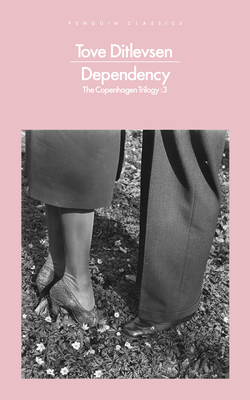 The final volume of the autobiographical Copenhagen Trilogy, after Childhood and Youth. Ditlevsen recalls her upbringing in poverty and her early success as a poet. By the end of the second book, she’s engaged to a much older literary editor. A series of marriages and affairs follows: Viggo, Ebbe, Carl and Victor are the major names, with some others in between. She produces stories and poems as well as a daughter and a son, but also has two abortions. Carl performs one of these and gives her a Demerol shot; ever afterwards, she takes advantage of his obsession with her chronic ear infection to beg for painkiller shots. “Then time ceases to be relevant. An hour could be a year, and a year could be an hour. It all depends on how much is in the syringe.” Addiction interferes with her work and threatens her relationships, but it’s an impulse that never leaves her even when she swaps the harder stuff for alcohol.
I only skimmed this one because from the other volumes I knew how flat and detached the prose is, even when describing desperate circumstances. I can admire this kind of writing – the present-tense scenes, the lack of speech marks, the abrupt jumps between time periods and emotional states, all coldly expressed – but I’m not sure I’ll ever love it. Of the three books, I liked Childhood the best for its universal observations. 
La Symphonie Pastorale by André Gide (1919; 1931)
[Translated from the French by Dorothy Bussy]
“Love is blindness / I don’t want to see” (U2)
 I had a secondhand French copy when I was in high school, always assuming I’d get to a point of fluency where I could read it in its original language. It hung around for years unread and was a victim of the final cull before my parents sold their house. Oh well! There’s always another chance with books. In this case, a copy of this plus another Gide novella turned up at the free bookshop early this year. A country pastor takes Gertrude, the blind 15-year-old niece of a deceased parishioner, into his household and, over the next two years, oversees her education as she learns Braille and plays the organ at the church. He dissuades his son Jacques from falling in love with her, but realizes that he’s been lying to himself about his own motivations. This reminded me of Ethan Frome as well as of other French classics I’ve read (Madame Bovary and Thérèse Raquin). Melodramatic, maybe, but I loved the religious and medical themes (deaf-blind Laura Bridgman gets a mention; when the preacher and Gertrude attend the title symphony, he encourages her synesthetic thinking).
Stammered Songbook: A Mother’s Book of Hours by Erwin Mortier (2011; 2015)
[Translated from the Dutch by Paul Vincent]
 In fragmentary vignettes, some as short as a few lines, Belgian author Mortier chronicles his mother’s Alzheimer’s, which he describes as a “twilight zone between life and death.” His father tries to take care of her at home for as long as possible, but it’s painful for the family to see her walking back and forth between rooms, with no idea of what she’s looking for, and occasionally bursting into tears for no reason. Most distressing for Mortier is her loss of language. As if to compensate, he captures her past and present in elaborate metaphors: “Language has packed its bags and jumped over the railing of the capsizing ship, but there is also another silence … I can no longer hear the music of her soul”. He wishes he could know whether she feels hers is still a life worth living. There are many beautifully meditative passages, some of them laid out almost like poetry, but not much in the way of traditional narrative; it’s a book for reading piecemeal, when you have the fortitude.
Bonjour Tristesse by Françoise Sagan (1954; 1955)
[Translated from the French by Irene Ash]
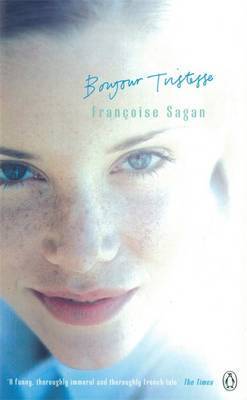 Like The Go-Between and Atonement, this is overlaid with regret about childhood caprice that has unforeseen consequences. That Sagan, like her protagonist, was only a teenager when she wrote it only makes this 98-page story the more impressive. Although her widower father has always enjoyed discreet love affairs, seventeen-year-old Cécile has basked in his undivided attention until, during a holiday on the Riviera, he announces his decision to remarry a friend of her late mother. Over the course of one summer spent discovering the pleasures of the flesh with her boyfriend, Cyril, Cécile also schemes to keep her father to herself. Dripping with sometimes uncomfortable sensuality, this was a sharp and delicious read.
The Order of the Day by Éric Vuillard (2017; 2018)
[Translated from the French by Mark Polizzotti]
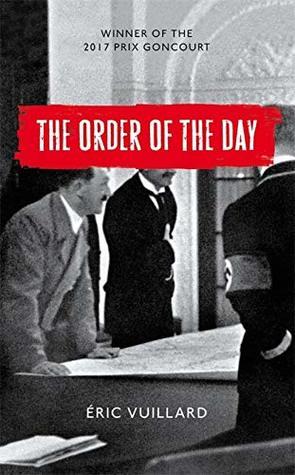 February 1933: 24 German captains of industry meet with Hitler to consider the advantages of a Nazi government. I loved the pomp of the opening chapter: “Through doors obsequiously held open, they stepped from their huge black sedans and paraded in single file … they doffed twenty-four felt hats and uncovered twenty-four bald pates or crowns of white hair.” As the invasion of Austria draws nearer, Vuillard recreates pivotal scenes featuring figures who will one day commit suicide or stand trial for war crimes. Reminiscent in tone and contents of HHhH, The Tobacconist, and the film Downfall, this starts off promisingly and ends with clear relevance to the present moment (“a mysterious respect for lies. Political manoeuvring tramples facts”) and a brilliant final paragraph, but in between was dull. You’d have to have more interest in history than I do to love this Prix Goncourt winner.
Publishers that specialize in novellas in translation:
Charco Press – I’ve reviewed:
 The Wind that Lays Waste by Selva Almada
Fish Soup by Margarita García Robayo
Die, My Love by Ariana Harwicz
Peirene Press – I’ve reviewed:
Mr. Darwin’s Gardener by Kristina Carlson
The Looking-Glass Sisters by Gøhril Gabrielsen
Ankomst by Gøhril Gabrielsen
 Dance by the Canal by Kerstin Hensel
The Last Summer by Ricarda Huch
Snow, Dog, Foot by Claudio Morandini
Her Father’s Daughter by Marie Sizun
The Orange Grove by Larry Tremblay
The Man I Became by Peter Verhelst
A few more favorite novellas in translation:
The Plimsoll Line by Juan Gracia Armendáriz
 Silk by Alessandro Baricco
Agatha by Anne Cathrine Bomann
Swallowing Mercury by Wioletta Greg
Next week, we’re closing out Novellas in November with a focus on short classics. I’ll introduce the week’s theme with some of my favorite examples on Monday.
Any theories as to why so many novellas are from other languages?
What are some of your favorites?
Being the Expert for #NonficNov / Three on a Theme: “Care”
The Being/Becoming/Asking the Expert week of the month-long Nonfiction November challenge is hosted by Rennie of What’s Nonfiction. This is my second entry for the week after Monday’s post on postpartum depression, as well as the second installment in my new “Three on a Theme” series, where I review three books that have something significant in common and tell you which one to pick up if you want to read into the topic for yourself.

It will be no surprise to regular readers that both of my ‘expert’ posts have been on a health theme: I have an amateur’s love of medical memoirs and works of medical history, and I’ve followed the Wellcome Book Prize closely for a number of years – participating in official blog tours, creating a shadow panel, and running this past year’s Not the Wellcome Prize.
The three books below are linked by the word “Care” in the title or subtitle; all reflect, in the wake of COVID-19, on the ongoing crisis in UK healthcare and the vital role of nurses.
Labours of Love: The Crisis of Care by Madeleine Bunting
 Bunting’s previous nonfiction work could hardly be more different: Love of Country was a travel memoir about the Scottish Hebrides. It was the first book I finished reading in 2017, and there could have been no better start to a year’s reading. With a background in history, journalism and politics, the author is well placed to comment on current events. Labours of Love arose from five years of travel to healthcare settings across the UK: care homes for the elderly and disabled, hospitals, local doctors’ surgeries, and palliative care units. Forget the Thursday-night clapping and rainbows in the windows: the NHS is perennially underfunded and its staff undervalued, by conservative governments as well as by people who rely on it.
We first experience bodily care as infants, Bunting notes, and many of the questions that run through her book originated in her early days of motherhood. Despite all the advances of feminism, parental duties follow the female-dominated pattern evident in the caring careers:
By the age of fifty-nine, women will have a fifty-fifty chance of being, or having been, a carer for a sick or elderly person. At the same time, many are still raising their teenage children and almost half of those over fifty-five are providing regular care for grandchildren.
Women dominate caring professions such as nursing (89 per cent), social work (75 per cent) and childcare (98 per cent). They now form the majority of GPs (54 per cent) and three out of four teachers are female. And they provide the vast bulk of the army of healthcare workers in the NHS (80 per cent) and social-care workers (82 per cent) for the long-term sick, disabled and frail elderly.
These are things we know intuitively, but seeing the numbers laid out so plainly is shocking. I most valued the general information in Bunting’s introduction and in between her interviews, while I found that the bulk of the book alternated between dry statistics and page after page of interview transcripts. However, I did love hearing more from Marion Coutts, the author of the 2015 Wellcome Book Prize winner, The Iceberg, about her husband’s death from brain cancer. (Labours of Love was longlisted for the Baillie Gifford Prize for Non-Fiction 2020.)
My thanks to Granta for the free copy for review.
Duty of Care: One NHS Doctor’s Story of Courage and Compassion on the COVID-19 Frontline by Dr Dominic Pimenta
 We’re going to see a flood of such books; I’m most looking forward to Dr Rachel Clarke’s Breathtaking (coming in January). Given how long it takes to get a book from manuscript to published product, I was impressed to find this on my library’s Bestsellers shelf in October. Pimenta’s was an early voice warning of the scale of the crisis and the government’s lack of preparation. He focuses on a narrow window of time, from February – when he encountered his first apparent case of coronavirus – to May, when, in protest at a government official flouting lockdown (readers outside the UK might not be familiar with the Cummings affair), he resigned his cardiology job at a London hospital to focus on his new charity, HEROES, which supports healthcare workers via PPE, childcare grants, mental health help and so on.
It felt uncanny to be watching events from earlier in the year unfold again: so clearly on a trajectory to disaster, but still gripping in the telling. Pimenta’s recreated dialogue and scenes are excellent. He gives a real sense of the challenges in his personal and professional lives. But I think I’d like a little more distance before I read this in entirety. Just from my skim, I know that it’s a very fluid book that reads almost like a thriller, and it ends with a sober but sensible statement of the situation we face. (All royalties from the book go to HEROES.)
The Courage to Care: A Call for Compassion by Christie Watson
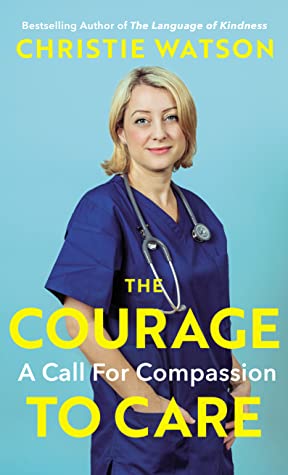 I worried this would be a dull work of polemic; perhaps the title, though stirring, is inapt, as the book is actually a straightforward sequel to Watson’s 2018 memoir about being a nurse, The Language of Kindness. Although, like Bunting, Watson traveled widely to research the state of care in the country, she mostly relies on her own experience of various nursing settings over two decades: a pediatric intensive care unit, home healthcare for the elderly, a children’s oncology day center, a residential home for those with severe physical and learning disabilities, a community mental-health visiting team, and the emergency room. She also shadows military nurses and prison doctors.
With a novelist’s talent for scene-setting and characterization, Watson weaves each patient and incident into a vibrant story. Another strand is about parenthood: giving birth to her daughter and the process of adopting her son – both are now teenagers she raises as a single mother. She affirms the value of everyday care delivered by parents and nurses alike. I was especially struck by the account of a teenage girl who contracted measles (then pneumonia, meningitis and encephalitis) and was left blind and profoundly disabled, all because her parents were antivaxxers. In general, I’ve wearied of doctors’ memoirs composed of obviously anonymized case studies, but I’ll always make an exception for Clarke and Watson because of their gorgeous writing.
Note: Watson had left nursing to write full-time, but explains in an afterword that she returned to critical care in a London hospital during COVID-19.
What I learned:
Empathy is a key term for all three authors. They emphasize that the skills of compassion and listening are just as important as the ability to perform the required medical procedures.
A chilling specific fact I learned: 43,000 people died in the Blitz* in the UK. Pimenta cited that figure and warned that COVID-19 could be worse. And indeed, as of now, over 63,000 people have died of COVID-19 in the UK. The American death toll is even more alarming.
Here are some passages that stood out for me from each book:
Bunting: “Good care is as much an art as a skill, as much competence as tact. … Care is where we make profound collective decisions about the worth of an individual life. … There is no tradition of ageing wisely in the West, unlike in many Asian and African cultures where age has prestige, status and is associated with wisdom … We need to speak about care in a different language, instead of the relentless macho repetition of words such as ‘efficiency’, ‘quality’, ‘driving’, ‘choice’, ‘delivery’ and productivity.’”
Pimenta: “this will be akin to the Blitz*, and … we need to start thinking of it like that. A marathon, not a sprint. … The challenges to come – a second or even third wave, a global recession, climate change, mass misinformation … and political and societal upheaval … – will all require more from all of us if we hope to meet them. The challenge of our generation is not behind us, it is only just beginning. I plan to continue doing something about it, and perhaps now you do as well. So stay informed, stay safe and be kind.”
Watson: “So much of nursing, I think to myself, seems obvious, and yet seeing that need in the first place is difficult and takes experience, training and something extra. … The mundanity of human existence is where I find the most beauty … It takes my breath away: how fragile, extraordinary and vulnerable, how full of hatred and love and obsession and complexity we all are – every single one of us.”
*I highly recommend all of folk artist Kris Drever’s latest album, Where the World Is Thin, but especially the song “Hunker Down / That Old Blitz Spirit,” which has become my lockdown anthem.

If you read just one, though… Make it The Courage to Care by Christie Watson.
Can you see yourself reading any of these books?
Be(com)ing an ‘Expert’ on Postpartum Depression for #NonficNov
This Being/Becoming/Asking the Expert week of the month-long Nonfiction November challenge is hosted by Rennie of What’s Nonfiction.
I’m also counting this as the first entry in my new “Three on a Theme” series, where I’ll review three books that have something significant in common and tell you which one to pick up if you want to read into the topic for yourself. I have another medical-themed one lined up for this Friday as a second ‘Being the Expert’ entry.
I never set out to read several memoirs of women’s experience of postpartum depression this year; it sort of happened by accident. I started with the graphic memoir and then chanced upon a recent pair of traditional memoirs published in the UK – in fact, I initially pitched them as a dual review to the TLS, but they’d already secured a reviewer for one of the books.
Inferno: A Memoir by Catherine Cho
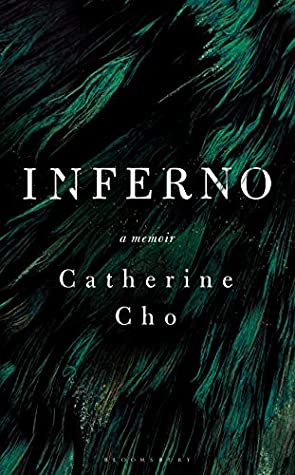 I was delighted to see this prediction of mine make the Sunday Times Young Writer of the Year Award shortlist. Coincidentally, I was already halfway through the book on my Kindle (via NetGalley) at that point, but its nomination gave me the push to finish in a timely manner. Cho, a Korean American literary agent based in London, experienced stress-induced postpartum psychosis after the birth of her son, Cato. She and her husband James had gone back to the USA when Cato was two months old to introduce him to friends and family, ending with a big Korean 100-day celebration for him at her in-laws’ home in New Jersey. Almost as soon as they got to her in-laws’, though, she started acting strangely: she was convinced there were cameras watching their every move, and Cato’s eyes were replaced with “devil’s eyes.” She insisted they leave for a hotel, but soon she would be in an emergency room, followed by a mental health ward.
Cho alternates between her time on the New Bridge ward – writing in a notebook, trying to act normal whenever James visited, expressing milk from painfully swollen breasts, and interacting with her fellow patients with all their quirks – and a rundown of the rest of her life before the breakdown. Her Kentucky childhood was marked by her mathematician father’s detachment and the sense that she and her brother were together “in the trenches,” pitted against the world. In her twenties she worked in a New York City corporate law firm and got caught up in an abusive relationship with a man she moved to Hong Kong to be with. All along she weaves in her family’s history and Korean sayings and legends that explain their values.
Twelve days. That was the length of her hospitalization in early 2018, but Cho so painstakingly depicts her mindset that readers are fully immersed in an open-ended purgatory – a terrifying time when she questioned her sanity and whether she was cut out for motherhood. “Koreans believe that happiness can only tempt the fates and that any happiness must be bought with sorrow,” she writes. She captures both extremes, of suffering and joy, in this vivid account.
My rating:
What Have I Done? An honest memoir about surviving postnatal mental illness by Laura Dockrill
 Dockrill is a British children’s author. Her style reminded me of others of her contemporaries who do a good line in light, witty, warts-and-all, here’s-what-it’s-really-like-to-be-a-woman books: Dolly Alderton, Caitlin Moran and the like. From a labor that quickly deviated from her birth plan due to an emergency Caesarean to the usual post-baby blues to full-blown psychosis, Dockrill recreates her experience with fluid dialogue and italicized passages of her paranoid imaginings. Her memoir resembles Cho’s in its broad strokes but also in certain particulars, like imagining surveillance cameras and hearing a voice in her head telling her she is a bad mum. I skimmed this one because of a library deadline and because of an overload on similar content. I had a greater affinity for Cho’s literary style compared to the more between-girlfriends, self-help bent of this memoir. With the glossary and resources at the end, though, I’d say this one would be more useful for someone going through the same thing.
My rating:
Dear Scarlet: The Story of My Postpartum Depression by Teresa Wong (2019)
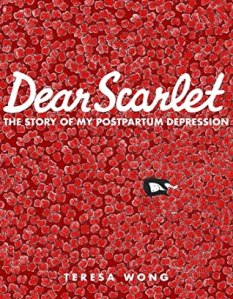 Memoir as letter and as graphic novel. Wong narrates the traumatic birth of her first child and her subsequent postpartum depression in black-and-white sketches that manage to feel breezy and fun despite the heavy subject matter. “I felt lost. I had no maternal instincts and no clue how I was supposed to take care of a baby,” she writes to Scarlet. “Your first two months in the world were the hardest two months of my life.”
For Wong, a combination of antidepressants, therapy, a postnatal doula, an exercise class, her mother’s help, and her husband’s constant support got her through, and she knows she’s lucky to have had a fairly mild case and to have gotten assistance early on. I loved the “Not for the Faint of Heart” anatomical spreads and the reflections on her mother’s tough early years after arriving in Canada from China.
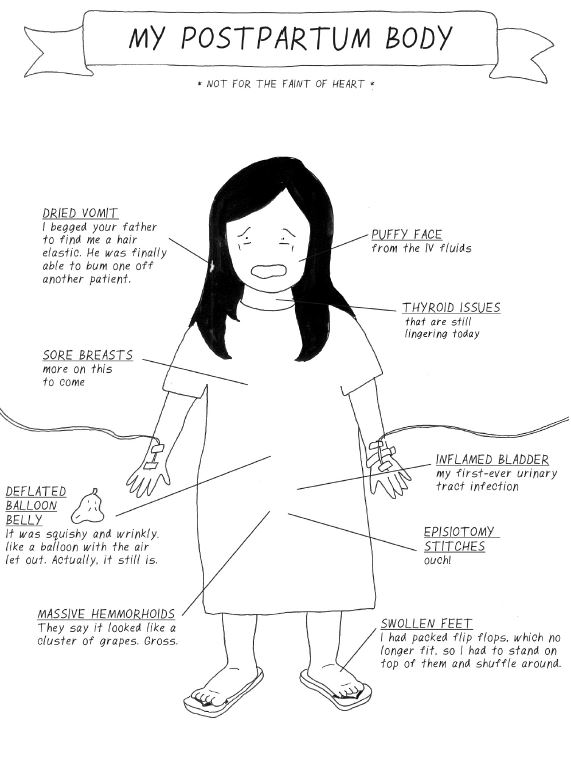
The drawing and storytelling style is similar to that of Sarah Laing and Debbie Tung. The writing is more striking than the art, though, so I hope that with future work the author will challenge herself to use more color and more advanced designs (from her Instagram page it looks like she is heading that way).
My rating:
My thanks to publicist Beth Parker for the free e-copy for review.
What I learned:
All three authors emphasize that motherhood does not always come naturally; “You might not instantly love your baby,” as Dockrill puts it. There might be a feeling of detachment – from the baby and/or from one’s new body. They all note that postpartum depression is common and that new mothers should not be ashamed of seeking help from medical professionals, baby nurses, family members and any other sources of support.
These two passages were representative for me:
Cho: “I don’t feel a rush of love or an overwhelming weight of responsibility, emotions that I’d been expecting. Instead, I felt curious, like I’d just been introduced to a stranger. He was a creature, an idea, not even human yet, just a being, a life. … I’d thought I would reclaim my body after birth, but instead, it was now a tool, something to sustain life.”
Dockrill: “If childbirth and motherhood are the most natural, universal, common things in the world, the things that women have been doing since the beginning of time, then why does nobody tell us that there’s a good chance that you might not feel like yourself after you have a baby? That you might even lose your head? That you might not ever come back?”
 On this topic, I have also read: Birth of a New Brain by Dyane Harwood. There are more book ideas here and here.
Nobody Told Me by Hollie McNish, one of my current bedside books, also deals with complicated pregnancy emotions and the chaotic early months of motherhood.
If you read just one, though… Make it Inferno by Catherine Cho.
Can you see yourself reading any of these books?
Four More Short Nonfiction Books for Novellas for November
Short nonfiction turns up in every genre. Today I have a feminist manifesto, some miniature travel essays, a memoir of the writing life, and a book of environmentalist speeches.
Dear Ijeawele, or A Feminist Manifesto in Fifteen Suggestions by Chimamanda Ngozi Adichie (2017)
[63 pages]
 My fourth book this year by Adichie, who is also making a repeat appearance on one of my nonfiction novellas lists; I reviewed “We Should All Be Feminists” in 2017. While this builds on the TED talk that fueled that essay, it is more successful for me because of the frame: a long letter to a childhood friend who had just had a baby girl and wanted advice about how to raise her as a feminist. Adichie’s premises are that women matter equally and that if you can’t reverse the genders in a scenario and get acceptable results (e.g. ‘women should leave men who cheat,’ but we don’t necessarily demand the opposite), an argument is sexist.
Even when her points seem obvious – gender roles are nonsense, don’t hold up marriage as the pinnacle of achievement, downplay appearance – they are beautifully expressed, and there are lots of tactics that wouldn’t have occurred to me in the context of feminism: Normalize differences between people. Teach a girl to love reading – “Books will help her understand and question the world, help her express herself”. And beware of how language is used: if people deride a woman for ambition where they wouldn’t criticize a man, their problem is not with ambition but with women. Hillary Clinton and Kamala Harris come to mind…
Go ahead and buy a stack of this book to have on hand the next time a friend has a baby (boy or girl). Adichie wasn’t a mother when she wrote it, but in her Introduction she says that, looking back after the birth of her daughter, it still rang true and gave her plenty to live up to.
[By the way, did you hear that Adichie is the Women’s Prize’s Winner of Winners for Half of a Yellow Sun? Her novel came out at #2 in my ranking of all 25 winners, so I’m pleased!]
A Time to Keep Silence by Patrick Leigh Fermor (1957)
[95 pages]
 Three brief essays about visits to monasteries: The Abbey of St. Wandrille de Fontanelle (Benedictine) and La Grande Trappe (Cistercian) in France, and the rock monasteries of Cappadocia in Turkey. I’ve read a fair bit about the monastic life, so I found little that was new in Fermor’s accounts of austere daily routines and religious history. I had more interest in the rock monasteries where some Church Fathers were based, simply because Turkey is a relatively unfamiliar setting for me, but despite Fermor’s rich descriptive gifts, this piece was, at nine pages, little more than a sketch. Alas, this was a disappointment.
The Cost of a Best Seller by Frances Parkinson Keyes (1953)
[118 pages]
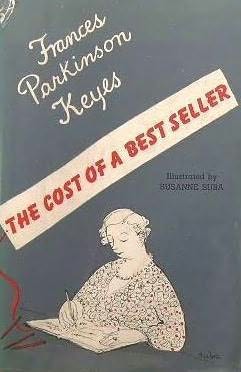 I picked up a £1 dustjacketless copy on a whim from the outdoor clearance area at the Hay Cinema Bookshop in September and started reading it immediately, off and on as a bedside book. Keyes is a twentieth-century author whose dozens of potboilers sold in their millions, but she has been largely forgotten since. Imagine my surprise, then, when her best-known novel, Dinner at Antoine’s (1948), turned up on a recent Book Riot list of New Orleans-themed literature – though mostly for the reference to the still-popular title restaurant.
When Keyes began writing, a mother of three young children in an attic room, it was to supplement her husband’s income, but the work soon became an obsession and allowed her to maintain her independence after her husband, a U.S. senator, died. Not until 17 years after the publication of her first novel did she have her first bestseller. She depicts fame as a double-edged sword: It allowed her to travel in Europe and to Louisiana, where she later made her home, but also made heavy demands on her time, requiring responses to annoying letters, hours spent signing books, and attendance at literary lunches. For someone with back problems, these commitments could be literally as well as figuratively painful.
Keyes has the popular fiction writer’s bitterness about never getting critical recognition. This memoir was pleasant enough, but hasn’t induced me to read any more by her. Readers fond of her work might get something more out of it. For the most part, it doesn’t feel dated, but one detail really got to me: Whenever she needed to ensure that she wouldn’t be disturbed, she would go work in the old slave quarters of her New Orleans mansion. Yipes!
No One Is Too Small to Make a Difference by Greta Thunberg (2019)
[68 pages]
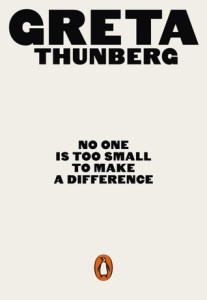 “Our house is on fire. … I want you to panic.” Starting with a speech she gave on a climate march in Stockholm in September 2018 and ending with her address to the UK parliament in April 2019, this punchy pamphlet of rhetoric makes it clear why the teenage Thunberg has rapidly become such an important public figure. She attributes her bluntness to her Asperger’s: the way her mind works, she sees climate breakdown as a simple, black and white issue – either we care or we don’t; either we stop emitting carbon or we don’t; either we find new ways of doing things now, or we stand by and watch it all go to ruin. She calls governments and international bodies to account for their inaction and lack of commitment, and for subsidizing fossil fuels and encouraging consumerism as usual.
Peppering in key statistics and accepted scientific guidelines but staying at a lay level, she calls on the world’s decision-makers to create hope for young people and others who will be most affected by global warming but don’t have a seat at the table. I admire Thunberg’s bravery as well as her words. The only issue with a wee book like this one is that the same points and language recur in multiple speeches, so there is inevitable repetition.
It’s been Nonfiction week here on Novellas in November. #NovNov meets #NonficNov!

Starting Monday: Literature in Translation week, which Cathy is hosting.
10 Favorite Nonfiction Novellas from My Shelves
What do I mean by a nonfiction novella? I’m not claiming a new genre like Truman Capote did for the nonfiction novel (so unless they’re talking about In Cold Blood or something very similar, yes, I can and do judge people who refer to a memoir as a “nonfiction novel”!); I’m referring literally to any works of nonfiction shorter than 200 pages. Many of my selections even come well under 100 pages.
I’m kicking off this nonfiction-focused week of Novellas in November with a rundown of 10 of my favorite short nonfiction works. Maybe you’ll find inspiration by seeing the wide range of subjects covered here: bereavement, social and racial justice, hospitality, cancer, nature, politics, poverty, food and mountaineering. I’d reviewed all but one of them on the blog, half of them as part of Novellas in November in various years.
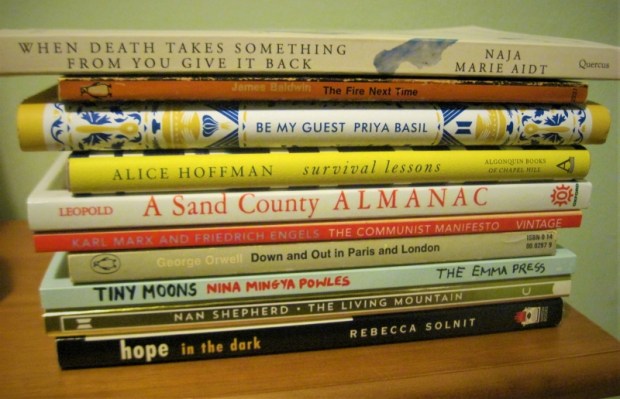
 When Death Takes Something from You Give It Back: Carl’s Book by Naja Marie Aidt [137 pages]: In March 2015 Aidt got word that her son Carl Emil was dead. The 25-year-old jumped out of his fifth-floor Copenhagen window after taking some mushrooms. The text is a collage of fragments: memories, dreams, dictionary definitions, journal entries, and quotations. The playful disregard for chronology and the variety of fonts, typefaces and sizes are a way of circumventing the feeling that grief has made words lose their meaning forever.
 The Fire Next Time by James Baldwin [89 pages]: A hard-hitting book composed of two essays: “My Dungeon Shook,” is a letter addressed to his nephew and namesake on the 100th anniversary of emancipation; and “Down at the Cross: Letter from a Region in My Mind,” which first appeared in the New Yorker and tells of a crisis of faith that hit Baldwin when he was a teenager and started to question to what extent Christianity of all stripes was upholding white privilege. This feels completely relevant, and eminently quotable, nearly 60 years later.
 Be My Guest: Reflections on Food, Community and the Meaning of Generosity by Priya Basil [117 pages]: A thought-provoking essay that reaches into many different topics. Part of an Indian family that has lived in Kenya and England, Basil is used to culinary abundance. However, living in Berlin increased her awareness of the suffering of the Other – hundreds of thousands of refugees have entered the EU to be met with hostility. Yet the Sikh tradition she grew up in teaches kindness to strangers. She asks how we can all cultivate a spirit of generosity.
 Survival Lessons by Alice Hoffman [83 pages]: Hoffman wrote this 15 years after her own experience of breast cancer to encourage anyone going through a crisis. Each chapter title begins with the word “Choose” – a reminder that, even when you can’t choose your circumstances, you can choose your response. This has been beautifully put together with blue-tinted watercolor-effect photographs and an overall yellow and blue theme (along with deckle edge pages – a personal favorite book trait). It’s a sweet little memoir with a self-help note.
 A Sand County Almanac by Aldo Leopold [92 pages]: Few know how much of our current philosophy of wilderness and the human impact on the world is indebted to Aldo Leopold. This was published in 1949, but so much rings true today: how we only appreciate wildlife if we can put an economic value on it, the troubles we get into when we eradicate predators and let prey animals run rampant, and the danger of being disconnected from the land that supplies our very life. And all this he delivers in stunning, incisive prose.
 The Communist Manifesto by Karl Marx and Friedrich Engels [70 pages]: Maybe you, like me, had always assumed this was an impenetrable tome of hundreds of pages? But, as I discovered when I read it on the train to Manchester some years ago, it’s very compact. That’s not to say it’s an easy read; I’ve never been politically or economically minded, so I struggled to follow the argument at times. Mostly what I appreciated was the language. Like The Origin of Species, it has many familiar lines and wonderful metaphors.
 Down and Out in Paris and London by George Orwell [189 pages]: Orwell’s first book, published when he was 30, is an excellent first-hand account of the working and living conditions of the poor in two world cities. He works as a dishwasher and waiter in Paris hotel restaurants for up to 80 hours a week and has to pawn his clothes to scrape together enough money to ward off starvation. Even as he’s conveying the harsh reality of exhaustion and indignity, Orwell takes a Dickensian delight in people and their eccentricities.
 Tiny Moons: A Year of Eating in Shanghai by Nina Mingya Powles [85 pages]: This lovely pamphlet of food-themed essays arose from a blog Powles kept while in Shanghai on a one-year scholarship to learn Mandarin. From one winter to another, she explores the city’s culinary offerings and muses on the ways in which food is bound up with her memories of people and places. This is about how food can help you be at home. I loved how she used the senses – not just taste, but also smell and sight – to recreate important places in her life.
 The Living Mountain by Nan Shepherd [108 pages]: This is something of a lost nature classic. Composed during the later years of World War II but only published in 1977, it’s Shepherd’s tribute to her beloved Cairngorms, a mountain region of Scotland. But it’s not a travel or nature book in the way you might usually think of those genres. It’s a subtle, meditative, even mystical look at the forces of nature, which are majestic but also menacing. Shepherd dwells on the senses, the mountain flora and fauna, and the special quality of time and existence (what we’d today call mindfulness) achieved in a place of natural splendor and solitude.
 Hope in the Dark: Untold Histories, Wild Possibilities by Rebecca Solnit [143 pages]: Solnit believes in the power of purposeful individuals working towards social justice, even in the face of dispiriting evidence (e.g. the largest protests the world had seen didn’t stop the Iraq War). Instead of perfectionism, she advises flexibility and resilience; things could be even worse had we not acted. Her strong and stirring writing is a reminder that, though injustice is always with us, so is everyday heroism.
Keep in touch via Twitter (@bookishbeck / @cathy746books) and Instagram (@bookishbeck / @cathy_746books). We’ll add any of your review links in to our master posts. Feel free to use the terrific feature image Cathy made and don’t forget the hashtag #NovNov.
Any suitably short nonfiction on your shelves?
Three for Novellas in November: Bythell, Carey and Diop
I started my reading for Novellas in November early with these three review books, one nonfiction and two fiction. They have in common the fact that they are published today –although I believe two were released early to beat the lockdown. Don’t worry, though; there are still plenty of ways of getting hold of new books: most publishers and bookshops are still filling orders, or you can use the UK’s newly launched Bookshop.org site and support your local indie.
Seven Kinds of People You Find in Bookshops by Shaun Bythell
[137 pages]
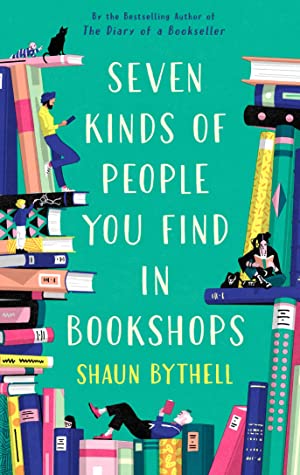 Cheerfully colored and sized to fit into a Christmas stocking, this is a fun follow-up to Bythell’s accounts of life at The Bookshop in Wigtown, The Diary of a Bookseller and Confessions of a Bookseller. Within his seven categories are multiple subcategories, all given tongue-in-cheek Latin names as if naming species. When I saw him chat with Lee Randall at the opening event of the Wigtown Book Festival, he introduced a few, such as the autodidact who knows more than you and will tell you all about their pet subject (the Homo odiosus, or bore). This is not the same, though, as the expert who shares genuinely useful knowledge – of a rare cover version on a crime paperback, for instance (Homo utilis, a helpful person).
There’s also the occultists, the erotica browsers, the local historians, the self-published authors, the bearded pensioners (Senex cum barba) holidaying in their caravans, and the young families – now that he has one of his own, he’s become a bit more tolerant. Setting aside the good-natured complaints, who are his favorite customers? Those who revel in the love of books and don’t quibble about the cost. Generally, these are not antiquarian book experts looking for a bargain, but everyday shoppers who keep a low-key collection of fiction or maybe specifically sci-fi and graphic novels, which fly off the shelves for good prices.
So which type am I? Well, occasionally I’m a farter (Crepans), but you won’t hold that against me, will you? I’d like to think I fit squarely into the normal people category (Homines normales) when I visited Wigtown in April 2018: we went in not knowing what we wanted but ended up purchasing a decent stack and even had a pleasant conversation with the man himself at the till – he’s much less of a curmudgeon in person than in his books. I do recommend this to those who have read and loved his other work.
With thanks to Profile Books for the free copy for review.
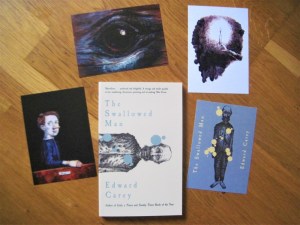
The Swallowed Man by Edward Carey
[160 pages]
 Carey’s historical novel Little was one of my highlights of 2018, so I jumped at the chance to read his new book. Interestingly, this riff on the Pinocchio story, narrated by Geppetto from the belly of a giant shark, originally appeared in Italian to accompany an exhibition hosted by the Fondazione Nazionale Carlo Collodi at the Parco di Pinocchio in Collodi. Geppetto came from a pottery-painting family but turned to wood when creating a little companion for his loneliness, the wooden boy who astounded him by coming to life. Now a son rather than a mere block of wood, Pinocchio sets off for school but never comes home. When he gets word that a troublesome automaton has been thrown into the sea, Geppetto sets out in a dinghy to find his son but is swallowed by the enormous fish that has been seen off the coast.
The picture of this new world-within-a-world is enthralling. Geppetto finds himself inside a swallowed ship, the Danish schooner Maria. Within the vessel is all he needs to occupy himself, at least for now: wood on which to paint the women he has loved; candle wax and hardtack for sculpting figures. Seaweed to cover his bald spot. Squid ink for his pen so he can write this notebook. A crab that lives in his beard. Relics of the captain’s life to intrigue him.
As a narrator, Geppetto is funny and gifted at wordplay (“This tome is my tomb”; “I unobjected him. Can you object to that?”), yet haunted by his decisions. Carey deftly traces Geppetto’s state of mind as he muses on his loss and imprisonment. The Afterword adds a sly pseudohistorical note to the fantasy. There are black-and-white illustrations throughout, as well as photos of the objects described in the text (and, presumably, featured in the exhibition). For me this didn’t live up to Little, but it would be a great introduction to Carey’s work.
With thanks to Gallic Books for the free copy for review.
At Night All Blood Is Black by David Diop
[145 pages; translated from the French by Anna Moschovakis]
 I had no idea that Africans (“Chocolat soldiers”) fought for France in World War I. Diop’s second novel, which has already won several major European prizes, is about two Senegalese brothers-in-arms caught up in trench warfare. Alfa Ndaiye, aged 20, considers Mademba Diop his blood brother or “more-than-brother” (the novel’s French title is “Soul Brother”). From the start we know that Mademba has died. Gravely injured in battle, entrails spilling out, he begged Alfa to end his misery; three times Alfa refused. Having watched his friend die in agony, he knows he did the wrong thing. Slitting the man’s throat would have been the compassionate choice. From now on, Alfa will atone by brutally wreaking Mademba’s method of death on Germans. “The captain’s France needs our savagery, and because we are obedient, myself and the others, we play the savage.” Alas, I thought this bleak exploration of (in)humanity was marred by the repetitive language and unpleasantly sexualized metaphors.
With thanks to Pushkin Press for the proof copy for review.
Do any of these novellas take your fancy?
What November releases can you recommend?
October Releases by Rachel Mann, Sigrid Nunez and Ruth Janette Ruck
A calmer month for new releases after September’s bumper crop. I read a sophisticated mystery set at a theological college, a subtle novel about empathy and being a good friend, and a memoir of raising one of Britain’s first llamas.
The Gospel of Eve by Rachel Mann
Last year I dipped into Mann’s poetry (A Kingdom of Love) and literary criticism/devotional writing (In the Bleak Midwinter); this year I was delighted to be offered an early copy of her debut novel. The press materials are full of comparisons to Donna Tartt’s The Secret History; it’s certainly an apt point of reference for this mystery focusing on clever, Medieval-obsessed students training for the priesthood at a theological college outside Oxford.
 It’s 1997 and Catherine Bolton is part of the first female intake at Littlemore College. She has striven to rid herself of a working-class accent and recently completed her PhD on Chaucer, but feels daunted by her new friends’ intelligence and old-money backgrounds: Ivo went to Eton, Charlie is an heiress, and so on. But Kitty’s most fascinated with Evie, who is bright, privileged and quick with a comeback – everything Kitty wishes she could be.
If you think of ordinands as pious and prudish, you’ll be scandalized by these six. They drink, smoke, curse and make crude jokes. In seminars with Professor Albertus Loewe, they make provocative mention of feminist theory and are tempted by his collection of rare books. Soon sex, death and literature get all mixed up as Kitty realizes that her friends’ devotion to the Medieval period goes as far as replicating dangerous rituals. We know from the first line that one of them ends up dead. But what might it have to do with the apocryphal text of the title?
I didn’t always feel the psychological groundwork was there to understand characters’ motivations, but I still found this to be a beguiling story, well plotted and drenched in elitism and lust. Mann explores a theology that is more about practice, about the body, than belief. Kitty’s retrospective blends regret and nostalgia: “We were the special ones, the shining ones,” and despite how wrong everything went, part of her wouldn’t change it for the world.
My thanks to publicist Hannah Hargrave for the proof copy for review. Published today by Darton, Longman & Todd Ltd.
What Are You Going Through by Sigrid Nunez
A perfect follow-up to The Friend and very similar in some ways: again we have the disparate first-person musings of an unnamed narrator compelled to help a friend. In Nunez’s previous novel, the protagonist has to care for the dog of a man who recently killed himself; here she is called upon to help a terminally ill friend commit suicide. The novel opens in September 2017 in the unfamiliar town she’s come to for her friend’s cancer treatments. While there she goes to a talk by an older male author who believes human civilization is finished and people shouldn’t have children anymore. This prophet of doom is her ex.
 His pessimism is echoed by the dying friend when she relapses. The narrator agrees to accompany her to a rental house where she will take a drug to die at a time of her choosing. “Lucy and Ethel Do Euthanasia,” the ex jokes. And there is a sort of slapstick joy early in this morbid adventure, with mishaps like forgetting the pills and flooding the bathroom.
As in Rachel Cusk’s Outline trilogy, the voice is not solely or even primarily the narrator’s but Other: her friend speaking about her happy childhood and her estrangement from her daughter; a woman met at the gym; a paranoid neighbor; a recent short story; a documentary film. I felt there was too much recounting of a thriller plot, but in general this approach, paired with the absence of speech marks, reflects how the art we consume and the people we encounter become part of our own story. Curiosity about other lives fuels empathy.
With the wry energy of Jenny Offill’s Weather, this is a quiet novel that sneaks up to seize you by the heartstrings. “Women’s stories are often sad stories,” Nunez writes, but “no matter how sad, a beautifully told story lifts you up.” Like The Friend, which also ends just before The End, this presents love and literature as ways to bear “witness to the human condition.”
With thanks to Virago for the proof copy for review.
Along Came a Llama: Tales from a Welsh Hill Farm by Ruth Janette Ruck
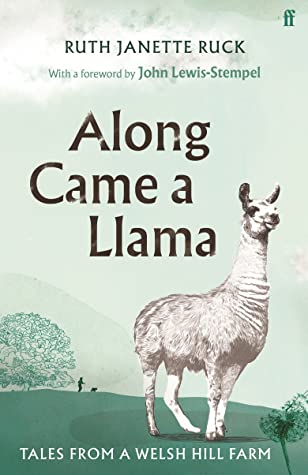 Originally published in 1978 (now reissued with a foreword by John Lewis-Stempel), this is an enjoyably animal-stuffed memoir reminiscent of Gerald Durrell and especially Doreen Tovey. Ruck (d. 2006) and her family – which at times included her ill sister, her elderly mother and/or her sister-in-law – lived on a remote farm in the hills of North Wales. On a visit to Knaresborough Zoo, Ruck was taken with the llamas and fancied buying one to add to their menagerie of farm animals. It was as simple as asking the zoo director and then taking the young female back to Wales in a pony box. At that time, hardly anyone in the UK knew anything about llamas or the other camelids. No insurance company would cover their llama in transit; no one had specialist knowledge on feeding or breeding. Ruck had to do things the old-fashioned way, finding books and specialist scientific papers.
But they mostly learned about Ñusta (the Quechua word for princess) by spending time with her. At holidays they discovered her love of chocolate Easter eggs and cherry brandy. The cud-chewing creature sometimes gave clues to what else she’d been eating, as when she regurgitated plum stones. She didn’t particularly like being touched or trailed by an orphaned lamb, but followed Ruck around dutifully and would sit sociably in the living room. Life with animals often involves mild disasters: Ñusta jumps in a pool and locks Ruck’s husband in the loo, and the truck breaks down on the way to mate her with the male at Chester Zoo.

A vintage cover I found on Goodreads.
From spitting to shearing, there was a lot to get used to, but this account of the first three years of llama ownership emphasizes the delights of animal companionship. There were hardships in Ruck’s life, including multiple sclerosis and her sister’s death, but into the “austere but soul-rewarding life of a hill firm … like a catalyst or a touch of magic, the llama came along.” I was into llamas and alpacas well before the rest of the world – in high school I often visited a local llama farm, and I led a llama in a parade and an alpaca in a nativity play – so that was my primary reason for requesting this, but it’s just right for any animal lover.
With thanks to Faber & Faber for the free copy for review.
What recent releases can you recommend?
Nonfiction Catch-Up: Long-Term Thinking, Finding a Home in Wales, Eels
Not long now until Nonfiction November. I’m highlighting three nonfiction books I’ve read over the last few months; any of them would be well worth your time if you’re still looking for some new books to add to the pile. I’ve got a practical introduction to the philosophy and politics of long-term/intergenerational planning, a group biography about the two gay couples who inhabited a house in the Welsh hills in turn, and a wide-ranging work on eels.
The Good Ancestor: How to Think Long Term in a Short-Term World by Roman Krznaric
 I saw Krznaric introduce this via a digital Hay Festival session back in May. He is an excellent speaker and did an admirable job of conveying all the major ideas from his recent work within a half-hour presentation. Unfortunately, this meant that reading the book itself didn’t add much for me, although it goes deeper into his propositions and is illustrated with unique, helpful figures.
Without repeating from my write-up of the Festival talk, then, I’ll add in points and quotes that struck me:
- “some of the fundamental ways we organise society, from nation states and representative democracy to consumer culture and capitalism itself, are no longer appropriate for the age we live in.”
- 100 years as the minimum timeframe to think about (i.e., a long human life) – “taking us beyond the ego boundary of our own mortality so we begin to imagine futures that we can influence yet not participate in ourselves.”
- “The phones in our pockets have become the new factory clocks, capturing time that was once our own and offering in exchange a continuous electronic now full of infotainment, advertising and fake news. The distraction industry works by cleverly tapping into our ancient mammalian brains: our ears prick up at the ping of an arriving message … Facebook is Pavlov, and we’re the dogs.”
- The Intergenerational Solidarity Index as a way of assessing governments’ future preparation: long-term democracies tend to perform better, though they aren’t perfect; Iceland scores the highest of all, followed by Sweden.
- Further discussion of Doughnut Economics (a model developed by Krznaric’s wife, Kate Raworth), which pictures the sweet spot humans need to live in between a social foundation and the ecological ceiling; failures lead to overshoot or shortfall.
- Four fundamental barriers to change: outdated institutional designs (our basic political systems), the power of vested interests (fossil fuel companies, Amazon, et al.), current insecurity (refugees), and “insufficient sense of crisis” – we’re like frogs in a gradually boiling pot, he says, and need to be jolted out of our complacency.
This is geared more towards economics and politics than much of what I usually read, yet fits in well with other radical visions of the future I’ve engaged with this year (some of them more environmentalist in approach), including Footprints by David Farrier, The Future Earth by Eric Holthaus, and Notes from an Apocalypse by Mark O’Connell.
With thanks to WH Allen for the free copy for review.
On the Red Hill: Where Four Lives Fell into Place by Mike Parker (2019)
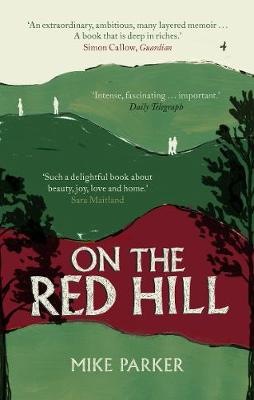 I ordered a copy from Blackwell’s after this made it through to the Wainwright Prize shortlist – it went on to be named the runner-up in the UK nature writing category. It’s primarily a memoir/group biography about Parker, his partner Peredur, and George and Reg, the couple who previously inhabited their home of Rhiw Goch in the Welsh Hills and left it to the younger pair in their wills. In structuring the book into four parts, each associated with an element, a season, a direction of the compass and a main character, Parker focuses on the rhythms of the natural year. The subtitle emphasizes the role Rhiw Goch played, providing all four with a sense of belonging in a rural setting not traditionally welcoming to homosexuals.
Were George and Reg the ‘only gays in the village,’ as the Little Britain sketch has it? Impossible to say, but when they had Powys’ first same-sex civil partnership ceremony in February 2006, they’d been together nearly 60 years. By the time Parker and his partner took over the former guesthouse, gay partnerships were more accepted. In delving back into his friends’ past, then, he conjures up another time: George fought in the Second World War, and for the first 18 years he was with Reg their relationship was technically illegal. But they never rubbed it in any faces, preferring to live quietly, traveling on the Continent and hosting guests at their series of Welsh B&Bs; their politics was conservative, and they were admired locally for their cooking and hospitality (Reg) and endurance cycling (George).
There are lots of in-text black-and-white photographs of Reg and George over the years and of Rhiw Goch through the seasons. Using captioned photos, journal entries, letters and other documents, Parker gives a clear impression of his late friends’ characters. There is something pitiable about both: George resisting ageing with nude weightlifting well into his sixties; Reg still essentially ashamed of his sexuality as well as his dyslexia. I felt I got to know the younger protagonists less well, but that may simply be because their stories are ongoing. It’s remarkable how Welsh Parker now seems: though he grew up in the English Midlands, he now speaks decent Welsh and has even stood for election for the Plaid Cymru party.
It’s rare to come across something in the life writing field that feels genuinely sui generis. There were moments when my attention waned (e.g., George’s feuds with the neighbors), but so strong is the overall sense of time, place and personality that this is a book to prize.
The Gospel of the Eels: A Father, a Son and the World’s Most Enigmatic Fish by Patrik Svensson
[Translated from the Swedish by Agnes Broomé]
“When it comes to eels, an otherwise knowledgeable humanity has always been forced to rely on faith to some extent.”
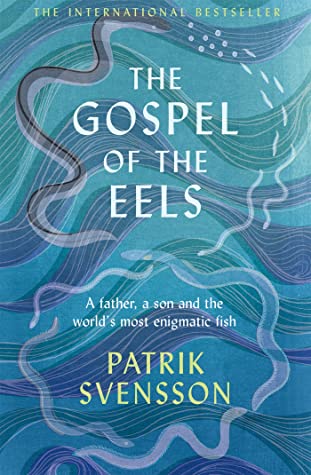 We know the basic facts of the European eel’s life cycle: born in the Sargasso Sea, it starts off as a larva and then passes through three stages that are almost like separate identities: glass eel, yellow eel, silver eel. After decades underwater, it makes its way back to the Sargasso to spawn and die. Yet so much about the eel remains a mystery: why the Sargasso? What do the creatures do for all the time in between? Eel reproduction still has not been observed, despite scientists’ best efforts. Among the famous names who have researched eels are Aristotle, Sigmund Freud and Rachel Carson, all of whom Svensson discusses at some length. He even suggests that, for Freud, the eel was a suitable early metaphor for the unconscious – “an initial insight into how deeply some truths are hidden.”
But there is a more personal reason for Svensson’s fascination with eels. As a boy he joined his father in eel fishing on Swedish summer nights. It was their only shared hobby; the only thing they ever talked about. His father was as much a mystery to him as eels are to science. And it was only as his father was dying of a cancer caused by his long road-paving career that Svensson came to understand secrets he’d kept hidden for decades.
Chapters alternate between this family story and the story of the eels. The book explores eels’ place in culture (e.g., Günter Grass’ The Tin Drum) and their critically endangered status due to factors such as a herpes virus, nematode infection, pollution, overfishing and climate change. A prior curiosity about marine life would be helpful to keep you going through this, but the prose is lovely enough to draw in even those with a milder interest in nature writing.
With thanks to Picador for the free copy for review.
One of my recent borrows from the public library’s children’s section was the picture book Think of an Eel by Karen Wallace. Her unrhymed, alliterative poetry and the paintings by Mike Bostock beautifully illustrate the eel’s life cycle and journey.

You simply must hear folk singer Kitty Macfarlane’s gorgeous song “Glass Eel” – literally about eels, it’s also concerned with migration, borders and mystery.
Would you be interested in reading one or more of these?
Signs of Life: To the Ends of the Earth with a Doctor by Stephen Fabes
Stephen Fabes is an emergency room doctor at St Thomas’s Hospital, London. Not exciting enough for you? Well, he also spent six years of the past decade cycling six continents (so, all bar Antarctica). His statistics are beyond impressive: 53,568 miles, 102 international borders, 1000+ nights of free camping, 26 bicycle tires, and 23 journals filled with his experiences. A warm-up was cycling the length of Chile with his brother at age 19. After medical school in Liverpool and starting his career in London, he found himself restless and again longing for adventure. The round-the-world cycle he planned fell into four sections: London to Cape Town, the West Coast of the Americas, Melbourne to Mumbai, and Hong Kong to home.
Signs of Life is a warm-hearted and laugh-out-loud funny account of Fabes’ travels, achieving a spot-on balance between major world events, the everyday discomforts of long-distance cycling and rough camping, and his humanitarian volunteering. He is a witness to the Occupy movement in Hong Kong, the aftermath of drought and tribal conflict in Africa, and the refugee crisis via the “Jungle” migrant camp in Calais. The desperate situations he saw while putting his medical expertise to good use in short bursts – e.g., at a floating clinic on a Cambodian lake, a malaria research center in Thailand, a leper hospital in Nepal, and a mental health rehabilitation clinic in Mumbai – put into perspective more minor annoyances like fire ants in El Salvador, Indonesian traffic, extreme cold in Mongolia, and camel spiders.

Wherever he went, Fabes met with kindness from strangers, even those who started off seeming hostile – having pitched his tent by a derelict cabin in Peru, he was alarmed to awake to a man pointing a gun at him, but the illicit gold miner soon determined he was harmless and offered him some soup. (Police officers and border guards were perhaps a bit less hospitable.) He also had occasional companions along the route, including a former housemate and a one-time girlfriend. Even limited shared language was enough to form common ground with a stranger-turned-fellow cyclist for a week or so. We get surprising glimpses of how Anglo-American culture permeates the developing world: For some reason, in the ‒Stans everyone’s point of reference when he introduced himself was Steven Seagal.
At nearly 400 pages, the memoir is on the long side, though I can see that it must have felt impossible to condense six years of adventures any further. I was less interested in the potted histories of other famous cyclists’ travels and would have appreciated a clearer sense to the passing of time, perhaps in the form of a date stamp at the head of each chapter. One of my favorite aspects of the book, though, was the use of medical metaphors to link geography to his experiences. Most chapters are titled after health vocabulary; for instance, in “Membranes” he ponders whether country borders are more like scars or cell membranes.
Fabes emphasizes, in a final chapter on the state of the West upon his return in early 2016, that, in all the most important ways, people are the same the world over. Whether in the UK or Southeast Asia, he sees poverty as the major factor in illness, perpetuating the inequality of access to adequate healthcare. Curiosity and empathy are his guides as he approaches each patient’s health as a story. Reflecting on the pandemic, which hit just as he was finalizing the manuscript, he prescribes global cooperation and innovation for this time of uncertainty.
We’re all armchair travelers this year, but this book is especially for you if you enjoy Bill Bryson’s sense of humor, think Dervla Murphy was a badass in Full Tilt, and enjoyed War Doctor by David Nott and/or The Crossway by Guy Stagg. It’s one of my top few predictions for next year’s Wellcome Book Prize – fingers crossed it will go ahead after the 2020 hiatus.
My rating:
With thanks to Dr Fabes and Profile Books for the free copy for review.
September Releases: Gyasi, McKay, Sheldrake, Tremain, Woolfson
September is always a big month in the publishing world, but even more so this year because of all the titles delayed from the spring and summer – apparently 600 books were published in the first week of September in the UK alone.
Still, I only ended up with my usual, manageable five new releases (with a few more on the way from the library). I read a beautiful novel about addiction and religion in contemporary America, speculative fiction about communication with wildlife in mid-pandemic (!) Australia, everything you ever wanted to know about fungi, historical fiction about outsiders in England and Borneo, and a study of our broken relationship with other animals.
Two of these are from my most anticipated list for the second half of 2020. Four of the five can be linked by the tenet that humans are only one species among many others necessary to life on this Earth, and not in some way above and beyond.
Transcendent Kingdom by Yaa Gyasi
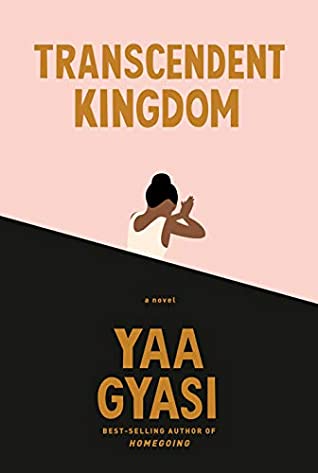 This follow-up to Gyasi’s dazzling, centuries-spanning linked story collection, Homegoing, won’t be out in the UK until March 2021, but I couldn’t resist reading an e-copy of the American edition (Knopf) from Edelweiss. It’s altogether a more subdued and subtle book, but its treatment of themes of addiction, grief, racism and religion is so spot on that it packs a punch. Gifty is a PhD student at Stanford, researching pleasure and reward circuits in the mouse brain. She gets mice hooked on a sugary drink and then performs experiments to see if she can turn off their compulsion to keep pressing a lever for more. Sometimes when they press the lever they get an electric shock. Certain mice give up; others never will. Why?
People who know Gifty well assume she chose her field because of a personal tragedy. When she was 10, her 16-year-old brother, Nana, a high school basketball star in this Ghanaian-American family’s Alabama town, died of an opiate overdose. He’d gotten addicted to prescription drugs after a sports injury. At one level, Gifty acknowledges she is trying to atone for her brother’s death, but she won’t see it in those terms. An intensely private person, she shoulders almost impossible burdens of grief and responsibility for her mother, who has plunged into depression and, when she comes to live with Gifty, spends all her time in bed.
The most compelling aspect of the novel for me was Gifty’s attitude towards the religion of her childhood. Though they were the only black family at their Pentecostal church, she was a model believer, writing prayers in her journal, memorizing scriptures, and never doubting that everything happens for a reason. Nana’s death shattered it all. Though she now looks to science for answers, she misses the certainty she once had: that she was saved, that humans are special, that someone was looking out for her and her family, that it all mattered. I highlighted dozens of passages, but it’s possible the book won’t mean quite as much to readers for whom there’s no personal resonance. The complex mother–daughter relationship is an asset, and musings on love and risk are tenderly expressed. I wanted a more climactic conclusion to take this into 5-star territory, but I’ve still added it to my Best of 2020 shelf.
Favorite lines:
the species Homo sapiens, the most complex animal, [is] the only animal who believed he had transcended his Kingdom, as one of my high school biology teachers used to say.
At times, my life now feels so at odds with the religious teachings of my childhood that I wonder what the little girl I once was would think of the woman I’ve become … I am looking for new names for old feelings. My soul is still my soul, even if I rarely call it that.
the more I do this work the more I believe in a kind of holiness in our connection to everything on Earth. Holy is the mouse.
My rating:
I read an advanced e-copy via Edelweiss.
The Animals in That Country by Laura Jean McKay
 McKay has a PhD in literary animal studies and serves as an animal expert and presenter on Australia’s ABC radio show Animal Sound Safari. Pair her academic background with the fact that this shares a title with a Margaret Atwood poetry collection and you’ll have some idea of what to expect here: mysterious but mostly believable speculative fiction that hinges on human communication with animals.
Jean Bennett isn’t your average grandma: a wise-cracking alcoholic, she drives the tourist train through the Australian wildlife park her daughter-in-law manages but wishes she could be a fully fledged ranger. Her ex-husband, Graham, left her and went down south, and eventually their only son Lee did the same. Now all Jean has left is Kim, her six-year-old granddaughter. Jean entertains Kim by imagining voices for the park’s animals. This no longer seems like a game, though, when news filters through of the “zooflu,” which has hit epidemic levels and has as a main symptom the ability to understand what animals say.
When Kim is kidnapped, Jean steals a camper van and takes Sue the dingo along to help her find her granddaughter. “There’s a new normal now,” a bus driver tells her. “And around here, not wearing a mask means you’ve gone animal. I’d put on my protective if I was you. Put that mutt in a cage.” It was uncanny reading this in the midst of a pandemic, but the specifics of McKay’s novel are hard to grasp. The animal language isn’t audible, necessarily, but a combination of smells, noises and body language. For a long time, they seem like pure nonsense, but gradually they resemble a sort of rough poetry. Here’s one example from Sue:
My front end
takes the food
quality.
Muzzle
for the Queen
(Yesterday).
(Sue usually calls Jean “Queen” or “Mother,” showing that she respects her authority, and “Yesterday” is frequently used to suggest a primitive sense of the past or of an older person.)
As entertaining a protagonist as Jean is, I lost interest in her road trip. If you focus on the journey into the wilderness and don’t mind a sudden ending, you may find this a worthwhile heir to Hollow Kingdom by Kira Jane Buxton and The Road by Cormac McCarthy.
My rating:
I read a proof copy for a Nudge review, but it’s never shown up on their website.
Entangled Life: How Fungi Make Our Worlds, Change Our Minds, and Shape Our Futures by Merlin Sheldrake
 I first heard about Sheldrake through Robert Macfarlane’s Underland. He struck me as a mad genius – an impression that was only strengthened by reading his detailed, enthusiastic book about fungi. Sheldrake researches fungal life in the tropical forests of Panama, accompanies truffle hunters in Italy, takes part in a clinical study on the effects of LSD (derived from a fungus), observes lichens off the coast of British Columbia, and attends a conference in Oregon on Radical Mycology. But more than a travel memoir, this is a work of science – there are over 100 pages devoted to notes, bibliography and index.
Basic information you’ll soon learn: mushrooms are only the fruiting bodies of fungi; under the ground is the material bulk, the mycelium, a sprawling network of hyphae. In what’s sometimes called the “Wood Wide Web,” fungal networks link the trees in a forest, and join up with plants, such as in lichens. “I feel a … sense of vertigo when I think about the complexity of mycorrhizal relationships – kilometers of entangled life – jostling beneath my feet,” Sheldrake confesses. He gives examples of fungi navigating and solving problems – what of our concept of intelligence if a creature without a brain can do such things?
Fungi are very adaptable to extreme conditions. Research is underway to grow edible mushrooms on some of our most troublesome waste, such as used diapers (nappies) and cigarette butts. And, of course, for millennia we’ve relied on certain fungi – yeasts – to create products like bread and beer. Sheldrake is a very hands-on writer: When he wants to know something, he does it, whether that’s scrumping Isaac Newton’s apples in Cambridge and fermenting the juice into cider at home or growing mushrooms on a copy of this very book.
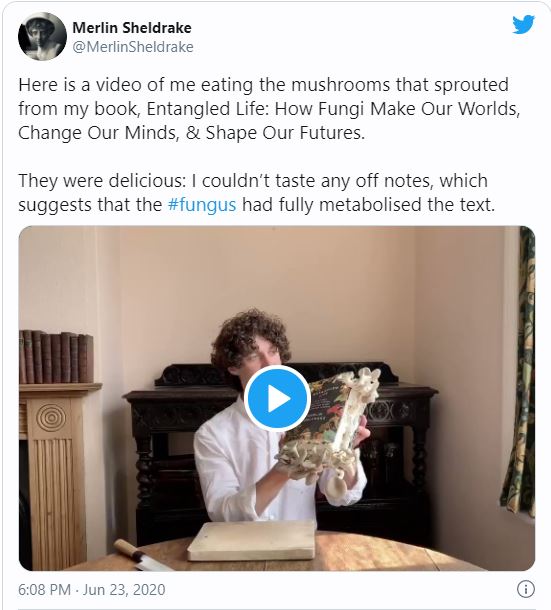
During the month I was reading this, I felt like I kept coming across references to fungi. (I even had a patch of ringworm!)
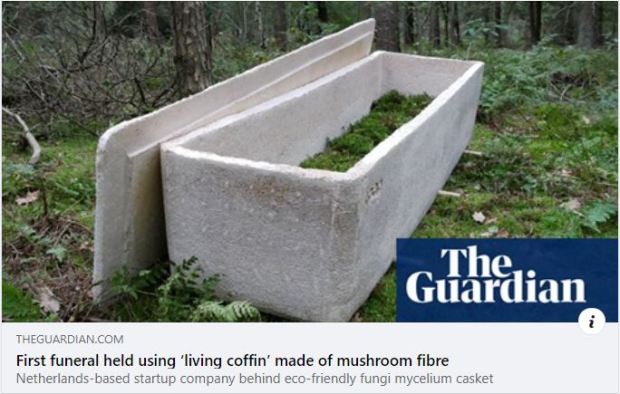
It’s a perspective-altering text, but one that requires solid concentration. I’ll confess that at times it went over my head and I wished for a glossary and diagrams. A greater than average interest in biology and/or botany would thus be a boon to a potential reader. But if you can keep up, the book will elicit many a cry of “wow!” and “what?!” I kept launching “did you know?” questions at my husband, especially about the zombie fungi that parasitize insects. What a strange and wonderful world.
Favorite lines: “Paying more attention to animals than plants contributes to humans’ plant-blindness. Paying more attention to plants than fungi makes us fungus-blind.”
My rating:
My thanks to Bodley Head for the free copy for review.
Islands of Mercy by Rose Tremain
 I read this back in June to prepare for writing a profile of Tremain for a forthcoming issue of Bookmarks magazine. Here’s the summary I wrote: “In Bath, England in 1865, 24-year-old nurse Jane Adeane is nicknamed ‘The Angel of the Baths’ for her healing touch. If she marries Dr. Valentine Ross, a colleague of her surgeon father, she can earn respectability – but will have to hide her love for Julietta, a married woman. Meanwhile, Dr. Ross’s brother, Edmund, a naturalist following in the footsteps of Alfred Russel Wallace, has journeyed to Borneo. Ill with malaria, he is taken in by British eccentric Sir Ralph Savage, a lover of native men and benevolent local rajah who funds infrastructure projects like a paved road and a hospital. Exiled or inwardly tortured for loving the wrong people, Tremain’s characters search for moments of wonder and comfort – whether those come in a primitive hut in the Malay Archipelago or in a cozy tearoom in Bath.”
It’s a slightly odd title, but tells you a lot about what Tremain is doing in this 14th novel. Often at the mercy of forces internal and external, her outcast characters look for places where they can find rest and refuge after a time of suffering. Will they, in turn, extend mercy? The split perspective and the focus on people who have to hide their sexuality are most similar to Sacred Country. The Victorian tip of the hat is mostly directed, I think, to George Eliot; of recent work, I was reminded of The Doll Factory and The Essex Serpent. I especially liked Jane’s painter aunt, Emmeline, and Clorinda, the Irish woman whose opening of a tearoom sets the plot going. The settings are surprising and vivid, and if Tremain doesn’t quite bring them and their story lines together seamlessly, she is still to be applauded for her ambition. This is probably my joint favorite of her novels that I’ve read so far, with The Road Home.
Favorite lines:
We must be unconventional in our joys and find them wherever we can.
life, so often so cruel in the way it thrust the human soul into prisons from which there seemed to be no escape, could sometimes place it athwart an open door.
My rating:
I read an advanced e-copy via NetGalley.
Between Light and Storm: How We Live with Other Species by Esther Woolfson
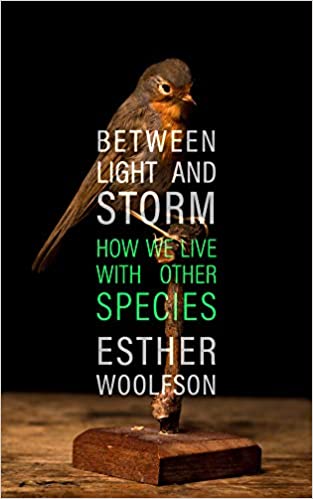 If you’ve read Woolfson’s Corvus, you’ve already met Chicken, an orphaned rook she raised. For over 31 years, Chicken was a constant presence in her home. The recently departed bird is the dedicatee of her new book, feted as “Colleague, companion, friend.” (No mere pet.) Relationships with these creatures with whom she shared her life led her to think differently about how we as humans conceive of the animal world in general. “If I had ever believed humans to be the only ones to live profound and interconnected lives, I couldn’t any more. … If we’re the gods now, shouldn’t we be better than we are?” From her introduction, it’s clear that her sympathy toward the more-than-human world extends even to spiders, and her language throughout – using words like “who” and “his” in reference to animals, rather than “that” or “its” – reinforces the view that all species are equally valuable.
Or, at least, should be. But our attitudes are fundamentally distorted, Woolfson believes, and have been since the days of Aristotle (whose Ladder of Nature is an origin of the ideas that nature is there for man to use) and the Old Testament writers (one of the two creation accounts in Genesis established the idea of “dominion”). From cave paintings to animal sacrifice, intensive farming to fur coats, taxidermy to whaling, she surveys what others have thought and said about how animals are, or should be, perceived. There was more of an academic tone to this book than I expected, and in early chapters I found too much overlap with other works I’ve read about deep time (Time Song, Surfacing, Underland again!).
I most appreciated the fragments of nature writing and memoir and would have liked more in the way of personal reflection. Woolfson’s perspective – as a Jewish woman in Scotland – is quite interesting. She is clearly troubled by how humans exploit animals, but mostly recounts others’ reasoning rather than coming to conclusions of her own. (Though there is a brilliant takedown of the gender politics of Watership Down.) It’s a book that demands more time and attention than I was able to give just now. As I only skimmed it, I’m going to refrain from assigning a rating and will pass this on to my husband and return to it one day. [I do wish the title, on its own (subtitle aside), was more indicative of the contents.]
My thanks to Granta for the free copy for review.
 Bookish Beck = Rebecca Foster. American transplant to England. Freelance proofreader and book reviewer.
 Bookish Beck