The 2026 Releases I’ve Read So Far
I happen to have read a number of pre-release books, generally for paid reviews for Foreword and Shelf Awareness. (I already previewed six upcoming novellas here.) Most of my reviews haven’t been published yet, so I’ll just give brief excerpts and ratings here to pique the interest. I link to the few that have been published already, then list the 2026 books I’m currently reading. Soon I’ll follow up with a list of my Most Anticipated titles.


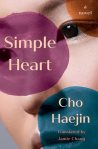 Simple Heart by Cho Haejin (trans. from Korean by Jamie Chang) [Other Press, Feb. 3]: A transnational adoptee returns to Korea to investigate her roots through a documentary film. A poignant novel that explores questions of abandonment and belonging through stories of motherhood.
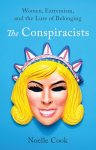 The Conspiracists: Women, Extremism, and the Lure of Belonging by Noelle Cook [Broadleaf Books, Jan. 6]: An in-depth, empathetic study of “conspirituality” (a philosophy that blends conspiracy theories and New Age beliefs), filtered through the outlook of two women involved in storming the Capitol on January 6, 2021.

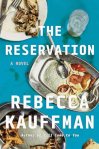 The Reservation by Rebecca Kauffman [Counterpoint, Feb. 24]: The staff members of a fine-dining restaurant each have a moment in the spotlight during the investigation of a theft. Linked short stories depict character interactions and backstories with aplomb. Big-hearted; for J. Ryan Stradal fans.
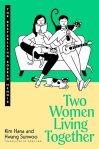


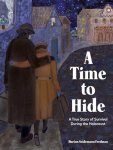
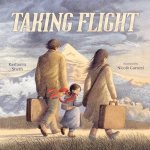 Taking Flight by Kashmira Sheth (illus. Nicolo Carozzi) [Dial Press, April 21]: A touching story of the journeys of three refugee children who might be from Tibet, Syria and Ukraine. The drawing style reminded me of Chris Van Allsburg’s. This left a tear in my eye.

Currently reading:
(Blurb excerpts from Goodreads; all are e-copies apart from Evensong)
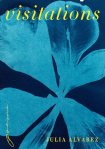 Visitations: Poems by Julia Alvarez [Knopf, April 7]: “Alvarez traces her life [via] memories of her childhood in the Dominican Republic … and the sisters who forged her, her move to America …, the search for mental health and beauty, redemption, and success.”
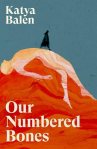 Our Numbered Bones by Katya Balen [Canongate, 12 Feb. / HarperVia, Feb. 17]: Her “adult debut [is] about a grieving author who heads to rural England for a writer’s retreat, only to stumble upon an incredible historical find” – a bog body!
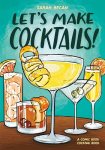 Let’s Make Cocktails!: A Comic Book Cocktail Book by Sarah Becan [Ten Speed Press, April 7]: “With vivid, easy-to-follow graphics, Becan guides readers through basic techniques such as shaking, stirring, muddling, and more. With all recipes organized by spirit for easy access, readers will delight in the panelized step-by-step comic instructions.”
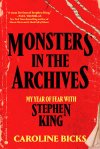 Monsters in the Archives: My Year of Fear with Stephen King by Caroline Bicks [Hogarth/Hodder & Stoughton, April 21]: “A fascinating, first of its kind exploration of Stephen King and his … iconic early books, based on … research and interviews with King … conducted by the first scholar … given … access to his private archives.”
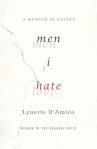 Men I Hate: A Memoir in Essays by Lynette D’Amico [Mad Creek Books, Feb. 17]: “Can a lesbian who loves a trans man still call herself a lesbian? As D’Amico tries to engage more deeply with the man she is married to, she looks at all the men—historical figures, politicians, men in her family—in search of clear dividing lines”.
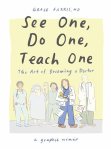 See One, Do One, Teach One: The Art of Becoming a Doctor: A Graphic Memoir by Grace Farris [W. W. Norton & Company, March 24]: “In her graphic memoir debut, Grace looks back on her journey through medical school and residency.”
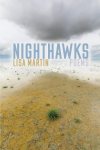 Nighthawks by Lisa Martin [University of Alberta Press, April 2]: “These poems parse aspects of human embodiment—emotion, relationship, mortality—and reflect on how to live through moments of intense personal and political upheaval.”
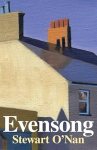 Evensong by Stewart O’Nan [published in USA in November 2025; Grove Press UK, 1 Jan.]: “An intimate, moving novel that follows The Humpty Dumpty Club, a group of women of a certain age who band together to help one another and their circle of friends in Pittsburgh.”
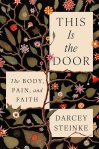 This Is the Door: The Body, Pain, and Faith by Darcey Steinke [HarperOne, Feb. 24]: “In chapters that trace the body—The Spine, The Heart, The Knees, and more—[Steinke] introduces sufferers to new and ancient understandings of pain through history, philosophy, religion, pop culture, and reported human experience.”
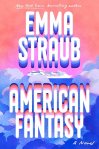 American Fantasy by Emma Straub [Riverhead, April 7 / Michael Joseph (Penguin), 14 May]: “When the American Fantasy cruise ship sets sail for a four-day themed voyage, aboard are all five members of a famous 1990s boyband, and three thousand screaming women who have worshipped them for thirty years.”
Additional pre-release review books on my shelf:
 Shooting Up by Jonathan Tepper [Constable, 19 Feb.]: “Born into a family of American missionaries driven by unwavering faith … Jonathan’s home became a sanctuary for society’s most broken … AIDS hit Spain a few years after it exploded in New York and, like an invisible plague, … claimed countless lives – including those … in the family rehabilitation centre.”
 Elizabeth and Ruth by Livi Michael [Salt Publishing, 9 Feb.]: “Based on the real correspondence between Elizabeth Gaskell and Charles Dickens … [Gaskell] visits a young Irish prostitute in Manchester’s New Bailey prison. … [A] story of hypocrisy and suppression, and how Elizabeth navigates the … prejudice of the day to help the young girl”.
Will you look out for one or more of these?
Any other 2026 reads you can recommend?
Best Books of 2025
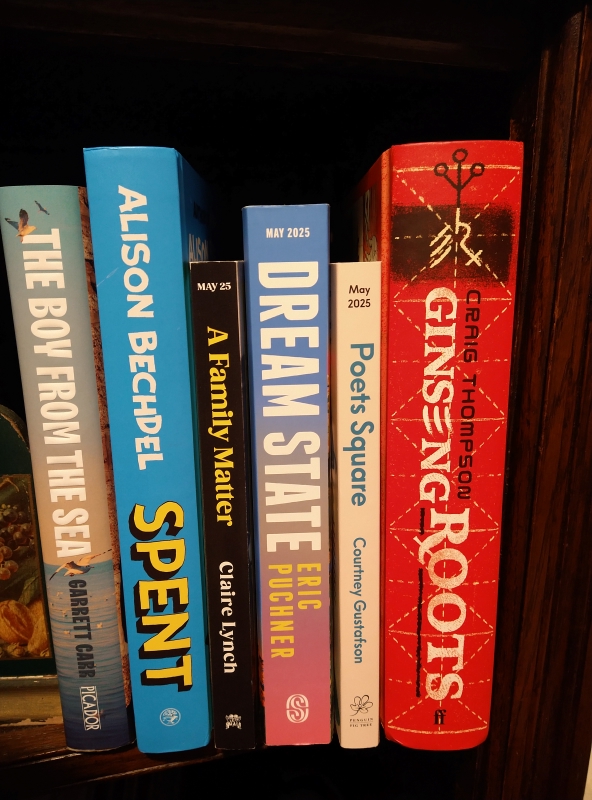
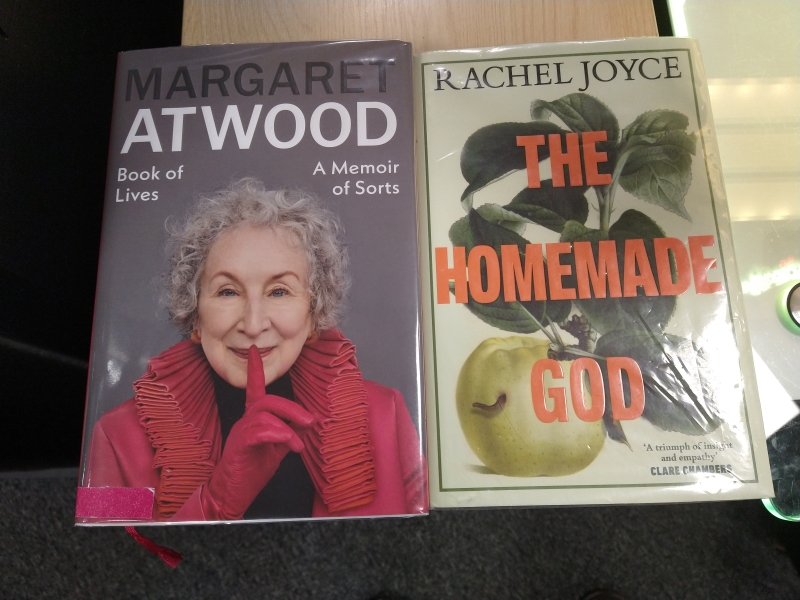
Without further ado, I present my 15 favourite releases from 2025. (With the 15 runners-up I chose yesterday, these represent about the top 9.5% of my current-year reading.) Pictured below are the ones I read in print; all the others were e-copies or library books I couldn’t get my hands on for a photo shoot. Links are to my full reviews where available.
Fiction
 Spent: A Comic Novel by Alison Bechdel: Alison has writer’s block and is consumed with anxiety about the state of the world. “Who can draw when the world is burning?” Then she has an idea for a book – or a reality TV series – called $UM to wean people off of capitalism. That creative journey is mirrored here. Through Alison’s ageing hippie friends and their kids, Bechdel showcases alternative ways of living. Even the throwaway phrases are hilarious. It’s a gleeful and zeitgeist-y satire, yet draws to a touching close. So great, I read it twice.
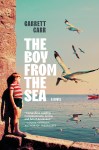 The Boy from the Sea by Garrett Carr: I was entranced by this story of an Irish family in the 1970s–80s: Ambrose, a fisherman left behind by technology; his wife Christine, walked all over by her belligerent father and sister; their son Declan, a budding foodie; and the title character, Brendan, a foundling they adopt and raise. Narrated by a chorus of village voices, this debut has the heart of Claire Keegan and the humour of Paul Murray. It reimagines biblical narratives, too: Cain and Abel, Jacob and Esau (brotherly rivalry!); Job and more.
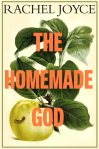 The Homemade God by Rachel Joyce: The story of four siblings initially drawn together (in Italy) and then dramatically blown apart by their father’s remarriage and death. Despite weighty themes including alcoholism and depression, there is an overall lightness of tone and style that made this a pleasure to read. Joyce has really upped her game: it’s more expansive, elegant and empathetic than her previous seven books. You can tell she got her start in theatre, too: she’s so good at scenes, dialogue, and moving groups of people around.
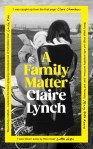 A Family Matter by Claire Lynch: In her research into UK divorce cases in the 1980s, Lynch learned that 90% of lesbian mothers lost custody of their children. Her earnest, delicate debut novel, which bounces between 2022 and 1982, imagines such a situation through close portraits of three family members. Maggie knew only that her mother, Dawn, abandoned her when she was little. Lynch’s compassion is equal for all three characters. This confident, tender story of changing mores and steadfast love is the new Carol for our times.
 Are You Happy? by Lori Ostlund: Nine short fictions form a stunning investigation into how violence and family dysfunction reverberate. “The Peeping Toms” and “The Stalker” are a knockout pair featuring Albuquerque lesbian couples under threat by male acquaintances. Characters are haunted by loss and grapple with moral dilemmas. Each story has the complexity and emotional depth of a novel. Freedom versus safety for queer people is a resonant theme in an engrossing collection ideal for Alice Munro and Edward St. Aubyn fans.
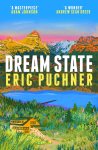 Dream State by Eric Puchner: It starts as a glistening romantic comedy about t Charlie and Cece’s chaotic wedding at a Montana lake house in summer 2004. First half the wedding party falls ill with norovirus, then the best man, Garrett, falls in love with the bride. The rest examines the fallout of this uneasy love triangle as it stretches towards 2050 and imagines a Western USA smothered in smoke from near-constant forest fires. Still, there are funny set-pieces and warm family interactions. Jonathan Franzen meets Maggie Shipstead.
 Palaver by Bryan Washington: Washington’s emotionally complex third novel explores the strained bond between a mother and her queer son – and their support systems of friends and lovers – when she visits him in Tokyo. The low-key plot builds through memories and interactions: the son’s with his students or hook-ups; the mother’s with restaurateurs as she gains confidence exploring Japan. Through words and black-and-white photographs, the author brings settings to life vibrantly. This is his best and most moving work yet.
Nonfiction
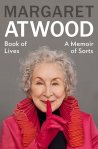 Book of Lives: A Memoir of Sorts by Margaret Atwood: For diehard fans, this companion to her oeuvre is a trove of stories and photographs. The context on each book is illuminating and made me want to reread lots of her work. I was reminded how often she’s been ahead of her time. The title feels literal in that Atwood has been wilderness kid, literary ingénue, family and career woman, philanthropist and elder stateswoman. She doesn’t try to pull all her incarnations into one, instead leaving the threads trailing into the beyond.
 Poets Square: A Memoir in 30 Cats by Courtney Gustafson: Working for a food bank, trapped in a cycle of dead-end jobs and rising rents: Gustafson saw first hand how broken systems and poverty wear people down. She’d recently started feeding and getting veterinary care for a feral cat colony in her Tucson, Arizona neighbourhood. With its radiant portraits of individual cats and its realistic perspective on personal and collective problems, this is a cathartic memoir and a probing study of building communities of care in times of hardship.
 Immemorial by Lauren Markham: An outstanding book-length essay that compares language, memorials, and rituals as strategies for coping with climate anxiety and grief. The dichotomies of the physical versus the abstract and the permanent versus the ephemeral are explored. Forthright, wistful, and determined, the book treats grief as a positive, as “fuel” or a “portal.” Hope is not theoretical in this setup, but solidified in action. This is an elegant meditation on memory and impermanence in an age of climate crisis.
 Death of an Ordinary Man by Sarah Perry: Perry recognises what a sacred privilege it was to witness her father-in-law’s death nine days after his diagnosis with oesophageal cancer. David’s end was as peaceful as could be hoped: in his late seventies, at home and looked after by his son and daughter-in-law, with mental capacity and minimal pain or distress. The beauty of this direct but tender memoir is its patient, clear-eyed unfolding of every stage of dying, a natural and inexorable process that in other centuries would have been familiar to all.
 Ginseng Roots by Craig Thompson: A book about everything, by way of ginseng. It begins with Thompson’s childhood summers working on American ginseng farms with his siblings in Marathon, Wisconsin. As an adult, he travels first to Midwest ginseng farms and festivals and then through China and Korea to learn about the plant’s history, cultivation, lore, and medicinal uses. Roots are symbolic of a family story that unfolds in parallel. Both expansive and intimate, this is a surprising gem from one of the best long-form graphic storytellers.
Poetry
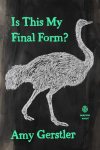 Is This My Final Form? by Amy Gerstler: This delightfully odd collection amazes with its range of voices and techniques. It leaps from surrealism to elegy as it ponders life’s randomness. The language of transformation is integrated throughout. Aging and the seasons are examples of everyday changes. Elsewhere, speakers fall in love with the bride of Frankenstein or turn to dinosaur urine for a wellness regimen. Monologues and sonnets recur. Alliteration plus internal and end rhymes create satisfying resonance.
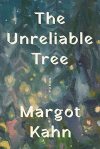 The Unreliable Tree by Margot Kahn: Kahn’s radiant first collection ponders how traumatic events interrupt everyday life. Poles of loss and abundance structure delicate poems infused with family history and food imagery. The title phrase describes literal harvests but is also a metaphor for the vicissitudes of long relationships. California’s wildfires, Covid-19, a mass shooting, and health crises – an emergency surgery and a friend’s cancer – serve as reminders of life’s unpredictability. Disaster is random and inescapable.
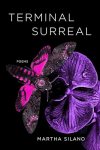 Terminal Surreal by Martha Silano: Silano’s posthumous collection (her eighth) focuses on nature and relationships as she commemorates the joys and ironies of her last years with ALS. The shock of a terminal diagnosis was eased by the quotidian pleasures of observing Pacific Northwest nature, especially birds. Fascination with science recurs, too. Most pieces are free form and alliteration and wordplay enliven the register. Her winsome philosophical work is a gift. “What doesn’t die? / The closest I’ve come to an answer / is poetry.”
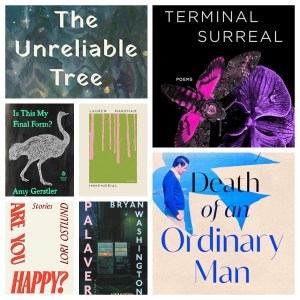
If I had to pick one from each genre? Well, like last year, I find that the books that have stuck with me most are the ones that play around with the telling of life stories. This time, all by women. So it’s Spent, Book of Lives and Is This My Final Form?


What 2025 releases should I catch up on?
Last Love Your Library of 2025 & Another for #DoorstoppersInDecember
Thanks to Eleanor, Margaret and Skai for writing about their recent library reading! Marcie also joined in with a post about completing Toronto Public Library’s 2025 Reading Challenge with books by Indigenous authors.
I managed to fit in a few more 2025 releases before Christmas. My plan for January is to focus on reading from my own shelves (which includes McKitterick Prize submissions and perhaps also review copies to catch up on), so expect next month to be a lighter one.
My recent reading has featured many mentions of how much libraries mean, particularly to young women.
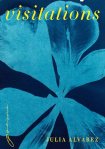 In her autobiographical poetry collection Visitations (coming out in April), Julia Alvarez writes of how her family’s world changed when they moved to New York City from the Dominican Republic in the 1960s. “Waiting for My Father to Pick Me Up at the Library” adopts the tropes of Alice in Wonderland: as her future expands, her father’s life shrinks.
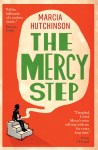 In The Mercy Step by Marcia Hutchinson, the public library is a haven for Mercy, growing up in Bradford in the 1960s. She can hardly believe it’s free for everyone to use, even Black people. Greek mythology is her escape from an upbringing that involves domestic violence and molestation. “It’s peaceful and quiet in the Library. No one shouts or throws things or hits anyone. If anyone talks, the Librarian puts a finger to her mouth and tells them to shush.”
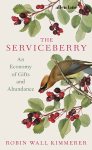 The Serviceberry by Robin Wall Kimmerer affirms the social benefits of libraries: “I love bookstores for many reasons but revere both the idea and the practice of public libraries. To me, they embody the civic-scale practice of a gift economy and the notion of common property. … We don’t each have to own everything. The books at the library belong to everyone, serving the public with free books”.
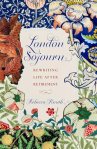 After Rebecca Knuth retired from an academic career in library and information science, she moved to London for a master’s degree in creative nonfiction and joined the London Library as well as the public library. But in her memoir London Sojourn (coming out in January), she recalls that she caught the library bug early: “Each weekday, I bused to school and, afterward, trudged to the library and then rode home with my geologist father. … Mostly, I read.”
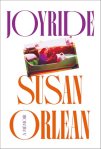 And in Joyride, Susan Orlean recounts the writing of each of her books, including The Library Book, which is about the 1986 arson at the Los Angeles Central Library but also, more widely, about what libraries have to offer and the oddballs often connected with them.
My library use over the last month:
(links are to any reviews of books not already covered on the blog)
READ
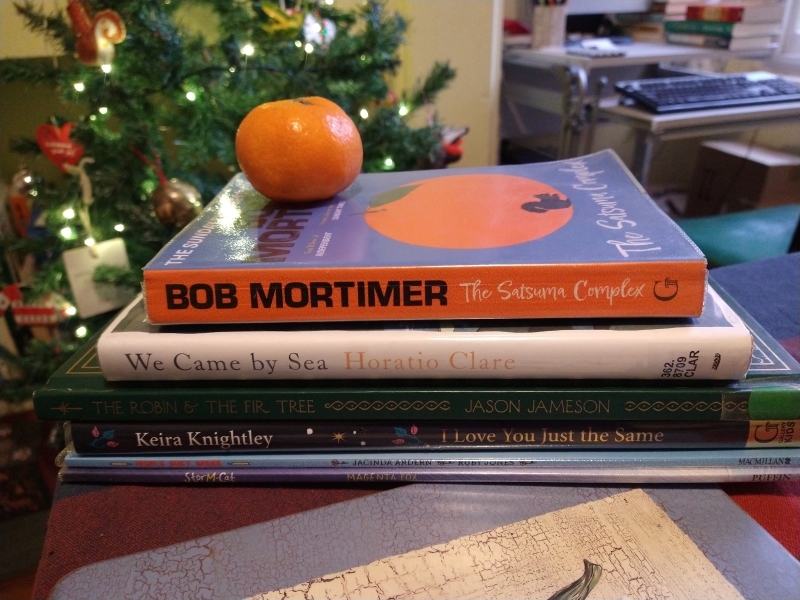
- Mum’s Busy Work by Jacinda Ardern; illus. Ruby Jones
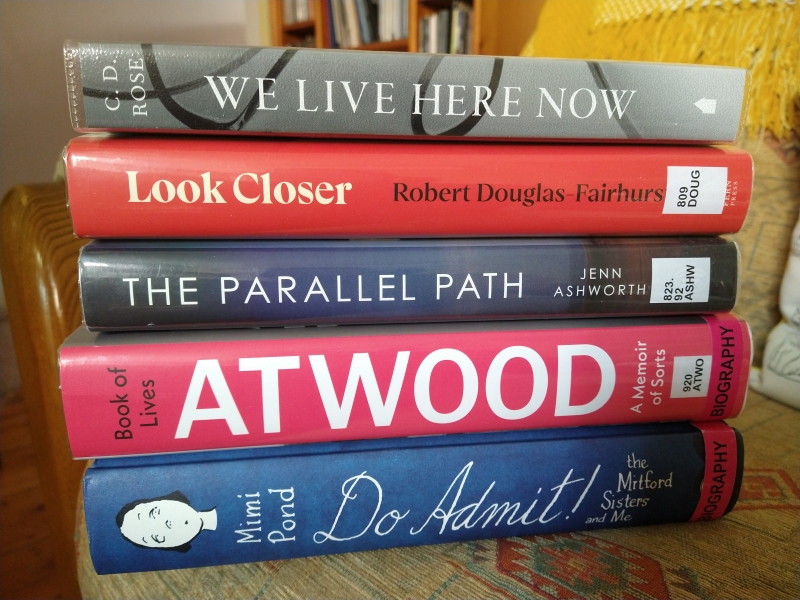
- Book of Lives: A Memoir of Sorts by Margaret Atwood

- Storm-Cat by Magenta Fox

- The Robin & the Fir Tree by Jason Jameson
- I Love You Just the Same by Keira Knightley – Proof that celebrities should not be writing children’s books. I would say the story and drawings were pretty good … if she were a college student.

- Winter by Val McDermid

- The Search for the Giant Arctic Jellyfish, The Search for Carmella, & The Search for Our Cosmic Neighbours by Chloe Savage
- Weirdo Goes Wild by Zadie Smith and Nick Laird; illustrated by Magenta Fox
- Murder Most Unladylike by Robin Stevens


+ A final contribution to #DoorstoppersInDecember
Do Admit: The Mitford Sisters and Me by Mimi Pond
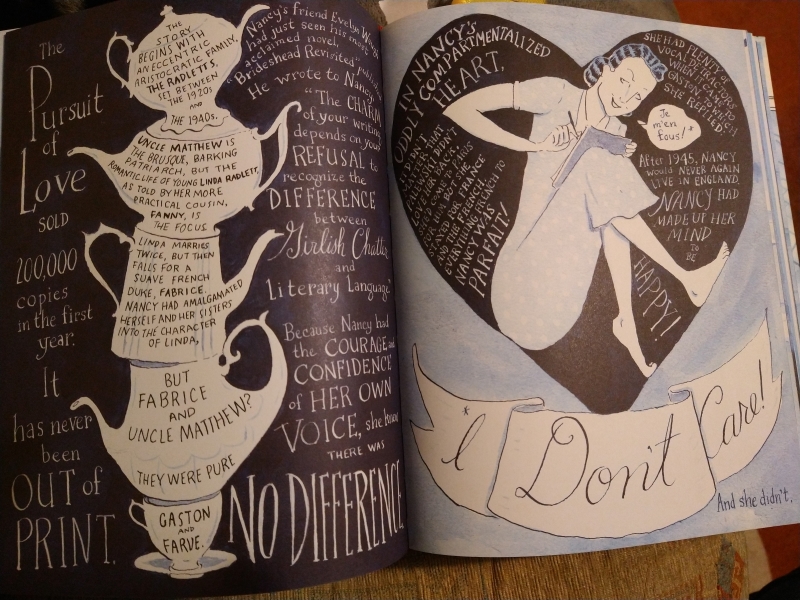
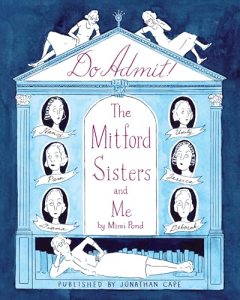 Truth really is stranger than fiction. Of the six Mitford sisters, two were fascists (Diana and Unity) and one was a communist (Jessica). Two became popular authors (Nancy and Jessica). One (Unity) was pals with Hitler and shot herself in the head when Britain went to war with Germany; she didn’t die then but nine years later of an infection from the bullet still stuck in her brain. This is all rich fodder for a biographer – the batshit lives of the rich and famous are always going to fascinate us peons – and Pond’s comics treatment is a great way of keeping history from being one boring event after another. Although she uses the same Prussian blue tones throughout, she mixes up the format, sometimes employing 3–5 panes but often choosing to create one- or two-page spreads focusing on a face, a particular setting or a montage. No two pages are exactly alike and information is conveyed through dialogue, documents and quotations. If just straight narrative, there are different typefaces or text colours and it is interspersed with the pictures in a novel way. Whether or not you know a thing about the Mitfords, the book intrigues with its themes of family dynamics, grief, political divisions, wealth and class. My only misgiving, really, was about the “and Me” part of the title; Pond appears in maybe 5% of the book, and the only personal connections I gleaned were that she wished she had sisters, wanted to escape, and envied privilege and pageantry. [444 pages]
CURRENTLY READING
- The Parallel Path: Love, Grit and Walking the North by Jenn Ashworth
- The Honesty Box by Lucy Brazier
- Of Thorn & Briar: A Year with the West Country Hedgelayer by Paul Lamb
- The Satsuma Complex by Bob Mortimer (for book club in January; I’m grumpy about it because I didn’t vote for this one, had no idea who the author [a TV comedian in the UK] was, and the writing is shaky at best)
- We Live Here Now by C.D. Rose
SKIMMED
- Look Closer: How to Get More out of Reading by Robert Douglas-Fairhurst
CHECKED OUT, TO BE READ
- It’s Not a Bloody Trend: Understanding Life as an ADHD Adult by Kat Brown
- We Came by Sea by Horatio Clare
ON HOLD, TO BE COLLECTED
- The Two Faces of January by Patricia Highsmith
- Arsenic for Tea by Robin Stevens
IN THE RESERVATION QUEUE
- Honour & Other People’s Children by Helen Garner
- Snegurochka by Judith Heneghan
- Ultra-Processed People by Dr. Chris van Tulleken (for book club in February)
RETURNED UNFINISHED
- Night Life: Walking Britain’s Wild Landscapes after Dark by John Lewis-Stempel
What have you been reading or reviewing from the library recently?

Share a link to your own post in the comments. Feel free to use the above image. The hashtag is #LoveYourLibrary.
The Best Books from the First Half of 2025
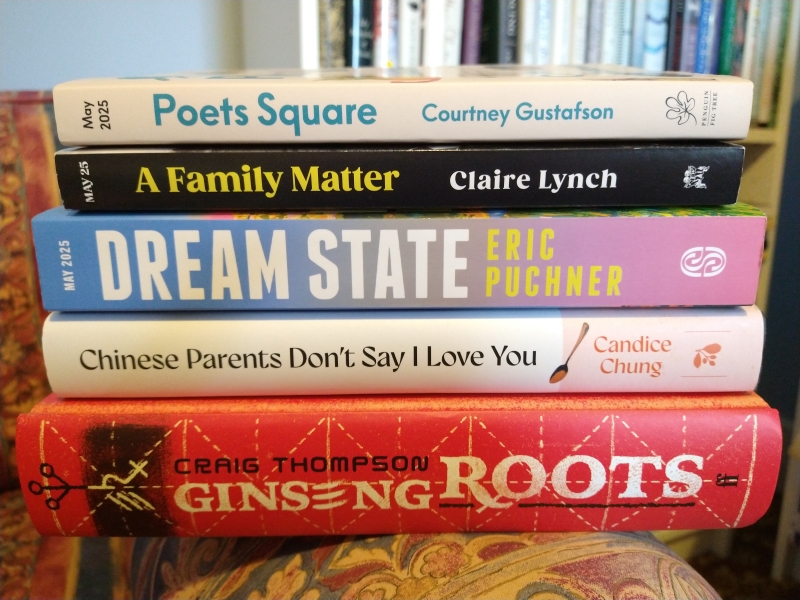
Hard to believe it, but it’s that time of year already. It’s the ninth year in a row that I’ve been making a first-half superlatives list. It remains to be seen how many of these will make it onto my overall best-of year rundown, but for now, these are my 16 favourite 2025 releases that I’ve read so far (representing the top ~21% of my current-year reading). Pictured below are the ones I read in print; all the others were e-copies. Links are to my full reviews.
Fiction
Spent: A Comic Novel by Alison Bechdel: Alison has writer’s block and is consumed with anxiety about the state of the world. “Who can draw when the world is burning?” Then she has an idea for a book – or maybe a reality TV series – called $UM that will wean people off of capitalism. That creative journey is mirrored here. Through Alison’s ageing hippie friends and their kids, Bechdel showcases alternative ways of living. Even the throwaway phrases are hilarious. It’s a gleeful and zeitgeist-y satire, yet draws to a touching close.
 Sleep by Honor Jones: A breathtaking character study of a woman raising young daughters and facing memories of childhood abuse. Margaret’s 1990s New Jersey upbringing seems idyllic, but upper-middle-class suburbia conceals the perils of a dysfunctional family headed by a narcissistic, controlling mother. Jones crafts unforgettable, crystalline scenes. There are subtle echoes throughout as the past threatens to repeat. Reminiscent of Sarah Moss and Evie Wyld, and astonishing for its psychological acuity, this promises great things from Jones.
 Save Me, Stranger by Erika Krouse: Twelve first-person narratives voiced by people in crisis, for whom encounters with strangers tender the possibility of transformation. In the title story, the narrator is taken hostage in a convenience store hold-up. Others are set in Thailand and Japan as well as various U.S. states. Krouse focuses on young women presented with dilemmas and often eschews tidy endings, leaving characters on the brink and allowing readers to draw inferences. Fans of Danielle Evans and Lauren Groff have a treat in store.
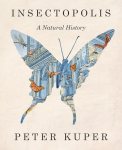 Insectopolis: A Natural History by Peter Kuper: “If insects were to vanish, the environment would collapse into chaos.” (E. O. Wilson) After an unspecified apocalypse, only insects remain. Group by group, they guide readers through an empty New York Public Library exhibit, interacting within and across species. It’s a sly blend of science, history, stories and silliness. There are interludes about insects in literature and unsung heroines of entomology. Informative and entertaining at once; what could be better? Welcome our insect overlords!
A Family Matter by Claire Lynch: In her research into UK divorce cases in the 1980s, Lynch learned that 90% of lesbian mothers lost custody of their children. Her earnest, delicate debut novel, which bounces between 2022 and 1982, imagines such a situation through close portraits of three family members. Maggie knew only that her mother, Dawn, abandoned her when she was little. Lynch’s compassion is equal for all three characters. This confident, tender story of changing mores and steadfast love is the new Carol for our times.
Are You Happy? by Lori Ostlund: Nine short fictions form a stunning investigation into how violence and family dysfunction reverberate. “The Peeping Toms” and “The Stalker” are a knockout pair featuring Albuquerque lesbian couples under threat by male acquaintances. Characters are haunted by loss and grapple with moral dilemmas. Each story has the complexity and emotional depth of a novel. Freedom versus safety for queer people is a resonant theme in an engrossing collection ideal for Alice Munro and Edward St. Aubyn fans.
Dream State by Eric Puchner: It starts as a glistening romantic comedy about t Charlie and Cece’s chaotic wedding at a Montana lake house in summer 2004. First half the wedding party falls ill with norovirus, then the best man, Garrett, falls in love with the bride. The rest examines the fallout of this uneasy love triangle as it stretches towards 2050 and imagines a Western USA smothered in smoke from near-constant forest fires. Still, there are funny set-pieces and warm family interactions. Cross Jonathan Franzen and Maggie Shipstead.
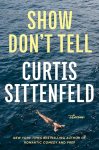 Show Don’t Tell by Curtis Sittenfeld: Sittenfeld’s second collection features characters negotiating principles and privilege in midlife. Split equally between first- and third-person perspectives, the 12 contemporary storylines spotlight everyday marital and parenting challenges. Dual timelines offer opportunities for hindsight on the events of decades ago. Nostalgic yet clear-eyed, these witty stories exploring how decisions determine the future are perfect for fans of Rebecca Makkai, Kiley Reid, and Emma Straub.
Nonfiction
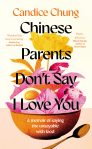 Chinese Parents Don’t Say I Love You: A memoir of saying the unsayable with food by Candice Chung: A vibrant essay collection spotlighting food and family. Chung reconnects with her semi-estranged parents by taking them along on restaurant review gigs for a Sydney newspaper. Fresh from a 13-year relationship with “the psychic reader,” she starts dating again and quickly falls in deep with “the geographer.” The essays range in time and style, delicately contrasting past and present, singleness and being partneredr.
Poets Square: A Memoir in 30 Cats by Courtney Gustafson: Working for a food bank, trapped in a cycle of dead-end jobs and rising rents: Gustafson saw firsthand how broken systems and poverty wear people down. She’d recently started feeding and getting veterinary care for a feral cat colony in her Tucson, Arizona neighbourhood. With its radiant portraits of individual cats and its realistic perspective on personal and collective problems, this is a cathartic memoir and a probing study of building communities of care in times of hardship.
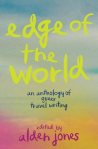 Edge of the World: An Anthology of Queer Travel Writing, ed. Alden Jones: Sixteen authors of diverse sexual orientations and genders contrast here and there and then and now as they narrate sensory memories and personal epiphanies. In these pieces, time abroad sparks clarity. There’s power in queer solidarity, whether one is in Berlin or Key West. Alex Marzano-Lesnevich’s piece is the highlight. A stellar anthology of miniature travelogues that are as illuminating about identity as they are about the places they feature.
Immemorial by Lauren Markham: An outstanding book-length essay that compares language, memorials, and rituals as strategies for coping with climate anxiety and grief. The dichotomies of the physical versus the abstract and the permanent versus the ephemeral are explored. Forthright, wistful, and determined, the book treats grief as a positive, as “fuel” or a “portal.” Hope is not theoretical in this setup, but solidified in action. This is an elegant meditation on memory and impermanence in an age of climate crisis.
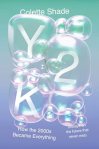 Y2K: How the 2000s Became Everything (Essays on the Future that Never Was) by Colette Shade: Shade’s debut collection contains 10 perceptive essays that contrast the promise and political pitfalls of “the Y2K Era” (1997–2008). The author recalls the thrill of early Internet use and celebrity culture. Consumerism was a fundamental doctrine but the financial crash prompted a loss of faith in progress. Outer space motifs, reality television, Smashmouth lyrics: it’s a feast of millennial nostalgia. Yet this hard-hitting work of cultural criticism, recommended to Jia Tolentino fans, reminisces only to burst bubbles.
Ginseng Roots by Craig Thompson: A book about everything, by way of ginseng. It begins with Thompson’s childhood summers working on American ginseng farms with his siblings in Marathon, Wisconsin. As an adult, he travels first to Midwest ginseng farms and festivals and then through China and Korea to learn about the plant’s history, cultivation, lore, and medicinal uses. Roots are symbolic of a family story that unfolds in parallel. Both expansive and intimate, this is a surprising gem from one of the best long-form graphic storytellers.
Poetry
Is This My Final Form? by Amy Gerstler: This delightfully odd collection amazes with its range of voices and techniques. It leaps from surrealism to elegy as it ponders life’s unpredictability. The language of transformation is integrated throughout. Aging and the seasons are examples of everyday changes. Elsewhere, speakers fall in love with the bride of Frankenstein or turn to dinosaur urine for a wellness regimen. Monologues and sonnets recur. Alliteration plus internal and end rhymes create satisfying resonance.
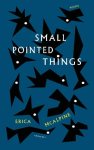 Small Pointed Things by Erica McAlpine: McAlpine’s second collection is full of flora and fauna imagery. The title phrase comes from the opening poem, “Bats and Swallows” – in the “gloaming,” it’s hard to tell the difference between the flying creatures. The verse is bursting with alliteration and end rhymes. She expands the view through conversations, theories and travel. What-ifs, consequences and regrets; mythical allusions, elegies and the concerns of motherhood. Just my sort of poetry: sweet on the ear, rooted in nature and the everyday.
Which of these grab your attention? What other 2025 releases should I catch up on?
May Graphic Novels by Alison Bechdel, Peter Kuper & Craig Thompson
May has been chock-full of new releases for me! For this first batch of reviews, I’m featuring three fantastic graphic novels that have made it onto my Best of 2025 (so far) list. I don’t read graphic books as often as I’d like to – my library tends to major on superhero comics and manga, which aren’t my cup of tea – but I sometimes get a chance to access them for paid review purposes. (The first two below are ones I was sent for potential Shelf Awareness reviews, but I missed the deadlines.) Reading these took me back to the early 2010s when I worked for a university library in South London and would walk to Lambeth Library on my lunch breaks to borrow huge piles of books, mostly taking advantage of their excellent graphic novel selection. That was where my education and fascination began.
Spent: A Comic Novel by Alison Bechdel
 I’ve read all but one of Bechdel’s works now. Fun Home was among the first graphic books I read and is a great choice if you’re new to this form of storytelling. It’s a family memoir about her father’s funeral home business and closeted lifestyle, which emerged shortly after her own coming-out – and shortly before his accidental death. In Spent, Alison and her handy wife Holly live on a Vermont pygmy goat farm. Alison has writer’s block and is struggling financially despite her famous memoir about her taxidermist father having been made into a successful TV series, Death & Taxidermy. Mostly, she’s consumed with anxiety about the state of the world, what with the ongoing pandemic, her sister’s right-wing opinions, and the litany of awful headlines. “Who can draw when the world is burning?” she exclaims.
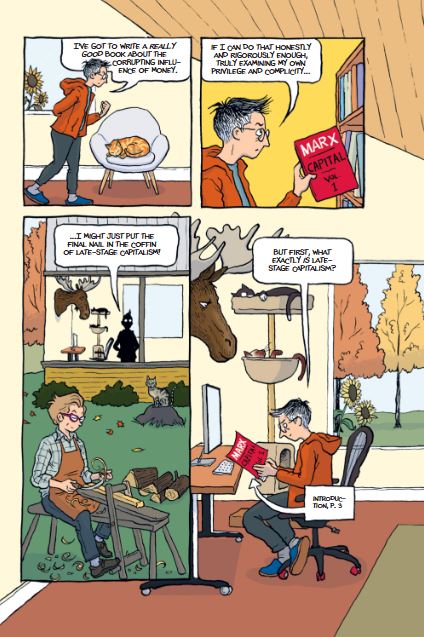
Then Alison has an idea for a book – or maybe a reality TV series – called $UM that will wean people off of capitalism. That creative journey is mirrored in Spent, which is composed of 12 “episodes” titled after Marxist terminology. Through Alison’s ageing hippie friends and their kids, Bechdel showcases alternative ways of living: a commune, a throuple, nonbinary identity, unpaid internships, Just Stop Oil demos, and the influencer lifestyle versus rejection of technology. It’s (auto)fiction exaggerated to the brink of absurdity, with details changed enough to mock but not enough to hide (e.g., she’s published by “Megalopub,” the hardware store is “Home Despot,” her show airs on “Schmamazon”).

Tiny details in the drawings reward close attention, such as Alison and Holly’s five cats’ antics during their morning routine, and a stuffed moose head rolling its eyes. It’s the funniest I can remember Bechdel being, with much broad humour derived from the outrageous screen mangling of her book – cannibalism, volcanoes and dragons come out of nowhere – and her middle-class friends’ hand-wringing over their liberal credentials. Even the throwaway phrases are hilarious. It’s a gleeful and zeitgeist-y satire, yet draws to a touching close as Alison has the epiphany that she can’t fix everything herself so must simply do what she can, “with a little help from her annoying, tender-hearted, and utterly luminous friends.”
Accessed as an e-book from Mariner Books. Published in the UK by Jonathan Cape (Penguin).
Insectopolis: A Natural History by Peter Kuper
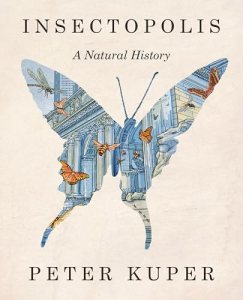 Nearly a decade ago, I reviewed Peter Kuper’s Ruins, which features monarch migration and has as protagonist a laid-off Natural History Museum entomologist. Here insects have even more of a starring role. The E. O. Wilson epigraph sets the stage: “If all mankind were to disappear, the world would regenerate back to the rich state of equilibrium that existed ten thousand years ago. If insects were to vanish, the environment would collapse into chaos.” We follow an African American brother-and-sister pair, the one dubious and the other eager, as they walk downtown to the New York Public Library. The sister, who holds a PhD in entomology, promises that its exhibition on insects is going to be amazing. But just before they reach the building, a red alert flashes up on every smartphone and sirens start blaring. A week later, the city is a ruin of overturned cabs and debris. Only insects remain and, group by group, they guide readers through the empty exhibit, interacting within and across species.


It’s a sly blend of science, history, stories and silliness. I loved the scenes of mosquitoes and ants railing against how they’ve been depicted as villainous, and dignified dung beetles resisting scatological jokes and standing up for their importance in ecosystems. There are interesting interludes about insects in literature (not just Kafka and Nabokov, but the Japanese graphic novel The Book of Human Insects by Osamu Tezuka), and unsung heroines of entomology get their moment in the sun. The pages in which Margaret Collins, an African American termite researcher in the 1950s, and Rachel Carson appear to a dragonfly as ghosts and tell their stories of being dismissed by male researchers were among my favourites. Informative and entertaining at once; what could be better? Welcome our insect overlords!
Accessed as an e-book from W. W. Norton & Company.
Ginseng Roots by Craig Thompson
 I’d read several of Thompson’s works and especially enjoyed his previous graphic memoir, Blankets, about his first love and loss of faith. When I read this blurb, I worried the niche subject couldn’t possibly sustain my attention for nearly 450 pages. But I was wrong; this is a vital book about everything, by way of ginseng. It begins with childhood summers working on American ginseng farms with his siblings in Marathon, Wisconsin. Theirs was a blue collar and highly religious family, but Thompson and his little brother Phil were allowed to spend their earnings from the back-breaking labour of weeding and picking rocks as they pleased. Each hour, each dollar, meant a new comic from the pharmacy. “Comics helped me survive my childhood. But what will help me survive my adulthood?” Thompson asks.

Together with Phil, he travels first to Midwest ginseng farms and festivals and then through China and Korea to learn about the plant’s history, cultivation practices, lore, and medicinal uses. As he meets producers – including a Hmong man whose early life mirrors his own – he feels sheepish about how he makes a living: “I carry this working-class guilt – what I do isn’t real work.” When his livelihood is threatened by worsening autoimmune conditions, he tries everything from acupuncture to psychotherapy to save his hands and his creativity.
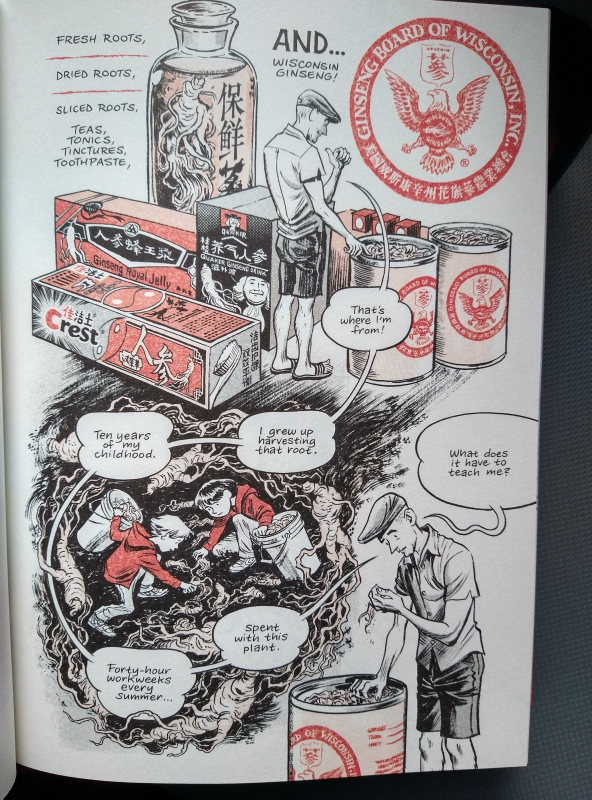
This chunky book has an appealing earth-tones palette and shifts smoothly between locations and styles, memories and research. When interviewing growers and Chinese medicine practitioners, the depictions are almost photorealistic, but there are also superhero pastiche panels and a cute ginseng mascot who pops up throughout the book. Like Spent, this pulls in class and economic issues in a lighthearted way and also explores its own composition process.
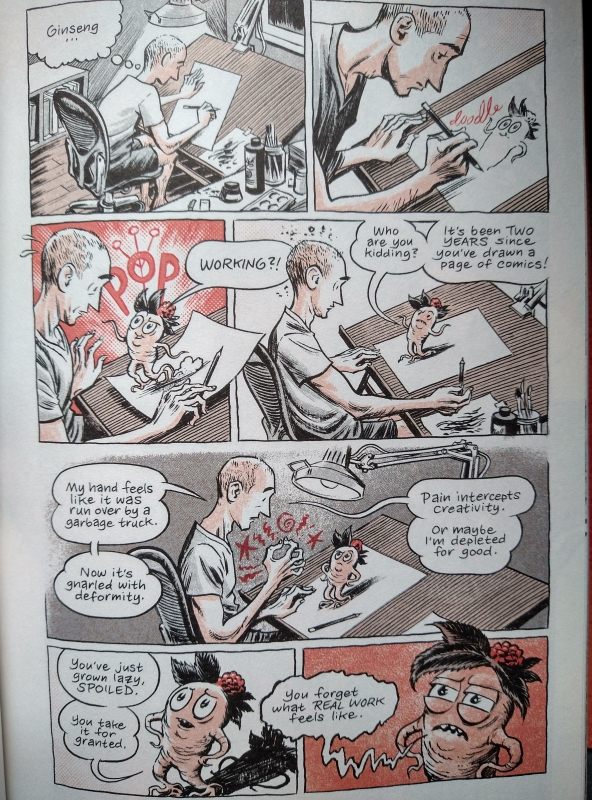
The story of ginseng is often sobering, involving the exploitation of immigrants (in the Notes, Thompson regrets that he was unable to speak with any of the Mexican migrant workers on whom the American ginseng harvest now depends), soil degradation, and pesticide pollution. The roots of the title are both literal and symbolic of the family story that unfolds in parallel. Both strands are captivating, but especially the autobiographical material: Thompson’s relationship with Phil, his new understanding but ongoing frustration with his parents, and the way all three siblings exhibit the damage of their upbringing – Phil’s marriage is crumbling; their sister Sarah, who has moved 26 times as an adult, wonders what she’s running from. A conversation with a Chinese herbal pharmacist gets to the heart of the matter: “I learned home is not WHERE I am. Home is HOW I am.”
Both expansive and intimate, this is a surprising gem from one of the best long-form graphic storytellers out there.
With thanks to Faber for the free copy for review. Published in the USA by Pantheon (Penguin).
Most Anticipated Books of the First Half of 2025
As I said the other week, I sometimes wonder if designating a book as “Most Anticipated” is a curse – if the chosen books are doomed to fail to meet my expectations. Nonetheless, I can’t resist compiling such a list at least once each year.
Also on my radar: fiction by Claire Adam, Amy Bloom, Emma Donoghue, Sarah Hall, Michelle Huneven, Eowyn Ivey, Rachel Joyce, Heather Parry and Torrey Peters; nonfiction by Melissa Febos, Robert Macfarlane, Lucy Mangan, Suzanne O’Sullivan and Sophie Pavelle. (Further ahead, I’ll seek out I Want to Burn This Place Down: Essays by Maris Kreizman and The Girls Who Grew Big by Leila Mottley in July, The Savage Landscape by Cal Flyn in Oct. and Tigers between Empires by Jonathan C. Slaght in Nov.)
However, below I’ve narrowed it down to the 25 books I’m most looking forward to for the first half of 2025, 15 fiction and 10 nonfiction. I’m impressed that 4 are in translation! And 22/25 are by women (all the fiction is). In release date order, with UK publication info given first if available. The blurbs are adapted from Goodreads. I’ve taken the liberty of using whichever cover is my favourite (almost always the U.S. one).

Fiction
 Live Fast by Brigitte Giraud (trans. from the French by Cory Stockwell) [Feb. 11, Ecco]: I found out about this autofiction novella via an early Shelf Awareness review. It “follows one woman’s quest to comprehend the motorcycle accident that took the life of her partner Claude at age 41. The narrator … recounts the chain of events that led up to the fateful accident, tracing the tiny, maddening twists of fate that might have prevented its tragic outcome. Each chapter asks the rhetorical question, ‘what if’ … A sensitive elegy to her husband”.
 The Unworthy by Agustina Bazterrica (trans. from the Spanish by Sarah Moses) [13 Feb., Pushkin; March 4, Scribner]: I wasn’t enamoured of the Argentinian author’s short stories, but Tender Is the Flesh was awesome. This is a short dystopian horror set in a convent. “In the House of the Sacred Sisterhood, the unworthy live in fear of the Superior Sister’s whip. … Risking her life, one of the unworthy keeps a diary in secret. Slowly, memories surface from a time before the world collapsed, before the Sacred Sisterhood became the only refuge. Then Lucía arrives.” (PDF copy for Shelf Awareness review)
 Victorian Psycho by Virginia Feito [13 Feb., Fourth Estate; Feb. 4, Liveright]: Feito’s debut, Mrs March, was deliciously odd, and I love the (U.S.) cover for this one. It sounds like a bonkers horror take on Henry James’s The Turn of the Screw, “a gruesome and gleeful new novel that probes the psyche of a bloodthirsty governess. Winifred Notty arrives at Ensor House prepared to play the perfect Victorian governess—she’ll dutifully tutor her charges, Drusilla and Andrew, tell them bedtime stories, and only joke about eating children.”

Three Days in June by Anne Tyler [13 Feb., Chatto & Windus (Penguin) / Feb. 11, Knopf]: I’m not a Tyler completist, but she’s reliable and this is a novella! “It’s the day before her daughter’s wedding and things are not going well for Gail Baines. First …, she loses her job … Then her ex-husband Max turns up at her door expecting to stay for the festivities. He doesn’t even have a suit. Instead, he’s brought memories, a shared sense of humour – and a cat looking for a new home. … [And] daughter Debbie discovers her groom has been keeping a secret.” Susan vouches for this. (Edelweiss download / on order from library)
 The Swell by Kat Gordon [27 Feb., Manilla Press (Bonnier Books UK)]: I got vague The Mercies (Kiran Millwood Hargrave) vibes from the blurb. “Iceland, 1910. In the middle of a severe storm two sisters, Freyja and Gudrun, rescue a mysterious, charismatic man from a shipwreck near their remote farm. Sixty-five years later, a young woman, Sigga, is spending time with her grandmother when they learn a body has been discovered on a mountainside near Reykjavik, perfectly preserved in ice.” (NetGalley download)
 Dream Count by Chimamanda Ngozi Adichie [4 March, Fourth Estate/Knopf]: This is THE book I’m most looking forward to; I’ve read everything Adichie has published and Americanah was a 5-star read for me. So I did something I’ve never done before and pre-ordered the signed independent bookshop edition from my local indie, Hungerford Bookshop. “Chiamaka is a Nigerian travel writer living in America. Alone in the midst of the pandemic, she recalls her past lovers and grapples with her choices and regrets.” The focus is on four Nigerian American women “and their loves, longings, and desires.” (New purchase)
 Kate & Frida by Kim Fay [March 11, G.P. Putnam’s Sons]: “Frida Rodriguez arrives in Paris in 1991 … But then she writes to a bookshop in Seattle … A friendship begins that will redefine the person she wants to become. Seattle bookseller Kate Fair is transformed by Frida’s free spirit … [A] love letter to bookshops and booksellers, to the passion we bring to life in our twenties”. Sounds like a cross between The Paris Novel and 84 Charing Cross Road – could be fab; could be twee. We shall see! (Edelweiss download)
 The Antidote by Karen Russell [13 March, Chatto & Windus (Penguin) / March 11, Knopf]: I love Russell’s Swamplandia! but haven’t gotten on with her other work I’ve tried, so I’m only tentatively enthusiastic about the odd Wizard of Oz-inspired blurb: “a historic dust storm ravages the fictional town of Uz, Nebraska. But Uz is already collapsing—not just under the weight of the Great Depression … but beneath its own violent histories. The Antidote follows a ‘Prairie Witch,’ … a Polish wheat farmer …; his orphan niece, a … witch’s apprentice …; a voluble scarecrow; and a New Deal photographer”. (Requested from publisher)
 Elegy, Southwest by Madeleine Watts [13 March, ONE (Pushkin) / Feb. 18, Simon & Schuster]: Watts’s debut, The Inland Sea, was a hidden gem. Given the news from L.A., this seems all the more potent: “In November 2018, Eloise and Lewis rent a car in Las Vegas and take off on a two-week road trip across the American southwest … [w]hile wildfires rage. … Lewis, an artist working for a prominent land art foundation, is grieving the recent death of his mother, while Eloise is an academic researching the past and future of the Colorado River … [and] beginning to suspect she might be pregnant”. (Edelweiss download)
 O Sinners! by Nicole Cuffy [March 18, One World (Random House)]: Cuffy’s Dances, which was longlisted for the Carol Shields Prize, was very good. The length of this sophomore novel (464 pages) gives me pause, but I do generally gravitate towards stories of cults. “Faruq Zaidi, a young journalist reeling from the recent death of his father, a devout Muslim, takes the opportunity to embed in a cult called The Nameless [b]ased in the California redwoods and shepherded by an enigmatic [Black] Vietnam War veteran.”
 The Accidentals: Stories by Guadalupe Nettel (trans. from the Spanish by Rosalind Harvey) [10 April, Fitzcarraldo Editions / April 29, Bloomsbury]: I really enjoyed Nettel’s International Booker-shortlisted novel Still Born. “When an albatross strays too far from its home, or loses its bearings, it becomes an ‘accidental’, an unmoored wanderer. The protagonists of these eight stories each find the ordinary courses of their lives disrupted by an unexpected event. … Deft and disquieting, oscillating between the real and the fantastical”. (PDF copy for Shelf Awareness review)
 Ordinary Saints by Niamh Ni Mhaoileoin [24 April, Manilla Press (Bonnier Books UK)]: “Brought up in a devout household in Ireland, Jay is now living in London with her girlfriend, determined to live day to day and not think too much about either the future or the past. But when she learns that her beloved older brother, who died in a terrible accident, may be made into a Catholic saint, she realises she must at last confront her family, her childhood and herself.” Winner of the inaugural PFD Queer Fiction Prize and shortlisted for the Women’s Prize Discoveries Award.
 Heartwood by Amity Gaige [1 May, Fleet / April 1, Simon & Schuster]: I loved Gaige’s Sea Wife. “In the heart of the Maine woods, an experienced Appalachian Trail hiker goes missing. She is forty-two-year-old Valerie Gillis, who has vanished 200 miles from her final destination. … At the centre of the search is Beverly, the determined Maine State Game Warden tasked with finding Valerie, who is managing the search on the ground. While Beverly is searching, Lena, a seventy-six-year-old birdwatcher in a retirement community, becomes an unexpected armchair detective.”
Are You Happy?: Stories by Lori Ostlund [May 6, Astra House]: Ostlund is not so well known, especially outside the USA, but I enjoyed her debut novel, After the Parade, back in 2015. “Nine masterful stories that explore class, desire, identity, and the specter of violence in America–and in American families–against women and the LGBTQ+ community. … [W]e watch Ostlund’s characters as they try—and often fail—to make peace with their pasts while navigating their present relationships and responsibilities.” (Edelweiss download)
 Ripeness by Sarah Moss [22 May, Picador / Sept. 9, Farrar, Straus and Giroux]: Though I was disappointed by her last two novels, I’ll read anything Moss publishes and hope for a return to form. “It is the [19]60s and … Edith finds herself travelling to rural Italy … to see her sister, ballet dancer Lydia, through the final weeks of her pregnancy, help at the birth and then make a phone call which will seal this baby’s fate, and his mother’s.” Promises to be “about migration and new beginnings, and about what it is to have somewhere to belong.”
Nonfiction
 The Forgotten Sense: The New Science of Smell by Jonas Olofsson [Out now! 7 Jan., William Collins / Mariner]: Part of a planned deep dive into the senses. “Smell is … one of our most sensitive and refined senses; few other mammals surpass our ability to perceive scents in the animal kingdom. Yet, as the millions of people who lost their sense of smell during the COVID-19 pandemic can attest, we too often overlook its role in our overall health. … For readers of Bill Bryson and Steven Pinker”. (On order from library)
 Bread and Milk by Karolina Ramqvist (trans. from the Swedish by Saskia Vogel) [13 Feb., Bonnier Books / Feb. 11, Coach House Books]: I think I first found about this via the early Foreword review. “Bread and Milk traces a life through food, from carefully restricted low-fat margarine to a bag of tangerines devoured in one sitting to the luxury of a grandmother’s rice pudding. In this radiant memoir from one of Northern Europe’s most notable literary stylists, we follow several generations of women and their daughters as they struggle with financial and emotional vulnerability, independence, and motherhood.”
 My Mother in Havana: A Memoir of Magic & Miracle by Rebe Huntman [Feb. 18, Monkfish]: I found out about this from Rebecca Moon Ruark and by the time the publisher offered it to me I’d already downloaded it. The themes of bereavement and religion are right up my street. “As she explores the memory of her own mother, interlacing it with her search for the sacred feminine, Huntman leads us into a world of séance and sacrifice, pilgrimage and sacred dance, which resurrect her mother and bring Huntman face to face with a larger version of herself.” (Edelweiss download)
 Mother Animal by Helen Jukes [27 Feb., Elliott & Thompson]: This may be the 2025 release I’ve known about for the longest. I remember expressing interest the first time the author tweeted about it; it’s bound to be a good follow-up to Lucy Jones’s Matrescence. “When Helen Jukes falls pregnant, … she widens her frame of reference, looking beyond humans to ask what motherhood looks like in other species. … As she enters the sleeplessness, chaos and intimate discoveries of life with a newborn, these animal stories become … companions and guides.” (Requested from publisher)
 Alive: An Alternative Anatomy by Gabriel Weston [6 March, Vintage (Penguin) / March 4, David R. Godine]: I’ve read Weston’s Direct Red and appreciate her perspective. “As she became a surgeon, a mother, and ultimately a patient herself, Weston found herself grappling with the gap between scientific knowledge and unfathomable complexity of human experience. … Focusing on our individual organs, not just under the intense spotlight of the operating theatre, but in the central role they play in the stories of our lives.”
 The Lost Trees of Willow Avenue: A Story of Climate and Hope on One American Street by Mike Tidwell [March 25, St. Martin’s Press]: A must-read for me because it’s set in Takoma Park, Maryland, where I was born. “A love letter to the magnificent oaks and other trees dying from record heat waves and bizarre rain, [activist] Tidwell’s story depicts the neighborhood’s battle to save the trees and combat climate change. … Tidwell chronicles people on his block sick with Lyme disease, a church struggling with floods, and young people anguishing over whether to have kids, … against the global backdrop of 2023’s record heat domes and raging wildfires and hurricanes.”
 Breasts: A Relatively Brief Relationship by Jean Hannah Edelstein [3 April, Phoenix (W&N)]: I loved Edelstein’s 2018 memoir This Really Isn’t About You, and I regularly read her Substack. “As [Edelstein] comes of age, she learns that breasts are a source of both shame and power. In early motherhood, she sees her breasts transform into a source of sustenance and a locus of pain. And then, all too soon, she is faced with a diagnosis and forced to confront what it means to lose and rebuild an essential part of yourself.”
Poets Square: A Memoir in Thirty Cats by Courtney Gustafson [8 May, Fig Tree (Penguin) / April 29, Crown]: Gustafson became an Instagram and TikTok hit with her posts about looking after a feral cat colony in Tucson, Arizona. The money she raised via social media allowed her to buy her home and continue caring for animals. “[Gustafson] had no idea about the grief and hardship of animal rescue, the staggering size of the problem in neighborhoods across the country. And she couldn’t have imagined how that struggle … would help pierce a personal darkness she’d wrestled for with much of her life.” (Proof copy from publisher)
 Lifelines: Searching for Home in the Mountains of Greece by Julian Hoffman [15 May, Elliott & Thompson]: Hoffman’s Irreplaceable was my book of 2019. “In the summer of 2000, Julian Hoffman and his wife Julia found themselves disillusioned with city life. Overwhelmed by long commutes, they stumbled upon a book about Prespa, Greece – a remote corner of Europe filled with stone villages, snow-capped mountains and wildlife. What began as curiosity soon transformed into a life-changing decision: to make Prespa their home.” I know next to nothing about Greece and this is a part of it that doesn’t fit the clichés.
Spent: A Comic Novel by Alison Bechdel [22 May, Jonathan Cape (Penguin) / May 20, Mariner Books]: Bechdel’s Fun Home is an absolute classic of the graphic memoir. I’ve lost track of her career a bit but like the sound of this one. “A cartoonist named Alison Bechdel, running a pygmy goat sanctuary in Vermont, is existentially irked by a climate-challenged world and a citizenry on the brink of civil war.” After her partner’s wood-chopping video goes viral, she decides to create her own ethical-living reality TV show. Features cameos from some characters from her Dykes to Watch Out For series.
Other lists of anticipated books:
Clare – we overlap on a couple of our picks
Kate – one pick in common, plus I’ve already read a couple of her others
Laura – we overlap on a couple of our picks
Paul (mostly science and nature)
What catches your eye here? What other 2025 titles do I need to know about?
Three Days in Paris and What I Read
My husband’s belated 40th birthday treat was a short city break in Paris earlier this week. No sooner had I gotten home on Tuesday than I was sealing up my suitcase to fly to the States the following afternoon. It’s been quite the whirlwind week (make that few months), but now that things have quieted down a little, I have a chance to look back on the long weekend’s eating, sightseeing and reading. I’d been to Paris twice before: once just for an overnight en route to Milan in 2019, while my first and only proper trip was in early 2004.
That time I did all the touristy things like the Eiffel Tower, the Musée d’Orsay (though not the Louvre), Notre Dame and the site of the Bastille. A sign of how times have changed: nearly 20 years ago when I was at Père Lachaise cemetery, you could go right up to Oscar Wilde’s grave and add your lip-print to the many kisses on it. (There’s a photo of me and my study abroad friend doing just that; I wish I’d had time to go dig it out of an album.) Today it’s walled off by Perspex with a note explaining that the family pay all the cleaning costs. To think that there are descendants of Wilde’s out there in the world! Still, a tiny letdown when it was such a cute ritual. We also visited Chopin and Balzac and took in the views.


The most touristy things we did this time around were Sainte-Chapelle, a marvel of medieval stained glass, and Shakespeare and Company, the famous English-language haunt of expats over the decades. Notre Dame is still closed for its extensive post-fire restoration (it’s due to reopen next year) but you can read some signboards about the reconstruction outside and sit on the bleachers to soak in the atmosphere. Our other destinations included the Hotel de Ville, lit up at night with a Christmas market to advertise the 2024 Olympics, and the Jardin des Plantes and its museum of paleontology and comparative anatomy – old-fashioned in just the way we like it, with row upon row of skeletons and lots of hand-inked original labels.


We were mostly in the city to eat, and eat we did. Many of our recommendations for boulangeries and patisseries came from American chef David Lebovitz’s blog. Although we did buy traditional baguettes and croissants, we were mostly on the lookout for unusual treats, such as hay-flavoured custard-filled choux buns and a famous maple syrup tart. We had one bistro meal and another at a creperie, this one incorporating Breton-Japanese fusion dishes such as my Breizh rolls, cut from a buckwheat galette filled with artichoke hearts, seaweed, scrambled egg and Comté cheese: a cross between a crêpe and sushi.
We enjoyed riding the Métro and by the time we left felt like pros at it. Speaking French to shopkeepers and waitstaff had also started to become second nature (I even managed to query errors in our order/bill twice at restaurants). The weather was showery and colder than expected, but never enough to spoil our experience, and we stole some good glimpses of the Tower from around the city.
But the highlight of the trip was something we stumbled upon and joined in on a whim. At Shakespeare and Company on our first full day, we spotted a sign for a free event they were hosting the next night: the recording of a podcast by comedian Greg Proops, followed by mince pies, mulled wine and carol singing.

We had never heard of Proops but thought we’d take a chance, so made our way back the next evening and got two of the last seats left in the back of the upstairs space. His monologue was funnier than expected, mostly a stringing together of in-jokes about national stereotypes of the English, Americans and French – but as we all know, clichés are amusing precisely because they contain grains of truth. He also had a few long anecdotes about getting eye surgery and running into a famous old film director in Paris. It sounds like this bookshop event is an annual tradition for him.


Best of all, afterwards the shop was technically closed but we were allowed to stay in – lock-in at the bookshop! They don’t normally allow photographs inside, but my husband managed to sneak a few plus some video of the carol singing. The mince pies, gingerbread and mulled wine were all tasty. Professor Lex Paulson at the piano led us in a marathon of 22 songs ranging from ancient traditionals (“O Come O Come Emmanuel” and “The Coventry Carol”) to recent pop (“Last Christmas” and “All I Want for Christmas Is You”); it must be said that there was more general enthusiasm for the latter, while my husband and I were among the few raring for “The Holly and the Ivy” and suchlike. A truly unforgettable evening.
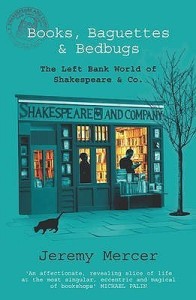 I’d read one memoir of working and living in Shakespeare and Company, Books, Baguettes and Bedbugs by Jeremy Mercer (original title: Time Was Soft There), back in 2017. I don’t remember it being particularly special as bookish memoirs go, but if you want an insider’s look at the bookshop that’s one option. Founder Sylvia Beach herself also wrote a memoir. The best part of any trip is preparing what books to take and read. I had had hardly any time to plan what else to pack, and ended up unprepared for the cold, but I had my shelf of potential reads ready weeks in advance. I took The Elegance of the Hedgehog by Muriel Barbery and read the first 88 pages before giving up. This story of several residents of the same apartment building, their families and sadness and thoughts, was reminiscent of Sophie’s World and didn’t grip me. But here’s what I did read, in chronological order (all:
  ):
):
Broderies by Marjane Satrapi (2003)
The fifth-floor Airbnb apartment where we stayed in the suburb of Mairie des Lilas overlooked a school and housed an amazing collection of graphic novels in French. I picked this one up to flick through because I remember enjoying Persepolis, but to my surprise I could understand just about every line bar a very few vocabulary words that I skipped over or grasped in context, so I read the whole thing over a couple of breakfasts and evening glasses of wine.
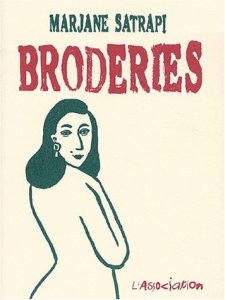 After a dinner party, Marji helps her grandmother serve tea from a samovar to their female family friends, and the eight Iranian women swap stories about their love lives. These are sometimes funny, but mostly sad and slightly shocking tales about arranged marriages, betrayals, and going to great lengths to entrap or keep a man. They range from a woman who has birthed four children but never seen a penis to a mistress who tried to use mild witchcraft to get a marriage proposal. What is most striking is how standards of beauty and purity have endured in this culture, leading women to despair over their loss of youth and virginity.
I think the title may have some slang meaning relating to the hymen? But in English translation it is Embroideries, referring to the way these women stitch together their life stories and their relationships. All the scenes are in black and white with a readable cursive handwriting for the plentiful text. It was a more talky graphic novel than I tend to prefer, but I learned a lot of good phrases from it, and found it a real joy to read. It must be the first book I have read in French since my university days!
The Sweet Life in Paris by David Lebovitz (2009)
 We both read this, keeping two bookmarks in and trading it off on Metro journeys. The short thematic chapters, interspersed with recipes, were perfect for short bursts of reading, and the places and meals he described often presaged what we experienced. His observations on the French, too, rang true for us. Why no shower curtains? Why so much barging and cutting in line? Parisians are notoriously rude and selfish, and France’s bureaucracy is something I’ve read about in multiple places this year, including John Lewis-Stempel’s La Vie.
Lebovitz has happily called the city home for two decades now, and performs culinary feats (testing the recipes for his dessert cookbooks) in a tiny apartment kitchen. There are sections here on fish, cheese, chocolate, and so on, but also on particular shopping areas and typically French incidents, such as everyone being on strike at the same time. One chapter was a hymn to G. Detou (a play on words meaning “I have it all”), a food emporium my husband was especially excited to visit. This was breezy and affectionate, a perfect travel companion.
A Waiter in Paris by Edward Chisholm (2022)
 This was consciously based on George Orwell’s Down and Out in Paris and London, but more so than an exposé of working-class poverty and abuses of power in the restaurant world, it is a rollicking narrative of living hand to mouth and trying to gain acceptance as a waiter. I enjoyed it in much the same way that I did Kitchen Confidential by Anthony Bourdain and Sweetbitter by Stephanie Danler: this is a high-stress, macho world I would never want to be a part of myself, but reading about it is intriguing. After Chisholm broke up with his girlfriend, he lived in a bedbug-ridden garret and often did 14-hour shifts as a runner at the “Bistrot de la Seine,” which packed in hundreds of tables and served thousands of meals daily. As “l’Anglais,” with no proper contract or social security, Chisholm was overlooked but determined to become a waiter. Though he felt fraternity with his colleagues, day-to-day life was brutal. He survived on coffee, cigarettes, and stolen rolls, and caught few-hour naps in the toilets of upscale restaurants. The waiters were cut-throat in their competition for tips, and the chefs, mostly Tamil, worked in a basement inferno. His pen portraits of these characters are particularly Orwellian. The account is as vivid and engrossing as a novel.
 I forgot to start it while I was there, but did soon afterwards: The Paris Novel by Ruth Reichl, forthcoming in early 2024. When Stella’s elegant, aloof mother Celia dies, she leaves her $8,000 – and instructions to go to Paris and not return to New York until she’s spent it all. At 2nd & Charles yesterday, I also picked up a clearance copy of A Paris All Your Own, an autobiographical essay collection edited by Eleanor Brown, to reread. I like to keep the spirit of a vacation alive a little longer, and books are one of the best ways to do that.
Review Catch-Up: Monica, Bibliomaniac, Family Meal, Fudge & More
I’m catching up with reviews of the many October releases I read, including these four sent by publishers…
- a genre-bending, Technicolor graphic novel in the form of short comics
- a book-addict’s memoir of an ambitious Covid-times tour of Britain’s bookshops
- an understated novel about queer men of colour coping with death and mental illness
- and a quirky contemporary poetry collection I read in one sitting.
Followed by a bonus list of October books I reviewed for Shelf Awareness, similarly varied in genre: autofiction, flash fiction, horror-tinged historical fiction, graphic memoirs and more.
Monica by Daniel Clowes
 Daniel Clowes is a respected American graphic novelist best known for Ghost World, which was adapted into a 2001 film starring Scarlett Johansson. I’m not sure what I was expecting of Monica. Perhaps something closer to a quiet life story like Alison by Lizzy Stewart? In any case, not this jumble of 1970s nostalgia and supernatural horror. The book is in nine loosely connected stories that make the head spin with their genre and tonal shifts; one thing that stays constant is Clowes’s drawing style, which combines vibrant, campy colour with exaggerated faces and blunt haircuts.
At first it seems there will be a straightforward linear narrative: the prologue, “Foxhole,” has two soldiers dreaming of what life will be like Vietnam, with the one looking forward to a simple life with his fiancée Penny. “Pretty Penny” shatters those illusions as we see that Penny has fully embraced sexual liberation while he’s been away. She rejects her mother and, in a countercultural decision, keeps the baby when she gets pregnant. Young Monica has a sequence of stepfather figures before Penny dumps her with her parents and goes AWOL.
To an extent, the rest of the book is about Monica’s search for her parents. We see her as a young college student communicating with her dead grandfather via a radio, as a successful entrepreneur selling candles, and as an older woman caretaking for a California Airbnb. But in between there are bizarre sci-fi/folk horror interludes – “The Glow Infernal” and “The Incident” – about unconnected characters, and Monica’s involvement with a cult inevitably turns strange. I couldn’t get past the distasteful story lines or grotesque style. Mostly, I wasn’t convinced that Clowes liked or cared about any of his own characters, so why should I? (This might be Tom Cox’s dream book, but not mine.) I suppose I might try a classic work by Clowes one day, but only if I can be assured that it has more plot and heart.
With thanks to Jonathan Cape (Penguin) for the free copy for review.
Bibliomaniac: An Obsessive’s Tour of the Bookshops of Britain by Robin Ince
Do you know anyone who can buy just one book? Do you know anyone who leaves a bookshop only with what they walked in to buy?
I understand that Robin Ince is a radio personality and comedian who, though holding no formal qualifications, often delivers presentations about science. He was meant to undertake a stadium tour with Professor Brian Cox in the autumn of 2021, but a Covid resurgence put paid to that. Not one for sitting around at home – he comes across as driven, antsy; positively allergic to boredom – he formulated Plan B: 100+ events, most of them in independent bookshops (the oddest venue was a Chinese restaurant; he was speaking to the Plymouth Humanists), over the course of two months, criss-crossing Britain and hitting many favourite places such as Hay-on-Wye, Hungerford (my local indie) and Wigtown. The topic of his previous book was curiosity, which gave him free rein to feature anything that interested him, so no two talks were the same and he incorporated lots of ad hoc book recommendations.
 Ince is not just a speaker at the bookshops but, invariably, a customer – as well as at just about every charity shop in a town. Even when he knows he’ll be carrying his purchases home in his luggage on the train, he can’t resist a browse. And while his shopping basket would look wildly different to mine (his go-to sections are science and philosophy, the occult, 1960s pop and alternative culture; alongside a wide but utterly unpredictable range of classic and contemporary fiction and antiquarian finds), I sensed a kindred spirit in so many lines:
“A bookshop with a proximity to an interesting graveyard is a fine combination.”
“I like charity bookshops, because I can delude myself into believing that I am committing an altruistic act by purchasing too many books. I am not satisfying my consumer lust – I am digging a well in Uganda.”
“This is one of the wonders of books: the delight of being a species that can chronicle and preserve. I pick up a book from a shelf, and someone who is no more than ash or bone can still change me.”
He’s also refreshingly open-minded, determined not to become a white male dinosaur: he once spent a wonderful year reading only women authors, and gratefully accepts the gift of a Black queer feminist work – at which he knows a younger version of himself would have scoffed. I took lots of notes on shops I hadn’t heard of, but also appreciated the witty asides on British ways and on the rigours and coincidences of the tour. If you liked White Spines, this will be right up your street, though to me this was universal where the Royle was too niche. And it didn’t matter a jot that I was previously unfamiliar with Ince as a public figure.
Bibliomaniac came out in paperback on 5 October. My thanks to Atlantic Books for the free copy for review.
Family Meal by Bryan Washington
After the verve of his linked short stories (Lot, which won the Dylan Thomas Prize) and the offbeat tenderness of his debut novel, Memorial, I couldn’t wait for Bryan Washington’s next book. While it’s set in the multicultural Houston of his first book and similarly peopled by young queer men of colour, Family Meal shares the more melancholy edge of Memorial with its focus on bereavement and the habits and relationships that help the characters to cope.
Cam has moved back to Houston from Los Angeles after the untimely death of his boyfriend Kai, who had a budding career as a translator and spent part of each year in Japan. Cam works in a failing gay bar, crashes with his boss and has mostly stopped eating. Although he still loves cooking Asian food for others, he rarely tastes it himself; his overpowering appetite now is for pills and sex, leading him to arrange as many as four hook-ups per day. Kai still appears and communicates to him. “Easier to spend time dwelling on death than it is to live, says Kai.” Is it to escape this spectre, or the memory of what happened to Kai, that Cam descends into his addictions? Meanwhile, his estranged friend TJ, with whom Cam grew up at TJ’s Korean American family’s bakery after the death of Cam’s parents, has his own history of loss and unhealthy relationships. But a connection with the bakery’s new nonbinary employee, Noel, seems like it might be different.
If you’ve read Washington before, you’ll know what to expect: no speech marks, obscenity-strewn dialogue, sexually explicit scenes that seem to be there for the sake of it (because sex is part of life, rather than because they particularly advance the plot). An issue I had here, like with Memorial, is that having multiple first-person narrators doesn’t add anything; Kai and TJ sound so much like Cam, who narrates roughly the first half, that it’s hard to tell their affectless accounts apart. Such interchangeable voices two books running suggests to me that Washington hasn’t yet managed to fully imagine himself outside of his own personality.

The novel has much to convey about found family, food as nurture, and how we try to fill the emptiness in our lives with things that aren’t good for us. However, it often delivers these messages through what wise secondary characters say, which struck me as unsubtle.
“You don’t have to do this alone, says TJ.”
(Kai:) “My mother would say, Cooking is care. The act is the care.”
“Love can be a lot of things though, says Noel. Right? It’s pleasure but it’s also washing the dishes and sorting medication and folding the laundry. It’s picking out what to eat for dinner three nights in a row, even if you don’t want to. And it’s knowing when to speak up, and when to stay quiet, and when, I think, to move on. But also when to fight for it.”
“Sometimes the best we can do is live for each other, she [Kai’s sister] says. It’s enough. Even if it seems like it isn’t.”
There’s no doubting how heartfelt this story is. It brought tears to my eyes at the beginning and end, but in between did not captivate me as much as I hoped. While intermittently poignant on the subject of bereavement, it is so mired in the characters’ unhealthy coping mechanisms that it becomes painful to read.
In my mind Washington and Brandon Taylor are in the same basket, though that may be reductive or unimaginative of me (young, gay Black authors from the American South who have published three books and tend to return to the same themes and settings). Before this year I would have said Taylor had the edge, but The Late Americans was so disappointingly similar to his previous work that Washington has taken the lead. I just hope that with his next work he challenges himself instead of coasting along in the groove he’s created thus far.
I wish I could get a copy of this into the hands of Sufjan Stevens…
With thanks to Atlantic Books for the free copy for review.
Fudge by Andrew Weatherhead
 I read this over a chilled-out coffee at the Globe bar in Hay-on-Wye (how perfect, then, to come across the lines “I know the secret of life / Is to read good books”). Weatherhead mostly charts the rhythms of everyday existence in pandemic-era New York City, especially through a haiku sequence (“The blind cat asleep / On my lap—and coffee / Just out of reach” – a situation familiar to any cat owner). His style is matter-of-fact and casually funny, juxtaposing random observations about hipster-ish experiences. From “Things the Photoshop Instructor Said and Did”: “Someone gasped when he increased the contrast / I feel like everyone here is named Taylor.”
The central piece, “Poem While on Hold with NBA League Pass Customer Support Nov. 17, 2018,” descends into the absurd, but his four hours lost on the phone are reclaimed through his musings on a sport he once played (“I had begun to find meaning in art and music / I was always too cerebral a player anyways … That feeling—of perfect grace and equanimity— / must be what we’re all searching for in this life”) and on life in general. This is poetry that doesn’t feel like poetry, if that makes sense. I have a hunch that it might appeal to readers of David Foster Wallace.
Published by Publishing Genius. With thanks to publicist Lori Hettler for the e-copy for review.
Reviewed for Shelf Awareness:
(Links to full text)
The Flowers of Provence by Jamie Beck (Gift books feature): A gorgeous book of photographs, perfect for gardeners, romantics, and armchair travelers. Her still lifes are as detailed and colorful as medieval paintings.
Edith Holler by Edward Carey (forthcoming): A dark fairy tale about a precocious girl confined to her family’s theatre in Norwich, England yet driven to reveal the truth behind her city’s child disappearances. Reminiscent of Dahl, Dickens, and Shakespeare at their goriest.
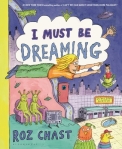
I Must Be Dreaming by Roz Chast: A laugh-out-loud-funny tour through her dream journal as well as a brief introduction to dream theory. Delightfully captures the randomness of dream topics and dialogues.

Tremor by Teju Cole: A kaleidoscopic work of autofiction that journeys between the US and Nigeria as it questions the ownership and meaning of Black art. The sophisticated structure is a highlight of this elegant study of art criticism, suffering, and subjectivity.
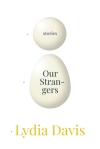
Our Strangers by Lydia Davis (Review and Q&A): In her ninth collection of mostly flash-length stories (a whopping 143 of them), an overarching theme is the mystery of human communication and connection. A real cornucopia of genres, structures, and voices. [Only available via Bookshop.org and independent bookstores.]
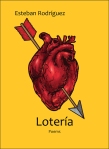
Lotería by Esteban Rodríguez: Lotería is a traditional Mexican game of chance. Each Spanish-language card is allotted a one-page poem in a creative, poignant recounting of his Mexican American family history.
Glass Half Empty by Rachael Smith: The British comics artist third graphic memoir is a refreshingly candid account of her recovery from alcoholism after her father’s death. In some panes, her adult self appears alongside her younger self, offering advice.


The Dead Peasant’s Handbook by Brian Turner: The final installment – after The Wild Delight of Wild Things and The Goodbye World Poem – in an intimate, autobiographical trilogy. Love is presented as the key to surviving bereavement and wartime trauma.
September Releases by Chloe Lane, Ben Lerner, Navied Mahdavian & More
September and October are bounteous months in the publishing world. I’ll have a bunch of books to plug in both, mostly because I’ve upped my reviewing quota for Shelf Awareness. There’s real variety here, from contemporary novellas and heavily autobiographical poetry to nature essays and a graphic memoir.
Arms & Legs by Chloe Lane
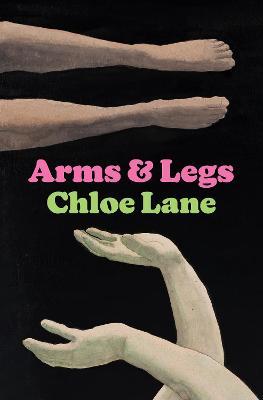 I reviewed Lane’s debut novel, The Swimmers, a black comedy about a family preparing for an assisted suicide, this time last year. It seems there’s an autobiographical setup to the author’s follow-up, which focuses on a couple from New Zealand now living in Florida with their young son. Narrator Georgie teaches writing at a local college and is having an affair with Jason, an Alabama-accented librarian she met through taking Finn to the Music & Movement class. She joins in a volunteer-led controlled burn in the forest, and curiosity quickly turns to horror when she discovers the decaying body of a missing student.
There’s a strong physicality to this short novel: fire, bodies and Florida’s dangerous fauna (“To choose to live in a place surrounded by these creatures, these threats, it made me feel like I was living a bold life”). Georgie has to decide whether setting fire to her marriage with Dan is what she really wants. A Barry Hannah short story she reads describes adultery as just a matter of arms and legs, a phrase that’s repeated several times.
Georgie is cynical and detached from her self-destructive choices, coming out with incisive one-liners (“My life isn’t a Muriel Spark novel, there’s no way to flash forward and find out if I make it out of the housefire alive” and “He rested the spade on his shoulder as if he were a Viking taking a drinks break in the middle of a battle”). Lane burrows into instinct and motivation, also giving a glimpse of the challenges of new motherhood. Apart from a wicked dinner party scene, though, the book as a whole was underwhelming: the body holds no mystery, and adultery is an old, old story.
With thanks to Gallic Books for the proof copy for review.
The Lights by Ben Lerner
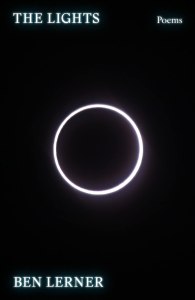 I’d read fiction and nonfiction from Lerner but had no idea of what to expect from his poetry. Almost every other poem is a prose piece, many of these being absurdist monologues that move via word association between topics seemingly chosen at random: psychoanalysis, birdsong, his brother’s colorblindness; proverbs, the Holocaust; art conservation, his partner’s upcoming C-section, an IRS Schedule C tax form, and so on.
The vocabulary and pronouncements can be a little pretentious. The conversational nature and randomness of the subjects contribute to the same autofiction feel you get from his novels. For instance, he probes parenting styles: his parents’ dilemma between understanding his fears and encouraging him in drama and sport; then his daughters’ playful adoption of his childhood nickname of Benner for him.
A few highlights: the enjambment in “Index of Themes”; the commentary on pandemic strictures and contrast between ancient poetry and modern technology in “The Stone.” I wouldn’t seek out more poetry by Lerner, but this was interesting to try. (Read via Edelweiss)
Sample lines:
“When you die in the patent office / there’s a pun on expiration”
“the goal is to be on both sides of the poem, / shuttling between the you and I. … Form / is always the answer to the riddle it poses”
“It’s raining now / it isn’t, or it’s raining in the near / future perfect when the poem is finished / or continuous, will have been completed”
This Country: Searching for Home in (Very) Rural America by Navied Mahdavian
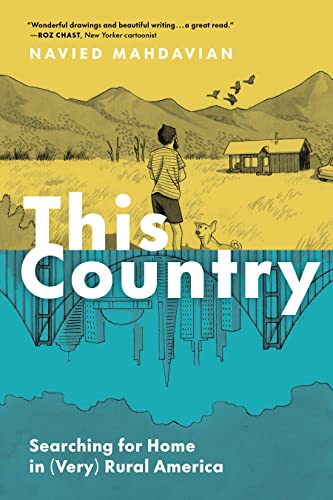 Mahdavian has also published comics in the New Yorker. His debut graphic novel is a memoir of the three years (2016–19) he and his wife lived in remote Idaho. Of Iranian heritage, the author had lived in Miami and then the Bay Area, so was pretty unprepared for living off-grid. His wife, Emelie (who is white), is a documentary filmmaker. They had a box house brought in on a trailer. After Trump’s surprise win, it was a challenging time to be a Brown man in the rural USA. “You’re not a Muslim, are you?” was the kind of question he got on their trips into town. Neighbors were outwardly friendly – bringing them firewood and elk kebabs, helping when their car wouldn’t start or they ran off the road in icy conditions, teaching them the local bald eagles’ habits – yet thought nothing of making racist and homophobic slurs.
I appreciated the self-deprecating depictions of learning DIY from YouTube videos and feeling like a wimp in comparison to his new friends who hunt and have gun collections – one funny spread has him imagining himself as a baby in a onesie sitting across from a manly neighbor. “I am shedding my city madness,” Mahdavian boasts as they plant an abundant garden and start learning about trees and birds. The references to Persian myth and melodrama are intriguing, though sometimes seem à propos of nothing, as do the asides on science and nature. I preferred when the focus was on the couple’s struggles with infertility and reopening the town movie theater – a flop because people only want John Wayne flicks.
This was enjoyable reading, but the simple black-and-white style is unlikely to draw in readers new to graphic storytelling, and I wondered if the overall premise – ‘we expected to find closed-minded racists and we did’ – was enough to hang a memoir on. (Read via Edelweiss)
Reviewed for Shelf Awareness:
(Links to full text)
The Wren, The Wren by Anne Enright
 Enright’s astute eighth novel traces the family legacies of talent and trauma through the generations descended from a famous Irish poet. Cycles of abandonment and abuse characterize the McDaraghs. Enright convincingly pinpoints the narcissism and codependency behind their love-hate relationships. (It was an honor to also interview Anne Enright. You can see our Q&A here.)
When My Ghost Sings by Tara Sidhoo Fraser
 This lyrical debut memoir is an experimental, literary recounting of the experience of undergoing a stroke and relearning daily skills while supporting a gender-transitioning partner. Fraser splits herself into two: the “I” moving through life, and “Ghost,” her memory repository. But “I can’t rely only on Ghost’s mental postcards,” Fraser thinks, and sets out to retrieve evidence of who she was and is.
The Vaster Wilds by Lauren Groff
 (Already featured in my Best of 2023 so far post.) Groff’s fifth novel combines visceral detail and magisterial sweep as it chronicles a runaway Jamestown servant’s struggle to endure the winter of 1610. Flashbacks to traumatic events seep into her mind as she copes with the harsh reality of life in the wilderness. The style is archaic and postmodern all at once. Evocative and affecting – and as brutal as anything Cormac McCarthy wrote. A potent, timely fable as much as a historical novel.
Zoo World: Essays by Mary Quade
 A collection of 15 thoughtful nature/travel essays that explore the interconnectedness of life and conservation strategies, and exemplify compassion for people and, particularly, animals. The book makes a round-trip journey, beginning at Quade’s Ohio farm and venturing further afield in the Americas and to Southeast Asia before returning home.
The Goodbye World Poem by Brian Turner
 The lovely laments in Brian Turner’s fourth collection (a sequel to The Wild Delight of Wild Things) dwell in the aftermath of the loss of his wife and others, and cultivate compensatory appreciation for the natural world. Turner’s poetry is gilded with alliteration and maritime metaphors The long title piece, which closes the collection, repeats many phrases from earlier poems—a pleasing way of drawing the book’s themes together. (My review of the third volume in this loose trilogy is forthcoming.)
And a bonus review book, relevant for its title:
September and the Night by Maica Rafecas
[Translated from the Catalan by Megan Berkobien and María Cristina Hall]
 A new Logistics Centre is to cut through Anaïs’s family vineyards as part of a compulsory land purchase. While her father, Magí, and brother, Jan, are resigned to the loss, this single mother decides to resist, tying herself to a stone shed on the premises that will be right in the path of the bulldozers. This causes others to question her mental health, with social worker Elisa tasked with investigating the case. Key evidence of her irrational behaviour turns out to have perfectly good explanations.
Certain chapters alternate Jan’s and Anaïs’s perspectives, recreate her confusion in a psychiatric hospital, or have every sentence beginning with “There” or “And” – effective anaphora. Although I didn’t think Jan’s several romantic options added to the plot, this debut novella from a Spanish author was a pleasant surprise. It’s based on a true story, though takes place in fictional locations, and bears a gentle message of cultural preservation.
With thanks to Fum d’Estampa Press for the free copy for review.
The Best Books from the First Half of 2023
Yes, it’s that time of year already! It remains to be seen how many of these will make it onto my overall best-of year list, but for now, these are my 20 highlights. Plus, I sneakily preview another great novel that won’t release until September. (For now I’m highlighting 2023 releases, whereas at the end of the year I divide my best-of lists into current year and backlist. I’ve read 86 current-year releases so far and am working on another 20, so I’m essentially designating a top 20% here.) I give review excerpts and link to the full text from this site or elsewhere. Pictured below are the books I read in print; all the others were e-copies.

Fiction
 Shoot the Horses First by Leah Angstman: In 16 sumptuous historical stories, outsiders and pioneers face disability and prejudice with poise. The flash entries crystallize moments of realization, often about health. Longer pieces shine as their out-of-the-ordinary romances have space to develop. In the novella Casting Grand Titans, a botany professor in 1850s Iowa learns her salary is 6% of a male colleague’s. She strives for intellectual freedom, reporting a new-to-science species of moss, while working towards liberation for runaway slaves.
 The House Is on Fire by Rachel Beanland: Moving at a propulsive pace, Beanland’s powerful second novel rotates through the perspectives of these main characters – two men and two women; two white people and two enslaved Black people – caught up in the Richmond Theater Fire of 1811 (one of the deadliest events in early U.S. history) and its aftermath. Painstakingly researched and full of historical detail and full-blooded characters, it dramatizes the range of responses to tragedy and how people rebuild their lives.
 The New Life by Tom Crewe: Two 1890s English sex researchers (based on John Addington Symonds and Havelock Ellis) write a book called Sexual Inversion drawing on ancient Greek history and containing case studies of homosexual behaviour. Oscar Wilde’s trial puts everyone on edge; not long afterwards, their own book becomes the subject of an obscenity trial, and each man has to decide what he’s willing to give up in devotion to his principles. This is deeply, frankly erotic stuff, and, on the sentence level, just exquisite writing.
 Daughters of Nantucket by Julie Gerstenblatt: (Yes, another historical fire novel, and I reviewed both for Shelf Awareness!) This engrossing debut explores the options for women in the mid-19th century. Metaphorical conflagrations blaze in the background in the days leading up to the great Nantucket fire of 1846: each of three female protagonists (a whaling captain’s wife, a museum curator, and a pregnant Black entrepreneur) holds a burning secret and longs for a more expansive, authentic life. Tense and sultry; for Sue Monk Kidd fans.
 I Have Some Questions for You by Rebecca Makkai: When an invitation comes from her boarding school alma mater, Granby, to teach a two-week course on podcasting, Bodie indulges her obsession with the 1995 murder of her former roommate. Makkai has taken her cues from the true crime genre and constructed a convincing mesh of evidence and theories. She so carefully crafts her pen portraits, and so intimately involves us in Bodie’s psyche, that it’s impossible not to get invested. This is timely, daring, intelligent, enthralling storytelling.
 Sidle Creek by Jolene McIlwain: In this debut collection of 22 short stories, loosely linked by their location in the Appalachian hills in western Pennsylvania and a couple of recurring minor characters, McIlwain softens the harsh realities of addiction, poverty and violence with the tender bruises of infertility and lost love. Grief is a resonant theme in many of the stories, with pregnancy or infant loss a recurring element. At times harrowing, always clear-eyed, these stories are true to life and compassionate about human foibles and animal pain.
 Hello Beautiful by Ann Napolitano: Oprah’s 100th book club pick. It’s a family story spanning three decades and focusing on the Padavanos, a working-class Italian American Chicago clan with four daughters. Julia meets melancholy basketball player William Waters while at Northwestern in the late 1970s. There is such warmth and intensity to the telling, and brave reckoning with bereavement, mental illness, prejudice and trauma. I love sister stories in general, and the subtle echoes of Leaves of Grass and Little Women add heft.
 Romantic Comedy by Curtis Sittenfeld: Through her work as a writer for a sketch comedy show modelled on Saturday Night Live, Sally Milz meets Noah Brewster, a pop star with surfer-boy good looks. Plain Jane getting the hot guy – that never happens, right? In fact, Sally has a theory about this very dilemma… As always, Sittenfeld’s inhabiting of a first-person narrator is flawless, and Sally’s backstory and Covid-lockdown existence endeared her to me. Could this be called predictable? Well, what does one want from a romcom?
 In Memoriam by Alice Winn: Heartstopper on the Western Front; swoon! Will Sidney Ellwood and Henry Gaunt both acknowledge that this is love and not just sex, as it is for so many teenage boys at their English boarding school? And will one or both survive the trenches of the First World War? Winn depicts the full horror of war, but in between there is banter, friendship and poetry. Some moments are downright jolly. This debut is obsessively researched, but Winn has a light touch with it. Engaging, thrilling, and, yes, romantic.
A bonus:
The Vaster Wilds by Lauren Groff (Riverhead/Hutchinson Heinemann, 12 September): Groff’s fifth novel combines visceral detail and magisterial sweep as it chronicles a runaway Jamestown servant’s struggle to endure the winter of 1610. Flashbacks to traumatic events seep into her mind as she copes with the harsh reality of life in the wilderness. The style is archaic and postmodern all at once. Evocative and affecting – and as brutal as anything Cormac McCarthy wrote. A potent, timely fable as much as a historical novel. (Review forthcoming for Shelf Awareness.)
Nonfiction
 All My Wild Mothers by Victoria Bennett: A lovely memoir about grief and gardening, caring for an ill child and a dying parent. The book is composed of dozens of brief autobiographical, present-tense essays, each titled after a wildflower with traditional healing properties. The format realistically presents bereavement and caring as ongoing, cyclical challenges rather than one-time events. Sitting somewhere between creative nonfiction and nature essays, it’s a beautiful read for any fan of women’s life writing.
 Monsters by Claire Dederer: The question posed by this hybrid work of memoir and cultural criticism is “Are we still allowed to enjoy the art made by horrible people?” It begins, in the wake of #MeToo, by reassessing the work of film directors Roman Polanski and Woody Allen. The book is as compassionate as it is incisive. While there is plenty of outrage, there is also much nuance. Dederer’s prose is forthright and droll; lucid even when tackling thorny issues. Erudite, empathetic and engaging from start to finish.
 Womb by Leah Hazard: A wide-ranging and accessible study of the uterus, this casts a feminist eye over history and future alike. Blending medical knowledge and cultural commentary, it cannot fail to have both personal and political significance for readers of any gender. The thematic structure of the chapters also functions as a roughly chronological tour of how life with a uterus might proceed: menstruation, conception, pregnancy, labour, caesarean section, ongoing health issues, menopause. Inclusive and respectful of diversity.
 Sea Bean by Sally Huband: Stories of motherhood, the quest to find effective treatment in a patriarchal medical system, volunteer citizen science projects, and studying Shetland’s history and customs mingle in a fascinating way. Huband travels around the archipelago and further afield, finding vibrant beachcombing cultures. In many ways, this is about coming to terms with loss, and the author presents the facts about climate crisis with sombre determination. She writes with such poetic tenderness in this radiant debut memoir.
 Marry Me a Little by Robert Kirby: Hopping around in time, this graphic memoir tells the story of how the author and his partner John decided to get married in 2013. The blue and red color scheme is effective at evoking a polarized America and the ebb and flow of emotions, with blue for calm, happy scenes and concentrated red for confusion or anger. This is political, for sure, but it’s also personal, and it balances those two aims well by tracing the history of gay marriage in the USA and memorializing his own relationship.
 All of Us Together in the End by Matthew Vollmer: In 2019, Vollmer’s mother died of complications of Alzheimer’s and Parkinson’s. Months later, his father reported blinking lights in the woods near the family cemetery. Although Vollmer had left the Seventh-Day Adventist Church in college, his religious upbringing influenced his investigation, which overlapped with COVID-19. Grief, mysticism, and acceptance of the unexplained are resonant themes. An unforgettable record of “a collision with the ineffable.”
 Eggs in Purgatory by Genanne Walsh: This autobiographical essay tells the story of the last few months of her father’s life. Aged 89, he lived downstairs from Walsh and her wife in San Francisco. He was quite the character: idealist, stubborn, outspoken; a former Catholic priest. Although he had no terminal conditions, he was sick of old age and its indignities and ready to exit. The task of a memoir is to fully mine the personal details of a situation but make of it something universal, and that’s just what she does here. Stunning.
Poetry
 More Sky by Joe Carrick-Varty: In this debut collection, the fact of his alcoholic father’s suicide is inescapable. The poet alternates between an intimate “you” address and third-person scenarios, auditioning coping mechanisms. His frame of reference is wide: football, rappers, Buddhist cosmology. The word “suicide” itself is repeated to the point where it becomes just a sibilant collection of syllables. The tone is often bitter, as is to be expected, but there is joy in the deft use of language.
 Lo by Melissa Crowe: This incandescent autobiographical collection delves into the reality of sexual abuse and growing up in rural poverty. Guns are insidious, used for hunting or mass shootings. Trauma lingers. “Maybe home is what gets on you and can’t / be shaken loose.” The collection is so carefully balanced in tone that it never feels bleak. In elegies and epithalamiums (poems celebrating marriage), Crowe honors family ties that bring solace. The collection has emotional range: sensuality, fear, and wonder at natural beauty.
 Standing in the Forest of Being Alive by Katie Farris: This debut collection addresses the symptoms and side effects of breast cancer treatment at age 36, but often in oblique or cheeky ways – it can be no mistake that “assistance” appears two lines before a mention of haemorrhoids, for instance, even though it closes an epithalamium distinguished by its gentle sibilance (Farris’s husband is Ukrainian American poet Ilya Kaminsky.) She crafts sensual love poems, and exhibits Japanese influences. (Review forthcoming at The Rumpus.)
 The House of the Interpreter by Lisa Kelly: Kelly is half-Danish and has single-sided deafness, and her second collection engages with questions of split identity. One section ends with the Deaf community’s outrage that the Prime Minister’s Covid briefings were not translated into BSL. Bizarre but delightful is the sequence of alliteration-rich poems about fungi, followed by a miscellany of autobiographical poems full of references to colour, nature and travel.
What are some of the best books you’ve read so far this year?
What 2023 releases should I catch up on right away?
 Bookish Beck = Rebecca Foster. American transplant to England. Freelance proofreader and book reviewer.
 Bookish Beck