#ParisInJuly2026, I: Kiran Millwood Hargrave, Deborah Levy & Chris Newens
I wouldn’t want to be in Paris right now – continental Europe is far too hot in high summer and in recent years the UK has been following suit – but I am having such fun travelling there through books. I have a fantastic stack of Paris-set novels and memoirs on the go, perfect for sinking into on long afternoons and evenings while I hide from the second round of the heat wave in our relatively cool lounge. These first four selections were corkers! I mostly read them earlier: in May, or across several years, or started in January but only just finished. And what a treat they all were: an epic yet intimate queer romance, two auto/fiction hybrids about making a life as an unconventional woman, and a tour through Paris food, district by district.

Almost Life by Kiran Millwood Hargrave (2026)
There has been homoerotic content in Hargrave’s previous fiction for adults, but this is a full-blown queer love story that, with its time span (1978 to 2013) and heft, feels momentous, like a future classic. Erica is an earnest 18-year-old tourist experiencing Paris before starting at UEA. She meets Laure, an older, cynical Sorbonne art history student, on the steps of the Sacré-Coeur: drawn to her not just because they’re reading the same book (A Lover’s Discourse by Roland Barthes) but also because Laure looks so perfectly Parisian there in a louche sprawl, smoking a cigarette. Laure is a confirmed lesbian, whereas Erica was previously straight. It’s coup de foudre for sure. Laure has been with many women, including married ones, but what she feels for Erica is different, and Erica leaving at the end of the summer is such a blow that her problem drinking gets out of control.
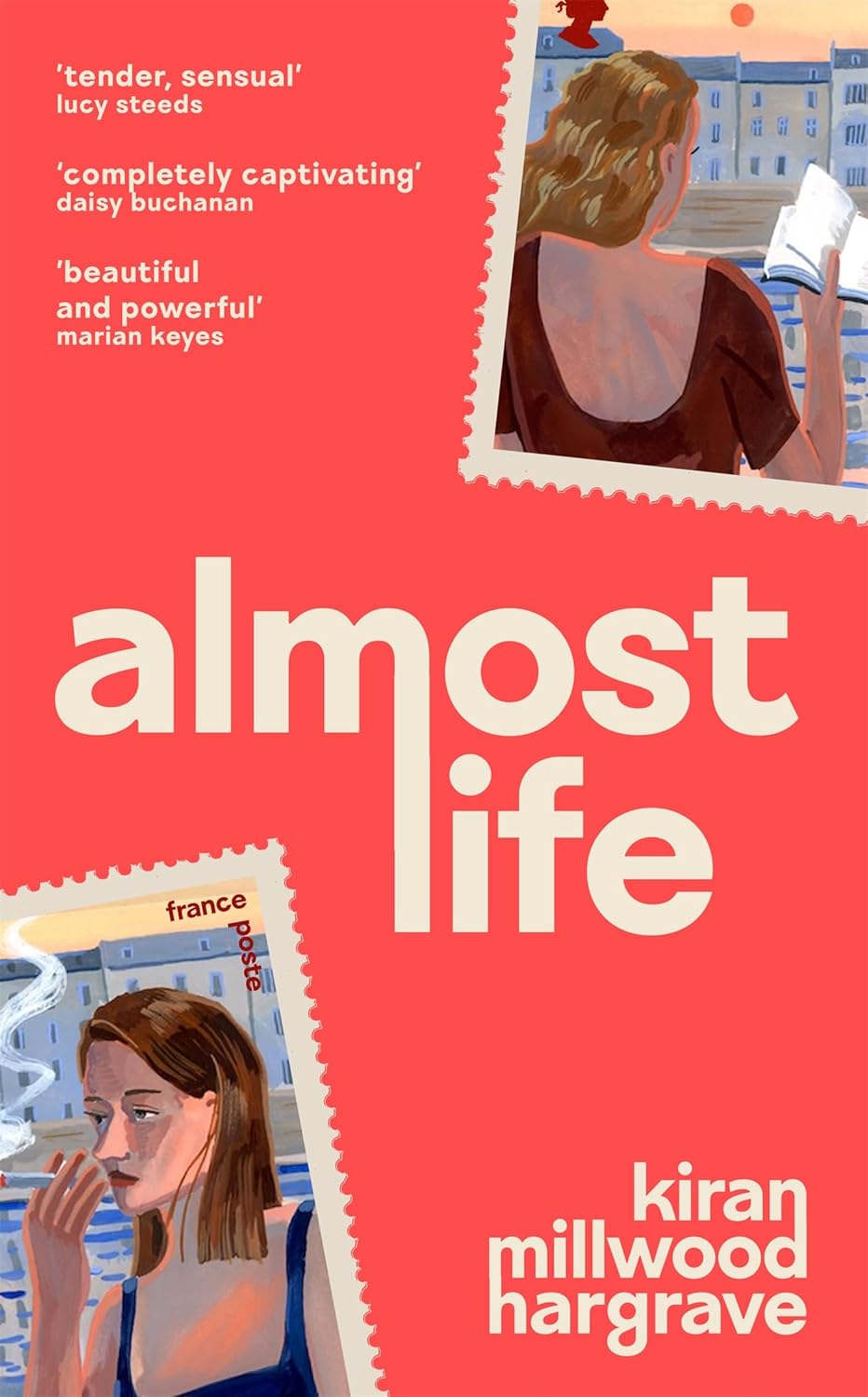
Comparisons with One Day by David Nicholls are inescapable what with the structure of jumping ahead by a few years with each section, although I’d argue that this is more similar to The Versions of Us by Laura Barnett and The Heart’s Invisible Furies by John Boyne. Hargrave’s close third-person narration alternates between her two protagonists and occasionally documents their interactions, though they keep missing their chance to be together. On two occasions Erica doesn’t write or visit when she should; twice they resume their love affair and could have gotten back together, but by then one or both has another partner. (Erica marries a Creative Writing MA classmate and they have two daughters.) The social context is important: they lose a dear friend to the AIDS crisis and Hargrave carefully bookends the action to show an advance in LGBTQ rights: early on, the characters are caught up in an attack on a gay bar in 1978; in the last pages, France legalizes same-sex marriage.
Thirty-five years is a long time in any relationship, but Erica and Laure’s is repeatedly strained by absence and perceived betrayals. They each, separately, go through a lot, including bereavements, addiction, mental health issues, and career disappointments. I thought the novel might have a speculative element, contrasting their potential life together with their divergent trajectories. In fact, only in one brief instance does Hargrave offer an alternative version of how things might have gone. Instead, the focus is on moments when fear or negligence stopped one of them from reaching out. I quibbled with a few seeming anachronisms and errors but overall found this delicious, touching, and even strangely close to home sometimes. Paris itself is a star, its museums, bars, and streets a perfect backdrop; Monet’s gardens and the Norfolk coast are appealing settings, too. This was a sweet, sexy, sobering read I can wholeheartedly recommend. (Public library) 
A linking passage:
“They went together to the Père-Lachaise and Erica pulled a button off her shirt to put on Gertrude Stein’s grave. Laure was amazed she knew Tender Buttons but not that Gertrude Stein had loved a woman. She did not want to be the lesbian prophet to this girl, but she could not help herself.”
My Year in Paris with Gertrude Stein: A Fiction by Deborah Levy (2026)
“Gertrude Stein said that’s enough. (I know that that’s not enough now.)”
~from “Roseability” by Idlewild – enjoy the c. 2000 Scottish punk!
Here’s the good news: You don’t need to know anything – or particularly care – about Gertrude Stein to enjoy this. Even not having read any Stein, just having read about her, it was clear to me that the style is an homage in places (repetition, scant punctuation). But where Stein’s is famously cryptic, Levy’s prose is crystal-clear as usual. There’s a gauzy fictional storyline in which the narrator is wrestling with an inchoate essay about Gertrude Stein. (Rather like Geoff Dyer trying to write about D.H. Lawrence in Out of Sheer Rage.) She has two close friends: Eva is a graphic novelist with an international background, currently separated from a husband back in Seattle; Fanny is a polyamorous French lesbian who works in finance and, no matter the topic, tells it like it is. A mystery of sorts arises in the form of Eva’s lost cat, Bob. Fanny has heard about a cat found drowned in the canal and they later meet a Frenchman whose cat was stolen. (It’s unclear whether it’s all one and the same cat.)
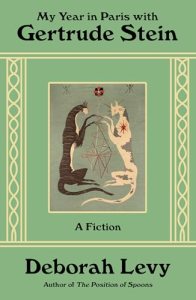
Cute American cover (though the British one is probably more apt).
The narrator alternates between this minor intrigue, biographical fragments about Stein, and her struggle to know how to capture her subject in words. Stein was brought up in a German Jewish household in Pennsylvania and failed her medical school exams at Johns Hopkins. In Paris she lived with Alice B. Toklas as she pleased, without apology: an artist’s muse, intellectual and author inspired by “early psychology and cubism.” Levy clearly admires Stein for pushing the boundaries of literature and of life, paving the way for so many. I wasn’t sure that the ‘story’, such as it is, matters here, or at least not as much as the biography and pastiche. Levy is very much in Ali Smith territory here. In any case, I found it playful, sophisticated and beguiling. There are so many plainly put but brilliant lines:
“Stein put her immense writing energies into making sure she was not understood. This is what interested me most about her writing. She did not believe it is worth having a conversation if everything is understandable.”
“Every century needs an artist to dismantle coherence as we have been taught it and make a space for something new to happen.”
I have a copy of The Autobiography of Alice B. Toklas that I’m going to attempt soon…
(Public library)
Real Estate by Deborah Levy (2021)
 I’m not sure why it took me so long to read the final volume of Levy’s so-called Living Autobiography. I started it in August 2022: perfect timing because that was the year we bought our first house. But I left it part-read on a shelf until April. It’s not my favourite of the trilogy – that’s The Cost of Living, which is perfect – but I appreciated it a lot more than Things I Don’t Want to Know, which felt forced. Levy paints her life as restless, nomadic; to an extent, she likes it that way. She flits between London and Paris, attends a literary festival in India and takes an extended holiday in Greece. At age 60, single and with adult daughters, she doesn’t have to answer to anyone. Yet she longs for a home of her own – a deep sense of fulfilment that perhaps can’t be bought along with a piece of property. Is it a paradox to desire grounding but also freedom? That’s the main question that Levy explores here, and you can see why Stein would become a model for her (Leonora Carrington is another in this book). “It seemed to me all over again that in every phase of living we do not have to conform to the way our life has been written for us, especially by those who are less imaginative than ourselves.” This is incredibly quotable, and really a perfect book for every woman of a certain age as we come to resemble our mothers and ponder how to go on constructing ourselves through words and relationships.
to think and feel and live and love more freely is the point of life
So then, now that I was a sixty-year-old female character, both unwritten and constantly rewriting the script, what did I value, own, discard and bequeath?
Levy has an enviable talent for simplicity and clarity, but simultaneous impact and meaning. I’d be lucky to ever write anything autobiographical that has half as much elegance and power as her work. (New purchase – Amazon?) 
Moveable Feasts: A Story of Paris in Twenty Meals by Chris Newens (2025)
Newens, an English journalist, grew up working in his family bakery and tea rooms, so knew of the hard labour and long, early hours that daily food preparation requires. He’d lived in Paris for a decade when he decided that his strategy for getting a broader understanding of his adopted city would be through its cuisine. Arrondissement by arrondissement, he explores culinary landmarks and famous dishes, choosing one recipe from each to recreate in his kitchen. Some of these are familiar French staples such as croissants, crêpes, macarons, a goat’s cheese salad and tartiflette. Others aren’t so much a recipe as a serving suggestion: fresh oysters, an omelette with no ingredients beyond 3 eggs, pre-packaged escargots. Tourist food can be good or terrible, depending on where you go.
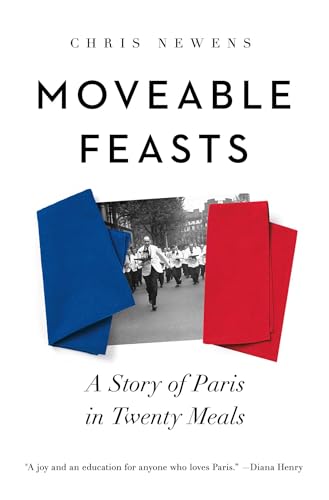 To get beyond clichés and give an accurate portrait of Paris, Newens realized, it’s essential to include ethnic dishes such as banh mi, couscous, falafel, kebabs (made of equal parts lamb belly and turkey thigh meat) and meen puyabaisse (a Tamil-fusion fish stew – A Waiter in Paris taught me that many of the city’s food service workers are from Sri Lanka) to reflect the many immigrant cultures that call Paris home. To mix things up, he sometimes strays from the usual format of meeting with restaurant staff and learning a dish from them. One chapter is an elegy for the family friend through whom he first discovered French food. In others he is surprised by the delicious/awful fare on offer at a Paris soup kitchen/sex club. Ultimately, he concludes that what sets the food in France apart, no matter the cuisine in question, is the quality of the produce, so his final trip is to Rungis, the largest produce market in the world, which supplies most of Paris’s food needs at some times of year. He then ties it all together by hosting a picnic where guests cook one of his 20 recipes to bring.
This is the best sort of armchair travelling, where you get to experience the deliciousness and excitement vicariously and can be relieved that you’ve avoided all the inconvenient or embarrassing realities of interviewing strangers. I also learned a fair bit about the different districts’ personalities and how tradition meets modernity in French food. Food is a daily chance at pleasure and I just love reading about it (even though I don’t cook). Newens won a Jane Grigson Trust Award for New Food and Drink Writers, and with his curiosity and sense of humour it’s easy to see why. (Read via Edelweiss)
The Best Books from the First Half of 2026
Hard to believe it, but it’s that time of year already. For a decade now, I’ve been making a first-half superlatives list. It remains to be seen how many of these will make it onto my overall best-of year rundown, but for now, these are my 15 favourite current-year releases that I’ve read so far (representing the top 23% of the 2026 releases I’ve read this year; or the top 10% of my overall reading so far). It’s been a brilliant year for fiction! Links are to my full reviews where available.
Fiction
 Daffodil Days by Helen Bain: Bain’s remarkable debut novel builds a slantwise biographical portrait of Sylvia Plath through her interactions with friends and acquaintances in the last years of her life. It’s everyone from her midwife to her brother to a washing machine salesman. The vignettes proceed backward through the book’s 17-month span: a determined metaphorical move from resignation to optimism. The focus is therefore not on the end of Plath’s life but on the full flow of her genius.
 The Half Life by Rachel Beanland: In Beanland’s enchanting third novel, a young Navy wife has a sexual awakening and discovers her scientific vocation while stationed on an Italian island. The title cleverly suggests both nuclear fallout and how secrets constrain people. Beanland adeptly depicts grief, homesickness, and culture shock, and illuminates American and Italian politics. Sensual and intriguing, this belated-coming-of-age story reminiscent of Beautiful Ruins and The Atomic Weight of Love is an absorbing summer read. [Forthcoming from Simon & Schuster on July 14.]
 Brawler by Lauren Groff: The nine short stories in Groff’s exceptional eighth book profile women in states of desperation and probe legacies of loss and violence. Themes of midlife reinvention and latent queerness recur. There’s also a startling Jamesian fable; a 1950s Southern gothic black comedy that would do Flannery O’Connor proud; and the masterful novella-length examination of privilege and obsession. The prose is stellar and the endings breathtaking. Groff is a first-rate novelist, but her short stories are truly peerless.
 Mare by Emily Haworth-Booth: This work of autofiction circles the question of becoming a mother and posits the writing life and other relationships as partial substitutes for parenthood. The narrator spends three days a week riding at a local stable and tending to a black and white mare. Haworth-Booth makes caring for an animal analogous with motherhood, but doesn’t stop at easy symbolism. Cultivating bodily bonds with other creatures is part of how we find purpose when life is threatened by chronic illness and climate breakdown.
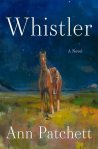 Whistler by Ann Patchett: Patchett is a master on the subject of family dysfunction, and her 10th novel, a stepdaughter-stepfather love story, is as wise as ever on secrets, traumatic memories, and storytelling. The bittersweet tone is perfectly judged. Daphne’s banter with her loved ones is a delight. The plot whisks along, its satisfying full circle returning to the Metropolitan Museum of Art, where she saw Eddie Triplett for the first time in 40 years, and incorporates a clever metanarrative twist. Quiet but surprising, witty yet heartrending.
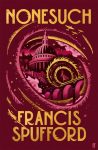 Nonesuch by Francis Spufford: A grown-up fantasy book for those of us who were Narnia-obsessed children. It’s a rollicking blend of realistic WWII-set fiction and alternative history, with some magical and time travel elements. I was impressed that Spufford voices a young woman as protagonist and takes her ambitions and sexual desire seriously. There are witty turns of phrase throughout yet never an inappropriate levity. This parallel world is cleverly imagined and carefully reasoned, and the whole is shot through with a clear love of London.
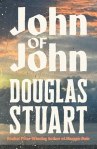 John of John by Douglas Stuart: In Stuart’s superb third novel, set on the Isle of Harris in the 1990s, Cal seeks to reconcile his sexuality and artistic goals with his family’s expectations and his devout upbringing. An absorbing, deliciously melodramatic story is built around the contrast between modernity and the old ways. The characters’ power plays and acts of desperation are heartrending, but mischief and love of colour and crafts lend lightness. Stuart’s every observation is profound; the simplest phrase is memorable for its beauty.
Nonfiction
 The Irish Goodbye: Micro-Memoirs by Beth Ann Fennelly: Fennelly takes the same approach as in flash fiction: some of these 45 pieces are as short as one sentence, remarking on life’s irony, poignancy or brevity. Again and again, she loops back to her sister’s untimely death; other topics are her mother’s worsening dementia, her happy marriage, her continuing 28-year friendships with her college roommates, the pandemic, and her ageing body. One of the most in-depth pieces revisits a lonely stint teaching in Czechoslovakia in the early 1990s.
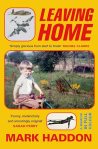 Leaving Home by Mark Haddon: Eighty-seven nonchronological vignettes range across Haddon’s life and his parents’. Most are awful: his cold, invalid mother; his father’s adultery; cruel treatment at boarding school; medical crises. Impressive that he’s a functional person given the lack of love and empathy in his early life, and that he’s so honest about mental health. Haddon is also an artist and there’s a wealth of comics, portraits and family photographs here (plus cynical captions on stock photos to puncture any potential nostalgia).
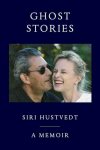 Ghost Stories by Siri Hustvedt: Paul Auster died of non-small cell lung cancer on April 30, 2024. “I’m living in a haunted house,” his widow writes. This isn’t a straightforward bereavement memoir but moves back and forth between past and present and incorporates various documents, such as e-mail updates she sent to friends and family during Paul’s illness. It’s particularly interesting to learn about their mutual influence on each other’s work. Recommended to fans of either or both authors, as well as those interested in grief stories.
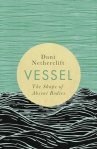 Vessel: The Shape of Absent Bodies by Dani Netherclift: One scorching afternoon in 1993, the author’s father and brother drowned while swimming in an irrigation channel near their Australia home. A joint closed-casket funeral took place six days later. Eighteen at the time, Netherclift witnessed her relatives’ disappearance but didn’t see their bodies. Must one see the corpse to have closure? she wonders. “The presence of absence” is an overarching paradox. The contradictions and ironies of the situation defy resolution.
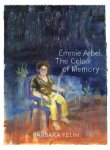 Emmie Arbel: The Colour of Memory by Barbara Yelin: An illustrated biography of a child Holocaust survivor based on interviews. Survival is not a one-time event because trauma is complex and ongoing. In Emmie’s case, her foster father (himself a Holocaust survivor) molested her for years. The colour palette is appropriately sombre. And yet there is vibrant colour in the depiction of Emmie’s home and garden in Israel. This is a work of real courage, of speaking out in spite of a suspicion that all is bleak and meaningless.
Poetry
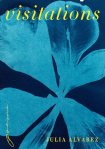 Visitations by Julia Alvarez: Like a miniature autobiography in verse, Alvarez’s radiant fifth collection offers snapshots from her life: a childhood in the Dominican Republic, immigration to 1960s New York City, the vicissitudes of adulthood, and the bittersweetness of later-life love. In a prose afterword, she calls the poems “visitations from selves of the past and present.” With its vivid scenes and alliterative phrasing, this gorgeous collection presents food and family, memory and companionship, as talismans to hold against the darkness.
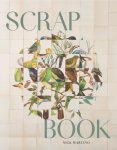 Scrap Book by Nick Martino: Martino’s debut poetry collection draws on his mother’s journals and 1980s Polaroids to capture a family dynamic overshadowed by divorce and his father’s incarceration. The imagery spotlights Midwest farm country. Love and meaning are salvaged from family wreckage in the same way one might “look/ for fugitive beauty in the bulldozed” orchard. Free verse alternates with forms: an unrhymed sonnet, an aubade, and a “duplex.” Alliteration and assonance sparkle, and two poems employ anaphoric rhetoric.
 The Way the Water Held Me by Catherine Redford: Redford was 35 with a young child when her wife died of cancer. We don’t hear so much about being widowed early, or in a same-sex partnership. Redford interrogates the expectations of widowhood through biographical poems about Mary Shelley. I loved the archival vocabulary of “Obituary” and how belongings left behind take on outsize significance. The alliteration and nature imagery are just right. From the hardest of circumstances came something tender and lovely.
Have you read any of these, or might you now based on my recommendation? What other 2026 releases should I catch up on?
June Releases by Fiona Mozley, Heather Sellers & Myfanwy Tristram
This month I have a fiction–poetry–nonfiction trio covers fake memories, Florida’s beauty and weirdness, and the past 50 years of protests in the UK. I also excerpt my reviews of five June releases I read in advance for Shelf Awareness, including one that’s in the running for my Book of the Year.
Awake Awake by Fiona Mozley
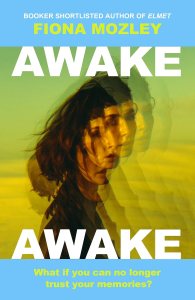 When writer Mary Mooney dives into her memories during appointments with her therapist, Sita, most of what comes up is the everyday stuff of her childhood in York: mild shenanigans with her younger brother, Jos; her friends Amelia and Eve plus Eric, a newcomer from New York City; and their wider circle. Early on, though, she warns readers that she’s untrustworthy. “In recent years, I have had difficulties with my memory,” she confesses. “It was not a sickness of forgetting. I did not have too few memories, but too many,” some of which couldn’t possibly be real – the best example being her conviction that her grandfather assassinated Hitler. She also tells Sita of a hotel fire and her rudeness to a couple of right-wing writers and journalists – things one does in dreams but not generally in real life.
The focus is on Mary and her peers’ formative teen years around the start of the Iraq War. In the final chapter, she offers a where-are-they-now for her closest friends. “Most of this is a verifiable journey through a life I really lived,” she notes, but “from hereon the fabrications begin.” This should have been an exciting revisiting of recent history in the company of an unreliable narrator, but everything about the novel is so dull that it was impossible to stay interested. It feels like pedestrian autofiction (insomuch as Mozley is from York and came of age in the same period as Mary, who is nominated for a major award for her first novel) drawing on a Blair-years upbringing. Mozley’s Elmet, which was shortlisted for the Booker Prize and the Sunday Times Young Writer of the Year Award, is one of my favourite debut novels of the last decade, so it’s a real shame that her subsequent work hasn’t lived up to that potential. Hot Stew (2021) was a DNF for me, a caricature-heavy London state-of-the-nation novel, and Awake Awake reads like a half-baked debut, not a world-class novelist’s third. Unless I hear rave reviews about a return to form in future, that’s it for me with Mozley.
With thanks to John Murray Publishers for the free copy for review.
Women in Tampa Talking about Alligators by Heather Sellers
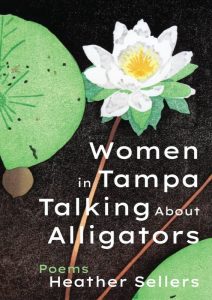 With such a title, how could you not want to read it?! In her fifth poetry collection, Sellers, a Florida native, recounts conversations with her neighbours, backyard sightings, and boat trips through swamp country. An appreciation of beauty rubs shoulders with awareness that it is threatened by climate breakdown and the state’s existential identity crisis. She describes Florida as “the thumbs-down thumb”; it “hangs on, for now, bobbing, / as she lowers into the dull warm blue sea.” Lovely poems about birds spin delightfully unexpected imagery: “watching the great white egret / stiletto across the jasmine fence, / black patent legs shining”. But they also contain barbs about the polluting influence of modern life (spot the alliteration and internal and slant rhymes):
Someone’s silvery phone gleaming underwater.
A fleet of rays flew between our little boats, skin kites on roller skates.
We discovered the things slung around the channel marker
was not a bird, just a plastic sack: the common, grey Florida Wal-Mart bag.
Cormorants dove into the chests of mangrove.
High above, paragraphs of frigates cursive-d land, land, land.
As winter and summer swap, the advantages and downsides of living in an identikit suburb mostly inhabited by retirees from elsewhere become clear. Nature is red in tooth and claw even in her garden, where crows prey on baby mockingbirds. Alligators are everywhere, and when “removed” for being a “nuisance” – in other words, interfering with human activity – their end reveals our inhumane priorities. “No? Seriously? They are euthanized? Euthanized for what, for living?” This is a terrific free verse collection at the intersection of the edenic and the diminished everyday. I would definitely read more by Sellers.
Published by Lynx House Press. With thanks to publicist Jeffrey Yamaguchi for the free e-copy for review.
Noisy Valley: The Art of Protest by Myfanwy Tristram
This is not a comprehensive history of protest but a snapshot of it over the past half-century or so, focussing on the Rhondda Valley in South Wales (not far from Cardiff), where a surprising number originated. The frame story is an exhibit of Tristram’s protest drawings at the Workers Gallery in Ynyshir, where she meets those featured. Each story is then expounded in turn, based on interviews with someone who led the protest or participated in it. We learn of miners’ strikes, a protest against a hospital closure, outrage over toxic runoff from a landfill, and a campaign to save Northern Meadows. One impetus was the worrying trend in the UK (and elsewhere) of governments cracking down on peaceful protests with overly harsh punishments.
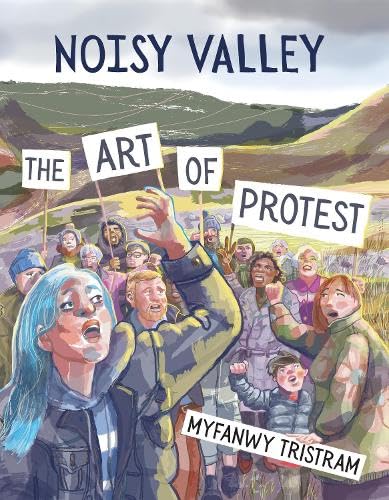
I was surprised to find that two of the chapters had local relevance for me: the Greenham Common women’s peace camp and the Aldermaston marches (part of the Campaign for Nuclear Disarmament). I was additionally taken aback to spot Martyn Joseph, a Welsh singer-songwriter we’re familiar with from Greenbelt Festival, turning up to sing a new bespoke version of “This Land Is Your Land” for a protest. I’m not fond of the talking heads approach to graphic nonfiction (also seen in Sexuality: A Graphic Guide and Trans History) or of the particular style here – monochrome in the main text with a few full-colour pages plus in the asides on the history of protest and changing regulations. I preferred the spreads focusing on landscapes. However, this is a worthwhile project and I particularly appreciated the below quote, which captures my feeling about the environmental marches I’ve been on in London.
You might find this a bit weird, but I never really thought that protest ever achieves its purpose. We still have nuclear weapons, you know. But it is worthwhile. My feeling is that protest is wonderful because it brings people together as a social group. The meeting of hearts and minds. I would argue that’s very positive.
~David Hurn, Aldermaston photographer
With thanks to SelfMadeHero for the free copy for review.
Reviewed for Shelf Awareness:
The Daffodil Days by Helen Bain: A remarkable debut novel about the last years of Sylvia Plath’s life. I’ve already discussed it here.
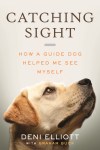 Catching Sight: How a Guide Dog Helped Me See Myself by Deni Elliott with Graham Buck: Elliott was diagnosed as legally blind as an adult, though she’d always had limited vision. She explores her relationships with five very different dogs and introduces the process of training guide dogs in this heartwarming story of human–animal connection and resilience.
 Instructions for the End of the World: Homilies of Comfort and Resistance by Maggie Helwig: Helwig is the rector of inner-city Toronto’s St. Stephen-in-the-Fields. Her stirring sermons espouse a practical, progressive theology and affirm the power of solidarity and the commitment to social justice in turbulent times (including the pandemic years).
Scrap Book by Nick Martino: Martino’s formally inventive debut poetry collection draws on his mother’s journals and 1980s Polaroids to capture a Midwestern family dynamic overshadowed by divorce and his father’s incarceration.
Whistler by Ann Patchett: Patchett is a master on the subject of family dysfunction, and her tenth novel, a stepdaughter–stepfather love story, is as wise as ever on secrets, traumatic memories, and storytelling. This is one of my top three books of 2026 so far, along with Brawler and John of John.
Which of these June releases have you read, or will you seek out now? What am I missing out on?
20 Books of Summer, 8–9: Greenwell and Reid for Pride Month
As part of my Pride Month coverage (more coming up in Love Your Library on Monday), I’m reviewing a sophisticated gay novella that’s celebrating its 10th anniversary this year, and a gossipy pastiche of a Hollywood tell-all that I read for Wednesday’s upcoming book club. SPOILERS APPEAR IN BOTH, so if details of what happens bother you, you may want to skim or skip over some of what follows. In fact, it might be a spoiler just to include the Reid under this heading…
What Belongs to You by Garth Greenwell (2016)
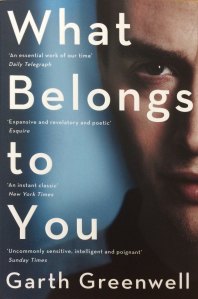 Greenwell’s third novel, Small Rain, was my novel of 2024, so I wanted to go back to his debut and trace the development of his talent. This, too, is autofiction and shares a preoccupation with the profound uncertainty produced by illness and a newfound awareness of mortality. There are also, through flashbacks, glimpses of the author’s strict, religious Kentucky upbringing in both. But What Belongs to You mostly arose from the years Greenwell spent teaching English in Bulgaria. A version of the first section was published in 2011 as a standalone novella called Mitko. This is the name of the mercurial, possibly mentally ill and unhoused sex worker that the American teacher meets in the bathrooms of Sofia’s National Palace of Culture and keeps encountering—sometimes willingly, sometimes not—in the years to come. “Never before had I met anyone who combined such transparency … with such mystery,” the narrator marvels; he feels “held like his beloved, or his child; or held, I suppose it must be said, like his captive or his prey.” Their relationship is wildly imbalanced. The sex can be tender or violent. He gives Mitko money; Mitko gives him syphilis. The narrator meditates on his bodily fear, his sense of betrayal, the unknowability of others, and the deviousness of appropriating their stories for his art. I didn’t love reading about gay cruising, but the stream-of-consciousness section about his earlier life, prompted by news of his father’s imminent death, and the granular account of a train ride with his mother he spends observing a little boy and his grandmother were right up my street – masterful examples of how to translate experience directly into hypnotic prose. Greenwell is the James Baldwin of our time. (Secondhand – Awesomebooks.com)
The Seven Husbands of Evelyn Hugo by Taylor Jenkins Reid (2017)
I always thought this came after Daisy Jones & the Six, but instead that 2019 novel brought renewed attention to her earlier work. They are both structured around biased first-person confessions in an interview setting, as well as, here, faux documents (gossip magazine articles). Evelyn Hugo grew up the daughter of Cuban immigrants in 1940s Hell’s Kitchen and escaped to Hollywood at age 15. That was through her first marriage; the others to come were for a mixture of reasons: short-lived passion, career advantage, public scandal, or masking the truth of another relationship. Because, in fact, the real love of this blonde bombshell’s life was a woman: fellow actress Celia St. James, with whom she co-starred in a Little Women adaptation. They have an intermittent relationship over the decades, both hiding in marriages to men so they can be together in secret and so that Evelyn can have the child she longs for. (Evelyn insists throughout that she is bisexual, which bothers lesbian Celia.)
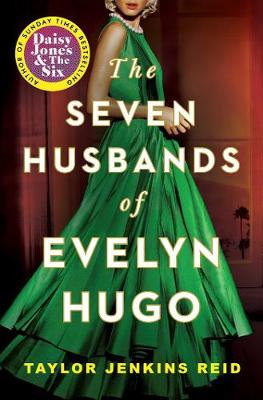
It’s a rollicking tour through a convincing pastiche of an Old Hollywood career, divided into sections based on the husband of the time. Evelyn comes across as cut-throat: willing to lie and manipulate people to get ahead. And yet you can’t help but admire her shrewdness; she’s also sympathetic for the poverty and domestic violence she’s endured, if not for how she’s leveraged her sensuality (her large breasts were famously almost shown in a French film). Ever the actress, she is still performative even when she claims to be disclosing the truth publicly for the first time. I wondered if she was too clichéd as a brassy Latina.
My main problem, though, was with the framing story: Evelyn demands that Monique Grant, a biracial rookie journalist, write her life story. Evelyn is 79 and strangely sure she’ll die soon, so wants to both unburden herself and set the record straight. Monique is going through a divorce and learns from Evelyn to treat this simply as the breakdown of a marriage rather than as a personal failure. She also absorbs lessons of how to be assertive and advance her own career. But early on Reid signposts a shock connection to be revealed between Evelyn and Monique. That ‘big reveal’ was a bit of a letdown. It could have just been an interview transcript (hello, Daisy Jones!) or finished ‘biography’.
In any case, writing as two characters of colour took guts from Reid, and bisexual rep is always welcome. This was an undemanding, soap opera-esque summer read. The only category on which it might fall short in our book club ratings is the writing, which is lite (but good for guzzling). Think of it as a fruity cocktail in book form. (Secondhand – Community Furniture Project) 
Book vs. Film: What Are You Going Through / The Room Next Door
Film, because…
I’m borrowing the idea from a post series by Kate of Books Are My Favourite and Best that compares books and their adaptations. It’s now vanishingly rare for me to see movies – I can probably count on the fingers of one hand the ones I’ve seen in the last three years – because we haven’t had a television for a decade or more, don’t subscribe to any streaming services, find going to the cinema too expensive, and mostly can’t be bothered to get out an old laptop to watch our measly collection of DVDs. It’s kind of a shame, because I was a real cinephile in my high school and early college years, making my way through the American Film Institute’s top 100 list, recording B&W classics from late-night TV, and following the Oscars race to enter a low-value pool. It certainly means a lot more time for books, though.
BUT I watched two streamed movies while I was staying with my sister in the States, both chosen for their literary influences or similarities. (I ran out of time to watch Women Talking, which I was eyeing up but it would have incurred a separate cost.) One was The Menu, about a megalomaniac chef for whose extravagant multi-course meals the mega-rich travel to a private island. Elle suggested it as a companion to Land of Milk and Honey with its chef protagonist and questions of power, sexuality and wealth. The Menu, starring Ralph Fiennes, was good fun, with a twisty plot and strong performances, but got darker and gorier than expected as Fiennes’ character uses dishes to explore childhood trauma and settle old scores.
The other was Pedro Almodóvar’s first English-language feature, The Room Next Door (2024). It’s based on Sigrid Nunez’s What Are You Going Through (2020), which I read at its release. It’s the story of a writer whose friend, ravaged by cancer, asks her to be present when she ends her life. As is typical of Nunez’s sparse, Cusk-like autofiction, the characters have no names and minimal histories, there are no speech marks, and the scant plot is layered with various other found stories and aphorisms. The film is, of necessity, very different: it zeroes in on the assisted suicide plot, makes events more concrete, and goes as far as the aftermath rather than just-before-the-end. I watched it with my sister because, as a hospice nurse, she has an interest in the topic.

Julianne Moore at The Room Next Door premiere (BFI LFF: Royal Festival Hall, 19 October 2024) (Raph_PH, CC BY 2.0, via Wikimedia Commons).
{SPOILERS IN THE REMAINDER}
In The Room Next Door, Ingrid (Julianne Moore) is a writer whose latest book explores her fear of death. She and Martha (Tilda Swinton) were acquaintances when they worked for the same magazine, but they seem to have lost touch over the decades. Martha’s journalistic career was much more exciting, taking her to war zones as a correspondent. Martha has a daughter, Michelle, whom she’s really not in touch with, partly as a result of not being frank about the identity of Michelle’s father. Ingrid is shocked by Martha’s request and it takes her a while to come around to the idea of being the person ‘in the room next door’ when Martha takes the euthanasia drug she’s bought off the dark web.
Nunez’s novel opens with the narrator attending a doom-and-gloom lecture by her ex, who is convinced that climate change won’t be addressed and the human race will die out. I was surprised that he’s included in the film and in fact given an expanded role: not only is there the scene from the book in which Ingrid meets Damian (John Turturro) for lunch and tells him what’s going on with her friend, but we learn that he was an ex for both of them, and he helps Ingrid deal with the fallout of Martha’s actions. He also seems to function as a reminder of sexuality, which remains a powerful impulse even in the face of individual or collective death.
When I got home from the States, I reread the Nunez and – though she’s a favourite of mine – I confess I was disappointed. The philosophical and storytelling asides seem like unnecessary distractions when all you want to know is what happens with her friend. (I have, of course, also read The Spare Room, which preceded the Nunez by 12 years, in the meantime.) My original review seems generous as well as admirably succinct. (It’s depressing for me to go back to old reviews; not only have I not gotten any better, my writing has deteriorated, if anything. Is it laziness? Erosion of formality? Lack of time? Loss of focus?)

My sole complaint then was that Nunez spent too much time recounting the plot of a mystery novel the narrator reads. Well! Having reviewed her collected short stories, It Will Come Back to You, I can report that said plot is that of her “The Plan,” published in LitMag in 2019. How (playful and meta, yes, but) self-indulgent to borrow her own short story! So while I still appreciated the overall theme of empathy and the wise observations (“The only thing harder than seeing yourself grow old is seeing the people you’ve loved grow old … most people are in denial about aging, just as they are about dying”), and enjoyed the monologue from a cat which I’d forgotten about, I got bored and impatient the second time around. (I’m still a Nunez stan, though. – Am I using that right? Are we still saying that?)
Ultimately, then, The Room Next Door surpasses its source material for its focus, its performances, its locations, and its weirdness. Almodóvar cuts most of the peripheral material and makes it all about the women’s relationship with each other, as well as Ingrid’s with her ex and Martha’s with her daughter. The elegant Moore does a fine job in the role; the only way to have given a flavour of Nunez’s narration would have been to use voiceover or diary-writing scenes, which could have been naff. But Swinton is a marvel. Her American accent is ever so slightly strange, but that works; she’s such a striking person that it fits for her to be somewhat otherworldly. She is a perfect vessel for Martha’s frustrated rage and her body language, as well as the costuming and makeup, highlight the differences between her well periods, when she’s vibrant, and her worst relapses, when she’s pale and gaunt. (I was astonished to learn that both actors are now 65, by the way!)
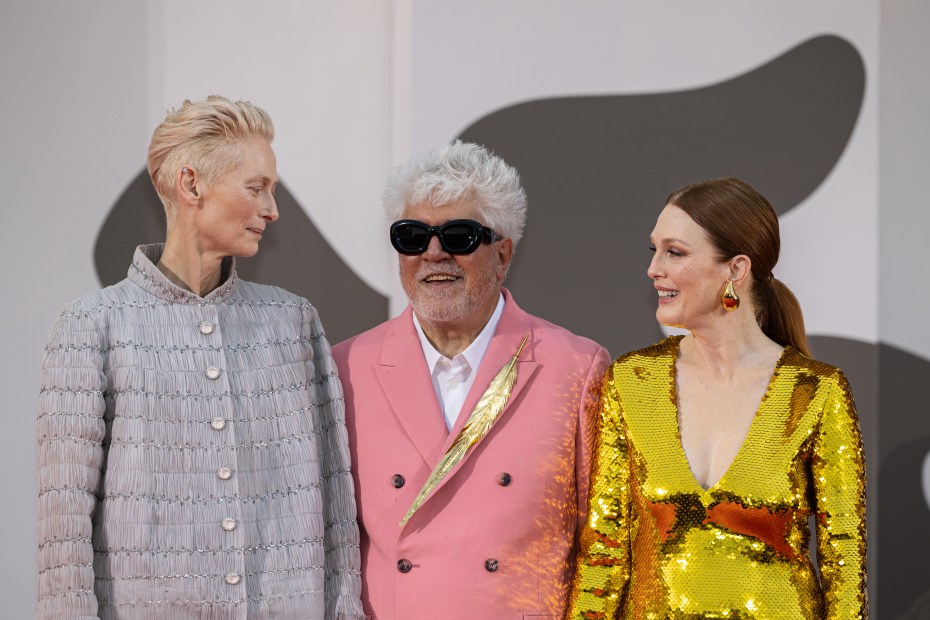
Tilda Swinton, Pedro Almodóvar, and Julianne Moore at 81st Venice International Film Festival (Harald Krichel, CC BY-SA 4.0, via Wikimedia Commons).
In the book, the friends stay in an Airbnb in upstate New York. In the film, Casa Szoke, an hour from Madrid in Spain, stands in. It’s a stunning Modernist (also described as “brutalist”) house, and the pool terrace and the staircase dividing Martha’s room from Ingrid’s downstairs are key features. Probably the single most interesting decision Almodóvar made was to have Swinton play Michelle as well, which emphasizes the persistence of family traits and – because Michelle has a scene after Martha is dead – makes it seem like she’s not completely gone. Of course, Almodóvar has always gone in for surrealism and doubling, and I loved this hint of the mysterious. I also appreciated the repeated quotes from James Joyce’s novella The Dead (“faintly falling … upon all the living and the dead.”).
The gist may be the same, but the reading and viewing experiences are really very dissimilar and, while I wouldn’t dissuade you from either, it was the film that impressed me most.
Book
My original rating:
My rating now: 
Film
20 Books of Summer, 4–7: Fadiman; Kingsolver & O’Farrell Rereads; Sullivan
I finished several of these a while ago now, but it’s been a struggle to summon up the motivation to write about them, especially during the heat wave we’re currently experiencing in the southern half of England. You’ve heard a lot from me recently as I’ve been catching up on reviews, so I’ll try to keep these responses to one (long) paragraph each.
Frog and Other Essays by Anne Fadiman (2026)
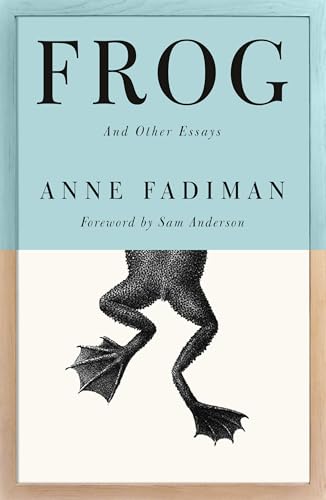 This was one of my Most Anticipated titles of the year because I’ve loved Fadiman’s nonfiction, especially the bookish Ex Libris, which I’ve read twice. Her essays are warm and fluent, braiding memoir and observation in a natural way and drawing readers in whether they share her particular preoccupations or not. “Frog” is about her guilt for not being more attentive to her children’s surprisingly long-lived pet frog, Bunky; “South Polar Times” recounts her obsession with polar exploration and what she discovered in the archives of the magazine Shackleton produced in the 1910s. At the centre of the book is a triptych on modern technology (“My Old Printer”) and language use, especially as she’s experienced it as a Yale professor trying to adjust to pandemic-era teaching (“Screen Share”) and expanded gender possibilities (“All My Pronouns,” which is mostly about getting used to “they” as a singular pronoun for nonbinary individuals). What a relief that advancing age and pedantry didn’t see her joining the anti-woke camp. The final essay, “Yes to Everything,” was – I think – the afterword to her late student Marina Keegan’s The Opposite of Loneliness (2014). For me the highlight was “The Oakling and the Oak,” about Samuel Taylor Coleridge’s disappointing son (“A penumbra of impossible expectation began to settle around Hartley’s head”). There’s a tantalizing parallel here with her own sense of needing to live up to her literary father, Clifton Fadiman, that I wish she’d explored further. So: good stuff here, but only seven essays, all of which were originally published elsewhere. It feels like scraping the barrel. And why the laudatory foreword by someone I’ve never heard of (Sam Anderson)? I ordered this while in the States to get to a free-shipping limit and I’m glad I got the chance to read it, but it’s not a must. Do seek out “Frog” and “Oak,” though. (New purchase – Target.com)
Prodigal Summer by Barbara Kingsolver (2000)
In all her life Lusa had never seen such an oversexed, muggy summer. Just breathing was a torrid proposition.
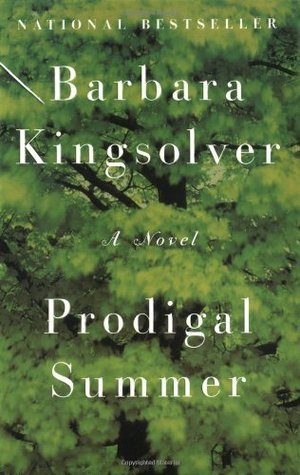 Although I remembered this as being in Kingsolver’s top tier of novels, I recalled no details beyond a female ranger who lives in the woods, has an affair with a hunter, and studies coyotes (actually, I thought it was wolves – I was conflating Deanna’s surname, Wolfe, and Sarah Hall’s The Wolf Border, which has a similar setup). I’d forgotten that there are two other strands: Lusa, a Polish-Palestinian entomologist widowed young, inherits her husband’s family farm and tries to make a go of goat breeding despite others’ disapproval; and Garnett, a pious old man trying to resurrect the American chestnut after it was wiped out by blight, has an ongoing low-key feud with his organic orchard-keeping neighbour, Nannie. These threads rotate under the headings “Predators,” “Moth Love,” and “Old Chestnuts.” There are pleasing connections between the main characters, who are also thematically linked by ideological disagreements and the possibility of new life and romance when age or circumstances seemed to disqualify them. Kingsolver writes brilliantly about science, and although she gets a little preachy through Nannie, in a way that presages Unsheltered (“It’s glory, to be part of a bigger something. The glory of an evolving world”), her environmentalist messages are always right on. It’s depressing to note that, more than a quarter-century later, the issues she raises related to food production and pesticide use are worse rather than better. Like Margaret Atwood, she’s a literary prophet of our time. I’m nearly halfway through her upcoming novel, Partita, for a Shelf Awareness review and its protagonist, Livia, seems to be in the lineage of Deanna – an Appalachian girl who tries to exceed her origins. This was a big ol’ satisfying summer read. Whyever didn’t Kingsolver win the Women’s Prize for this one? (Little Free Library)
My original rating: 
My rating now:
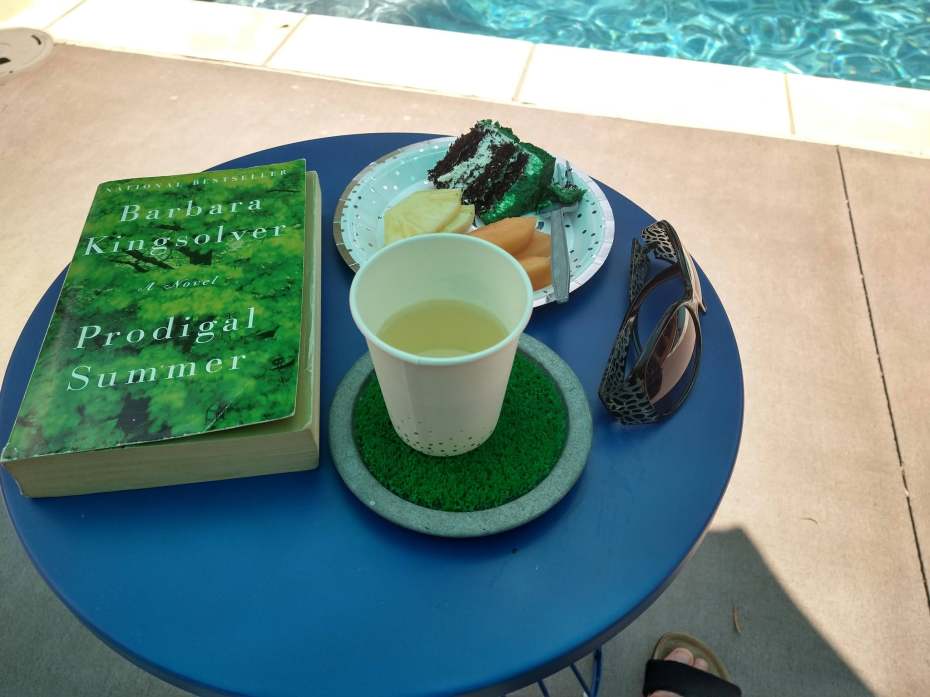
Poolside reading at my nephew’s graduation party.
The Vanishing Act of Esme Lennox by Maggie O’Farrell (2006)
Nothing is our own. We begin in the world as anagrams of our antecedents.
 Another reread. I remembered the mental hospital element but think I may have otherwise had this confused with Sebastian Barry’s The Secret Scripture, which also features historical family secrets and a great big twist. This was our book club selection for June, and although I missed the meeting (which was also our summer social) while I was back visiting my family, I wanted to catch up by reading it again – especially after it earned a perfect score from the rest of the group! In the novel’s present day, vintage clothing store owner Iris is having an affair with a married man and learns that she has a ‘mad’ great-aunt who will soon be her responsibility when the hospital Esme has called home for 60 years closes. Why did Iris’s grandmother, Kitty, hide that she had a sister? With Kitty on a dementia ward, she can’t ask outright. Instead, narration alternates between the sisters’ growing-up years in India and Edinburgh – where flighty, rebellious Esme caught boys’ eyes while obedient Kitty didn’t – and Iris and Esme embarking on a tentative relationship. The use of the present tense for both, as well as the fragments of memory we gradually work out are Kitty’s, create a continuous narrative so gripping that I could easily have consumed it in one sitting had I not had other commitments. Grief, parenting, male privilege, family legacies, and a freedom of spirit that might today be branded neurodivergence are strong elements. It’s appalling how women have been punished for breaking the rules, but the other ensuing betrayals are just as shocking. This must have one of THE best surprise endings out there. I can’t believe I’d forgotten the details. After a couple of lacklustre early novels, O’Farrell’s career truly took off with this one. Now to reread her other gems. (Borrowed from a book club friend)
My original rating:
My rating now: 
Commencement by J. Courtney Sullivan (2009)
Smith had left its mark on her, so that the place would always feel like home
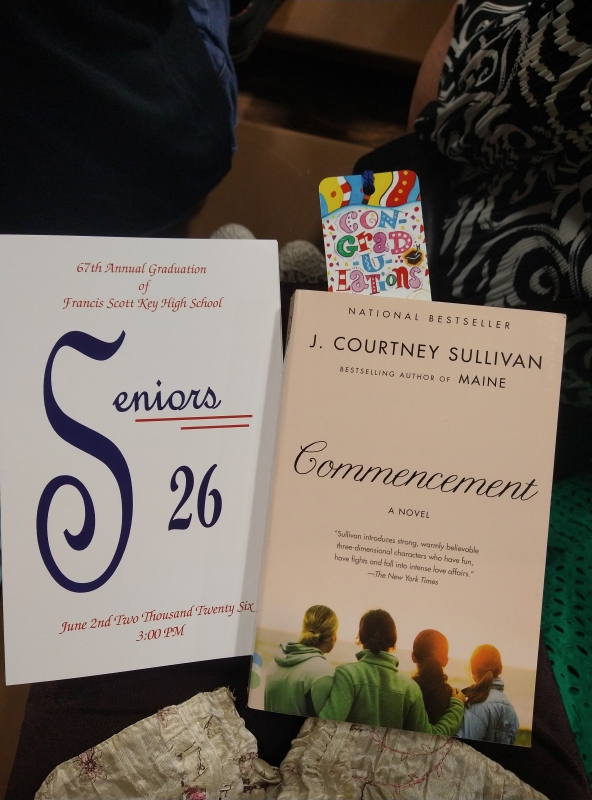
 I’ve had a mixed experience with Sullivan’s novels, but this debut was a delight. Let’s start with the clever title: An American graduation ceremony is called “commencement,” so it marks both an ending and a beginning. For four friends who meet at Smith College, a women-only institution, in the late 1990s, their student experiences have effects that carry on into their ‘real’ lives afterwards. We watch how their relationships with each other, and with family members and partners, shift over the course of nearly a decade. Sally arrives on campus bereft from the death of her mother, but she doesn’t let her sadness corrode her ambition or her kind heart. Bree is engaged to a man when she comes up from Savannah but leaves in a committed relationship with a woman. April was raised by a single mother and has always been a strident feminist, but graduates with plans to go to extremes in drawing attention to the plight of sex workers. The framing story of the friends gathering for Sally’s wedding introduces us first to Celia, who is in some sense still living the student life in the small New York City apartment she brings one-night stands back to after drunken evenings. The wedding ends up in a huge fight between the four, and as the years pass they split off into pairs and trios of loyalty before a crisis brings them back together. It’s a little far-fetched how this all plays out, but I was invested enough in all four characters that I was happy to go along with it. Sullivan went to Smith (I also attended what was a women’s college at the time, Hood), so you have to wonder if anything was autobiographical for her. She weaves in various women’s issues, such as sexual assault and decisions about career and motherhood. I applaud Sullivan for mentioning support for trans men on campus, though her discussion does seem of its time and today I think the debate would be more around allowing trans women to attend. I chose this to read because my recent USA trip was for my nephew’s high school graduation. It’s perfect for Curtis Sittenfeld fans. (Secondhand purchase – 2nd & Charles)
#ReadingtheMeow2026, Part II: George Mikes & Louise Ross Memoirs; Letters of Note: Cats
I’m a few days late with this second batch (after my first post on some Chinese and Japanese cat books). Thanks again to Mallika of Literary Potpourri for hosting the annual Reading the Meow challenge, which is always a great excuse for me to get to a handful of the many cat books on my shelves and e-readers.
Tsi-Tsa by George Mikes; illus. Nicholas Bentley (1978)
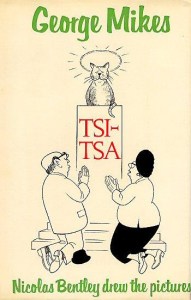 Mikes wasn’t an animal lover at all, but when Tsi-Tsa (from the Hungarian cica, which means pussycat) started turning up in his London house, he finally got it. “A man who had made fun of British cat-worship for several decades, I fell for Tsi-Tsa in the grand way – at first without even noticing it,” he writes. She was actually Sooty, his neighbour’s cat, but so determinedly adopted Mikes – sleeping on his chest, with her right paw on his left shoulder – that her owner told him he could have the cat. His transformation into an ailurophile was soon complete: “The days when I thought that all cats were alike – that a cat was a cat was a cat – have long passed. … By now I am fully aware that cats differ from one another as significantly – and are as much individuals – as humans, or more so.”
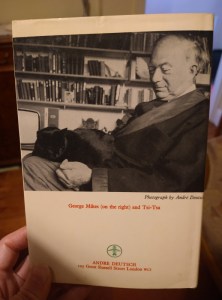 Most of the book is devoted to two crises: his diagnosis of impending blindness, and Tsi-Tsa going missing. If you’re wary of cat memoirs because the pet tends to die at the end, you needn’t worry. This ‘biography’ of Tsi-Tsa ends with her very much alive, having learned to adjust to her physical limitations after being hit by a car. I’ve read several of Mikes’s books, including the trilogy of satirical expat advice books that make up How to Be a Brit. This is similarly light-hearted, if a little insubstantial. If you’ve enjoyed books by Derek Tangye and Doreen Tovey, you’ll find it comparable. (Secondhand – Addymans bargain alley, Hay-on-Wye)
And another novella-length memoir about a black cat that makes itself at home and becomes part of the family!
Slow Blink: A Memoir by Louise Ross (2026)
A 1927 book found on her elderly father’s bookshelf, the poetry collection archy and mehitabel by Don Marquis, sparked Ross’s journey into memory for a look at two very special cats. In Marquis’ book, Archy the cockroach was a human poet in a previous life, while Mehitabel the alley cat was Cleopatra. Ross’s family thus gave to one of their cats the noble name of Mehitabel, and she became the girl’s best buddy as she was growing up in Australia. It became a nightly ritual: her mother would put the cat outside, Mehitabel cried underneath Ross’s window, which she opened to let the cat sneak in and share her bed. In the morning, back out Mehitabel would hop, dashing round to the laundry room yard to pretend she’d been outside all night. Boarding school, early career and travels drove the friends apart somewhat before Mehitabel died at the venerable age of 22.
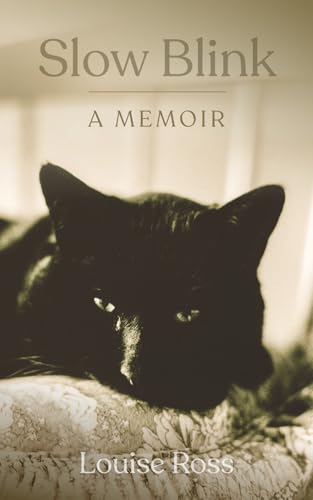 Eight years later, Ross was living in Colorado with her husband and struck up a friendship with a stray black cat who hung out by the bins of their townhouse complex. Eventually he came to trust her and even to shelter indoors from harsh winter weather. What name to give him? Archy, of course. He survived their landlord’s laying down of the law as well as a period of being lost miles away before dying of feline leukaemia. It was only a yearlong relationship in the end, but it had a lasting effect, not least because Ross continued to see Archy after his death. Future losses only reinforced for her the idea that something continues beyond death. “He taught me that some experiences can’t be explained, and that love persists in ways we don’t understand but can, if we’re open and willing, receive.”
While not all pet owners will have experience of such a literal enduring relationship, we can all affirm the strength of the bond with animals, and I also appreciated Ross’s brief (95-page) memoir for its marveling at life’s twists and turns – she now lives in Portugal and has published two volumes of interviews with fellow expatriates and immigrants living there.
With thanks to the author for the free e-copy for review.
Letters of Note: Cats, ed. Shaun Usher (2020)
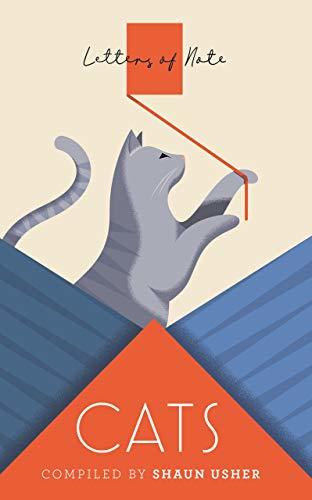 Canongate’s series of short thematic letters anthologies launched in 2013, arising from the website lettersofnote.com. There’s a variety of encounters and experiences here, and the tone ranges from forlorn or silly to outraged. Elizabeth Taylor mourns her missing cat and Jack Kerouac’s mother informs him of the death of his pet. T.S. Eliot tries out the cat-themed nonsense verse he’d become famous for in a birthday note to his godson. Jack Lemmon proposes a cat ranch to his pal Walter Matthau; Erasmus Darwin (grandfather of Charles) and poet Anna Seward exchange slightly saucy ‘love letters’ written in the voices of their cats. Charles Dickens and Jane Carlyle both recount cats’ vendettas against pet canaries.
Some letters are more interesting than others, as you’d expect. There are nice glimpses of cats’ oddities – a reminder that, in many ways, they’re the same across centuries and countries. I was most struck by two entries. One was Adlai Stevenson’s official objection to an Illinois Senate bill proposing owners restrain cats on leashes so they can’t kill birds. “The problem of cat versus bird is as old as time,” he rightly observes, but I can personally attest that leash training works and means our little hunter only kills spiders and houseflies instead of … everything that moves. This environmentalist bill would have been ahead of its time for 1949. The most affecting piece was an open letter by Guy Davenport to the drivers of Lexington, Kentucky, one of whom ran over his cat. It’s a brilliant miniature polemic. This was intermittent entertainment; fun to browse or sample. (Secondhand – hospital book sale)
#ReadingtheMeow2026, Part I: Chinese & Japanese Authors
I’m a couple of days late, but here we go. It’s my fourth time participating in the annual Reading the Meow challenge, hosted by Mallika of Literary Potpourri. Chinese and especially Japanese authors are famous for their literary love of cats. For my first post, I’m giving brief thoughts on a couple of Japanese novels – one of them a classic that may be responsible for the entire cat craze – and two examples of cute cat-themed manga.
I Am a Cat, Volume 1 by Natsume Sōseki (1905; 2025)
[Translated from Japanese by Nick Bradley]
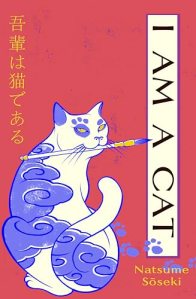 Translator Nick Bradley makes a strong case for this as the “beginning [of] the Japanese cat book trend,” and I wondered if it was one of the earliest examples of the animal narrator, too. The unnamed feline antihero values brains over beauty: “Even though I am just a cat, I often like to philosophize. … Now, ladies and gentlemen, I have an admission to make. As far as cats go, I am no oil painting.” He’s lazy and fatalistic, contented to live out his days with the dyspeptic schoolteacher who has taken him in off the street. I’ll have to take Bradley’s word for it that this popular serialized novel (of which this is the first of three volumes) is a satire in which the cat is “a mirror to Japanese Meiji society at the time the novel was written.” The voice is amusingly lofty and snobbish, but I was uninterested in the story and set it aside at 35%, unsure whether to return to it in future. (Read via Edelweiss)
She and Her Cat by Makoto Shinkai and Naruki Nagakawa (2021; 2022)
[Translated from Japanese by Ginny Tapley Takemori]
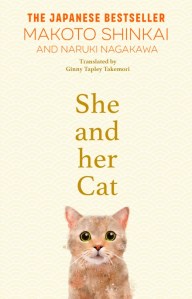 Shinkai is an anime filmmaker and I think this originated in his manga. I could spot the enduring influence of Sōseki in the setup of strays interacting with fellow cats and dogs. Most of these linked short stories involve young women grappling with turbulent careers and uncertain romantic relationships. When cats show up in their lives, they offer uncomplicated friendship and reliable tenderness. Narration, whether first- or third-person, alternates between owner and cat in each. I started reading this against my better judgement, as from The Guest Cat onwards I’ve found Japanese cat books bland and twee. It’s the combination of a flat style, my unfamiliarity with the context, and (magic) realism, which has worked for me with Murakami but hardly anyone else. This was a half-hearted skim. (Little Free Library)
Cat manga, though: that’s the ticket!
Chi’s Sweet France by Kanata Konami; illus. Catherine Bouvier (2025; 2026)
[Translated from Japanese by Akiko Indei and Pierre Fernande]
 I had read The Complete Chi’s Sweet Home, Part 4 and really not enjoyed it (see above), but because this is a series of shorts, and set in France, it was palatable. I thought about saving it for Paris in July but ended up reading it on my computer in one sitting last month. Chi’s family (a mom, a dad and a little boy) moves from Japan to Paris. She wants to go outside and join the French cats in prowling the rooftops, but the mother says it’s too dangerous. Only when they move out to the countryside from the Paris apartment can she go outside. I don’t love the simplistic drawing style – no noses, a triangle or trapezoid for the mouth – or the cutesy writing (e.g. “Chi’s territowy”). Still, reading this was a pleasant way to spend half an hour. (Read via Edelweiss)
Mobu’s Diary: Earning Your Paté by Kathy Lam (2022; 2026)
[Translated from Chinese by Cindy Ko and Kevin Wang]
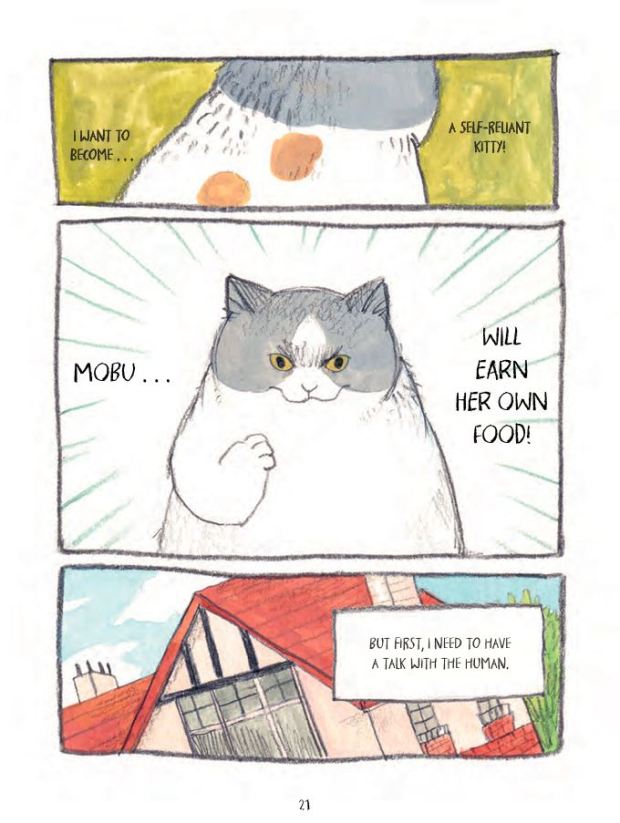
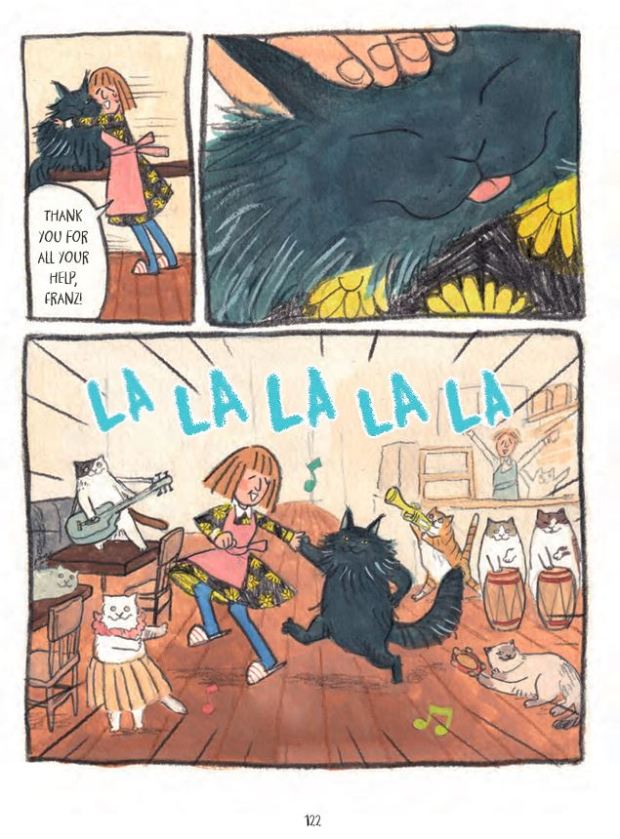
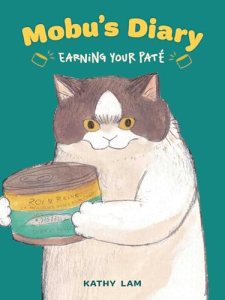 We have a winner! This comic was delightful through and through, and I hope more adventures are to come. Mobu is a three-year-old, slightly neurotic calico. This noble kitty decides she wants to earn her keep (imagine that!) and scans feline-suitable job listings: yoga teacher, massage therapist, pest exterminator, tuna sales rep… When she sees an opening at a cat café, she knows it’s right for her. The only issue is that she doesn’t really like being petted, so she mostly naps on higher shelves. All the same, just by being herself – playful, sleepy, cute and rotund – and observing human behaviour, she manages to be truly helpful. She comforts a distressed student who’s freaking out about a bad grade. She also notices and sometimes intervenes when ‘friends’ are really competing, a couple is fighting, and a boss is trying to take advantage of a worker. Her fellow cats are equally well drawn, and their antics could easily inspire a whole series. (Read via Edelweiss) Forthcoming from Andrews McMeel Publishing on 22 September.
Bonus:
 Kitten by Stacey Yu – Yu’s first novel is a peculiar, endearing fable about a young Chinese American woman who identifies with her boyfriend’s cat as she works to overcome codependency issues with him and her mother. On a beach vacation, James cooks for Katie and does all the driving. “I liked being with James because he made it easier for me to be alive,” she admits to herself. James’s family pet, Silver, is the first cat she has met. James found Silver on this beach a decade before, and the cat regularly swims in the ocean with her owners. Katie is “struck by the intensity of my affection for her”—somewhere between maternal instinct and envy of the cat’s comfort and security. Yu maintains the uncomfortable ambiguity of the central relationships as literal realities and psychological explanations coalesce. That Katie’s estranged mother’s nickname for her is “Kitten” connects the novel’s major elements.
Forthcoming from Sceptre (UK) on 30 July and Random House (USA) on August 4. (See my full review for Shelf Awareness.)
Coming up tomorrow: An anthology of cat-related letters and a couple of short memoirs about life with a beloved cat.
Three I Read for Father’s Day: Faber Poetry Anthology; Giffels & Pascoe
I’m behind on reviews after a long weekend visiting friends. As I did last year, I picked out three books related to fathers and fatherhood. It’s my ideal Three on a Theme recipe: one fiction + one nonfiction + one poetry. I won a copy of a poetry anthology about parenthood and completed the trio with a memoir that’s been on my shelves for a number of years and a debut novel I bought secondhand mostly for the title.
Family Lines: Poems about Parents and Parenthood, ed. Simon Armitage and Rachel Bower (2026)
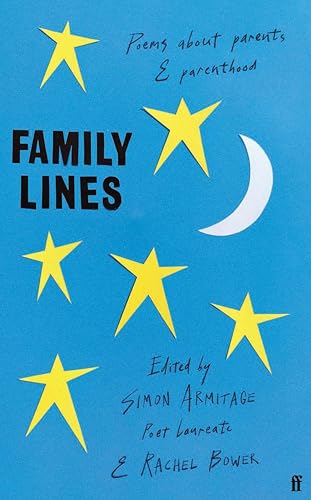 Not all of the poems are about fathers, of course, but there are plenty of selections here that feel true of any family relationship: the complicated emotions, the sometimes physical realities of transformation and care, the risks of ageing and loss, and how identity is defined by a connection or an opposition. This suffered a bit from its first third – covering pregnancy, birth, and early parenthood – being very similar in scope to Night Feeds and Morning Songs (2021, ed. Ana Sampson), which I reviewed for Mother’s Day. Some of the same contributors feature, though I think only the one specific poem overlaps, Liz Berry’s “The Republic of Motherhood.” Highlights included Gail McConnell’s prose poem “Orange” contemplating lesbian motherhood and Rita Dove’s “Daystar” about never-ending domestic duties: “She wanted a little room for thinking; / but she saw diapers steaming on the line”.
Contemporary material mingles with older; Homer and Wordsworth are two of the ten poets included in a chapter on fathers and father figures. “Sleep” by Roger Robinson was the best example of the theme, a sweet tribute to a man who “for the next twenty years / … battles on his job every day / just so you could be comfortable / and have the space to be what you want.” Relevant entries from other sections were Alden Nowlan’s “It’s Good to Be Here,” about his inauspicious beginning in 1932 with a 14-year-old mother (“I’m in trouble, she said / to him. …// … they began to talk very quietly and at last he said / well, I guess we’ll just have to make the best of it”); Anne Sexton’s “All My Pretty Ones,” about going through her late father’s things and wondering if she’s inherited his alcoholism; and Hartley Coleridge’s “Lines—,” acknowledging he’ll never live up to his father’s talent: “Because I bear my Father’s name / I am not quite despised, / My little legacy of fame / I’ve not yet realized.” (Faber giveaway)
Furnishing Eternity: A Father, a Son, a Coffin, and a Measure of Life by David Giffels (2018)
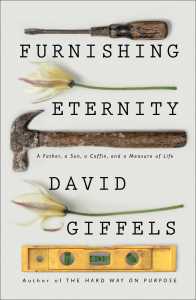 Losing his mother and best friend to cancer within a year, and then turning 50, got Giffels to thinking about mortality. He had a whim to build his own coffin and decided it would be a perfect joint project with his widowed father, who had a home workshop full of tools. As sprightly and driven as his father was, he was also in his eighties and had survived a couple of different cancers, so it was never far from the author’s mind that he needed to make the most of his time with his father while he could. I’m not at all interested in woodworking or DIY, but this is an unusual and likable memoir that alternates the practicalities of building the casket with memories of his relationships with his mother and friend John, who was an artist. While Giffels mentions his wife Gina frequently, he doesn’t talk about his own children as much as I might have expected to take the lessons full circle. No matter; I appreciated the middle-aged Ohio hipster’s thoughts on friendship, ageing and grief. Bereavement memoirs are more often the preserve of women, it seems, so it was good to have a different take.
This is how middle-aged friendships often go, slipping and slipping until ‘we really should get together soon’ becomes a discomforting veil for the truth—that such friendships cease to exist.
I thought a time would come when I would feel definitively like a grown-up, like I would have achieved a certain kind of acumen for making decisions and knowing what to do in unknowable situations, when I wouldn’t feel insecure in real-life grown-up scenarios (board meetings; ordering wine; delivering eulogies). Instead, I still felt like a kid. Or rather, I felt like an adult who was in the continuous loop of his youth.
death is a shattering. Grief is the chaos of wreckage. Only life can find the pattern, and only in its own sweet time. What I remember from the long season of loss was wanting each day to pass as quickly as possible. To get beyond it. I guess I missed the fact that the by-product of this wish was for my own life to rush by.
(New bargain purchase from Amazon)
Our Father Who Art in the Tree by Judy Pascoe (2002)
“It was simple for me: the saints were in heaven, and guardian angels had extendable wings like Batman, and my dad had died and gone to live in the tree in the back yard.”
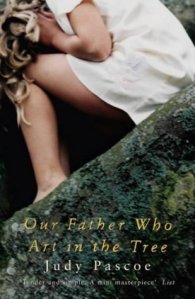 The premise of this Australia-set novella was appealing enough for me to overcome my usual antipathy to child narrators. It probably helps that Simone is looking back from adulthood rather than limited to a 10-year-old’s knowledge. She tells her mother, Dawn, about the voice coming from the tree and it turns out that the two of them are the only ones who can hear her father. He tells them that he’s sorry he left, that he will always love them, that death is not so bad. Simone’s three brothers and best friend, the judgemental neighbours: they’re all clueless. The boys carry on with normal life as best they can, while Dawn has the chance to start over with “the drain man.” Meanwhile, the tree keeps encroaching on the house, undermining the foundations. It’s both a literal problem and a symbol of the enormity of grief, and the book as a whole works on both levels. Despite the early promise of magic, I found it to be a mostly realistic and reasonably touching look at the aftermath of family tragedy. (Secondhand – Community Furniture Project, Newbury)
Some Peripheral Reading for Joyce Carol Oates’s Birthday
June 16th is Bloomsday, of course, and was Paul Auster and Siri Hustvedt’s wedding anniversary – as I learned from Ghost Stories. It’s also the 88th birthday of one of our most prolific authors, Joyce Carol Oates. As I wrote in my introductory post for 20 Books of Summer, Marcie (of Buried in Print) and I have embarked on a casual Oates buddy reading project starting this summer and extending into autumn’s spooky selections. (See her post from today on her early and recent experiences with JCO.)
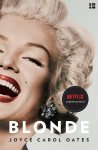 First, an update: I’m now on page 101 of Blonde! It’s such a mammoth doorstopper that I will celebrate my every milestone.
When I scoured the public library and university library catalogues for Oates’s work, I found two oddities to explore further. One is an essay contributed to an anthology on tear-jerking poems; the other is her introduction to an art book on a particular genre of funerary sculpture.
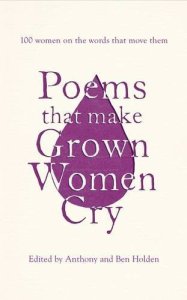
For Poems that Make Grown Women Cry: 100 Women on the Words that Move Them (2016; ed. Anthony and Ben Holden), Oates chose “City Horse” by Henri Cole (I’ve read his 2025 collection The Other Love). It’s a melodramatic portrait of a dead horse overcome by a natural disaster. We know from the title who the poem is about, though not until over halfway through do we get an actual identification: “O, wondrous horse; O, delicate horse – dead, dead”; before that, the unnamed “she” has been simply one more element of the flood detritus (“sucked out to sea and washed up again – / with uprooted trees, crumpled cars, and collapsed houses –”), with evidence of human abuse before that (“facedown in dirt, and tied to a telephone pole, / as if trying to raise herself still, though one leg is broken”). It gets more mawkish before the end: “‘She was more smarter than me, / she just wait,’ a boy sobs”. So I didn’t love the poem as a whole, but the first line of this elegy is incredible: “At the end of the road from concept to corpse”.
In her prefatory essay, Oates extrapolates from one suffering creature to pity “for us all”: “we have been made unnatural by our increasingly mechanized and impersonal society,” and we, too, will be “used up and discarded eventually … by nature, and by time.”
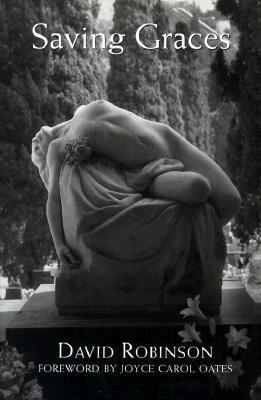 From a dead horse to cities full of dead humans … I think we can safely conclude Oates is not the most cheerful of writers. Saving Graces by David Robinson (1995) is a black-and-white photographic tour through European cemeteries, mostly in London, Milan, and Paris, with a focus on a specific class of 19th-century statuary. These are mourning women: generally semi-nude or flimsily draped and often in the throes of full-body, abandoned weeping that looks like a sexual swoon. They are not angels, Robinson insists; instead, he came to believe that they represented the meeting of the Romantic infatuation with death and “the emergence of the family as the primary focus of affection” in the Victorian period. The women emphasize the finality of death and the overwhelming nature of grief, but those who commissioned the statues may also have envisioned them as “escorts on the journey ahead … posted there to watch over and take care of the deceased.” As photographs go, they’re not hugely interesting; there’s only so much one can do, composition-wise, with gravestones, and I wish he or Oates had done more to subvert the exploitation of the sensual female image.
Oates’s foreword contrasts the photography of life with “the photography of stillness—of the arrested, meditative image.” Robinson’s are the latter type, of course. She describes the book as follows:
“an assemblage of strikingly beautiful photographs that tells us much, and hints at far more, of our collective desire that death be not mere deadness—biological decay, cellular decomposition, the extinction of the ‘unique’ human personality—but Death: mysterious, ethereal, mourned, and therefore celebrated by the most attractive among us. Contemplating these images, we realize how human anxiety, human vanity, human terror of the unknown, whether male or female, may well be the unacknowledged origin of our greatest artworks”.
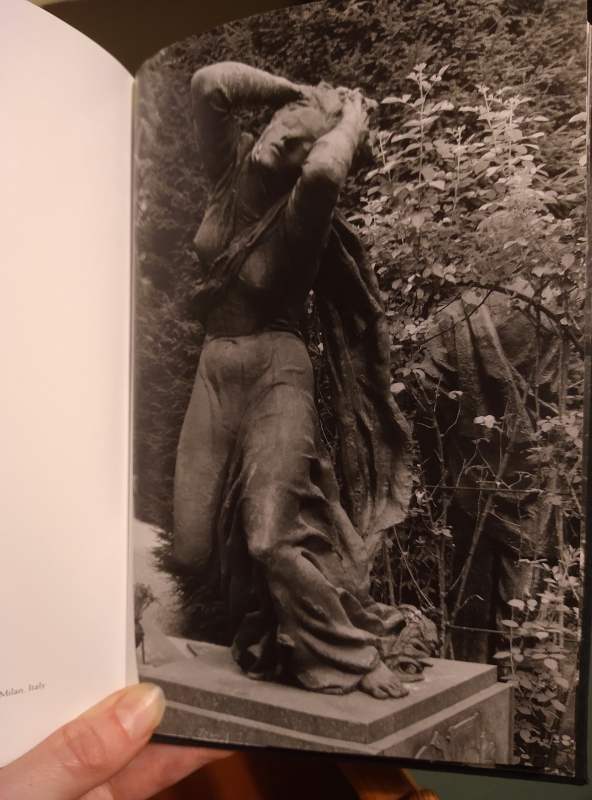
I’ve already encountered Death in the first chapter of Blonde, and I reckon he’ll be a common figure in much of Oates’s work to come, whether realist, Gothic or gory.
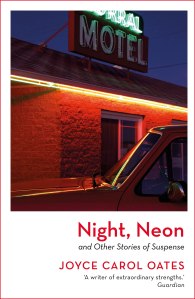 Today I picked up Night, Neon (2021), one of Oates’s many collections of suspense stories, from the library and, based on online reviews, chose two stories to read. I started with the first one, “Detour,” in which a road sign reroutes Abigail from her usual commute when she’s a mile from home. Disoriented, she ends up driving into a ditch and stumbles to the nearest dwelling for help. No one answers the door, so she lets herself in and, Goldilocks-like, makes herself at home, using the toilet and settling into a bed for a nap. When she wakes up, she’s been put into a nightgown and is locked into the bedroom by a man who claims to be her husband of 30 years and is concerned about her health. How has she entered into someone else’s life, and will she be able to get back to her own? The story ends on a note of (hopeful) uncertainty.
“Miss Golden Dreams 1949” proved to be a great companion to Blonde in that it’s voiced by a Marilyn Monroe clone/sex robot being auctioned off at Sotheby’s. Creepily, it’s addressed from her to “Daddy,” a wealthy potential buyer. Even in Oates’s short fiction, I’m finding that she uses three sentences where one would do the job, but at least the stories pass quickly.
Guardian reviewer Ben East sums up her approach nicely (“You tend to know what you’re getting with an Oatesian short – a disquieting snapshot of American life on the verge of individual or ideological collapse”) and describes her short fiction in general as “nuanced rather than neat.” This collection seems promising, so I’ll probably go ahead and read its six more stories and a novella before the summer is out.
 Bookish Beck = Rebecca Foster. American transplant to England. Freelance proofreader and book reviewer.
